Literary adventures in the Netherlands

Relaxing Zeeland

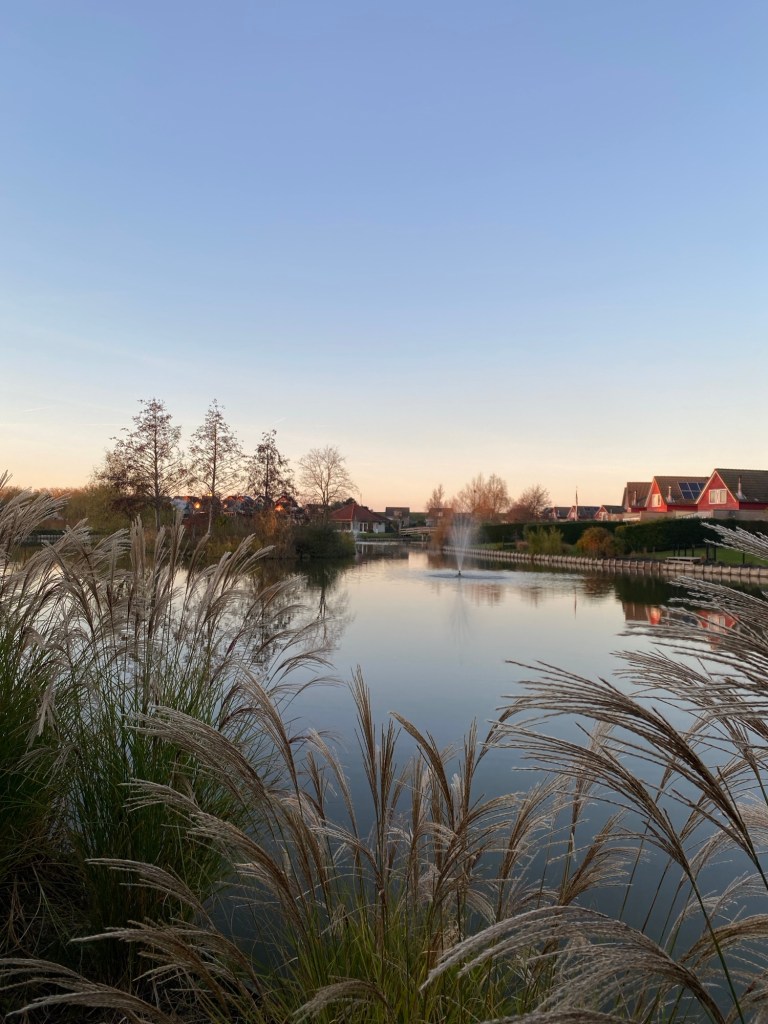
I spent a couple of weeks in my beloved Zeeland recently, a place we have been visiting annually for almost 25 years now. It’s a place where you meet so few Brits and I often find myself feeling the need to explain why I would holiday in such a remote and seemingly unprepossessing place. I am always shocked, therefore when, very occasionally, I bump into someone who knows exactly where I am talking about. This happened just a couple of days ago while chatting to someone I have not met before in my organisation, who is Dutch and knew exactly every town I was talking about!

Middelburg, the main city in the province of Zeeland might just be my favourite place in the world and the only other place I would want to settle permanently outside of Greater Manchester or the UK. It is more of a large town than a city and it is beautiful and relaxing and historic and friendly. It also has probably the best bookshop in Zeeland, a wonderful independent store called De Drukkery, a must-see if you ever find yourself in this part of Europe.

Getting ready for Kerstmas in the Markt, the main square in Middelburg

This trip was our longest ever and very off-season – now that we are not so bound by school term times. We decided to take a trip to Den Haag, just a couple of hours by train from our nearest train station in Goes. Den Haag is a city we have visited briefly before and were very impressed with so wanted to spend a bit more time there. It does not pack as big a punch as Amsterdam or Rotterdam (both of which are actually very close by) but it is a lovely city, rather more relaxed and less touristy than its brasher neighbours. It is also the home of the Dutch parliament and most government ministries, the offices of the Dutch royal family, the International Court of Justice and many international embassies, so it has a feeling of gravitas and authority about it.

The Binnenhof, the home of the Dutch parliament is one of the oldest parliamentary estates in the world still in use. It is undergoing some extensive renovation at the moment so we were unable to visit it. The International Court of Justice is housed in the stunning Peace Palace – again, unfortunately, it was not open to visitors on the days we were there, but I feel sure we will go back.

The Binnenhof, Den Haag

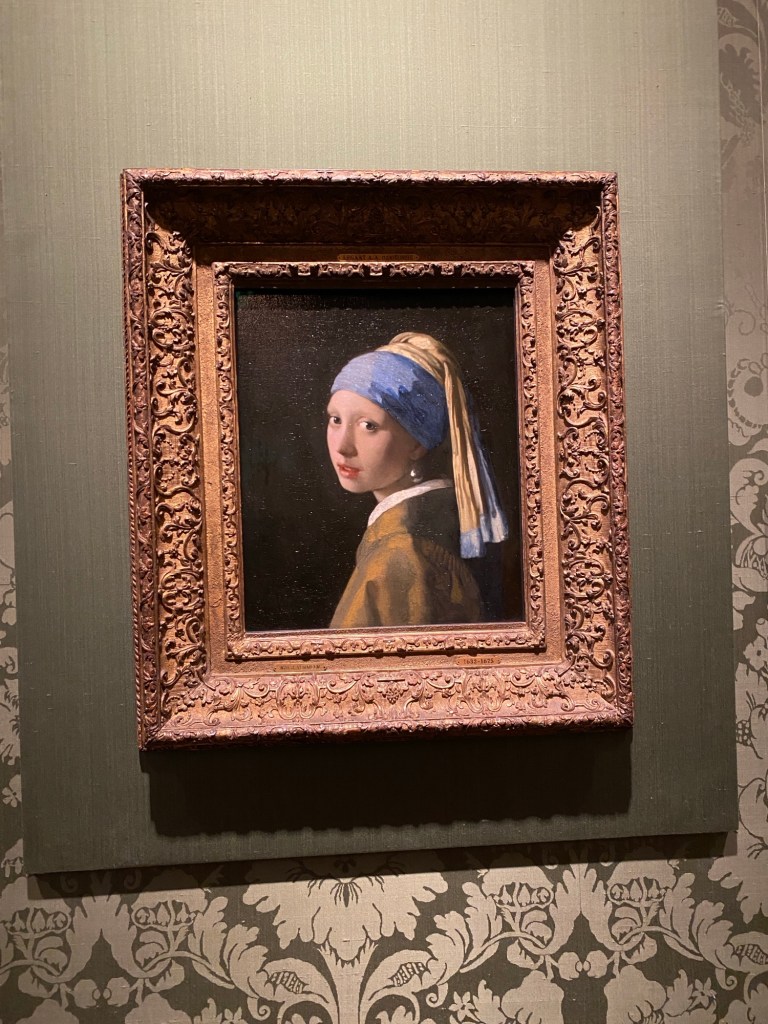
I did not mind this too much as my main objective was actually to visit the world famous Mauritshuis museum, a lifelong ambition of mine. This is a small and stunning museum, located close to the Binnenhof that houses two paintings with literary connections – Vermeer’s Girl with a Pearl Earring and The Goldfinch by Carel Fabritius.

I adore Vermeer’s work – it captures everything that Holland means to me. There was an exhibition of almost all of Vermeer’s paintings at the Rijksmuseum in Amsterdam in 2023. I would have made a special trip to go and see it, but it very quickly sold out so I was unable to get tickets (although I have just learned that there is a documentary about it now available on Amazon Prime). Girl with a Pearl Earring did not have to travel very far as the Rijksmuseum is less than 60km from the Mauritshuis, the home of the painting since 1902. Tracy Chevalier hit literary gold with her 1999 novel of the same name. It was only her second book and it made her name. I remember reading the book when it came out and I absolutely loved it. It was also what stimulated my interest in the work of Vermeer. We made out first visit to Zeeland in 2002 and I have been in love with the Netherlands and with painting from the Dutch Golden Age (broadly, the 17th century) ever since.

If it was a joy to see Girl with a Pearl Earring in real life, Fabritius’s The Goldfinch (Het Puttertje in Dutch) took my breath away and brought tears to my eyes. It is tiny, a little over 30cm high and 20cm wide, and it is so simple, but so deeply captivating – a wild bird, fixed to a perch by a delicate chain. The colours are muted and earthy, apart from a dash of yellow gold on the bird’s wing. The shadow of the bird on the plastered wall behind it creates a sense of foreboding and shows the painter’s skill at creating a sense of light and shade.

Donna Tartt’s book of the same name is one of my all-time favourite reads – I read it about five years ago and it sparked my interest in both this painting (which I had only been vaguely aware of up to that point) and the painter Carel Fabritius. His story is also a fascinating one – he died in an explosion in the city of Delft in 1654 (the year The Goldfinch was completed), at the tender age of 32. His canon consists of only thirteen known paintings, others are assumed to have been lost in the tragedy in Delft which claimed his life. I read Laura Cumming’s excellent biography of the painter, Thunderclap, earlier this year and it has made me want to see all of his works in real life. I now have three under my belt – in addition to The Goldfinch, I saw Young Man in a Fur Cap and A View of Delft, with a Musical Instrument Seller’s Stall on a visit to the National Gallery last January. There are three more in the Netherlands (in Amsterdam and Rotterdam) which I am sure I will get to see at some point, a further two in Germany and Poland, and all the rest but one are in North America. Sadly, I suspect the one in the Pushkin museum in Moscow will never be ticked off.

The town of Delft, where Fabritius died, and also the home of Vermeer (there is a museum there dedicated to him), is just a half an hour tram ride from Den Haag. We paid a brief visit to the town and will definitely go back as it is beautiful.

So, another magical, inspiring and restorative visit to the Netherlands and to Zeeland, a place hardly anyone thinks to visit. Their loss, but that suits me just fine!

Booker shortlist review #1 – “The Rest of Our Lives” by Ben Markovits

The winner of this year’s Booker Prize was announced last week and it was David Szalay’s Flesh. It was this author’s second attempt, having been nominated for All That Man Is in 2016 – the year I started this blog. That was also the first year I set myself the goal of reading all the novels on the shortlist – I don’t think I managed it that year either! (I have no idea how on earth the judges manage to get through so many books – they must have to forego all other meaningful activity for months!) When this year’s shortlist was announced a month or so ago I gave myself a fifty percent chance of getting through the shortlist before the announcement.


Well, predictably, I only got through half the books in time (I already had Andrew Miller’s The Land in Winter under my belt), although I did manage to get through Anita Desai’s The Loneliness of Sonia and Sonny, all 700 pages of it, which has to be an achievement in itself. 

The first book that I decided to tackle was Ben Markovits’s The Rest of Our Lives – according to the blurb it was about a man in mid-life whose children are leaving home to go to college and so it seemed to chime with some aspects of my life right now. I also noted that the author is a lecturer in creative writing at Royal Holloway, University of London, where I did my own undergraduate degree in English, so, a happy coincidence.

The central character is Tom, an academic in law, in his fifties, living in New York city with his wife Amy. It is clear that Tom has reached a state of disillusionment with his life. Amy had an affair some years earlier and it is clear that their marriage has never really recovered from this shock. Tom has been waiting until their children have left home before leaving his wife. Tom and Amy’s elder child Michael is at college in California, and when their daughter Miri goes to college in Pittsburgh, Tom drives her there and the moment of reckoning arrives. 

The journey to Pittsburgh is long – around seven hours (which makes my 3 hour journeys to drop my kids off seem pathetic!). After delivering Miri, Tom decides to keep going, not to go back to New York. He tells Amy that he is going to visit an old pal who has been seeking his advice on a legal matter. He keeps driving. 

In the background we learn of Tom’s health complaints, a swollen face every morning that no doctor has yet been able to diagnose satisfactorily. A friend of mine recently described middle age as being like ‘sniper’s alley’ when it comes to health – you can eat well, exercise, avoid smoking or drinking too much, do all the right things, and yet some nasty disease might still get you. It’s true, and one becomes acutely aware of this in middle age. We learn of Tom’s professional disappointments, never having quite attained the goals he hoped he might. He revisits a number of old friends and finds the relationships are not quite how he imagined. What will Tom do with the level of mediocrity he finds himself in?

This is a road trip novel where the central character goes on a journey of self-examination. This could be a cliche if it was not handled extremely well. And I’m afraid that, for me, it was not handled extremely well. I found the author’s writing style languorous and dull. The ending was abrupt and it felt like the author had just got rather bored with his story and decided to stop. The characters lacked spark. The most interesting character for me was actually Michael’s girlfriend Betty, although I am not sure what purpose she served in the novel, except to show Tom how things might have been if he’d made some different choices.

This was not a bad novel, but I find it quite hard to believe that it was considered Booker shortlist-standard, especially a shortlist that omits Chimamanda Ngozi Adiche’s Dream Count

Unfortunately, I find this book difficult to recommend. 

Book review – “Never Let Me Go” by Kazuo Ishiguro

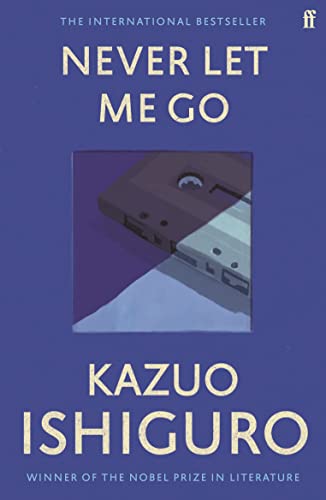
I am very happy to be at the stage in life where I read books that have been recommended to me by my children (all now adults). This is one which my elder daughter enjoyed reading over the summer last year and which she thought I would too. She was not wrong; it is hard not to be a fan of Kazuo Ishiguro, one of our finest living writers, internationally acclaimed, winner of the Booker Prize in 1989 (for The Remains of the Day) and the Nobel Prize for Literature in 2017. The Remains of the Day was adapted for screen in 1993 and turned into a highly-acclaimed film starring Emma Thompson and Anthony Hopkins. Never Let Me Go was also made into a film in 2010 (though I did not know this) with a stellar cast which included Keira Knightley, Carey Mulligan and Andrew Garfield. Ishiguro has quite the pedigree and from what I have seen seems a very nice and down to earth chap. (And a British ‘Sir’ to boot.)

[This review contains some spoilers.]

I read and reviewed Klara and the Sun when it came out  in 2021, a novel about some of the potential repercussions of our obsession with technology and AI in particular (I posted about my own sense of alarm about this last month). It looked ahead to some future date when the advance was seemingly beyond our ability to arrest. The world it portrayed was at once familiar and extremely strange. Never Let Me Go bears some similarities in that it explores human cloning. Some readers may recall ‘Dolly the Sheep’ the first successfully cloned mammal who was born in Scotland in 1996 and died in 2003. At the time, there was a lot of fear-mongering about the consequences of this extraordinary achievement and some justified debate about how we as a human race should manage and control the inevitable advance of this particular field of science. In Never Let Me Go, Ishiguro imagines a world where this science is normalised into everyday life and what that means for the people involved.

The narrator of the story is Kathy, a woman still quite young when she is looking back on her life, and in particular at her childhood, from the perspective of one whose living purpose is to care for her peers, the others who share the same destiny as her. Kathy was brought up in an English boarding school (‘Hailsham’) where the staff are known to the young people as “the guardians”. This was in the late 1990s (when Dolly the sheep was all over the news?). Kathy tells us all about her life there, about the daily life of the children, about their relationships and petty differences, about the trivial things that were important to them. At first it is not clear to the reader exactly what is going on at Hailsham, but part way through, when reference is made to their future status as “donors” or “carers” it becomes increasingly and terrifyingly clear what these young people are for – their purpose is organ harvesting. They are all clones of someone on the outside (who they refer to as ‘models’ or ‘possibles’). 

When we think about clones we might think about robots (rather like Klara in Klara and the Sun), but the children at Hailsham have been created and have all the usual aspects of human personality. This presents challenges to how they are raised and ‘Hailsham’ was originally conceived as a place where their lives could be made rich, where they could develop relationships with one another (including sexual relationships) and be given some purpose in life until they would be required as donors. But of course, their lives are completely pointless, as Ishiguro shows us, their future is bleak; at some point they will donate, once, twice, perhaps more, after which they will weaken and die. By showing us the human frailty of the young people (petty squabbles, jealousies and meanness) he shows how they are just like us, how we could be just like them, just a few steps away from being nothing but an organ incubator. It would be easier if they were dehumanised (like Dolly). 

I found this a powerful novel that I have thought about much since I finished it a few months ago. As I have been thinking about it for this review, I have dipped back into sections of the book and seen things I did not see first time around, the pathos in Kathy, Ruth and Tommy’s trip to Norfolk for example, to search for Ruth’s “possible”, like a search for a mother, an origin story, but of course, the search is fruitless and deeply disspiriting to them all. It is a moment of realisation for them all – there is no-one out there for them. 

This book has to be on a list of must-read books of the twenty-first century.

Booker shortlist review #6 – “The Safekeep” by Yael van der Wouden

Winner of the Booker prize 2024

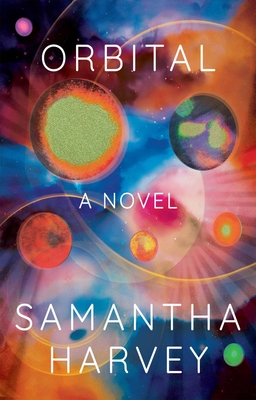
This is my sixth and final review of this year’s Booker Prize shortlist. The winner was announced a couple of weeks ago so I didn’t quite get all my reviews in before the big day! The prize went to Samantha Harvey’s Orbital which is a worthy winner in my view and it is interesting that the Chair of judges said the decision of the panel was unanimous. It feels like it was a book for this moment, when we seem to be on the cusp of something big globally and could all do with stepping back and looking at the world from a different perspective. If only!

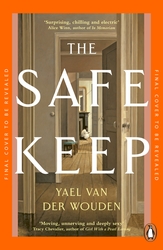
The Safekeep is one of the longer books on the shortlist and that’s partly why I left it until last to read. It is also the debut novel of its Dutch author (the first from the Netherlands to be shortlisted I believe) and is a very impressive piece of work. It is set in the rural east of the country, bordering Germany, in 1961 and the central character is Isabel, a young single woman living alone in the house formerly occupied by her and two brothers (Hendrick and Louis) and their mother. The mother is now dead and Isabel is still clearly deeply in grief. She is obsessive in trying to preserve the house and all its contents, even broken fragments of crockery that remind her of her mother. She creates an inventory of the contents when she believes that the maid Neelke is covertly taking items away. Isabel is an anxious and paranoid woman.

In many ways she has every right to be anxious; she sees herself as the only custodian of their parents’ legacy. Her older brother Hendrick escaped the small town as soon as he could, preferring to live in the city with his boyfriend, and the younger brother Louis is an irresponsible womaniser. He will also inherit the property when its official owner (Uncle Karel, who obtained the house for his sister during the war) dies. Isabel will be homeless without any means of supporting herself, a fact which they all seem to brush over. Isabel is lonely, isolated and grieving.

When Louis invites his siblings to meet his new girlfriend Eva (whom Isabel views with disdain at their very first meeting) and then installs her in the house when he has go to England to work for the summer, Isabel is furious and desperate. To make matters worse, Louis gives Eva their mother’s old room, which Isabel has treated almost as a shrine, and cannot understand why his sister is so affronted. Over the course of the summer, the development of Eva and Isabel’s relationship will transform their lives. 

It is hard to say more about this book without revealing the significant plot twist. It took me a while to warm to any of the characters: Louis is insufferable and selfish, Hendrick is bitter and Isabel is uptight and unreasonable. Eva, initially, seems dull and insipid. But the book is about Isabel’s transformation and her coming to terms with loss. She has lived in the shadow of her mother, her brothers, the war (which would still have been fresh in everyone’s memory in 1961) and not been allowed to be herself or even acknowledge who she is and what she stands for. It is also a book about memory, and legacy, and the importance and value of “things”, what we hold on to when our life feels outside of our control. There are some significant sex scenes which felt a bit cringey – the portrayal of the intensity was powerful but they went on too long and were overdone for me. I also listened to this on audio and found the reader not great, almost to the point of distracting, so I’d recommend reading the book on paper. The book is undoubtedly a powerful debut, however, and I look forward to what more this author has to offer in the future. 

Booker shortlist book review #3 – “Orbital” by Samantha Harvey

I have to confess that I wasn’t looking forward to reading this book. I find I have zero interest in space. Super-telescopes, yes okay, but rockets and astronauts? No. I feel it’s all a colossal waste of money, pure hubris. Sometimes, blurbs don’t give much away in terms of what a book is about and I tend to avoid reading reviews of books I plan to review myself, lest I be influenced, so coming to this book has been a very pleasant surprise.

The book is set in an international space station, with six astronauts of varying nationalities, on a single day where their craft makes sixteen circumnavigations of the earth. The group is there primarily for research purposes but their days are curiously languid; they have mice and plants in laboratories, but they too are lab animals, their body’s responses to the conditions of space being monitored. To what end? The novel explores the minute details of their everyday life: eating, hygiene, games they play to pass the time, their waking thoughts and their dreams whilst asleep, and the routine is made poetic. The prosaic details give us an insight into what aspects of life make our existence special and meaningful. What is the point of food if it is only nutrition? What about taste and texture? I think this gets to the heart of my problem with the ambition of some of those currently engaged in space exploration – who wants to live on a spaceship or another planet if it means we lose the pleasures of a beautiful meal, or fresh fruit, breaking bread with loved ones, a hot bath?

And I think that is where this novel is coming from; setting it in space means the author can take a step back and provide a panoramic view of the earth and our lives on this fragile and beautiful planet. The astronauts admire the earth from a distance and express a child-like wonder at the oceans, mountain ranges, weather systems and natural phenomena, echoing their own childhood ambitions about going into space.

This novel is also about what it means to be human and in that sense is deeply political and speaks to our time. Borders are not visible from space. The authorities attempt to create borders in space – the Russians have their own toilet – but away from earthly politics, none of the astronauts take this too seriously. They share stories and find they have much in common. One of the astronauts, a Japanese woman, loses her mother while she is on her tour of duty on the space station. There is no question of her returning for the funeral or other rituals that follow death. And it is the absence of that connection to what makes us human that is the most painful.

I loved this book. It is very short, less than 150 pages, but every word seems deliberately and carefully chosen. The prose is beautiful and spare and in its conciseness packs an incredible punch.

Highly recommended and must be a contender for the winner.

Booker shortlist book review #2 – “Stone Yard Devotional” by Charlotte Wood

This is my second read from the Booker shortlist and it’s one of the shorter ones, but, quietly and unobtrusively, it plumbs the great depths of the human experience, exploring life, death, grief, the meaning of existence, forgiveness and plague. For a relatively small novel it packs a great deal in! Set in Australia in contemporary times (before, during and a little after the global Covid-19 pandemic), it is narrated in the first person by a woman, perhaps in late middle age, who has chosen to retreat from her life and live within a community of nuns. Initially, this is as a short-term guest, but her stay becomes indefinite. Whilst the narrator does not become a nun (curiously, she describes herself as an atheist and writes of the horrors of Catholicism growing up, at school, and in the world at large) she participates fully in the life of the community, eventually taking charge of the food, growing, foraging, buying and preparing it.

Our narrator initially went to the community on a form of retreat; she was separating from her husband and grieving for her mother who had died of cancer. The timing of events is not clear, echoing the timelessness, the absence of a life ruled by clocks, of living in the abbey. Amongst the nuns, the shape of the day is determined by the rising and setting of the sun, birdsong and the daily prayer rituals. There is comfort in both its order and in the absence of strict commercially-driven time structures. 

Life in the abbey provides the narrator with space to reflect, on her childhood, her family and in particular her relationship with her mother. The mother is perhaps the nearest thing to a saint that the narrator will ever worship, despite the availability of so many in the church. The pain of her loss seeps out of the pages and she describes a gentleness, a goodness and a generosity that is unmatched by any of the religious figures in the novel. 

The nature of belief and Christianity are also explored and the lifestyle chosen by the nuns in the abbey is contrasted with other nuns who go out and work with the poor and the abused. Two nuns in particular are given as examples – sisters Jenny (formerly of the abbey and known to the other nuns) and Helen, who set up a refuge for abused women in Thailand. Sister Jenny was murdered and when her body is later recovered it is returned to the abbey by her colleague, sister Helen, who, by chance, is a former school mate of the narrator. Helen was bullied because she was poor, and the narrator revisits the harms that were done to her and the part she herself played in them. 

Covid is a presence in the novel but this is not about Covid – the community is after all, largely separate from mainstream society. The plague that does permeate, however, is the infestation of mice that occurs periodically in Australia – I recall hearing about this in the news. The abbey and the local town are overrun and the author writes graphically of how the creatures invade every detail of life and what the sisters do to combat them. It conveys a sense of a world out of control, that even where a life of solitude is chosen, destructive phenomena cannot be escaped. 

This is a powerful novel. It took me a little while to get into after James because it has a totally different pace and perspective, but I found it a rich and rewarding read. Since I finished it I find myself reflecting on it often and new insights keep cropping up in my mind. It is an extremely well-crafted piece of work.

Highly recommended. 

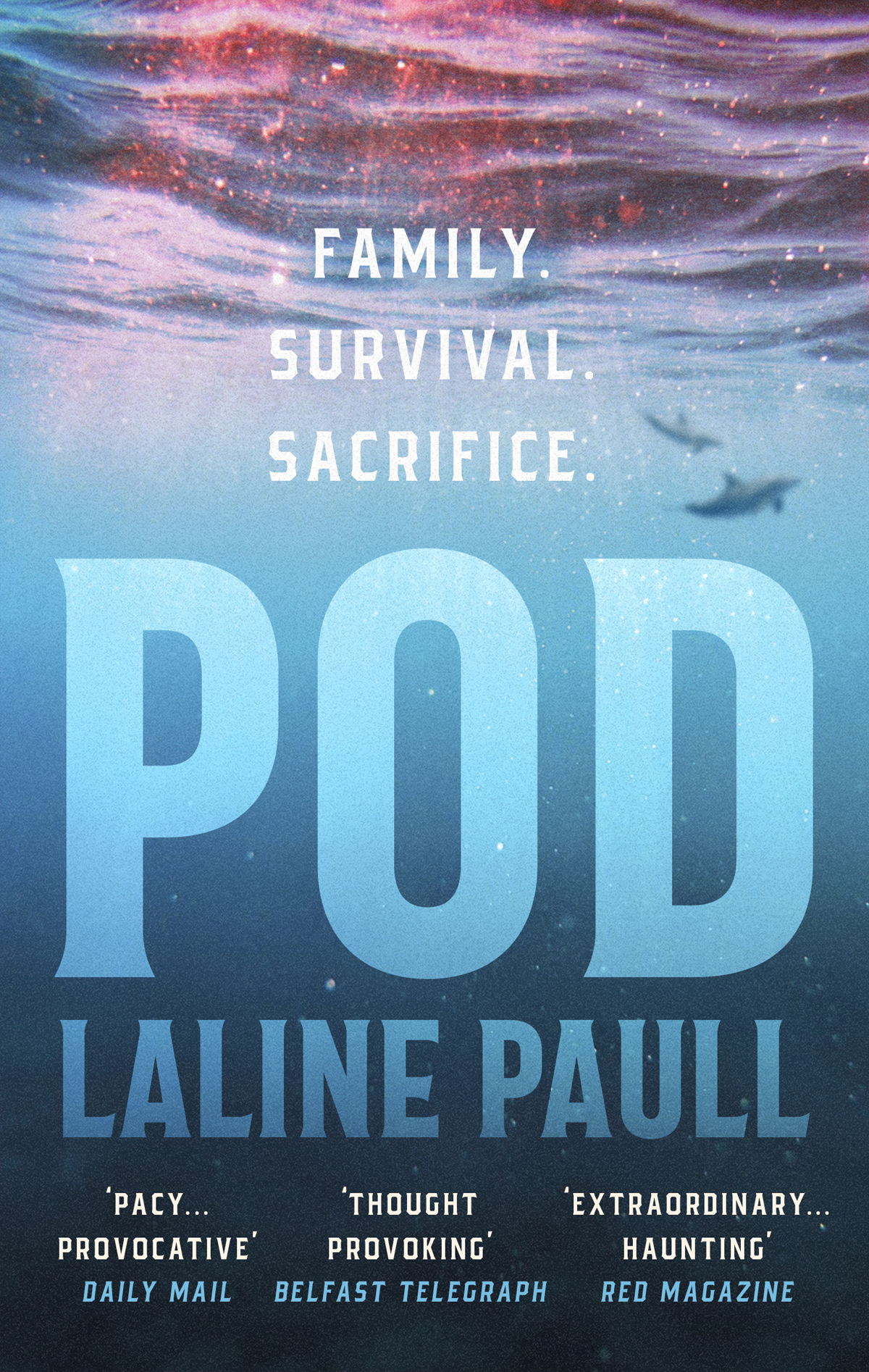
Women’s prize shortlist book review #6 – “Pod” by Laline Paull

I have at last completed this book, which is the final one I read on the Women’s Prize shortlist for this year. The publisher’s blurb describes it as “An immersive and transformative new novel of an ocean world – its extraordinary creatures, mysteries, and mythologies – that is increasingly haunted by the cruelty and ignorance of the human race.” Its main character is Ea, a dolphin who makes the difficult decision to leave her pod, believing that her disability (a form of deafness that prevents her from performing the special ‘spinning’ rituals unique to her kind) has made her responsible in large part for a tragedy that struck the pod and resulted in the death of her mother.

I was attracted by the theme of a marine world threatened and disturbed by the crisis facing our oceans. I hoped it might explore this profoundly important theme, one of the most critical issues facing the human race today, in a unique and innovative way. I thought it might be interesting to deal with it from the perspective of sea creatures and was curious about how the author might deal with that without it becoming trivial or childlike. Well, the answer is that she introduces strong violence and an erotic dimension. The characters have names and they communicate. They also operate in communities and there are both inter and intra-species rivalries. The communities are ordered in hierarchies and often these hierarchies are brutal. In the pod of dolphins that Ea joins for example, or rather is captured and forced into, there is a strong male leader who has his own harem, and rape and sexual exploitation are part of life for the younger female members. 

I cannot summarise the plot of the novel any further than this because, in truth, I’m not actually sure what it was all about! I have never watched Game of Thrones, but you would have to have been living under a rock these last few years to be unaware of it. Well, I think Pod might be a literary, dolphin version of Game of Thrones! I dislike writing negative reviews, I’d rather not post a review at all (except I am also a completer-finisher and have to finish all six reviews of the Women’s prize shortlist!), but I am afraid I really struggled to finish this book. Yes, it is well-written, yes it is imaginative and yes it is certainly unusual, but for me, it just didn’t work. I didn’t really care for any of the characters, mainly because I didn’t feel I could connect with them. They were animals, but they spoke, but some understood each other and others did not. It felt incoherent, confused and confusing. The descriptive passages, such as the accounts of rape and of full-blown underwater battles, were powerful in their way, but I was unable to see these in my mind. I struggled to envision the world the author was trying to create.

I wonder if science fiction fans might find this book more engaging than I did. Perhaps followers of this genre might be better than me at stretching credulity, buying into a landscape completely unfamiliar. I’m not sure. I have read science fiction that I felt was more successful than this novel. 

I’d be keen to hear from anyone else who has read this book, would love to hear your views, because I really feel like I have missed something with this novel. I did not read it consistently, which was perhaps part of the problem and perhaps why it felt inconsistent. But unfortunately, I did not feel motivated to read it, it just did not capture my interest. I was relieved to get to the end! Hmm, such a shame when a book does not work for a reader.

Audiobook review – “Cleopatra and Frankenstein” by Coco Mellors

I’ve had my eye on this book for a while. It has been highly praised in the United States, winning lots of plaudits for its debut novelist Coco Mellors, and in the UK it was a Sunday Times bestseller. The blurb was tantalising; set in New York city it tells the story of a whirlwind romance and its consequences, and comparisons with Sally Rooney have been drawn. My book club liked the sound of it too. We mostly do audiobooks these days as we are busy ladies of a certain age with families and work, etc, and I downloaded it excitedly.

It is essentially a novel of character studies. Cleo is a twenty-something artist struggling to make ends meet in New York where she has a low-calibre job while making her art in her spare time. Cleo is troubled and drifting. She is British but feels no connection with her home country where she has no friends and very little family. Her mother died by suicide when she was in her final year at university. Her parents separated when she was young and her father remarried a ghastly woman and has a new family.

Cleo’s US visa is about to expire and she has no idea what she is going to do next when she meets Frank at a party. Frank is twenty years her senior and owns a successful advertising agency. The opening chapters focus heavily on their initial meeting and the intense chemistry between them, and the inevitability of their getting together. The opening is clever and satisfying to read while also telling us a lot about these two people. It sets the scene really well. Despite the age difference Cleo and Frank seem well-suited. It is tempting to say that Cleo is looking for a ‘father-figure’, but I don’t think that would be correct; she is looking for stability though. Her life experience also makes her older than her years. Frank also had a troubled upbringing, his mother was an alcoholic, and he says he has never met anyone like Cleo before. He is perhaps a little younger than his years. Needless to say, their relationship blossoms. The impending expiry of Cleo’s work visa creates a literary turning point in the plot of the novel. Frank asks Cleo to marry him in a kind of ‘what have they got to lose’ way and they have a quickie ceremony at City Hall, witnessed by an emotional hot dog seller.

So far so good, but for me, the book goes somewhat downhill from here. It is clear that the rest of the novel is going to be about their marriage – will they repent of having married in haste? 

Spoiler alert!

The next few chapters focus a lot on Cleo and Frank’s circle, rather than the couple themselves, and I felt I rather lost the two main characters here. Coco Mellors goes into detailed character portraits of their friends Santiago, Anders and Vincent, and Frank’s younger half-sister Zoe, and we meet Cleo’s father and his wife Miriam, who were cringingly two-dimensional for me. There were times when I wanted to give up on this book because I was so deeply irritated with the secondary characters. I found them lazy stereotypes and I could not fathom why we needed to know so much about them. My only conclusion is that they were there to tell us a bit about “life in New York city”, which I found a bit patronising. It all seemed like something out of Wall Street! Or they were there for padding, to take the focus off Cleo and Frank for a few months, the period during which they were relatively content with one another, until the author could legitimately turn to problems arising in their marriage after the first flush or romance. 

About half way through a further character is introduced. Eleanor is a forty year-old copywriter who goes to work in Frank’s agency. It is clear she is much more ‘ordinary’ than the ‘extraordinary’ Cleo (looks-wise) but there is something about her that attracts Frank’s attention. They share an easy companionability that contrasts with the more intense relationship he has with Cleo. Not unexpectedly, Frank and Cleo’s marriage begins spectacularly to disintegrate, as do the other characters in the book, in a kind of parallel decline. To be fair, the book gets better again from here, although I found the ending disappointingly predictable.

I’m really not sure about this book. It is well-written and I liked the characters of Cleo and Frank, and Eleanor. I disliked most of the others though and found the novel a bit unbalanced in that respect. It’s not a bad read, though it could be quite triggering for some, covering themes of suicide, addiction, and childhood trauma. 


My main complaint is that it seems to favour sensationalism over authenticity and other books I have read recently cover similar themes better (for example, any of Sally Rooney’s books and Sorrow and Bliss by Meg Mason). I came across an LA Times review which said that Cleopatra and Frankenstein read as though it had been written to be adapted for a Netflix series, and I think I probably agree.

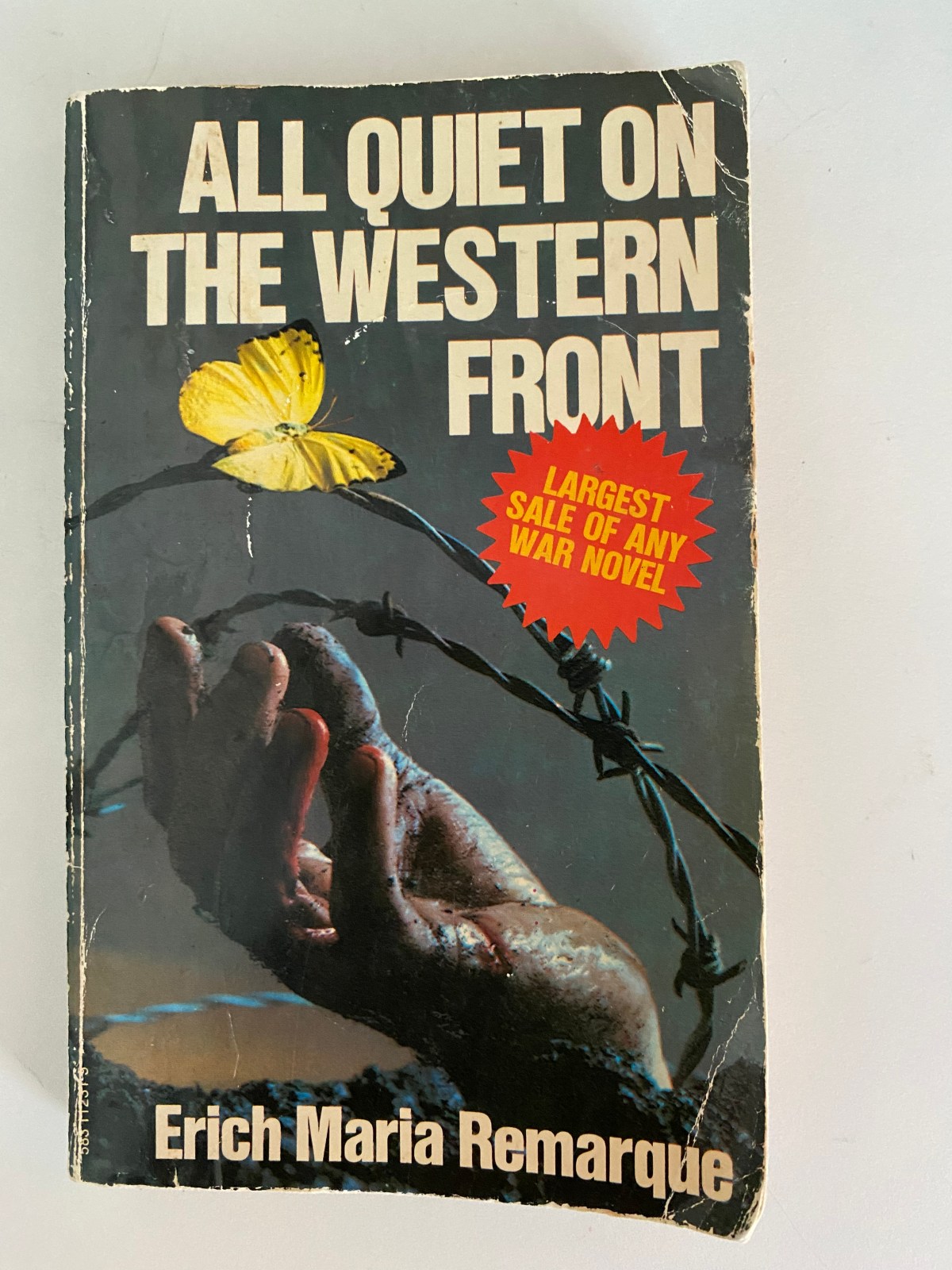
Reading challenge book review – “All Quiet on the Western Front” by Erich Maria Remarque

The April book in my ‘Trying not to be too challenging’ Reading Challenge for this year was All Quiet on the Western Front, the best-known novel by Erich Maria Remarque which draws on his experience as a German soldier in the First World War. First published in 1929, only ten years after the end of that war, it has become one of the most iconic novels about war, all the more poignant because it is written from the perspective of an ‘enemy’ fighter. The book was banned in Germany, where the National Socialists were capitalising on the villification of their country in defeat and felt the book made Germany appear weak. 

My copy is a well-thumbed 1977 reprint that came from my husband’s collection when we got together. I did try reading once before years ago, but as a mother of young children at the time it was just too much for me to bear. I suppose the horrors of yet another senseless and destructive war in Europe appearing in the daily news bulletins, plus the release of a film adaptation that did very well at the Oscars recently, meant the book caught my eye as I was browsing the TBR shelves this time. 

The central character and narrator of All Quiet on the Western Front is Paul Baumer, a young soldier at the Front, serving with other young men who, only weeks earlier, were his friends at the school they attended in a quiet German town. They were persuaded to sign up by their fervently patriotic schoolmaster Kantorek, who told them of glory to be had in serving their nation; their illusions are quickly shattered once they are posted to the Front. Parts of this book are very difficult to read. The vivid accounts of hideous deaths, of gruesome injuries, and of the trauma of enduring such terror, fear and physical pain are stomach-churning, but one is compelled to read almost from a sense of guilt that young men had to, often still have to, endure the horror while the rest of us sit at home in comfort or mourning. One cannot help but think of Ukrainian and Russian soldiers at this point.

Besides the accounts of trench warfare, what is equally shocking is how little progress either side seems to make in exchange for their losses. You have to ask how any of it could be called a victory. The pace of the book is also extraordinary: the periods of fierce and brutal conflict are short episodes of violent action amidst a wider tedium. Most of the soldiers’ time (those that survive the battles) seems to be spent doing very little, just trying to survive. Or in Paul’s case, thinking. The rations are poor and the food is often rank, the conditions are appalling – the descriptions of the ongoing battle to keep rats at bay at night is particularly awful – and no detail is spared in describing toilet habits, for example. 

When Paul returns home for a period of leave, the contrast between his life on the Front and that of civillians is stark. Distressingly, Paul feels that he can no longer relate to his family, that he must spare them the reality of war, but that in doing so he is a co-conspirator in concealing the truth. He cannot wait to get back to the Front, to be with those who can understand him, who share his experience. 

Paul survives almost the whole war, dying only weeks before its end, on a relatively calm day when the single line report from the military authorities read simply “In westen nichts neues” (translated as “All quiet on the Western Front”) from which the book takes its title. In reality, Paul could never have returned to his old life and his family, not after what he had seen and experienced. 

We are not youth any longer. We don’t want to take the world by storm. We are fleeing. We fly from ourselves. From our lives. We were eighteen and had begun to love life and the world; and we had to shoot it to pieces. The first bomb, the first explosion, burst in our hearts. We are cut off from activity, from striving, from progress. We believe in such things no longer, we believe in the war.

Paul, in All Quiet on the Western Front, Chapter 5

There have been two translations of the book into English; my edition will be the original by Arthur Wesley Wheen. The second was by Brian Murdoch in 1993. It is interesting that my edition does not include any credit to the translator. Nowadays, translation is considered almost an art in itself, bringing the out the intention and talent of the author to those unable to read books in their original language. 

I recommend this book highly. It is practically essential reading, though it is not an easy one. 


The next book for this challenge from my TBR shelf is The Bloody Chamber by the late great feminist author Angela Carter. I think I got this as part of a set of three books by her (along with Nights at the Circus and Black Venus) back in the day when I used to subscribe to a postal book club (remember those?) It’s another of those books I’ve been ‘meaning to read’ for years – at last an excuse!

Women’s Prize for Fiction shortlist

The shortlist for the 2023 Women’s Prize for Fiction was announced following much anticipation last week. The winner will be announced on 14 June, but it is one of those literary prizes where you suspect all of the finalists feel like winners due to the sense of warmth and inclusivity around it. This prize has really taken off in recent years thanks to some brilliant marketing activity. The team made fantastic hay out of the Covid lockdowns, running Zoom chats with shortlisted authors (and many hundreds of fans) where you really felt like you were part of the contest. All facilitated by the inimitable Kate Mosse, of course, the dynamic founder of the Prize. Unlike the Booker prize the Women’s Prize also has a sense of humility about it; it doesn’t confine itself to purely literary novels. This is a contest that celebrates the joy of reading in its widest sense, with podcasts, blogs and email newsletters that really keep you engaged.

This year’s shortlist of six books includes three debut novels and three from established authors.

Fire Rush by Jacqueline Crooks

This book has been getting a lot of attention. It is the author’s debut novel, though her short stories and non-fiction work have garnered praise. Set in 1970s London it tells the story of Yamaye, a young black woman and her relationship with the music she identifies with as part of her cultural inheritance, dub reggae. She meets and falls in love with Moose, but when their love affair ends, it triggers a search for identity and a personal transformation.

Trespasses by Louise Kennedy

Another author better known for her short stories, Irish writer Louise Kennedy’s novel is set in Belfast during the period known as ‘the Troubles’, a poignant moment to remember those terrible days as we mark the 25th anniversary of the Good Friday Agreement. It tells the story of primary school teacher Cushla navigating love and politics in the most challenging of circumstances. For most of us it is hard to imagine what it must be like to try and live an ordinary life surrounded by violence and threat but if the reviews are anything to go by, Louise Kennedy has pulled it off here.

Demon Copperhead by Barbara Kingsolver

Kingsolver’s 1998 best-selling novel The Poisonwood Bible remains one of the best books I have ever read – it had such a powerful impact on me. This literary giant needs no introduction and has both won and been shortlisted for the Women’s Prize before. Demon Copperhead is said to be her modern take on Dickens’s David Copperfield where a young man, born into poverty in Virginia tries to make his way in the world in a modern America beset by social problems and prejudice.

Black Butterflies by Priscilla Morris

Another debit novel, this one also set in against the backdrop of conflict, this time Sarajevo in 1992. As we watch the terrible events in Ukraine unfold day after day it is easy to forget that only thirty years another devastating war took place on the European continent and destroyed a country. This novel tells the story of Zora, an artist and teacher who must decide whether to flee their home or try to stay and defend their city against siege.

The Marriage Portrait by Maggie O’Farrell

Another author who needs no introduction, having won this prize a mere three years ago with her incredible novel Hamnet. This is her follow-up and is another work of historical fiction, this time set in Renaissance Italy. Sixteen year old Lucrezia has been married off to a powerful Duke, Alfonso, whom she believes plans to kill her. Powerless and alone she must try and save her own life. Based on a real person, it looks like Maggie O’Farrell has produced yet another literary gem.

Pod by Laline Paull

This looks to be the most unconventional book on the shortlist, where the central character is a dolphin. Afflicted by a form of deafness which isolates her within her family group, Ea survives a tragedy that kills other members of her family. Young and alone, she must navigate the treacherous oceans and multiple dangers. Exploring themes of family and belonging Pod also remninds us of the fragility of our natural environment and the impact humanity has had on other species.

Quite a shortlist! I would love to think that I might be able to get through them all before the winner is announced – six weeks and counting! I hardly know where to start.