

Well, this Mummy did and really enjoyed it! It wasn’t, like, really obvs. (sorry, can’t resist a bit of punctuation, which I fear may become extinct in my lifetime) since the book concerned was a) written by someone of my own generation, and b) the cover doesn’t give too much away, so not totes embarrassing to be seen reading in the company of my daughter and her BFFs.
(Enough teen-speak now, I think, especially since I’m rubbish at it.)
I got an advance copy of The One Memory of Flora Banks by Emily Barr from Net Galley. This is a website you can subscribe to, free of charge, and it gives you a chance to get electronic copies of books (so you need an e-reader device), usually ahead of publication. In return you are simply asked to leave a review of the book on the website. I guess it gives publishers an idea of how the book might be received, and informs their marketing. The books available are mostly by less well-known writers.
Emily Barr has written a number of novels, mostly in what is often called the “chick-lit” genre, though I think this is her first venture into YA fiction. I first came across her many years ago when she gained a bit of fame for being a very young journalist at The Guardian and for having a relationship with a senior MP. I remember enjoying her columns as she was a very witty and very clever writer. Here are my thoughts on the book, which was published earlier this month and I note is widely available, including in my local supermarket, so being heavily pushed.
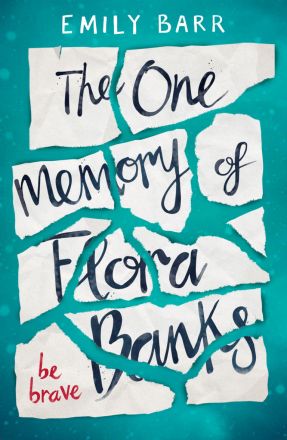
Seventeen year-old Flora Banks is the narrator and central character. At the age of 10, Flora developed anterograde amnesia. This condition means that Flora has no short-term memory; she cannot remember what happened even a few minutes ago. Her parents micro-manage her life and Flora has various techniques and strategies to help her. For example, she writes things on her arms and hands that she needs to remember and keeps detailed notebooks about past events in her life which enable her to contextualise the present.
Flora is at once a reliable and unreliable narrator: the former because she tells things directly as she sees and experiences them, but unreliable because she cannot give us any background to the story, apart from what she recites from her notebooks. For example, it is some time before we learn what caused Flora’s condition and this is an important key to the story because it helps to explain the motivations of other characters in the novel. It is an interesting narration: there is a great deal of repetition as Flora struggles to memorise events, which I found irritating at first, but then it also enables the reader to empathise with Flora and see how life might be from her perspective.
Flora leads a sheltered life in Penzance until two events shake up her mundane existence: first, she attends a going-away party at her best friend Paige’s house. Paige’s boyfriend, Drake, is moving to Norway to study. At the end of the party Flora finds herself on the beach in the company of Drake, who kisses her and expresses feelings for her. This has a profound effect on Flora and becomes the singular event of the book’s title that Flora can permanently remember.
“I kissed Drake on the beach. I am alive in that memory.”
The second event, is that Flora’s parents have to go to Paris to see her brother Jacob who is dangerously ill. They don’t reveal the details of the illness and promise to return home soon. They leave Flora at home, for what they say will be just a few days with all her meals and strict instructions, and arrange for Paige to stay at the house to take care of her. Paige, however, has found out about the kiss with Drake and in a fit of pique decides that she will not Flora-sit. Home alone, Flora’s highly ordered life begins to unravel. Most significantly, Flora fails to take her medication. Now obsessed with Drake and the kiss and the conviction that his love for her will somehow begin a rehabilitation process (because the kiss is such a powerful memory) Flora discovers a resourcefulness she never knew she had, and takes herself off to Arctic Norway to find Drake, all the while convincing her parents that she is still at home with Paige. Flora then has an epic adventure.
Once I got into it, I really enjoyed this book. It is a very cleverly-crafted piece of fiction. Flora is a fantastic creation and I can really see how both she and Paige would be appealing characters to YA readers. Whilst Flora’s problems are very rare and very specific, I think there is a wider theme here about parenting and how, in seeking to protect our teens from the dangers the world presents, we may in fact deny them the very experiences that will enrich their lives. Flora has no capacity to weigh up risk so she is an unusual case (or maybe not!!!???), but the people who aid and abet her (Paige and Jacob) do have that ability, which suggests we have to trust the decisions young people make.
So, a thought-provoking read, which I will be passing on to my youngsters, and recommend to a non-YA audience too, even mature Mummies and Daddies! It’s Zoella next for me – now that WILL be embarrassing! 😉
If you or any young people you know have read this, I’d love to hear your thoughts about it.
If you have enjoyed this review, please feel free to share and if you’d like to be notified about my future posts, please follow me by clicking on the link below or to the right (depending on your device).

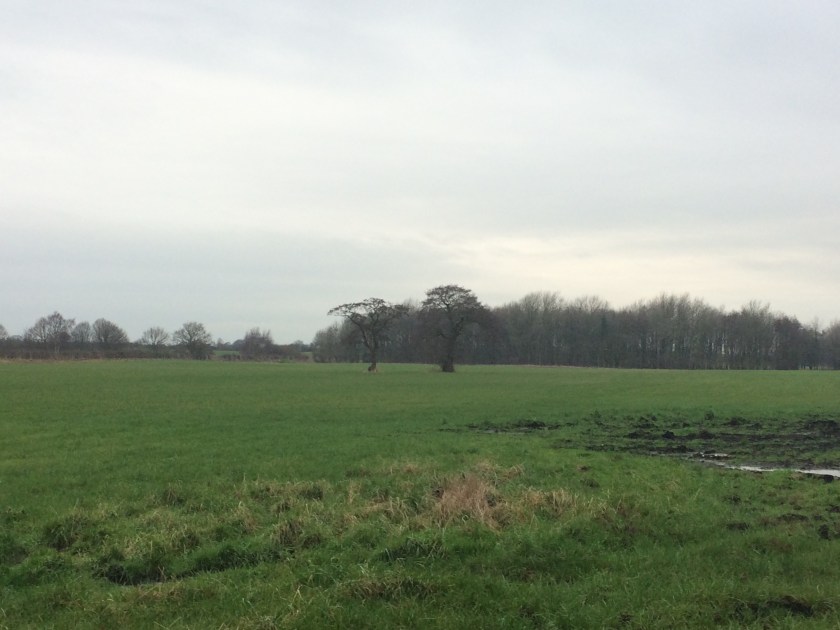 Parts of the country have been struck by a severe cold snap this last couple of days; on my walk yesterday I certainly felt the scenery was quite bleak. Yesterday was the end of Advent, twelfth night, and a natural end, for me, of a period of reflection: about the year that has gone and the one that is to come. In June last year I started this blog and I have loved posting every week about my reading and hearing from readers what you have enjoyed. In the past 12 months I have read over 30 books, the bulk of those since starting this blog, and that feels like quite an achievement. I hope to improve on that this year.
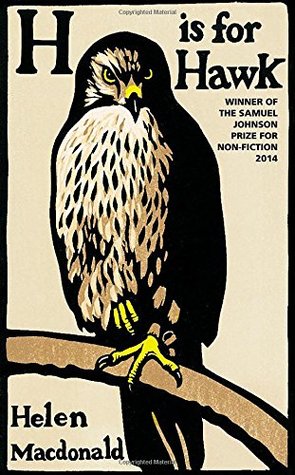 This book was a long slow read for me, but in a way that suits the type of book that it is. It is an account of bereavement. In that sense it bears reading over a long period because it covers a period of more than a year following the death of the author’s father.
 My children’s Christmas stockings would be incomplete without at least one book – whether they want one or not! – and they can be sure that this family tradition will continue even when they are older. Call it my personal crusade. I am also the book-giver for all the little people in my family; with all their senses under assault at this time of the year, I love the idea of giving something that can provide a little space and calm, and a retreat into their own imaginations.
 This poem was first published in 1823, and is written by Clement C Moore. Despite its age, it is very accessible and is an absolute joy. We have been reading this to our kids on Christmas Eve since they were toddlers and they still look forward to it even though they are 10, 12 and 15! There are many versions available – ours is a rather quirky one (designed by William Wegman), where the models in the pictures are dogs dressed up! The pictures are key to the children’s enjoyment of it, so choose a version that is beautiful to look at and will become a family heirloom.
 There are so many books published that you may find people in your usual circle haven’t read the same things as you. But you will always find book review websites (whose authors would love you to post comments or engage in conversation, hint, hint!), or online reading communities, who have read your favourite most recent read. Sometimes, if I read a book I love (or loathe, though these are very few) I’m just bursting to talk about it with someone. I can always do that online.
 This is a novel about race in modern America where the white population seems to feel it has solved the problem of racism. Firstly, it abolished slavery and then set in place several pieces of legislation to reinforce racial equality. Unfortunately, this has not addressed a fundamental problem of disparity of outcomes between whites and blacks (or people of colour more widely), in academic achievement, income, social status, crime, you name it, the statistics paint a troublesome picture. The thesis of the novel is that, whilst white America is slightly uncomfortable with the facts as they stand, they can point to a number of black high achievers (not least the first African-American President) as evidence that they have done all they could. The under-achievement of the rest can be put down to, for example, their own fecklessness or problems of character.
 Autumn is becoming the new ‘new year’ for many people, lighter, brighter and generally a nicer time of year than January, which I’ve always felt was a really bad time to make resolutions and embark on new activities! On that theme, a lot of people I know are using October to make fresh starts or implement changes. For so many of us, transformation starts on the inside; if we have problems or issues we want to tackle or changes we want to make in our lives, it often means overcoming personal barriers – fears, phobias, addictions and the like – or building confidence in moving forward and realising dreams.
 I didn’t think that the words “life-changing” and “tidying” could belong in the same sentence in anyone’s world, let alone adding the word “magic” as well! Don’t get me wrong, like many people, I enjoy the buzz I get from a clean tidy space, it’s the cleaning and tidying bit I don’t like. Marie Kondo is a different kind of animal, but she is highly likeable because she doesn’t try to hide it. She confesses that when she was a child she loved tidying both her own and other people’s things, and devoured women’s magazines with all their cleaning and tidying tips.
