
January has turned into a bit of a rest and recuperate month for me. As I write, there is exactly one week left of the month and after some pretty wild weather in the UK over the last few days, I can report that the sun is shining in Manchester. I have been in my garden this morning assessing the storm damage and putting the covers back over the furniture after the wind had blown them off, and can report that green shoots are peeking out of the ground. I have an ancient nesting box on a wall that was put there by previous owners of our house and I have noticed from my kitchen window that some blue tits have been busy fluttering around it. The afternoons are definitely getting a bit longer and I do feel a slight sense of spring in the air. It feels like the long dark winter is starting to give way. Hmm, does that mean I have to stop resting and recuperating and start doing?!
For me, this month has also been about catching up. On all the things I did not manage to get done in the hectic weeks leading up to Christmas, and on all the unfinished books that have languished in piles for far too long. Perhaps that’s a sign of spring too, wanting to get rid of the old and usher in the new, draw some lines under what has passed. My most delayed unfinished task, certainly as far as this blog is concerned, is completing reviews of the 2023 Booker shortlisted titles. My final review is of the book that actually won, Prophet Song by Paul Lynch. It was widely welcomed as a good winner and the author has certainly done his time as a hard-working writer, so a good choice from the judges in that respect. It wasn’t my favourite book of the six (The Bee Sting was the outstanding one for me), but it was certainly imaginative, well-crafted and had important things to say.
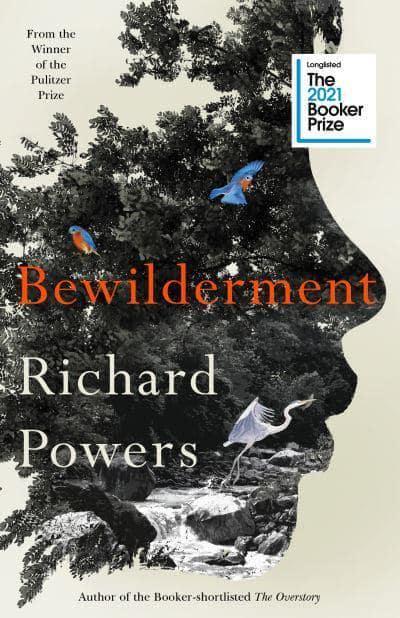
Set in Dublin in an apparently near-future, Prophet Song is a story told from the perspective of Eilish Stack, a scientist and mother of four children, her youngest just a baby. Eilish’s husband Larry is a trade unionist, a senior officer in the Teacher’s Union of Ireland, not exactly a militant group, and when he is arrested on vague charges of seditious behaviour and subversive activity, Eilish’s world begins to fall apart. What also falls apart is the society she has known, normal social order, and most frighteningly, the family’s future suddenly seems very unclear.
Larry is detained indefinitely and neither Eilish nor a lawyer are able to get access to him or any clarity from the authorities on why he remains in detention and what might happen to him. Eilish has to cope alone as a busy mother of three teenagers and a baby, carer for her elderly father whose dementia is beginning to impact significantly on his ability to live safely alone, and working full-time at the lab, the only breadwinner now. There is the sense of her gradually losing her hold on day to day life as well as the emotional and psychological strain of both personal and social events.
Civil war effectively breaks out in the country. The government becomes increasingly totalitarian and, as is usually the case when democratic society breaks down in this way, for reasons that are quite baffling, a proportion of the society gets brought along, becomes complicit in the crackdowns and persecution. Eventually, Eilish feels she has no choice but to flee the country, to try and cross the border to the north (Northern Ireland), perhaps even try and get to the British mainland on a boat (anyone spot the irony?). Her sister lives in Canada and wants her and the family, including their father, to go there. Eilish’s father won’t, can’t, leave the country of his birth, and where he wants to die. Eilish has to make some terrible choices.
I was reading this book at the time when hysteria in Britain about refugees crossing the channel in small boats was reaching boiling point. Nothing there is resolved and we seem unable to have a reasoned debate in this country about immigration or about human rights. In 2024, it is said that a staggering forty per cent of the world’s population live in countries that will hold general elections (how many participate is quite a different question), including in the UK of course. Some of these will take place in countries where it is democratic in name only, Russia for example (hmm, who do we think will win?). In others, like the US, the world is frankly holding its breath. The media in many of these countries cannot be said to be unbiassed, objective, representative or fair, and bad actors are capable of de-stabilising democracy through sophisticated technological tools, social media and deep-fakes. Some governments are also destabilising democracy themselves and implementing laws that favour the outcomes they and their supporters desire. By making Eilish so real, so relatable, her life so like ours, Paul Lynch, shows us how close all of us are to the seemingly unthinkable. It is a wake-up call and we all need to pay attention.
Highly recommended.





 It therefore seems timely that I recently read the memoir Unorthodox by Deborah Feldman. Deborah is in her mid-thirties and lives in Berlin, with her young son. However, she grew up in Williamsburg, Brooklyn as a member of the Satmar sect of Hasidic Jews. She was brought up by her grandparents; her parents separated when she was very young. Her father was a man with sub-normal intelligence, though the precise nature of his disability or illness was never identified. Deborah’s mother was English, the daughter of poor divorced Jewish parents (though not Hasidic), who was unlikely ever to be able to marry well. The marriage was effectively one of convenience for both of them and Deborah was born soon after. The marriage broke down quite quickly, however, and Deborah’s mother was compelled to leave. The community put enough pressure on to ensure she left her child behind.
 Last month, the theme of the Reading Challenge was ‘Something from Africa’ and I picked the debut novel of contemporary Nigerian writer Lola Shoneyin The Secret Lives of Baba Segi’s Wives. If you were able to read along with me, I hope you enjoyed the book – I loved it! Shoneyin, previously a published poet, released this novel in 2010 and it was longlisted for the Orange Prize for Fiction in 2011. Described as a feminist author, I thought the book was clever in the way it portrayed the patriarch Baba Segi and his polygamous household where, though he is referred to by his wives as “Lord” and “King”, he is in fact a fool deceived by the much cleverer women around him. The book begins in comedy, but its ending is much more sober and ambivalent.
 July’s theme is ‘Something from the Americas’. I always had South America in mind here and it was hard as there is so much to choose from among the great classics by Isabel Allende, Mario Vargas Llosa or Gabriel Garcia Marquez, to name but a few. However, I really want to explore something more contemporary and less of a household name outside South America. I’ve chosen a book by Argentinian crime and mystery novelist Claudia Pineiro – Betty Boo. This was first published in 2011 in the original Spanish and then in English translation in 2016. It’s available in paperback and on Kindle.
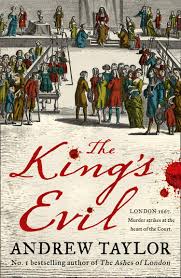 This is the third book in Andrew Taylor’s series of Marwood & Lovett novels. I have thoroughly enjoyed the first two books,
  Julia's books