Re-reading the classics – Audiobook review “Cranford” by Elizabeth Gaskell

I listen to more and more audiobooks these days. Life never seems to get any less busy and if I only reviewed the books I actually read in the traditional format, I think I might only manage a couple a month! C’est la vie. It’s interesting, though, and gives you a different perspective on an author’s work.

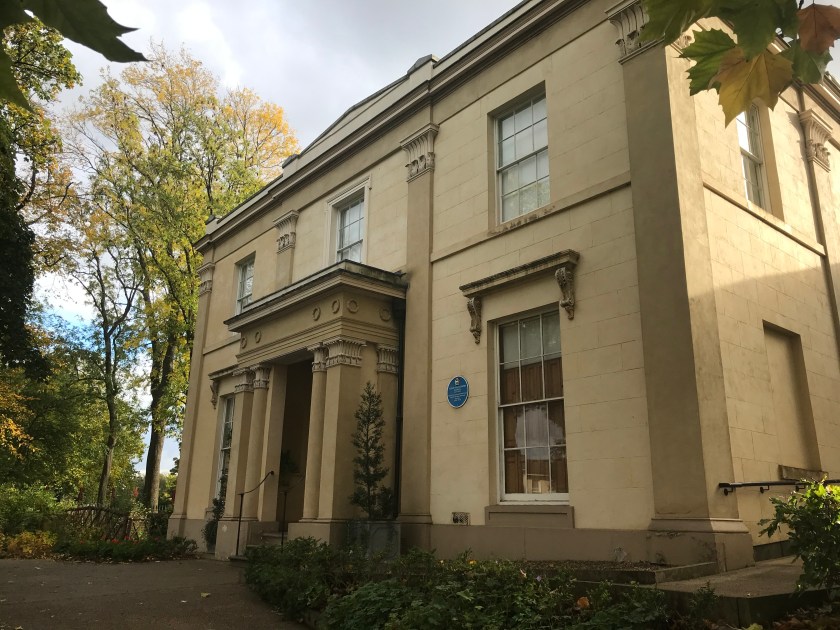
Elizabeth Gaskell’s home in Plymouth Grove, Manchester, where she lived from 1850-65

I have posted here many times about Elizabeth Gaskell – I have reviewed North and South and am a regular visitor to her home in central Manchester, a beautiful and calm space in one of the busiest areas of the city, close to the Manchester Royal Infirmary and the universities. Gaskell also has a strong association with the Cheshire town of Knutsord. She lived there with her aunt after her parents died. It is where she met and married Unitarian minister William Gaskell, and where she is buried in the modest churchyard of the Brook Street Unitarian Chapel, close to the railway station. Knutsford is a short drive from my home and I am a frequent visitor to the magnificent Tatton Park, the entrance to which is on the periphery of the town. 

I was delighted to find that an audio version of Gaskell’s second novel Cranford (which was first published in serial form between 1851-53) was available as a freebie in my audiobook subscription. The reading was by Prunella Scales, an actress I love and whose voice we seldom hear these days as she has been living with dementia for some years now. 

I had never read Cranford, thinking of it as one of Gaskell’s less serious works, and neither have I ever watched the much-acclaimed television series which includes most of Britain’s acting royalty, including several Dames and Sirs! Listening to the audio, however, was a joy. With its wit, irony and observation of character I think it is up there with Jane Austen’s best work. 

Set in the fictional market town of Cranford (which is so recognisable as Knutsford that it is remarkable to think that almost two hundred years have passed), it is narrated by Mary Smith, a regular visitor to the town as the guest of the ageing Misses Deborah and Matty Jenkyns.  Mary Smith writes detailed accounts of events in the town, mainly insofar as they affect the female community, the widows and spinsters. There is a powerful social hierarchy here, as well as a strict code of behaviour and manners. This is a country town, but the industrial revolution hums in the background – Drumble (aka Manchester), lies not too many miles away. 

Change is coming to the community, suggested by a death on the railroad, by the happy marriage between the widowed Lady Glenmire and the local surgeon Dr Hoggins (considered by some to be an affront to the social order), and by the collapse of a bank which leaves Miss Matty virtually penniless. All these events unsettle the established order in Cranford. But what the episodes reveal is the tender humanity beneath all the appearance (and indeed the inhumanity of some).

Cranford is a treasure of a book. Written by Gaskell mainly to generate income, it shows the professional writer at work, honing her craft, exploring her creativity and drawing on ‘what she knew’ in the pursuit of her art. Great fun but also poignant and truthful.

Highly recommended.

#KeepKidsReading – book recommendations

Like most avid readers, one of my favourite pastimes is browsing local bookshops, looking at what’s new, reading blurbs and admiring the artwork. Book covers have got so good in recent years, particularly in the children’s section and whilst I do love all my Penguin classics that have great works of art on the covers, the amount of original work out there is stunning and great for artists of course. I think this is particularly important for books for younger readers as it is often the thing that will make them reach for a title.

A few books have caught my eye recently and I thought I’d list a few here for anyone looking for ideas for the children in their lives.

Non-fiction

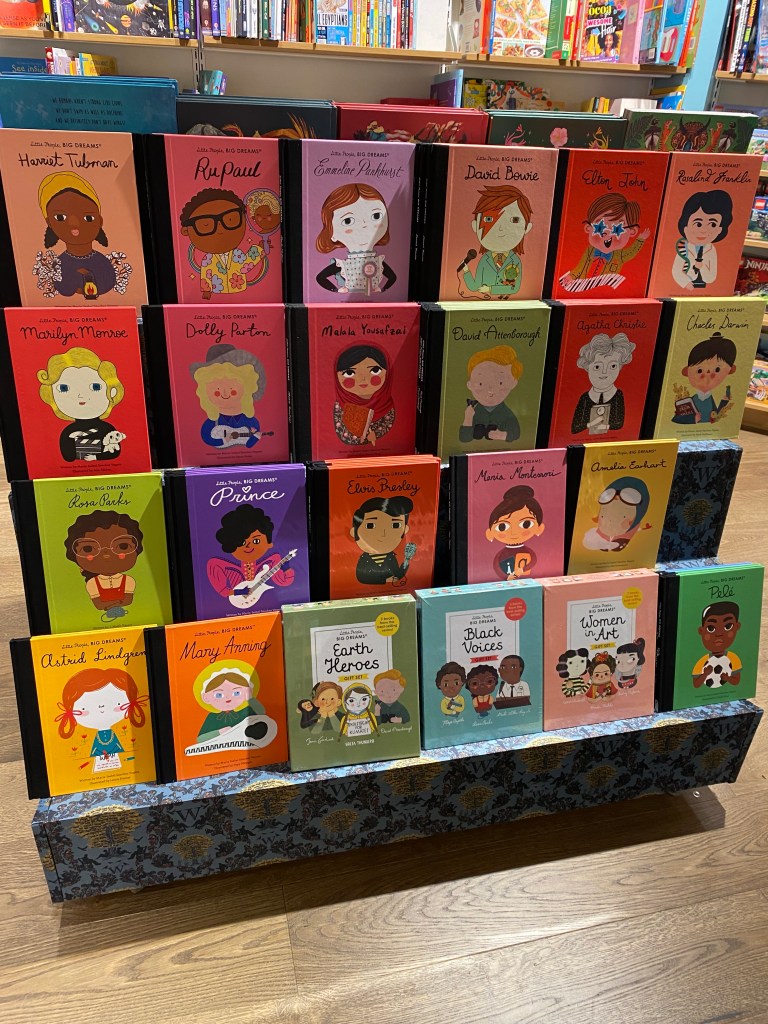
I love the ‘Little People, Big Dreams’ series and since the titles were first (self) published in 2012 they now encompass a huge range of international figures from important people in history to pop stars, sports stars, artists, writers, scientists and explorers. The books have also won international acclaim and count Oprah Winfrey, no less, among their fans. Incredibly, they are all penned by one person, Spanish writer Maria Isabel Sanchez Vegara, working with a team of illustrators from around the world. Aimed at the 4-7 age group, you will find a title to suit your little one, no matter their interest. And the website has some excellent additional resources too.

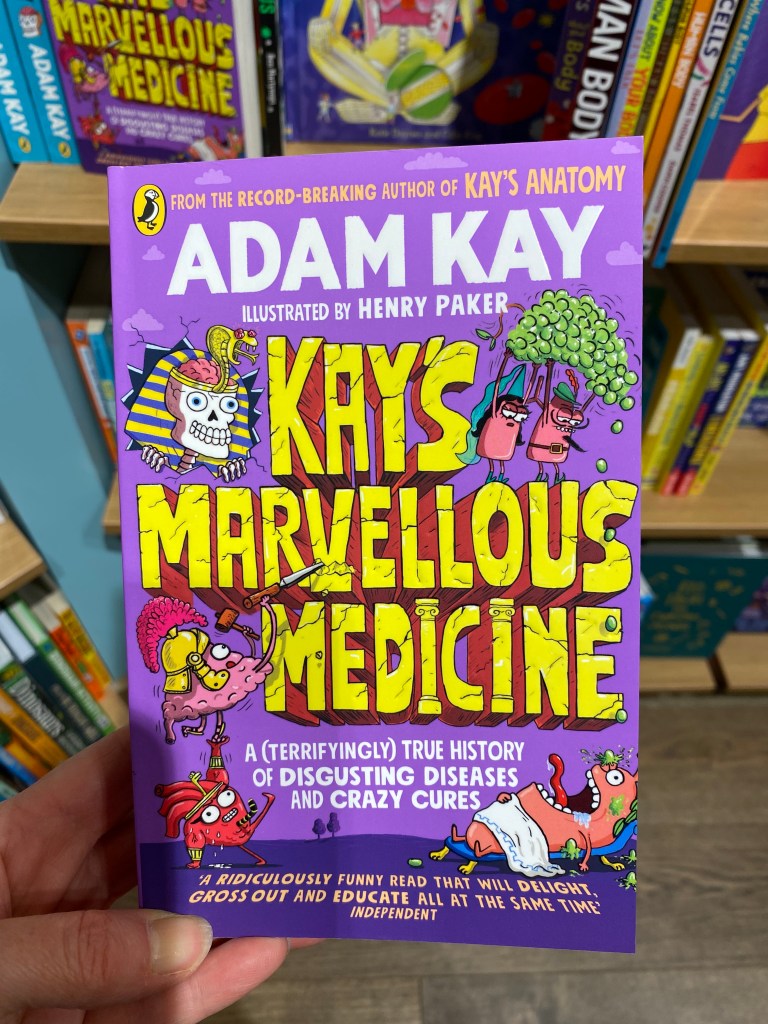
If your 8-11 year old is interested in science these two books will be of interest. The Virus explains the Coronavirus pandemic in simple, factual and non-patronising terms. Could really help any kids still anxious about the disease. Adam Kay is best known for his darkly comic insights into life in the NHS, such as the bestselling This Is Going to Hurt.

History is such an important subject for young people and will help them develop their critical appraisal skills. I think the Windrush book is a timely and beautifully put together perspective on the subject through the eyes of those who travelled. And I loved A History of the World in 25 Cities which has echoes of the ground-breaking ‘History of the World in a Hundred Objects’ (BBC/British Museum). It’s an innovative way of looking at history which many of today’s well-travelled and cosmopolitan kids will respond to.

I adore these two books! Sunflower Shoots and Muddy Boots is a practical book for active kids who love nature and growing things and even those who live in flats and might only have a balcony or window can participate. This book would suit kids of even a young age who can follow the activities with the help of an adult. Grow is a thing of beauty! For children who are a little older (8+) it is a guide to plants and gardening, with the most stunning illustrations. It would make a great gift.

A Couple of quite serious books here. Unstoppable Us: How humans took over the world is by the Israeli historian and philosopher Yuval Noah Harari. He is well-known for his best-selling books for adults , such as Sapiens and Homo Deus. I wonder if he has given up on us grown-ups and feels it’s only the kids now who can save us! You Don’t Know What War Is is a Ukrainian child’s war diary. So many kids will have Ukrainians in their schools and communities and this book may help them to understand what is a very troubling geopolitical situation.

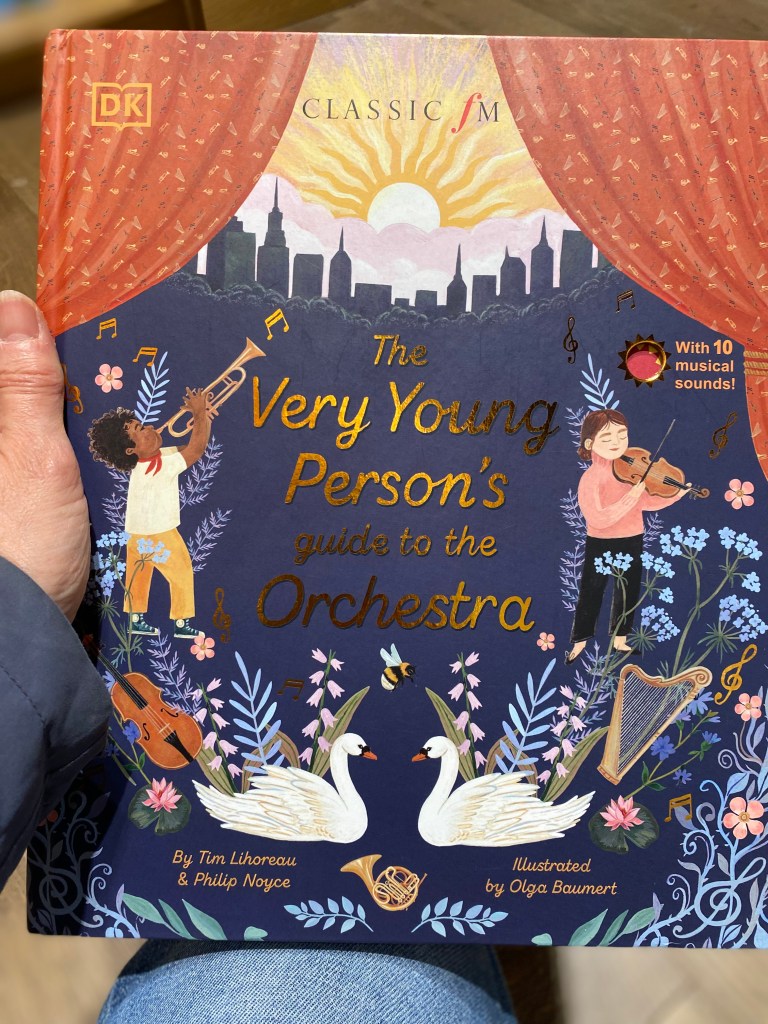
Finally, among the non-fiction, two that really appealed to me. Selina Boyd’s Cocoa Girl Awesome Hair is a fab book specifically for young people of colour, and great fun. And The Very Young Person’s Guide to the Orchestra which will appeal to aspirational parents! I loved the buttons at the back where you could hear the sounds of different instruments.

Fiction

I reviewed Michelle Paver’s Dark Matter on here a year or so ago and loved it. It was the first book of hers that I’d read and I learned subsequently that she has written a lot of middle-grade fiction. Her Wolfbane series has been hugely successful and this book is the ninth and final book in the series.

Sarah Hagger-Holt’s Proud of Me deals with similar tough themes to a book I reviewed on here last week Raven Winter. Two young people share the same father – an anonymous sperm donor but have different views on what information they want about this in the future. It is a story about searching for identity.

Another series, this time a pair of young detectives living in a high rise block of flats. This is the second book by Sharna Jackson and characters Nik and Norva. I used to love junior detective books when I was a kid and I am sure this would have resonated with me as a nine or ten year old.

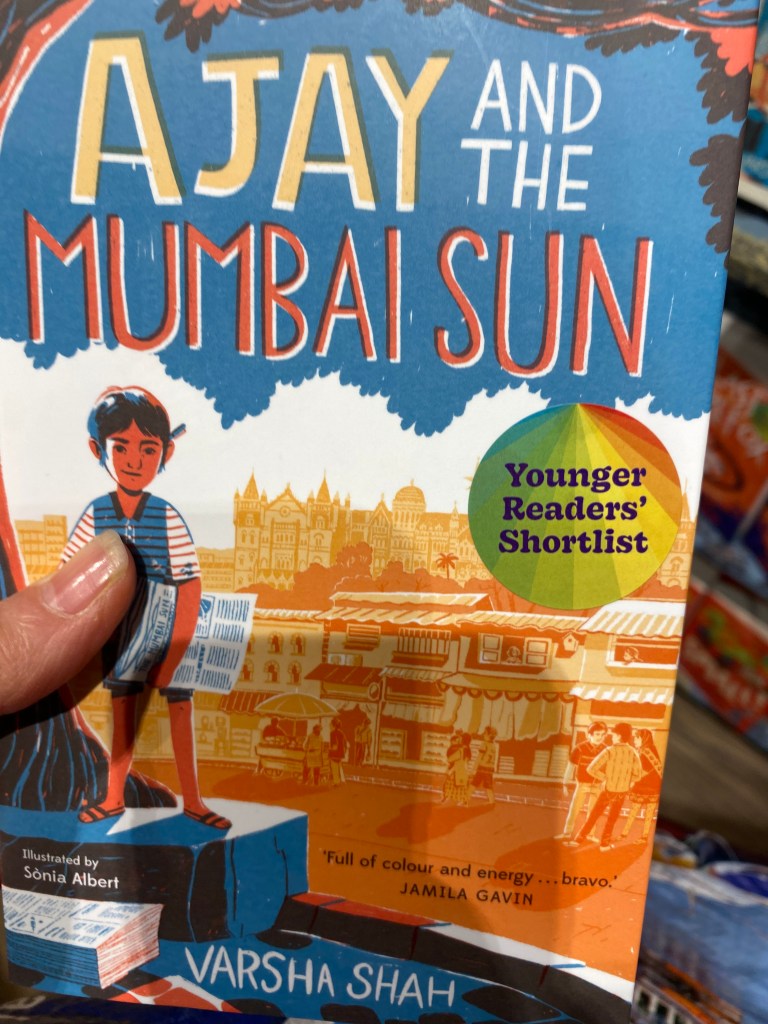
Reading the blurb of this reminded me of Mitch Johnson’s Kick, which I reviewed here a few years ago. Set in an Indian slum area it deals with the reality of life for children growing up in this part of the world in very different circumstances than most of us are used to. This will be a powerful read, but, like Kick hopefully a hopeful one.

I couldn’t ‘resist’ a bit of historical fiction and Tom Palmer’s Resist fits the bill. Set in the Nazi-occupied Netherlands in the second world war, it tells the story of teenage girl Edda fighting her own personal battles against her oppressors who have murdered members of her family and imprisoned her brother. Powerful stuff.

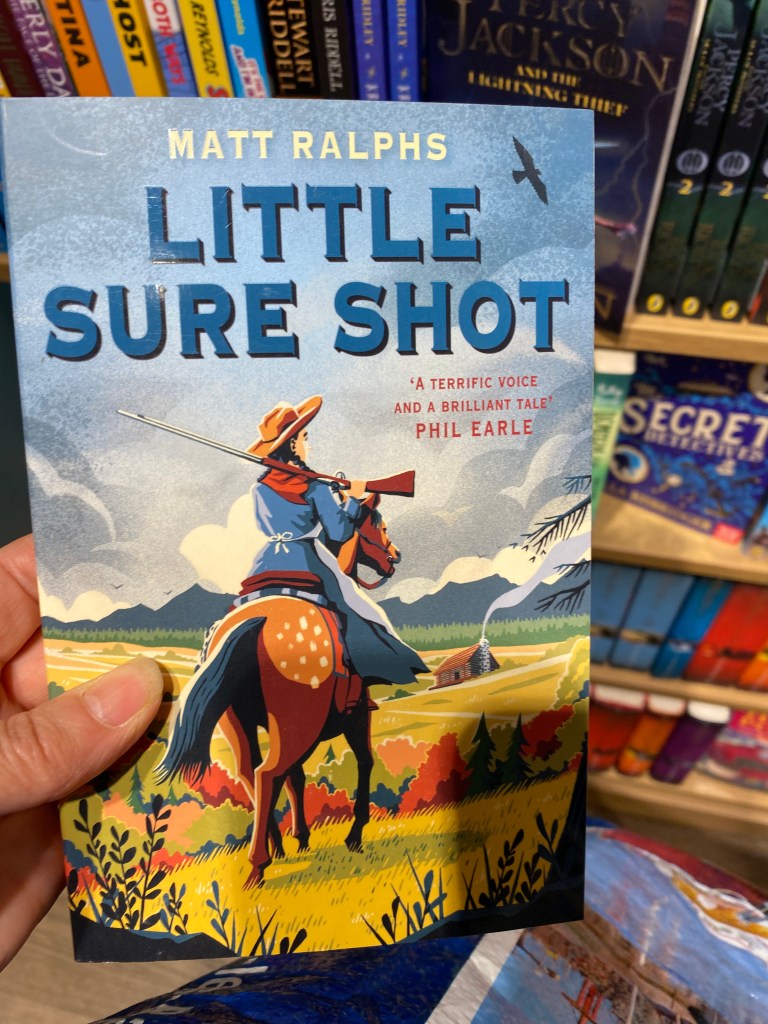
Finally, I love the sound of this book Little Sure Shot by Matt Ralphs, based on the story of Annie Oakley. Annie is a young girl living on an Ohio farm with her family who has a talent with a rifle. When the family is thrown into poverty by tragedy Annie must deploy her talents to keep the family afloat. A really novel idea for a children’s book. It is newly published and I hope it’s a success.

That wraps up my research for this #KeepKidsReading week. I hope there is something here that will appeal to your young people.

#KeepKidsReading classic audiobook review – “Alice’s Adventures in Wonderland” by Lewis Carroll

I was first given this book as a child in primary school (I still have my copy!) and though I recall reading it, I’m not sure what I thought about it at the time. I read it again (along with the sequel Alice Through the Looking Glass) while I was an English literature undergraduate (this time exploring the symbolism and the place of the work in the history of literature). It is easy to forget that this book was written in the Victorian era (it was first published in 1865), a time when children were definitely meant to be seen and not heard. Alice is nearly subversive when thought about in that context!

I came across the audiobook recently, read, to my excitement, by the marvellous actor Jodie Comer, who comes from Liverpool but who seems able to mimic just about any accent. As I had a longish solo car journey, I thought it would be the perfect accompaniment. I was slightly disappointed that Jodie Comer read it in a (perfectly executed) received pronunciation – fitting to the book’s period, but I think it might make it sound somewhat dated to a modern child’s ear. There was a wide range of other accents too though, various northern and west country voices for the animals. 

I listened in one sitting and it really is a marvel. I had forgotten just how many different ‘episodes’ there are! I was reminded of Philip Pullman’s His Dark Materials trilogy, which I think draws on the legacy that was established by Alice. I am currently watching season three of the BBC television adaptation of that series (which is further than I have read in the books) and I am struck by the succession of ‘worlds’ (or multiverses as I think it would be more fashionable to call them). Alice goes through a series of changes as she passes through the different areas of Wonderland and encounters different animals, some familiar, some fantasy, and different forms of people (such as the royal playing cards). As an adult, I have to admit that I have found this a little tedious at times – there is a kind of impatience in my watching/listening. But, of course, children have a much greater tolerance for this sort of thing and it’s probably a strong argument against bingeing. It’s simply too rich!

Listening to Alice, my absolute favourite section was the mock turtle’s story. I love the nonsense logic and I think the puns will make children laugh as much as I did. In performance terms, Jodie Comer had great fun with the Queen of Hearts and the King and the repetitions of “off with his head” got increasingly melodramatic. Again, children will love the anarchic humour.

Alice was a reaction to the constraints placed on children and the virtual denial of childhood in the late nineteenth century. Alice refers to the events going on around her as “curiouser and curiouser”, but of course, she is also curious, drinking potions and eating biscuits and mushrooms, even though she knows this is against every rule she has been taught, just for the hell of it, to see what happens. The message here is that curiosity is rewarded with adventures and rules can be broken…sometimes!

Some parts of this book may well feel dated to 21st century ears, and I was listening out for things that might offend, in the way that some have been offended by Roald Dahl recently, but Alice is much more fantastical, in my view. Its entertainment value for younger children remains strong, however, and Alice’s innocence still rings true. 

Book review – “Four Thousand Weeks” by Oliver Burkeman

I always enjoyed reading Oliver Burkeman’s columns in the Saturday supplement of The Guardian, but then two or three years ago he announced that he was going to stop doing them. Reading this book, one assumes that he had a bit of a revelation and that is what he is sharing with us in this his third non-fiction book. 

Burkeman opens by telling us that when asked to guess how long the average life is, most people, when told not to think too long or hard about it, come up with numbers such as 200,000 weeks, or longer. When people are then invited to calculate the number of weeks in a long life of around 80 years (if you’re lucky), most are quite shocked. Burkeman’s central point is that this is an absurdly, insultingly short amount of time, given the capacity of the human brain for ambition and the desire for happiness and fulfilment. As technology has enabled us to do more with our lives (we no longer have to spend time growing our own food, we can travel much further and faster and more cheaply than even our grandparents’ generation and we are living longer than ever) we have tried to cram ever more in, in the belief that this is the signifier of an objectively ‘good’ life. 

Burkeman describes himself as a time management geek and insists that he has tried every method and read more than most about how to squeeze even more into his busy life, to expand his list of goals and ambitions and to try and achieve more. He claims that not only do most of these methods fail at first contact with reality, but that they are not making us any happier either, quite the contrary.

Within the first few pages of the book, you realise that you have in fact been cheated. You are not going to find the one true time management method that is finally going to “work”. What you get is a long essay on why it is much healthier and more productive to embrace the fact that we do not actually spend very much time on this earth and that rather than trying to squeeze more in, we should be focusing on quality over quantity. So, it’s a book about learning to choose differently. When we understand what our purpose really is, what truly gives us joy, we can prioritise those things rather than the long list of more prosaic and ultimately less satisfying goals that we give ourselves. It can be so hard to let things go, of course – what if you want to be a great parent, a great cook AND a great painter. Well, I’m afraid Burkeman thinks we can’t do it all and we have to choose. But in choosing we will become better at the things we truly want.

When I became a mother in the early 2000s, there was a lot of literature about on the topic of ‘having it all’ – a fulfilling career, adorable high-achieving children, a loving partner, a stunning home, and a gym membership. I quickly realised that if that was a possibility, then I was a failure. I still feel at times that I did fail; I gave up my career on the birth of my second child because I hated sub-contracting my children’s care, I could not do everything to the best of my ability, oh and it made no economic sense. Reading this book brought some of those thoughts back to me and at times I felt vindicated. On the other hand, as a woman in my fifties now, well over half way through my four thousand weeks if that is to be my gift, it was also quite a sobering read. But perhaps also a timely one. Now my family is almost grown up it is time to shift my priorities once again and focus on what my real goals are. I don’t have time to visit every country, read every book or learn every skill that I’d like to. That is just a fact. And since the love of my family and my friends is actually the most important thing in my life it sharpens the mind. Time to choose and choose wisely. 

Highly recommended, but not for the faint-hearted!

Audiobook review – “The Sound of Laughter” by Peter Kay

Peter Kay comes from a strong northern comic tradition and is considered one of our finest comic actors and stand-up comedians today. In  my book club recently we decided we needed something light and funny, and perhaps also it was time for a memoir or autobiography, so Peter Kay fitted the bill. The first volume of his autobiography became the highest and fastest-selling autobiography of all-time. I think it has only just been knocked off that top spot by Prince Harry’s Spare. Which is disappointing.

Peter Kay’s success is entirely deserved. Hailing from a modest background in Bolton, he was brought up a Catholic (his mother was from Northern Ireland) and attended a primary school where he was taught mainly by nuns. Apparently, Peter Kay still lives in the area and even after many years at the very top of his game and with phenomenal successes to his name he comes across as grounded, modest and without affectation.

The Sound of Laughter recounts Peter’s childhood, teenage years and early life working in various low-wage jobs before finally finding success when he wins a northern comedy competition (beating the favourite and fellow comic Johnny Vegas, whom he clearly admires). Peter’s early life was ‘ordinary’ in every sense of the word, and yet it is a sign of his genius in a way, that he has mined this seemingly inauspicious material and dug up comedy gold which still serves him well today. Whether Kay is talking about the nuns at his school (whom he gives such names as ‘Sister Sledge’, ‘Sister Act’ and ‘Sister Matic’), his driving lessons and various driving instructors, his many jobs, (which included working in a petrol station, a branch of Netto, a cash and carry and a bingo hall), or his beloved family, his eye for every minute comic detail is laugh-out loud funny. I listened to this on audio, narrated by Kay, himself (who else could have done it!) and there is a wealth of ‘bonus material’ – he simply cannot help himself going off at tangents, throwing in an anecdote. I got through much of it in a couple of long car journeys and goodness knows what fellow motorists must have thought if they spotted me crying with laughter!

What is striking about Kay is that he in no way conforms to the ‘tortured comic genius’ trope that we recognise in the likes of Robin Williams or Tony Hancock, nor complex or controversial like Billy Connolly, Peter Sellers or Eddie Izzard. He just seems like a straight-up regular guy who you can imagine living next door to. And this is his USP.

At a time when young people are under so much pressure to achieve and when momentous decisions come thick and fast, Kay is also a shining example of how you do not need to go to the best school, the best university, or have outstanding qualifications to succeed. In his case, being true to oneself is a far more valuable commodity, as are hard graft, humility and self-respect.

Kay published a second volume of his autobiography in 2010, called Saturday Night Peter, which I will be downloading on audio. I hope it will be just as funny as the first volume – I’ll report back. He also said in an interview in 2021 that he was working on a third volume. As he is currently working on a months-long sell-out tour of the UK we wait with bated breath.

Highly recommended.

Audiobook review – “The Bread the Devil Knead” by Lisa Allen-Agostini

The Bread the Devil Knead is Lisa Allen-Agostini’s third novel (she has previously published YA fiction as well as a collection of poetry) and it was shortlisted for the Women’s Prize for Fiction in 2022. It is both powerful and a page-turner with a gripping plot as well as an engaging, authentic and complex central character who is also the main narrator.

Alethea Lopez is 40 years old, the manager of a clothing shop in Port of Spain, Trinidad. She is stylish and sexy. Her partner Leo is a musician who was once in a popular band. Alethea is also having an affair with her boss, the owner of the shop. But beneath her confident exterior Alethea conceals some dark secrets. The superficial aura of calm she has created around herself begins to crumble when a woman is gunned down outside the shop by a jealous lover. Alethea is shaken. A curious police officer drives her home and notices the bruises on her face. We learn from the outset that Alethea’s relationship with Leo is an abusive and violent one, perhaps that is why she looks for love with her boss, although that relationship is also abusive in its own way. 

The police officer’s curiosity is dangerous for Alethea; Leo reacts in a way that is designed to ensure that she will always be afraid of the consequences of revealing to anyone what goes on inside their home. And yet Leo has a powerful hold over Alethea that is more than just the constant threat of violence – she seems drawn to him, needs his desire for her, and his love, no matter how twisted and unhealthy it seems to the reader.

Alethea also has a brother, Colin, who is a preacher. They are recently reunited after years apart. Alethea narrates her story but there are also flashbacks to her childhood: she grew up in a single parent family. Her mother (also violently abusive to her) told her that she was the product of a brief affair she had with a Venezuelan, a man it is clear she will never meet. (Alethea has the additional social disadvantage of being lighter-skinned than most and of having a Hispanic surname). Colin joined their family when he was a toddler, having been brought by Alethea’s uncle to be cared for by her mother. Alethea was a few years older than Colin and clearly adored him. He was better treated by her mother than she was, but Alethea was never jealous and merely saw it as part of her role to protect him. 

As the violence in adult Alethea’s life gets worse, alternative pathways for her gradually come into view. A childhood friend who went to live in America returns, having married a rich man, and wants to open a boutique with Alethea. The renewal of her relationship with Colin causes her to examine the events of her childhood anew, especially when she finds that she has inherited property from her maternal grandmother. Gradually, the complex layers of Alethea’s emotional landscape are revealed and the reader begins to understand how she came to be here.

This is a profoundly moving novel; Alethea’s narrative is candid but she never becomes sorry for herself. She is vulnerable and damaged but she also has tremendous strengths and as her self-awareness grows so does her stature. 

Set in Trinidad, the novel is written primarily in the local creole. I listened to the book on audio and although the language was hard for me as an English-speaker to get into initially, my ear gradually became attuned to it and by the end I was so glad I had chosen this format because the musicality of the language added to the experience. It is also the author doing the reading and so she brings to it all her own knowledge of her character and Alethea truly comes to life.

Highly recommended, though readers should be aware that there is a significant amount of violence and the themes of domestic abuse, parental abuse and incest are explored unsparingly.

Books due out this spring

If you were watching, listening to or reading the news over the Christmas and New Year holidays, you might think that the publishing event of 2023 had already happened. Yes, that autobiography! It is everywhere and has already become the fastest selling non-fiction book ever. I suspect that anyone who was going to buy it has already done so which I hope means that the initial brouhaha has died down. Those of us interested in books rather than gossip, however, can settle down and look forward to some far more interesting offerings for the first few months of the year. Here are a few of the titles I’ve picked that are due for publication this spring and which I am heartily looking forward to.

Two of the world’s finest living writers will be publishing new work this spring. Margaret Atwood releases what will be her eleventh short story collection Old Babes in the Wood in March. Salman Rushdie, who last year survived a vicious stabbing incident, perpetrated while he was a guest at a literary festival in the US, publishes his thirteenth novel Victory City, which is due out later this month.

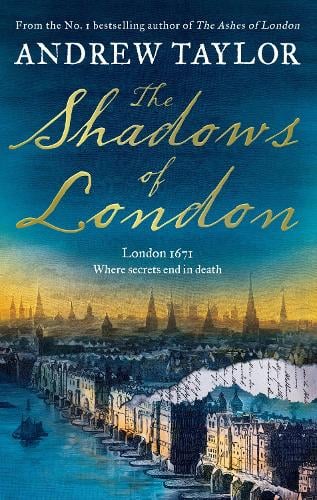
I am very excited about the prospect of a new Marwood and Lovett mystery by one of my favourite contemporary authors, Andrew Taylor. His sixth book in the series, The Shadows of London, which follows on from his other post-Great Fire of London novels, many of which I have reviewed on here, is due out in March.

Caleb Azumah Nelson is undoubtedly one of the young new authors to watch at the moment. His first novel Open Water, published in 2021, was multi-award winning. His next offering Small Worlds, is due out in May and is about a young man in London whose life revolves around music and dancing. The world he has built for himself begins to be challenged however, in his relationship with his father, his faith, and his Ghanaian heritage. It’s being widely trailed already.

One of my favourite children’s authors of recent years is Zillah Bethel. Her 2016 book A Whisper of Horses is a joy. Her latest novel The Song Walker is out this month and concerns a young girl who wakes up in the middle of the desert with no idea who she is or how she got there. She meets Tarni, also alone and on her own mysterious journey, and the two trek across the Australian outback in search of answers to their respective questions.

Journalist Ian Dunt is a thoughtful and interesting political commentator, and there has been lots to comment on in the UK in the last few years! The public is now beginning to ask seriously whether the system of government we have is fit for purpose. As I ease my way back into some non-fiction, his new book How Westminster Works and Why It Doesn’t, due out in April, might be one to reach for for answers.

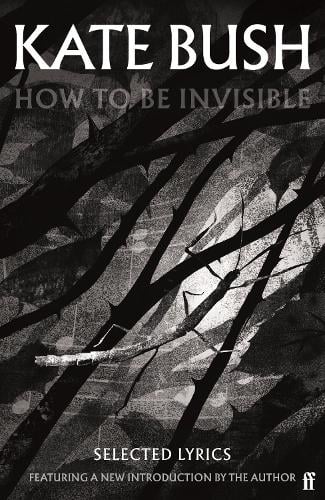
And finally, a book I will definitely be coveting is How to be Invisible: selected lyrics of Kate Bush, the paperback version of which is due out in April with a new introduction by the woman herself. I am a huge admirer and still listen to her music frequently, but she is such a recluse that we fans have to take every little Kate-tidbit that comes our way! Definitely a keeper!

What publishing events are you looking forward to in the next few months?

On reading challenges

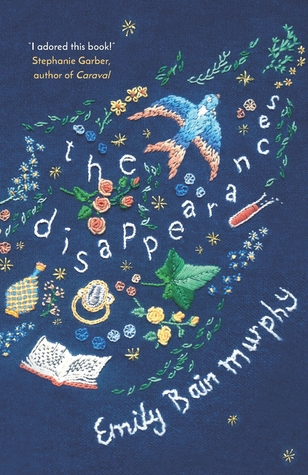
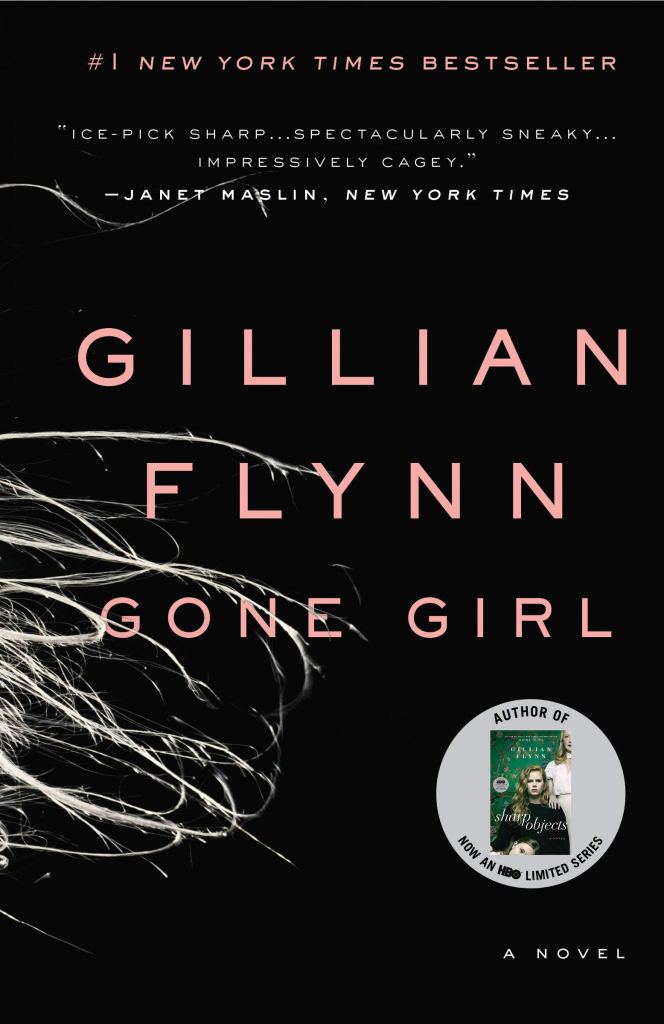
Every year there are very many interesting reading challenges that bloggers and others set themselves. I have done one every year since I started this blog more than six years ago and I have participated in others, some successfully, some not. For a while there my challenge was to pick a genre or theme for each month and select a title. The aim was to expand my reading horizons and delve into things that would not normally attract my attention, such as science fiction or autobiography. It worked and I read some amazing things. Some stand-out discoveries for me were Emily Bain Murphy’s The Disappearances, the very first choice in my very first reading challenge in 2018, classic crime fiction (I never imagined I’d become a fan of Agatha Christie) and Gillian Flynn’s Gone Girl, which I confess I had been a bit snooty about when it was published.

Last year, I decided I wanted to read more non-fiction. I only managed about four books! And, another confession, Margaret Atwood’s Burning Questions, which I think I started last summer, remains in my bedside pile, only half-read! Don’t get me wrong, I’m really enjoying it, but it’s a chunky volume and is a series of essays, some only a few pages long, so it’s the kind of book you dip in and out of. Definitely not one to speed read. It was a tricky year between one thing and another and I neither read nor blogged as much as I have done in previous years.

So, as the end of January draws near (noticeably longer days, hurray!) I find myself reading about other people’s reading challenges and wondering should I be doing one? And the conclusion I have come to, is perhaps not. Having failed (and I’m using that word with a degree or irony) last year to achieve quite a number of the goals I had set myself, due to a mixture of over-estimating my time and abilities, and under-estimating the other demands that would be placed upon me by life, I have concluded that perhaps the overall goal of expanding my reading horizons has been met, and I don’t need to do that any more. That particular habit has been well and truly established and neither do I need encouragement to read.

What I am going to do, however, is aim to pull an unread book off one of my shelves each month to read. If you are reading this you will no doubt be familiar with the particular compulsion that we book lovers have to just keeping on buying new ones, despite the many dozens of unread ones we already own! This is both a waste of money and a source of unnecessary guilt. I’m going to aim for one a month but be kind to myself if I don’t manage it.

First title to be dusted off the ‘unread’ shelf!

There’s less than a week left of the current month, so I’ve been looking for something shortish, and I’ve landed on Hilary Mantel’s Fludd, published in 1989. I have no idea how long I have had my copy, but I vividly remember reading her 1992 novel A Place of Greater Safety. It was one of the first books I read after completing my English degree (at which point my head was too saturated to read anything substantial for a long time) and it reignited my passion for literature, so I’m guessing I bought this book around that time. Hmm. I make that about thirty years. It’s time to give it the attention it deserves, don’t you think?

Re-reading the classics – “The Great Gatsby” by F Scott Fitzgerald

My book club is great. We like to dabble in a few different genres and periods and we all make suggestions about the next title. Our last read of 2022 was Graham Norton’s Forever Home and our first choice for 2023 was The Great Gatsby – couldn’t be more different! We also mainly read via audiobook, about which there seems to be a perennial debate (and for the avoidance of doubt I am totally pro audiobooks), which throws up some interesting debates about individual titles in itself. 

The Great Gatsby is one of the very few novels that I have read multiple times. I am not a big re-reader (although I have become a bit more of one since getting into audiobooks). I do love it and it never ceases to amaze or surprise me. For a relatively compact book it is thematically dense and exposes a side to the American way of life, the American dream that few wrote about in the early 1900s. The book is almost 100 years old and yet still the concept of the United States of America exercises a powerful draw, although arguably in the last few years, the scales have fallen from more of our collective eyes. But Fitzgerald was writing about this dark underbelly long before most. 

The contrast between the lavish first half of the book, with its portrayal of seemingly endless wealth, lives full of Dionysian pleasure, and purpose directed only at extravagance, is thrown into sharper relief by the darkness of the second half of the book. Once the book moves out of the bubble of the Long Island social scene, when the narrator Nick Carraway accompanies a drunk and brooding Tom Buchanan to New York City, along with Tom’s lover Myrtle Wilson, wife of a local garage owner, events take a decidedly more sinister turn. In place of music and dancing there is violence and the dark side of alcohol. In place of the luxury West Egg mansions there is the sordid city apartment where Tom takes Myrtle. And in place of easy and superficial socialising there is violence, secrecy and betrayal. Fitzgerald is systematically picking apart the edifices of wealth, class and the American dream that he has set up for us in the opening chapters of the book, with only a hint of what is to come in the dark moods of Tom Buchanan. Jay Gatsby is, for me, less of a defined and rounded character, and more of a device for Fitzgerald to undertake this dismantling process, more of a representation of fakery and of the damage caused by the aspiration towards something so ultimately meaningless. The book is truly a masterpiece. 

Which brings me on to the subject of the medium through which one accesses such works. There have been a few film adaptations of The Great Gatsby; the most recent one, starring Leonardo di Caprio was critically panned. A version starring Robert Redford was made in 1974, which I think I have seen, but a long while ago (note to self: must watch again). My book club friends and I all ‘read’ Gatsby this time via the audiobook, which was a freebie on Audible. What appealed to us in particular was that the reader was Jake Gyllenhaal. I’m afraid to say that we were all deeply disappointed. There was something very mechanical about his reading, almost no distinction in voice or tone between the characters, which is surprising given his talents as an actor. Truly, it was as if this was his first reading of the novel. Which perhaps it was. I know many people will point to this as one of the underlying problems of audiobooks, that the reader can affect your view of the book. In this case, if it was my first encounter with Gatsby, I might have come away wondering what all the fuss was about, although I also hope I might have decided I actually needed to go to the source and read the book myself too. A film is clearly more of an interpretation than a straight unabridged reading, but you would not judge a book by the film or the mini-series. The excellent readings have far outweighed the poor ones I have come across in my audiobook experience; besides Gatsby, the other terrible one was a reading of Dostoyevsky’s The Brothers Karamazov, which was so bad I actually stopped listening! That was a freebie too. Which is perhaps the moral of the story here; you get what you pay for. It requires a certain skills set, commitment and a good understanding of the book to pull off a reading well. 

A recent debate regarding audiobooks was around the use of AI, surely an alarming development for jobbing actors. I think this will be a retrograde step by production companies and readers will turn away. During the various lockdowns I dabbled quite a bit in Youtube recorded meditations. There were some I came across which just felt to me that I was not listening to a human, and they were terrible. We know the difference and we won’t be fobbed off.


So, The Great Gatsby, do read it if you haven’t done so already, it really is one of the landmarks of literature in English, but the audiobook? Best avoided.

Audiobook review – “1Q84” by Haruki Murakami

I wrote last week about having finished two long books that I have been working through for a while. The first, Booker Prize-winner The Seven Moons of Maali Almeida by Shehan Karunatilaka, was hard work and not a hit for me. The second I have been listening to on audio for a few weeks, Haruki Murakami’s 1Q84. By contrast, this complex and curious novel was one of the best things I have read in a long time. It is a huge book, three volumes totalling around a thousand pages, forty-five hours of listening time, recounting the events of a single year. Despite the huge anticipation of the novel when it was announced, it was not received with universal critical acclaim. Its initial print run, in the original Japanese, was sold out on the first day of release, largely due to advance orders, Murakami having already achieved a high literary profile by that stage. 

SPOILER ALERT!

The novel is essentially a love story, an unlikely one given the journey the two main characters have to take. The book opens with central character Aomame in a taxi on the city expressway. The traffic reaches an unexpected standstill and it appears that Aomame has some important business she is anxious to complete. She persuades the driver to let her leave the car when they reach an emergency exit, despite this being illegal. The driver advises her that there is a subway station below the expressway that she can reach via the emergency metal stairway. Aomame’s ‘business’ is murder. Her task is to kill a man who is a known philanderer and wife-beater and she poses as a hotel employee attending to the air conditioning in his room before killing him swiftly and bloodlessly with a specially crafted metal tool. The event is shocking, but Aomame has already become so likeable to us as the reader because she has so far seemed benign, polite, and charming. 

We later learn that Aomame’s actions are carried out with the assistance of an older woman we know as ‘The Dowager’, a wealthy widow who is a member of the exclusive health club where Aomame is a fitness instructor. It seems that both women have powerful reasons for dispatching of men like Aomame’s victim at the hotel and the combination of the Dowager’s money and Aomame’s skills, plus the support of the Dowager’s loyal bodyguard Tamaru, they conduct a quiet and effective campaign of retribution on violent and cruel men. 

Told in parallel with Aomame’s story is that of Tengo, a maths teacher at a cram school and aspiring writer. He is asked by his friend Komatsu, an editor at a publishing house, to rewrite a novella ‘Air Chrysalis’ by a young female writer, Fuka-Eri. Komatsu feels it has great potential and wishes to enter it for a prestigious debut writer’s prize, but feels it needs work. He arranges for Tengo to meet with the young woman and to rewrite the story at rapid pace. This will obviously be a clandestine exercise as it would be a scandal if it got out. The book does win the prize and is also a great commercial success, but it is then that all the problems start. 

Tengo deepens his relationship with Fuka-Eri and learns of her troubled background, the fact that she was brought up in a commune run by a secretive religious cult called Sakigake, and that after a violent and deadly confrontation with police, Fuka-Eri managed to escape and landed at the doorstep of a Professor Ebisuno, former friend and colleague of her father, and he took her in and became her guardian. She later confides to Tengo that she escaped under the instruction of ‘the little people’, who happen to be the subject of ‘Air Chrysalis’. Tengo finds himself increasingly drawn into the young woman’s strange world and a series of consequential events. 

Meanwhile, in Aomame’s world, strange things are also happening. She has begun to observe that there are two moons in the sky which it seems only she can see; the usual silver one, and a smaller green one. She concludes that she is living in some sort of parallel world, which she names 1Q84, to distinguish it from the actual year 1984. The Dowager runs a hostel for abused women in the grounds of her estate, and after taking in a young girl, rendered mute by the sexual abuse she has experienced, she asks Aomame to carry out one last killing – that of the leader of Sakigake, who she says is responsible for the violence that the young girl has experienced. It will be a very risky, dangerous and complicated task that may not be successful and could lead to Aomame’s death, because Leader is so well-protected. Believing she has nothing to lose, Aomame accepts the challenge.

Aomame’s and Tengo’s stories are told in parallel, yet the links between the strange events in their lives soon become clear. We also learn that Aomame and Tengo knew each other as children. She came from a family of devout Witnesses, setting her apart from the other children at school, and from which she would later escape, while he was the only child of a widowed and distant father who forced him to go to work with him at the weekends, collecting television license fees.The two lonely outsiders formed a bond as 10 year olds, but lost touch. Neither has forgotten the special kindness the other showed them however. 

The plot thickens, events become increasingly unpredictable and dangerous and Tengo and Aomame’s lives are drawing ever closer. Right to the end, I found myself unable to predict how it was going to turn out. I gasped more than once at an unexpected twist. Though the book is long, it draws you into its world skilfully and imperceptibly. Some critics disliked the book and found the writing clunky and cliched. I disagree completely. I found the simplicity and spareness of the language remarkably engaging and powerful. I loved the way the author got into the heads of the characters and into the minutiae of their lives that made you feel you were observing this year in their lives almost in real time. As I said at the beginning, it is essentially a love story, in my opinion. It is a brilliant homage to Orwell’s 1984, focusing not on controlling governments but on the sinister power of cults. I am having great fun thinking about the parallels between the two stories! I also love the questions it leaves unanswered, such as what really happened to Tengo’s ‘older girlfriend’ and what about the little people and Mr Ushikawa? 

Completing this book has truly felt like a milestone in my reading life. I have not come across anything quite like it before and I recommend it highly. It is well worth the investment of time.