My elder daughter turned 13 recently. I find this fact quite extraordinary and I am filled with a new sense of responsibility. Getting three children this far has been something of a feat, of course (!), but I now feel as if I have the huge challenge of nurturing a young woman. I have an older son, but that seems different somehow. Perhaps that’s because I have never been a young man, but I do have experience of being a young woman, so I am profoundly aware of all the special ups and downs that life can present to girls.

I recently read We should all be feminists by Chimamanda Ngozi Adichie (look out for the review next week). This was given to me by a friend as a birthday gift. It’s a fuller version of a speech the author gave to a TEDx conference in 2012. Its context is Nigerian society, but there is much here that we can all take on board in terms of how we bring up our children and the values we attempt to instil.
I have a particular conundrum in that I have for a long time been what is disparagingly termed a ‘full-time Mum’. I took the usual maternity leave with my first child (my son) and when I went back to work he went to nursery for four long days every week (we had no family nearby to support us), a fact which haunts me to this day. My job was challenging and I was 50 miles away, so it was a difficult time. When I became pregnant with my second child not only did it make little economic sense for me to continue working but I felt my higher education job was incompatible with our circumstances. There was no way I could be the kind of parent I wanted to be whilst being committed to my career, and with no back-up it seemed impossible. My husband’s job was senior, demanding and in a relatively male-dominated industry so there was little prospect, in reality, of a shared model. So when my daughter was born I took a career break. I had another child during that time and took seven years off, which ended with voluntary redundancy.
When I recount this story I find it quite hard to believe myself – I was always very ambitious, acquired a Bachelors and a Masters degree, had a good career where I was respected, have always been a feminist, and yet as far as my children are concerned Mummy stays at home. Mummy does work of course (I have run a small business, I write and I do some occasional work for a charity) but I don’t work long hours out of the house like Daddy does so the lion’s share of the household work also falls to me. I don’t feel unhappy with this and I don’t regret any of the decisions we made and if I could do it all again I would make the same choice to stop working (I only wish I’d been there for my son sooner and not put him in nursery), but I do worry about the kind of messages this sends to both my son and my daughters about gender roles. What kind of a role-model am I?
We should all be feminists and the small companion book Dear Ijeawele have given me much food for thought. One of the first suggestions in Dear Ijeawele is that a woman should be “a full person” and not be defined by motherhood. I think in the early years I allowed this to happen, although with three young children and a husband working away every week for a number of years I had little time to define myself any other way! However…that is changing now. As my children get older and can take more responsibility for themselves I am trying to strike a balance between being there for them, but also not being there always, if you see what I mean.
Suggestion number ten in Dear Ijeawele is to “be deliberate in how you engage with [your daughter] and her appearance”. Adichie is a beautiful woman who embraces her femininity. She is a face of No. 7 cosmetics, a fact for which she has been criticised and for which she makes no apology. I have always struggled with my femininity; I think it was handled clumsily and fearfully when I was a teenager (I don’t think I’m alone). Being feminine should not be incompatible with feminism, this much I believe, but I struggle with both my young daughters’ desires to wear make-up, for example. I feel very conflicted as I want them to be happy with their natural appearance, to know they are beautiful as they are, and not to feel influenced by the media that they have to look a certain way or that a certain beauty product is a ‘must-have’. I also worry about the pressure to wear revealing clothing, although, as Adichie says, we should never link appearance with morality.
With a teenage and a pre-teen daughter, these are all very urgent issues. I’m afraid when they were young they did play with dolls and much of their environment was pink, though trains, lego and other colours were available! I agree it is important not to provide gender-specific toys and to encourage breadth and variety. Mostly, my kids liked to paint, make things and play with water, and I never tried to stop the girls getting messy – they were worse in fact! But the issues seem to be weightier now, especially as their thoughts gradually turn to their futures and as sexuality begins to emerge. They hear the news and find that there continues to be a gender pay gap in society, that there is not parity of treatment between LGBTQ and straight people, and that women and girls continue to be abused and exploited more than their male counterparts.
There is much that we all still need to do.
I would love to hear your thoughts about raising girls in the 21st century.
If you have enjoyed this post, please subscribe to my blog by clicking on the button below or to the right, depending on your device.

 I have chosen On Chesil Beach by Ian McEwan, which was published in 2007. I suspect it has been languishing unread on my shelf for a number of years! The cover is, arguably, not particularly summery, showing a young woman walking along Chesil Beach in Dorset, at what looks like dawn, but could possibly be twilight. For those of you unfamiliar with Dorset, Chesil beach is a unique natural feature of the area. Geographically, it is known, I believe, as a tombolo. It is a 20 mile stretch of shingle beach that lies in a long, fairly straight line from Abbotsbury (near the swan sanctuary) to the Isle of Portland in Dorset. Whilst it is connected to the land at each end, it sits apart from the main beach along its length, creating a kind of lagoon which is a haven for bird life.


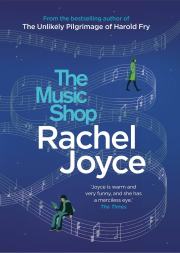 There are of course, a lot of titles published in the Spring and early Summer, marketed specifically for the holiday reading market. I’ve been perusing the titles and these are the ones that have stuck out for me. The Music Shop by Rachel Joyce, is a love story set in the 1980s about Frank, a record store owner, and Ilse, a German woman whom Frank meets when she happens to faint outside his shop. It’s had good reviews and Rachel Joyce’s earlier novel, The Unlikely Pilgrimage of Harold Fry, did very well.
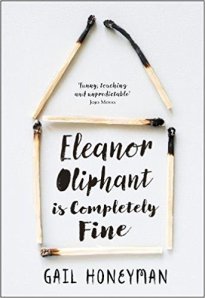 Eleanor Oliphant is Completely Fine by Gail Honeyman is on my summer reading list. Set in Glasgow, it’s about the emotional and psychological journey of a young woman from shy introvert with a dark past to living a more fulfilling and complete life through friendship and love. I’m looking forward to it.
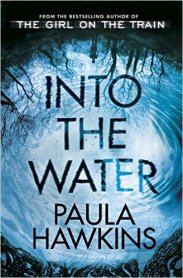 Paula Hawkins’s new novel Into the Water is everywhere, following the phenomenal success of The Girl on the Train which I’ve just finished listening to on audiobook. I had to find out what all the fuss was about! I enjoyed it, but I found most of the characters a bit irritating (that could be the influence of the actors reading, however) and, as I said, thrillers are not my favourite genre. Into the Water is another psychological thriller about a series of mysterious drownings. Like The Girl on the Train, I think, it’s as much about the internal dramas experienced by the characters as it is about ‘events’ so I’m sure it’s gripping.
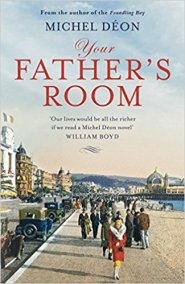 Finally, a little-known book that has caught my eye is Your Father’s Room by Michel Deon. Set in 1920s Paris and Monte Carlo (perfect if you’re off to France for your hols!) it is a fictionalised memoir based on the author’s own life. Looking back on his childhood in an unconventional bohemian family during the interwar period, the elderly narrator recounts how the events of his early life, including family tragedy, affected him growing up. I really need to read this; I’m writing a book myself partly based on my grandmother’s life in East London in the same period so I think I could learn a lot from how the author approaches this genre.
 I am an admirer of Gillian Anderson, not since her X-Files days, but since watching The Fall, the hugely popular television drama about a misogynistic and brutal serial killer in Northern Ireland, in which Anderson played the beautiful, enigmatic, but also rather damaged DSI Stella Gibson. The drama ran for three series between 2013-2016 and I was hooked. (It also starred Jamie Dornan, which helped). Jennifer Nadel, Anderson’s co-author, is a former journalist, writer and activist. Both women are open about their experiences of depression and poor self-esteem, despite their hugely successful careers and enviable lifestyles, and this book is their account of recovery and a ‘guidebook’ for other women who may be suffering from mental health issues.
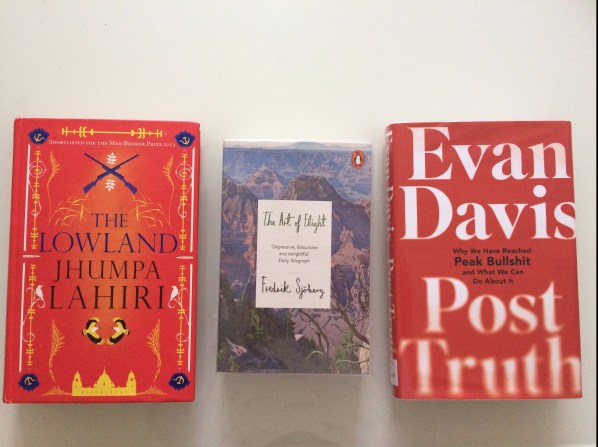
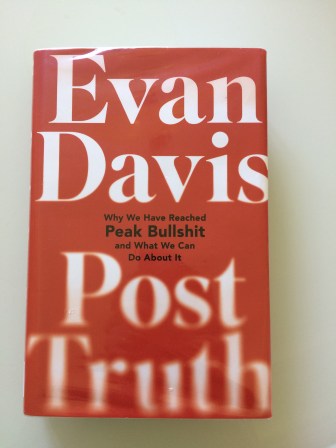 This is actually my July reading challenge book, which was to borrow something from the library. I read it in virtually one sitting on a train journey to London. For a weighty non-fiction book it’s very readable and the writing is resonant of Evan’s relaxed and articulate presenting style. There were parts where I could almost hear him reading it out. There are many references to the help and support he has had in the acknowledgements, so I’m sure he had plenty of research assistance (how could he not – with Newsnight, The Bottom Line and Dragon’s Den he is a very busy fellow!), but the authorial voice is definitely authentic, and I would bet it isn’t ghost-written, which just makes me love him all the more!
 I fell in love with Jane Austen in my teens, and I have never fallen out of love with her. The first book I read was Pride and Prejudice, and I remember I much preferred this colourful collection of sisters to Louisa May Alcott’s in Little Women! But it wasn’t until I read Emma for my English Literature A level that I really ‘got’ Jane Austen and I was blown away. Even now when I read Austen I still see her writing as impossibly brilliant. And then when you think about the life she led, her modest rural upbringing, her insight into human character is barely plausible. After Emma I quickly gobbled up all of Austen’s work (sadly, there is too little of it) and my favourite is probably Mansfield Park.
 Children these days have so many distractions which can take them away from reading; they seem to be so busy with out of school activities, have more homework than ever before and, of course, there are the digital distractions…don’t even get me started. But reading is such an important activity for them:
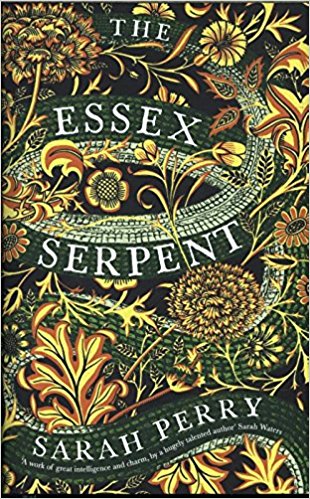 The book is set mostly in the fictional Essex village of Aldwinter in the 1890s and the action takes place over the course of a year. The central dynamic of the plot is the relationship between Cora Seaborne, a woman approximately in her late 30s, who at the start of the novel is newly widowed, and William (Will) Ransome, the local minister. Will is happily married to Stella and they have three children, while Cora is happily widowed! It seems hers was a fairly loveless marriage in which she felt constrained and imprisoned and her husband appears to have been somewhat older than her. The lack of intimacy in the marriage is indicated by the fact they had only one child, Francis, and that he is an unusual boy (for Cora “nothing shamed her as much as her son”), who is almost certainly autistic.
 Julia's books