#KeepKidsReading – the summer holidays are here!

It’s too long since I did one of my periodic #KeepKidsReading weeks, where I write about what is currently happening in the world of children’s literature and post reviews of kids’ books that have caught my eye.

The premise of these themed weeks is to try and encourage people to spread the word about children’s books and perhaps even consider reading some themselves! It’s always such a treat to open a book that has been written with children in mind – it’s as good a min-retreat! We bookbloggers love reading – of course we do! – but when you get caught up in your stats, your reading speed (that feature on the e-reader is surely a thief of joy!) and how your ‘number of books read’ on Goodreads compares to last year, you can easily forget that reading is, at its most basic, just pure pleasure.

Generation Alpha (ie people born between 2010-24), aka ‘kids today’, have more competing pressures on their time than ever and, I would argue, more things to worry about. Reading educates, creates bonds, promotes wellbeing and empowers – as adults, parents and grandparents it is imperative that we do not allow this simple but oh so valuable pastime to slip away from them.

So, this is my teeny tiny little personal campaign!

If you know any children and they have not yet signed up for this year’s UK summer reading challenge, then get them along to the local library or point them in the direction of the website (Gen Alpha is, of course, digitally native!). This annual initiative is run by The Reading Agency and delivered in partnership with public libraries (because even though they are all digital natives, they don’t all have the hardware at home). Each year, the challenge has a theme and this year it’s Ready, Set, Read, with a sporting theme.

Later in the week I will be posting a few reviews of book suggestions for children, so look out for those.

In the meantime, happy reading and spread the word!

#KeepKidsReading

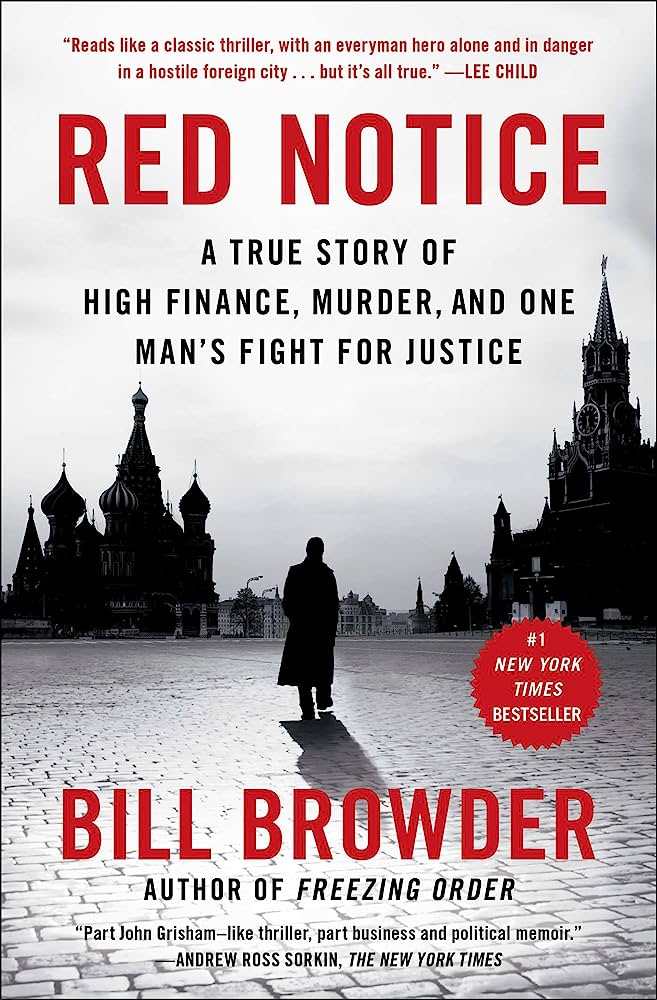
Audiobook review – “Red Notice” by Bill Browder

This was my book club’s June read. It wasn’t a title I suggested but I was happy to go along with it even though the blurb didn’t appeal that strongly. A true-life thriller about high finance and espionage did not seem like the kind of book I would normally read, but then isn’t that the joy of a book club, to make new discoveries? The book opens with the narrator (the author) giving a detailed account of his being detained at a Moscow airport without explanation, being held for endless hours without food or water. Attempts to contact friends, family, contacts in the British Embassy bear no fruit and finally his phone battery gives out. The intention of the Russian authorities seems to be to terrify their detainees, keeping them guessing about what might happen to them.

Finally, the author is allowed to leave and is put on a plane back to London, where he lives. This happened in the early 2000s, but there is a long history leading up to this event. Bill Browder then takes us on the long journey to explain how he came to be in this situation, beginning with his childhood in Chicago as the lowest-achieving child in a highly academic family. Young Bill clearly had something of the entrepreneur about him and despite his early difficulties in education (exclusion, boarding school, severe bullying) he eventually wins a place at Stamford business school. 

After completing his college education and a stint at a couple of consultancy firms he decides on an adventure, following somewhat in the footsteps of his eastern European grandparents. From an early age he shows clearly his entrepreneurial streak and a nose for an opportunity. He moves to Russia in the 1990s, as that country is emerging into the post-Soviet Union era. Browder begins to see the huge financial benefits that can be secured by being an early investor in the privatisation of national industries and he persuades a number of wealthy individuals to come on board with him. His Hermitage investment fund is extremely successful and he makes a lot of money, for himself and his investors. 

[Spoilers below]

Browder bases himself between Moscow and London, where he also starts a family, but it is clear that the pressures and demands of his lifestyle take their toll on his marriage. Eventually, he and his wife divorce – there is a lot of very personal material in this book too. Browder will eventually meet and marry a Russian woman with whom he has two daughters.

To support his finance business, Browder has to set up a strong team of lawyers and advisors, as well as colleagues with connections and insights into Russian society. In the time that Browder is operating in Russia, the country changes dramatically and a small number of people begin to make a lot of money – the rise of the oligarchs. Corruption was always part of the system, but now becomes endemic. As a foreigner (even worse, an American) profiting handsomely from Russia’s embrace of capitalism, Browder becomes a marked man. His life becomes endangered (hence the detainment at the airport) and he has good reason to believe that Putin himself is behind efforts to eliminate him. The ‘red notice’ of the title refers to the Interpol arrest warrant that the Russians tried to have exercised on him (which was eventually  withdrawn, much to the ire of the Russian authorities for whom this is a huge embarrassment). Browder realises that the Russians might attempt to get at him through his associates. He persuades most of them to flee the country, sometimes under cover, but one of his lawyers, Sergei Magnitsky, refuses. Browder tells us that he simply “loved his country too much”. Magnitsky is arrested, charged with trumped-up accusations of fraud, and imprisoned in a labour camp. His treatment there, including beatings, eventually leads to his death. 

This event shapes Browder’s life from then on and occupies the final third or so of the book. The author’s attempts to fight his friend’s case, and then to seek justice for him become the cause of his life. He devotes his time to raising awareness of human rights abuses in Russia and eventually succeeds in persuading the American Congress to pass ‘Magnitsky’s law’, with the help of key politicians such as the late John McCain, which permits sanctions against those guilty of human rights abuses, such as freezing of overseas assets and refusal of visas. Bill Browder continues to devote his life to persuading other countries to adopt similar legislation. 

This is a fascinating story and after my initial scepticism I have to say that I was completely hooked. In the context of Russia’s current behaviour it has extra resonance and gives an insight into the psyche of those in power in that country. I had heard of Magnitsky’s law, but had no idea of the background. Browder and his team were one of the first to use the then new platform YouTube to great effect as a publicity tool to raise awareness of their cause, when Sergei Magnitsky was still alive. The videos can still be seen on there and are powerful. Also, powerful, is the final chapter of the book, narrated on the audio version by the author himself. It is chilling when he tells us that if he is killed, we the readers will know who did it. 

A stunning and unique story, highly recommended.

Winner of the Women’s Prize for Fiction announced tonight

Well, I did not hot my target, but I had fun trying! When the shortlist for this year’s Women’s Prize was announced a few weeks ago, I set myself the goal of reading all six titles, much as I do with the Booker Prize in the autumn. The Women’s Prize is at least as big as the Booker now, so why not. (Dare I say it is also a bit more accessible?)

I’ve read three out of the six novels and have posted reviews on Fire Rush by Jacqueline Crooks, Black Butterflies by Priscilla Morris, and The Marriage Portrait by Maggie O’Farrell. I have almost finished my fourth, Trespasses by Louise Kennedy. I have not yet started Demon Copperhead by Barbara Kingsolver or Pod by Laline Paull, although I will definitely read both of them.

I have loved all the books I have either finished or am reading. Two are debut novels, and in only one instance (Maggie O’Farrell) have I read anything previously by the author. I have heard a great deal of praise for Kingsolver, but have not heard much about Pod, though it sounds a very unusual and innovative work.

The winner will be announced this evening at 7.10pm by Chair of Judges Louise Minchin, and it can be watched live on YouTube.

Of the four that I have read or am reading, all would be a worthy winner. They are fantastic novels. For me, the one that has stood out though is Fire Rush. It has such a raw energy and the author creates a world that draws you in and is completely compelling.

Only a few hours to go – let’s see if the judges agree with me!

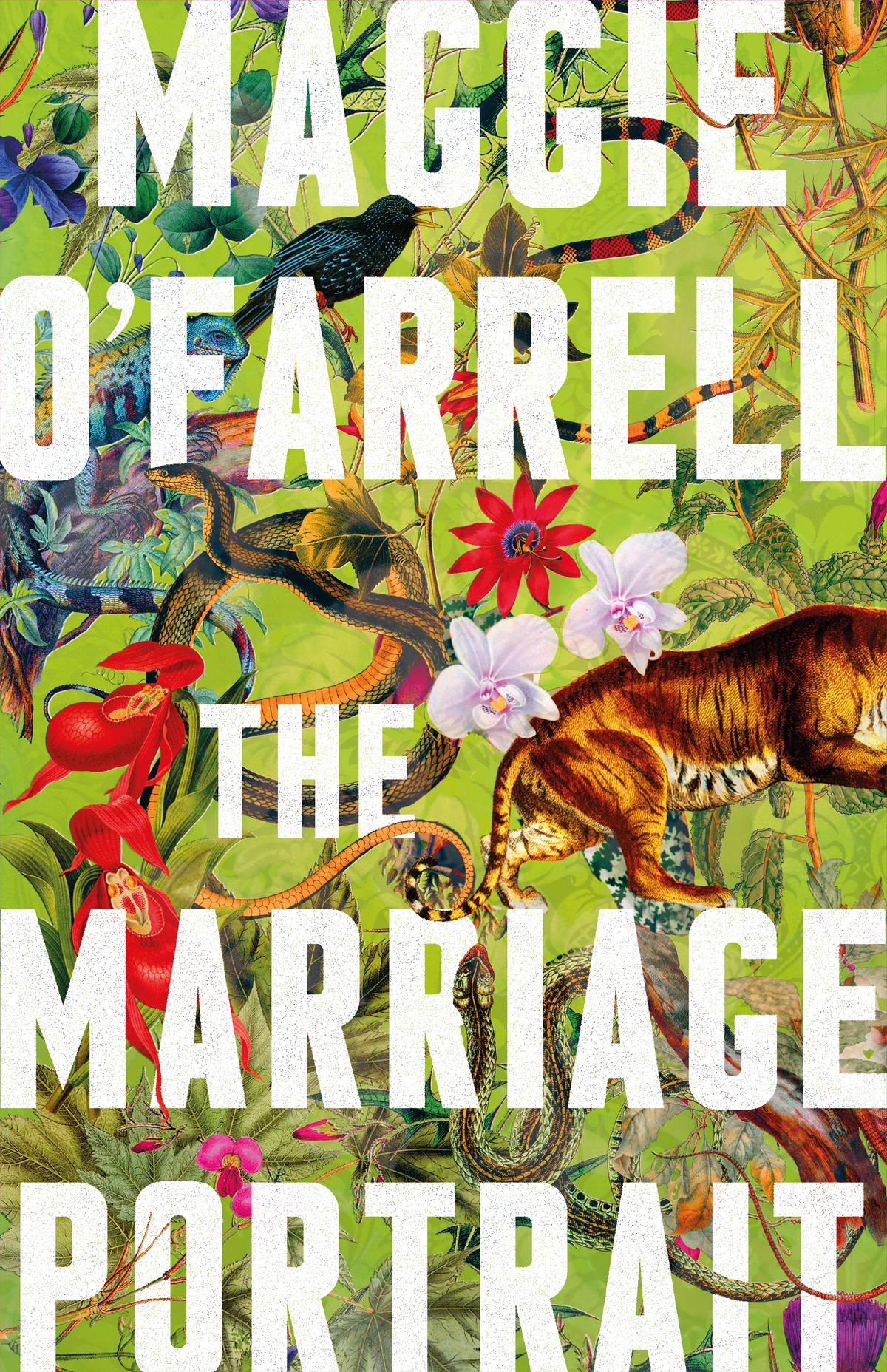
Women’s Prize shortlist review #3 – “The Marriage Portrait” by Maggie O’Farrell

Maggie O’Farrell won the Women’s Prize in 2020 with her eighth novel, Hamnet. It would be quite a coup if she won the prize again in 2023 with her ninth novel. Hamnet is without doubt one of my favourite novels of recent years. Beautifully written, moving, and an astonishing subject. In The Marriage Portrait O’Farrell takes a somewhat similar approach: taking a real historical figure, about which very little is known, and inventing their back story. This time, O’Farrell takes us to 16th century Italy. 

The main character in the novel is Lucrezia de Medici who lived a short life from 1545-1561. She was the daughter of the then Duke of Florence and his noble Spanish wife. She was their fifth child, and is portrayed in O’Farrell’s novel as somewhat unruly. Little was really expected of her, apart from a decent marriage, but as the third daughter, she would not have been considered for the highest ranking match. Her brothers, of course, were schooled in the arts of ruling. Lucrezia is portrayed as sensitive, and passionate about art and nature. She is taught to paint, since she shows some aptitude for it and it at least keeps her out of trouble. Painting is the one activity in which she finds true happiness.

Lucrezia’s elder sister Maria is matched with the nobleman Alfonso, the heir to the Duke of Ferrara, but when Maria dies suddenly, Lucrezia is forced to step in as a substitute. The children’s nurse, Sofia, sensing Lucrezia’s horror at the prospect, manages to persuade the Duke to hold back from marrying his daughter off, on the basis that she is still a child and not yet begun to menstruate. There is only so long that Sofia can protect her charge, however, and at the tender age of 15, Lucrezia is married to Alfonso, who, by then, is Duke of Ferrara. 

Lucrezia is terrified to leave her family. Initially, she is taken to her husband’s country residence, the delizia, where, as Duchess, she enjoys a little more freedom than she had in Florence. Her husband Alfonso, is constantly preoccupied with matters of state and a schism in his own family and largely abandons her. It is clear, however, that her expected role is to bear heirs and Lucrezia endures the consummation of their marriage with fear and horror. 

When the couple return to court to begin married life proper, Lucrezia becomes increasingly aware of a more sinister side to her husband. It is clear that her initial fear of him was not simply girlish trepidation, but a deeper sixth sense. Very soon she begins to fear for her safety. 

The novel opens at a banquet, where Lucrezia is being fed various delicacies by Alfonso. It is 1561, the year that she died and Lucrezia tells the reader that she believes her husband wishes her dead. Thereafter, the novel flits back and forth between Lucrezia’s early childhood, giving a sense of how her character and her place in the household evolved, and 1560-61 and the progress of her brief marriage. 

Having enjoyed Hamnet so much, I was really looking forward to this book and treated myself to a signed hardback copy. It moves at a much slower pace than Hamnet and I found it quite difficult to get into at first. There is more scene-setting and building of character than there is plot, but then we are talking about a very short span of time in the life of a person who did not have very much to do with their days! About halfway through, once Lucrezia is married, I think it improved – the sense of threat builds, the insular nature of courtly life becomes more apparent, and Lucrezia’s isolation all add to the feeling of danger for her. Even those she might reasonably think of as ‘friends’ – her husband Alfonso, his sisters, the servants – all in fact represent a potential threat. Her only confidante is her ladies maid Emilia, but she is also powerless and vulnerable. It is only when a group of artists arrives to set about making a commemorative portrait  of her (the marriage portrait) that Lucrezia realises the deep peril of her situation. As the novel darkens, it improves.

I would recommend this novel although for me it did not have the powerful impact of Hamnet, but then it must be very difficult to follow something that brilliant.
Women’s Prize shortlist review #2- “Black Butterflies” by Priscilla Morris

My second book review from the Women’s Prize shortlist. Fire Rush set the bar high, but Black Butterflies is a cracker too! It’s the debut novel by Priscilla Morris and has garnered a lot of attention, being shortlisted for a number of prizes. Morris draws on her part-Yugoslav heritage for the subject matter of this novel and her intimate knowledge of Sarajevo and her feeling for the people of that city shine through. 

Set in 1992, at the time of the outbreak of the Balkan wars and in particular the devastating siege of the city of Sarajevo, the war is seen through the eyes of Zora Kovovic, an artist of Serb origin who teaches at the university and lives with her Bosnian journalist husband. Their daughter lives in England with her English husband and child, and Zora’s mother lives alone in a flat nearby.

The novel opens with Zora visiting her mother’s flat only to find that a coarse and rather frightening Bosnian family has moved in following the passage of a law that entitles them to occupy empty properties. Zora’s mother has been staying with her over the winter, recovering from illness. The sense of impending doom is clear, everything is about to change. Zora and Franjo, Zora’s husband, who is somewhat older than her, decide that he should leave Sarajevo and take her mother with him, for the safety of England. Zora says she will follow later, she feels a duty to her students and wants to keep an eye on both her mother’s and their own apartments, fearing that they will be taken over otherwise. She does not feel in any danger. She believes that the life they have in cosmopolitan, artistic Sarajevo, which feels like the Paris of the Balkans, could not possibly be under threat. 

Franjo and Zora’s mother leave and the situation in the city rapidly deteriorates as war between the ethnic groups in the former Yugoslavia escalates. Very quickly, bombs begin to drop, snipers in the hills surrounding the city,target its inhabitants and many are killed simply going about their daily business. Bodies begin to appear in the streets. The siege intensifies, there are power outages, food becomes scarce and eventually essential services are cut off – water, sewage, power and telephone lines. It very quickly becomes impossible for Zora to escape. 

Spoiler alert:

The novel follows the siege for a year, recounting in vivid detail the suffering of the people who chose to remain in the city. What is hardest for Zora is the loneliness. Without Franjo and her mother and no possibility of contacting them or her daughter, Zora is completely isolated. Her mental state is reflected in her art. When she is prevented from working at the university, she withdraws to her studio to paint obsessively, but when the building where her studio is housed burns down and she loses almost all her work, it is like she has been robbed of her very soul. This theme pervades the novel and is not only a powerful metaphor for Zora’s individual suffering, but also a measure of the cultured and refined nature of the community, contrasting with the crudeness and brutality of the soldiers who become the masters of the frightened city-dwellers. 

Zora’s apartment is in a small block and she and the other residents who elected to remain develop a powerful bond. They often share what little food they have, and find comfort in one another’s company. It feels like the only thing keeping them sane. Zora eventually escapes Sarajevo, with the help of her son-in-law, who manages to secure a press pass and counterfeit papers to get her out, but though she wants to be reunited with her family, she finds it difficult to leave her fellow Sarajevans and part of her wants to stay. The siege has changed her, changed all of them and they will never be the same again after the experiences they have shared. There is the sense that her loved ones will never truly be able to understand her ever again. 

This is a really powerful novel, which I loved, but which is absolutely heartbreaking at the same time. As a senseless war on the eastern side of the European continent rages once more, this reminder of the horrors of the Balkan war and the break up of the former Yugoslavia (indeed, tensions in that area seem to be re-emerging), we get a glimpse of what life is like for the innocent bystanders in times of war. Again, I listened to this on audio and it is skilfully narrated by Rachel Atkins.

Women’s Prize shortlist review #1- “Fire Rush” by Jacqueline Crooks

It’s been a busy few weeks with half term, travel away from home and the day job, so I have not been doing as much reading as I would have liked. This is especially disappointing given that I’d set myself the goal of reading the shortlist for this year’s Women’s Prize! I have been doing a fair bit of driving and running though so at least I’ve been getting through some of them on audio. There is nothing quite like the feel of a book in your hands, but, increasingly, I am finding audio is the way I access most of my reading. Are you finding this too?

Fire Rush by Jacqueline Crooks was the first of the shortlisted books that I picked up and I am so glad I chose the audio version. At its heart is a love for music, specifically dub reggae, and the interconnectedness of the music, the Caribbean culture, the London scene of the 1970s where the book is set, and the idea of music as salvation. Short excerpts of dub reggae are built into the audiobook at key moments and it gives an extra dimension to the text, characters and setting, as well as the pace and tension of the book. This is also not a musical genre I am particularly familiar with, so I definitely would not have ‘heard’ it if I had read the book in hard copy.

The book opens in 1978 in the south London suburb of Norwood, where twenty-something Yamaye lives with her indifferent and sometimes cruel father. Her life seems to be going nowhere and the bleakness of the moment – it was a period of economic stagnation, cultural wilderness and all against a racist backdrop – is tangible. Yamaye lives for music, dub reggae, and spends her weekends at an underground club in the crypt of a church with her friends, sassy Asase and white Irish girl Rumer. There is an ever-present sense of threat from the authorities and most of the characters have had a brush with the law at some point. There is also an ever-present threat of violence, from darker forces operating in this underground world. 

At The Crypt, Yamaye meets Moose, a craftsman who works with wood, particularly the teaks and mahoganies from the Caribbean where he is from and where his grandmother still lives. Moose and Yamaye embark on a love affair. He dreams of going back to Jamaica with her and living a free and peaceful life in the country. Yamaye has dreams too, of becoming a DJ, mixing tracks at reggae nights. 

Spoiler alert:

All their dreams are shattered, however, by two devastating events: Moose is killed in police custody and Asase is found guilty of murdering Yamaye’s friend and the owner of the record shop she frequents. Events turn quite dark and fearing that her life is in some danger, Yamaye escapes to Bristol where she spends time in a ‘safe house’ which proves to be anything but. She must make a second escape and flees this time to Jamaica, determined to track down Moose’s grandmother, to find out more about her roots, and specifically to try and connect with her late mother who died mysteriously in Ghana when Yamaye was a child. In Jamaica she finds a new lease of life, but also encounters new dangers that will lead her to a final reckoning with forces that want to harm her. 

This is a really powerful book which tells a fascinating story. Over a period of five years or so we watch Yamaye grow from being a timid and cowed young woman, oppressed in her own home, to one who finds her inner power through music, love and embracing her true cultural inheritance. 

I loved this book. It was both gripping and engaging from start to finish. The audiobook is brilliantly read by Leonie Elliott (the actress who plays Lucille in Call the Midwife) who manages the range of voices and accents with aplomb. This is an example of audio really adding to the experience of the book and I recommend it highly. 

At the Hay Festival 2023

I had a busy half term week, spending time with my children and some friends, and a glorious couple of days at the Hay Festival, so no time for blogging. I didn’t make it to Hay last year; with both my daughters doing important exams, I just felt I couldn’t be away from home at such a crucial time. So it was especially sweet to go back this year. I went for two days, staying overnight in a tent – I am NOT a camper! – at the official Hay campsite, which I felt was preferable to a B&B miles away. It was an experience. Perhaps the coldest night of my life. Hay on Wye is in quite an exposed position, with a cool breeze, even though the sun shined the whole time. Night time temperatures dropped to around 5 degrees, so it was not comfy, even beneath the many layers I had packed. The good value and the proximity to the festival site made it worthwhile though. I’m not sure what it would have been like if it had been raining.

I saw some really interesting presentations, very little on the fiction front this year, strangely. To be honest, I don’t think I picked the best days with regard to the programme of events. My fantasy is to spend the whole week there, to dip in and out, participate in some of the off-site events, perhaps do some of the walks in the area, but that will have to wait until I am free of the tyranny of the the school calendar! It’s also not cheap: drinks and meals on the site are expensive, so if you could self-cater somehow and take packed lunches it would be much more manageable.

Below are some of my photos from the event. If you’ve never been I highly recommend it. If travelling to Hay is not possible, you can watch many of the events on the Hay Player, which is very reasonable at £15 a year and gives you access to a huge back catalogue of events too.

George Monbiot (journalist and climate activist) and Minette Batters (head of the NFU) discussing farming and the environment – a very heated debate!

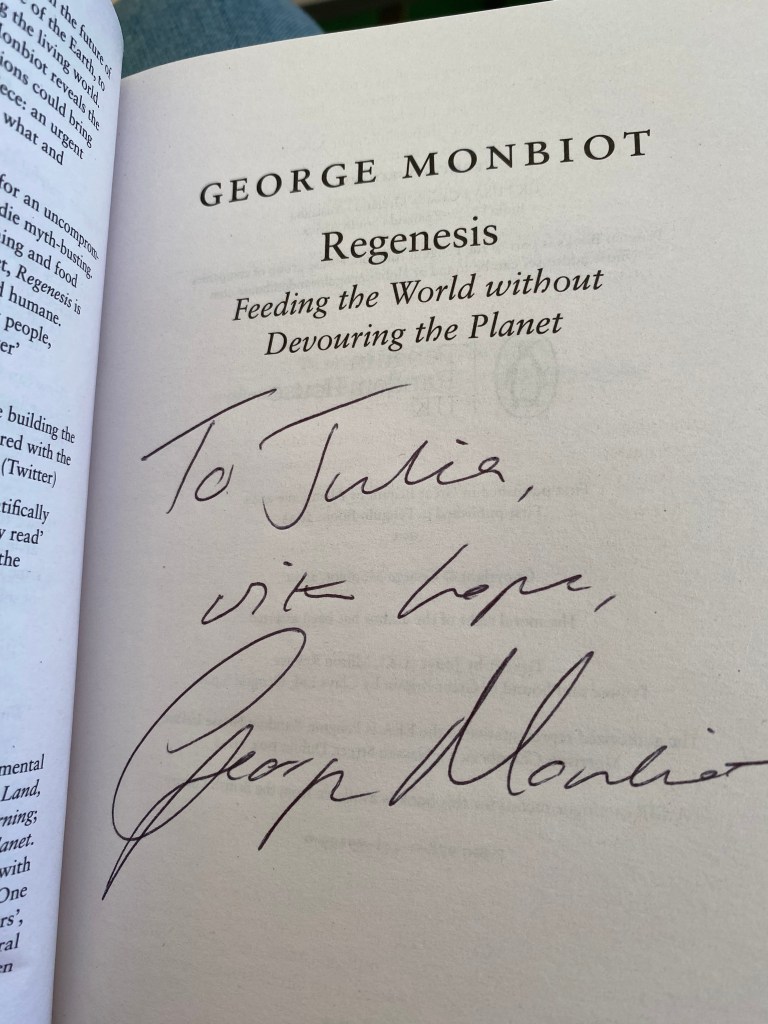
On the few occasions when I have met famous people I have not been very good at it! They say you should never meet your heroes. This time I managed to mumble a few words of conversation in the brief encounter to get my book signed.

BBC colleagues Jeremy Bowen and Frank Gardner discuss their experiences in the Middle East
The Hay Festival at night when all the day’s crowds have gone

BBC correspondent Lyse Doucet gives the Christopher Hitchens memorial lecture, covering the future of journalism and the concept to truth in reference to AI. A panel of historians discusses how we represent history, particularly in reference to Britain’s stately homes, with the CEO of the National Trust.

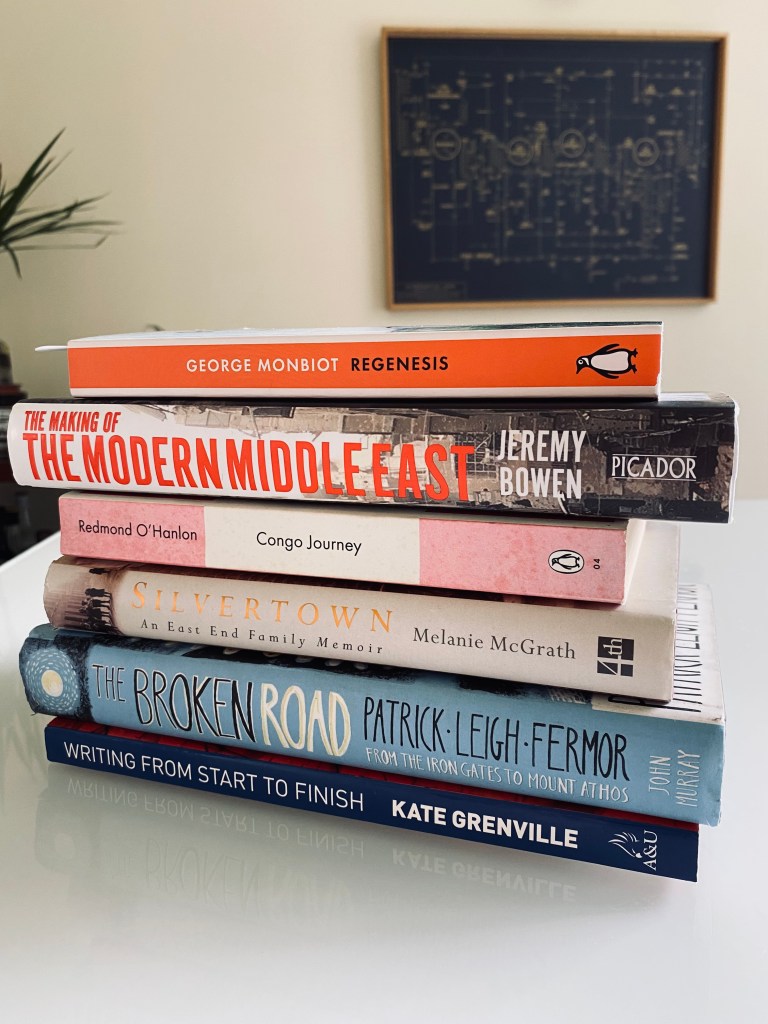
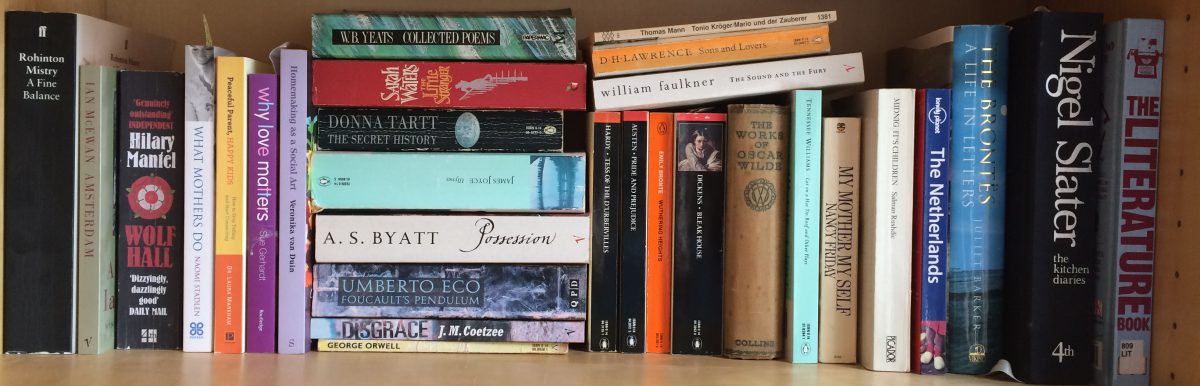
And of course, the obligatory book haul – another of the expenses at Hay! I believe I was quite restrained…

As usual, Hay 2023 was inspiring, fascinating, at times controversial and always stimulating.

Audiobook review – “Cleopatra and Frankenstein” by Coco Mellors

I’ve had my eye on this book for a while. It has been highly praised in the United States, winning lots of plaudits for its debut novelist Coco Mellors, and in the UK it was a Sunday Times bestseller. The blurb was tantalising; set in New York city it tells the story of a whirlwind romance and its consequences, and comparisons with Sally Rooney have been drawn. My book club liked the sound of it too. We mostly do audiobooks these days as we are busy ladies of a certain age with families and work, etc, and I downloaded it excitedly.

It is essentially a novel of character studies. Cleo is a twenty-something artist struggling to make ends meet in New York where she has a low-calibre job while making her art in her spare time. Cleo is troubled and drifting. She is British but feels no connection with her home country where she has no friends and very little family. Her mother died by suicide when she was in her final year at university. Her parents separated when she was young and her father remarried a ghastly woman and has a new family.

Cleo’s US visa is about to expire and she has no idea what she is going to do next when she meets Frank at a party. Frank is twenty years her senior and owns a successful advertising agency. The opening chapters focus heavily on their initial meeting and the intense chemistry between them, and the inevitability of their getting together. The opening is clever and satisfying to read while also telling us a lot about these two people. It sets the scene really well. Despite the age difference Cleo and Frank seem well-suited. It is tempting to say that Cleo is looking for a ‘father-figure’, but I don’t think that would be correct; she is looking for stability though. Her life experience also makes her older than her years. Frank also had a troubled upbringing, his mother was an alcoholic, and he says he has never met anyone like Cleo before. He is perhaps a little younger than his years. Needless to say, their relationship blossoms. The impending expiry of Cleo’s work visa creates a literary turning point in the plot of the novel. Frank asks Cleo to marry him in a kind of ‘what have they got to lose’ way and they have a quickie ceremony at City Hall, witnessed by an emotional hot dog seller.

So far so good, but for me, the book goes somewhat downhill from here. It is clear that the rest of the novel is going to be about their marriage – will they repent of having married in haste? 

Spoiler alert!

The next few chapters focus a lot on Cleo and Frank’s circle, rather than the couple themselves, and I felt I rather lost the two main characters here. Coco Mellors goes into detailed character portraits of their friends Santiago, Anders and Vincent, and Frank’s younger half-sister Zoe, and we meet Cleo’s father and his wife Miriam, who were cringingly two-dimensional for me. There were times when I wanted to give up on this book because I was so deeply irritated with the secondary characters. I found them lazy stereotypes and I could not fathom why we needed to know so much about them. My only conclusion is that they were there to tell us a bit about “life in New York city”, which I found a bit patronising. It all seemed like something out of Wall Street! Or they were there for padding, to take the focus off Cleo and Frank for a few months, the period during which they were relatively content with one another, until the author could legitimately turn to problems arising in their marriage after the first flush or romance. 

About half way through a further character is introduced. Eleanor is a forty year-old copywriter who goes to work in Frank’s agency. It is clear she is much more ‘ordinary’ than the ‘extraordinary’ Cleo (looks-wise) but there is something about her that attracts Frank’s attention. They share an easy companionability that contrasts with the more intense relationship he has with Cleo. Not unexpectedly, Frank and Cleo’s marriage begins spectacularly to disintegrate, as do the other characters in the book, in a kind of parallel decline. To be fair, the book gets better again from here, although I found the ending disappointingly predictable.

I’m really not sure about this book. It is well-written and I liked the characters of Cleo and Frank, and Eleanor. I disliked most of the others though and found the novel a bit unbalanced in that respect. It’s not a bad read, though it could be quite triggering for some, covering themes of suicide, addiction, and childhood trauma. 


My main complaint is that it seems to favour sensationalism over authenticity and other books I have read recently cover similar themes better (for example, any of Sally Rooney’s books and Sorrow and Bliss by Meg Mason). I came across an LA Times review which said that Cleopatra and Frankenstein read as though it had been written to be adapted for a Netflix series, and I think I probably agree.

Reading challenge book review – “All Quiet on the Western Front” by Erich Maria Remarque

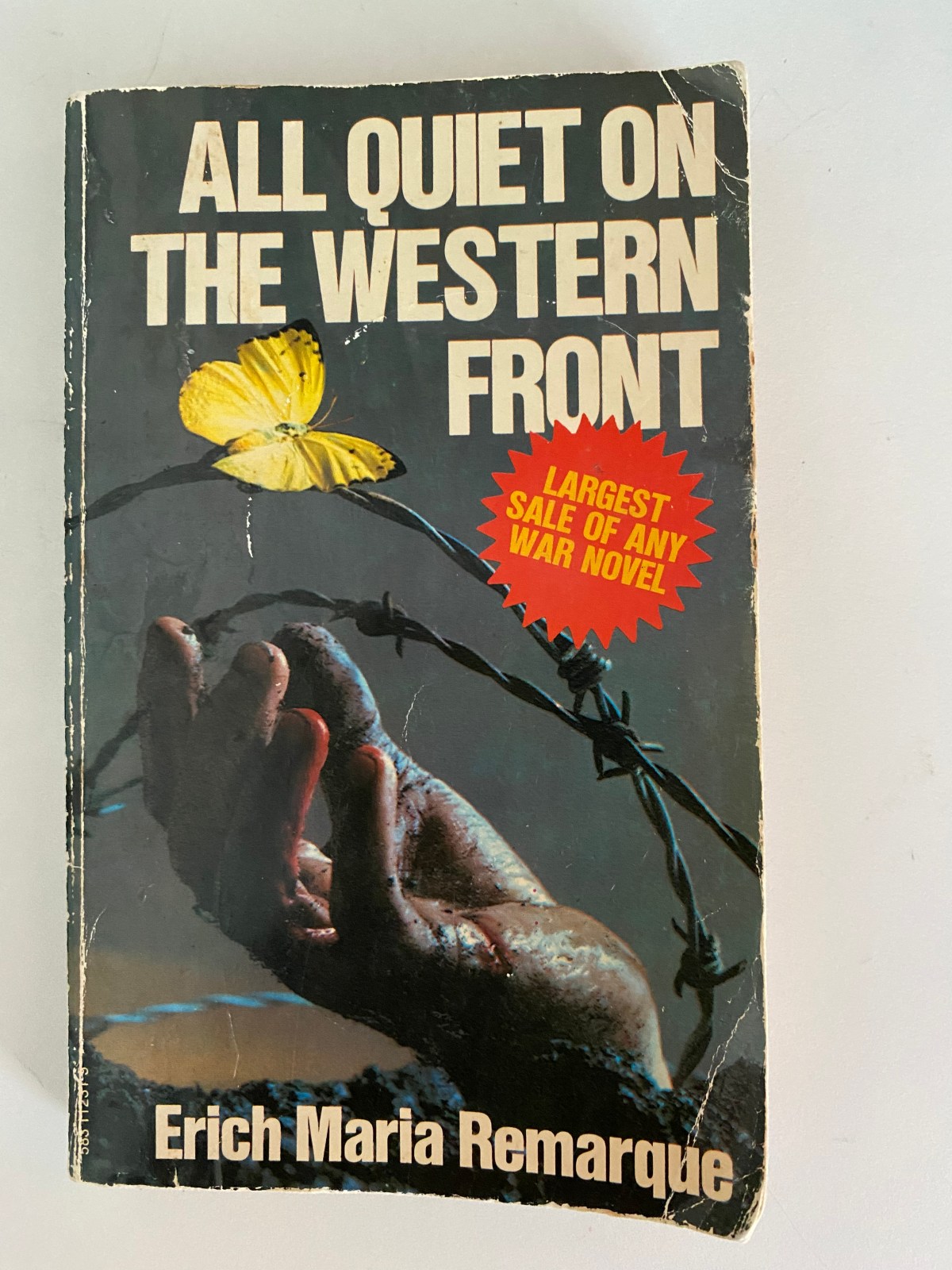
The April book in my ‘Trying not to be too challenging’ Reading Challenge for this year was All Quiet on the Western Front, the best-known novel by Erich Maria Remarque which draws on his experience as a German soldier in the First World War. First published in 1929, only ten years after the end of that war, it has become one of the most iconic novels about war, all the more poignant because it is written from the perspective of an ‘enemy’ fighter. The book was banned in Germany, where the National Socialists were capitalising on the villification of their country in defeat and felt the book made Germany appear weak. 

My copy is a well-thumbed 1977 reprint that came from my husband’s collection when we got together. I did try reading once before years ago, but as a mother of young children at the time it was just too much for me to bear. I suppose the horrors of yet another senseless and destructive war in Europe appearing in the daily news bulletins, plus the release of a film adaptation that did very well at the Oscars recently, meant the book caught my eye as I was browsing the TBR shelves this time. 

The central character and narrator of All Quiet on the Western Front is Paul Baumer, a young soldier at the Front, serving with other young men who, only weeks earlier, were his friends at the school they attended in a quiet German town. They were persuaded to sign up by their fervently patriotic schoolmaster Kantorek, who told them of glory to be had in serving their nation; their illusions are quickly shattered once they are posted to the Front. Parts of this book are very difficult to read. The vivid accounts of hideous deaths, of gruesome injuries, and of the trauma of enduring such terror, fear and physical pain are stomach-churning, but one is compelled to read almost from a sense of guilt that young men had to, often still have to, endure the horror while the rest of us sit at home in comfort or mourning. One cannot help but think of Ukrainian and Russian soldiers at this point.

Besides the accounts of trench warfare, what is equally shocking is how little progress either side seems to make in exchange for their losses. You have to ask how any of it could be called a victory. The pace of the book is also extraordinary: the periods of fierce and brutal conflict are short episodes of violent action amidst a wider tedium. Most of the soldiers’ time (those that survive the battles) seems to be spent doing very little, just trying to survive. Or in Paul’s case, thinking. The rations are poor and the food is often rank, the conditions are appalling – the descriptions of the ongoing battle to keep rats at bay at night is particularly awful – and no detail is spared in describing toilet habits, for example. 

When Paul returns home for a period of leave, the contrast between his life on the Front and that of civillians is stark. Distressingly, Paul feels that he can no longer relate to his family, that he must spare them the reality of war, but that in doing so he is a co-conspirator in concealing the truth. He cannot wait to get back to the Front, to be with those who can understand him, who share his experience. 

Paul survives almost the whole war, dying only weeks before its end, on a relatively calm day when the single line report from the military authorities read simply “In westen nichts neues” (translated as “All quiet on the Western Front”) from which the book takes its title. In reality, Paul could never have returned to his old life and his family, not after what he had seen and experienced. 

We are not youth any longer. We don’t want to take the world by storm. We are fleeing. We fly from ourselves. From our lives. We were eighteen and had begun to love life and the world; and we had to shoot it to pieces. The first bomb, the first explosion, burst in our hearts. We are cut off from activity, from striving, from progress. We believe in such things no longer, we believe in the war.

Paul, in All Quiet on the Western Front, Chapter 5

There have been two translations of the book into English; my edition will be the original by Arthur Wesley Wheen. The second was by Brian Murdoch in 1993. It is interesting that my edition does not include any credit to the translator. Nowadays, translation is considered almost an art in itself, bringing the out the intention and talent of the author to those unable to read books in their original language. 

I recommend this book highly. It is practically essential reading, though it is not an easy one. 


The next book for this challenge from my TBR shelf is The Bloody Chamber by the late great feminist author Angela Carter. I think I got this as part of a set of three books by her (along with Nights at the Circus and Black Venus) back in the day when I used to subscribe to a postal book club (remember those?) It’s another of those books I’ve been ‘meaning to read’ for years – at last an excuse!

Women’s Prize for Fiction shortlist

The shortlist for the 2023 Women’s Prize for Fiction was announced following much anticipation last week. The winner will be announced on 14 June, but it is one of those literary prizes where you suspect all of the finalists feel like winners due to the sense of warmth and inclusivity around it. This prize has really taken off in recent years thanks to some brilliant marketing activity. The team made fantastic hay out of the Covid lockdowns, running Zoom chats with shortlisted authors (and many hundreds of fans) where you really felt like you were part of the contest. All facilitated by the inimitable Kate Mosse, of course, the dynamic founder of the Prize. Unlike the Booker prize the Women’s Prize also has a sense of humility about it; it doesn’t confine itself to purely literary novels. This is a contest that celebrates the joy of reading in its widest sense, with podcasts, blogs and email newsletters that really keep you engaged.

This year’s shortlist of six books includes three debut novels and three from established authors.

Fire Rush by Jacqueline Crooks

This book has been getting a lot of attention. It is the author’s debut novel, though her short stories and non-fiction work have garnered praise. Set in 1970s London it tells the story of Yamaye, a young black woman and her relationship with the music she identifies with as part of her cultural inheritance, dub reggae. She meets and falls in love with Moose, but when their love affair ends, it triggers a search for identity and a personal transformation.

Trespasses by Louise Kennedy

Another author better known for her short stories, Irish writer Louise Kennedy’s novel is set in Belfast during the period known as ‘the Troubles’, a poignant moment to remember those terrible days as we mark the 25th anniversary of the Good Friday Agreement. It tells the story of primary school teacher Cushla navigating love and politics in the most challenging of circumstances. For most of us it is hard to imagine what it must be like to try and live an ordinary life surrounded by violence and threat but if the reviews are anything to go by, Louise Kennedy has pulled it off here.

Demon Copperhead by Barbara Kingsolver

Kingsolver’s 1998 best-selling novel The Poisonwood Bible remains one of the best books I have ever read – it had such a powerful impact on me. This literary giant needs no introduction and has both won and been shortlisted for the Women’s Prize before. Demon Copperhead is said to be her modern take on Dickens’s David Copperfield where a young man, born into poverty in Virginia tries to make his way in the world in a modern America beset by social problems and prejudice.

Black Butterflies by Priscilla Morris

Another debit novel, this one also set in against the backdrop of conflict, this time Sarajevo in 1992. As we watch the terrible events in Ukraine unfold day after day it is easy to forget that only thirty years another devastating war took place on the European continent and destroyed a country. This novel tells the story of Zora, an artist and teacher who must decide whether to flee their home or try to stay and defend their city against siege.

The Marriage Portrait by Maggie O’Farrell

Another author who needs no introduction, having won this prize a mere three years ago with her incredible novel Hamnet. This is her follow-up and is another work of historical fiction, this time set in Renaissance Italy. Sixteen year old Lucrezia has been married off to a powerful Duke, Alfonso, whom she believes plans to kill her. Powerless and alone she must try and save her own life. Based on a real person, it looks like Maggie O’Farrell has produced yet another literary gem.

Pod by Laline Paull

This looks to be the most unconventional book on the shortlist, where the central character is a dolphin. Afflicted by a form of deafness which isolates her within her family group, Ea survives a tragedy that kills other members of her family. Young and alone, she must navigate the treacherous oceans and multiple dangers. Exploring themes of family and belonging Pod also remninds us of the fragility of our natural environment and the impact humanity has had on other species.

Quite a shortlist! I would love to think that I might be able to get through them all before the winner is announced – six weeks and counting! I hardly know where to start.