I chose this novel for my Facebook Reading Challenge in April, the theme of which was a children’s book. I was delighted to have this as a theme; regular readers of this blog will know that I am a huge fan of children’s literature and regularly post reviews of books for young readers. It has unfortunately been some time since I read a children’s book, however, so I was keen to get started on this one. Splinters of Scarlet is Emily Bain Murphy’s second novel. Her first, The Disappearances, was a huge success, both critically and commercially, and so her follow-up was hugely anticipated. I read The Disappearances as part of this very reading challenge in January 2018 and absolutely loved it. My elder daughter who I insisted read the book, rates it as one of her favourite novels of all time and has re-read it several times. Every music fan will be familiar with the concept of the ‘difficult second album’, and the same may be said of books, except that books are produced and marketed somewhat differently, and first-time authors rarely achieve huge first-time success in the same way that certain pop performers do. I fear, however, that Emily Bain Murphy has not quite pulled off the ‘difficult second novel’. Don’t get me wrong, it is good, but my expectations were perhaps a bit too high.

The novel is set in Copenhagen in 1866-67, initially in an orphanage and then in the home of a wealthy mining widow Helene Verstergaard. The central character is Marit Olsen, an orphan seamstress. Her closest friend is Eve, a younger fellow orphan with a precocious talent for ballet, who is about to be adopted by the famed former ballerina Mrs Vertergaard. Marit adores Eve, loves her friend like a sister, even as a mother might, and has mixed feelings about the likely adoption. She is happy that her friend is happy, but it will be a poignant outcome for her since her father was killed in a Vestergaard mine and she remains bitter at the callous way she and her sister were treated; Helene Vestergaard’s late husband was the owner of the family mining dynasty and Marit blames him for her father’s death. When her father died, Marit’s older sister suddenly became responsible for the two of them, and Marit believes this burden, in turn, killed her.
What we also learn in the opening chapters is that certain people in the country have magical powers. Marit does for example and uses these in her job as a seamstress, and especially in the costumes she makes for Eve. Marit’s sister did too and ‘over-used’ her magic in trying to provide for the family. The over-use of magic is dangerous for its owner as it can lead to that person’s death if they are overtaken by ‘the firn’.
Eve is adopted and Helene Vestergaard decides that in addition to a daughter she would like a talented seamstress and so decides to take Marit from the orphanage too. Despite her mixed feelings Marit agrees so that she can be with Eve. Her lifestyle will be very different to her friend’s, however, for she will be a servant and live among the staff.
Marit becomes close to a number of the servants, most of whom it seems possess magical powers – Marit realises this is no accident; Helene has chosen her household carefully. A foreboding presence in the Vestergaard household is Helene’s brother-in-law Philip. Marit quickly begins to suspect something sinister is going on in the Vestergaard mines and that Philip is linked to it. She also begins to suspect a link with her father’s death and her quest for the truth drives risk-taking investigations.
Marit shares her suspicions with the servants she has become close to and they agree to help her. Thus they set about various surveillance operations to try and find out what is going on in the mines and what exactly Philip Vestergaard has to do with it. The remainder of the book concerns Marit’s activities, for which she uses her magical powers extensively, as well as her increasing concerns about ‘the firn’ and whether she will fall victim to it. Philip Vestergaard senses Marit’s interest and begins to see that she and some of the others are a threat. He sets about silencing them, even killing one of the servants. The scene is set for the denouement – a showdown between the two opposing forces in the novel – truth and lies.
This novel has quite a complex plot and wide cast of characters, some of whom I found it hard to distinguish. The Disappearances also has a complex plot and a wide cast of characters and yet the author, in my view, handles it more deftly in that book and with greater imagination and coherence. For me, this novel is sometimes confused, and there are some non-credible twists which seem to be made to serve the plot. It is perhaps unfair to compare this novel to the earlier book, which was so good. If Splinters of Scarlet had been the first novel I would possibly be looking upon it more favourably. As it is, I’m afraid I didn’t enjoy it anywhere near as much. I suspect this book would suit a younger reader, perhaps 11-13 year olds, whereas The Disappearances is more suitable for 12-14 year olds. However, I think it is less good than other books in this age group.
Competent and her fans will love it, but for me it was not as engaging or brilliant as this author’s first novel.


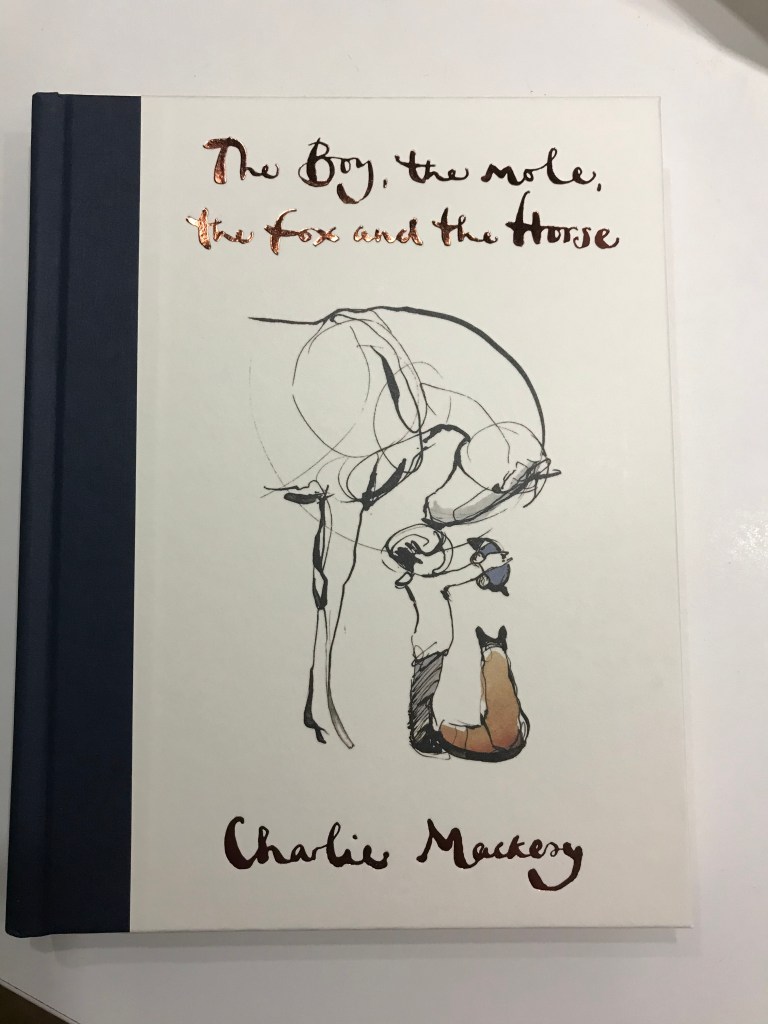




 The Boy, the Mole, the Fox and the Horse by Charlie Mackesy £16.99
 Harry Potter and the Goblet of Fire (Illustrated edition) by JK Rowling and Jim Kay £32.00

 Diary of a Dyslexic School Kid by Alais Winton and Zac Millard £9.99


 The Book of Dust Volume Two: The Secret Commonwealth by Philip Pulman £20.00
 No Ballet Shoes in Syria by Catherine Bruton £6.99
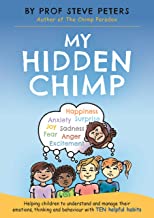 My Hidden Chimp by Steve Peters £12.99
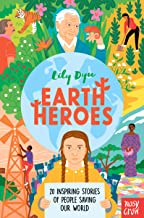 Earth Heroes: Twenty Inspiring Stories of People Saving Our World by Lily Dyu £9.99
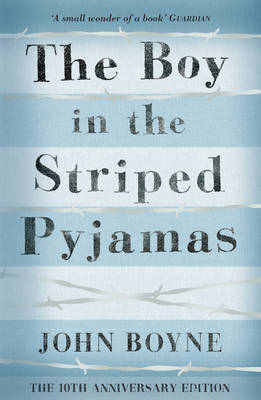 I remember when this book was published in 2006. It was widely acclaimed, but also controversial; there were some questions marks over its historical accuracy (one senior rabbi argued that nine year-old boys were not kept in concentration camps, all were gassed because they could not work and were therefore of no use, though this argument also been disputed) and others have questioned whether such a relationship, between a young inmate and the son of the camp commandant, could have gone on for so long undetected, particularly when Bruno slips under the fence. Whatever its problems, the book has sold millions of copies worldwide and was made into a successful film within two years of publication.
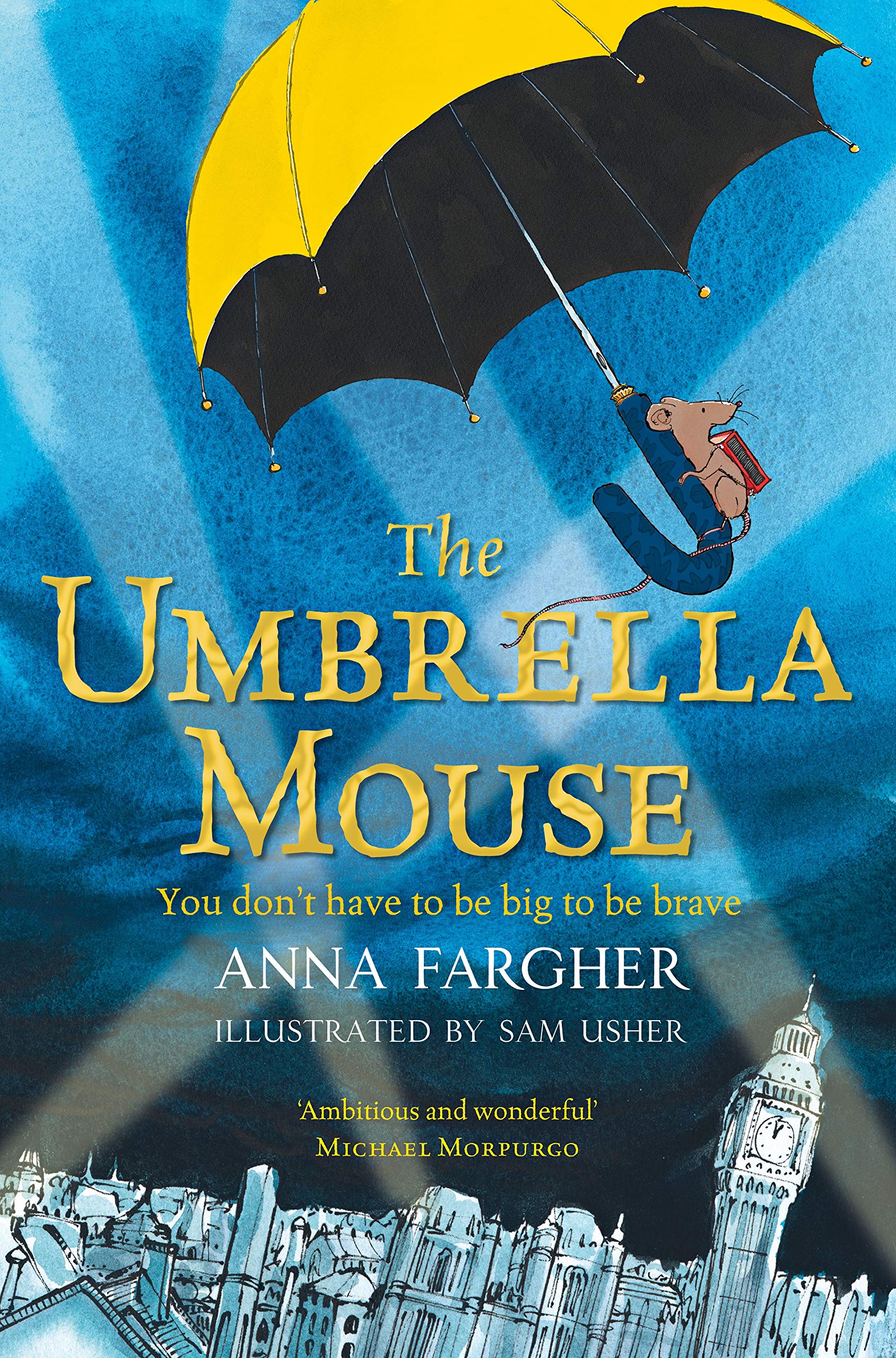 I’ve just finished a lovely little book The Umbrella Mouse by Anna Fargher. When I was browsing in my local bookshop a few months ago, one of the assistants recommended it to me and said it had had her in tears. I knew then it was a ‘must-read’! I got my copy secondhand online and it’s signed!
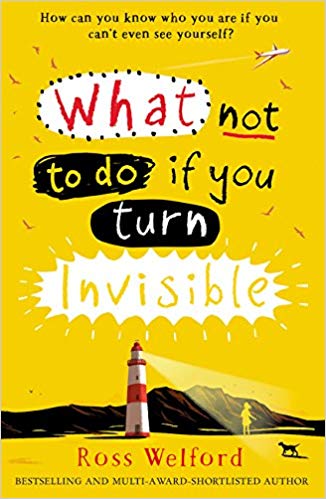 The main character in the book is a girl this time – 12 year-old Ethel Leatherhead; yes, it is an unusually old-fashioned name, but that is significant. Ethel lives with her ‘Gram’, a very conservative, very proper lady who has strong views about things that are ‘common’ or undesirable. We learn that Ethel’s mother died when she was young, and that she is not aware of her father. Ethel also has a great-grandmother, who turns 100 in the course of the novel. Great-gram lives in a nursing home and speaks very little until one day, after Ethel visits her, she grabs her by the arm and says to Ethel, rather mysteriously, “Tiger. Pussycat.”
 This sounds slightly like an up-to-date Stig of the Dump to me. Central character Landfill lives the life of a wild creature. He has contact only with animals and one other human, Babagoo, who says he has brought him up from a seed. Babagoo wants to protect Landfill from ‘Outside’ and from the unpredictable other humans about whom he paints a fearful picture. Landfill goes along with this until one day he spies a she-wolf giving birth to her cubs. He realises that animals do not come from seeds and wonders what else Babagoo may have lied to him about.
 Kid Normal and the Shadow Machine by Greg James and Chris Smith
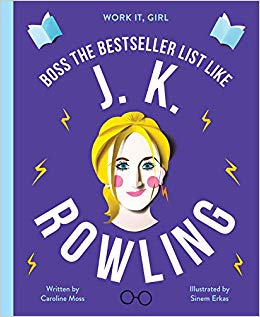 Work It Girl: Boss the bestseller list like J K Rowling by Caroline Moss and Sinem Erkas
 Joe Quinn’s Poltergeist by David Almond, illustrated by Dave McKean
 The Quiet at the End of the World by Lauren James
 How Not to Lose It: Mental Health Sorted by Anna Williamson and Sophie Beer
 Julia's books