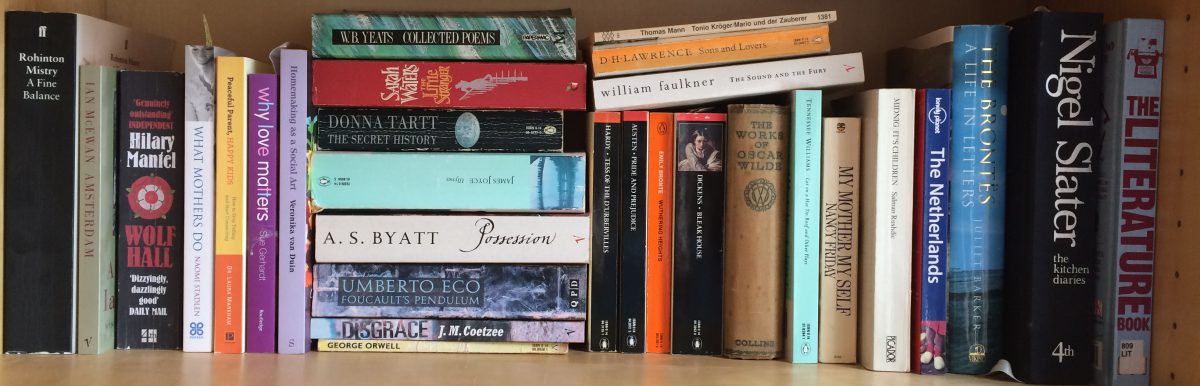
Most of my reviews recently seem to have been of quite high-brow books. I wouldn’t want to give the impression that I’m any kind of snob when it comes to reading it’s just that it has all been quite literary of late. I’m currently reading Claudia Winkelman’s Quite in the crevices of my life (when the complex plotting of Tinker, Tailor, Soldier, Spy starts to make my head hurt!), my book club’s choice and which one of my friends described as ‘hubba bubba’! If you are old enough to remember what that is, well, it is describes the book perfectly! Look out for my review of that soon.

A novel I read recently, which was at the more popular end of the spectrum (no judgement intended), was Queenie, the debut novel by Candice Carty-Williams. It was shortlisted for a number of prizes, including the Waterstones Book of the Year and the Costa First Novel Award, was longlisted for the Women’s Prize last year and won in two categories of the British Book Awards in 2020 – Book of the Year and Debut Book of the Year. So, it was quite a sensation, and its thirty-two year old author seemed to be everywhere!
Rightly so, because it is a super book, very readable. In my head I thought it was a YA novel, the cover and the marketing scream YA, but it’s really quite adult; I’m not sure I’d be giving it to my 16 year-old for another year or so, for example. Lots of quite graphic sex.
Queenie Jenkins is a twenty-something Londoner of Jamaican origin and the novel begins with her break-up from long-term (white, middle-class) boyfriend Tom. He initially tells her it is a “break” but it becomes quite clear that he is simply trying to let her down gently. Or failing to be honest with her, depending on your perspective.
Queenie’s life soon spirals out of control. She has to move out of the apartment she shared with Tom into a much more shabby and smaller room in a house. She also finds herself engaging in a series of brief and bruising sexual encounters. Some are literally bruising – one affair with a junior doctor leaves her with a physical damage and a STD. Almost worse, however, is the work colleague who seems nice, approaches her with sensitivity and understanding, but, guess what? He just wants the sex and turns out to have…other commitments!
This is more than just a break-up novel, however. The book has been described by some as the ‘black Bridget Jones’, but it is far more complex than that. Queenie experiences gaslighting of the nastiest kind, and you can’t help but notice the racial dimension to that. But it’s not exactly a ‘race’ novel either…it is more complex than that too! It is a novel about sisterhood because it is friendship that gives Queenie the leg-up she needs to get her life back on track, her relationships with ‘The Corgis’ – the title of the Whatsapp group she invites her three closest confidantes to join.
This book is a good read. I don’t want to say ‘fun’ (like Bridget Jones) because it is at times deeply harrowing, although the author has a deft comic touch that quickly lifts you out of the gloom. It’s snappily written, with a style that a younger readership will recognise and engage with, but which is not too beyond the comprehension of this middle-aged reader either!
So, proof – I’m not just into classics and high-brow!
Recommended.
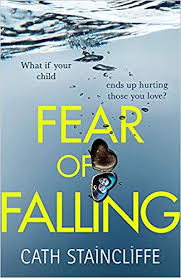 The centre of the story is the relationship between two women, Bel and Lydia, who meet at a New Year’s party in 1985, when they are both sixth-formers although at different schools in Yorkshire. They are very different people – Lydia is reserved, generally quite sensible, and from a secure and ordinary family. Bel is wilder, her family rather more bohemian and she has a difficult relationship with her parents. Bel grew up in France and then London and it is her father’s job that has brought them to northern England, where she is something of an outsider. Bel and Lydia are drawn to one another, despite their very different personalities; for Lydia, Bel represents spontenaiety, excitement, danger even. For Bel, Lydia represents security, a steady point in a turning world.
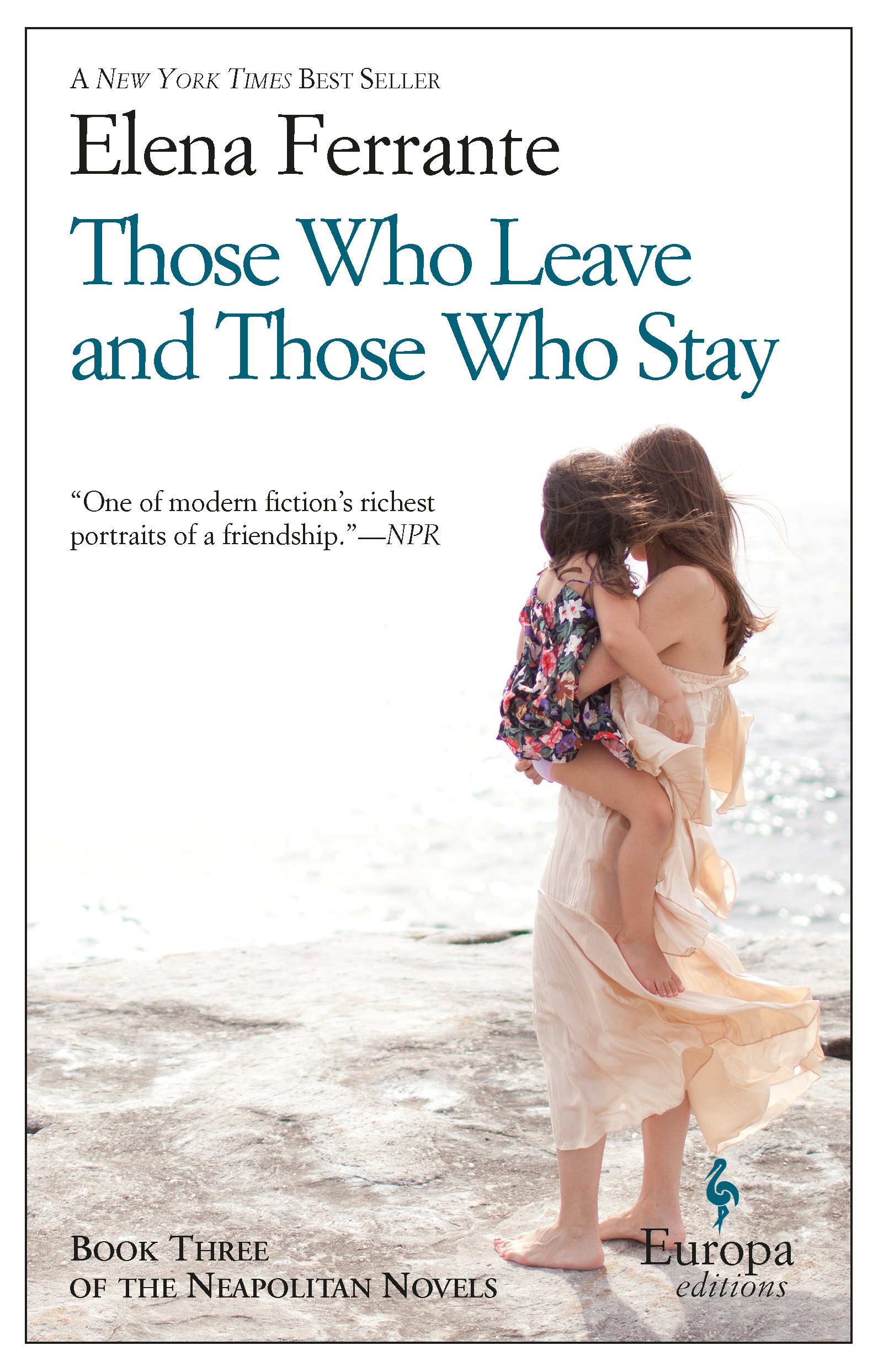 This third book picks up precisely where volume two left off, at a small book launch for Elena’s first book, a mildly sexual novel which has caused a stir, and where she is being questioned in a patronising way by an obnoxious critic. A familiar face from Naples walks into the room – Nino Sarratore – and Elena’s confidence is restored. Nino has been a friend since childhood, and there is a complicated triangular relationship between him, Elena and Lila, the main but elusive protagonist of all the books. Elena has been in love with Nino since they were young, but this has not been reciprocated. Like Elena, Nino proved to be a successful student, despite the disadvantages of background and upbringing, and would go on to achieve great things academically, though both know that neither is as brilliant as their mutual friend Lila, with whom Nino was once in a relationship, but who would never reach the academic heights of the other two.
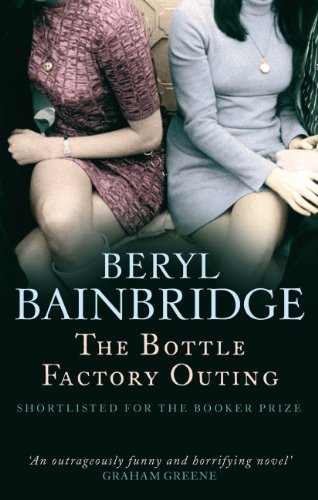 In summary, this book is set in the late ‘60s, early 70s and is about Freda and Brenda, two young women who work together in a London factory where Italian wine is bottled. They also live together in a pokey bedsit, and share a double bed at nights. Freda is blonde, buxom and outgoing, sexually frustrated and of a romantic inclination. She has the hots for Vittorio, the nephew of the factory’s Italian owner, and fantasises about being seduced by him, contriving situations to enable this. Brenda is a redhead, but mousey in personality, timid and sexually repressed. She has left her drunken husband Stanley in the Yorkshire farmhouse which they shared with his domineering mother. Freda and Brenda met after Brenda had a tearful outburst in a butcher’s shop. Freda took her in and got her a job at the factory. Freda can be kind but also cruel and the book is as much about the complex nature of relationships between women as anything else.
 Julia's books