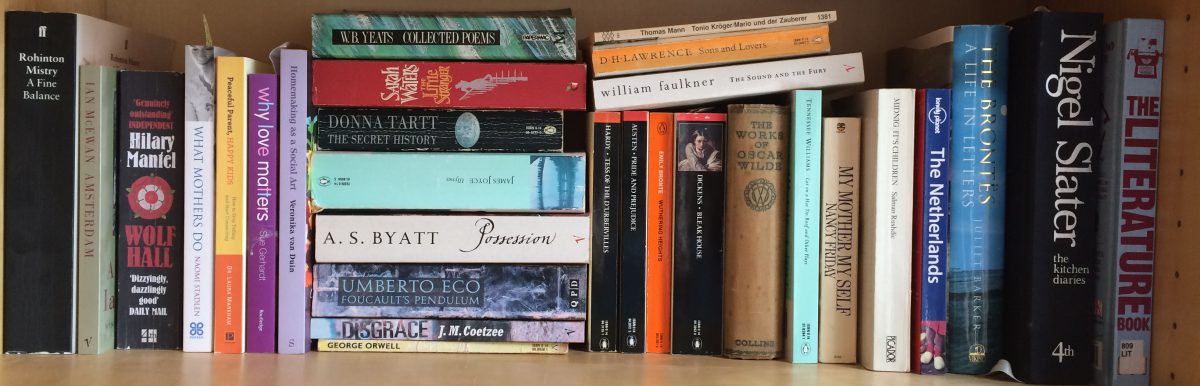
I know so many people who love reading, but find it hard to find the time to do so – when you have a family, work and find yourself under pressure to provide taxi services, help with homework, cook interesting and nutritious meals, check emails….the list goes on. Reading often drops off the list. And how many of you do your reading at bedtime and find you fall asleep before you’ve even finished a chapter?
It’s a common problem. I am a great believer in two things, however. First, if you want your kids to read they have to see you doing it too – so you’re actually being a good parent by finding time to read. Second, reading can be a wonderful way of escaping all the chores and pressures of life, so you will benefit from even 10-15 minutes here and there.
 I’m a big fan of audiobooks as a way of passing otherwise dead time in a more constructive way – for me it’s car journeys, or whilst exercising. It might also be while you’re waiting for swimming lessons to finish or at the supermarket. You have to choose your titles carefully though, because it’s not just about what you listen to, but the narrator is really key to the enjoyment. For example, audiobooks I have enjoyed have been Holding, narrated brilliantly by the author Graham Norton, Frankenstein, narrated by Derek Jacobi and 1984, narrated by Andrew Wincott (Adam from The Archers). Their reading styles enhanced my enjoyment. A title I enjoyed less because of the narration was The Girl on the Train, where I felt the male voices were not done well.
 I have recently finished listening to The Story of a New Name by Elena Ferrante, Book Two in her Neapolitan Novels series. I have listened to and reviewed here, Book One, My Brilliant Friend, and the narration by American actor Hilary Huber is sublime. The Story of a New Name continues where Book One left off, with Lila marrying the grocery-store owner Stefano Caracci. Lila acquires a new social standing and some material wealth, but it is a loveless affair, and the marriage soon deteriorates into violence and enmity.
Lila’s childhood friend Elena, chooses a different path; she continues her education and though at first she barely scrapes through with adequate grades, she eventually graduates and is accepted at the university in Pisa. While Lila’s life is coming apart (despite her many talents, her beauty and her magnetic appeal), Elena’s eventually triumphant academic trajectory comes as a surprise to many as her abilities and potential were not thought to be as great (especially by herself).
This book has the same wonderful setting, 1960s Naples, the same cast of fascinating characters, mostly sinister and flawed, and develops the themes of friendship, and its many complex facets, jealousy, family feuds, conflict, love, hatred and the position of women in society.
The book is long (over eighteen hours worth of listening, or nearly 500 pages in paperback), but it is epic in scale and epic in achievement. On my audiobook app you can select a faster reading speed; I tried listening at 1.25 speed, but I went back to standard speed, because Hilary Huber’s American drawl is a treat for the ears and brilliantly suited to the story.
I would highly recommend this audiobook – the cast of characters is complicated and sometimes I forgot who was who, especially when shortened or ‘pet’ names are used in the dialogue. I found it helpful to look up a cast of characters online so I could keep track. There are two more books in the series – Those Who Leave and Those Who Stay and The Story of the Lost Child. I will certainly stick with the series and get both of these – even though it might take another year to get through listening to them!
Does the narration style affect your enjoyment of an audiobook?
If you have enjoyed this post, keep up to date with my blog by clicking on the Follow button. Let’s also connect on social media.
 It is extraordinary to think that this remarkable novel, still as popular and as shocking today as ever, was written when Mary was just 19 years old. The fact that she was such a literary talent is not surprising given that she was the offspring of the two famous intellectuals, Mary Wollstonecraft, philosopher and author of the seminal feminist work A Vindication of the Rights of Woman, and William Godwin, the radical political philosopher. In her lifetime, she was highly regarded as a radical writer and intellectual, as well as being the wife of the poet Percy Bysshe Shelley, whom she met and fell passionately in love with at the age of 17. Her reputation since her death, however, has been overshadowed by that of her husband’s, with whom she bore four children (three died in infancy), whose affairs and financial troubles she endured, and whose poems she edited both before and after his death. Percy Bysshe Shelley drowned at sea in 1822, just six years into their marriage when she was 25. She died at the age of 53 in London from a suspected brain tumour.
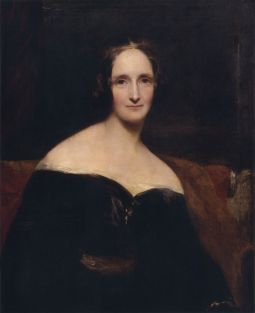 By any standards her life was remarkable and in the last few years her reputation has been revived and she has begun to be more widely considered as a formidable talent in her own right, rather than just a ‘one-book author’. Frankenstein has been a staple of English literature GCSE and A level syllabuses for years, but most of her other works have fallen out of print. A new biography, In Search of Mary Shelley: The girl who wrote Frankenstein, by Fiona Sampson was published earlier this year, some of which I caught when it was serialised in Radio 4 recently. What I heard sounded fascinating. Sadly it is not available on the BBC iPlayer at the moment.

 I am an admirer of Gillian Anderson, not since her X-Files days, but since watching The Fall, the hugely popular television drama about a misogynistic and brutal serial killer in Northern Ireland, in which Anderson played the beautiful, enigmatic, but also rather damaged DSI Stella Gibson. The drama ran for three series between 2013-2016 and I was hooked. (It also starred Jamie Dornan, which helped). Jennifer Nadel, Anderson’s co-author, is a former journalist, writer and activist. Both women are open about their experiences of depression and poor self-esteem, despite their hugely successful careers and enviable lifestyles, and this book is their account of recovery and a ‘guidebook’ for other women who may be suffering from mental health issues.
 This was one of the books I took on holiday last year, but which I didn’t manage to read. I finally got around to it when we read it in our Book Club in December. I’d been really excited about it; I love Meera Syal (Goodness Gracious Me, The Kumars at No. 42), she’s such a talent and a fantastic role model. She has written two previous novels, both published in the 1990s, neither of which I have read.
 Julia's books