Audiobook review – “Home Stretch” by Graham Norton

I am a huge admirer of Graham Norton. There does not seem to be much that this funny, likeable man cannot turn his hand to. I was sceptical when I saw that he had written his first novel; I get a little cross and cynical when celebrities decide to write books. The sense of entitlement annoys me and I tend to think they take the place of better writers both in bookshops and on shelves at home. When I read Norton’s first book, however, Holding, I was a convert. I loved it. I have also read his memoir The Life and Loves of a He Devil, but I think his fiction is better.

Home Stretch is Norton’s third novel and is equally accomplished. Set in County Cork, in the south-west of Ireland, close to where Norton grew up, it carries the charm and gentleness of that part of the world, while also exploring some challenging themes.

The novel opens in 1987 with a car crash and the deaths of three young people late at night, the day before two of them were due to be married. There are three survivors, Linda O’Connell, the sister of the dead bride-to-be, who is seriously injured, Martin Coulter, the local doctor’s son, and Connor Hayes, the 17 year-old son of local publicans. Whilst he is not considered directly at fault, Connor admits to being the driver and must therefore pay in some way. Connor is convicted of, we do not quite know what, but presumably dangerous driving, and given a two year suspended sentence. But the shame of being in some way responsible for so many deaths in the small town community is a far greater punishment that not only Connor, but his parents and sister Ellen will have to bear for much longer. It is decided that Connor should disappear for a while and he is sent to England to the employ of a distant cousin on a building site in Liverpool. The work does not suit Connor at all; living in a large scruffy house with the other lads on the building site he is bullied and beaten. A chance encounter in a pub leads Connor to abandoning his job and moving to London. It quickly becomes apparent that Connor is gay and he immerses himself in the scene in the capital.

Meanwhile, back in Cork, Connor’s sister Ellen is wooed and won by the smooth and, at this point, affable Martin Coulter. The couple eventually marry and it seems as if the family has finally been redeemed. Connor has gradually lost touch with his parents and although this is heartbreaking for them, it does, in a way, enable everyone to move on.

From here onwards, the novel flits back and forth in time, from 1987, the time of the accident, to the 1990s, the 2000s and the 2010s as the plot is pieced together. We learn that Connor goes to live in a New York where we find him in a long-term relationship with a partner. In Cork, Martin Coulter has taken over as the local GP and he and Ellen, now with two children, have a difficult marriage. Connor’s parents have settled lives, but have never got over ‘losing’ their son. Linda, the third survivor of the crash, is paralysed and lives a fairly empty existence being cared for by her mother and a series of paid nurses.

It is clear that there was more to the 1987 car crash than there initially seemed and the truth of the terrible night unravels as the novel progresses. Norton’s plotting is sound although it is not difficult for the reader to work out what happened, there are enough clues. Norton’s real skill though is in the characterisation and he brings acute observation to all of his characters, even the minor ones. As with Holding, I listened to this book on audio, narrated by the author, so you get even more insight into his characters through the way he reads them. There is a deep affection for this part of Ireland and the people who dwell there and although Connor is exiled from his native land from quite a young age, seemingly cast out, there is a growth and acceptance on all sides by the end which indicates Norton’s own pride in his homeland.

Thoroughly enjoyable, recommended.

Reading Challenge – December choice

And so, the final month of the year begins and it’s time for the last book in my 2021 reading challenge. I usually choose a theme for each month, but this year I picked a very specific book for December- A Christmas Carol by Charles Dickens. I almost always select something short for December because it is such a busy month, and this novella fits the bill perfectly at less than 100 pages, which should be easily achievable. I have an almost complete collection of vintage Dickens editions, bought in secondhand bookshops in the 1980s, as I did a special study of the author for my English literature degree. Strangely, A Christmas Carol is not in my library so I will have to acquire a copy. I quite fancy one of those lovely clothbound editions, even though they are quite pricey, to match all my other Dickens hardbacks.

We all know the story but how many of us have actually read this 1843 Dickens novella?

I love Dickens and A Christmas Carol might be one of the only books of his that I have not read. Honestly, I cannot remember if I have because of course most of us will know the story and all the main characters – Ebenezer Scrooge, Jacob Marley and Tiny Tim. Published in December 1843 it was an instant best-seller. It has never been out of print and has been adapted for stage and screen many times. It was Dickens’s sixth work to be published; his well-known classics Oliver Twist, Nicholas Nickleby and The Old Curiosity Shop had already been serialised to great acclaim. My own personal Dickens favourite, Barnaby Rudge, came out just before A Christmas Carol.

November was a very busy month for me so after my Booker Prize reading marathon, I have not actually managed to read very much this last month and have only just started my reading challenge choice (Erica Jong’s Fear of Flying). I don’t expect it to take me very long, however; it’s quite a page-turner! My day job has kept me very busy, my kitchen renovation drags on and my youngest child had an operation (a routine procedure) so life has been pretty hectic. I am expecting December to be quieter and I am looking forward to a gentle build-up to Christmas. With the Covid Omicron variant threatening to alter everyone’s plans in the coming weeks, I will most likely be hunkering down at home with the family and not doing too much in the way of partying. My Christmas shopping will be largely local and outdoors, no bad thing, as I await my booster jab.

So, I hope to be able to get back to regular posting in the coming weeks and will be sharing my usual thoughts on bookish Christmas gift ideas, so look out for those.

Happy reading!

Book review – “Dark Matter” by Michelle Paver

I chose this book for October in my Reading Challenge, the theme for which was a ghost story. There were quite a few that I fancied, including many classics that I have long wanted to get around to, but I liked the sound of this one and Paver is an author I have always wanted to try, having read some great reviews of her work. She mostly writes stories for young people and this novel was one of her early ventures into writing for adults, although I am loathe to make that distinction.

The book has a tantalising opening; it is a letter from one Algernon Carlisle (‘Algie’) in response to an enquiry from a Dr Murchison, who is researching ‘phobic disorders’, applying for information on an Arctic expedition he was part of. Algie’s reply is cool; he seems somewhat affronted by the suggestion that the events of the Arctic expedition were a result of a ‘phobic disorder’ and writes that, since one of his friend’s died and the other was deeply damaged by the experience, he therefore does not wish to be reminded of it.

Set in 1937, the book’s narrator is Jack Miller, an educated but lower class civil servant who is bored with his job and rather bitter about his situation in life. He meets a group of upper class Oxbridge-educated young men who are setting up a year-long expedition to the Arctic and are seeking a wireless operator. After meeting Jack they invite him to join them and it seems like the opportunity of a lifetime, as well as taking Jack away from his repetitive and uninteresting existence. He has mixed feelings about the group but he gradually develops a close friendship with one of them, Gus.

When they set off on the trip in midsummer, they are full of enthusiasm, but the first alarm bells ring when the captain of the ship commissioned to take them to the abandoned mining settlement known as Gruhuken in Spitsbergen (which sits between Greenland and Norway in the Arctic Ocean), is anxious about travelling to the place. He is unspecific about his reservations but it is clear that something deeply untoward happened there at the time when the place was populated by miners.

When the three arrive at this strange and desolate place they are initially energetic and keen. They have their team of huskies and even though it is challenging coping with the 24 hour daylight they manage well enough. Jack finds ALgie trivial and annoying but his friendship with Gus deepens. After a few weeks, Gus becomes very ill and appendicitis is suspected. He must be removed to the mainland and it is agreed that Algie will accompany him. Jack will be left alone, although it is hoped for no longer than two to three weeks. It soon becomes clear that this is unrealistic and Jack finds his situation increasingly difficult. This is especially so when the daylight gives way to constant night and the disturbance to his body clock begins to have mental repercussions. He begins to see and hear things. Jack is visited by a trapper who also lives in Spitsbergen, though far too distant to be any sort of regular companion. Jack welcomes the company, but the trapper tells him the story of what happened years previously in Gruhuken, when a man was killed. It is said that his ghost stalks the area. Jack wants not to believe the story and declines the trapper’s invitation to join him at his own settlement. Jack is determined that he will get through this period, and prove his worth to Gus.

The rest of the book is about Jack’s mental decline as he loses all sense of time and the physical isolation leads him to become increasingly fearful and desperate. He becomes close to one of the huskies in particular, but this is also indicative of a kind of decline in his essential human-ness. The weather deteriorates, equipment breaks, the physical environment begins to collapse. The degeneration of the fragile physical set-up is a metaphor for the mental and emotional breakdown.

What is so clever about this book, and with all really good ghost stories is that the author lets the reader decide whether there really is a ghost or whether it is a ‘phobic disorder’. Algie’s view is clear from the opening of the book.

This was a real page-turner and I loved the Arctic setting which is brilliantly evoked. Paver apparently has a deep affection for this part of the world but it is clear from the book that she is also aware of its treachery and its power.

I really enjoyed this book. Recommended.

Facebook reading challenge – November’s choice

Three days after Hallowe’en and I still haven’t quite finished last month’s book!

The beginning of each new month seems to come around ever more quickly, and I can’t believe that I’m on the second last book of this year’s reading challenge. I’ve been reading my way through the Booker Prize shortlist these last few weeks so I am still not quite finished with October’s book, Michelle Paver’s Dark Matter. It’s a quick read so I am looking forward to its conclusion in the coming days. Look out for my review next week.

This month’s theme is going to be interesting – classic erotic fiction! There are some great titles to choose from, much of it a century or two old, surprisingly enough. There are some French options, of course, but the book I have chosen is Erica Jong’s Fear of Flying. Its central character and narrator is poet Isadora Wing who accompanies her academic husband on a trip to Europe where she decides to act out her sexual fantasies in encounters with other men.

Published in 1973, the novel was highly controversial and caused a storm. It is also credited with setting off the second wave of feminism. The book has sold over 20 million copies worldwide and I believe we have a copy in the house on a shelf somewhere. I did not buy it so I think it must have been my husband’s – that should provide for some interesting conversations!

Fear of Flying was Erica Jong’s first novel, published when she was 29 years old

At the time I wrote Fear of Flying there was not a book that said women are romantic, women are sexual, women are intellectual and that brought all those parts together.

Erica Jong, 2011

So, I am hoping this one will be a page-turner after all the highbrow Booker shortlist reading. I’ll let you know in about four weeks time!

Booker book review #2 – “Great Circle” by Maggie Shipstead

When I set out a few weeks ago out on my annual quest to read the Booker shortlist ahead of the announcement of the winner early next month, I decided I’d need a strategy. I have never actually managed to get through all six books in the six weeks or so between the shortlist being publicised and the award ceremony, but this year I am determined. Looking at the relative heft of each book, I decided that Great Circle by Maggie Shipstead would have to be ‘read’ as an audiobook. It is by some distance the longest on the shortlist – 608 pages, which amounts to 25 hours listening time. Between twice or thrice weekly runs, a bit of driving for work and a bit of solitary walking, I decided I could probably get through it in the month. My book club also decided to read it, though with some trepidation, as its longer than most books we select.

Well, here we are, just over halfway through the month and I have finished it – I COULD NOT STOP LISTENING! This is an extraordinary book, a huge achievement. Fascinating, clever, brilliantly conceived, exhaustively researched, intricately plotted and beautifully written. Whilst wishing to take nothing away from the author, I suspect there was a brilliant and meticulous editor involved with this book too.

The novel’s heroine is Marian Graves, an early 20th century aviator, a contemporary of Amelia Earhart and Charles Lindbergh. The novel begins with an account of the circumstances preceding her birth. She and her twin brother Jamie (who will later become an artist) are the only children of Addison Graves, a ship’s captain, and a 19-year-old socialite who falls pregnant on their first, casual, liaison. Their mother Annabel is emotionally disconnected from her babies, appearing to suffer from postnatal depression. When the ship that Addison Graves captains, the Josephina Eterna, sinks following an explosion in the hold, he chooses to rescue himself and the baby twins rather than remain on board until the last passenger leaves, as is his duty. His young wife is never found and when Addison is sent to prison he leaves the twins in the care of his brother Wallace, an artist and a drinker, who lives in Missoula, Montana.

The children have a wilderness childhood, thriving on neglect. They develop a close friendship with local mixed race boy Caleb, whose mother is also an alcoholic, and who spends most of his time at their home. When she is about fourteen, Marian watches an acrobatic air show held locally by two amateur pilots. She is mesmerised and decides thereafter that her only ambition is to become a pilot. Her life’s mission from then on is to accumulate enough money to take flying lessons. Marian has little formal education but she is an avid reader and works her way through the small library that her father left in the care of his brother. Having taught herself to drive and to mend cars she gets work as a delivery driver, distributing baked goods and, at the bottom of the baskets, bootleg liquor (this is the era of prohibition). She makes a delivery to the local brothel where she runs into local gangster Barclay McQueen. He is a big-time liquor distributor, importing from Canada and with an operation that spans the country. He is mesmerised by the young Marian and after slowly and gently building a relationship with her, he pays for flying lessons and will eventually buy her a plane. But he is no benevolent benefactor; he wants Marian and will eventually marry her. She finds herself drawn to him too, and there is a powerful chemistry between them, but it is also a dangerous and destructive passion.

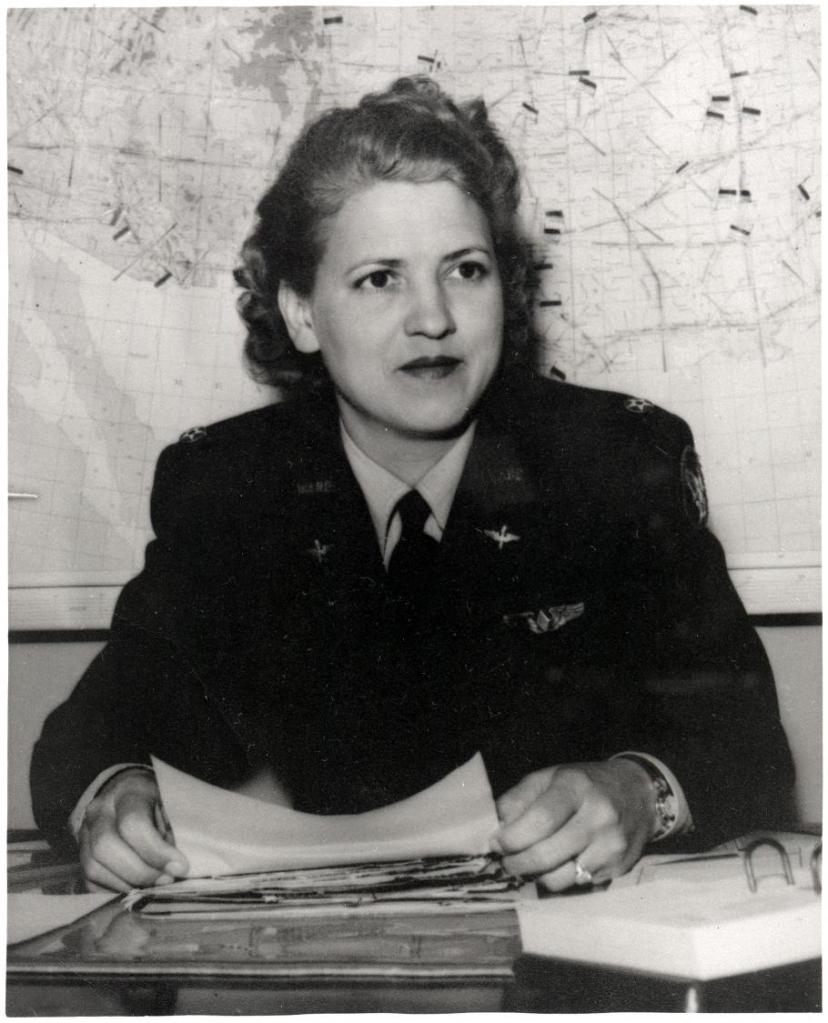
Jacqueline Cochran, the real-life founder of the Women’s Airforce Service Pilots appears in the novel. https://airandspace.si.edu/stories/editorial/flying-homefront-women-airforce-service-pilots-wasp

As we move slowly through the events of Marian’s life we follow her flying career, which goes from strength to strength, despite the times, as her natural brilliance, her driving ambition and ingenuity, combine with the many and varied flying challenges she undertakes. The greater the risk, the more expertise she gains. She catches the attention of another high-profile lady pilot who sets up a special air service in England during the second world war, where women pilots are used as aircraft couriers, flying planes to different locations where they are needed.

A present-day story is being told in this book too. In Los Angeles in 2014-15, young actress Hadley Baxter finds her life is a mess. Made famous as a child actor in a highly successful television show, she finds further fortune with a franchise called Archangel (think Twilight), but then fame turns to infamy when having broken up with the co-star, with whom she had been in a long-term relationship, she is spotted in the arms of a bad-boy rockstar, and then in a clinch with a married producer. Hadley is offered the role of Marian Graves in an arthouse biopic which is focussing specifically on Marian’s attempt to circumnavigate the globe via the north and south poles – the great circle. It was during this attempt in 1950 that Marian and her co-pilot, Eddie Bloom, and their plane disappeared. A journal Marian kept was found by chance in Antarctica years later and published. A novel was also written by a woman distantly related to Marian by marriage. These two documents will form the basis of the new film.

There are parallels between Marian’s and Hadley’s stories; Hadley was also brought up by a neglectful and drunken uncle after her parents died when their light aircraft plunged into a lake, their bodies never found. At first the novel moves back and forth between the two. It’s mostly Marian’s story, but the Hadley episodes are laugh-out loud funny, utilising every possible Hollywood caricature and absurdity. In the last third of the novel they gradually begin to intersect, however, when at a film dinner party Hadley meets the artist Adelaide Scott, who is related to Marian. The producers suggest Hadley meets Adelaide, almost as a way of getting inside Marian, in preparation for the role, an idea which is mostly ridiculous since Adelaide met her only once when she was just five years old. By this time, Hadley has developed an interest in Marian which goes beyond the role and, through Adelaide, she gradually uncovers truths about Marian, about the expedition and about what eventually happened to her, which help her to reach a place of peace with the events of her own life.

There is much more to this novel than I have been able to convey in the above paragraphs which just goes some way to indicating how rich the story is. I have barely touched on Marian’s twin brother Jamie, whose story is also powerful, and Marian’s relationship with Caleb, the childhood friend who is also the love of her life. There are many ‘great circles’ in this novel, not just the circumnavigation of the globe. It is a book about the links between beginnings and endings, how we all end up back where we started somehow and about the connections between us and how these may cross, years, decades, even lifetimes.

For me this was ‘unputdownable’. An extraordinary book, it would be a worthy winner of the Booker Prize.

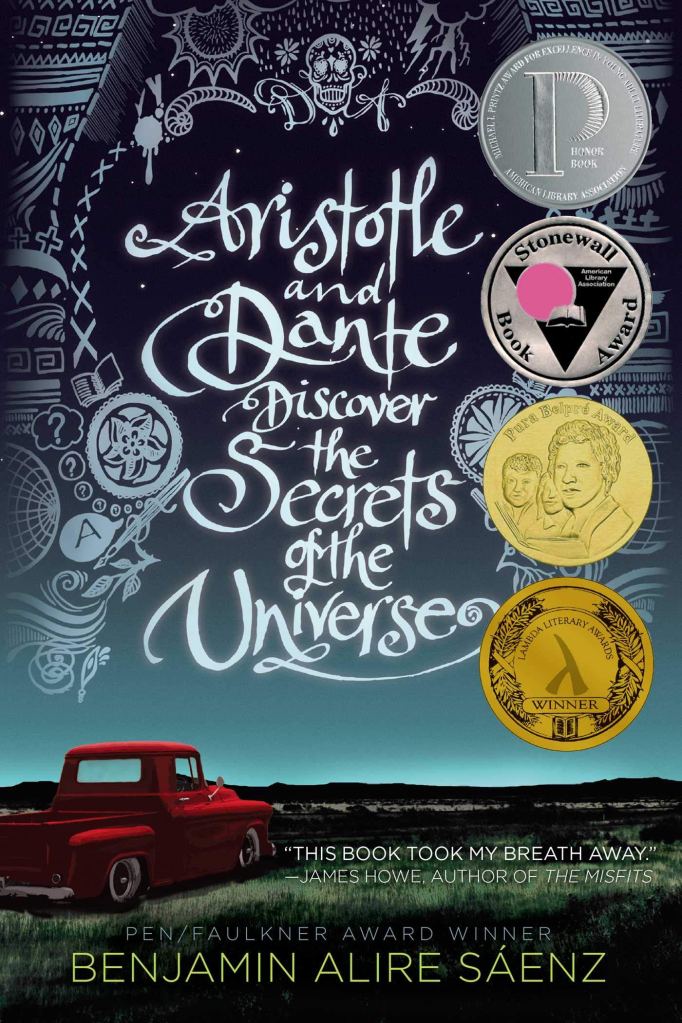
Book review – “Aristotle and Dante Discover the Secrets of the Universe” by Benjamin Alire Sáenz

This was the September choice for my Facebook Reading Challenge, the theme of which was a YA novel. I had not heard of either the author or the book despite the fact it has become an international best-seller since its publication in 2012. It’s always nice to discover an author for the first time and I am certainly glad I read this. It is a heartwarming story and covers some very interesting topics.

THIS REVIEW CONTAINS SPOILERS

I don’t usually have spoilers in my reviews, but when I review children’s or YA books, I do include them as I am assuming that any adult readers of this blog who might want to get hold of the book for a child they know, will also want to know what’s in it. So, you are hereby warned – there be spoilers!

Dante Quintana and Aristotle (Ari) Mendoza are two Mexican-American teenage boys who meet at a swimming pool where they live in El Paso, Texas. Ari cannot swim so Dante offers to teach him. The two are very different characters: Dante is the only child of academic parents. He is bright, quirky, bookish and artistic. Ari is the fourth and youngest child of somewhat more troubled parents. Ari has an older brother whom he has not seen since he was four years old because he is in prison, for reasons he does not know and which his family never discusses. Also, Ari’s father is a Vietnam veteran, a closed man, unable to talk about his war experiences. The novel is set in the 1980s.

Continue reading “Book review – “Aristotle and Dante Discover the Secrets of the Universe” by Benjamin Alire Sáenz”

Booker book review #1 – “No One is Talking About This” by Patricia Lockwood

And thus begins my annual attempt to read my way through the Booker Prize shortlist before the winner is announced. Customarily, the shortlist is announced in mid-September and the winner announced at the beginning of November, giving about six weeks to read six novels. I have never yet managed all six. I think the closest I have come is about four. I am optimistic this year as I have a strategy – a mixture of audiobook, e-reader and actual book – and a plan. So far I have completed one (the shortest), am part-way through another (the longest) and I am the proud owner of a signed copy of a third. With just over four weeks to go I am, if not optimistic, then at least hopeful. I expect kitchen renovations at the end of the month to disrupt all my plans!

The first book I am ticking off the list is Patricia Lockwood’s No One Is Talking About This, which has become one of the most talked about books of the year since it was first published in February. This is Lockwood’s first novel; she is better known as a poet and published a memoir in 2017 entitled Priestdaddy which was highly acclaimed. No One Is Talking About This has been compared variously to William Faulkner’s The Sound and the Fury, Virginia Woolf’s To The Lighthouse, and James Joyce’s Ulysses. I count all three of those among my all-time favourite reads so I should have loved this book.

It is a really difficult book to describe (for me, that’s where the comparison with Ulysses ends). I should also add, by way of a caveat, that I listened to this on audio and may well have been affected by the slightly manic reading of it. It is narrated in the first person by an unnamed character who has an unnamed family but who lives, we can assume, in New York City. The first half of the book is pure stream of consciousness, a portrayal of the wildness of modern life, particularly those parts conducted through ‘the portal’, which is pretty much everything. We see the ridiculousness of life lived out online, where only appearances matter, where substance and empathy and humanity appear to have vanished. Where photographing and documenting your food is more important than eating it. Where how your relationships look is more important than the relationships themselves. I think most of us can recognise this as the way we might all actually be heading if we are not careful. If indeed, we are not already there.

The second half of the book, described by the author herself as ‘autofictional’ centres around a devastating family event. The narrator’s sister becomes pregnant and the journey is duly recorded on the portal, until a scan reveals an irregularity in the baby’s head measurement. The pregnancy and the baby are no longer as photogenic or fit for the portal, but the event will have a seismic impact on the family and on our narrator in particular. She is completely unprepared for the immense love she feels for the severely disabled baby girl her sister delivers, a child whose life expectancy is limited and whose quality of life would usually be described as poor. And yet, the baby, with her rudimentary abilities, her dependency on her loved ones and her complete helplessness, draws out the humanity in those around her, that, because of the evils of the portal, they had forgotten they had.

This second half of the book is based on an event in Lockwood’s own family – her sister gave birth to a child with Proteus syndrome – and knowing there is truth in it, makes it a powerful read indeed. For me, it is not Ulysses, and Lockwood is not yet Woolf or Faulkner. I wasn’t awed or stunned by the book, but it is innovative. Her instincts as a poet serve her well. It reminded me a little of the 2018-shortlisted book Ducks, Newburyport by Lucy Ellman, which I have recently finished. I have to say I found that book better, but Lockwood has a good chance of winning with this novel.

So, recommended. I’m looking forward to what the rest of the shortlist has to offer.

Facebook Reading Challenge – October choice

It’s that time of the month again (where exactly did September go?) when I choose a new book for my reading challenge. Last month the theme was a YA novel and the title I selected was a challenge in itself just to say! Aristotle and Dante Discover the Secrets of the Universe by Benjamin Alire Saenz has become an international best-seller and won multiple awards since its publication in 2013. A follow-up – Aristotle and Dante Dive into the Waters of the World – is due for publication later this month. Look out for my review next week.

For this month, the theme is a ghost story. This is a genre I have eschewed over the years, although two such novels I have loved have included The Little Stranger by Sarah Waters and Beloved by Toni Morrison. There are many, what you might call, psychological ghost stories I could have chosen, such as The Shining by Stephen King, which I was tempted by since I have never got around to reading anything by this author. It would also give me a reason to watch the film again which I saw many years ago when I first met my husband as it’s one of his favourites. I was also tempted by Susan Hill’s The Woman in Black a classic English ghost story if ever there was one, and its adaptation for stage is the second-longest running (non-musical) theatre show in London’s West End (after The Mousetrap). Incredibly, it has been in production since 1989.

In the end, however, I have gone for Dark Matter: A Ghost Story by Michelle Paver, an author I know almost nothing about, but whose name seems to keep cropping up in my world. It must be a sign! This novel was published in 2010 and its setting is an Arctic expedition.

Autumn seems like a good month to curl up with this particular type of book as the nights begin noticeably to draw in and there are mists in the mornings. October is also the month of All Hallows Eve, of course, which in many cultures is a time for remembering the dead. I always disliked this particular festival when my children were young because of the preponderance of things I hated – plastic, synthetics and sweets! – which inevitably are designed to attract children. The supermarkets are beginning to fill with garish costumes and even more garish food products, but perhaps reading this book will give me a different appreciation of this ancient festival.

Image by Pexels from Pixabay

I would love for you to join me in the reading challenge this month.

Book review – “Beautiful World Where Are You” by Sally Rooney

A couple of weeks ago I posted about a work trip to London. I’d bought a copy of the very newly minted Sally Rooney novel Beautiful World, Where Are You which had been published earlier that week amid great excitement (there were queues and bookshops were opened at midnight to enable the keenest readers to get their hands on a copy). Whilst in London I also happened to stumble on a ‘pop-up’ in Shoreditch selling not only the novel, but other books to which there are references in the novel, and some merchandise echoing the design of the book’s cover. This book has surely been the most anticipated of the year, and who can blame the publishers, but it has definitely become a ‘product’. As has the author I suspect. I hope she is okay.

I sort of hoped I might devour the novel on the return train trip to London, but I didn’t and in fact it took me a further week or so to finish it. Rooney’s previous novel, Normal People, was a sensation, not least because of the success of the television series, one suspects, which was brilliantly put together with brilliant performances from the two wonderful new young Irish actors playing the lead parts. It was all a moment of pure serendipity and it was a joy that something so good got the attention it deserved.

Rooney’s follow-up novel therefore was always going to be a challenge and I admire her for just getting the thing out under what must have been intense pressure. It is unmistakeably Rooney – the beautiful prose, the masterful dialogue, the introspective characters, Dublin, the palpable tensions between the characters and the things unsaid. There are four characters: Alice, a successful, famous and thus fairly wealthy author (hmm) who has recently had a nervous breakdown and whom we meet when she is renting a seaside house in the country. Felix, her lover, whom she meets on Tinder, a warehouse worker and cash-strapped under-achiever. Eileen, who lives in Dublin and is Alice’s best friend from childhood. Eileen works for a publishing company in a junior role which pays poorly. She is intellectually and emotionally unfulfilled, and bitter at the hand life has dealt her. Simon is Alice and Eileen’s friend, also from their youth, but a little older, a political researcher he lives in Dublin too. He is single, but seems to have a series of much younger girlfriends, handsome, gentle and compassionate, with a strong Catholic faith.

Much of the novel is an exchange of long and detailed communications between Alice and Eileen. They are more like letters, the kind that middle class people of previous centuries might have exchanged, full of lengthy discourse on the meaning of life, love, sex, career, fame and mental health, cleverly punctuated with much more prosaic gossipy tidbits on their love lives. These of course are emails, though, not letters. In between the letters chapters we follow the various events of the characters’ lives, primarily Eileen’s gradual descent into personal crisis and her relationship with Simon, and Alice’s recovery and unlikely relationship with Felix.

It is some way into the book before the characters collide, when Simon travels with Eileen to visit Alice at her rural retreat. The weekend is a kind of catharsis for them all. Everything must break before it can be reassembled in a meaningful way.

If you are expecting a re-run of Normal People you will get some of the same things – a good deal of sex, middle-class angst and working-class insecurity, and a grown-up exploration of Irish identity in the 21st century. But it is a very different book. There are surely some autobiographical elements. It has a lot less pace and it seems a long time before anything significant happens. This novel is a much slower burn. I liked it but I didn’t love it. I did not care as much about any of the characters as I did about Marianne and Connell. I think it is the book Sally Rooney needed to write though, good enough to follow Normal People but perhaps not quite as good, so that, one hopes, some of the hype around her dissipates and she can get on with being a brilliant author and not have to worry about being a celebrity.

I think it will always be worth reading what Sally Rooney writes, so I have no hesitation in recommending this book.

Autumn is officially here

As I write this, the sun is setting for the day and the moon (a waning one now, since it was also a full one just two days ago) will soon be visible. We are at the precise mid-point between the summer and winter solstices when the sun is positioned directly above the equator, giving equal time to darkness and light. In the northern hemisphere, our nights will now start to grow longer, while in the southern hemisphere it is the day that is lengthening as the spring turns into summer.

Not the view from my window! Rather, beautiful photography from Ingo Jakubke on Pixabay

It is an important time of the year in the literary world too; as we begin to spend more time on home-based pursuits we inevitably read more. The shortlist for the Booker Prize was announced last week and a number of literary festivals traditionally take place in the autumn – I am looking forward to the Manchester Literary Festival in October. And like it or not, some of us will be starting to think about Christmas shopping and publishers are competing to attract our attention in the hope that one of their new releases will make it into your shopping basket as the perfect gift. So, it’s a bumper time of year for new books to be published. I posted on here last week about the furore surrounding the publication of Sally Rooney’s Beautiful World Where Are You? It is surely one of the most hotly anticipated books of the year.

But the noise surrounding that book has obscured somewhat the many other big publications of the season. Here are some of those that have caught my eye and which I very much hope to add to my TBR list over the coming weeks.

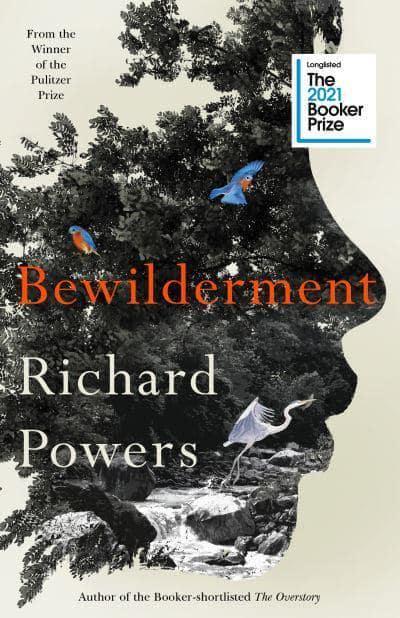
Bewilderment by Richard Powers

Powers maintains his Booker-nominated streak with his new novel. The Overstory was shortlisted in 2018 and remains one of the best books I have read in recent years. Bewilderment is a good deal shorter but continues with similar themes of the environmental damage wrought by humanity. The main characters are a widowed father and his troubled 9 year-old son seeking connection in the face of global, national and personal tragedy. I can’t wait to read this.

Cloud Cuckoo Land by Anthony Doerr

Another author whose last work was one of my absolute favourites of recent years (All the Light We Cannot See, 2015). Doerr’s latest novel is a complex interweaving of five characters and three parallel storylines set in the past (the 15th century siege of Constantinople), the present (during an attack on a public library in Idaho) and the future (a community under threat). They might all be separated by centuries, but the author explores the things that connect them.

The Inseparables by Simone de Beauvoir

Lost for 75 years, this novel was not published in de Beauvoir’s lifetime as its themes were not considered appropriate. It concerns the friendship between two young girls and how it unravels as they grow up. It is based on a friendship de Beauvoir herself had. The novel’s discovery has caused a frenzy and you can read an extract from The Guardian here.

The Magician by Colm Toibin

I am always wishing I’d read more Toibin, but I never seem to manage it and have only read Brooklyn (after I’d seen the film!). So, I’m determined to read this one as its subject is the great German author Thomas Mann, a favourite from my German A level days.

Four Thousand Weeks by Oliver Burkeman

I watched a discussion between Burkeman and Guardian journalist Zoe Williams a couple of weeks ago about this book. I have enjoyed Burkeman’s columns in The Guardian’s Weekend magazine for some years and like his take on life. This is not a traditional book about producitivity, apparently, despite what the title might suggest, it sounds more like an ‘anti-producitivity’ book, encouraging the reader to focus on what is really meaningful in life.

Pax, Journey Home by Sara Pennypacker

I make it my business to read plenty of children’s literature. It helps me reconnect with the sheer joy of reading that I felt as a child. I loved Pax, Pennypacker’s first novel, and this is a follow-up. I am keen to find out what happened to the young fox and his human companion Peter.

And yet more…

There are a number of other books out which readers might like to note: The Man Who Died Twice by Richard Osman is the second in his Thursday Murder Club series, and looks to be an equally big success. Apples Never Fall by Liane Moriarty is out – will it continue her run of best sellers, following Big Little Lies and Nine Perfect Strangers? I expect so! And in a similar vein, Paula Hawkins’s A Slow Fire Burning looks set to bring the author more success. I probably would not pick up this kind of novel, but I loved The Girl on the Train so I might give it a go. Michaela Coel is everywhere at the moment, deservedly so after the phenomenal success of her television series I May Destroy You. She is an incredible role model and continues to campaign on the issues the series raised. She has now written Misfits: A pesonal manifesto which promises to be a powerful read. Finally, Pat Barker’s The Women of Troy, the follow-up to her 2019 success The Silence of the Girls. I found that book difficult to get into, but it was critically acclaimed and shortlisted for The Women’s Prize.

So, plenty to get my teeth into there. Not sure how many of these I’ll actually manage, given that my present TBR pile is toppling, but I am ever the optimist!

What are you reading this autumn? Do enjoy this beautiful time of the year, before the winter kicks in.