The Platinum Jubilee

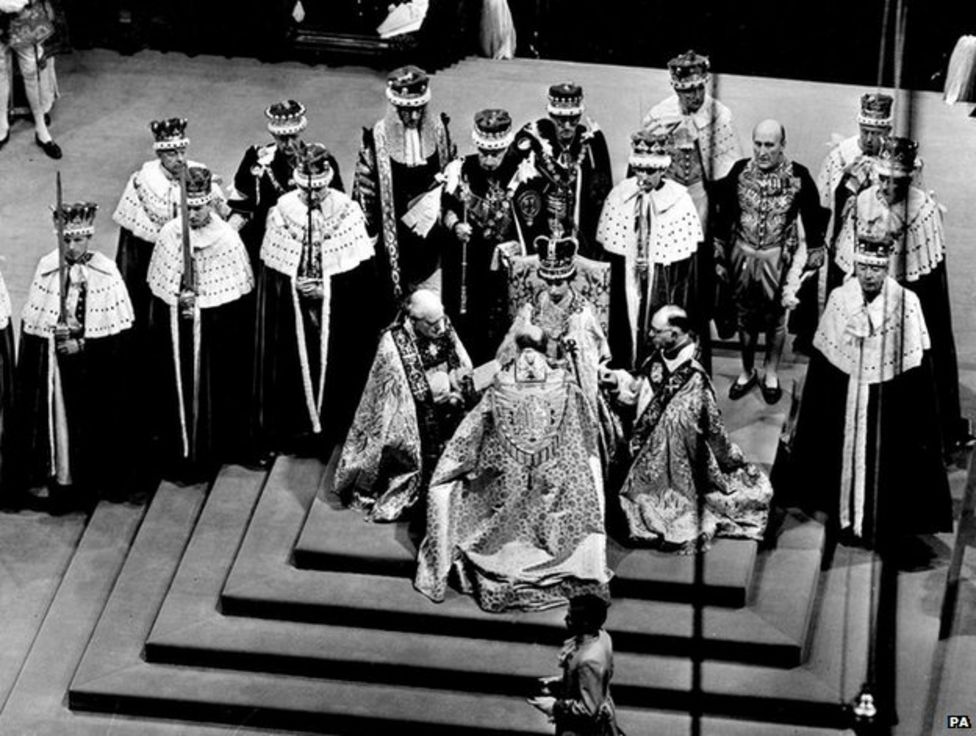
I’ve never been a royalist. If anything, growing up in a working-class environment, my family was rather dismissive of everything the British royal family represents – aristocracy, privilege, unearned wealth, inequality, unelected power. My views have not shifted much, especially in the light of the various royal scandals of recent years. However, it is hard not to be impressed by Queen Elizabeth II; she represents a totally different era and mindset, and her forthcoming platinum jubilee really is an extraordinary moment in history. When you stand her alongside many of today’s politicians and world leaders, she is even more impressive. We will not see her like again.

To mark this momentous occasion, I intend to do what many others in the blogging world, the media and social media are doing, and picking my favourite books of the last 70 years, one from each decade of the Queen’s reign. I am going to stick to British books, which I know means it risks being a very white male list, but then perhaps that reflects the predominant literary forces in play throughout this time.

Let’s start with the 1950s then.

As a period in modern history I am fascinated by the 1950s. I’m not hugely knowledgeable about popular music, but this was the era of early rock and roll. The second world war was over and in Britain rationing was coming to an end and whilst there was still a great deal of hardship, there was I think a new energy in popular culture that would be fully unleashed in the subsequent decade.

On the flip-side, Britain was still a very buttoned-up country, very deferential, and popular culture reflected, not the truth of how society was, but a version that social and political leaders wanted it to be. Books that have looked back on this era have also shown that British society was deeply flawed, such as Andrea Levy’s Small Island.

Some of the best books I read in my teenage years (probably the books that made me determined to read English literature at university) were written in this decade: John Steinbeck’s East of Eden (I was obsessed with Steinbeck!), Truman Capote’s Breakfast at Tiffany’s and JD Salinger’s Catcher in the Rye and, one of my all-time favourites, Charlotte’s Web by EB White. They are all American novels, however, so I cannot pick them.

Instead, my pick is not just one book, but a collection – The Chronicles of Narnia by CS Lewis, although if pressed I would have to choose The Lion, The Witch and The Wardrobe. Lewis is one of my literary heroes, not just because his books are powerful wonderful stories, but also because of his great scholarship, output and influence. I remember at primary school, we were able to choose and buy Puffin books – we’d get a newsletter once a month or so and I would save up my pocket money for these little treasures. I got The Horse and His Boy because I liked horses, having no idea it was part of one of the all-time great literary series! I went on the read the whole series in order (in true child book geek style!) and loved them. At university I learned more of what they were really about and was in even greater awe. I love watching television and film adaptations and I love books that draw on Narnia (like Philip Pulman’s His Dark Materials trilogy and, of course, Harry Potter). The Chronicles of Narnia represent a true literary milestone.

Look out for my 1960s pick tomorrow!

#KeepKidsReading – Book review #3 – “Heartstopper” by Alice Oseman


My final book review of the week and this one really is about that quest to KEEP kids reading, at the age when their attention spans are shortening and the amount of time they spare for reading is at its minimum, ie the middle teen years. So, I’m finishing with a young author who is a sensation at the moment, Alice Oseman. At the age of just 27 she is already an award-winner for her multiple novels, novellas and graphic novels and her Heartstopper series has been adapted for television by Netflix. The four volumes of graphic novels are all currently in the top six of the WH Smith children’s book charts.

The Heartstopper series is about the relationship between two kids at a boys’ school, Charlie Spring (year 10) and Nick Nelson (year 11). Charlie is ‘out’ as gay but he is in a difficult situation with another boy, Ben, who is abusive and controlling and who masquerades as straight. Charlie meets Nick when the school experiments with ‘vertical form times’, which include kids from multiple year groups, and immediately develops a crush. Nick is lovely, but he is sporty and popular, everything Charlie is not. Everyone assumes Nick is straight – he does not even realise himself that he might not be. But as his friendship with Charlie develops their is a burgeoning attraction between the two. And, yes, dear reader, they kiss! This is where volume 1, which I read, ends, but the television series covers all four volumes.

Graphic novels, or books which explore unconventional formats (Nicola Yoon’s Everything Everything is another YA book I love for this reason) are perfect for kids who get bored or switch off when faced with pages and pages of words. This book can be read quickly, or you can savour its warm and expressive illustrations, so it will also appeal to avid readers as well, especially with the TV link.

Highly recommended for teenage reluctant readers, and everyone else besides!

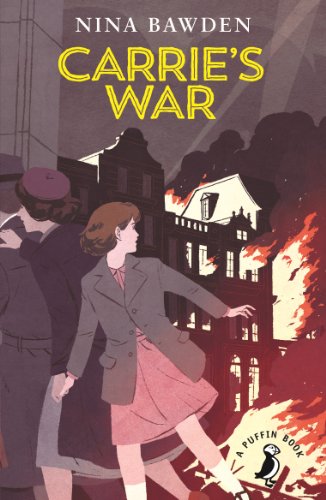
#KeepKidsReading – Book review #2 “Carrie’s War” by Nina Bawden

It’s my #KeepKidsReading week, which means I get to write about some wonderful children’s literature. On Wednesday I posted about a new author, Benjamin Dean, and his first novel, published last year, called Me, My Dad and the End of the Rainbow. Today, it’s time for something altogether different, one of the classics of children’s fiction, Carrie’s War by Nina Bawden. First published in 1974, the author drew on her experiences as an evacuee during the Second World War when she was sent to Wales.

The book opens with the central character, Carrie, returning to Wales where she and her brother Nick were evacuated during the war. She was twelve and he was ten years old at the time. Carrie, now widowed, has brought her four children to the small town, and tells them about her time there, about Mr Evans, the parsimonious shopkeeper, and his sister, Aunty Lou, with whom Carrie and Nick were sent to live. Carrie’s friend Albert was sent to the manor house outside of town called Druid’s Bottom, which was owned by Mr and Miss Evans’s sister, the elderly and poorly Mrs Gotobed, who has been estranged from her siblings since she married ‘up’ many years previously.

Carrie and Nick visit Albert and find Druid’s Bottom a much more inviting place than their own accommodation. Mrs Gotobed’s housekeeper is Hepzibah Green, who also cares for Mister Johnny, a simpleton who has limited language and intellectual skills, but a high level of intuition and empathy. Hepzibah tells the children all sorts of stories about Druid’s Bottom, including the legend of the skull of the slave boy. Apparently, when he died, the slave put a spell on the house, that if his skull ever left it, disaster would strike the estate and all those living there. Mr Evans believes Hepzibah to be a witch who is only after his sister’s money.

When Mrs Gotobed dies, Mr Evans, as her only living male relative, will inherit the property and intends to turn out Hepzibah and Mister Johnny. Albert believes the old lady would not have wanted this and that she must have left a will to that effect. When none is found, Albert tells Carrie he believes Mr Evans stole and destroyed it, just to keep his sister’s old housekeeper from living there.

Carrie and Nick are called back to live with their mother, who has moved to Glasgow where she is an ambulance driver. On their last night at Druid’s Bottom, Carrie tosses the slave boy’s skull into the horse pond, wishing ill upon the house, which now belongs to Mr Evans, as she is so angry with him. As the children leave on the train the next morning, they pass the old house, only to see it in flames. She had not expected the spell the be enacted so fast. Carrie has believed her whole life that she is responsible for the fire and that all the residents (Albert, Hepzibah and Mister Johnny) must have perished. She is so sure of her guilt that she never bothers to find out what actually happened.

Early one morning on their visit to Wales, Carrie’s children walk to Druid’s Bottom before their mother wakes up. The house remains derelict, but they find the now very old Hepzibah and Mister Johnny living happily in a converted barn in the grounds. Hepzibah recounts what really happened in the years since Carrie and Nick left and it was not at all like Carrie feared. She laughs at their hints that she is some sort of witch, as their mother had believed (in the nicest possible sense), giving rational explanations for all the seemingly mysterious occurrences, but the ending of the book is ambiguous on this point. It’s fascinating that modern books for children rarely leave this element of doubt, this unanswered question. Are today’s children really less tolerant of ambiguity?

Like Me, My Dad and the End of the Rainbow this is a ‘middle-grade’ book, and the central character is twelve years old. But, as you would expect from a book written almost fifty years ago, there is a kind of innocence that today’s children may find off-putting. The language and the structure are fairly simple and the setting not too difficult to imagine, so this book would probably suit the 8–10 year-old modern reader. Its themes are perhaps more complex than you might expect though, and it is multi-layered. On the one hand, a younger child could make a very simple reading – there is history of a certain aspect of the war they will be familiar with (I think my son read this in primary school as part of their learning about the war), there are some superficially obvious goodies and baddies, and the story is straightforward. For a more sophisticated reader, however, there is a more nuanced interpretation of the characters – about what underlies Mr Evans’s sadness and therefore his behaviour and attitudes as an adult, about the power of legends, and about the experiences of relatively young children thrust into situations beyond their control which were sometimes frightening.

Nina Bawden’s first novel was actually an adult crime novel, but she then turned her hand to children’s fiction and was hugely successful. Carrie’s War was her third book for children and arguably her best-known. Her other books include The Peppermint Pig and The Robbers.

She was awarded a CBE in 1995 and died in 2012.

This book deserves a place on every child’s bookshelf.

#KeepKidsReading – Book review #1 “Me, My Dad and the End of the Rainbow” by Benjamin Dean

When you are seeking out appropriate titles for your children and young people it can be quite tricky to select books which pitch at the right level for each individual. The term ‘middle grade fiction’ tends to refer to books for the age group 8-12 years, which means that the vocabulary, themes, subject matter and points of interest are appropriate to most children in that range. It won’t suit all, however; some children may be earlier or later developers and find the books too easy or hard for them at that age. A six or seven year old stronger reader may find some of the content or themes too mature, or likewise a weaker reader in secondary school may find the content too childish. It’s not easy. You can read bookblogging sites (like this one!) or visit others who specialise in children’s books. One of my favourites is librarygirlandbookboy. Subscribe to Caboodle or readinggroups.org for ideas, events and competitions, or ask the advice of booksellers and librarians who will be only too happy to make recommendations. Honestly, it doesn’t matter what your child reads, magazines count too, anything they enjoy, just keep them reading.

Benjamin Dean is getting a lot of attention in the children’s fiction world at the moment. Me, My Dad and the End of the Rainbow was his debut novel, published just last year, and his follow-up, The Secret Sunshine Project was published in March. His third novel The King is Dead is due for publication this July – busy chap! Ben, as he apparently likes to be called, is a LGBTQ+ writer of colour and his stories touch on these themes, but, let me stress, not exclusively.

Me, My Dad and the End of the Rainbow tells the story twelve year old Archie Albright whose parents have recently separated. They are both trying hard to maintain a good relationship with their son, but Archie overhears the constant arguments and it is clear that something in their relationship went suddenly and badly wrong, though Archie is not sure what. As an adult reader it was heartbreaking (and should be sobering) when narrator Archie describes his feelings about his parents’ break-up and how when they think they are doing the right thing by him, it is often all wrong. Over-compensating perhaps.

One day, Archie finds a leaflet that his father accidentally dropped, advertising the London Pride event. Archie gets it into his head that if he were to go along to this he would find out something that will enable him to improve the situation with his parents. He expects to find some sort of pot of gold at the end of the rainbow. With the help of his two best friends, geeky Seb and feisty Bell, they make a plan to travel secretly to London to the Pride event (they would never get permission to go if they asked). On the train they bump into Archie’s (gay) babysitter Oscar and his friend Dean, who at first want to take them back home, but are persuaded to accompany them.

When they arrive in London, they are completely unprepared for the scale of the event and the volume of people attending. Almost as soon as they leave the station they lose Seb in the crowd and Archie and Bell also become separated from Oscar and Dean. Archie and Bell are then befriended by a couple of drag queens who are taking part in the carnival and who agree to help them find their friends. Horror strikes again when Archie bumps into his father, who is also attending Pride. Naturally, secrets are revealed and the two manage to open up to one another. Archie’s dad came out as gay and this was the reason for the split with his mother, something that they have had difficulty coming to terms with.

Middle-grade fiction always has a happy ending and the group is eventually reunited with the help of the network of performers. The events enable Archie and his parents to move forward to the next stage of their lives with honesty and love.

It’s a really lovely book, emotional at times, but greatly heartwarming. I loved the characters and I think children will be able to identify with Archie and his vulnerabilities. But Archie is the hero in the end because it is he who enables his parents to find a way through their troubles and to be the family they want and need to be. I would not say this is a book for children who are perhaps questioning their sexual orientation, (though it may be helpful if they are), but it is a book that could help children trying to adapt to changing or non-traditional family structures, or who might be experiencing communication difficulties in their relationships at home. It’s also just a great little story for any kid.

Archie is in secondary school so although the content is probably aimed at KS2 (junior school kids), it might also work for younger or less mature secondary school students. A younger reader might benefit from having a parent read it with them as they may not get all the ironic references or the humour.

Look out for more in the future from this author.

Audiobook review: Notes on an Execution by Danya Kukafka

This was suggested by one of my fellow book club members for our April read. I had not heard of this author before – this is only her second novel – but I feel sure hers is a name that we will all hear about in the future. Danya is an American and is a literary agent in her day job. She published her first novel Girl in Snow in 2017, and Notes on an Execution was published earlier this year, to great acclaim it seems, judging by everything I have been able to glean about the book since finishing it.

Danya Kukafka
Danya Kukafka – an incredible young talent

The novel is set in the US and covers a period of thirty or more years and moves effortlessly back and forth in time. The present day strand is narrated by Ansel Packer, a convicted murderer who is on Death Row in a Texas prison, twelve hours from his execution. He reflects on the nature of life and death and philosophises about right and wrong. He has been writing down his thoughts in what he considers to be a work of philosophy (harking back to his time in college where he majored in the subject but failed to complete his degree) and plans to leave it as his legacy. He has been having a Death Row visitor, Shawna, to whom he grants custody of his manuscript.

Interspersed with Ansel’s narrative is an account of his past. He spent his early years on a remote farm, where his violent father Johnny abused his young wife, Lavender, then only seventeen years old, virtually keeping her prisoner and well away from normal society. Ansel receives no formal schooling and is isolated from other children. When Johnny takes Lavender on a trip, leaving four year old Ansel in charge of his baby brother, Lavender escapes her husband’s clutches at a gas station and manages to call the police to tell them about the children. Ansel is taken into foster care. He is told that his baby brother died.

An account of Ansel’s time in foster care in upstate New York is given by Saffy, another of the orphaned children living in the home. Saffy has had troubles of her own – her Indian father is unknown to her, she is the result of a short relationship her mother had, and her mother was killed. Saffy eventually finds her purpose as a police officer, working her way up to detective. She is put on a case involving three murdered girls whose bodies have been found buried in the woods. Saffy knows one of the victims – it was one of the girls she grew up with in the foster home. A suspect is found, but Saffy knows the homeless man being fingered for the crime is not the real killer. She harbours a private agenda to catch the murderer, which grows into an obsession.

A further narrator is Hazel, the twin sister of Ansel’s wife Jenny. Hazel recalls her first meeting with Ansel; shortly after he and Jenny get together at college, he joins the family for the Christmas holidays. Hazel is strangely attracted to him and jealous of her sister, but there is something about Ansel she does not trust. In the middle of the night she looks out of her bedroom window and sees him burying something in the family’s back garden, an action she cannot explain, but she says nothing.

This is a book about a serial killer; we know the ending, we know that Saffy must therefore eventually get him. This book is not a whodunnit. It is part cat and mouse – the chase, how Saffy will eventually catch up with him. It is also about the women Ansel killed, it tells their stories. It is also about the mind of a killer, how this is cultivated, what part his upbringing and his being left by his mother played in that evolution. Lest we blame his mother for “abandoning” him, the author explores Lavender’s story too – she was a child herself when she was impregnated by Ansel’s abusive father and it was his violence that forced her to take the only course of action possible to save herself and her children. She will carry the burden of that action for the rest of her life.

I was reading this at about the same time as Crime and Punishment and there are some interesting parallels – the brutal murders of women, the lack of remorse shown by the killer, the philosophising on right and wrong by the person committing the crime. The two books, separated by more than 150 years, share some similar characteristics, but Kukafka, makes the victims front and centre even though Ansel is trying to make the story about himself.

This is a brilliant book. It is powerful and interesting in a way that I did not expect and even though we know how it ends, the author still manages to throw in some heart-stopping surprises. I listened to the audiobook and was riveted. The performances were excellent.

Highly recommended.

Women’s Prize shortlist announced today

Each year the Women’s Prize seems to get bigger and better! The idea for this wonderful initiative was first conceived in the early 1990s when it became apparent that despite women authoring the majority of books published, they rarely achieved more than one or two places on the shortlist for the prestigious Booker Prize; in 1992, there was not even one woman writer on the shortlist. Author Kate Mosse was the driving force behind the prize and remains its Director. She is a formidable character and I am not surprised she was the one to get this going! The first winner was the late Helen Dunmore for her novel A Spell of Winter. Other winners have included Carol Shields, the late Andrea Levy, Chimamanda Ngozi Adichie, Eimear MacBride, Ali Smith and Maggie O’Farrell.

Over the years the Prize has had a number of sponsors and has previously been named after them (the Orange Prize and the Bailey’s Prize), but since 2018 it has been known simply as the Women’s Prize and enjoys a range of joint sponsors. Its remit is not simply to award prizes for literary achievement, but also to support reading and creativity in the community more generally and to make a space in the literary world for women’s voices.

In many ways, the Prize feels more relevant than the Booker even, and I have particularly valued how, during the pandemic, the talks with authors, which often only took place in-person in London, came to Zoom, making the work and the writers more accessible.

The shortlist for the 2022 Women’s Prize was announced today and is as follows:

Great Circle by Maggie Shipstead – I’ve already read and reviewed this one as it was shortlisted for last year’s Booker, and it is AMAZING!


The Island of Missing Trees by Elif Shafak – set in Cyrpus in 1974 at the time of the island’s division.


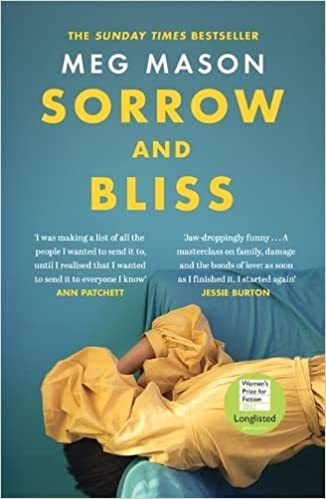
Sorrow and Bliss by Meg Mason – 40 year old Martha seems to have it all until her marriage breaks down and she has to move back to her dysfunctional family home. Can her life ever be ‘fixed’?


The Bread the Devil Knead by Lisa Allen-Agostini – Alethea is in an abusive marriage. She witnesses a woman murdered by her jealous lover and seems to see what her own future might be. Can she change her life’s trajectory?


The Sentence by Louise Erdrich – set in a Minneapolis bookshop during the tumultuous period November 2019 to November 2020 which is haunted by one of its now deceased customers. New employee Tookie must solve the mystery and make sense of events.


The Book of Form and Emptiness by Ruth Ozeki – teenager Benny starts hearing voices after his father dies and his mother develops her own mental problems. He finds solace in the public library where he meets the characters who will help him through his grief.

This is a fascinating list of books and I would happily curl up on the sofa with any of them! I have long wanted to read Louise Erdrich’s work, so I think that may be the one I go to first.

Which do you fancy?

The winner is announced on 25 May and you can enter a competition to win copies of the shortlisted books by signing up to the the newsletter here.


Spring is here! Time for nature books

At last, spring seems to have arrived here in the north of England and it has felt like a long time coming. I love my garden but I could certainly not describe myself as a ‘keen’ gardener, nor have I a great knowledge about the subject. I like it to look nice though, and I like being in it. So, for the last few weeks, as the weather has got noticeably warmer and less damp, I have spent a lot of time in my garden, mainly cutting things back as it was already well-planted when we moved in and the shrubs just seem to grow and grow every year. I have barely touched the garden all winter, but as soon as buds start to appear on things, or spring blooms emerge, I am filled with a renewed gardening energy!

Nature more generally is rather different for me; I love being outside all year round and I find great beauty in bare trees in the winter months, when you can see the wonderful shapes and the intricate patterns of their branches more clearly. It can appear to some that everything is ‘dead’, but while much of it is indeed dormant, there is still a great deal going on if you care to look. Nevertheless, in the spring, so much of the work of nature is visible that it’s a good time of the year to think about nature books. I’ve picked out a few below, fiction and non-fiction, both classic and contemporary, that you might like to indulge in.

Classics on nature

Walden by Henry David Thoreau

I read this while at university for a module on American literature, and I’m afraid my 20 year-old self found it very boring! It is, however, a classic of the genre. Written in the 1840s, when the author was in his late 20s, it is his account of living in the wilderness (for two years), beside Walden pond in Massachussetts, observing the changes in the natural world around him and contemplating the virtues of the simple life versus a more materialistic one. I would like to come back to this book sometime soon, to see if I feel any differently about it!

Silent Spring by Rachel Carson

This is a book I’d never heard of until fairly recently. It is now regarded as one of the early warnings on climate change. Carson was a research biologist and became increasingly concerned about the use of pesticides in particular, and how they then infiltrated the food chain, and more generally about the way man was exploiting nature in a way that would have disastrous long-term (although short and medium term, as it turns out) consequences.

Moby Dick by Herman Melville

The classic man versus nature novel. The whale represents existential threat to man’s self-perceived mastery and throws its protagonist into psychological turmoil. Spoiler: the whale wins.

Nature in contemporary fiction

The Overstory by Richard Powers

Moby Dick is one of my all-time favourite classics, and The Overstory is one of the best books I have read in the last ten or more years. It will become a classic. The secret life of trees is explored in awesome detail, woven into a plot about climate activism and the lengths that some people will go to to save nature. It draws on the classics of nature writing as well as new research. Powerful and brilliantly written.

The New Wilderness by Diane Cook

Like Carson’s Silent Spring, this 2020 Booker Prize shortlisted novel envisions a future where humans have prevailed and pushed nature to a point where life as we know it cannot be sustained. Dystopian fiction at its finest and most frightening, because much of it feels very close and entirely possible. If this does not spur you to action then nothing will.

The Last Bear by Hannah Gold

I recommended this in a post a few weeks ago, when I was looking at books out for young people. This book was the overall winner of the Waterstones Children’s Book prize this year and is at the top of my TBR list. Unlike many of the other books mentioned in this post where the subject is man versus nature, Hannah Gold’s book explores the special empathy that children have with animals and nature. A force for good which should surely be harnessed.

Nature in contemporary non-fiction

H is for Hawk by Helen Macdonald

A brilliant book that has spawned a number of imitators. Published in 2014, it is a memoir of grief, but also a powerful evocation of the relationship between man and nature, again, this time in the form of a goshawk. The author’s father was a keen falconer and photographer who died suddenly. In an effort to reconnect with her memories of her father she acquires a young goshawk which she seeks to train. The landscapes she describes provide a perfect metaphor for grief.

The Snow Geese by William Fiennes

A beautiful and brilliant book by an English author who observes and recounts the epic migratory journey of these magnificent birds from the southern United States to the Arctic. Not a book about man versus nature, rather one about what we can learn about ourselves and human nature by observing animals.

Wilding: the return of nature to a British farm by Isabella Tree

Published in 2019 to critical acclaim and hugely popular to boot, Wilding is an account filled with hope of one couple’s decision to surrender their uneconomic 3,500 acre farm in West Sussex to nature, by introducing free-roaming breeds of animals and ceasing to manage the environment. In a few short years an extraordinary natural balance was restored. I have this book but have not yet read it, but I did listed to an adaptation on the radio which was inspiring.

I hope you approve of my selection. I would love to hear your reading suggestions for this verdant time of the year.

Book review – “The Secret Scripture” by Sebastian Barry

This is the third book I listened to in Sebastian Barry’s McNulty family trilogy. The first was The Whereabouts of Eneas McNulty, published in 1998, then I listened to The Temporary Gentleman, published in 2014, and then finally this book, which was published in 2008 and shortlisted for the then Man Booker Prize. I read them in the wrong order, but in doing so, arguably, I saved the best till last! The Secret Scripture is an astonishing and powerful piece of work, and provides answers to some of the unresolved questions raised in the other two books.

At the centre of the trilogy is the McNulty family and in particular the three brothers, Eneas, Tom and Jack. Eneas, as I have already posted about in my review of the first book in the trilogy, is something of a black sheep in that he is largely exiled from the family, in America, Africa and finally England, because of his job as a policeman which gets him into trouble with the republican Sligo underworld. The Temporary Gentleman concerns Jack, the golden child of the family, with a degree in engineering and a respectable marriage to the daughter of a doctor. However, this book reveals the lie about his life, hinted at in The Whereabouts of Eneas McNulty, his alcoholism and gambling and the problems in his marriage. The third son, Tom, who becomes a local councillor, is married to Roseanne, who is the subject of The Secret Scripture and who appears in both the other novels. Having come to The Secret Scripture last I feel now that this trilogy is as much about Roseanne as it is about the McNulty family, because their relationships with her tell us almost more about them than their own lives.

When the book opens we meet Roseanne, a woman in her 90s, perhaps even 100, a long-term resident of a mental hospital that is about to be demolished. Her psychiatrist, Dr William Grene, must assess her and determine whether she is able to be discharged into the community. There is a recognition that many of the residents of such institutions were committed for social as much as mental health reasons. Dr Grene sets about trying to establish why Roseanne, who has been a patient at the hospital for around half a century, was admitted. The story is told from the parallel perspectives of Roseanne, who writes her own story in secret, and Dr Grene who records his notes and observations in a day book. These become a kind of confessional for both of them.

What we know about Roseanne is that she was very beautiful and therefore treated with suspicion, considered almost a temptation to sin, and therefore a sinner herself. To make matters worse, she is a Protestant. As a child she idolises her father and spends a great deal of time with him at his place of work – his job is as caretaker of a cemetery, a role he takes very seriously. However, after a tangle with local gangsters, active in the political strife that beset Ireland in the 1920s and 1930s, he is served the humiliation of losing his position and being redeployed as a rat-catcher. He maintains his dignity, however, and is conscientious, but the family’s fortunes decline thereafter. Roseanne’s mother is committed to an institution and her father dies. The local priest arranges a marriage to Tom McNulty, and he truly loves her, but she is never accepted by his parents, the elder Mrs McNulty in particular.

Roseanne is ill-treated by them all, except Eneas. After being spotted in a mis-judged but innocent meeting with another townsman on a mountain walk, she is exiled as an adulteress. This is largely an excuse for the family to be rid of her. Her marriage is annulled and she is forced to live in a hut outside the town. Tom marries again and it is as if Roseanne never existed. She is maintained at subsistence level, but no more. Her fate is sealed when she becomes pregnant and gives birth to a child alone on the strand with the tide coming in. She collapses unconscious after the delivery and awakes to find herself being taken away by ambulance, and no sign of her baby.

Events unfold rapidly in the final third of the book. Connections are made with Eneas and with Jack, and the family’s stories become knitted together. It is a slow build, however, up to this point. What the author is doing very skilfully, is building the picture of this woman, of her relationship with Dr Grene, who provides us with a perspective on her and the treatment she received at the hands of the McNulty family and the Sligo community more generally. Roseanne is a marginal figure in the other two books, but a figure, a mystery, nonetheless. The Secret Scripture gives us answers to questions the reader might have had whilst also exposing the dysfunctional relationship between religion and society that bedevils Ireland’s modern history.

A film adaptation of The Secret Scripture was released in 2016, starring Vanessa Redgrave and Rooney Mara, though the story differs in some important respects.

This novel has been Barry’s most successful to date, winning the Costa Book of the Year in 2008 (his novel Days Without End won in 2017, making him the first double-winner) and the James Tait Black Memorial Prize the same year. Apparently, however, some have found the ending of the book flawed and unpalatable. I disagree wholeheartedly! I do not wish to reveal any spoilers, so I will only say that I found it extraordinary. I can see how some might find it a plot twist too far, but from a reader’s perspective it is heart-stopping and I loved it.

I am on a real roll with Sebastian Barry at the moment; having only discovered his work in 2017 when I read Days Without End, I cannot now get enough of him – there is the Dunne Family trilogy to savour next.

The Secret Scripture is a brilliant and powerful book and I recommend it highly.

Book review – “Where the Crawdads Sing” by Delia Owens

This book has been a phenomenal success since its publication in 2018 and has spent most of that time on various best-seller lists. A film is now in production starring Daisy Edgar-Jones (who played Marianne, to great acclaim, in the television adaptation of Sally Rooney’s Normal People) and I am reliably informed by a young person that Taylor Swift has written a song for it! I approached it with some trepidation – I don’t normally go for best-sellers and I feared this might be over-hyped and overly sentimental. I could not have been more wrong and my book club decided this might be one of the best books we had ever read.

Delia Owens
Delia Owens is better known as a conservationist than an author. Crawdads was her debut novel, published when she was 69.

The novel covers events in the period 1952 to 1970 and the central character is Kya (short for Catherine) Clark, known to the local rural community of Barkley Cove as “the swamp girl”. The North Carolina setting of the novel is crucial because Kya becomes an integral part of it. And the setting is brilliantly and powerfully evoked by the author.

The novel is told on two timelines. It opens in 1969 with the discovery of a body in an old tower beside the swamp. The victim is Chase Andrews, a local man, the sporting pride of Barkley Cove, suave, confident and outgoing, he is married but has a reputation as something of a playboy. The local police begin their investigation. The novel then reverts to 1952 where six year-old Kya, the fifth and youngest child of a ‘swamp’ family (one which lives in a rundown house beside the swamp, where their income is precarious and their reputation as outsiders separates them from the mainstream Barkley Cove community) watches her fragile mother walking down the dirt track away from their home, leaving the family for good. Kya’s father is a feckless, violent drunk and Kya’s older siblings gradually leave the home too, unable to bear his aggressive dominance. This leaves Kya on her own with her father. At times they are able to live relatively agreeably together – he sometimes gives her money from his war pension (the family’s only income) and she is able to purchase supplies from the town – but mostly, he disappears, sometimes for days at a time, and Kya is forced to learn to fend for herself. Eventually he disappears altogether. Kya manages to evade the local authorities who try and get her to attend school; they give up eventually too. Kya grows up alone developing an intimate knowledge of the natural world of the swamp, living in harmony with it.

Kya avoids everyone in the town, she has learned to stay under the radar of both the authorities and the two gossips, to whom she is a mystery, to be treated with suspicion and disdain, but she makes three friends: Jumpin’, and his wife Mabel, the proprietor of the swamp-side general store where she must go to replenish her basic supplies, and childhood playmate Tate Walker. When the young child Kya starts to visit his store alone, Jumpin’ quickly realises that she is living alone and he and his wife support and protect her discreetly as best they can; as “coloreds” they are themselves marginalised. Tate Walker was friends with Kya from a very young age when they played together, and is well aware of her father’s violent tendencies. His mother died, a loss which binds them, and he lives alone with his father. When Kya’s father vanishes they renew their acquaintance and their relationship deepens. They eventually become “lovers” of a kind, though avoid intercourse. Tate receives the education Kya is denied and is ambitious to go to college and study natural science. He promises that he will visit Kya during the vacations, but on his first visit home he spots Kya from a distance on the beach near her hut and realises that she is almost a wild creature (that is indeed part of what he loves about her) and that she will never be able to fit into the new academic world he now inhabits. Tate leaves Kya without saying goodbye or explaining.

In her deep grief at being abandoned once again Kya falls into a relationship with Chase Andrews. He seduces her and the two begin a secret affair. Chase tells Kya that he will marry her, though he never introduces her to his family. On a visit to Barkley Cove Kya sees an announcement in the local newspaper that Chase is engaged to be married.

Kya’s progress, from small child learning to live by her wits to beautiful young woman living alone on the swamp, fending for herself, is told alongside the story of the police investigation into Chase Andrews’s murder. Inevitably, the twin stories collide when Kya is accused by Chase’s mother and charged with the murder. The account of the trial is told in gripping detail in a way that is reminiscent of To Kill a Mockingbird. No spoilers here, however, as it will have you on the edge of your seat!

I listened to this on audio and it was read brilliantly by Cassandra Campbell, the same actress who read Maggie Shipstead’s Great Circle so powerfully. If you’ve read the hype about this book then believe it! I cried several times throughout – there are so many big moments in it. The plotting is extremely clever. The characters are all strong, fully thought through and well-rounded. But what makes this book so brilliant, and what for me makes it great, is that it is just a cracking good story!

Highly recommended.

#KeepKidsReading Book review – “Julia and the Shark” by Kiran Millwood Hargrave with Tom de Freston

Today is the 25th annual World Book Day so it seems a very apt moment to have another #KeepKidsReading week – an occasional series where I post reviews about children’s books. My days of creating World Book Day outfits for my primary school age children are long-gone, though it seems like only five minutes ago, and although at the time it felt like a huge pressure to come up with ideas and then scour charity shops for suitable garments, I genuinely think it is a brilliant concept and any initiative that gives out vouchers for children to get a free book, MUST be a force for good.

I’d like to tell you about Julia and the Shark. This book was heavily promoted in my local branch of Waterstones and I’m afraid I couldn’t resist the ‘Signed Exclusive Edition’ sticker and the attractive design. It is a beautiful thing: hardbacked, the cover is in tasteful shades of grey and bright yellow with shiny silver relief. Inside, the grey/yellow/silver theme continues, as do the illustrations of flying birds which decorate the edges of the pages almost zoetrope style. The images, brilliantly done by Tom de Freston, are stunning and a few of them are on opaque pages scattered throughout the book. In terms of design, the book, in my view, follows a trend set by books like The Boy, The Mole, The Fox and The Horse a couple of years ago, or even Quentin Blake’s illustrations for Roald Dahl, where the pictures are an integral part of the experience for the reader and convey something important about character or the state of their mind.

But what of the story? The central character is ten year old Julia, the only child of a mathematician father and a marine biologist mother. The story begins with the family moving from their home in south west England to Shetland, in the very northern isles of Scotland, for the summer. Julia’s father has been commissioned to convert a lighthouse, once operated manually, to an automatic system. The family will live in the building for the duration of the project (a few months) and Julia’s mother will pursue an interest of her own, which is to discover the whereabouts of a rarely seen marine creature, the Greenland shark. She is attempting to get funding for a research project to study the shark and learn about its long, slow life in the hope that it can help in the pursuit of a treatment for degenerative dementia, a condition which killed Julia’s grandmother.

Julia has mixed feelings about the trip; she is unhappy about being away from her friends for the summer, but, buoyed by her mother’s enthusiasm and excitement about her own project, she comes around. Julia and her mother get to know a few people in the local village and Julia makes friends with a boy, Kin, whose family owns the local launderette, out of which they also run a small library. Julia and Kin share a love of nature, she for the sea (a passion passed on by her mother) and he for the stars. Julia quickly becomes initiated into some of the problems that dog Kin’s life, most notably, that he is a victim of racist bullying from some of the local lads.

The Greenland shark can live for hundreds of years – https://www.britannica.com/animal/Greenland-shark

SPOILERS BELOW

Julia becomes increasingly worried about her mother. At first, her mother’s spontaneous and outgoing behaviour is presented as a foil to her father’s logical, sensible character, and it is clear which behaviour Julia prefers! However, the behaviour becomes more and more reckless and bizarre; it starts when Julia’s mother purchases an expensive camera she does not really need and the family can ill afford. It peaks when she buys a run-down boat to go on solo expeditions in search of the shark when it becomes clear that the failure of her funding applications means she can no longer go aboard another working vessel as a paying guest. The boat and the solo expeditions prove both hazardous and fruitless.

Events come to a head when Julia’s mother has a breakdown. The nature of the emergency means that Julia is left in the care of a local shop owner the family has befriended, but she escapes during the night. She learns that there has been a sighting of the Greenland shark and Julia decides she will take her mother’s boat out to search for it. This proves highly dangerous and almost costs Julia her life when she sails into a storm that overturns the boat.

It is very tense at the end because it is not clear if either Julia or her mother will survive. The only indication that Julia does is a paragraph in the opening pages where Julia, who is the book’s narrator, tells us:

“This is the story of the summer I lost my mum, and found a shark older than the trees. Don’t worry though, that doesn’t spoil the ending.”

BIG SPOILER

I was worried when I read this – a book where a young girl loses her mother! But rest assured, the mother does not die. She almost dies when she takes too many pills, and is diagnosed with bipolar disorder, but there is a happy resolution and Julia is saved from the waves.

This is quite a challenging book. It does deal with death (Julia’s grandmother’s death is referenced throughout), mental illness, bullying, difficult parents (not just Julia’s but it also turns out that the boy who had been bullying Kin had been abandoned by both his mother and father), and less seismic but equally impactful issues for kids like moving home, being an only child, friendship, and dealing with failure and disappointment.

This is a book that will suit quite a wide range of children between 9 and 13 – younger, stronger readers who are also quite emotionally mature will get a lot out of it, as will older kids who may identify strongly with the issues but perhaps need the pictures to keep them engaged. I loved Julia as the narrator, who was able to present complex issues in easy to understand ways. And it is a very compelling story with elements of adventure too. I thoroughly enjoyed reading it. It would also be a beautiful book to give as a gift. My only concern with it is that the design has made it quite pricey; at £12.99 this will be out of reach of many parents and children. I hope to see it in libraries.

Highly recommended.