Book review – “Where the Crawdads Sing” by Delia Owens

This book has been a phenomenal success since its publication in 2018 and has spent most of that time on various best-seller lists. A film is now in production starring Daisy Edgar-Jones (who played Marianne, to great acclaim, in the television adaptation of Sally Rooney’s Normal People) and I am reliably informed by a young person that Taylor Swift has written a song for it! I approached it with some trepidation – I don’t normally go for best-sellers and I feared this might be over-hyped and overly sentimental. I could not have been more wrong and my book club decided this might be one of the best books we had ever read.

Delia Owens
Delia Owens is better known as a conservationist than an author. Crawdads was her debut novel, published when she was 69.

The novel covers events in the period 1952 to 1970 and the central character is Kya (short for Catherine) Clark, known to the local rural community of Barkley Cove as “the swamp girl”. The North Carolina setting of the novel is crucial because Kya becomes an integral part of it. And the setting is brilliantly and powerfully evoked by the author.

The novel is told on two timelines. It opens in 1969 with the discovery of a body in an old tower beside the swamp. The victim is Chase Andrews, a local man, the sporting pride of Barkley Cove, suave, confident and outgoing, he is married but has a reputation as something of a playboy. The local police begin their investigation. The novel then reverts to 1952 where six year-old Kya, the fifth and youngest child of a ‘swamp’ family (one which lives in a rundown house beside the swamp, where their income is precarious and their reputation as outsiders separates them from the mainstream Barkley Cove community) watches her fragile mother walking down the dirt track away from their home, leaving the family for good. Kya’s father is a feckless, violent drunk and Kya’s older siblings gradually leave the home too, unable to bear his aggressive dominance. This leaves Kya on her own with her father. At times they are able to live relatively agreeably together – he sometimes gives her money from his war pension (the family’s only income) and she is able to purchase supplies from the town – but mostly, he disappears, sometimes for days at a time, and Kya is forced to learn to fend for herself. Eventually he disappears altogether. Kya manages to evade the local authorities who try and get her to attend school; they give up eventually too. Kya grows up alone developing an intimate knowledge of the natural world of the swamp, living in harmony with it.

Kya avoids everyone in the town, she has learned to stay under the radar of both the authorities and the two gossips, to whom she is a mystery, to be treated with suspicion and disdain, but she makes three friends: Jumpin’, and his wife Mabel, the proprietor of the swamp-side general store where she must go to replenish her basic supplies, and childhood playmate Tate Walker. When the young child Kya starts to visit his store alone, Jumpin’ quickly realises that she is living alone and he and his wife support and protect her discreetly as best they can; as “coloreds” they are themselves marginalised. Tate Walker was friends with Kya from a very young age when they played together, and is well aware of her father’s violent tendencies. His mother died, a loss which binds them, and he lives alone with his father. When Kya’s father vanishes they renew their acquaintance and their relationship deepens. They eventually become “lovers” of a kind, though avoid intercourse. Tate receives the education Kya is denied and is ambitious to go to college and study natural science. He promises that he will visit Kya during the vacations, but on his first visit home he spots Kya from a distance on the beach near her hut and realises that she is almost a wild creature (that is indeed part of what he loves about her) and that she will never be able to fit into the new academic world he now inhabits. Tate leaves Kya without saying goodbye or explaining.

In her deep grief at being abandoned once again Kya falls into a relationship with Chase Andrews. He seduces her and the two begin a secret affair. Chase tells Kya that he will marry her, though he never introduces her to his family. On a visit to Barkley Cove Kya sees an announcement in the local newspaper that Chase is engaged to be married.

Kya’s progress, from small child learning to live by her wits to beautiful young woman living alone on the swamp, fending for herself, is told alongside the story of the police investigation into Chase Andrews’s murder. Inevitably, the twin stories collide when Kya is accused by Chase’s mother and charged with the murder. The account of the trial is told in gripping detail in a way that is reminiscent of To Kill a Mockingbird. No spoilers here, however, as it will have you on the edge of your seat!

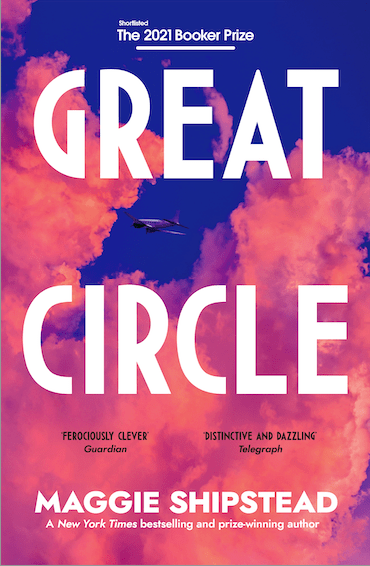
I listened to this on audio and it was read brilliantly by Cassandra Campbell, the same actress who read Maggie Shipstead’s Great Circle so powerfully. If you’ve read the hype about this book then believe it! I cried several times throughout – there are so many big moments in it. The plotting is extremely clever. The characters are all strong, fully thought through and well-rounded. But what makes this book so brilliant, and what for me makes it great, is that it is just a cracking good story!

Highly recommended.

#KeepKidsReading Book review – “Julia and the Shark” by Kiran Millwood Hargrave with Tom de Freston

Today is the 25th annual World Book Day so it seems a very apt moment to have another #KeepKidsReading week – an occasional series where I post reviews about children’s books. My days of creating World Book Day outfits for my primary school age children are long-gone, though it seems like only five minutes ago, and although at the time it felt like a huge pressure to come up with ideas and then scour charity shops for suitable garments, I genuinely think it is a brilliant concept and any initiative that gives out vouchers for children to get a free book, MUST be a force for good.

I’d like to tell you about Julia and the Shark. This book was heavily promoted in my local branch of Waterstones and I’m afraid I couldn’t resist the ‘Signed Exclusive Edition’ sticker and the attractive design. It is a beautiful thing: hardbacked, the cover is in tasteful shades of grey and bright yellow with shiny silver relief. Inside, the grey/yellow/silver theme continues, as do the illustrations of flying birds which decorate the edges of the pages almost zoetrope style. The images, brilliantly done by Tom de Freston, are stunning and a few of them are on opaque pages scattered throughout the book. In terms of design, the book, in my view, follows a trend set by books like The Boy, The Mole, The Fox and The Horse a couple of years ago, or even Quentin Blake’s illustrations for Roald Dahl, where the pictures are an integral part of the experience for the reader and convey something important about character or the state of their mind.

But what of the story? The central character is ten year old Julia, the only child of a mathematician father and a marine biologist mother. The story begins with the family moving from their home in south west England to Shetland, in the very northern isles of Scotland, for the summer. Julia’s father has been commissioned to convert a lighthouse, once operated manually, to an automatic system. The family will live in the building for the duration of the project (a few months) and Julia’s mother will pursue an interest of her own, which is to discover the whereabouts of a rarely seen marine creature, the Greenland shark. She is attempting to get funding for a research project to study the shark and learn about its long, slow life in the hope that it can help in the pursuit of a treatment for degenerative dementia, a condition which killed Julia’s grandmother.

Julia has mixed feelings about the trip; she is unhappy about being away from her friends for the summer, but, buoyed by her mother’s enthusiasm and excitement about her own project, she comes around. Julia and her mother get to know a few people in the local village and Julia makes friends with a boy, Kin, whose family owns the local launderette, out of which they also run a small library. Julia and Kin share a love of nature, she for the sea (a passion passed on by her mother) and he for the stars. Julia quickly becomes initiated into some of the problems that dog Kin’s life, most notably, that he is a victim of racist bullying from some of the local lads.

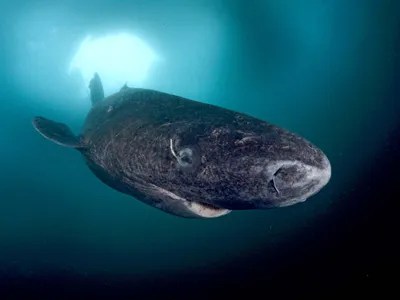
The Greenland shark can live for hundreds of years – https://www.britannica.com/animal/Greenland-shark

SPOILERS BELOW

Julia becomes increasingly worried about her mother. At first, her mother’s spontaneous and outgoing behaviour is presented as a foil to her father’s logical, sensible character, and it is clear which behaviour Julia prefers! However, the behaviour becomes more and more reckless and bizarre; it starts when Julia’s mother purchases an expensive camera she does not really need and the family can ill afford. It peaks when she buys a run-down boat to go on solo expeditions in search of the shark when it becomes clear that the failure of her funding applications means she can no longer go aboard another working vessel as a paying guest. The boat and the solo expeditions prove both hazardous and fruitless.

Events come to a head when Julia’s mother has a breakdown. The nature of the emergency means that Julia is left in the care of a local shop owner the family has befriended, but she escapes during the night. She learns that there has been a sighting of the Greenland shark and Julia decides she will take her mother’s boat out to search for it. This proves highly dangerous and almost costs Julia her life when she sails into a storm that overturns the boat.

It is very tense at the end because it is not clear if either Julia or her mother will survive. The only indication that Julia does is a paragraph in the opening pages where Julia, who is the book’s narrator, tells us:

“This is the story of the summer I lost my mum, and found a shark older than the trees. Don’t worry though, that doesn’t spoil the ending.”

BIG SPOILER

I was worried when I read this – a book where a young girl loses her mother! But rest assured, the mother does not die. She almost dies when she takes too many pills, and is diagnosed with bipolar disorder, but there is a happy resolution and Julia is saved from the waves.

This is quite a challenging book. It does deal with death (Julia’s grandmother’s death is referenced throughout), mental illness, bullying, difficult parents (not just Julia’s but it also turns out that the boy who had been bullying Kin had been abandoned by both his mother and father), and less seismic but equally impactful issues for kids like moving home, being an only child, friendship, and dealing with failure and disappointment.

This is a book that will suit quite a wide range of children between 9 and 13 – younger, stronger readers who are also quite emotionally mature will get a lot out of it, as will older kids who may identify strongly with the issues but perhaps need the pictures to keep them engaged. I loved Julia as the narrator, who was able to present complex issues in easy to understand ways. And it is a very compelling story with elements of adventure too. I thoroughly enjoyed reading it. It would also be a beautiful book to give as a gift. My only concern with it is that the design has made it quite pricey; at £12.99 this will be out of reach of many parents and children. I hope to see it in libraries.

Highly recommended.

Give the gift of books this Valentine’s Day!

My local shops are filled with hearts and red and pink things at the moment. I can’t begrudge them the opportunity to generate some profits on higher-margin sales after what have been a couple of very painful years for so many, but my heart sinks somewhat at the ghastly products sold in the likes of Marks and Spencer (which has had a good pandemic), as they further milk the Colin the Caterpillar and Percy Pig brands!

I don’t want to come over all Scrooge-like, however; we all need a bit of fun at this stage in the year and Valentines Day can certainly provide that. If your loved one is less than impressed by pink and shiny things, however, or if you’d like to give a rather more sustainable gift, there can surely be nothing better than a book. Bookshops are working harder than ever and those in my local high street have certainly put out a nice display of options – my lovely local secondhand bookshop (shout out to Abacus Books, Altrincham) always puts on a brilliant, ever-changing locally-themed front window.

The high street shops will cover all the classics of course, but I thought I’d give you a few ideas of my own based on my reading over the last year or two.

The Long Petal of the Sea

The Long Petal of the Sea by Isabel Allende – a romantic story of

Set in turbulent times (first the Spanish Civil War, then political unrest in Chile) this is a saga which tells of the love story of Victor and Roser, thrown together by tragedy, they stay together out of duty. But they ultimately discover the true nature of their love for one another after many decades. Based on real events.

The Unbearable Lightness of Being

The Unbearable Lightness of Being by Milan Kundera – this 1984 classic set at the time of the Prague spring in 1968 follows the relationships of Tomas, his wife Tereza, his lover Sabina and her lover Franz. And a dog. Complex and philosophical it is nonetheless a romance of sorts and very sexy!

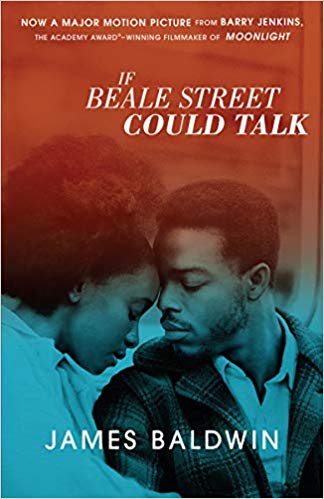
If Beale Street Could Talk

If Beale Street Could Talk by James Baldwin – an American classic with a lovely film adaptation. This book tells the powerful story of two devoted young lovers Tish and Fonny in New York, whose lives are torn apart when Fonny is falsely convicted by a racist justice system, of rape. Tish fights for her lover’s aquittal, but she cannot overcome massive institutional hurdles. Can their love survive.

Normal People

Normal People by Sally Rooney – one of the books of the decade, surely, if your loved one has not read this or seen the television adaptation, then you must get it for them. Charming, sexy, with a top-notch male hero it explores the journey of young love, the ups and downs, the turbulence and misunderstandings, but ultimately how people can look after each other’s vulnerability.

Aristotle and Dante Discover the Secrets of the Universe

Aristotle and Dante Discover the Secrets of the Universe by Benjamin Alire Saenz – a powerful story about loneliness, friendship and how this can blossom into love. Two young teenagers, from very different backgrounds, with different life experiences and perspectives, different journeys to go on in terms of discovering their sexuality. Charming, heart-warming. Regardless of your gender or sexuality this is a story about the triumph and the beauty of love.

Call Me By Your Name

Call Me By Your Name by Andre Aciman – a summer romance set in Italy between an American adolescent on the threshold of adulthood, the son of two academics, and a visiting research student. The setting is beautifully evoked, the blistering heat of the landscape providing the perfect backdrop to the burgeoning sexual feelings between a teenager and the slightly older object of his desire. The romance is real, tender and, like most first loves, painful at times. Beautifully done.

I hope this gives you some ideas – it’s not too late!

Book review – “Dominicana” by Angie Cruz

Dominicana by Angie Cruz

This book first crossed my radar when it was shortlisted for the Women’s Prize in 2020. Most of us were under severe lockdown restrictions at that time, of course, and spending much of our social and cultural lives on video platforms. This was quite liberating for those of us living outside major cities; lots of cultural outlets, whose activities had been shut down by the pandemic, were forced to seek new sources of income and found them by broadcasting live-streamed Zoom events which anyone anywhere could join. The National Theatre (like other theatres across the globe) had been doing this for years of course with its NT Live and Encore programmes where performances are streamed into regional cinemas, but everyone suddenly got in on the act and it was great! I do live near a major city (Manchester, England), but still most events in the publishing world take place in London. One such event, in the past, has been the Women’s Prize talks, interviews with the shortlisted authors, but in 2020 we were all able to participate, and I even had a question answered!

It was a very strong field in 2020 (it always is!) which included Maggie O’Farrell’s Hamnet (the eventual winner that year), the final part of Hilary Mantel’s Wolf Hall trilogy, The Mirror and the Light, and Bernardine Evaristo’s Girl, Woman, Other. Both of the latter books were also Booker Prize shortlisted, Evaristo having won it (jointly with Margaret Atwood) in 2019. When I heard Angie Cruz talking about her book I knew I had to read it. She described it as about the immigrant experience, of a young, naïve girl, moving from her rural home in the Dominican Republic (a small and at that time turbulent nation in the Caribbean Antilles that shares the island of Hispaniola with Haiti). Ana, the central character, has been married off at the age of fifteen to a suitor who is more than twice her age, who plans to take her with him to New York City. Juan Ruiz is a businessman, the eldest of three brothers who have created modest commercial interests in America, but in Dominica they are the local bigwigs who boast of much greater wealth and power than they actually have, particularly Juan. Ana’s mother sees a chance for the whole family to benefit from Juan’s interest in her daughter; she forces her daughter into the marriage in the hope that the whole family will eventually be able to emigrate to America and make a much better life in the land of opportunity.

On arrival in New York, it soon becomes apparent that Ana has been sold a pup. Juan’s business empire is little more than small-scale trading that he runs out of the apartment to which he now confines his new young wife. Ana is forced to cook and clean for Juan, his cronies and his brothers. Juan forces her to stay indoors and keeps her imprisoned by convincing her that the world outside their door is a place of terror. They reside in a part of town where there are outbreaks of violence associated with the civil rights movement and where sirens seem to blare constantly. Ana has been told that her family will soon join her (Ana mainly misses her brother and wants him to be able to get an American education) but Juan clearly has no intention of facilitating this. It is not entirely clear what Juan wants from Ana; yes, he expects his conjugal rights, but he also has a New York lover, a woman his own age. Ana is little more than a slave.

Juan takes a business trip back to the Dominican Republic – political unrest there means he needs to sort out the family’s affairs. During his absence, Ana ventures beyond the apartment for the first time. She shops, starts English lessons given for free by a local nun and falls in love with Juan’s younger brother Cesar, who has been ordered to look after his sister-in-law and goes above and beyond the call of duty in this respect! By this time Ana is heavily pregnant, but with Cesar she has fun for the first time since she arrived in New York. Encouraged by Cesar, she starts selling her home-cooked pastries to the Dominicans working (mostly illegally) in the clothing factories. Ana begins to find her power.

In The Heights by Lin Manuel Miranda
Lin Manuel Miranda’s award-winning musical In The Heights deal with similar themes to Dominicana including the experience of immigrants arriving in New York City from the Dominican Republic

This is a great story; the author described it as based loosely on her own family’s stories. It took me a long time to get to it – it was on my TBR pile for the best part of a year – and when I did get to it, it took me a long time to read. I’m not really sure why, but I couldn’t really get into it. I really wanted to love Ana, but I just did not feel she was fully developed. The chapters were short, the typeface on my edition was, oddly, tiny which made it quite difficult to read, and parts of it, I’m sad to say, just felt like a bit of a slog. There seems to be a bit of a fashion at the moment as well, for not using speech marks – has anyone else noticed this? Perhaps it is me, but I find this really jarring because you sometimes think you are still reading prose, when actually it is dialogue, or vice versa. This worked well in, for example, The Promise, last year’s Booker winner from Damon Galgut, but in Dominicana I found it problematic.

The story ends a bit abruptly for my taste, but not to have ended it where the author did would have entailed many more chapters so there is an argument for closure at that point. This is a powerful story, which needs to be told, but for me there was something missing in the telling.

Sort of recommended.
The East Coast Floods- 1953

This week was the 69th anniversary of the worst natural disaster to befall Britain in the 20th century, one of the worst ever in fact. On the night of the 31st of January 1953 a storm that began as a depression in the north Atlantic, moved to the North Sea and rolled down the east coast of Britain. Earlier in the day, the storm had already claimed 135 lives when it caused fatal damage to the MV Princess Victoria, an early roll-on/roll-off style ferry operating between Stranraer and Larne in the Irish Sea. This alone was Britain’s worst peacetime maritime disaster.

The MV Princess Victoria sank 69 years ago. The story was covered on the Belfast Live news website earlier this week (Image: Mirrorpix)

Tragically, even though the Princess Victoria sank on the afternoon of 31 January, poor communications meant that news of the storm did not reach communities on the east coast. If you look at a map of Britain and the north west coast of Europe you will notice the dramatic narrowing of the North Sea as it reaches Kent and northern France at the English channel. The bit between East Anglia and the Netherlands is shaped like a funnel. And that is exactly how it behaved on the night of 31 January. By tragic coincidence, the storm occurred on the night of a new moon spring tide, when the waters reach high levels anyway. It was, to use an extremely apt expression, ‘a perfect storm’. A huge surge of water could not escape through the channel fast enough and the funnel overflowed in dramatic fashion. The water had nowhere else to go except on to the low-lying flatlands of Norfolk, Suffolk, Essex, Lincolnshire, and most devastatingly of all, the Netherlands.

Because it occurred in the middle of the night, many homes flooded while their inhabitants slept. Many of those coastal homes were poorly built, timber framed and single-storey. In all, 326 people died in Britain. A further 230 deaths at sea can be attributed the storm. In the Netherlands, there were 1,863 deaths, much of the land being below sea level. The Netherlands has been no stranger to devastating flooding over the centuries and so it has long taken its sea defences programme very seriously, but even the renowned Dutch ingenuity at dealing with the sea was no match for a surge which saw sea levels on that night rise to 5.6m above the norm.

Exhibit at the Watersnoodsmuseum, Ouwerkerk, Netherlands

I know Zeeland, the southernmost region of the Netherlands and the worst affected by the floods, well; I have been visiting it regularly for twenty years. And I first learned about the 1953 storm surge when I was there in 2003 and there were commemorations to mark the 50th anniversary. There is a museum which tells the story of that night in fascinating and very poignant detail. The last time I was there they had a virtual reality exhibit where you could see what it was like to be surrounded by rising waters inside your own home. It seemed to me extraordinary that I had never heard about the disaster at home, even though I grew up in Essex.

I have been wanting to write about this neglected piece of British history for a very long time and have been ruminating on a novel which I had hoped might be publishable on the 70th anniversary of the disaster (this time next year) – if I’ve any hope of meeting that deadline I’d better get my skates on! In December I made a long-delayed trip to Canvey Island in Essex to undertake some research. Sadly, the Canvey Island Heritage Museum, the only museum I know of in the UK which has information about the floods, has been closed since the start of the pandemic. But just walking around the island (it is tiny) gave me a powerful sense of what it might have been like. Canvey Island lies in the Thames estuary and is separated from its nearest town, Benfleet, by a wide creek. Until the early 1900s, the only means of access was via a causeway at low tide, on foot or by horse and cart. Canvey lies barely above sea level and 58 people on the island lost their lives on the night of 31 January, many of them children. It suffered the greatest loss of any of the towns and villages affected that night.

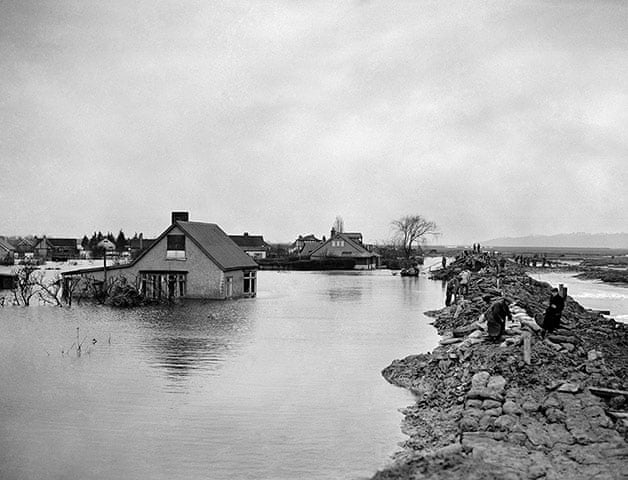
Canvey Island flooding 1953
Flooding in Cavey Island, 1953 (Image: PA/PA Archive)

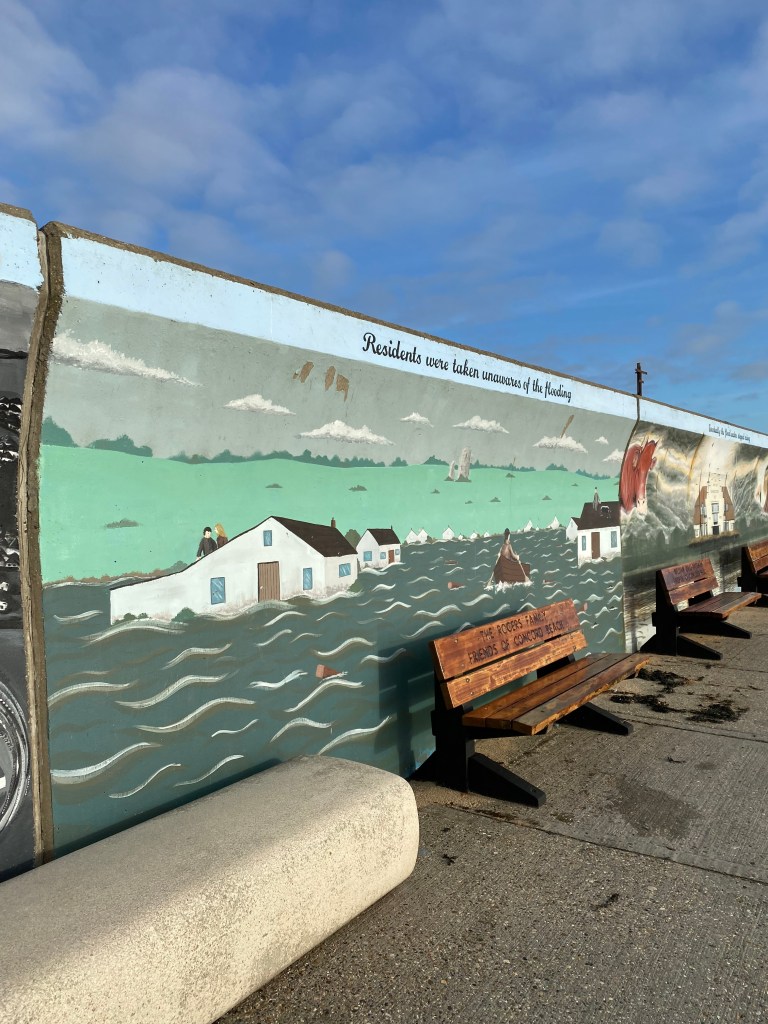
The memories of the island’s terrible experience are still palpable today. Along the sea wall, a powerful mural depicts some of the stories of that terrible night. I remember visiting Canvey as a child – it was a sort of seaside place. No-one would disagree that the island has seen better days; people think that the south-east of England is all bright lights, prosperity and high property values, but it isn’t. The sense of community remains powerful, however, and, sitting in the local library poring over their collection of books about the flood I was struck by the sense of separateness felt, as a mark of pride. I hope the pictures below convey a small part of its specialness.

Images from the Sea Wall murals on Canvey Island, an example of the steel gates that now provide protection to the islanders, and houses lying on land that is as low as the level of the sea on the other side of the wall.

The trip gave me a powerful impetus to get the book started – and I have! I am writing this post now, partly to put a marker down that, hey, I’m doing this! Trying to make myself accountable. But also to draw attention to this terrible disaster that seems to have slipped from our national memory.

Reading challenge book review – “A Christmas Carol” by Charles Dickens

An aunt of mine, who moved with her husband to Australia in the 1970s, said that one of the things she missed from home was the British seasons. Australia moved from scorching summer to a milder greyer period between April and August (not very different to the typical British summertime!), seldom very cold or wet. I have always been fascinated by the changes in the light, the temperature, and nature more generally as the year progresses, so I cannot imagine what it must be like when the months pass with so little to distinguish them.

The snow that fell here in the north during the very cold snap at the end of November gave rise to some beautiful scenes with the most incredible light

Like many, I find the winter months challenging – it can be hard to maintain energy levels and motivation, particularly post-Christmas when one is facing into a long stretch of cold, wet and dark. But I appreciate and am grateful for this time of the year, for this marking of time. It is period which provides a uniquely reflective opportunity as our bodies want us to be less active, cultivate rest and, of course, read more! A Christmas Carol, the Dickens novella that I chose for the final month of my 2021 reading challenge, was the perfect book to sink into winter with.

I started it on Boxing Day, after the hurly-burly of Christmas preparation was finally over, after the meal was long-cooked and someone was taking over the reins in the kitchen. As a child, I always found Boxing Day such an anti-climax, of course, but now as a mother, I love it – the chance to put my feet up at last! When I sat down to read the book I felt deeply immersed in the season – the darkness, the warmth and protection of the interior domestic scenes, (the Cratchits and Scrooge’s nephew, that is, not the cold, lonely home of Scrooge). I read in the late afternoons as I sat down with a glass of something, or a hot cup of tea, as the dusk was falling and my neighbours’ lights were coming on, and I felt in the middle of a northern winter! I cannot imagine reading this book at Christmas time in Australia!

The visitations of the spirits of course, turn Scrooge from a miserable, lonely miser to a benevolent embracer of life and all the good things it has to offer. But in reading it for the first time in what must be many years I felt a deep and powerful sense of the importance not so much of the Christian religious themes but of more universal ideas around family, the importance of community, or caring for the less fortunate, and of rituals around food – the scene in the Cratchit’s household, particularly with the Christmas pudding is marvellous! This has a particular resonance for me as each year I gift a few of my neighbours a home-made Christmas pudding, so at the end of November, my kitchen resembles a Turkish bath thanks to all the steaming!

A Christmas Carol is a brilliant book – simple themes conveyed with imagination and economy. Like so many people, December was a very busy month of preparation and my reading suffered. This was the perfect reintroduction and I thoroughly enjoyed opening a Dickens again. It has made me want to go back and re-read all his other novels that I love so much. The size of my TBR pile is so great that that might be too much – next year’s reading challenge perhaps!

What is your ‘go to’ book at Christmas?

Audiobook review – “Home Stretch” by Graham Norton

I am a huge admirer of Graham Norton. There does not seem to be much that this funny, likeable man cannot turn his hand to. I was sceptical when I saw that he had written his first novel; I get a little cross and cynical when celebrities decide to write books. The sense of entitlement annoys me and I tend to think they take the place of better writers both in bookshops and on shelves at home. When I read Norton’s first book, however, Holding, I was a convert. I loved it. I have also read his memoir The Life and Loves of a He Devil, but I think his fiction is better.

Home Stretch is Norton’s third novel and is equally accomplished. Set in County Cork, in the south-west of Ireland, close to where Norton grew up, it carries the charm and gentleness of that part of the world, while also exploring some challenging themes.

The novel opens in 1987 with a car crash and the deaths of three young people late at night, the day before two of them were due to be married. There are three survivors, Linda O’Connell, the sister of the dead bride-to-be, who is seriously injured, Martin Coulter, the local doctor’s son, and Connor Hayes, the 17 year-old son of local publicans. Whilst he is not considered directly at fault, Connor admits to being the driver and must therefore pay in some way. Connor is convicted of, we do not quite know what, but presumably dangerous driving, and given a two year suspended sentence. But the shame of being in some way responsible for so many deaths in the small town community is a far greater punishment that not only Connor, but his parents and sister Ellen will have to bear for much longer. It is decided that Connor should disappear for a while and he is sent to England to the employ of a distant cousin on a building site in Liverpool. The work does not suit Connor at all; living in a large scruffy house with the other lads on the building site he is bullied and beaten. A chance encounter in a pub leads Connor to abandoning his job and moving to London. It quickly becomes apparent that Connor is gay and he immerses himself in the scene in the capital.

Meanwhile, back in Cork, Connor’s sister Ellen is wooed and won by the smooth and, at this point, affable Martin Coulter. The couple eventually marry and it seems as if the family has finally been redeemed. Connor has gradually lost touch with his parents and although this is heartbreaking for them, it does, in a way, enable everyone to move on.

From here onwards, the novel flits back and forth in time, from 1987, the time of the accident, to the 1990s, the 2000s and the 2010s as the plot is pieced together. We learn that Connor goes to live in a New York where we find him in a long-term relationship with a partner. In Cork, Martin Coulter has taken over as the local GP and he and Ellen, now with two children, have a difficult marriage. Connor’s parents have settled lives, but have never got over ‘losing’ their son. Linda, the third survivor of the crash, is paralysed and lives a fairly empty existence being cared for by her mother and a series of paid nurses.

It is clear that there was more to the 1987 car crash than there initially seemed and the truth of the terrible night unravels as the novel progresses. Norton’s plotting is sound although it is not difficult for the reader to work out what happened, there are enough clues. Norton’s real skill though is in the characterisation and he brings acute observation to all of his characters, even the minor ones. As with Holding, I listened to this book on audio, narrated by the author, so you get even more insight into his characters through the way he reads them. There is a deep affection for this part of Ireland and the people who dwell there and although Connor is exiled from his native land from quite a young age, seemingly cast out, there is a growth and acceptance on all sides by the end which indicates Norton’s own pride in his homeland.

Thoroughly enjoyable, recommended.

Reading Challenge – December choice

And so, the final month of the year begins and it’s time for the last book in my 2021 reading challenge. I usually choose a theme for each month, but this year I picked a very specific book for December- A Christmas Carol by Charles Dickens. I almost always select something short for December because it is such a busy month, and this novella fits the bill perfectly at less than 100 pages, which should be easily achievable. I have an almost complete collection of vintage Dickens editions, bought in secondhand bookshops in the 1980s, as I did a special study of the author for my English literature degree. Strangely, A Christmas Carol is not in my library so I will have to acquire a copy. I quite fancy one of those lovely clothbound editions, even though they are quite pricey, to match all my other Dickens hardbacks.

We all know the story but how many of us have actually read this 1843 Dickens novella?

I love Dickens and A Christmas Carol might be one of the only books of his that I have not read. Honestly, I cannot remember if I have because of course most of us will know the story and all the main characters – Ebenezer Scrooge, Jacob Marley and Tiny Tim. Published in December 1843 it was an instant best-seller. It has never been out of print and has been adapted for stage and screen many times. It was Dickens’s sixth work to be published; his well-known classics Oliver Twist, Nicholas Nickleby and The Old Curiosity Shop had already been serialised to great acclaim. My own personal Dickens favourite, Barnaby Rudge, came out just before A Christmas Carol.

November was a very busy month for me so after my Booker Prize reading marathon, I have not actually managed to read very much this last month and have only just started my reading challenge choice (Erica Jong’s Fear of Flying). I don’t expect it to take me very long, however; it’s quite a page-turner! My day job has kept me very busy, my kitchen renovation drags on and my youngest child had an operation (a routine procedure) so life has been pretty hectic. I am expecting December to be quieter and I am looking forward to a gentle build-up to Christmas. With the Covid Omicron variant threatening to alter everyone’s plans in the coming weeks, I will most likely be hunkering down at home with the family and not doing too much in the way of partying. My Christmas shopping will be largely local and outdoors, no bad thing, as I await my booster jab.

So, I hope to be able to get back to regular posting in the coming weeks and will be sharing my usual thoughts on bookish Christmas gift ideas, so look out for those.

Happy reading!

Book review – “Dark Matter” by Michelle Paver

I chose this book for October in my Reading Challenge, the theme for which was a ghost story. There were quite a few that I fancied, including many classics that I have long wanted to get around to, but I liked the sound of this one and Paver is an author I have always wanted to try, having read some great reviews of her work. She mostly writes stories for young people and this novel was one of her early ventures into writing for adults, although I am loathe to make that distinction.

The book has a tantalising opening; it is a letter from one Algernon Carlisle (‘Algie’) in response to an enquiry from a Dr Murchison, who is researching ‘phobic disorders’, applying for information on an Arctic expedition he was part of. Algie’s reply is cool; he seems somewhat affronted by the suggestion that the events of the Arctic expedition were a result of a ‘phobic disorder’ and writes that, since one of his friend’s died and the other was deeply damaged by the experience, he therefore does not wish to be reminded of it.

Set in 1937, the book’s narrator is Jack Miller, an educated but lower class civil servant who is bored with his job and rather bitter about his situation in life. He meets a group of upper class Oxbridge-educated young men who are setting up a year-long expedition to the Arctic and are seeking a wireless operator. After meeting Jack they invite him to join them and it seems like the opportunity of a lifetime, as well as taking Jack away from his repetitive and uninteresting existence. He has mixed feelings about the group but he gradually develops a close friendship with one of them, Gus.

When they set off on the trip in midsummer, they are full of enthusiasm, but the first alarm bells ring when the captain of the ship commissioned to take them to the abandoned mining settlement known as Gruhuken in Spitsbergen (which sits between Greenland and Norway in the Arctic Ocean), is anxious about travelling to the place. He is unspecific about his reservations but it is clear that something deeply untoward happened there at the time when the place was populated by miners.

When the three arrive at this strange and desolate place they are initially energetic and keen. They have their team of huskies and even though it is challenging coping with the 24 hour daylight they manage well enough. Jack finds ALgie trivial and annoying but his friendship with Gus deepens. After a few weeks, Gus becomes very ill and appendicitis is suspected. He must be removed to the mainland and it is agreed that Algie will accompany him. Jack will be left alone, although it is hoped for no longer than two to three weeks. It soon becomes clear that this is unrealistic and Jack finds his situation increasingly difficult. This is especially so when the daylight gives way to constant night and the disturbance to his body clock begins to have mental repercussions. He begins to see and hear things. Jack is visited by a trapper who also lives in Spitsbergen, though far too distant to be any sort of regular companion. Jack welcomes the company, but the trapper tells him the story of what happened years previously in Gruhuken, when a man was killed. It is said that his ghost stalks the area. Jack wants not to believe the story and declines the trapper’s invitation to join him at his own settlement. Jack is determined that he will get through this period, and prove his worth to Gus.

The rest of the book is about Jack’s mental decline as he loses all sense of time and the physical isolation leads him to become increasingly fearful and desperate. He becomes close to one of the huskies in particular, but this is also indicative of a kind of decline in his essential human-ness. The weather deteriorates, equipment breaks, the physical environment begins to collapse. The degeneration of the fragile physical set-up is a metaphor for the mental and emotional breakdown.

What is so clever about this book, and with all really good ghost stories is that the author lets the reader decide whether there really is a ghost or whether it is a ‘phobic disorder’. Algie’s view is clear from the opening of the book.

This was a real page-turner and I loved the Arctic setting which is brilliantly evoked. Paver apparently has a deep affection for this part of the world but it is clear from the book that she is also aware of its treachery and its power.

I really enjoyed this book. Recommended.

Facebook reading challenge – November’s choice

Three days after Hallowe’en and I still haven’t quite finished last month’s book!

The beginning of each new month seems to come around ever more quickly, and I can’t believe that I’m on the second last book of this year’s reading challenge. I’ve been reading my way through the Booker Prize shortlist these last few weeks so I am still not quite finished with October’s book, Michelle Paver’s Dark Matter. It’s a quick read so I am looking forward to its conclusion in the coming days. Look out for my review next week.

This month’s theme is going to be interesting – classic erotic fiction! There are some great titles to choose from, much of it a century or two old, surprisingly enough. There are some French options, of course, but the book I have chosen is Erica Jong’s Fear of Flying. Its central character and narrator is poet Isadora Wing who accompanies her academic husband on a trip to Europe where she decides to act out her sexual fantasies in encounters with other men.

Published in 1973, the novel was highly controversial and caused a storm. It is also credited with setting off the second wave of feminism. The book has sold over 20 million copies worldwide and I believe we have a copy in the house on a shelf somewhere. I did not buy it so I think it must have been my husband’s – that should provide for some interesting conversations!

Fear of Flying was Erica Jong’s first novel, published when she was 29 years old

At the time I wrote Fear of Flying there was not a book that said women are romantic, women are sexual, women are intellectual and that brought all those parts together.

Erica Jong, 2011

So, I am hoping this one will be a page-turner after all the highbrow Booker shortlist reading. I’ll let you know in about four weeks time!