When I posted my new Facebook Reading Challenge earlier this week, I completely forgot to mention the final book of my 2020 reading challenge, which was The Santaland Diaries by David Sedaris. I chose it because I just felt a bit of a laugh was in order at the end of what had been a challenging and intense few months. I decided to go for this one on audiobook because I love Sedaris’s unique style of delivery; he is mostly quite deadpan, but that just gives his occasional bursts of comic energy all the more impact.
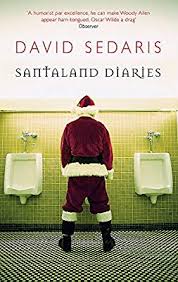
The book is a series of sketches loosely based on Christmas themes. The longest of these, and the one which opens the book, is an account of the author’s time working as a Christmas elf at Santaland in Macy’s department store in New York city (the veracity is disputed, but who cares?). I made the mistake of starting to listen to this on one of my morning runs. I have to tell you that I had to stop several times, doubled over with breathless laughter and my chuckles got me some strange glances from passers-by! In the caricatures of ghastly parents, children, his fellow elves and the mostly overly self-important ‘Santas’ we can all recognise tiny little bits of ourselves. These pieces were first aired on various media in the early 1990s, but it is extraordinary how much of it remains punishingly accurate today. In the awful, domineering parents bullying their kids into posing for photos with Santa bearing gleeful smiles (regardless of their true feelings) he foreshadows instagram parenting which values the posting of an experience more highly than the experience itself. You could easily believe that Sedaris had been made completely cynical by his seasonal work experience but he ends the piece with an uplifting account of one of the truly magical Santas who really did enchant the children who came to see him.
The next couple of essays I found more clever than funny- one is a woman reading out her round robin Christmas letter in which she gives an account of her husband’s illegitimate Vietnamese daughter turning up at the family home, and ends very darkly when her own daughter’s baby dies, it turns out, at the hands of the narrator, who has tried to pin the blame for the crime on the Vietnamese ‘interloper’. Macabre humour indeed.
My favourite essay was called ‘6 to 8 Black Men’. It is one of the funniest things I have ever heard. It sounds very un-PC, but it is actually extremely self-deprecating and pokes fun at north American Christmas customs and the culture more generally (including the systemic racism), as compared to their European counterparts. I have had a couple of repeat listens of this piece and watched it on YouTube and it made me laugh just as much second and third time around. Sedaris’s humour is edgy at times, but I think the best comedy tends to makes you slightly uncomfortable.
This was a wonderful little collection, suitable for any time of year, and a perfect introduction to Sedaris, if you have not come across him before.
Highly recommended.
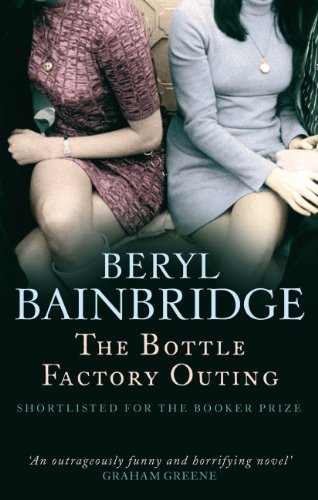 In summary, this book is set in the late ‘60s, early 70s and is about Freda and Brenda, two young women who work together in a London factory where Italian wine is bottled. They also live together in a pokey bedsit, and share a double bed at nights. Freda is blonde, buxom and outgoing, sexually frustrated and of a romantic inclination. She has the hots for Vittorio, the nephew of the factory’s Italian owner, and fantasises about being seduced by him, contriving situations to enable this. Brenda is a redhead, but mousey in personality, timid and sexually repressed. She has left her drunken husband Stanley in the Yorkshire farmhouse which they shared with his domineering mother. Freda and Brenda met after Brenda had a tearful outburst in a butcher’s shop. Freda took her in and got her a job at the factory. Freda can be kind but also cruel and the book is as much about the complex nature of relationships between women as anything else.
 I am a firm believer that all reading material is good, just keep them at it, and adults should not judge if their kids want to read comics and picture books when they might think they ‘should’ be reading something more mature. If this sounds like a child you know, I’ve found a great little series they might find interesting. Hamish and the Baby Boom by Danny Wallace and illustrated by Jamie Littler is the fourth book in a series. Hamish Ellerby is the central character, a 12 year-old boy and leader of the Pause Defence Force in the town of Starkley. Hamish’s father is some sort of secret agent, ever engaged in defending earth against the evil Scarmash. Hamish has inherited some of his father’s abilities and leads his small group of friends in the PDF against strange and hostile happenings in the town of Starkley.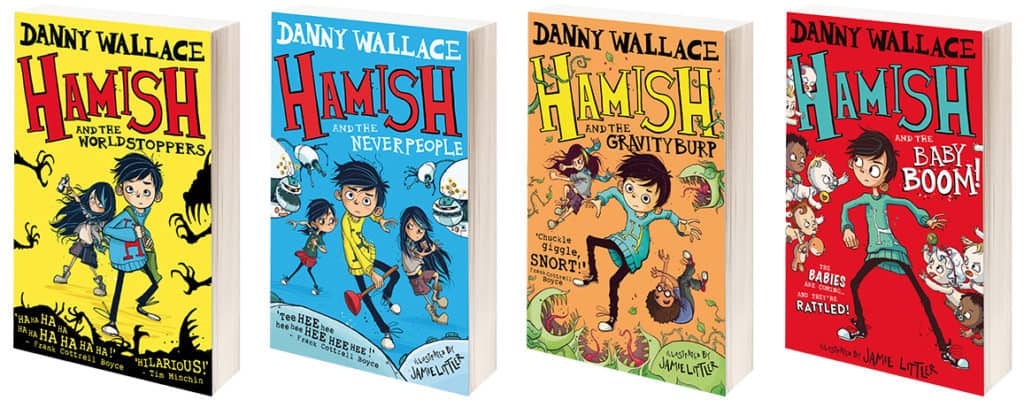
 We decided for our March meeting we’d read Graham Norton’s 2014 memoir The Life and Loves of a He Devil. We wanted to read an autobiography and felt that among the many “celebrity” memoirs out there, Graham’s might have more to offer than most. We all like him as a broadcaster and personality and thought it might be fun. We were not wrong! But when we came to meet and discuss it, we had very little to say. We’d exchanged a number of messages on our WhatsApp group in the preceding weeks, with many laughter emojis, asking each other if we’d come across the dog and condom anecdote yet, or the Dolly Parton story. Some sections of this book, which I read most of whilst on a train journey to London, were laugh-out-loud, or rather “try to suppress a laugh because I’m in public”, moments. It’s a romp and Graham writes the way he speaks, with wit, authenticity and complete honesty. His writing style is similar in his novel
  Julia's books