Women’s Prize shortlist book review – “All Fours” by Miranda July

This book has caused quite a stir in literary circles and is possibly the most remarkable and unusual books that made it to the Women’s Prize shortlist. There was quite a lot of sex on the shortlist this year – an intense lesbian relationship in The Safekeep, the book that won the prize, as well as sex as exploration and rebellion in Good Girl and as relief from the pressures of a confined life in Fundamentally. But All Fours is pretty much all about sex and one woman’s search for her fundamental sexual core as she enters a new phase of her life.

The book is first person narrated and our central character (unnamed) is a moderately successful filmmaker and writer who enjoys a modicum of fame but has never fully lived up to the promise that her one really popular work suggested. She is in her 40s and now lives in LA with her partner Harris and their young child Sam. Her life has become somewhat routine and her relationship has settled into a loving but comfortable and predictable dynamic. She has a close bond with her child; as a baby they almost died following a very rare pregnancy complication where a foetus would normally die, and the event resonates throughout her life. 

As a gift to herself, the narrator, supported by her partner, decides to go on a road trip to New York, where she will spend time in a fancy hotel and enjoy a writing retreat to make some headway on her current project. Soon after she sets off from home, however, she decides to make a detour and finds herself at a motel, a mere half an hour from her home. At a car rental showroom she finds herself deeply attracted to one of the employees, Davey, a young married man whose wife, Claire, is an aspiring interior designer. 

What happens next is inexplicable to both the reader and the narrator who finds herself drawn along a strange path where she sets about to transform her dingey motel room, with Claire’s help, into something resembling a boutique Parisian hotel room. She also seduces Davey and the two embark on an unusual, intense, sexual relationship. All the while, the narrator, lies to Harris and Sam, telling them first about the road trip and second about New York. 

During her sojourn at the motel, the narrator undergoes a deep exploration of her life and her soul. With Davey she explores all parts of her sexual self. To say this is a ‘menopause novel’ is too simplistic, but the narrator’s age (forty-five) and her anticipation of the change that she fears is about to swallow her, undoubtedly drives the crisis she is experiencing. There is an Alice in Wonderland quality to the novel – she disappears into a kind of time warp, where collisions with her real life (calls with Harris and Sam) jar and seem unreal. She is at once desperate to be with them again, to have the reassurance of their stability, but also desperate to escape, tortured by the thought that life has nothing more to give her sexually. 

The novel is explicit as well as at times being very dark and at times very funny. The narrator is very self-aware but also very unknowing about herself, which is why she needs to go on this journey – both literal and metaphorical. Once she leaves the motel, one thing is for sure – her life will never be the same again. 

I really enjoyed the book. The sex is very graphic but pretty well done – I only recall cringing once or twice which is not much given that there is a lot of it! It’s also a really challenging book – as it sets out to question the ordinary lives most of us lead and it’s difficult not to ask yourself, is this enough? So it may be an uncomfortable read for some. It gives the middle finger to Trump-era America with its gender fluidity and libertarian approach to sex and sexuality; it may be far too “woke” for some, but I consider that a plus. 

A brave book and an interesting choice for the Women’s Prize shortlist – that said, it could not really have been left off it.

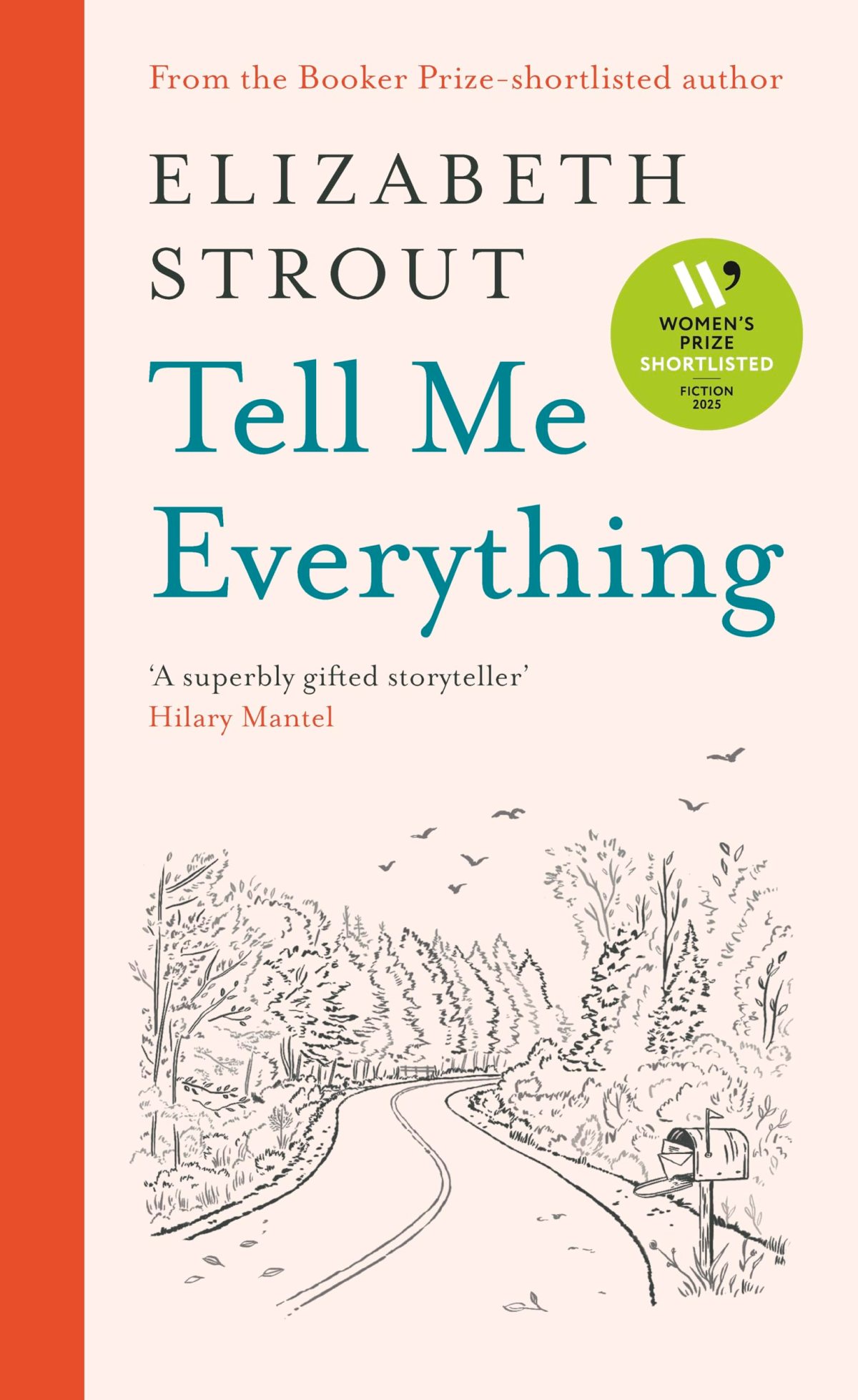
Women’s Prize shortlist book review – “Tell Me Everything” by Elizabeth Strout

Elizabeth Strout is the most experienced of the authors shortlisted for this year’s Women’s Prize and a writer I admire. I have not read all of her work, but I love her style and reviewed Oh William! on this blog after it was shortlisted for the 2022 Booker Prize. Strout writes many of her books in series, and Tell Me Everything  is book number five in her Amgash series (Oh William! was book number three). So, many of the same characters appear throughout the novels. She uses these characters in other novels too – for example, Olive Kitteridge appears in this book but she also has a book, in fact a two-book series, of her own! (Olive Kitteridge: A novel in stories and Olive, again). Some might not like this; it might seem that Strout is simply recycling, that she lacks ideas. I disagree. I think it takes huge authorial control and discipline to maintain  characters, remember their personality traits as well as their personal histories, but it also enables the author to take a very deep dive into the nature of what it is to be human and to observe over a long period of time the way that a person evolves and also the ways in which they do not change.

There is a bit of debate online about whether Tell Me Everything, or indeed any of the other books, can be read and enjoyed in isolation. As I said, I have not read her work extensively, but I certainly enjoyed Tell Me Everything and it really makes me want to go back and read her other novels. 

The central character in Tell Me Everything is Bob Burgess, a small-time lawyer and stalwart of the community in Crosby, Maine. This is quintessential Main Street America and, if nothing else, feels like an antidote to the more troubling vision of the United States that appears so often on our television screens these days. Bob spends most of his time on what we might call “pottering” until he is contacted out of the blue by a former school-mate who asks him to defend her brother, Matthew Beach, who stands accused of the murder of their mother Diana. Matthew is a lonely isolated man, probably neurodivergent, who lived with and cared for his sometimes cruel mother. 

As Bob begins to investigate he uncovers secrets about the family, the past, with which he is linked of course, living in a relatively small community and having gone to the same school as Matthew’s sister, and events beyond Crosby which seem to come back to impact on the town and its inhabitants. The case is not easy for Bob – he seems to be one of life’s innocents and he is shocked and hurt, not only by what he uncovers, but also by turns of events which affect the people around him. 

Bob shares many of his thoughts with his close friend Lucy Barton, central character in many of Elizabeth Strout’s novels, and through their discussions Strout is able to explore the central human questions and concerns that underlie both this case and other events going on around them. These other events include the serious illness of Bob’s brother’s wife, the professional challenges faced by Bob’s wife Margaret, the local minister, and Lucy’s relationship with her husband William, a man she once left due to his infidelity but who she now lives with again. There is also the Lucy Barton/Olive Kitteridge dimension; Olive lives in a retirement home but the two women strike up what appears to be an unlikely friendship, but after many get-togethers in which Olive shares lengthy stories about herself, her family and the many people she has known in Crosby, the two women find they have much in common – a deep interest in people. 

Though in many ways this seems like an old-fashioned novel with mostly middle-aged people in a small town with small lives, Strout brings in some very contemporary problems – child abuse, the opioid epidemic and other addiction problems, poverty, and family differences causing irreparable conflict and damage. All of these very modern problems impact on the characters and events in this novel.

I loved this book and could not put it down. My book club was divided – which probably reflects how readers more generally feel about Elizabeth Strout. I accept that her books might be a bit “Marmite”! I also love the way Strout writes – it appears simple, but is deceptively so, perhaps the hardest kind of writing to actually do. And her dialogue, which makes up a very high proportion of the book, is so natural. Her observation of people is brilliantly acute.

Of all the books on the shortlist this was the one I enjoyed the most, I think, but I can see it may not be the most consequential and therefore not one of those that was likely to win despite the author’s reputation and stature.

I recommend it highly though.

Women’s Prize shortlist book review – “The Persians” by Sanam Mahloudji

I think I’m in what they call a real reading and writing funk at the moment – definitely no flow going on here. I’ve been writing this blog for nine years and I am finding it hard at the moment to motivate myself to put fingers to keyboard and write reviews. I have had a handful of unkind comments on my blog posts – really only a very small number, but sadly my skin is thin. I don’t mind people disagreeing with me (I like debate about books), but unkindness sucks. But I’m not sure that’s the sole reason. Real life has been super-busy and some parts of it quite challenging of late and I just don’t think I have been in the right headspace. 

Reading has always been my sanctuary, but it hasn’t entirely been that for me recently. It was with great joy that I picked up Marcel Proust’s Remembrance of Things Past (Vol 1) a few weeks ago. A long-neglected volume that has sat unloved on my bookshelves for many years (a gift from my husband back in the days before we had children!). And whilst I am enjoying the experience of reading it, it is, I’m afraid, very very slow, and only really rewards long spells of reading (like a train or plane journey). Precious few periods like that recently so it feels like hard going. And a couple of books I have read recently, I am afraid I did not particularly enjoy. So, a reading funk it is. Let’s hope I get out of it soon. 

One book I did enjoy though, was on the Women’s Prize shortlist, Sanam Mahloudji’s The Persians. I think I am right in saying it is one of three debut novels that made the shortlist and it is an impressive achievement with a cast of strong and distinctive characters and covering the lives of several generations of the same family. It is particularly appropriate for the Women’s Prize shortlist because it is primarily a book about women, about mothers, daughters and sisters and family dynamics.

The novel opens in Aspen, Colorado where Shirin, the high-flying, flamboyant, sophisticated, Iranian immigrant who left her home country and made a life, a business and a name for herself in her adopted United States, finds herself in trouble with the law after allegedly assaulting a police officer, a charge she does not take very seriously. In these opening, energy-filled scenes we get a strong sense of who Shirin is and what she represents in the family – resentment at being treated merely as an immigrant, harking back to the wealth and status her family enjoyed in Iran (they brought much of the wealth with them, it has to be said) and an arrogance which we will later learn hides some vulnerabilities. Her husband, like most of the men in the family, is rather insipid, seems merely to want a quiet life. Shirin’s niece Bita, daughter of her late sister Seema, who also fled to the US with her but who subsequently died, loathes her aunt, but is forced to engage with the embarrassment of the case because she is a law student and has connections that may help Shirin. 

The parallel story is that of Shirin’s (and Seema’s) mother, Elizabeth, the matriarch of the family, who did not leave Iran after the revolution, but stayed behind in Tehran with Shirin’s daughter Niaz, who was a child at the time. Through flashbacks we will learn the history of these women and how they have developed their world view, and we also learn about the Valiat family history, in particular the source of its wealth and status and its mythology. The author skilfully peels away the layers to reveal the lies and deceits that have been perpetrated on them all, whilst also exposing the hypocrisy in attitudes towards class, race and gender. Both in Iran and in the US. All the women in the book are on a journey of self-discovery. 

I thoroughly enjoyed this book and recommend it highly. I listened to it on audio and the narration, by four different actors, was mostly excellent.

Women’s Prize shortlist book review – “Good Girl” by Aria Aber

It was good to see the Women’s Prize garnering lots of attention again this year – it really is coming into its own as a literary event. The non-fiction winner, Rachel Clarke’s The Story of a Heart was covered in a piece on BBC Radio 4’s Today programme the morning after, while the fiction winner, The Safekeep by Yael van der Wouden, was not even mentioned. There was a bit of press interest however in the author’s acceptance speech comments about being intersex and the challenges she has faced throughout her life as a result of that, mostly the prejudice she has encountered. She also advocated for transgender people in the speech. It is worth watching and you can see it here. I do always feel the Women’s Prize ceremony is a little bit scrappy – surely they can get a bigger venue, or more organised stage appearances!

I am not sure I will read The Story of a Heart – whilst it has been described as uplifting and life-affirming, I think I might find it too emotionally challenging. It tells the true story of a heart transplant from a nine year-old girl, Kiera, who had died in a car accident, to a young boy Max, facing imminent heart failure due to a viral infection, and who needed a new heart to survive. The book is about the journey of both families.

I reviewed The Safekeep when it was shortlisted for the Booker Prize last year. I enjoyed the book very much, but I did not feel it was the finest book on the list. The Women’s Prize on the shortlist was somewhat different in character. I have so far read three of the other five books and whilst it has not been my favourite so far, I can see why it was chosen.

Good Girl by Aria Aber

I am going to start my reviews of the shortlist with Good Girl by Aria Aber. I think I am right in saying that Aria Aber is the youngest of the shortlisted authors and this is her debut novel. Aber is based in the US but was born and raised in Germany to Afghan immigrant parents and therein lies the rub for me – the novel reflects many of the details of her own upbringing. The central character Nila is a young woman, an art student, a talented photographer, but who has gone off the rails somewhat. Her parents were refugees from Afghanistan and have struggled to integrate in Berlin. The family lives in a run-down suburb of the city in a poorly maintained apartment block with hundreds of other immigrants who are not welcomed by the locals. The spectre of Nazism is never far away from their lived experience. Nila’s mother is dead, passing away suddenly as a middle aged woman who never fulfilled her potential; she was medically trained but her status was never accepted by the German authorities. Nila’s father simply does not know how to “be” in this society that is so alien to him, where his status as the male head of the household is neither recognised or valued, and where he is unable to get work fitting his standing. His outlet is to bully his wife and daughter.

Amidst all this ‘othering’, the unhappy home life and prejudice at school, Nila finds relief in Berlin’s underground music scene. In the clubs she is able to forget her Afghan heritage (her parents told her she should be proud, but she just feels shame and wants to hide it) and her problems at school. Instead she can lose herself in techno music, dancing, drugs and sex. On one of these nights she meets Marlowe Woods, an American writer, somewhat older than her, still dining out on past success but whose star is very much descending. His disillusion finds common cause with Nila’s hopelessness and the two strike up an intense but complicated relationship. 

I struggled to find very much to like about any of the characters in the novel. Nila is a vulnerable and troubled young woman and it is clear to see why she behaves the way she does. It is also a difficult read in the sense that the immigrant experience does not seem to have improved and the challenges of integration affect young people the most. I found it difficult to work out with Nila, what was a kind of ‘nihilism of youth’ and what could be attributed to the specifics of her situation. Parts of the novel felt like they were an angry young person who was simply rebelling and for me that was not particularly interesting. I did not like Marlowe at all, I thought he was just a creep, and I also felt the ending was a little weak. 

So, hmm, not my favourite.

I have also read The Persians, which has acquired an additional resonance for me in the light of recent events in Iran, and I felt, as far as the immigrant experience goes, this was far more cleverly and subtly done. I’ll review that next time. 

May chronicles

I’ve had another long break from blog posting, but I’m happy to report that I have had a busy month of travelling, some near and some far. It was my middle child’s 21st birthday so we made a short trip to the beautiful city of Cambridge for a family celebration. Hotel accommodation in Cambridge can be pricey and I have found that the cheaper accommodation can be hit and miss and seldom has free parking. So we stayed a little outside town at the wonderful Madingley Hall. It belongs to the University and there seemed to be some conference groups there, although it is a substantial property and was by no means full. It was beautiful, with fabulous grounds and is close to one of the park and ride facilities so I recommend it highly if you are thinking of going there.

Madingley Hall, Cambridge

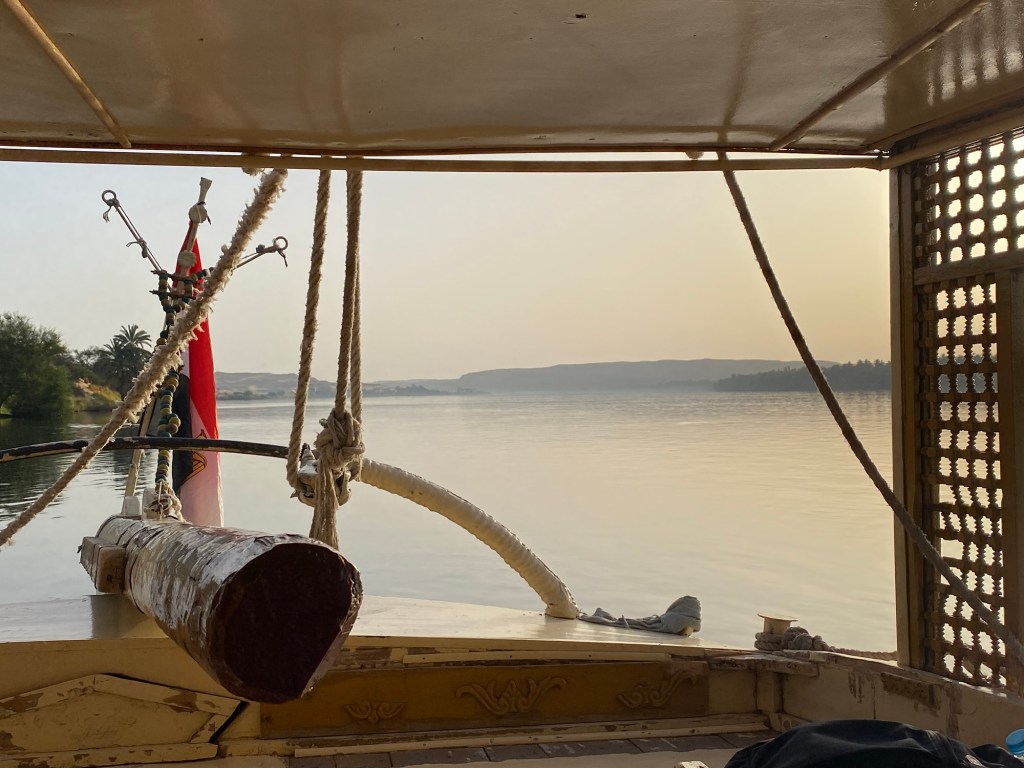
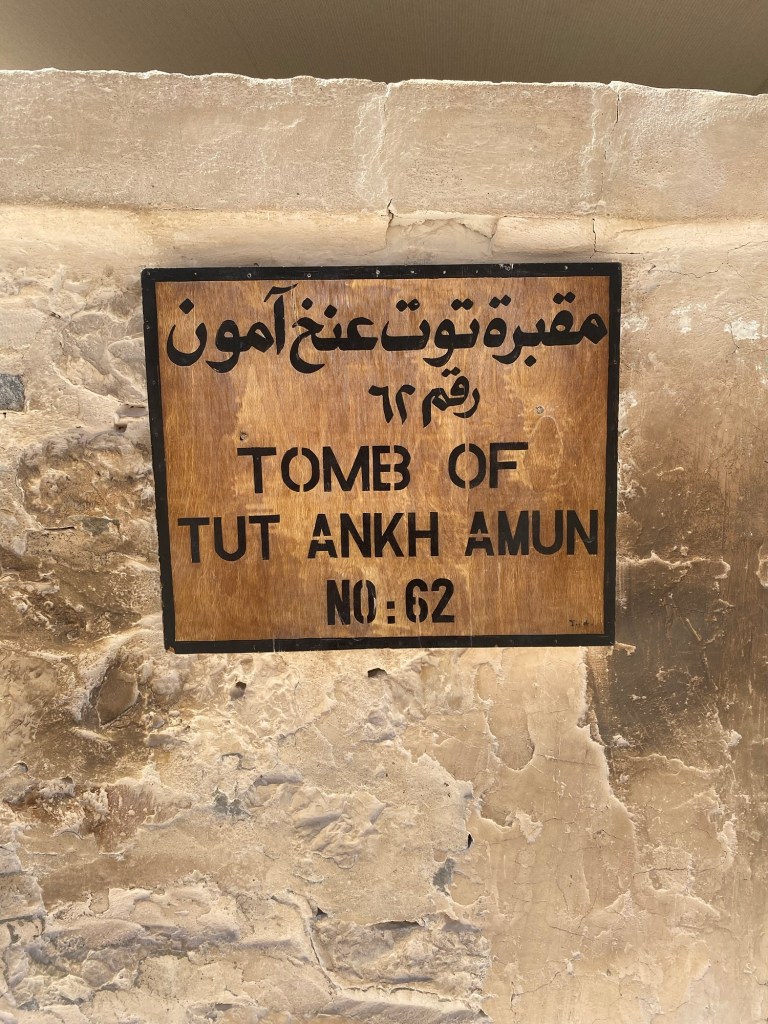
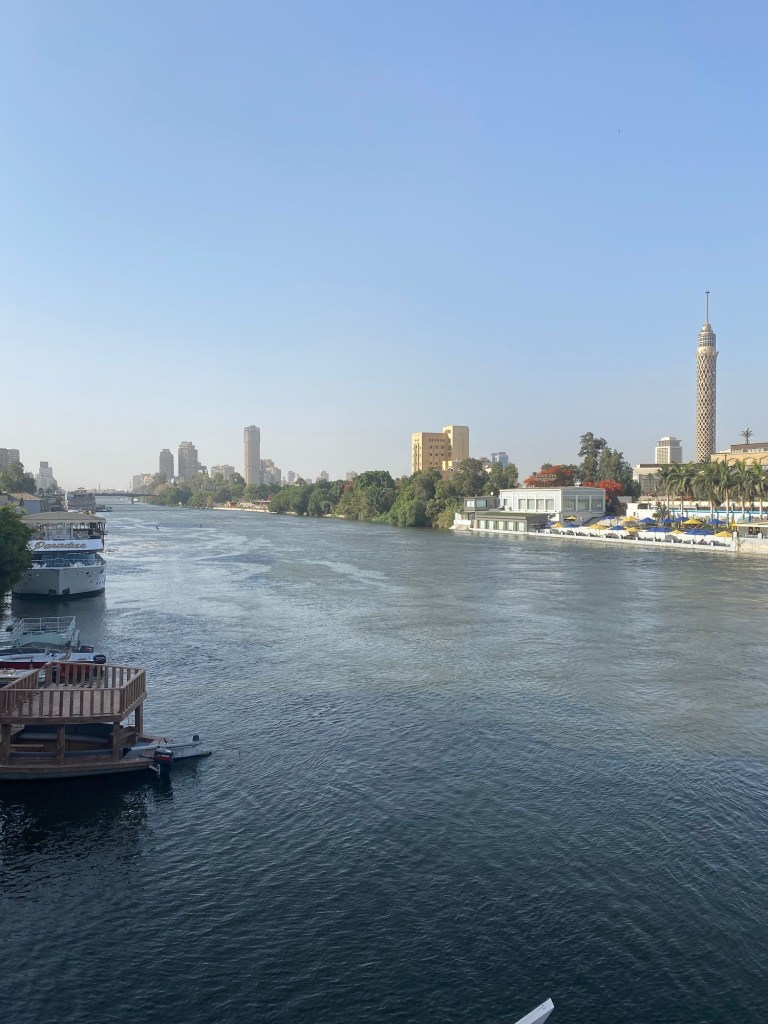
A few days after the birthday I set off for Egypt! I always enjoyed travelling when I was younger, but since having my children this has been on the back burner. Our holidays have been family affairs and we have tended to stick to UK and European destinations with the kids. This has also been the first year in about two decades (!) when I have not been bound by school holidays. My husband has a busy work schedule and is less interested in exotic locations than me so I took myself off alone! Well, not exactly alone…I went on a group tour, feeling that perhaps I needed to build my confidence a bit with solo travel before going it completely alone. I could not have made a better decision! I travelled with a company called Intrepid and the tour was fantastic. It was a very international group- Australians, New Zealanders, US, Canadian and Italian citizens and even a couple of other Brits! Such a wonderful and interesting group of people, we bonded really well and I am missing them all so much. Our tour guide was brilliant, so knowledgeable about ancient Egyptian history and culture.

I had the most marvellous time and as soon as I came back I was on Intrepid’s website thinking about my next trip! Some of my fellow travellers went on to Jordan and looking at their Instagram posts I think that might be next on my list. I’ve posted some photos below. Egypt is an incredible country, with beautiful friendly people and I will definitely go back there.

I had a few days to find my feet again and catch up on laundry before I was off again, this time on what has become an annual visit for me – to the Hay Festival. For the past couple of years I have camped at the Tangerine Fields site just outside Hay on Wye, but I decided I am over camping! I stayed in a B&B in Talgarth, about 10 minutes drive from the Festival site.

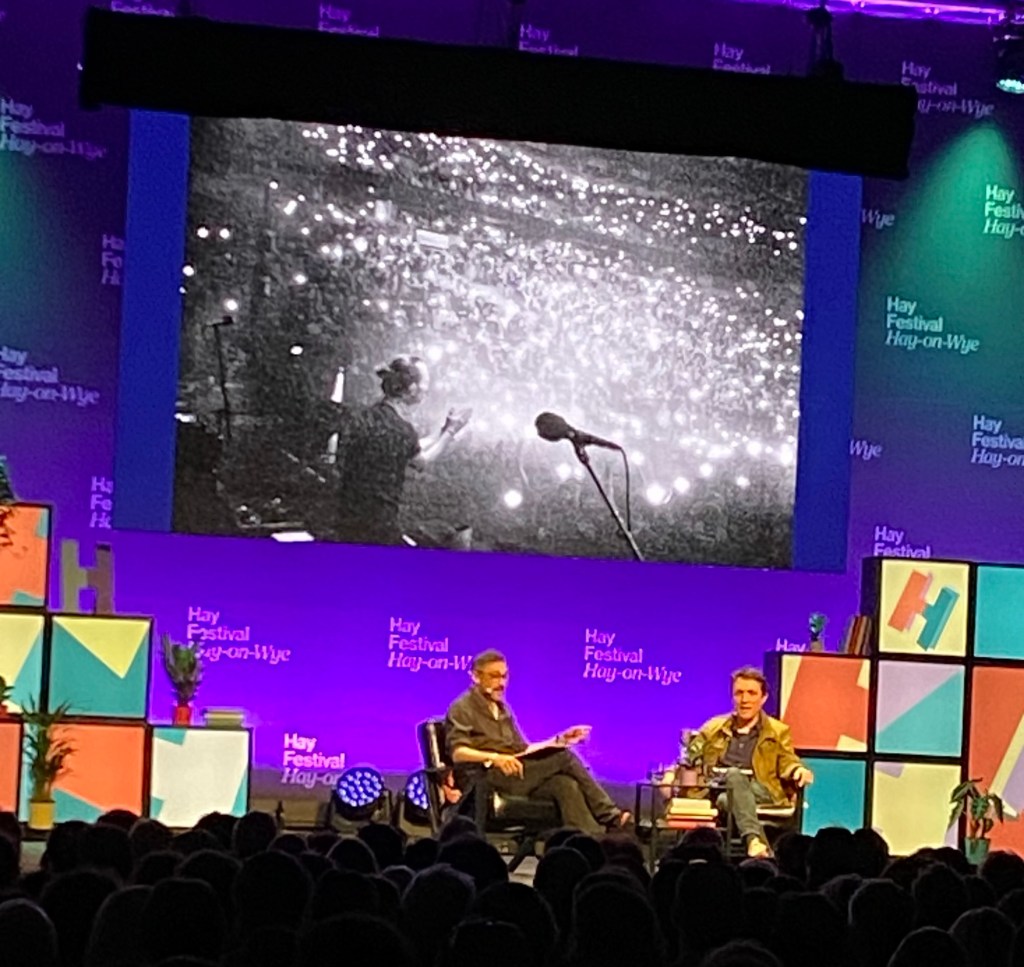
I was there for three days and, as usual, had a fantastic time. There were two particular highlights for me: my final event on Saturday evening was a talk from Radiohead bass player Colin Greenwood, who has recently published a book of photographs he has taken over the years performing and recording with his band. He was very warm and candid and clearly exhausted having just returned from touring the US with Nick Cave and the Bad Seeds. Despite this he spent almost two hours afterwards signing copies of his book How to Disappear, chatting to fans and having selfies with them – such a pro. My other highlight was seeing Kate Mosse and Jacqueline Wilson, two giants of the literary scene. Apparently, between them, they have sold 50 million books worldwide – staggering. The pair are great friends and talked about their writing habits, their current projects and many other topics. They were both so down to earth and modest.

My other events were Jeremy Bowen, BBC International Editor and often to be found reporting from the Middle East or Ukraine – I have seen him at Hay before. Listening to him is sobering indeed. I saw Hallie Rubenhold, author of best-selling non-fiction book The Five about the women victims of Jack the Ripper. she has just published a book about the case of Dr Crippen and his lover, who murdered Crippen’s first wife. She was very interesting. Less interesting was Jeremy Hunt MP. Politicians are usually good value at Hay, but I’m afraid Mt Hunt had disappointingly little gossip! He has just published a book talking about how Britain can be great again, but it struck me as somewhat blinkered about how we became un-great in the first place. His interviewer Robert Peston was a little more entertaining.


A few photos of my Hay Festival experience below.

I am looking forward to a bit of staying put in June! The winner of the Women’s Prize will be announced next week (12th June). I have a couple of reviews to post of books on the shortlist that I have read, so will aim to get those out in the next few days.

Book review – “Alias Grace” by Margaret Atwood

I have had a copy of Alias Grace on my bookshelf for years; my copy might even date back to when the paperback version came out in 1996. But, like so many of the books I own, it was some time before I got around to reading it! I watched the mini-series available on Netflix (it was made in 2017) during the Covid lockdown, I think, and thoroughly enjoyed it so I suppose I felt I didn’t need to read the book after that, but I came back to it recently and am so glad I have finally properly honoured this incredible piece of writing. 

Full disclosure, I am a huge admirer of Margaret Atwood and will probably never dislike anything she has written. She is surely one of the greatest authors alive, with countless awards and prizes to her name, including two Bookers and a PEN lifetime achievement award. I’m not sure why the Pulitzer or Nobel prizes have eluded her – surely The Handmaid’s Tale must be a candidate for both of these. The first book of hers that I read was The Blind Assassin, which won her her first Booker Prize in 2000. It was also the very first audiobook I ever listened to, on tape in my first ever little car! The job I had at the time involved a 90 mile round trip drive three days a week and my husband bought it for me to help pass the time. I felt that book was one of the most brilliant things I had read in years; my first child was a toddler so I did not have a lot of time for reading in my life at that stage – at least not adult reading! 

Alias Grace preceded The Blind Assassin. In my opinion, the later book is better, but you do get the sense of an author rising to the peak of her literary powers and experimenting with moving between time periods (which she also does in The Handmaid’s Tale, of course). Alias Grace is the story of a double murder and a young woman convicted for the crime. Grace Marks was a young Irish immigrant to Canada and after the death of her mother (on board the ship) she leaves her drunken abusive father and, much to her guilt and shame, her younger siblings, to get a job as a servant girl. She finds a position with Thomas Kinnear, an unmarried gentleman who is having an illicit affair with his housekeeper, and Grace’s immediate supervisor, Nancy Montgomery. 

After the couple are murdered in brutal circumstances, Grace is convicted of the crime along with James McDermott, who also worked for Kinnear. McDermott escapes with Grace, but the pair are soon captured, convicted and sentenced to hang. Grace’s sentence is later commuted to life in prison following appeals by a group of well-meaning supporters who believe she was merely an accessory to McDermott’s wicked plan. She is eventually allowed to work as a servant in the home of the prison governor, because she is a docile and obedient inmate. Her supporters eventually arrange for a psychiatrist, Dr Simon Jordan from America, to interview her over a period of time and to produce a report which they hope will help to secure her release. 

Atwood uses these interviews to tell us the story; Grace gives a full account of her life to Dr Jordan, from the beginning, her early childhood in northern Ireland, to her mother’s death, and finally her experiences working for Mr Kinnear and Nancy Montgomery and the murders themselves. For the reader, the question becomes, is Grace a reliable witness? This is a dilemma Dr Jordan finds himself in too. Over the months he spends time with her, he also gets drawn into her world and the patient/doctor boundary becomes blurred. 

The book is based on real events – these murders actually took place and Grace Marks was a real woman convicted of the crime in mid-19th century Canada. At the end of the novel, the author gives an account of the facts she has gleaned from contemporaneous and historical sources. No-one really knows exactly what happened; the reader, like others who have investigated this grisly crime, must make up their own mind. But Atwood does not leave her readers dissatisfied (at least not this one!) – she leaves you with a question. And in her subtle portrayal of Grace, she leaves you with enough space to draw whatever conclusion you want. Or to leave you as perplexed as, it seems, everyone else has been.

I recommend this book highly – it’s a really significant literary achievement. 

The Womens’ Prizes 2025

I’ve had a little blogging hiatus these last few weeks, and, unfortunately, a bit of a reading hiatus, never desirable. The day job and kids coming home from university for the Easter break have cut short my time. We also had a a short holiday in our beloved Zeeland, which was relaxing but full.

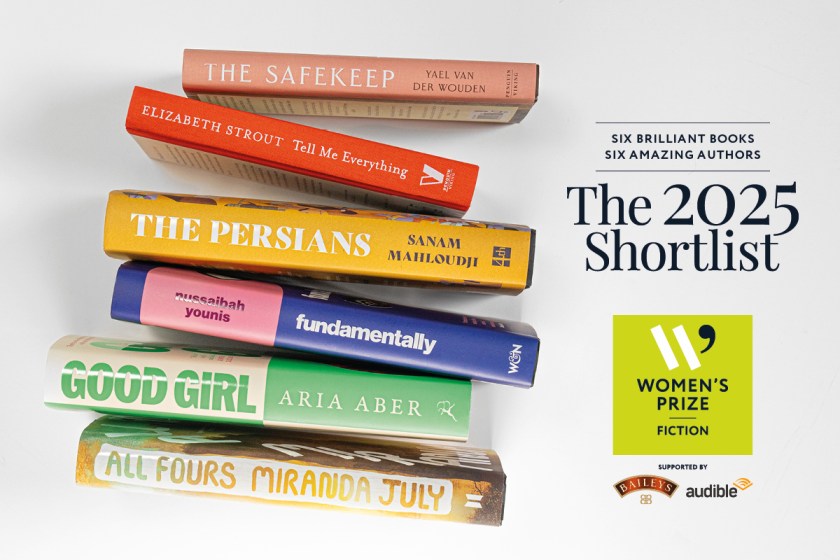
While I was away, this year’s Women’s Prize for Fiction shortlist was announced, and a very interesting selection it is. It was a big surprise to me that Dream Count, the long-awaited new novel by Chimamanda Ngozi Adiche (I flagged this as one of the highlights among new books out this spring, just a couple of weeks ago) did not make the shortlist. A further surprise was that Yael van der Wouden’s Safe Keep, shortlisted for the Booker Prize last year, did make it. I enjoyed Safe Keep but it didn’t feel like a prize-winning novel when I read it last autumn.

Elizabeth Strout’s latest novel Tell Me Everything has also made the shortlist. She is an author I admire hugely, having shot to literary stardom quite late in life and has been fairly prolific these last few years. She has definitely found her groove. The other four novels on the shortlist are by authors I have not come across before: Sanam Mahloudji’s The Persians about a family split by the revolution in Iran and trying to make a life in America looks fascinating. Miranda July’s All Fours about a woman approaching middle age who decides to leave her family and try and forge a new identity for herself, has received a lot of attention.

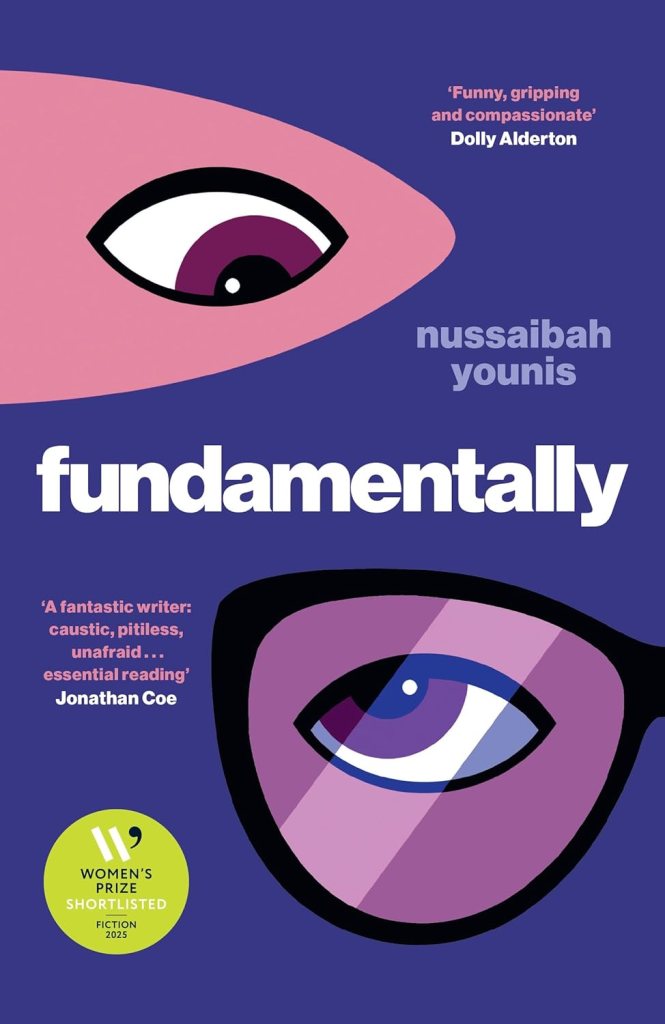
Nussaibah Younis’s Fundamentally is also about a woman escaping her life, this time to become a UN worker in Iraq and developing an unlikely friendship with a young ISIS bride. Finally, Aria Aber’s Good Girl is about Afghan teenager Nila, living in Berlin with her migrant family, also trying to make a new life for herself away from the impoverished suburbs where she grew up, and finding that the grass may not be greener on the other side.

A very interesting selection that perhaps speaks to the times we are living through right now. I’m not sure where to start!

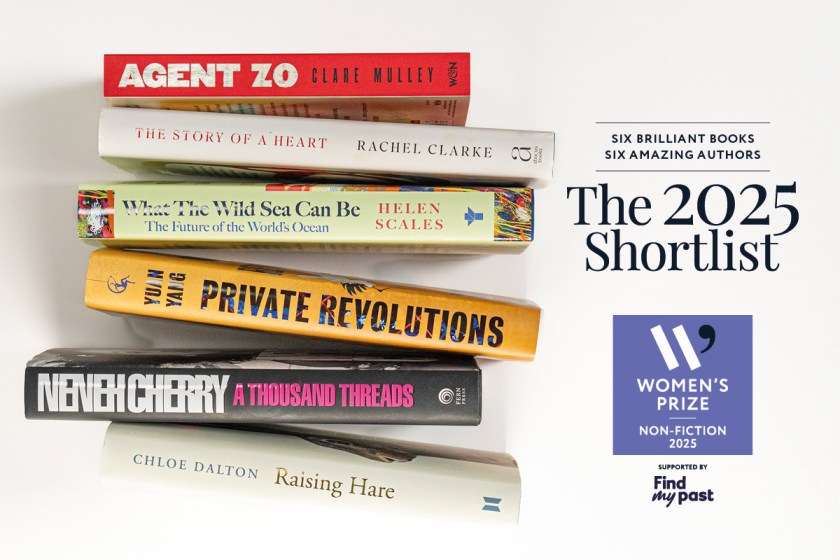
The Women’s Prize non-fiction shortlist is also out. A few of the books included had already caught my eye: Neneh Cherry’s autobiography A Thousand Threads, Chloe Dalton’s account of raising a baby hare Raising Hare, and Rachel Clarke’s The Story of a Heart, a true account of an organ donation from one child to another – this might be a really tough read. The other shortlisted books are:

  • What the Wild Sea Can Be: the future of the world’s oceans by Helen Scales – promising to be an awe-inspiring account of the wildlife on our watery planet and what we can do to protect it.
  • Private Revolutions – coming of age in a new China by Yuan Yang, the first Chinese-born British MP.
  • And finally Clare Mulley’s Agent Zo: the untold story of courageous WW2 resistance fighter Elzbieta Zawacka, the only female member of the Polish elite special forces.

The winners of both prizes will be announced on 12th June – about 8 weeks to read 12 books!

Books out this spring

It really does feel that at long last there is a bit of a change in the air. I am spring cleaning my bookshelves at the moment – always a very challenging task. Books that I have forgotten I owned, books I might want to re-read (someday!) and books that I am ready to let go of, either because they deserve to find a new home or because I am accepting I will almost certainly never get around to them! And I need to make some space for the new titles coming out this season. A few have caught my eye and I thought I would share them with you.

I have been enjoying a lot of non-fiction in recent months and I find that I feel more excited by this genre’s new books than the fiction, to be honest.

Everything is Tuberculosis by John Green

A few years ago I read a book about tuberculosis by science writer Kathryn Lougheed and found it absolutely fascinating. My paternal grandfather died of the disease in London in 1940 just days before his second child (my dad) was born, and I was drawn to this book as I was trying to find out more about my family history. This book comes at a flexion point I think, as I was reading in the newspaper just this week of fears that cases of this terrible condition are likely to rise in the coming months and years following the withdrawal of US aid to developing countries. In our globalised world, we should not expect to be able to contain the disease within national boundaries (as we found with the Covid 19 pandemic) so it will be no surprise to see cases increase in the global north.

Story of a Murder by Hallie Rubenhold

Hallie Rubenhold caught the attention of the literary world with her bestselling book The Five about the women who were the victims of the infamous Victoria London serial killer Jack the Ripper. Her new book, released at the end of March, gives the same treatment to another famous murder case. In 1910, a London doctor, Hawley Crippen, murdered his wife Belle Elmore, a music hall performer. In this book, Rubenhold applies her research and detective skills to uncovering the story of how a group of Belle’s friends helped bring the killer to justice, and shady associates who may also have had a role. The book has been highly praised and its publication is much anticipated.

Maternity Service by Emma Barnett

I am an avid listener to the BBC Radio 4 morning news programme Today, and Emma Barnett is one of its main presenters. She is a broadcasting tour de force and made her name with some spectacular interviews on Radio 5 Live, and changed the face of another Radio 4 stalwart show Woman’s Hour. She is a campaigner for many feminist causes and is a high profile mother of young children who speaks passionately about the challenges of juggling motherhood and a career. As I work with new mothers I am very interested in what she has to say on the topic.

So, that’s the non-fiction, what of the fiction?

Dream Count by Chimamanda Ngozi Adichie

Published just a week or so ago and immediately longlisted for the Women’s Prize, this is the much anticipated new novel from Chimamanda Ngozi Adichie, her first in a decade. I love her work – her book Half of a Yellow Sun about the Biafran war is one of my favourite books of all time – and have reviewed her recent non-fiction books on here. This will be top of my TBR list for spring.

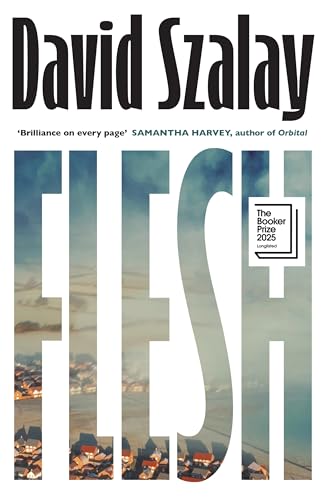
Flesh by David Szalay

Szalay’s 2016 novel All That Man Is was one of the first books I reviewed on this blog, after it was shortlisted for the Booker Prize that year. It wasn’t my favourite on the shortlist but I did enjoy it and found it interesting to read men’s perspectives on life’s dilemmas. Flesh follows the life of a young Hungarian boy as he moves from his small town to the ranks of the super-rich in London. With so much toxic masculinity in the world just now I feel this might be an important read.

The House of Barbary by Isabelle Schuler

This is said to be a feminist re-telling of the legend of Bluebeard which interests me as this myth has crossed my path a couple of times in recent years, also as a feminist re-telling. First in the non-fiction book Women Who Run With Wolves by Clarissa Pinkola Estes, and second in Angela Carter’s collection of short stories The Bloody Chamber. The book is a re-imagining of a number of brutal myths and the opening story (which gives the book its title) concerns the Bluebeard tale. I have not heard of Isabelle Schuler so I am interested to read her treatment of this story.

So, that lot should keep me occupied for a little while!

What books are you looking forward to reading this spring?

Book review – “Thunderclap” by Laura Cumming

The longlist for this year’s Women’s Prize for Non-fiction was announced last week. Only a couple of the books on the longlist have crossed my radar – Neneh Cherry’s autobiography (I have heard her talking about it on the radio quite a lot recently) and Anne Applebaum’s Autocracy Inc.: The Dictators Who Want to Run the World, which feels like it might be required reading at the moment, sadly. Anne Applebaum is someone I admire hugely and she is speaking at the Hay Festival this year, the opposite weekend to Colin Greenwood so I am trying to choose between her and Radiohead! Depression and joy perhaps!

So, I thought it might be a good week to post a review of Thunderclap by Laura Cumming, which was shortlisted for last year’s Women’s Prize for Non-fiction and has been widely praised since its publication in 2023. Laura Cumming is a journalist, art critic for the Observer, and Thunderclap is her third book. The subject is Carel Fabritius, the Dutch Golden Age painter, pupil of Rembrandt, who was killed in 1654 at the age of 32 in Delft when a building in the town where gunpowder was being stored exploded, killing more than a hundred people and injuring thousands of others. Fabritius was killed and his studio destroyed along with an unknown number of his paintings. Only about a dozen of his paintings remain in art galleries around the world. 

Laura Cumming follows in the footsteps of many other scholars and art experts in trying to find out more about the artist who showed so much promise (he has been described as the only one of Rembrandt’s many pupils who began to develop his own style after learning from the great Master, and at such a young age) but has left tantalisingly little. Experts have long felt that there simply must be more of his work, but that it just has not been found yet. He is a somewhat enigmatic figure and very little is known about his life; it is known that his first wife died young as did their infant daughter, and that he married again, but there are significant gaps and despite his rare talent he seems to have died quite indebted so he obviously did not live well from his work. For one so gifted he has left remarkably little behind, either in terms of paintings or a paper trail. 

Cumming writes of her deep love of Dutch art and how this was fostered from an early age. Her father was also an artist and nurtured her interest, and married with the deep dive into the life and work of Carel Fabritius (and his contemporaries) is biographical detail about her father and his creative life. She draws many parallels between her modest, gentle and talented father (who died prematurely) and the kind of person she imagines Fabritius might have been. Examining the facts of his life, his humble background, his marriage to a local girl, then widowhood and the loss of a child, she concludes that he carried a heavy burden and that this helps to explain his absence from the main Delft and Amsterdam artistic scenes. Cumming looks deep into a number of his paintings and finds in ‘Young Man in a Fur Cap’ (thought to be a self-portrait) traces of tragedy and grief. 

This book is both expansive (as well as Fabritius, Cumming writes at length about other Dutch painters of the time and the genre generally, her father and her own journey embracing art) as well as focussed on the tiny details of her subject, his life, his appearance, his paintings. I learned so much but I did not feel at any point that I was being given a history lesson – Cumming takes you on the journey with her.

One of my favourite books of recent years is Donna Tartt’s The Goldfinch, which, of course, concerns one of Fabritius’s most famous paintings of the same name. It now hangs in the Mauritshuis gallery in The Hague. I was drawn to find out more about the painting and its artist creator after reading that book, and Thunderclap came out shortly after I read it, so I have been keen to read this book. I was not disappointed, it really is excellent. Since completing it I have also been to the National Gallery in London to see the Van Gogh exhibition there. The National Gallery has two of the paintings Cumming explores in detail – ‘Young Man in a Fur Cap’ and ‘View of Delft, with a Musical Instrument Seller’s Stall’ – and it was a joy to see them and have a greater understanding of the work.

I recommend this book highly. 

By coincidence, I am currently reading Naomi Klein’s Doppelganger, which won the Women’s Prize for Non-fiction last year. I am enjoying it enormously and it shows what high quality this particular Prize promotes. The 2025 shortlist is out on 26 March.

Book review – “Never Let Me Go” by Kazuo Ishiguro

I am very happy to be at the stage in life where I read books that have been recommended to me by my children (all now adults). This is one which my elder daughter enjoyed reading over the summer last year and which she thought I would too. She was not wrong; it is hard not to be a fan of Kazuo Ishiguro, one of our finest living writers, internationally acclaimed, winner of the Booker Prize in 1989 (for The Remains of the Day) and the Nobel Prize for Literature in 2017. The Remains of the Day was adapted for screen in 1993 and turned into a highly-acclaimed film starring Emma Thompson and Anthony Hopkins. Never Let Me Go was also made into a film in 2010 (though I did not know this) with a stellar cast which included Keira Knightley, Carey Mulligan and Andrew Garfield. Ishiguro has quite the pedigree and from what I have seen seems a very nice and down to earth chap. (And a British ‘Sir’ to boot.)

[This review contains some spoilers.]

I read and reviewed Klara and the Sun when it came out  in 2021, a novel about some of the potential repercussions of our obsession with technology and AI in particular (I posted about my own sense of alarm about this last month). It looked ahead to some future date when the advance was seemingly beyond our ability to arrest. The world it portrayed was at once familiar and extremely strange. Never Let Me Go bears some similarities in that it explores human cloning. Some readers may recall ‘Dolly the Sheep’ the first successfully cloned mammal who was born in Scotland in 1996 and died in 2003. At the time, there was a lot of fear-mongering about the consequences of this extraordinary achievement and some justified debate about how we as a human race should manage and control the inevitable advance of this particular field of science. In Never Let Me Go, Ishiguro imagines a world where this science is normalised into everyday life and what that means for the people involved.

The narrator of the story is Kathy, a woman still quite young when she is looking back on her life, and in particular at her childhood, from the perspective of one whose living purpose is to care for her peers, the others who share the same destiny as her. Kathy was brought up in an English boarding school (‘Hailsham’) where the staff are known to the young people as “the guardians”. This was in the late 1990s (when Dolly the sheep was all over the news?). Kathy tells us all about her life there, about the daily life of the children, about their relationships and petty differences, about the trivial things that were important to them. At first it is not clear to the reader exactly what is going on at Hailsham, but part way through, when reference is made to their future status as “donors” or “carers” it becomes increasingly and terrifyingly clear what these young people are for – their purpose is organ harvesting. They are all clones of someone on the outside (who they refer to as ‘models’ or ‘possibles’). 

When we think about clones we might think about robots (rather like Klara in Klara and the Sun), but the children at Hailsham have been created and have all the usual aspects of human personality. This presents challenges to how they are raised and ‘Hailsham’ was originally conceived as a place where their lives could be made rich, where they could develop relationships with one another (including sexual relationships) and be given some purpose in life until they would be required as donors. But of course, their lives are completely pointless, as Ishiguro shows us, their future is bleak; at some point they will donate, once, twice, perhaps more, after which they will weaken and die. By showing us the human frailty of the young people (petty squabbles, jealousies and meanness) he shows how they are just like us, how we could be just like them, just a few steps away from being nothing but an organ incubator. It would be easier if they were dehumanised (like Dolly). 

I found this a powerful novel that I have thought about much since I finished it a few months ago. As I have been thinking about it for this review, I have dipped back into sections of the book and seen things I did not see first time around, the pathos in Kathy, Ruth and Tommy’s trip to Norfolk for example, to search for Ruth’s “possible”, like a search for a mother, an origin story, but of course, the search is fruitless and deeply disspiriting to them all. It is a moment of realisation for them all – there is no-one out there for them. 

This book has to be on a list of must-read books of the twenty-first century.