#KeepKidsReading book review – “Stolen History” by Sathnam Sanghera

I am starting my #KeepKidsReading week book reviews with a newly-published non-fiction title that caught my eye. Sathnam Sangera published his best-selling book fort adults Empireland: How imperialism has shaped modern Britain in 2021. He is a journalist and has long campaigned for a more grown-up debate about the UK’s history of empire-building, what this means for us today and how it can help us manage some of the issues that arise from our multi-cultural society. Sathnam was part of a panel at the Hay Festival in a debate I saw there about Britain’s stately homes, the riches within them and how we as a society might engage with or view them in the modern era. It was fascinating.

The topic is certainly gaining traction (not before time, many would argue) and it is encouraging to see a book aimed at children on the subject. Sathnam Sanghera acknowledges the wonderful Horrible Histories series (books and television) for changing the way certain topics are taught to young people, making them accessible as well as entertaining. Sanghera sets out to do the same here, though it is a little heavier on the education than the entertainment side.

The author begins by explaining what the British Empire was and how Britain came to be perhaps the most powerful nation on earth. I learned quite a lot! I did not know, for example, that the British Empire was actually seven times larger than the Roman Empire and endured for a similar period of time.

He goes on to talk about some of the things we think of as ‘British’ that we actually imported from other parts of the Empire, not least tea! There are a number of pen-portraits of Empire figures, from the controversial explorers and colonisers, such as Robert Clive, to the many black and brown skinned individuals whose place in history has been minimised, such as Mary Seacole (who played just as big a role in the Crimean War as her white counterpart Florence Nightingale).

Sanghera does not shy away from controversial topics in this book and I think he handles them very well. For example, a theme running throughout is how objects (and indeed natural resources and human labour) were forcibly removed from their countries of origin. He alludes to the debate currently ongoing about the return of precious artefacts to their original owners. He also busts plenty of myths! For example, in the debate about whether British museums should return looted artefacts Sanghera points out that less than 1% of the British Museum’s current collection is on display so the place would hardly be hollowed out if even a lot of items were returned.

The author addresses head-on the fact that to many people the concept of ‘the British Empire’ remains sacred. He explains carefully why some people are made angry by discussions about it, without taking up a polar position himself. I think he manages quite successfully to explain why it remains important to people, whilst also equipping his readers with factual information and even a few strategies for handling discussions. He even explains terms such as ‘exceptionalism’ and ‘jingoism’ in simple but effective terms, which is quite something.

As you can probably guess, I rather liked this book and would recommend it to any parent keen for their child to have a grasp of this topic (which would probably be better than very many adults’ grasp!). It is definitely not just for families with multi-cultural heritage. I had some slight reservations about the title, because it suggests a ‘position’ that is actually much more nuanced in the book. But it turns heads I suppose.

Highly recommended (and for adults too!). It is published in paperback by the always wonderful Puffin Books, is very well illustrated and is set out in highly digestible chunks.
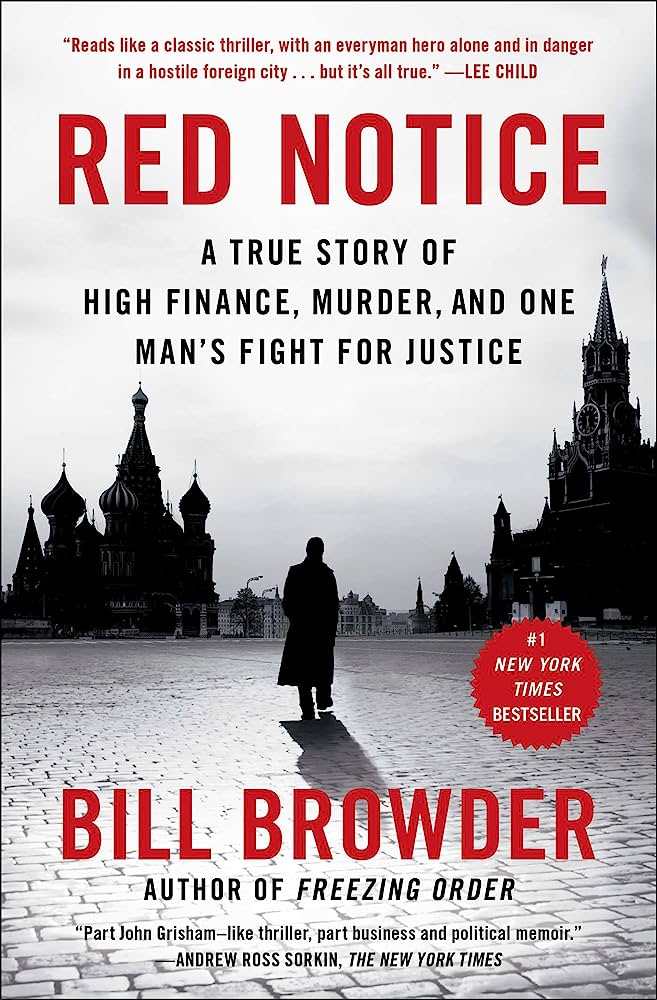
Audiobook review – “Red Notice” by Bill Browder

This was my book club’s June read. It wasn’t a title I suggested but I was happy to go along with it even though the blurb didn’t appeal that strongly. A true-life thriller about high finance and espionage did not seem like the kind of book I would normally read, but then isn’t that the joy of a book club, to make new discoveries? The book opens with the narrator (the author) giving a detailed account of his being detained at a Moscow airport without explanation, being held for endless hours without food or water. Attempts to contact friends, family, contacts in the British Embassy bear no fruit and finally his phone battery gives out. The intention of the Russian authorities seems to be to terrify their detainees, keeping them guessing about what might happen to them.

Finally, the author is allowed to leave and is put on a plane back to London, where he lives. This happened in the early 2000s, but there is a long history leading up to this event. Bill Browder then takes us on the long journey to explain how he came to be in this situation, beginning with his childhood in Chicago as the lowest-achieving child in a highly academic family. Young Bill clearly had something of the entrepreneur about him and despite his early difficulties in education (exclusion, boarding school, severe bullying) he eventually wins a place at Stamford business school. 

After completing his college education and a stint at a couple of consultancy firms he decides on an adventure, following somewhat in the footsteps of his eastern European grandparents. From an early age he shows clearly his entrepreneurial streak and a nose for an opportunity. He moves to Russia in the 1990s, as that country is emerging into the post-Soviet Union era. Browder begins to see the huge financial benefits that can be secured by being an early investor in the privatisation of national industries and he persuades a number of wealthy individuals to come on board with him. His Hermitage investment fund is extremely successful and he makes a lot of money, for himself and his investors. 

[Spoilers below]

Browder bases himself between Moscow and London, where he also starts a family, but it is clear that the pressures and demands of his lifestyle take their toll on his marriage. Eventually, he and his wife divorce – there is a lot of very personal material in this book too. Browder will eventually meet and marry a Russian woman with whom he has two daughters.

To support his finance business, Browder has to set up a strong team of lawyers and advisors, as well as colleagues with connections and insights into Russian society. In the time that Browder is operating in Russia, the country changes dramatically and a small number of people begin to make a lot of money – the rise of the oligarchs. Corruption was always part of the system, but now becomes endemic. As a foreigner (even worse, an American) profiting handsomely from Russia’s embrace of capitalism, Browder becomes a marked man. His life becomes endangered (hence the detainment at the airport) and he has good reason to believe that Putin himself is behind efforts to eliminate him. The ‘red notice’ of the title refers to the Interpol arrest warrant that the Russians tried to have exercised on him (which was eventually  withdrawn, much to the ire of the Russian authorities for whom this is a huge embarrassment). Browder realises that the Russians might attempt to get at him through his associates. He persuades most of them to flee the country, sometimes under cover, but one of his lawyers, Sergei Magnitsky, refuses. Browder tells us that he simply “loved his country too much”. Magnitsky is arrested, charged with trumped-up accusations of fraud, and imprisoned in a labour camp. His treatment there, including beatings, eventually leads to his death. 

This event shapes Browder’s life from then on and occupies the final third or so of the book. The author’s attempts to fight his friend’s case, and then to seek justice for him become the cause of his life. He devotes his time to raising awareness of human rights abuses in Russia and eventually succeeds in persuading the American Congress to pass ‘Magnitsky’s law’, with the help of key politicians such as the late John McCain, which permits sanctions against those guilty of human rights abuses, such as freezing of overseas assets and refusal of visas. Bill Browder continues to devote his life to persuading other countries to adopt similar legislation. 

This is a fascinating story and after my initial scepticism I have to say that I was completely hooked. In the context of Russia’s current behaviour it has extra resonance and gives an insight into the psyche of those in power in that country. I had heard of Magnitsky’s law, but had no idea of the background. Browder and his team were one of the first to use the then new platform YouTube to great effect as a publicity tool to raise awareness of their cause, when Sergei Magnitsky was still alive. The videos can still be seen on there and are powerful. Also, powerful, is the final chapter of the book, narrated on the audio version by the author himself. It is chilling when he tells us that if he is killed, we the readers will know who did it. 

A stunning and unique story, highly recommended.

Book review – “Four Thousand Weeks” by Oliver Burkeman

I always enjoyed reading Oliver Burkeman’s columns in the Saturday supplement of The Guardian, but then two or three years ago he announced that he was going to stop doing them. Reading this book, one assumes that he had a bit of a revelation and that is what he is sharing with us in this his third non-fiction book. 

Burkeman opens by telling us that when asked to guess how long the average life is, most people, when told not to think too long or hard about it, come up with numbers such as 200,000 weeks, or longer. When people are then invited to calculate the number of weeks in a long life of around 80 years (if you’re lucky), most are quite shocked. Burkeman’s central point is that this is an absurdly, insultingly short amount of time, given the capacity of the human brain for ambition and the desire for happiness and fulfilment. As technology has enabled us to do more with our lives (we no longer have to spend time growing our own food, we can travel much further and faster and more cheaply than even our grandparents’ generation and we are living longer than ever) we have tried to cram ever more in, in the belief that this is the signifier of an objectively ‘good’ life. 

Burkeman describes himself as a time management geek and insists that he has tried every method and read more than most about how to squeeze even more into his busy life, to expand his list of goals and ambitions and to try and achieve more. He claims that not only do most of these methods fail at first contact with reality, but that they are not making us any happier either, quite the contrary.

Within the first few pages of the book, you realise that you have in fact been cheated. You are not going to find the one true time management method that is finally going to “work”. What you get is a long essay on why it is much healthier and more productive to embrace the fact that we do not actually spend very much time on this earth and that rather than trying to squeeze more in, we should be focusing on quality over quantity. So, it’s a book about learning to choose differently. When we understand what our purpose really is, what truly gives us joy, we can prioritise those things rather than the long list of more prosaic and ultimately less satisfying goals that we give ourselves. It can be so hard to let things go, of course – what if you want to be a great parent, a great cook AND a great painter. Well, I’m afraid Burkeman thinks we can’t do it all and we have to choose. But in choosing we will become better at the things we truly want.

When I became a mother in the early 2000s, there was a lot of literature about on the topic of ‘having it all’ – a fulfilling career, adorable high-achieving children, a loving partner, a stunning home, and a gym membership. I quickly realised that if that was a possibility, then I was a failure. I still feel at times that I did fail; I gave up my career on the birth of my second child because I hated sub-contracting my children’s care, I could not do everything to the best of my ability, oh and it made no economic sense. Reading this book brought some of those thoughts back to me and at times I felt vindicated. On the other hand, as a woman in my fifties now, well over half way through my four thousand weeks if that is to be my gift, it was also quite a sobering read. But perhaps also a timely one. Now my family is almost grown up it is time to shift my priorities once again and focus on what my real goals are. I don’t have time to visit every country, read every book or learn every skill that I’d like to. That is just a fact. And since the love of my family and my friends is actually the most important thing in my life it sharpens the mind. Time to choose and choose wisely. 

Highly recommended, but not for the faint-hearted!

Non-fiction book review: “The Hare with Amber Eyes: A Hidden Inheritance” by Edmund De Waal

This was my my fourth non-fiction book of the year and, very helpfully, also my book club read for June (now only two behind!). I have to admit I was a little sceptical at first. It was suggested by one of my fellow book club members and I had not heard about it before. I thought it would be just another rich family  memoir, but it seemed to have a bit of history about it, so I was game.

The author is a British ceramicist whose grandmother was part of one of the richest Jewish families in Europe, the Ephrussi banking dynasty, before the Nazis confiscated their property and they were forced to flee their native Vienna in the late 1930s. At the start of his journey the author apparently knew very little of his family history and it is only through the discovery of a collection of ‘netsuke’ tiny Japanese carved figures of people and animals in ivory or wood, that he decides to explore further. The author was on an academic sabbatical in Japan, where his great uncle Iggy (Ignatius) lived when he sees the collection for the first time. He is fascinated by the netsuke and this prompts him to dig deeper into their history and how they came to be in his family.

The book does begin as something of a rich family memoir. Originally from Odessa, the accumulation of wealth through banking enables them to live variously in Paris and Vienna, mixing with the highest-calibre thinkers and artists of the day. It is Charles Ephrussi, an enthusiast for ‘japonisme’, which was popular at the time, who put together the collection of netsuke. Later, they would be considered more like minor trinkets (compared to other parts of the collection), played with by the children of the family, as taste for japonisme waned and the market became saturated with lower quality objects. Because of the family’s wealth and importance, the author has been able to compile a detailed history of the family and imagines the scenes and events at their various homes, the salons they held with the famous people of the day present. It is fascinating but a touch sterile for me.

As the narrative moves into the twentieth century, and the inevitable decline of the dynasty, I felt it became more interesting. The first world war changes everything, of course, for that stratum of society, but the author writes most movingly when describing the decade or so before the outbreak of the second world war, with the gradual demonising of Jews, particularly the wealthy ones. As various members of the family see the writing on the wall and flee the continent, the dynasty begins to break down. The final humiliation comes when the Nazis confiscate their mansion in Vienna and all its contents. The netsuke only survived this process because the family’s long-serving maid, Anna, who was kept on at the house, gradually spirited them away and hid them in her mattress. Later they were smuggled out of the country.

This part of the book is also most moving because it is within the author’s living memory almost, his grandmother having been one of those to flee Vienna, arriving in Kent with next to nothing and having to start her life again. De Waal also becomes increasingly reflective as the history gets closer to the time of the war and to his living family members. It is as if he becomes able to feel their pain. He is also philosophical about how relatively lucky his family were – yes, they lost everything (and they had a lot to lose), but they survived and prospered, unlike many other European Jews. Their wealth meant they were able to leave more easily than most. He is also deeply moved by the loyalty of Anna, the family maid, who risked her own life by trying to save something of the family’s collection, the netsuke.

I listened to this on audio and it was beautifully read by Michael Maloney, but it would have been useful to have the family tree that is in the print edition to refer back to as I did lose track of the members of each generation. The book won the Costa Book Award in the Biography category in 2010. Since its publication, some historians have challenged some of the facts in the book, I gather, for example suggesting the standing of the Ephrussi family has been overstated. I suspect some misrepresentation is inevitable in this kind of book, where the author has fleshed out bare facts with imaginings about day to day life, and this does not detract too much.

It is a fascinating account – recommended.

My next non-fiction read is a book I have had for a while now, Margaret Atwood’s Burning Questions – a collection of essays and comment pieces. It is another big book, so I suspect I am not going to be catching up too easily on my non-fiction challenge for the year, but I plan to take it on my summer holidays so we’ll see!

Non-fiction book review – “What I Talk About When I Talk About Running” by Haruki Murakami

The non-fiction reading challenge that I set myself at the beginning of the year has not been going quite to plan – I set myself the goal of reading one non-fiction book a month, so I should be well into my sixth by now, but I have only completed three. My reading has been quite erratic these last few months; my two daughters have been doing their GCSE and A level exams and have needed a lot of support from me, including taking them to and from school for the exams themselves. Happily, they finish this week and I am pleased to report that they have both coped really well with the enormous pressure.

After the challenge of Andrew Arsan’s Lebanon, I went for something completely different for my third non-fiction, a book by the Japanese author, Haruki Murakami, who is much better known for his novels, such as Norwegian Wood and 1Q84. He is considered one of the world’s greatest living writers and has published fourteen novels, several short story collections and a number of essays and works of non-fiction.

I came across What I Talk About When I Talk About Running by complete accident when I was looking for books to give my son for a foreign trip he took recently. He is a keen runner too and I thought he might find it interesting. Reading the blurb I determined that I would give it a go myself.

I decided to listen to it on audiobook, and to listen while I was running! It’s fairly short, less than five hours listening time, around 200 pages, so I got through it fairly quickly. In it the author talks about his experience of running marathons, which he does once a year, and an ultramarathon in his home country of Japan. He writes about his highly disciplined approach to running; he has run six miles a day, six days a week for more than two decades. He wrote the book in 2007, when he was in his late fifties, and was still managing to maintain this schedule. Despite his busy life as a world-famous writer, international lecturer and academic, he has stuck very successfully to this schedule. He is now in his early seventies – I wonder if he is still doing it?

He writes of the benefits to his mental and physical health from his running schedule, but he is not fanatical about promoting his particular method. He is simply writing about what works for him. He draws parallels between his approach to running and his approach to writing – the meticulous attention to detail, the obsession with timings, the need to remain on task. It is also fascinating when he writes about what he notices when he runs, the landscapes and people around him, how it makes him see the world in a certain way. This is the continuous practice of the writer, observing what is happening in the world they inhabit.

This felt like a very intimate book; Murakami lets us into his very private running world. As a runner myself I do not talk very much about the strange thoughts that go through my mind when I’m running, how I feel when approaching a known hill or what my legs feel like after 7km, but Murakami takes us there. Some of the narrative is extremely detailed, for example when outlining his training schedule for an upcoming marathon – this could be the literary equivalent of showing someone your holiday photos! In other words not really interesting to anyone else! But if you are a runner and interested in the process you will be drawn into his world of measurements, timings, footwear and clothing considerations, like it was all completely normal conversation. As with running the book has a meditative quality.

I thoroughly enjoyed this book and I recommend listening while running.

My next non-fiction title is actually one my book club is reading – The Hare with the Amber Eyes by Edmund de Waal, about the well-known potter’s search for his family history as he traces the origins of a cache of Japanese miniature sculptures. Let’s hope I can catch up on this challenge!

Non-fiction book review – “Lebanon: A Country in Fragments” by Andrew Arsan

At the start of the year I set myself a non-fiction reading challenge. I realised that although I loved non-fiction, it was a genre I had neglected a bit. I set myself the goal to read one non-fiction title a month. It has not been going well! My January book, BJ Fogg’s Tiny Habits, took a while to get through. My February book was Lebanon by Andrew Arsan, which I spotted in my local bookshop at the end of last year and bought on impulse. It was big and not cheap, so not the usual kind of book I would buy, so it was very much a treat to myself – I know, most people would go for a new lipstick or something!

There is a story to this. I had the privilege of visiting Lebanon about twenty five years ago. My closest friend at university was half-Lebanese and lived most of her life between Lebanon and the UK. Some of the time she was forced back to the UK due to civil unrest in Lebanon, but she always had a foot in each camp. At the time (the second half of the 1990s), Lebanon was relatively stable and I spend a wonderful few weeks there. The people I met could not have been warmer or more welcoming and I loved every minute of my trip. The history of the region is the history of civilisation and it is heartbreaking to see that that part of the world endures so much suffering and destruction today.

The ancient Roman ruins at Baalbek – a UNESCO World Heritage site

Lebanon is a tiny country, one of the smallest states in the world, but its strategic importance means it has a higher profile on the international stage than its size might suggest. Its population is though to be close to seven million now, but well over 1.5 million of these are thought to be refugees from the various conflicts going on nearby. Over a million refugees from the war in Syria are thought to be living in Lebanon.

I always knew that the country was comprised of a fragile balance of different religious interests, known as confessionalism. I also always knew that much of its political system was characterised by corruption and vested interest. I also always knew that it was a country whose people have endured the worst effects of that corruption and the factionalism. Who could forget the terrible explosion of out of date and highly combustible fertiliser at the Port of Beirut in 2020, which killed in over 200 people, and for which no-one has yet been held fully accountable? Lebanon is also a country that its other more powerful neighbours, particularly Israel and Syria, have sought at times to control. The story of Lebanon is fascinating if also rather tragic.

The aftermath of the explosion at the Port of Beirut (Copyright ABC news)

What I was expecting from Andrew Arsan’s book was a history of the country which would give me a more detailed perspective of its present conditions. I was expecting a textural narrative which would tell me more about the Lebanese people, their nature and character, and about the culture. That’s not quite what I got!

Andrew Arsan is a Cambridge scholar of Middle Eastern history, with Lebanese origins. This book is a work of great scholarship that focuses on the period 2005-2019 – the references alone run to almost fifty pages. The book begins with the assassination of Rafiq Hariri, the great political hope of the Lebanese people at the time. The Syrian government are thought to have been behind his killing. It triggered a period of political turmoil in the country that the author describes in great detail. I found much of this very difficult to follow. I suspect, however, that anyone with some prior knowledge of the country and its politics, or who was from Lebanon, would be able to appreciate this account more. The overwhelming impression that I was left with, however, was that the government is corrupt; it’s about who owes what to whom, is influenced by outside interests, and is more interested in itself than improving the lot of the population.

The second half of the book was more interesting to me as it followed many of the social developments in the period, the cultural changes, how corruption has compromised the basic rights of Lebanese people, for example, the extensive privatisation of beach areas, previously unowned public goods, to the exclusion of all but the wealthiest citizens. The very basics of life have become increasingly difficult – there are frequent power cuts, intermittent access to the internet, and there is a whole chapter on how government incompetence and corruption led to a months-long failure in refuse collection services, with predictable consequences.

The book is extensively researched – I don’t think I have ever read anything quite like it. It looks like the kind of book you would dip into, but in fact it is a book that is meant to be read as a single narrative work. It is extremely well-written, with dark humour as well as profound irony. It is a shame that it is unlikely to be read widely.

I could only read this book about ten pages at a time, so it took me almost two months to work through. It is not bedtime reading and it won’t be top of many wish lists, but it is the kind of book that deserves to be read and understood, because Lebanon is a country that deserves more of our attention and to be better understood.

The next book I read in my non-fiction challenge was Haruki Murakami’s What I Talk About When I Talk About Running – much longer title, much shorter book. I listened to it on audio over the course of about three runs. Look out for my review next week.

Spring is here! Time for nature books

At last, spring seems to have arrived here in the north of England and it has felt like a long time coming. I love my garden but I could certainly not describe myself as a ‘keen’ gardener, nor have I a great knowledge about the subject. I like it to look nice though, and I like being in it. So, for the last few weeks, as the weather has got noticeably warmer and less damp, I have spent a lot of time in my garden, mainly cutting things back as it was already well-planted when we moved in and the shrubs just seem to grow and grow every year. I have barely touched the garden all winter, but as soon as buds start to appear on things, or spring blooms emerge, I am filled with a renewed gardening energy!

Nature more generally is rather different for me; I love being outside all year round and I find great beauty in bare trees in the winter months, when you can see the wonderful shapes and the intricate patterns of their branches more clearly. It can appear to some that everything is ‘dead’, but while much of it is indeed dormant, there is still a great deal going on if you care to look. Nevertheless, in the spring, so much of the work of nature is visible that it’s a good time of the year to think about nature books. I’ve picked out a few below, fiction and non-fiction, both classic and contemporary, that you might like to indulge in.

Classics on nature

Walden by Henry David Thoreau

I read this while at university for a module on American literature, and I’m afraid my 20 year-old self found it very boring! It is, however, a classic of the genre. Written in the 1840s, when the author was in his late 20s, it is his account of living in the wilderness (for two years), beside Walden pond in Massachussetts, observing the changes in the natural world around him and contemplating the virtues of the simple life versus a more materialistic one. I would like to come back to this book sometime soon, to see if I feel any differently about it!

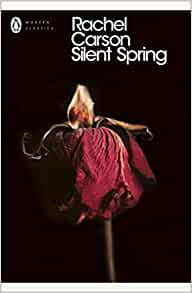
Silent Spring by Rachel Carson

This is a book I’d never heard of until fairly recently. It is now regarded as one of the early warnings on climate change. Carson was a research biologist and became increasingly concerned about the use of pesticides in particular, and how they then infiltrated the food chain, and more generally about the way man was exploiting nature in a way that would have disastrous long-term (although short and medium term, as it turns out) consequences.

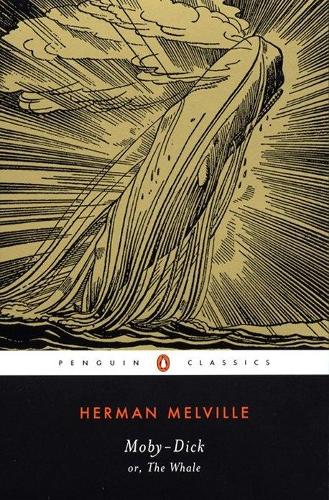
Moby Dick by Herman Melville

The classic man versus nature novel. The whale represents existential threat to man’s self-perceived mastery and throws its protagonist into psychological turmoil. Spoiler: the whale wins.

Nature in contemporary fiction

The Overstory by Richard Powers

Moby Dick is one of my all-time favourite classics, and The Overstory is one of the best books I have read in the last ten or more years. It will become a classic. The secret life of trees is explored in awesome detail, woven into a plot about climate activism and the lengths that some people will go to to save nature. It draws on the classics of nature writing as well as new research. Powerful and brilliantly written.

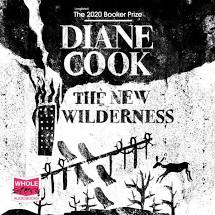
The New Wilderness by Diane Cook

Like Carson’s Silent Spring, this 2020 Booker Prize shortlisted novel envisions a future where humans have prevailed and pushed nature to a point where life as we know it cannot be sustained. Dystopian fiction at its finest and most frightening, because much of it feels very close and entirely possible. If this does not spur you to action then nothing will.

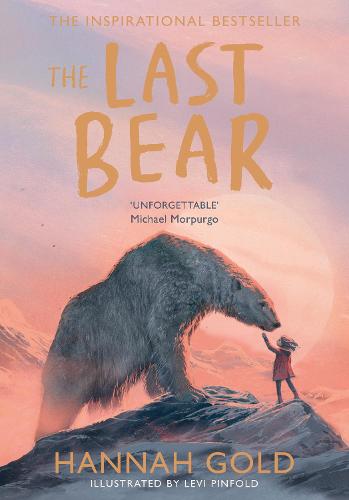
The Last Bear by Hannah Gold

I recommended this in a post a few weeks ago, when I was looking at books out for young people. This book was the overall winner of the Waterstones Children’s Book prize this year and is at the top of my TBR list. Unlike many of the other books mentioned in this post where the subject is man versus nature, Hannah Gold’s book explores the special empathy that children have with animals and nature. A force for good which should surely be harnessed.

Nature in contemporary non-fiction

H is for Hawk by Helen Macdonald

A brilliant book that has spawned a number of imitators. Published in 2014, it is a memoir of grief, but also a powerful evocation of the relationship between man and nature, again, this time in the form of a goshawk. The author’s father was a keen falconer and photographer who died suddenly. In an effort to reconnect with her memories of her father she acquires a young goshawk which she seeks to train. The landscapes she describes provide a perfect metaphor for grief.

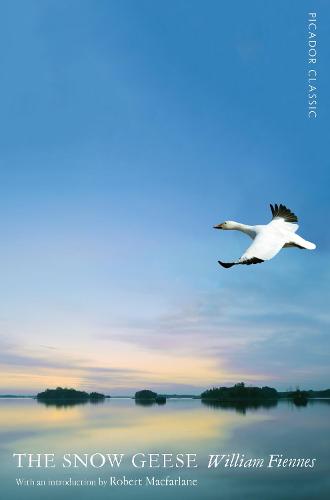
The Snow Geese by William Fiennes

A beautiful and brilliant book by an English author who observes and recounts the epic migratory journey of these magnificent birds from the southern United States to the Arctic. Not a book about man versus nature, rather one about what we can learn about ourselves and human nature by observing animals.

Wilding: the return of nature to a British farm by Isabella Tree

Published in 2019 to critical acclaim and hugely popular to boot, Wilding is an account filled with hope of one couple’s decision to surrender their uneconomic 3,500 acre farm in West Sussex to nature, by introducing free-roaming breeds of animals and ceasing to manage the environment. In a few short years an extraordinary natural balance was restored. I have this book but have not yet read it, but I did listed to an adaptation on the radio which was inspiring.

I hope you approve of my selection. I would love to hear your reading suggestions for this verdant time of the year.

Book progress

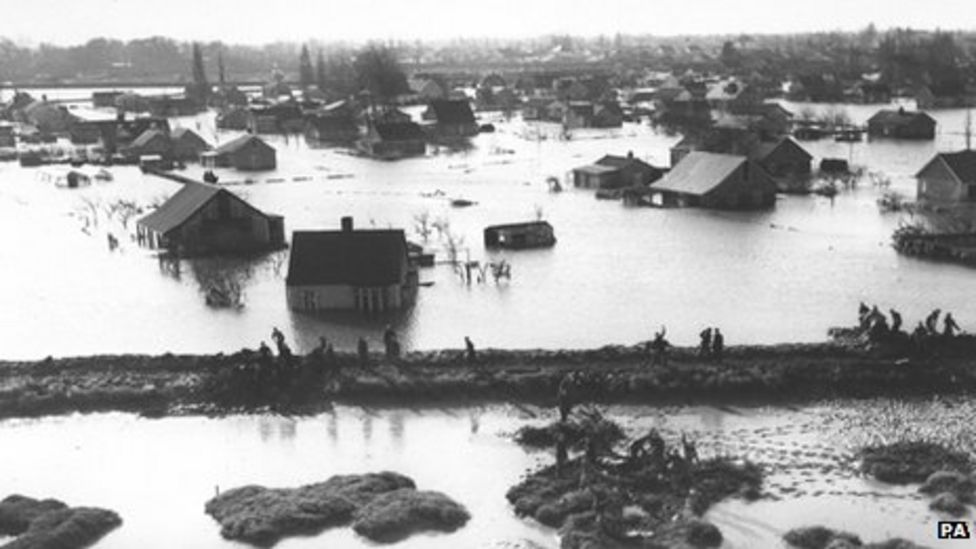
A few weeks ago, I posted on here about the terrible flood events of January 1953 that devastated parts of the east coast of England and the Netherlands. In England over 300 people lost their lives in one terrifying night and in the Netherlands the death toll exceeded 1,800. This event is rarely talked about in England and I am not sure why as events which have caused much less loss of life and less destruction and which also took place a generation or more ago, command much greater pubic attention. Perhaps it is the ‘no-fault’ nature of the disaster – it was a natural event, not caused by negligence, corruption or malicious intent, unlike say the bombing of the Pan Am aeroplane over Lockerbie in 1988 (270 deaths) or the Aberfan colliery disaster in 1966 (144 deaths). I do not wish to ‘rank’ these events in terms only of death toll – the Aberfan disaster killing as it did mostly schoolchildren is particularly horrific – but I am simply somewhat surprised that it seems to have slipped from memory.

The morning after – Canvey Island after the devastating floods on 31 January 1953

The loss of life associated with the 1953 storms could not be said to be entirely ‘no fault’. Enquiries found a woeful lack of a meaningful communication system, and the fact that the events took place over the weekend (meaning that officials were not working) certainly contributed to the death toll. Perhaps it was the proximity of these events to the second world war that has contributed in part to the amnesia; tens of thousands of civillians died in the war that had ended only eight years earlier. It is also likely that the lack of investment in maintaining civil defences both during and after the weather contributed to the ease with which flood barriers were breached.

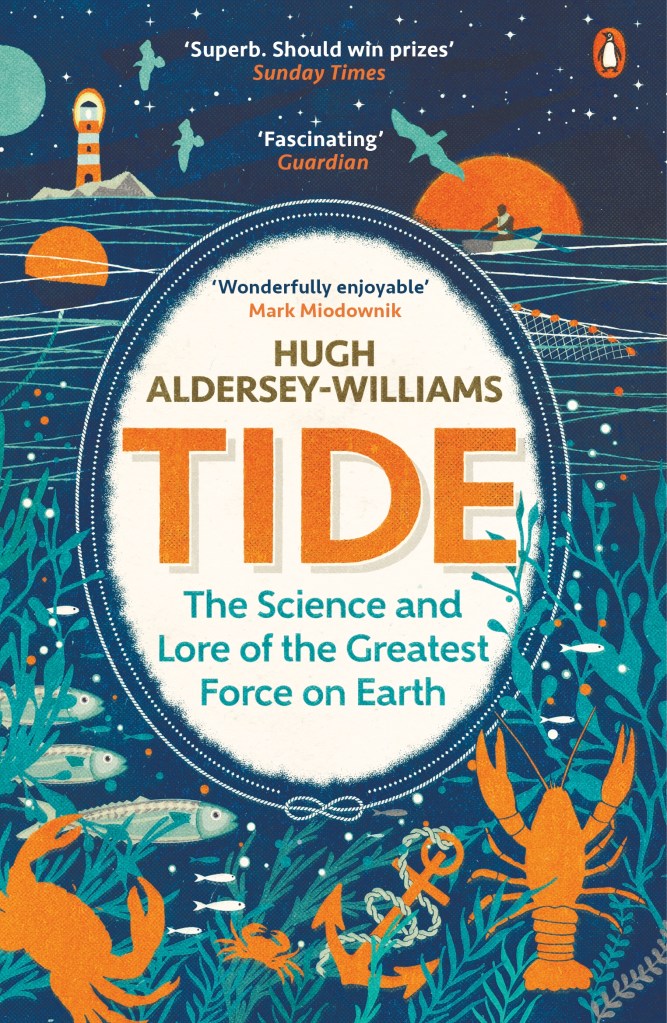
So, as you can see, I’ve been doing research! I’ve read pretty much all the main sources on the subject, and watched quite a lot of newsreel footage from the time. I’d like to tell you about one of the books I read, which had a section on the 1953 floods but which was about the tides more generally. Tide: The Science and Lore of the Greatest Force on Earth, written by Hugh Aldersley-Williams, a scholar of natural sciences, and published in 2017 is a brilliant read. I borrowed it from my local library, intending to read only the section relevant to my research, but I ended up working through the whole book, and thoroughly enjoyed it. The author is an intelligent and witty writer whose knowledge and authority on his subject is slightly concealed by his humour and deft use of language. It is scholarly work dressed up as an entertaining read, and there aren’t many serious works of non-fiction you can say that about.

The author looks at the link between the sea on earth and our moon, something I had never before understood fully. He also explores the cultural impact of the tides, particularly on nations like the United Kingdom which has such a long coastline relative to its size. Before clocks were invented, “measuring time” was meaningless. People lived their lives by natural phenomena such as the position of the sun, the phase of the moon, the behaviour of wildlife, and the ebb and flow of the tides. Clocks have largely inured us to these movements.

“The coast of the British Isles is one of the most tidally lubricated coasts anywhere in the world.”

Hugh Aldersley-Williams

Hugh Aldersley-Williams writes in detail about historical events that have been influenced by tidal flows, such as the cholera epidemic in London in the 1880s (construction of a sewerage system in the west end of the city meant that the tides of the Thames forced river water into the drinking water in the east of the city). The success of the D-Day landings in northern France in 1944 depended heavily on the accurate prediction of the tides. The author also travelled widely to investigate tidal phenomena all over the world and writes finally (and inevitably) about rising sea levels and the impact of the tides on low-lying coastal communities. Devastating flooding in Europe this last winter has given us a foretaste of this.

This book was an absolutely brilliant read and I recommend it highly.

Another book I read as part of my research and which I did not enjoy was Vulgar Things by Lee Rourke. I read it because it is set in Canvey Island, the location of my own book. However, I found that this book did not keep my interest – the plot was thin and the premise weak. I hope my own book portrays Canvey Island in a more positive light than Vulgar Things. I don’t like criticising books so I won’t say any more.

I recently attended an online writing class with Kate Mosse and Maggie O’Farrell. As writers of historical fiction they said that a book should wear its research thinly. We have all, I am sure, read books where the author is just dying to tell you everything they have found out about their topic! As a novice writer I need to be very careful about this. So, it’s the school Easter holidays and I am using this time to take a break between completing the research phase and beginning the writing phase of my book. Writing starts next week! I have cleared my diary for the next month or two and have high expectations of myself. There is danger to this of course; I could hit creative blocks, or plot problems, and will get myself in a panic about not hitting my daily word count! We will see.

Wish me luck!

Non-fiction reading challenge – “Tiny Habits” by BJ Fogg

I like to set myself an annual reading challenge – it’s a great way of expanding your reading horizons and I’ve thoroughly enjoyed the selections I’ve made over the last few years that I’ve been doing it. This year, I decided to do something a little different and set myself the goal of reading twelve non-fiction books. Non-fiction is a genre I neglected a bit last year and yet I come across so many books that look so fascinating.

Tiny Habits
First book of my non-fiction reading challenge complete!

For January, I set myself a relatively easy book, Stanford academic BJ Fogg’s Tiny Habits: Why starting small makes lasting change easy. I picked up on this when I was thinking about why so many of us find new year resolutions so difficult to keep. I generally make a conscious choice to not set myself any, in the firm belief that I’m setting myself up to fail! The opening of a new calendar or diary has the powerful effect of making me want to do or change something, however! Instead of resolutions I thought about some new habits I would like to adopt into my life. Nothing too earth-shattering, mainly things like drinking more water, practicing piano daily or writing something (anything!) each day. Small, incremental changes that don’t look that hard to do, but which I have singularly failed to implement in my life to date.

I liked the sound of this book. I like the idea of starting small – this seemed achievable. There is a website to accompany the book, https://tinyhabits.com/, which includes some free resources and, as you might expect, options to join mailing lists and paid-for courses.

The basic premise of the tiny habits approach is based on the science of psychology: first it’s about finding the motivational sweet spot of a habit (too many of us seem to set ourselves habits that we don’t really want to do, like go to the gym every day); second, it’s about designing behaviour changes that we are actually able to implement (within our means, doable in our daily lives); thirdly, it’s about finding ways to remember to do the things we want to do. I can really identify with this last one – I really want to drink more water, but I just forget! There is an underpinning equation to all of this: B = M A P (Behaviour = Motivation, Ability, Prompt).

This is not a book to be read straight through. It’s more of a workbook, and it is intended that you should implement some changes as you go along. There are lots of exercises at the end of each chapter and appendices with ideas and further resources. My copy now has lots of post-it notes sticking out of it. It’s quite a long book (270 pages, but very small typeface). It’s written in the typical self-help style with lots of anecdotes and a fair bit of repetition. I find most of these kinds of books could be shortened by at least a third!

As with most lasting change, there is no quick-fix method here, although I have to say that this book has helped me to implement some small desirable changes, for example, drinking more water, doing daily stretches, flossing my teeth and reducing my sugar consumption a little. The big take-away for me has been the concept of the ‘Anchor’ – ie pegging a desired new habit to something you already do very reliably like brushing your teeth. This has worked very well for me for the small things; the jury remains out on whether this is going to ‘scale up’ as BJ Fogg promises, into bigger changes. So, for example, if you set yourself the ‘tiny habit’ of one press-up per day, this can in time, evolve into a full-blown exercise regime, and therefore greater health and well-being, because you will be buoyed-up by your success in achieving the single press-up habitually. Fogg is also big on ‘celebrating’, for example, making sure you give yourself some sort of fist pump or similar when you achieve even the tiniest habit. This does not quite suit my English character, but I’m trying!

This is definitely a book I have learned from and one I feel sure I will dip in and out of. If you want to make some major changes overnight this is not going to work, but I am in agreement with the author’s basic premise that small changes have the greatest chance of success and that you can probably build on them over time.

Lebanon
Book two of my 2022 non-fiction reading challenge

Book number two in my non-fiction reading challenge is a very big one: Lebanon: A country in fragments by Andrew Arsan. Lebanon is a country that fascinates me and I had the very good fortune to spend some time there in the late 1990s. I’m looking forward to this one, though it may take me some time!

Interested in self-help books? Here are some others that I have reviewed:

WE: A Manifesto for Women Everywhere by Gillian Anderson and Jennifer Nadel

Women Who Run With Wolves by Clarissa Pinkola Estes

Big Magic: Creative living beyond fear Elizabeth Gilbert

Notes on a Nervous Planet by Matt Haig

The life-changing magic of tidying by Marie Kondo

The Things You Can See Only When You Slow Down by Haemin Sunim

My 2022 reading challenge

I’ve been setting myself a reading challenge for a few years now. I love following the challenges that other bloggers have set for themselves. Sometimes this is about quantity, no bad thing, especially if you want to get back into a reading groove if perhaps life has taken over a bit and reading has dropped off the list of priorities. I can certainly empathise with this at the moment! Earlier this month I did my monthly ‘in pictures’ post. I hardly took any photos in December so the few that I did have (mostly photos of a research trip to Essex) all looked very pleasant and serene. In reality, things felt much more chaotic! Not just the usual pre-Christmas stuff, but also putting my house back together after the huge disruption of a kitchen refurbishment. Don’t get me wrong, it’s wonderful now and I’m very happy, but it took several weeks to be fully finished, thanks to Covid and supply chain issues (Brexit: the gift that keeps on giving).

So, I feel like I also need to get back into my reading groove and my annual reading challenge might be just the thing. I’m going to do it slightly differently this year. Normally I pick a theme or a genre for each month, but this year, I’m going full non-fiction! Looking back on my 2021 list of books read, only two were non-fiction titles – Cheryl Strayed’s Wild: From Lost to Found on the pacific Crest Trail (which made me want to go and do a long distance walk immediately!) and Haemin Sunim’s The Things You Can See Only When You Slow Down, which it might have been better to read as an aid to calm when I was in the middle of kitchen chaos! I got so much out of those two books as I almost always do from non-fiction, so I really want to make the effort to read more this year.

So, it’s a non-fiction book per month for me. I don’t think I’m going to set myself any themes, rather I’m going to try and go where the mood takes me. This month’s book seems like an apt one: Tiny Habits: Why starting small makes lasting change easy by B J Fogg. I haven’t exactly made new year’s resolutions for 2022, but I am trying to make sure I do certain things on a daily basis, such as piano practice and writing! I am hoping that this book will help me with a few tips and secrets on how to stick to my plans.

When I first started doing my reading challenges I set up a Facebook group which worked well at first. But I have become increasingly disillusioned with social media, and with that platform in particular, so I’m not going to do that this year. I’d be interested to know what platforms other bloggers find helpful in sharing their work, apart from through WordPress of course.

So, I’ll be looking out for others’ reading challenges with interest. I always get good ideas from other people’s reviews. Until next time, happy reading!