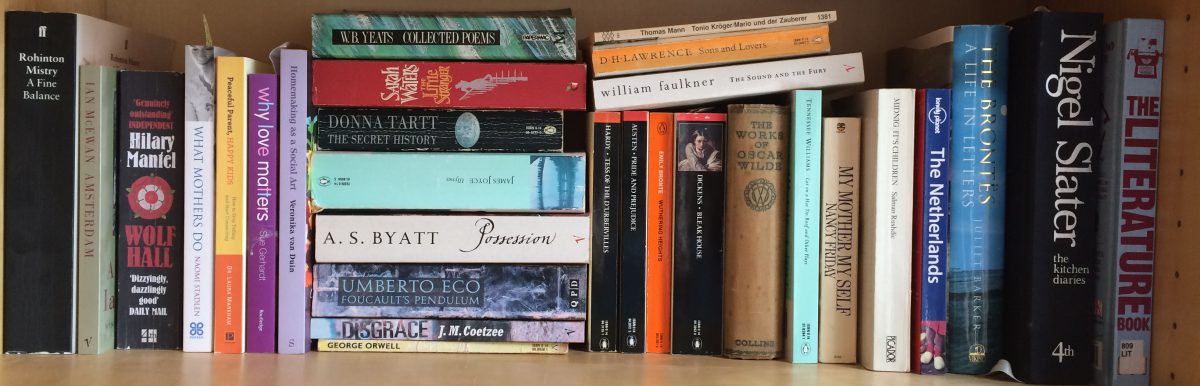

And that’s just the living room pile! I have a few more beside my bed, and, ahem, a shelf or two full in bookcases here and there. If I sat down and worked out how long it would take me to get through them all I’d probably find I don’t need to buy another book for…some time! It’s a fairly harmless vice, compared to some, but I can’t help thinking that there’s something wrong with me – am I an eternal optimist (thinking I CAN read all these books) or do I have my head stuck in the sand (believing I WILL read all these books)? Is it wasteful? Of money and the earth’s resources? Or am I right to reward the many hard-working writers who have put so much time and effort into their books, by purchasing copies, even if I might never read them?
Who knows, but the piles do rather haunt me and get bigger in my mind, in true Dorian Gray fashion.
 So, the task for March on my 2017 reading challenge is to grip up this issue and tackle one of the books on my ‘to read’ pile that has been sitting there the longest. It’s Just Kids by Patti Smith. I came to Patti relatively late in life; I was a bit young to be into her in the ’70s when she was prominent. I’m not a big music fan and am relatively ignorant but I picked up her career-defining album Horses in one of those ‘2 for a tenner’ type sales in HMV, or somewhere similar, a few years ago, and it quickly became one of the soundtracks of my 30s, and my children loved it too! We all loved ‘Gloria’ particularly and that song would definitely be one of my Desert Island Discs, both because I love the power and energy of the song and because it brings back happy memories of us all singing in the car – “Gloria, G-L-O-R-I-A, Gloria!”
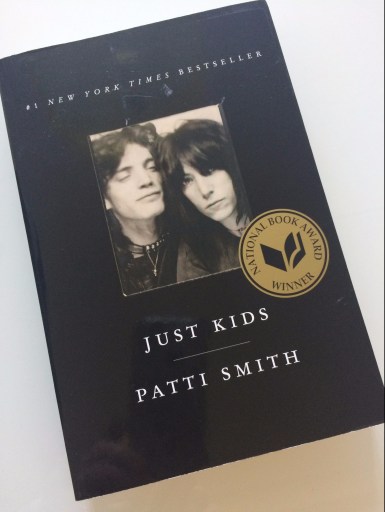 Patti Smith is a fascinating woman who has led a fascinating life. I have been meaning to read this book for years (it was published in 2010), so when I came across it in the Strand Bookshop whilst on my trip to, where else, New York last summer, it had to be bought! (It’s a very New York book.)
I’m looking forward to starting it, especially as I have now at long last finished Do Not Say We Have Nothing, with which I rather struggled, as I wrote about here a couple of weeks ago (I’ll post my review of that book soon). Reading Just Kids will I hope transport me back to last summer as I await the proper arrival of spring; I see a few snowdrops sprouting in my garden, but I also saw snow yesterday so we’re not there yet.
So, if you fancy joining me on the challenge this month, and picking a book from your ‘to read’ pile, do let me know what you’ll be tackling and why. (I think I’ll also give up book-buying for Lent!)
If you’ve enjoyed reading this post, I’d love you to subscribe to the blog, which you can do by clicking the link below or to the right, depending on your device.
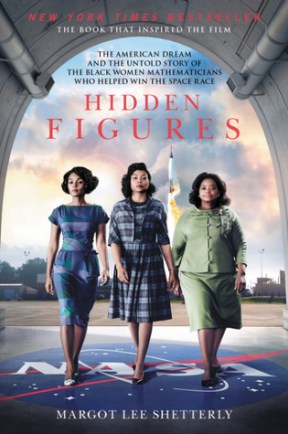 This year, literary references are a little thinner on the ground, but I want to tell you about a couple that have caught my eye. My children were on their half term holiday last week and I took my youngest daughter (aged 10) to see Hidden Figures. It is based on a true story, but the film was inspired by a book of the same name by Margot Lee Shetterly. You will no doubt have seen the trailers, but, to summarise, it tells the story of three exceptionally talented mathematical minds whose contribution to the US space programme in the 1960s went largely unacknowledged…because they were African-American women working at a time when racial segregation was still in place. It is a remarkable story, very moving and very well told.

 I’m not knocking either of these genres, I’m simply saying that literary non-fiction is a very tough genre to sell in. I read recently that the average non-fiction title in the US sells 250 copies a year (one for roughly every million people), or 2,000 copies over its lifetime. It makes you wonder why on earth you would write one! Many seem to be written by academics, journalists or people who have already established themselves in a chosen field and know they are writing for a particular niche. One striking thing about the genre, though, is that authors have a real passion for the topic, and the authenticity of the work is palpable.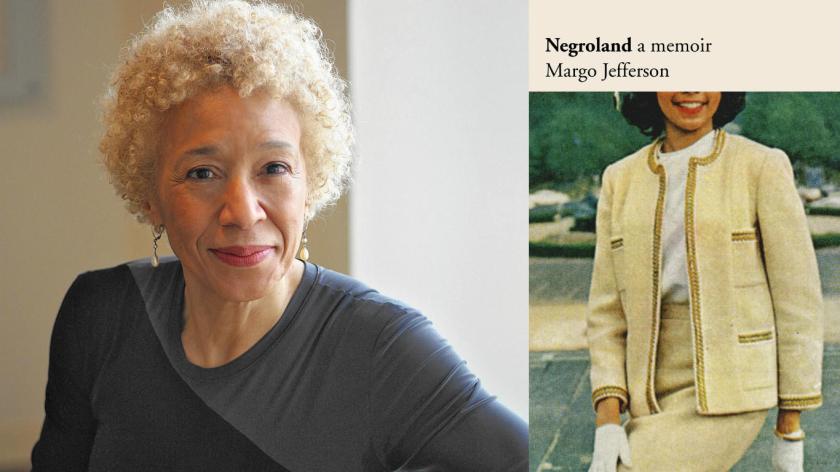
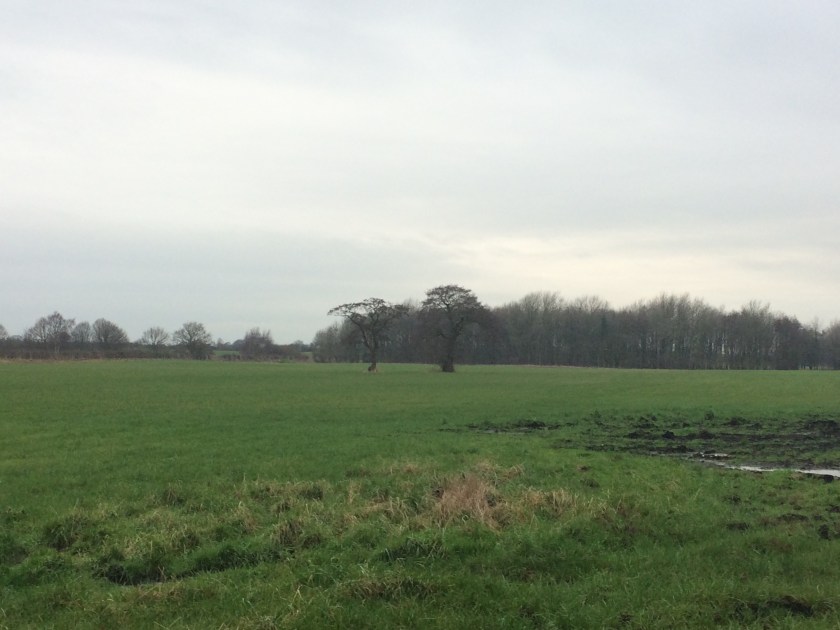 Parts of the country have been struck by a severe cold snap this last couple of days; on my walk yesterday I certainly felt the scenery was quite bleak. Yesterday was the end of Advent, twelfth night, and a natural end, for me, of a period of reflection: about the year that has gone and the one that is to come. In June last year I started this blog and I have loved posting every week about my reading and hearing from readers what you have enjoyed. In the past 12 months I have read over 30 books, the bulk of those since starting this blog, and that feels like quite an achievement. I hope to improve on that this year.
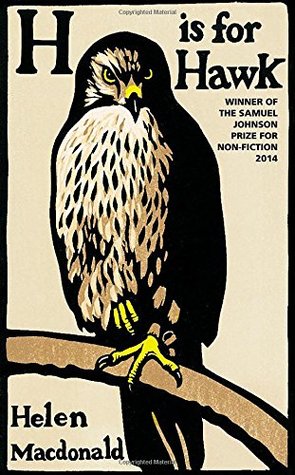 This book was a long slow read for me, but in a way that suits the type of book that it is. It is an account of bereavement. In that sense it bears reading over a long period because it covers a period of more than a year following the death of the author’s father.
 We have also completed a rather intense phase of building work in our house so I’m itching to get things back under control domestically. When thinking about this I was reminded of a book I picked up a couple of years ago called The Happiness Project by Gretchen Rubin. I’ll give you the sub-title which more or less sums up what the book is about:
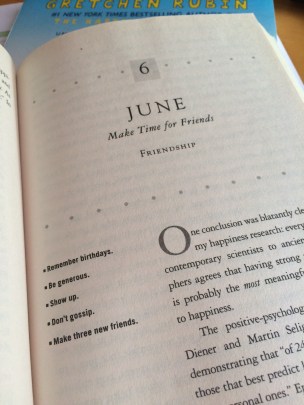 Other examples: June is a month to “Make Time for Friends” and September to “Pursue a Passion”. Her basic premise is that in order to implement change successfully you have to make things habitual. Once these habits are embedded in your lifestyle they are hard to break – for example, I manage to find 5-10 minutes each day to brush and floss my teeth, but found it really hard to find the same amount of time to drink enough water…until I got into the habit of drinking a glass at 10, 12, 2 and 4 o’clock each day. Sounds banal but it works.


 Nadiya’s Bake Me A Story: Fifteen stories and recipes for children by Nadiya Hussein. My kids love baking and adore the Bake-Off and Nadiya’s victory in the competition last year was inspirational to many. Nadiya is a judge on the children’s Bake-Off on CBBC so kids will still be very familiar with her. This is a lovely book, and Nadiya is a lovely person who has qualities that naturally appeal to children. I love the idea that recipes here are combined with a quirky take on some classic fairy tales.

 The Usborne Creative Writing Book. Children are programmed to be creative, but modern life does not always allow them to exercise that muscle. Consequently, a blank page can be daunting for some children and they may need a little nudge or guidance to express their inner writer/artist/designer. There are a wide range of creative journals around just now; I bought this one because writing is the particular interest of the child I have in mind, but others are more gender-based or tailored towards different interests. They provide a great little tool for when kids say they are bored; boredom is good!
 Guinness World Records 2017: Gamer’s Edition. The Guinness World Record Book has been a staple for my son’s stocking since he was young, but at 15 he is no longer as interested as he once was. The Gamer’s Edition is a compromise, acknowledging his passion for computer gaming, whilst fulfilling his mother’s passion for the very un-tech world of books – sneaky!
 The 7 Habits of Highly Effective Teens by Sean Covey. Building on the success of his similarly titled books for adults, Covey has written a book for teenagers which encourages goal-setting, helps to build resilience and gives advice on managing relationships with family, friends, peers and authority figures. It is non-patronising and is written very much in the context of the digital age. Just don’t let them see you reading it!
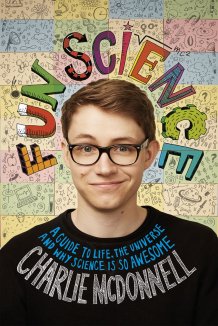 Fun Science: A guide to life, the universe and why science is so awesome by Charlie McDonnell. Charlie is a highly successful YouTuber who vlogs about science, in the linguafranca of the young people. He has over 2 million subscribers to his YouTube channel and clearly has a great passion for his subject, which is always to be admired. The look and feel of the book is a world away from a textbook, so I doubt it’s going to help much with GCSE revision, but the enthusiasm is quite infectious, which is half the battle. I could see this appealing to 11-13 year olds.
 Autumn is becoming the new ‘new year’ for many people, lighter, brighter and generally a nicer time of year than January, which I’ve always felt was a really bad time to make resolutions and embark on new activities! On that theme, a lot of people I know are using October to make fresh starts or implement changes. For so many of us, transformation starts on the inside; if we have problems or issues we want to tackle or changes we want to make in our lives, it often means overcoming personal barriers – fears, phobias, addictions and the like – or building confidence in moving forward and realising dreams.
 I didn’t think that the words “life-changing” and “tidying” could belong in the same sentence in anyone’s world, let alone adding the word “magic” as well! Don’t get me wrong, like many people, I enjoy the buzz I get from a clean tidy space, it’s the cleaning and tidying bit I don’t like. Marie Kondo is a different kind of animal, but she is highly likeable because she doesn’t try to hide it. She confesses that when she was a child she loved tidying both her own and other people’s things, and devoured women’s magazines with all their cleaning and tidying tips.
 Julia's books