The Platinum Jubilee #6 2000s

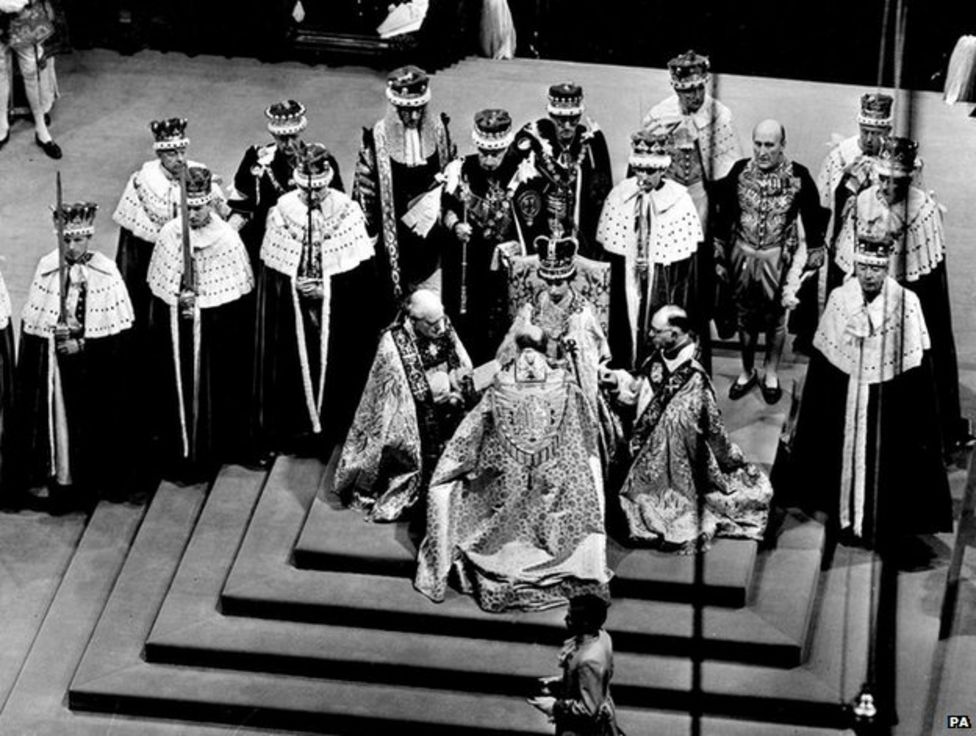
After the turbulence of the 1990s, the noughties were a quieter decade for the Queen. She was getting older of course, in her mid-seventies by the turn of the century. In 2002 she celebrated her Golden Jubilee, marking an incredible half century on the British throne. It was an altogether more sedate affair than the Silver Jubilee in 1977, I seem to remember. Perhaps we were all becoming more grown up about the monarchy. The Queen also celebrated her 80th birthday in 2006 (my youngest was born on that day). She was officially an elderly lady and from that moment on she was pretty untouchable.

I think one of the reasons we took our eyes off the monarchy was that there was so much bigger stuff going on elsewhere in the world. There was the attack on the World Trade Center in New York in September 2001, of course, an event which led to prolonged and devastating war in the Middle East, the effects of which are still being felt today. The financial crash in 2008 would lead to a decade of austerity in the UK and the end of the Labour government.

For me, the decade was dominated by small children. My three children were born between 2001 and 2006. These were my reading wilderness years. Most of my reading was of children’s books, which, to be fair, is no bad thing. We worked through the Harry Potter books, of course. A favourite of mine was also Philip Pulman’s Northern Lights (though this was in fact published in 1995), though my kids were less keen on this one. My son adored the Diary of a Wimpy Kid series by Jeff Kinney (2007 onwards) while my daughters adored the Rainbow Magic books (2003 onwards). We had a huge collection of them which they have never forgiven me for throwing out. To be fair, their opprobrium is deserved and I have no defence.

The wars in Iraq and Afghanistan stimulated my interest in literature from that part of the world. I read two books published in this decade by Afghan-American novelist Khaled Hosseini which are extraordinary – The Kite Runner (2003) and A Thousand Splendid Suns (2007). Both novels evoke the culture and atmosphere of Afghanistan and its turbulent recent history.
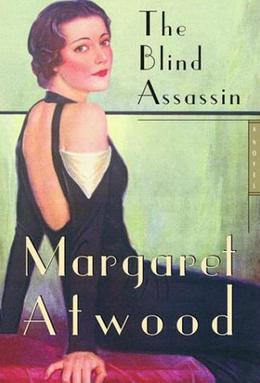
I had a long drive to work in the first couple of years of the decade. I used to buy audiobooks (on cassettes!) and one that I loved, and which I listened to several times, was Margaret Atwood’s The Blind Assassin, published in 2000. Complex and innovative in structure, it explores the relationship between two sisters in the 1930s and 1940s, as recalled by Iris, her sister Laura having died in 1945.

In the UK, Zadie Smith shot to literary fame with her first novel White Teeth (2000) about two men, a Bangladeshi and an Englishman, who became friends during the war, and how their relationship evolves later on amid racial tension in London. I am ashamed to say that this is a book I have tried and failed to read more than once. I have no idea why. It took me a long time to read books in those days so perhaps it required more mental energy than I had available at the time.

A book I did love was Mark Haddon’s The Curious Incident of the Dog in the Night-time, published in 2003. It is an innovative novel about a teenager with autism spectrum disorder who takes it upon himself to investigate the death of his neighbour’s dog. It is about how the central character Christopher navigates a world that has been set up for the convenience of the majority that does not experience disability or neurodiversity, and what this means for people who are on the outside of this group.

The book of the decade, for me, however, was Wolf Hall by Dame Hilary Mantel, published in 2009. I adored her earlier novel about the aftermath of the French Revolution A Place of Greater Safety (1992), but it was Wolf Hall that really cemented her reputation as one of the finest living British writers. And rightly so. As a piece of historical fiction it is truly extraordinary. The depth of her research and the profound degree to which she has understood both her subject (Thomas Cromwell, minister at the court of King Henry VIII) and the period, drips off the page. The plotting, the story-telling, the characterisation, the immersion, it is all breathtaking.
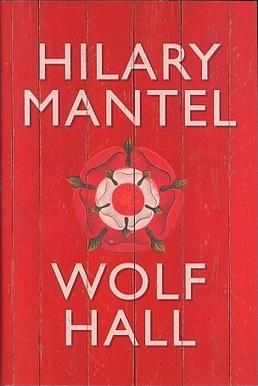
I can’t say with absolute certainty that I read Wolf Hall in the decade in which it was published (which was the rule I set myself), but on this occasion I am giving myself the benefit of the doubt for this is a truly outstanding book that might even be book of the century.

The Platinum Jubilee #5 1990s

The 1990s proved to be a torrid decade for the Royal Family; the Queen’s children were getting divorced left, right and centre. Charles and Diana separated in 1992 and divorced in 1996, Princess Anne divorced in 1992, and Prince Andrew in 1996. In 1992, a massive fire at Windsor Castle caused extensive damage – the Queen would go on to describe that year as her annus horribilis. But it would get much worse. In 1997 her beloved Royal Yacht Britannia was decommissioned, deemed no longer worth refitting, one of the few occasions on which the Queen has been seen to cry in public. Then, the big one, the death of Diana, Princess of Wales, in a car crash in Paris in September 1997, drew great criticism. The Royal Family failed to grieve alongside a nation that seemed to have had its heart ripped out and sharp contrasts were drawn between the warm and outgoing character of Diana, and the seemingly hard-hearted Royals. Diana had become a thorn in the side of the British monarchy and conspiracy theories abounded about the cause of her death.

I was in my twenties in the 1990s and therefore at my peak. I had my own fair share of ups and downs, romances and heartbreaks, successes and disappointments. I joined the Civil Service in 1991 after graduating in 1990 and had an exciting few years in Whitehall before moving to Newcastle in north east England. Eighteen years of Conservative government came to an end in 1997 when Tony Blair and his New Labour government were elected in 1997, and there was so much HOPE! The music of this era remains the soundtrack of my life. My favourite band Radiohead became one of the biggest bands in the world, releasing their seminal work OK Computer in 1997, which probably remains my most listened to album ever. I was also listening to REM, U2, Blur and Oasis of course, Morrissey, PJ Harvey going to lots of gigs, working in the capital so at the theatre all the time. I was living my best life! Or so it seemed at the time. I met my husband in 1999, so the decade ended on a high too.

I re-discovered contemporary fiction in the 1990s and some of my favourite all-time books came out in this decade. One of the best was Donna Tartt’s The Secret History, published in 1992, a debut novel about a group of Classics students at a New England college and the events leading up to the death of one of their number. In 1991, Nigerian poet and author Ben Okri won the Booker Prize for his extraordinary novel The Famished Road, a strange and dreamlike book about a spirit boy who finds himself torn between the spirit and the material worlds. I remember finding it both strange and fascinating, but hugely powerful.

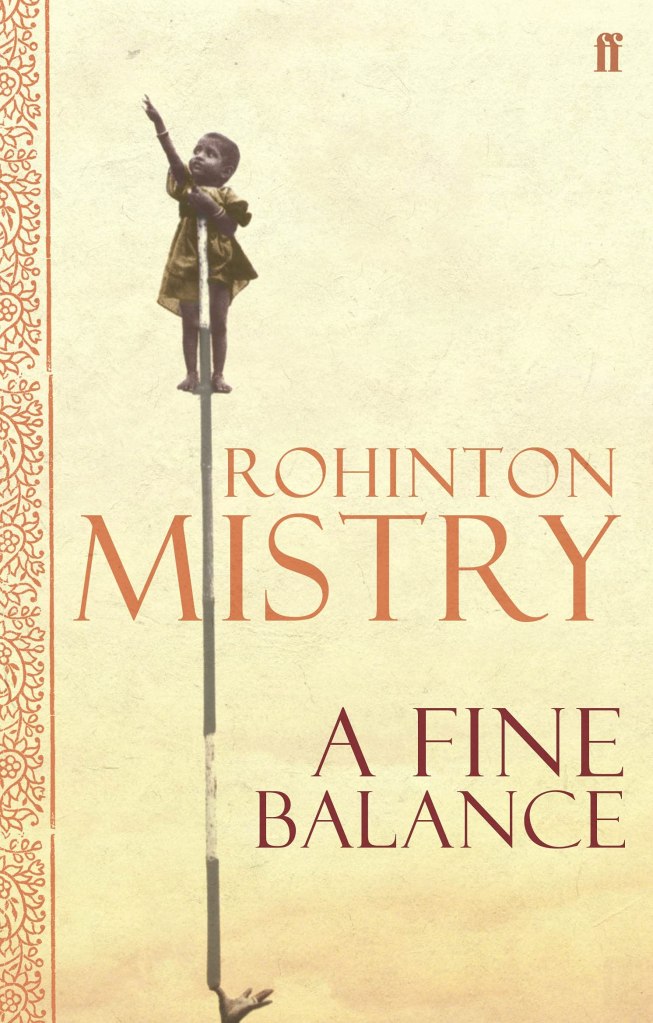
Two extraordinary Indian novels were published in this decade, both of which had a profound effect on me. Vikram Seth’s 1993 novel A Suitable Boy is one of the finest books I have ever read, and, at more than 1,300 pages long, it is also one of the longest ever published. I read it one Christmas when I was particularly miserable and it saved me. In 1995, Rohinton Mistry published A Fine Balance, another very powerful novel about life in the caste system in India.

In the UK, there were a couple of literary landmarks. Helen Fielding’s Bridget Jones’s Diary came out in 1996 – it WAS my life! It spoke for women of my generation, who were told we could have it all and then found we couldn’t really. Then in 1997 came JK Rowling’s Harry Potter and the Philosopher’s Stone and children’s literature would neve be quite the same again.

British-American novelist Tracy Chevalier took the literary world by storm in 1999 with her debut novel Girl with a Pearl Earring, a unique and innovative piece of historical fiction about the story behind Vermeer’s world famous painting. For me, it started a love affair with the Netherlands and with historical fiction for which I am very grateful.

Ian McEwan’s 1997 novel Enduring Love was another favourite. The scene with the hot air balloon remains one of the most arresting in the English language, in my opinion, and I am in awe of McEwan’s ability to create incredible stories out of the day to day.

But for me the book of the decade is AS Byatt’s Possession. Published in 1990, it also won the Booker Prize that year. The novel follows two present-day academics who are researching a possible romance between two previously unconnected Victorian poets. It is a book about academic rivalry and hubris, about lies and deception and is both a detective story and a romance. It is extremely literary whilst also being very accessible. It is a masterwork.

There are so many books I could have chosen from this decade. Reflecting on those years I see that they were turbulent for Her Majesty, and eventful and rich for me too, though rather more mirabilis than horribilis in my case, I am happy to say. At least none of my yachts were decommissioned.

The Platinum Jubilee #4 1980s

And then came the 1980s. It all started quite well for the Royal Family with the wedding of Prince Charles and Lady Diana Spencer in July 1981. I remember the event well and at the time it seemed like the biggest event that had ever happened in my life. The nation was enthralled by Diana Spencer, a fact that would become a problem for the Queen in the years to come.

It was the decade of my teens and much of the music of my youth was pretty dire – I was a fan of Adam and the Ants and Duran Duran! I was also a big fan of Japan and OMD, which was somewhat better. The Smiths and Joy Division came to the fore, but I was not into indie bands until much later. The prevailing culture was of materialism, prizing wealth and selfishness. Margaret Thatcher told us there was no such thing as society. In 1987 I went to university, truly a dream come true. With so many young people going on to higher education today (a very good thing in my view, though I do wish it was cheaper for them), it is easy to forget that in the 1980s this was a privilege gifted to only about 15% of 18 year olds, and the majority of those came from either a privately educated or grammar school background.

Most of my reading in the 1980s was of the classics, either in my preparations for studying an English degree, or during my studies. I did also study American and Irish literature, which was more modern, but I read little from post-war authors. I missed out on a lot!

There were some landmark books published in the 1980s. Margaret Atwood’s The Handmaid’s Tale, came out in 1985. It has always been an iconic novel, but has enjoyed a resurgence in the recent years with the extraordinary television series and the author’s follow-up The Testaments. It is truly frightening to me that some of the horrors envisaged in that novel are materialising before our eyes today.

In the US, Alice Walker was blazing a trail for non-heterosexual women of colour with her novel The Color Purple, published in 1982. It won the Pulitzer Prize in 1983 and was adapted into a film in 1985, by Steven Spielberg and starring Oprah Winfrey. It holds the dubious record for the film receiving the most nominations at the Academy Awards without winning a single Oscar. Hmm. It is hard to overstate the importance and significance of this book.

Magical realism as a literary style was being explored with exceptional applomb. Isabel Allende published her extraordinary debut novel The House of the Spirits in 1982 and Milan Kundera published The Unbearable Lightness of Being, a novel about the Prague Spring in 1968. His books were banned at the time by the communist regime in his native Czechoslovakia.

Of British books published in the 1980s I could choose a number as my book of the decade. An author I admire hugely, Kazuo Ishiguro, born in Japan but brought to the UK by his parents at the age of five years (and now a knight of the realm), published his Booker and Nobel Prize-winning novel The Remains of the Day in 1989. A beautiful book encapsulating perfectly British character and manners with tenderness and empathy.

In 1985, Jeanette Winterson published her groundbreaking semi-autobiographical novel Oranges Are Not the Only Fruit about a teenage girl growing up in northern England in the 1960s in a fanatical religious family and discovering her sexuality.

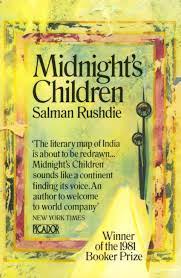
While I love both of these books very much, I don’t think I read either of them in the 1980s. So, my book of the decade is by Salman Rushdie (another knight of the realm, while Winterson is merely a CBE), who is described as an Indian born British-American, so I think it counts in the parameters I have set myself. Midnight’s Children won the Booker Prize in 1981 and was voted the ‘Booker of Bookers’ a few years ago. An awesome novel which was one of the first contemporary novels I read after I graduated in 1990 (the end of the 1980s, strictly speaking!), I remember being blown away by it. It is set at the time of Indian independence in 1947, specifically following the life of Saleem Sinai at the stroke of midnight in the new republic. Children born at that time were said to have been imbued with special powers. It is a spectacular novel, perhaps the finest of the second half of the twentieth century.

The Platinum Jubilee

I’ve never been a royalist. If anything, growing up in a working-class environment, my family was rather dismissive of everything the British royal family represents – aristocracy, privilege, unearned wealth, inequality, unelected power. My views have not shifted much, especially in the light of the various royal scandals of recent years. However, it is hard not to be impressed by Queen Elizabeth II; she represents a totally different era and mindset, and her forthcoming platinum jubilee really is an extraordinary moment in history. When you stand her alongside many of today’s politicians and world leaders, she is even more impressive. We will not see her like again.

To mark this momentous occasion, I intend to do what many others in the blogging world, the media and social media are doing, and picking my favourite books of the last 70 years, one from each decade of the Queen’s reign. I am going to stick to British books, which I know means it risks being a very white male list, but then perhaps that reflects the predominant literary forces in play throughout this time.

Let’s start with the 1950s then.

As a period in modern history I am fascinated by the 1950s. I’m not hugely knowledgeable about popular music, but this was the era of early rock and roll. The second world war was over and in Britain rationing was coming to an end and whilst there was still a great deal of hardship, there was I think a new energy in popular culture that would be fully unleashed in the subsequent decade.

On the flip-side, Britain was still a very buttoned-up country, very deferential, and popular culture reflected, not the truth of how society was, but a version that social and political leaders wanted it to be. Books that have looked back on this era have also shown that British society was deeply flawed, such as Andrea Levy’s Small Island.

Some of the best books I read in my teenage years (probably the books that made me determined to read English literature at university) were written in this decade: John Steinbeck’s East of Eden (I was obsessed with Steinbeck!), Truman Capote’s Breakfast at Tiffany’s and JD Salinger’s Catcher in the Rye and, one of my all-time favourites, Charlotte’s Web by EB White. They are all American novels, however, so I cannot pick them.

Instead, my pick is not just one book, but a collection – The Chronicles of Narnia by CS Lewis, although if pressed I would have to choose The Lion, The Witch and The Wardrobe. Lewis is one of my literary heroes, not just because his books are powerful wonderful stories, but also because of his great scholarship, output and influence. I remember at primary school, we were able to choose and buy Puffin books – we’d get a newsletter once a month or so and I would save up my pocket money for these little treasures. I got The Horse and His Boy because I liked horses, having no idea it was part of one of the all-time great literary series! I went on the read the whole series in order (in true child book geek style!) and loved them. At university I learned more of what they were really about and was in even greater awe. I love watching television and film adaptations and I love books that draw on Narnia (like Philip Pulman’s His Dark Materials trilogy and, of course, Harry Potter). The Chronicles of Narnia represent a true literary milestone.

Look out for my 1960s pick tomorrow!

Audiobook review: Notes on an Execution by Danya Kukafka

This was suggested by one of my fellow book club members for our April read. I had not heard of this author before – this is only her second novel – but I feel sure hers is a name that we will all hear about in the future. Danya is an American and is a literary agent in her day job. She published her first novel Girl in Snow in 2017, and Notes on an Execution was published earlier this year, to great acclaim it seems, judging by everything I have been able to glean about the book since finishing it.

Danya Kukafka
Danya Kukafka – an incredible young talent

The novel is set in the US and covers a period of thirty or more years and moves effortlessly back and forth in time. The present day strand is narrated by Ansel Packer, a convicted murderer who is on Death Row in a Texas prison, twelve hours from his execution. He reflects on the nature of life and death and philosophises about right and wrong. He has been writing down his thoughts in what he considers to be a work of philosophy (harking back to his time in college where he majored in the subject but failed to complete his degree) and plans to leave it as his legacy. He has been having a Death Row visitor, Shawna, to whom he grants custody of his manuscript.

Interspersed with Ansel’s narrative is an account of his past. He spent his early years on a remote farm, where his violent father Johnny abused his young wife, Lavender, then only seventeen years old, virtually keeping her prisoner and well away from normal society. Ansel receives no formal schooling and is isolated from other children. When Johnny takes Lavender on a trip, leaving four year old Ansel in charge of his baby brother, Lavender escapes her husband’s clutches at a gas station and manages to call the police to tell them about the children. Ansel is taken into foster care. He is told that his baby brother died.

An account of Ansel’s time in foster care in upstate New York is given by Saffy, another of the orphaned children living in the home. Saffy has had troubles of her own – her Indian father is unknown to her, she is the result of a short relationship her mother had, and her mother was killed. Saffy eventually finds her purpose as a police officer, working her way up to detective. She is put on a case involving three murdered girls whose bodies have been found buried in the woods. Saffy knows one of the victims – it was one of the girls she grew up with in the foster home. A suspect is found, but Saffy knows the homeless man being fingered for the crime is not the real killer. She harbours a private agenda to catch the murderer, which grows into an obsession.

A further narrator is Hazel, the twin sister of Ansel’s wife Jenny. Hazel recalls her first meeting with Ansel; shortly after he and Jenny get together at college, he joins the family for the Christmas holidays. Hazel is strangely attracted to him and jealous of her sister, but there is something about Ansel she does not trust. In the middle of the night she looks out of her bedroom window and sees him burying something in the family’s back garden, an action she cannot explain, but she says nothing.

This is a book about a serial killer; we know the ending, we know that Saffy must therefore eventually get him. This book is not a whodunnit. It is part cat and mouse – the chase, how Saffy will eventually catch up with him. It is also about the women Ansel killed, it tells their stories. It is also about the mind of a killer, how this is cultivated, what part his upbringing and his being left by his mother played in that evolution. Lest we blame his mother for “abandoning” him, the author explores Lavender’s story too – she was a child herself when she was impregnated by Ansel’s abusive father and it was his violence that forced her to take the only course of action possible to save herself and her children. She will carry the burden of that action for the rest of her life.

I was reading this at about the same time as Crime and Punishment and there are some interesting parallels – the brutal murders of women, the lack of remorse shown by the killer, the philosophising on right and wrong by the person committing the crime. The two books, separated by more than 150 years, share some similar characteristics, but Kukafka, makes the victims front and centre even though Ansel is trying to make the story about himself.

This is a brilliant book. It is powerful and interesting in a way that I did not expect and even though we know how it ends, the author still manages to throw in some heart-stopping surprises. I listened to the audiobook and was riveted. The performances were excellent.

Highly recommended.

Spring is here! Time for nature books

At last, spring seems to have arrived here in the north of England and it has felt like a long time coming. I love my garden but I could certainly not describe myself as a ‘keen’ gardener, nor have I a great knowledge about the subject. I like it to look nice though, and I like being in it. So, for the last few weeks, as the weather has got noticeably warmer and less damp, I have spent a lot of time in my garden, mainly cutting things back as it was already well-planted when we moved in and the shrubs just seem to grow and grow every year. I have barely touched the garden all winter, but as soon as buds start to appear on things, or spring blooms emerge, I am filled with a renewed gardening energy!

Nature more generally is rather different for me; I love being outside all year round and I find great beauty in bare trees in the winter months, when you can see the wonderful shapes and the intricate patterns of their branches more clearly. It can appear to some that everything is ‘dead’, but while much of it is indeed dormant, there is still a great deal going on if you care to look. Nevertheless, in the spring, so much of the work of nature is visible that it’s a good time of the year to think about nature books. I’ve picked out a few below, fiction and non-fiction, both classic and contemporary, that you might like to indulge in.

Classics on nature

Walden by Henry David Thoreau

I read this while at university for a module on American literature, and I’m afraid my 20 year-old self found it very boring! It is, however, a classic of the genre. Written in the 1840s, when the author was in his late 20s, it is his account of living in the wilderness (for two years), beside Walden pond in Massachussetts, observing the changes in the natural world around him and contemplating the virtues of the simple life versus a more materialistic one. I would like to come back to this book sometime soon, to see if I feel any differently about it!

Silent Spring by Rachel Carson

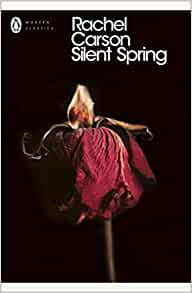
This is a book I’d never heard of until fairly recently. It is now regarded as one of the early warnings on climate change. Carson was a research biologist and became increasingly concerned about the use of pesticides in particular, and how they then infiltrated the food chain, and more generally about the way man was exploiting nature in a way that would have disastrous long-term (although short and medium term, as it turns out) consequences.

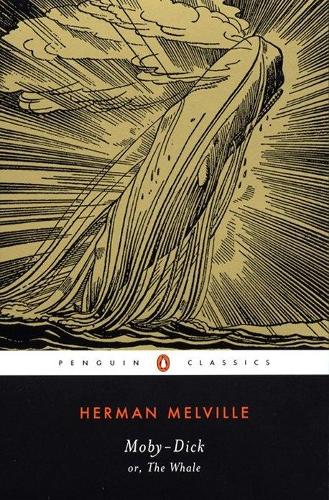
Moby Dick by Herman Melville

The classic man versus nature novel. The whale represents existential threat to man’s self-perceived mastery and throws its protagonist into psychological turmoil. Spoiler: the whale wins.

Nature in contemporary fiction

The Overstory by Richard Powers

Moby Dick is one of my all-time favourite classics, and The Overstory is one of the best books I have read in the last ten or more years. It will become a classic. The secret life of trees is explored in awesome detail, woven into a plot about climate activism and the lengths that some people will go to to save nature. It draws on the classics of nature writing as well as new research. Powerful and brilliantly written.

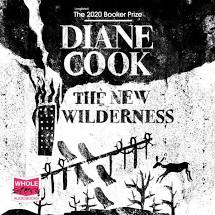
The New Wilderness by Diane Cook

Like Carson’s Silent Spring, this 2020 Booker Prize shortlisted novel envisions a future where humans have prevailed and pushed nature to a point where life as we know it cannot be sustained. Dystopian fiction at its finest and most frightening, because much of it feels very close and entirely possible. If this does not spur you to action then nothing will.

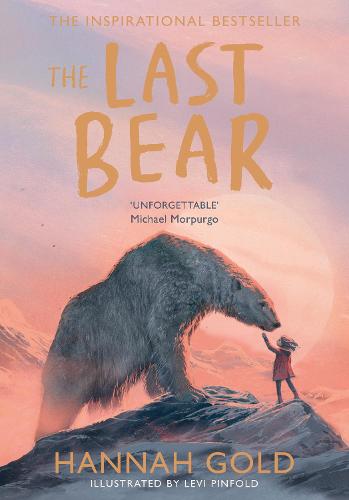
The Last Bear by Hannah Gold

I recommended this in a post a few weeks ago, when I was looking at books out for young people. This book was the overall winner of the Waterstones Children’s Book prize this year and is at the top of my TBR list. Unlike many of the other books mentioned in this post where the subject is man versus nature, Hannah Gold’s book explores the special empathy that children have with animals and nature. A force for good which should surely be harnessed.

Nature in contemporary non-fiction

H is for Hawk by Helen Macdonald

A brilliant book that has spawned a number of imitators. Published in 2014, it is a memoir of grief, but also a powerful evocation of the relationship between man and nature, again, this time in the form of a goshawk. The author’s father was a keen falconer and photographer who died suddenly. In an effort to reconnect with her memories of her father she acquires a young goshawk which she seeks to train. The landscapes she describes provide a perfect metaphor for grief.

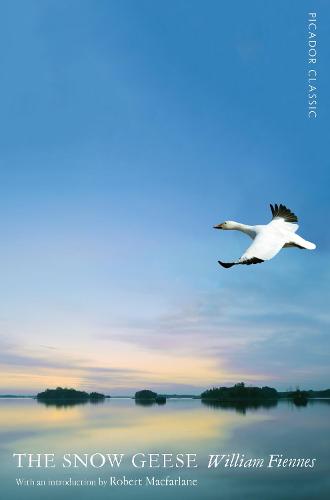
The Snow Geese by William Fiennes

A beautiful and brilliant book by an English author who observes and recounts the epic migratory journey of these magnificent birds from the southern United States to the Arctic. Not a book about man versus nature, rather one about what we can learn about ourselves and human nature by observing animals.

Wilding: the return of nature to a British farm by Isabella Tree

Published in 2019 to critical acclaim and hugely popular to boot, Wilding is an account filled with hope of one couple’s decision to surrender their uneconomic 3,500 acre farm in West Sussex to nature, by introducing free-roaming breeds of animals and ceasing to manage the environment. In a few short years an extraordinary natural balance was restored. I have this book but have not yet read it, but I did listed to an adaptation on the radio which was inspiring.

I hope you approve of my selection. I would love to hear your reading suggestions for this verdant time of the year.

Book review – “Briefly Yours” by Cat English

A few months ago I read Erica Jong’s Fear of Flying and reviewed it on here. It was part of my 2021 reading challenge and for that month I’d set myself the challenge of reading some classic erotic fiction. The post must have got me noticed in certain quarters because shortly afterwards I was approached to participate in a book review tour. Now, this was my ‘first time’ so I agreed, rather excitedly! I may have been blogging for some time, but clearly there is a whole sector of book bloggers out there that I have never discovered before! They mostly inhabit Instagram and post short punchy reviews with lots of hashtags. (Note to self: must log into Insta again one day.)

Briefly Yours

Briefly Yours by Cat English is a non-fiction erotic memoir. ‘Cat’, her nom-de-plume and working pseudonym, is a call-girl, but she is no ordinary sex worker. It is very much a career choice which she has made in order to help fund her sister’s law degree and to support her passion, which is rescuing feral cats, feeding them, helping them to get well and arranging veterinary treatment, including neutering. Cat has worked in other sectors and in the book she takes time out from the sex work to try her hand at something more conventional, working in a department store. However, the lifestyle of the commuter and the bullying she is subjected to by her supervisor, are not worth the pitiful salary.

Cat’s life story is interwoven into her accounts of work at the parlour and many episodes of encounters with clients. She creates three separate worlds – the parlour, with the other women who work there, the clients and staff, a fun and credible cast of characters; her cat world, with all the feral creatures she names and cares for, with the help of her sister; and her family life, her mum, sister and brothers. She seems close to her family and they are aware of her lifestyle, even though she tries to keep it a secret generally from friends and neighbours. I would have liked to have had a little more sense of her sister’s gratitude – wow, what a sacrifice! Cat grew up on a council estate in the north west, so she is a down to earth girl who comes across as both deeply caring and pretty shrewd.

She deals with the issues around her sex work head-on. She invites the reader to set aside their prior assumptions and asks whether what she is doing is really any more exploitative than working for minimum wage in a dead-end job she hates. Whilst I was deeply uncomfortable with some of the issues she raised, it did open my eyes. It helps that she actually enjoys the work, both the sex and the customer service aspect (she meets people’s needs, and knows that she does it well). Some of the clients are ghastly, some are cruel and borderline violent (the set-up of the parlour brings with it a degree of protection), but Cat certainly feels like she has a degree of control. She has mixed feelings about the clients; some she really likes, others she has no respect for particularly if they have partners and children at home, but insisting their wives don’t understand them. There is a nice camaraderie in the parlour, but this is high-end, and therefore expensive. Even if you can accept prostitution at this level, one does wonder about the women who are doing it for much less, or to support a drug habit, or putting themselves at great risk on the streets. I found that quite difficult to get out of my head.

I suspect I am not the target audience for this book! I have to say though that I did enjoy it. It’s a light fun read. There is a lot of really bad erotic fiction out there, that is written for a certain kind of stimulation. I think this definitely better than most of the ‘written to a formula’ trash in that category. The sex scenes are very graphic (though not much more so than, say Luster or Queenie, even though those books would fall into a more literary category), but mostly they ring true. Cat writes well, actually, and with charm; she captures the array of clients really well and it feels authentic. I suspect she might not find the life of an author quite as lucrative as that of a call-girl, but I wish her well!

I was sent a complimentary advance copy of this book by Literally PR.

March in pictures

I missed out on this post last month – like much of the UK population I had Covid for the first time in February and so did not do very much or take many pictures!

What I was reading in March:

Plus more research for my book:

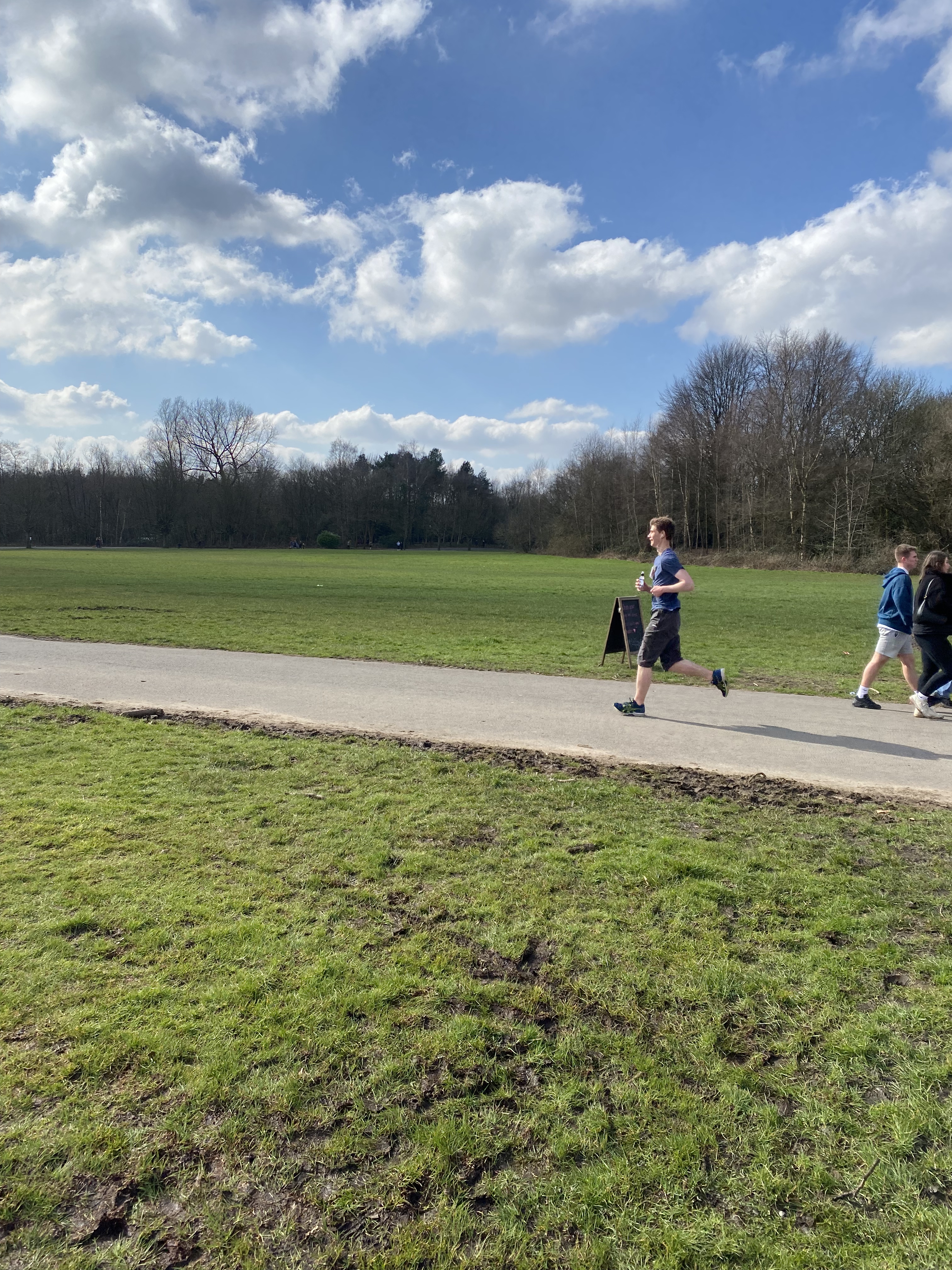
Sufficiently recovered from Covid to do the Heaton Park run with my son, but kept it to a 5k, while he completed his first half marathon!

And very happy to have a signed copy of Margaret Atwood’s latest!

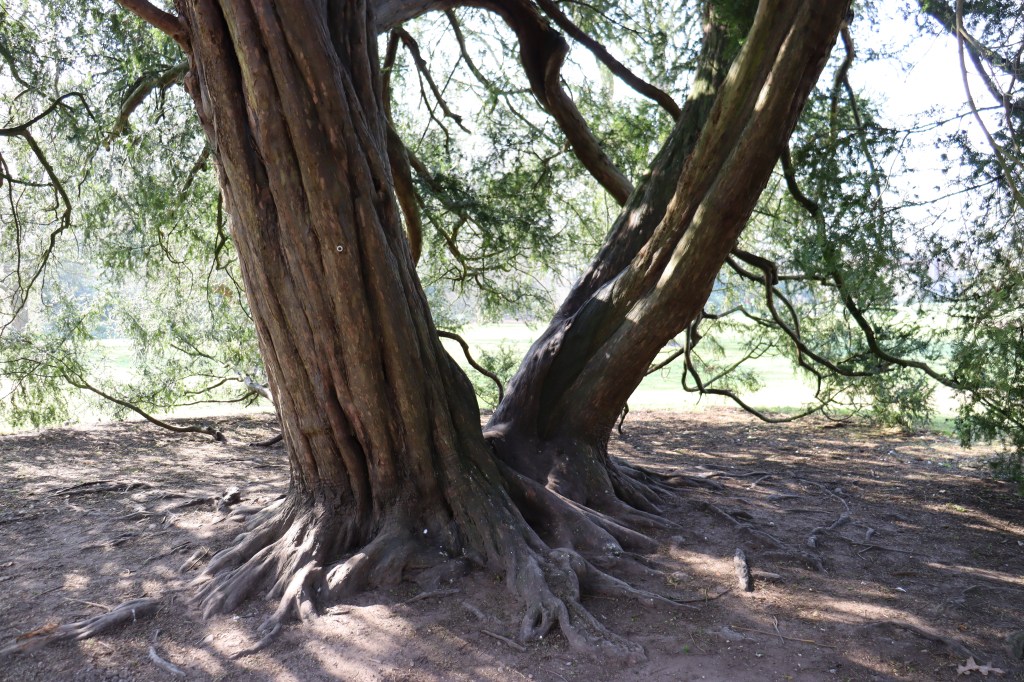
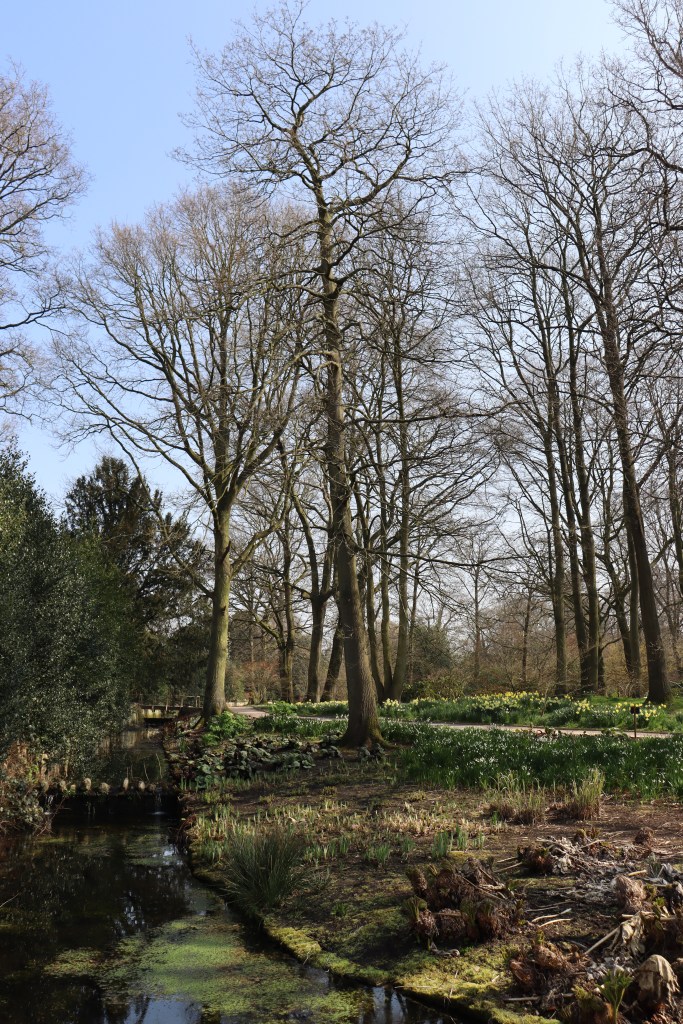
Enjoying a bonus early spring warm spell at Dunham Massey, Cheshire.

Looking forward to April!

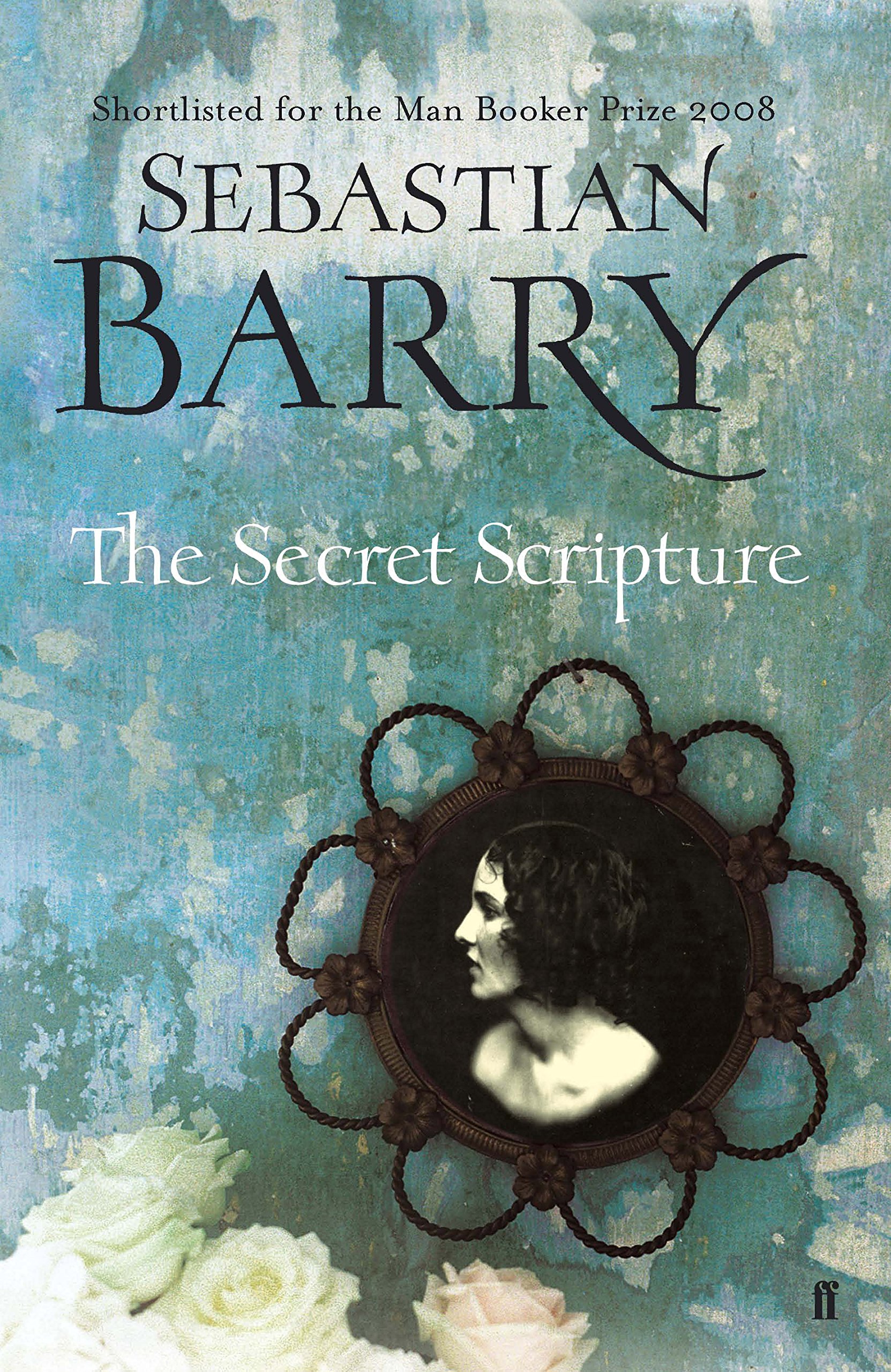
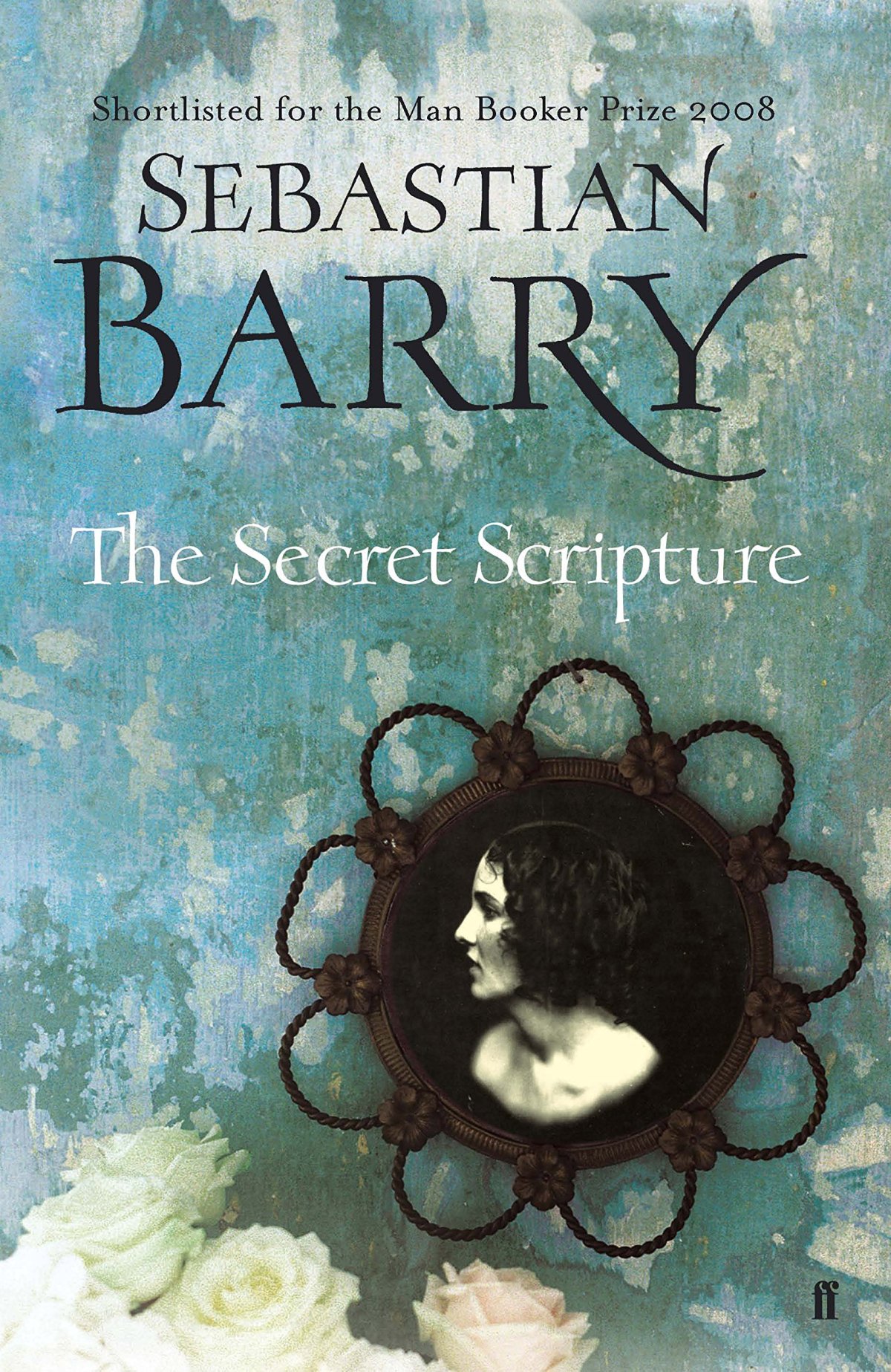
Book review – “The Secret Scripture” by Sebastian Barry

This is the third book I listened to in Sebastian Barry’s McNulty family trilogy. The first was The Whereabouts of Eneas McNulty, published in 1998, then I listened to The Temporary Gentleman, published in 2014, and then finally this book, which was published in 2008 and shortlisted for the then Man Booker Prize. I read them in the wrong order, but in doing so, arguably, I saved the best till last! The Secret Scripture is an astonishing and powerful piece of work, and provides answers to some of the unresolved questions raised in the other two books.

At the centre of the trilogy is the McNulty family and in particular the three brothers, Eneas, Tom and Jack. Eneas, as I have already posted about in my review of the first book in the trilogy, is something of a black sheep in that he is largely exiled from the family, in America, Africa and finally England, because of his job as a policeman which gets him into trouble with the republican Sligo underworld. The Temporary Gentleman concerns Jack, the golden child of the family, with a degree in engineering and a respectable marriage to the daughter of a doctor. However, this book reveals the lie about his life, hinted at in The Whereabouts of Eneas McNulty, his alcoholism and gambling and the problems in his marriage. The third son, Tom, who becomes a local councillor, is married to Roseanne, who is the subject of The Secret Scripture and who appears in both the other novels. Having come to The Secret Scripture last I feel now that this trilogy is as much about Roseanne as it is about the McNulty family, because their relationships with her tell us almost more about them than their own lives.

When the book opens we meet Roseanne, a woman in her 90s, perhaps even 100, a long-term resident of a mental hospital that is about to be demolished. Her psychiatrist, Dr William Grene, must assess her and determine whether she is able to be discharged into the community. There is a recognition that many of the residents of such institutions were committed for social as much as mental health reasons. Dr Grene sets about trying to establish why Roseanne, who has been a patient at the hospital for around half a century, was admitted. The story is told from the parallel perspectives of Roseanne, who writes her own story in secret, and Dr Grene who records his notes and observations in a day book. These become a kind of confessional for both of them.

What we know about Roseanne is that she was very beautiful and therefore treated with suspicion, considered almost a temptation to sin, and therefore a sinner herself. To make matters worse, she is a Protestant. As a child she idolises her father and spends a great deal of time with him at his place of work – his job is as caretaker of a cemetery, a role he takes very seriously. However, after a tangle with local gangsters, active in the political strife that beset Ireland in the 1920s and 1930s, he is served the humiliation of losing his position and being redeployed as a rat-catcher. He maintains his dignity, however, and is conscientious, but the family’s fortunes decline thereafter. Roseanne’s mother is committed to an institution and her father dies. The local priest arranges a marriage to Tom McNulty, and he truly loves her, but she is never accepted by his parents, the elder Mrs McNulty in particular.

Roseanne is ill-treated by them all, except Eneas. After being spotted in a mis-judged but innocent meeting with another townsman on a mountain walk, she is exiled as an adulteress. This is largely an excuse for the family to be rid of her. Her marriage is annulled and she is forced to live in a hut outside the town. Tom marries again and it is as if Roseanne never existed. She is maintained at subsistence level, but no more. Her fate is sealed when she becomes pregnant and gives birth to a child alone on the strand with the tide coming in. She collapses unconscious after the delivery and awakes to find herself being taken away by ambulance, and no sign of her baby.

Events unfold rapidly in the final third of the book. Connections are made with Eneas and with Jack, and the family’s stories become knitted together. It is a slow build, however, up to this point. What the author is doing very skilfully, is building the picture of this woman, of her relationship with Dr Grene, who provides us with a perspective on her and the treatment she received at the hands of the McNulty family and the Sligo community more generally. Roseanne is a marginal figure in the other two books, but a figure, a mystery, nonetheless. The Secret Scripture gives us answers to questions the reader might have had whilst also exposing the dysfunctional relationship between religion and society that bedevils Ireland’s modern history.

A film adaptation of The Secret Scripture was released in 2016, starring Vanessa Redgrave and Rooney Mara, though the story differs in some important respects.

This novel has been Barry’s most successful to date, winning the Costa Book of the Year in 2008 (his novel Days Without End won in 2017, making him the first double-winner) and the James Tait Black Memorial Prize the same year. Apparently, however, some have found the ending of the book flawed and unpalatable. I disagree wholeheartedly! I do not wish to reveal any spoilers, so I will only say that I found it extraordinary. I can see how some might find it a plot twist too far, but from a reader’s perspective it is heart-stopping and I loved it.

I am on a real roll with Sebastian Barry at the moment; having only discovered his work in 2017 when I read Days Without End, I cannot now get enough of him – there is the Dunne Family trilogy to savour next.

The Secret Scripture is a brilliant and powerful book and I recommend it highly.

St Patrick’s Day

Happy St Patrick’s Day to all my Irish family, friends, acquaintances and fellow bloggers. Ireland is a country very close to my heart since my husband is from Dublin and my children are proudly half-Irish. I have spent very many happy times in Ireland in the last twenty-something years, and sadly not nearly enough time there in the last two.

I know that not every Irish person is a huge fan of ‘Paddy’s Day’ even though the diaspora celebrates it with great vigour. It’s true that the imagery associated with it can harden a false impression about the country and what it means to be Irish, that it’s all about the ‘craic’. Indeed it is not. Ireland and the Irish are thoughtful, deeply emotional, and phenomenally creative people. It’s not for nothing that the nation punches well above its weight internationally.

So, for my post today, in a celebration of all things Irish, I’m picking out a few of my favourite Irish books and authors.

Highlights from my recent reading:

Days Without End

Days Without End by Sebastian Barry

This vivid and powerful account of an Irish emigrant participating in the Amercian Civil War and finding forbidden love is one of my all-time favourite books and began my love affair with the writing of Sebastian Barry.

Holding

Holding by Graham Norton

One of my favourite television and radio personalities, Graham Norton proved himself an accomplished author too with this his first novel, which has also now been adapted for television.

Grown Ups

Grown Ups by Marian Keyes

Marian Keyes might well have attained the status of “national treasure” in Ireland at this stage. This was the first book of hers that I read and I intend to read more. Loved it.

The Wonder

The Wonder by Emma Donoghue

Donoghue hit the big time with her book Room, which was made into an Oscar-winning film starring Brie Larson, but for me The Wonder, published in 2016, is better. It explores the place of myth and its confused relationship with religion in Ireland. Powerful and beautiful.

The Glorious Heresies

The Glorious Heresies by Lisa McInerney

Gangs, drugs, violence, love, this book has it all. Winner of the Baileys Prize (now the Women’s Prize) in 2016, it explores the dark underbelly of the city of Cork in a post-Celtic Tiger Ireland. Not an easy read, but beautifully and confidently written, with dark humour and love at its heart.

And now for some classics…

An education in literature in English would be incomplete without the above. Ulysses changed the world of fiction forever, perhaps even the world. Yeats, for me, evokes all that is Ireland and his life story is so emblematic. O’Casey’s play is a history lesson. Behan and Wilde are authors who embody some of our notions of human suffering.

So, today I will be raising a glass of Guinness to Ireland and in particular to its extraordinary literary heritage.

Sláinte!