Facebook Reading Challenge – May’s book

The months are passing at a rapid rate and I can’t believe it is already time to consider a new book for my Facebook Reading Challenge. Last month the theme was travel writing and I chose Colin Thubron’s To A Mountain in TibetI have to confess that, almost a week into the new month, I still have not finished it. Although I am enjoying it, it is a very slow read. Something about the way it is written makes my reading pace reduce to the author’s speed of ascent up the mountain! I wish I could say look out for the review next week but I have had to set it to one side to speed-read my book club book, which I had forgotten all about…

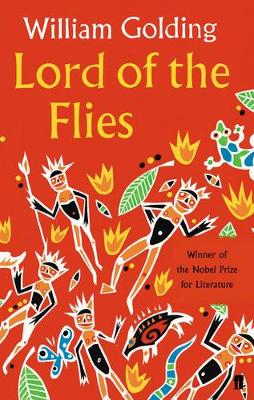
lord of the flies img

It will get finished, of course, and I posted a video on the Facebook group’s page last week announcing this month’s book which is William Golding’s Lord of the Flies. A few people replied to say they had done it for ‘O’ level – I am sure they are of a similar age to me, but it was obviously not my year, as I had forgotten that it’s a favourite set text for 16 year-olds. Most people seemed happy to be reading it again though. You can see things in a completely different way when you come back to a book, particularly after a number of years and a number of life changes. My recent re-read of Perfume (the March choice for the Reading Challenge) gave me an insight into that.


So, if you care to join us for the challenge this month, hop on over to the group’s Facebook page and request to join, or else just read along and let me know your thoughts when I post a review in early June.

Happy reading!

If you have enjoyed this post, I would love for you to follow my blog. We can also connect on the various social media platforms.

Book review – “The Storm Keeper’s Island” by Catherine Doyle

Regular followers of this blog will know that I am passionate about children’s literature and that I frequently post reviews of great kids’ books I have read. I have decided to make this a more regular feature and will devote one week a month to reviewing children’s books and discussing issues about kids reading habits, an issue which I know is of concern to many of you, parents or otherwise. After all, most keen adult readers would, I think, say that their love of reading was fostered in childhood. Just the other day, I recommended Lucy Mangan’s new book Bookworm: A memoir of childhood reading, one of the books on my TBR list this spring which I feel sure will take me back to my own childhood and the many nights I spent reading under the covers, not with a torch, worse, by the light from the landing. It’s a wonder my eyesight wasn’t ruined!

The Storm Keeper's Island imgThis month, I would like to recommend Catherine Doyle’s The Storm Keeper’s Island, published last year by Bloomsbury, as a fantastic choice for any young people you know who like modern adventure stories where the good guy wins. Catherine Doyle is a young writer (just 29 years old) and has published several YA novels already; The Storm Keeper’s Island is her first novel for what is called the “middle grade”, ie about 9-12 years, and it was a barn-storming debut, winning several prizes and accolades from established authors in this genre. A second novel, following the further adventures of the main character Fionn Boyle, is planned for this summer and I would expect it to feature heavily in recommended holiday reading lists in advance of the Summer Reading Challenge.

Fionn Boyle and his twin sister Tara are to spend the summer with their grandfather, Malachy Boyle, on the real-life island of Arranmore, just off the coast of Donegal in north-west Ireland. It is a sparsely-populated island where most of the inhabitants are native Irish speakers, but many tourists visit. It is an island the author knows well, her own grandparents having lived there, and her love of the place comes across strongly. The two children don’t seem to know their grandfather well; he is their paternal grandfather, and their own father died at sea before they were born. The children have been sent to their grandfather because their mother has had some sort of mental breakdown. We learn that she has never really recovered from her husband’s death.

Malachy Boyle soon proves to be a quirky character, about whom there is an air of mystery. His cottage is full of home-made candles with mysterious names, like “The Whispering Tree”, “Low Tide” and “Unexpected Tornado”. Malachy Boyle is in fact Arranmore’s ‘Storm Keeper’, a chosen one whose role is to preserve the memories and legends of the island and protect it from its ancient mythical enemy, Morrigan, and her foe, the good spirit, Dagda. Inevitably, Fionn, gets drawn into an adventure involving these mythical spirits; Tara’s island boyfriend (whom she met on a previous visit), the ghastly Bartley Beasley, a vain, self-centred, full-of-himself bully, is the grandson of Elizabeth Beasley, who wants her family to be the next in line for the storm-keeper role and hopes Bartley will be anointed when it becomes time for Malachy to pass the baton. The undercurrent of conflict between the Boyles and the Beasleys is a metaphor for the Morrigan/Dagda feud.

Led by Bartley, the children (ie him, Tara, and Bartley’s sister Shelby, but excluding Fionn) plan to search out the long-lost and mysterious Sea Cave, where it is said a wish can be made. Obviously, Bartley wants to use the wish to make himself the storm-keeper. They are warned away from it as it is said to be highly dangerous. Fionn wants to find it first, to prevent Bartley having his wish, but he is afraid. As time passes, his grandfather passes on to him the knowledge of the candles and how lighting one enables a kind of time travel, where those present can see, even be a part of, events of the past that have been captured in the candle. Using the candles, Fionn will eventually triumph and (spoiler alert!) become the new storm-keeper.

I am not normally a lover of fantasy fiction, and I fear the above makes it sound as if there is a lot of myth and legend here. There is, but there are also actually a lot of real-life issues, modern concerns that children will identify with – loneliness, bullying, sibling rivalry, grief and loss, emotional vulnerability, what is meant by fear and courage, and perseverance. Ultimately, the good triumphs over the bad, the bullies don’t win and they are be exposed and punished. All the kinds of messages we want kids to get from their reading. The island legends do underpin the novel but it is by no means the heart of the novel. Most of all the child characters are credible and human, and many kids will be able to identify with them.

There is excitement, adventure and mild peril here, but also a kind of escapism – the children are on their summer holidays in a remote island community, with freedom to roam and where candles are more useful than mobile phones. The book would suit a variety of young readers in the 9-12 year-old age group. Recommended.

What recently-published books would you recommend for the 9-12 age group?

If you have enjoyed this post, I would love for you to follow my blog. Let’s also connect on social media.

Books to look out for this Spring

The freaky February weather is behind us, those treacherous early Spring storms seem to have passed, and there are signs of Spring – things are sprouting in my garden (apart from all those snowdrops I planted last Autumn – hmm!) and it is warm enough to take the thick down lining out of my winter coat. The London Book Fair has been taking place this week, with all those publishers deciding what we are going to be reading in the coming months, and there are some fantastic new books to look out for. With the Easter holidays coming up in the next month or so, you may be looking for something to read yourself. Here are some of the newly published or soon to be published books that have caught my eye

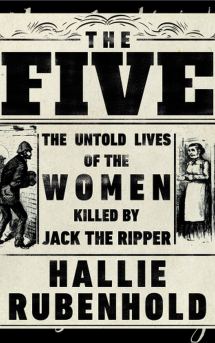
The FiveThe Five by Hallie Rubenhold

This book has been getting a lot of coverage and tells the stories of the women raped and murdered in Victorian London by Jack the Ripper. Reclaiming a space for these women, the author seeks to make them more than just victims.


BookwormBookworm: a memoir of childhood reading by Lucy Mangan

I have been reading Lucy Mangan’s columns in The Guardian for years and have always loved her writing style. I have also always identified with the passion for reading she found she had as an introverted child. This looks like a nice read and one that will take you back to characters and places you may also have loved as a child.


SpringSpring by Ali Smith

The third in Ali Smith’s seasonal quartet. Autumn was published in 2016 and was shortlisted for the Man Booker in that year. Winter was published in 2017 (still on my TBR list) and here we now have Spring, due for publication on 28 March. It concerns the lives of three people living in a time of war in a country facing a crisis of identity. Remind you of anywhere?


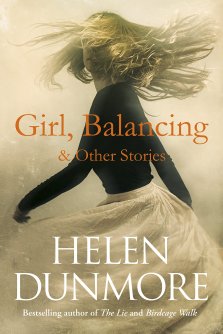
girl balancingGirl, Balancing by Helen Dunmore

Having just completed Birdcage Walk, I’m really keen to get into some more Helen Dunmore and this collection of short stories looks like a perfect one to take on holiday. I don’t read very many short stories so this will be a bit of a departure for me.


LannyLanny by Max Porter

Just read a review of this and it sounds so intriguing that I can’t wait to get hold of it. Set in a small village not far from London, this book is about the many residents past and present who have lived there, and about the culture, history and folklore of the place, embodied by the slumbering woodland spirit Dead Papa Toothwort.


That should keep me going for a while!

What books are you looking forward to reading this Spring?

If you have enjoyed this post, I would love for you to follow my blog. Let’s also connect on social media.

The Reading Challenge for March: “Perfume” by Patrick Suskind

This month’s theme for my Facebook Reading Challenge is a European novel. I confess that I did have the “B-word” in mind when I set the theme, feeling the need to assert that there is more that unites us than divides us, to paraphrase the late Jo Cox. The B-word has at this stage, however, become synonymous with something altogether more sinister – something very worrying is happening to our concepts of democracy, statehood, nationality, political representation and society. No-one really knows where we are or where we’re going.

Photo 11-03-2019, 13 52 18
My thirty year-old copy of Perfume

However, that does not change my belief that we would all do well to push our personal horizons from time to time, literary and otherwise, and engaging with books originally written in other languages is one way of doing that, even if you have to read them in translation. So, the book I have chosen for this month, Perfume by Patrick Suskind, is an absolute classic, and one that I consider to be one of my all-time favourites.

Perfume was first published in 1985 in German, and then in English in 1987. This was also my first year at University, studying English, and I spent those three years reading continuously. Sounds great (it was!) but by the end of it I could hardly even lift a book! Perfume was one of the first books I read after my hiatus, and I was completely blown-away. The novel is set in 18th century Paris and concerns a perfumier Jean-Baptiste Grenouille, his talent for and obsession with all things olfactory, and his descent into a murderous lifestyle – the sub-title of the book is “the story of a murderer”.

I am excited to be reading the book again, although slightly apprehensive – what if I don’t love it as much as I did before? Context matters, so it will be an interesting experience either way.

If you would like to read the book and join the conversation, do pop over to the Facebook page. 

If you have enjoyed this post, I would love for you to follow my blog.


World Book Day…don’t you just love it!

world book day

I love World Book Day, truly I do, but I have to confess that by the time my third and youngest child was at the end of primary school I breathed a sigh of relief that no longer would I have to be knocking up a costume the night before. (Perhaps this says more about my approach to organisation than anything else!) One of my kids hated dressing up, another is highly imaginative and I’m afraid my sewing skills could never match up to expectations and another worried about their costume and how it would compare to others. It was SO stressful, and I began to feel, towards the end, that we were sort of missing the point.

Going along to the bookshop the following weekend clutching our tokens for a free mini-book was much more in my comfort zone, though, again, we would inevitably walk out with an additional book or two and I often wondered how parents for whom money was tight, or non-existent, managed this particular challenge and having to say no once again. Possibly avoid the bookshop altogether and quietly forget the token?

I saw a post on Facebook this morning suggesting that if the costume your child wants costs more than a book, don’t buy it and get a book instead. This is good advice! Children can be strong-willed little things, however, and it can be hard to hold the line. Schools could do more, I think, to reward and recognise ‘creative’ costumes, or perhaps set the challenge that a costume has to be assembled from a certain limited range of materials and take no more than an hour to put together. Most kids LOVE a set of parameters and this would reduce the peer pressure to turn to online sellers of fabulous ensembles.

My own take on this, as a parent of teenagers, is that books are for life and not a day, and we would all do well to try and incorporate books and reading into our children’s lives. I feel certain this would counter much of the anxiety around screen-time that so many parents experience. So, here are my alternative suggestions for celebrating World Book Day:

  1. Read a book yourself – model the behaviours you want in your children.
  2. Put down the phones, sit down and have a conversation with your child about a book they have read. Value their opinions and don’t judge.
  3. If they don’t like a book (that’s okay), as them why. This will encourage them to think about what they DO like.
  4. Make using their World Book Day token an occasion. Buy them an additional book if you can afford it.
  5. If you can’t, take them along to the charity shop where there will be hundreds of kids’ books.
  6. Get them a library ticket and visit regularly.
  7. Do all of the above. Again.

Nothing is better than reading to your child at bedtime. Yes, I know it can sometimes feel like a hassle, especially if you still have work to do, are tired or want to watch your favourite TV show, but, believe me, it stops and often sooner than you think. Even five minutes reading with your child is better than none.

There was some depressing research published this week showing that only around a third of children under thirteen are read to daily for pleasure by an adult, and the trend is downwards. This is not good. When we also hear about teenagers’ mental health issues, I’m afraid I can’t help thinking there is a link.

What are your thoughts on children’s reading habits?

If you have enjoyed this post, I would love for you to follow my blog. Let’s also connect on social media.


Book review: “Becoming” by Michelle Obama

This book has certainly captured headlines since it was published in November. It was abridged and serialised on Radio 4 the week it came out. I caught a couple of the episodes, but this was merely a taster since, having now finished reading it, at over 400 pages, they gave only the very edited highlights. I do not normally go in for celebrity memoirs, and one could be quite cynical about the enormous deal that has been struck by the Obamas and their publishers (though I gather they are donating royalties to charity). However, very early on in the book any cynicism I might have had melted away.  I have no idea what help Michelle had in writing this book, but it does not ‘feel’ ghost-written. Her narrative voice is very authentic – warm and compassionate, the same way that she comes across when she speaks.

becoming imgMy book club chose this for our pre-Christmas read (I’ve only just finished it!) and we all thoroughly enjoyed it. It’s long, and perhaps could have been edited somewhat, but I imagine the main buyers of this book will be Michelle-fans who want as much detail as possible. The first part of the book was, for me, the least engaging. My fellow readers and I were a little surprised to learn that Michelle Robinson did not in fact come from an affluent background. She was a ‘Southsider’ – from a part of Chicago that was fairly blue-collar and largely African-American, and became more so as she grew older and some of the white residents moved out. A picture is painted of a family with strong values around hard work, doing the right thing, caring for others and loyalty to family. Michelle excelled in school through hard work, determination and the support of her parents and attended both Princeton and Harvard Law School. She has never forgotten her humble beginnings, however, and this underpins her commitment to equality and social justice. However, I did feel this part of the book was most descriptive; in the context of the book as a whole I can see why it would have been important to her to put her politics in perspective, but it was a tiny bit…pedestrian?

Michelle met her husband, Barack Obama, while she was working at a law firm in Chicago, and the development of their relationship forms the basis of the second part of the book. It’s a lovely romantic story, and they are clearly deeply committed to one another. However, it did not come without some pain. Much has been made of their difficulties conceiving a child (both daughters were born after IVF treatment) and of their seeking relationship counselling. What I found most interesting, however, was how Michelle has wrestled with and had to reconcile herself to, the role that being the spouse of a high-profile politician, then a Senator, then a President, has meant for her own career ambitions and her life as a parent.

The challenges of this dilemma are thrown into sharpest relief in the later chapters of Part Two where Barack Obama makes his bid for the US Presidency in 2007/8. The way that Michelle was treated is both fascinating and appalling. How she coped is beyond me, and it is to her enormous credit that she was able to rise above the racist and misogynist vitriol that came her way. I suspect those things ultimately made her stronger. Since Barack Obama left office in 2016, there have been calls from many quarters for Michelle to consider running at some point in the future, to which she has repeatedly said she never would (she states this explicitly in the final pages of the book). When you read her personal reflections in the 2008 campaign you can see fully why she is not made for that particular political bear-pit. She is a much better person than that and working towards a bigger picture than the short-termism associated with political elections.

As my visibility as Barack Obama’s wife rose, the other parts of me were dissolving from view. When I spoke to reporters, they rarely asked about my work. They inserted “Harvard-educated” in their description of me, but generally left it at that. A couple of news outlets had published stories speculating that I’d been promoted at the hospital not due to my own hard work and merit but because of my husband’s  growing political stature, which was painful to read. 

The final part of the book looks at her life in the White House. As she writes in the opening lines:

There is no handbook for incoming First Ladies of the United States.

As with most things in her life, Michelle Obama had to find her own way. In some ways that must be a liberating position to be in – having the freedom to write your own job description (the present First Lady has taken a somewhat different approach) – but for Michelle Obama there was the deep hostility she had to contend with, not just the political opposition, but the more personal, racist, misogynist and body-shaming tone she also endured.

I understood…that I’d be measured by a different yardstick. As the only African American First Lady to set foot in the White House, I was “other” almost by default. If there was a presumed grace assigned to my white predecessors, I knew it wasn’t likely to be the same for me. 

When the book was published, commentators pounced upon her comments about the present incumbent of the White House, looking for something juicy. Yes, there are some criticisms, as you might expect, and sadly the echo chamber rather defines the politics of the age – most of us prefer to read or listen to people who reflect the views we already hold. But what struck me in fact was the restraint, and the most chilling comment was that Michelle Obama will never forgive Trump and his team for placing the life of her husband and her daughters in danger. This sums up the book, and the woman, for me; it’s family, loved ones, values first, politics second.

If you’re a Michelle fan you’ll love this and have probably read it already anyway! If you’re objective there is still much to enjoy here and there’s no doubting the courage, integrity and sheer grit of the woman. She is undoubtedly a role model to us all.

What did you think of Michelle Obama’s memoir? 

If you have enjoyed this post, I would love for you to follow my blog. Let’s also connect on social media. 

Happy 2019!

2018-12-31 17.51.53-2

Happy new year, readers and fellow bloggers!

I hope you all had a good break and got plenty of reading done. My holiday was a rather different one this year. Straight after Christmas I was with family in East Anglia, so there was very little reading time. We then went on a family skiing trip to a very beautiful and very snowy Austria for New Year. (We love skiing, but I am always relieved when we all come home injury-free!)

It was probably our best family ski trip ever, in an area we have never previously visited, Serfaus-Fiss-Ladis in the South Tirol. There were very few British accents to be heard and fellow skiers were overwhelmingly Austrian, German or Dutch so it seemed to us to be well-kept secret. It was stunningly beautiful and we enjoyed the unusually bountiful snowfall, even if that caused us some problems getting back home.

the overstory imgDespite being outside skiing all day I did get a fair bit of reading done and managed finally to break the back of a book I have been reading for some time now – The Overstory by Richard Powers, the final one of the Man Booker Shortlist 2018. It’s a wonderful and brilliant novel, but it’s very long and quite hard work. The prose is a joy so much so that you simply have to read every word, which makes it doubly time-consuming. So, it was the perfect holiday choice. I’ve still not quite finished!


becoming imgOver the holiday I also completed Michelle Obama’s Becoming. This is a much faster read and very different, though also thoroughly enjoyable. Look out for my reviews of both books over the next couple of weeks.

I’ve been putting some thought into my reading plans for 2019 this last few days and have just launched this year’s Facebook Reading Challenge. If you’d like to join us do pop over to the page to have a look at the list of themes for the year. The title for January is Beryl Bainbridge’s The Bottle Factory Outing, which I gather is very funny so I’m looking forward to starting it.


I’m also planning to visit the Hay Festival again this year, which I attended for the first time in 2018. I loved it so much that I now intend to make it a regular part of my annual calendar. I am lucky enough to live in Manchester where we have a fantastic literary festival every Autumn. Unfortunately, I couldn’t make any of the events last year (the speakers I wanted to see all sold out very quickly so I need to be more on the ball this time) so that will also be a priority for 2019.

My other big goal this year is to attempt to get my own book published. I’ve been working on it for about 18 months now and finally finished the revisions to my second  draft in December. I feel it’s now time to put it in front of someone else for feedback – a terrifying prospect, but a necessary one. I feel sick even thinking about it!

I hope the year ahead will be joyfully book-filled. What a wonderful hobby we share!

What are your literary plans for 2019?

If you have enjoyed this post I would love for you to follow my blog. Let’s also connect on social media. 


Listening versus reading

headphones-3658441_1920

I loved listening to Matt Haig read his wonderful book Notes on a Nervous Planet. I downloaded the audiobook in the Summer and blogged about it here in October. I decided that it was definitely a book I wanted to have on my bookshelves, to dip into occasionally, to read certain chapters at specific times, and to be able to jot notes down. I also decided that it would make a great gift for a few people I know.

I set it as the November book for my Facebook Reading Challenge and so far the feedback seems to be positive. Apart from a handful of my very favourite books (eg Wuthering Heights) I seldom re-read books. I always feel I should; my husband is a great re-reader and says he gets different things out of a book each time he returns to it, and he is right of course. For me, though, there seem to be just too many books to read first time around!

Notes on a Nervous Planet imgI have made an exception and decided to read Notes on a Nervous Planet again. I’m surprised at how different the reading experience is versus listening. Firstly, the author has a wonderful reading voice and I suppose because it is non-fiction and is very much about his experiences of anxiety and depression, you can sense that it comes straight from the heart. I really think that the narrator of an audiobook plays such an important role in the experience. For example, I loved Hilary Huber’s narration of Elena Ferrante’s Neapolitan Novels, but I struggled with the reading of 1984 by Andrew Wincott…who is Adam in The Archers. I just couldn’t get Adam out of my head!

The second interesting difference is the speed. I read quite fast, and I am aware that this means I don’t always take in every detail. With listening, however, I listen at the natural pace (I dislike the 1.25 and 1.5 speeds). It does mean that you absorb a lot more of the text. I was surprised reading Notes on a Nervous Planet how many passages I remembered virtually word for word.

The third difference for me may be a very subjective one, but it’s about the way the content of the book organises itself in my head. Here, my preference is for the tangible book. Listening to this book I found it more of a continuous narrative, but reading it is more useful to me in terms of taking forward some of the ‘recommended’ actions – I use the term loosely as it’s not a smug, instructional just do as I say and your life will be perfect, sort of book! For others who are more aurally oriented the experience may be different.

Audiobooks are great, especially for long car journeys (if you have the appropriate technology), or, my particular preference, walks into town. I have found with this book, though, that reading again has brought me some extra insight, and that can’t be bad.

Are you a fan of audiobooks? Have you ever both read and listened to a particular title?

If you have this post, I would love for you to follow my blog. Let’s also connect on social media.

7 ways that reading improves your mental health

World-Mental-Health-Day

On World Mental Health Day, I would like to flag up the obvious – reading is good for you. If you need a reason, here are seven:

  1. Reading reduces stress – it can slow your heart rate and help you relax.
  2. It can help you sleep – reading before bed induces sleep much more effectively than any other activity. Switching off your mobile phone and picking up a book will promote good sleep hygiene.
  3. Reading stops you ruminating – many of us build up our anxiety levels by going over and over stressful experiences. Reading a book will take you out of that negative thought cycle.
  4. Books do not mess with your melatonin – unlike a phone. Young people in particular benefit from putting the phone, with its melatonin-suppressing blue light, away and picking up a book.
  5. Reading explands your mind – much more than YouTube or EastEnders ever will.
  6. Reading improves focus and concentration – and that can help you manage the demands of life more effectively, especially if you find it difficult to complete tasks, with all the consequent pressures that brings.
  7. You won’t be comparing yourself with perfection – most characters in good books are flawed…like the rest of us. Normal. You will not meet people living seemingly amazing lives, with perfect bodies and hundreds of friends, who are going to make you feel rubbish. You will meet characters like you. And others not like you. Life’s rich tapestry in fact.

So, celebrate World Mental Health Day by doing something for yourself and sitting down with a book.

Book review: “The Last Runaway” by Tracy Chevalier

This was one of my holidays reads and one of two books my book club chose for our summer break. It’s only my third Tracy Chevalier novel, but each time I read her I just want more! I read Girl with a Pearl Earring years ago when it was first published and then The Lady and the Unicorn a year or so ago, which I thought was wonderful. I have since picked up Virgin Blue from my local secondhand bookshop so that will be next on my list.

The Last Runaway imgOne thing that is so impressive about Chevalier is how beautifully she creates the  historical setting: the two novels I have read so far have been set in 17th century Holland and 15th century Paris and Brussels and I can only begin to imagine the amount of research she has to undertake. The Last Runaway is set in the United States in the mid-nineteenth century when parts of the country were only just being settled. Honor Bright, our main character is a young Quaker woman from Dorset in England. She has led a modest and sheltered life, but her world was turned upside down when her fiancé left her and their close-knit Quaker community for another woman. This was not only a scandal but it left Honor distraught and in a very difficult position. When her sister, Grace, is persuaded by her fiancé that they should move to America, Honor decides she must go with her, not only to support her sister, but to escape the oppression of her situation and have some chance of making a life for herself.

Their journey from Bristol to New York is arduous and Honor suffers with debilitating seasickness. As they travel the long distance from New York to Ohio, Grace contracts Yellow Fever and dies. This places Honor in a further difficult position: not only must she tell Adam Cox, Grace’s fiancé, that she is dead, but she is also in fear about where that leaves her as he, of course, has no obligation to support her. Honor, however, cannot face going back to England either because of the journey or the shame.

On the final leg of her journey, Honor has a frightening encounter with a local slave-hunter, Donovan. Honor is appalled both by his profession and his dangerous air, and yet also finds herself strangely drawn to him when he seems to flirt with her. This also sends her into a tailspin as it conflicts with her Quaker outlook and moral code.

Honor arrives in the small town of Wellington, close to Faithwell, her intended destination. There, she finds quarters with Belle Mills, the local milliner, who, it transpires, is also the half-sister of the mysterious Donovan. Belle warns Honor about him and it is clear there is a tension between these siblings. During her stay with Belle, Honor adapts her talent for quilting (quilting, its traditions, the patterns and its place in Quaker culture, are a strong and fascinating motif running through the novel) and shows promise as a hat-maker, endearing her to Belle and her many customers. Belle’s designs are often flamboyant, which is an anathema to Honor, who, as a Quaker, must observe plainness and modesty in all forms of dress. The two women develop a firm friendship, however, and Honor begins to feel more confident.

Honor first realises there is something strange going on when she finds a black man under a woodpile in the yard of Belle’s home. Honor is aware of the existence of the slave trade, indeed, the Quakers were an important part of the movement calling for its abolition, but this is the first time she has come so close to an escapee. She is terrified, particularly when Donovan comes searching at his sister’s property, sensing the presence of the runaway. Honor later learns that Belle is part of a network of citizens who provided the means of escape, food and shelter for runaway slaves fleeing the South to states which had already outlawed slavery – the ‘underground railroad’. Belle was what was known as a ‘station-master’.

Honor is collected from Belle’s by Adam Cox, Grace’s fiancé, and taken back to Faithwell, to live with him and his sister-in-law (also widowed) and to work in their shop. The domestic situation is uncomfortable for Honor, however, and her prospects only  brighten when she is wooed and then married to fellow Quaker Jack Haymaker. At first it seems like a good marriage that will improve Honor’s situation, but her mother-in-law proves to be a formidable presence, who does not conceal her contempt for her daughter-in-law and how little she has to offer when Honor goes to live with them on their isolated farm. At first, Jack is attentive and loving, but quickly becomes complacent and Honor grows increasingly miserable, despite her efforts to feel and appropriate degree of godly gratitude. Tensions deepen when Honor decides she will provide support for runaway slaves passing through their property. This is against the expressed wishes of the Haymakers. A law has been passed which makes it illegal for anyone to help a runaway, and the penalties are severe. Whilst the Quakers are against slavery, they are also against law-breaking and Honor’s actions are seen as a threat to their livelihood. Honor finds herself increasingly in conflict with the family until the point where her position becomes untenable. All the while, Donovan hovers in the background, stalking Honor and sniffing out runaways.

I will say no more as the events of the story then take quite dramatic turns. I loved the unexpected twists of the plot. I also love the way the author wove in details about the slave trade and the underground railroad (which I confess I knew very little about). Colson Whitehead’s 2016 novel The Underground Railroad brought the existence of this movement to the attention of many readers for the first time, I think. I was not aware that Tracy Chevalier had also written this novel about it. I also loved the domesticity of this novel, its femaleness and the feminine craft of homemaking, particularly in relation to the skills required for good quilting. This seems to be a common theme in Chevalier’s work. I loved how strong the women were in this novel; the men do not come out looking so good!

I recommend this book highly. It’s a great story, a fascinating read and will give you an insight into worlds you may not know much about.

If you have read this book, I would love to hear your views.

If you have enjoyed this post, do follow my blog and let’s connect on social media.