Sight is the debut novel from British author Jessie Greengrass and was shortlisted for the Women’s Prize for Fiction, which was won recently by Kamila Shamsie. This was the first novel I have read from this year’s Women’s Prize shortlist, and the one which appealed most strongly to my fellow book club members and I. We love the Women’s Prize and always try to get through a couple on the shortlist. We are all mothers, spend way too much time talking about our kids and so the blurb, about one woman’s journey to parenthood, spoke directly to us.
It is a very curious book. I had to keep reminding myself that it’s a novel as we become so deeply embedded in the internal world of the unnamed first person narrator that it feels as if it is an autobiography.

We know very little of the narrator, except that she is a young woman of indeterminate age, though probably in her early thirties. Her partner is Johannes, whom she meets shortly after the death of her mother. The book begins with her account of her mother’s decline and death and the time she spent caring for her. It is clearly a traumatic time for her and she struggles with all the challenges it represents – emotional, physical and administrative. It is an account of what it is like to be a daughter and an only child and to lose your only parent, your only link with your birth, with your early life and with that part of your life of which you have no memory.
She seems to drift into the relationship with Johannes at a time when she is emotionally vulnerable. He seems to offer her stability and comfort. The issue of having a child is clearly something that looms large in their relationship and eventually she agrees, but she remains unsure about the wisdom of this step.
This is not a story. It is an internal monologue, an account of one woman’s ambivalence about having a child. In fact she seems very ambivalent about all her close relationships – with her mother, with Johannes and with the only other significant character in the book, her late grandmother, a psychotherapist who lived alone and practised in a large house in Hampstead, and with whom she spent a few weeks each summer as a child. I suppose this ambivalence is present because we are getting the narrator’s unfettered, unmediated thoughts, but I found it confusing to marry this with any notion of love. For me, love was missing from the book. I understand well that for many women, it is not easy to bond with the foetus they carry, even the baby they give birth to. I can also accept relationships with a parent can be fraught and complex, even where there is familial love on both sides. Our narrator is deeply moved by the suffering of her mother in the final stages of her life; the actions she takes, the things she tells us about, sleeping beside her in the hospice, reading to her, suggest deep love, but she does not seem to me to express it. And when she writes about her grief and her loss, it is more a loss of a role, or a relation, rather than a person. There is something very cold about her feelings, which are captured in the following quote:
“Then I was faced with the problem of what to do with all my mother’s things. I felt that I was expected, somehow, to keep them, to make myself curator, but the thought of storing this detritus of an ended lifetime, of dragging it behind me like a deadened limb, turning myself into little more than a conduit for memory, was horrifying; and so in the end I gave away what I could to anyone who wanted it and hired a skip for the weekend to deal with the rest.”
What I found most difficult was that there seemed to be little real love in her relationship with Johannes. This was the man she chose to be the father of her child and although she finds great comfort in their easy companionship, their shared interests and the great care he shows for her, there is also at times a kind of contempt.
Perhaps my reading of it is too simplistic or too literal – perhaps if my internal thoughts were this closely mapped they would also reveal ambivalences in my feelings for the people I love most in the world. Our thoughts are closed to everyone but ourselves, and even to ourselves sometimes.
This is not a linear narrative – it jumps back and forth from her childhood, to the present, the antenatal appointments, to her mother’s death. In that sense it bears similarities to a ‘stream of consciousness’ style. Woven through it are accounts of three scientific figures – Rontgen and his discovery of the X-ray, Sigmund Freud and his psychoanalytic relationship with his daughter Anna, and John Hunter and the development of early surgery in the 18th century.
What I liked about this book was the remarkable writing, the intensity of the observation, particularly of her relationship with her own young daughter:
“When my daughter throws her arms with thoughtless grace around my neck, I respond with an agonising gratitude that I must hide from her in case, feeling the heft of it, she might become encumbered and not do that she was born for, which is to go away from me.”
There is profound insight in this book, not necessarily to the human condition – there was much here that I could not empathise with – but I mean in terms of the self-awareness. The deep introspection has given her a powerful knowledge of her own nature, of the events that have shaped her existence and of the impact of her relationships upon her.
This is a long review for a book in which very little happens! It was not an easy read and it sometimes frustrated me. It’s an extraordinary achievement for a first novel and offers a fresh approach to much-explored themes, even if at times it feels rather dislocated.
Recommended if you prefer psychology to plot.
If you have read Sight, what did you make of it, and how does it compare to the other novels on the Women’s Prize shortlist?
If you have enjoyed this post, I would love for you to follow my blog and for us to connect on social media.
 I have learnt my lesson and carve-out reading time for myself in the day. My bedtime reading is usually reserved for lighter books, entertainment. I have recently discovered the Maisie Dobbs series by British-American writer
 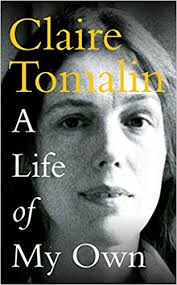 Browsing in the bookshop last year, I noticed that she had published her own autobiography, at the age of 83 – I note with some pleasure that her 84th birthday is in fact today! Many happy returns! Reading the blurb whetted my appetite – I was not aware of her life as a groundbreaking Literary Editor at the Sunday Times, or that she had five children, including one boy who died as a baby, and another son who was born with severe disabilities, nor that her first husband, fellow journalist Nicholas Tomalin, was killed in 1973, when her children were still very young. It sounded like a very interesting read.
 The novel is set in Renaissance Florence; the sense of time and place is profound. You can almost smell the streets wafting from the pages! Dunant is a meticulous researcher and the novel feels very authentic. The central character is Alessandra, the fifteen year-old daughter of a wealthy cloth merchant. Much to the frustration of her family Alessandra is a precociously intelligent young woman, a talented artist, a strong personality and has a deep desire to be out in the world. These are all traits which are highly inconvenient for the family and not compatible with the kind of life she will be expected to lead.



 I then saw Rupert Everett (with whom I fell in love years ago after his appearances in films Another Country and Dance with a Stranger in the mid-1980s) in conversation with Alan Yentob. Everett has just completed his film about Oscar Wilde, a passion project which it has taken over ten years to bring to fruition. There was a BBC4 Imagine documentary about it a couple of weeks ago.
 Finally, my last event of the day was hearing Turkish author Elif Shafak speaking about her new book The Forty Rules of Love. I reviewed her novel

 I’m a big fan of audiobooks as a way of passing otherwise dead time in a more constructive way – for me it’s car journeys, or whilst exercising. It might also be while you’re waiting for swimming lessons to finish or at the supermarket. You have to choose your titles carefully though, because it’s not just about what you listen to, but the narrator is really key to the enjoyment. For example, audiobooks I have enjoyed have been Holding, narrated brilliantly by the author Graham Norton, Frankenstein, narrated by Derek Jacobi and 1984, narrated by Andrew Wincott (Adam from The Archers). Their reading styles enhanced my enjoyment. A title I enjoyed less because of the narration was The Girl on the Train, where I felt the male voices were not done well.
 I have recently finished listening to The Story of a New Name by Elena Ferrante, Book Two in her Neapolitan Novels series. I have listened to and reviewed here, Book One,

 I had read this book previously, but many years ago as an undergraduate, so whilst I had remembered the basic story, I had forgotten much of the detail. I had forgotten for example just how brilliant the writing is and how very like Jane Austen Flaubert can be in his use of irony. By all accounts, Flaubert was a perfectionist and spent years on this book; it is certainly masterful and for me the writing was sublime. I had also forgotten how unlikeable all the characters are! Even Emma, our supposed “heroine”, is at times unpleasant, childish, selfish, superficial and self-obsessed. When I discussed it with my husband (who speaks fluent French and read it in the original) he was surprised that I did not find Charles Bovary, Emma’s husband, sympathetic. Interesting that he felt affection for the long-suffering, betrayed husband who loved his wife to the death, despite her many faults, whereas I found him ineffectual and basically unable to connect with his wife on any level, and that was part of the problem in their marriage.
 Julia's books