As a mother of three, I find it is always a challenge to get back into the swing of things after a school holiday. I am self-employed and work from home so I tend to take the holidays ‘off’ (insofar as one is ever ‘off’ as a parent!), but it always seems to take me a week or so to restore the term-time order of things and get back into my rhythm, including my reading rhythm. The dynamic at home has also been affected by the fact that my eldest is deep in GCSE revision and now on study leave, wanting feeding during the day and everything!


We took a short family holiday to the Netherlands over Easter, a country we know well and have visited annually for many years now. We spend our time either in Amsterdam (a fab city for kids, by the way) or in the far south of the country in Zeeland, a fascinating area for which I have a very deep affection. I’m a bit reluctant to plug it because it’s authentic and unspoilt, but we love the cycling, the beaches, the space, the calm, the beautiful and historic Dutch and Belgian towns and the warm welcome we receive each time we go there.
Despite my love of Holland, its art and architecture and its people, I am ashamed to say that I know very little about its literature, so on this trip I decided to take with me a book called In the Dutch Mountains by Cees Nooteboom. He is one of the giants of not only the Dutch but also the wider European literary tradition. I picked up this book at a secondhand stall in a market in Dublin, so this particular copy is well-travelled!
Since starting this blog almost a year ago my reading habits have changed; I now find I am reading much more newly-published work than I have ever done before, which is great, but that has been at the expense of my reading of the classics or other contemporary fiction from recent years which I have wanted to read. There really are only so many hours in a day, after all! So, it felt lovely to be picking up a novel that was first published in 1984 and is widely considered to be a modern classic.
 What is so immediately intriguing about the title of the novel, of course, is that Holland is very, very flat. But In the Dutch Mountains imagines a world where the Netherlands extends much further south of its modern borders to northern Spain and the Pyrenees (hence the Dutch mountains). The narrator is himself a Spaniard, a civil servant who not only relates the story, but also philosophises on the processes of writing and story-telling: a story within a story. The main characters in the tale are Kai and Lucia, a slightly other-worldly circus couple, remarkable for their physical perfection, who are relieved of their jobs (because times have moved on and audience tastes have changed) and find themsleves travelling south to look for work. Kai is kidnapped and Lucia sets out on a journey to find him, accompanied by an old woman she meets on the way who agrees to drive her to find her lover.
The book is a vivid re-telling and reinterpretation of an iconic European fairy-tale, The Ice Queen, and explores the boundaries between myth and reality, but as a 21st century reader the strongest themes that came out for me were that of migration (for work), and what it means to be one nationality or another. The author contrasts the orderly, tidy north (what we now know as Holland) and the more chaotic, but freer south. He himself is Dutch but his narrator is part of the Spanish establishment (an inspector of roads), who happens to be a part-time novelist and philosopher. Alfonso, the narrator, is writing in the quiet of a school, empty of children who are on their summer holiday, a middle-aged adult sitting at a diminutive desk and chair. Thus the novel sets up a whole series of contradictions which invite us to challenge our assumptions and expectations.
This is a short novel, but one which merits reading slowly and deeply, and I will probably re-read it at some point. It won the 1993 European Prize for Literature. It was a curious read and I can’t exactly say I loved it, but I did find it fascinating, and it wasn’t at all what I expected. I think it’s always good to push your reading boundaries and as I read this book I certainly found myself drawn into a very different literary tradition than the one I have become used to in recent years. As a citizen of a nation that has expressed its intention to leave the European Union I feel strongly that European literature has a great deal to offer us in terms of enhancing our understanding of and empathy with our near neighbours, and I intend to read more of it in the future.
What European novels have you read? Do you think they are different in style and tone to English literature?
If you have enjoyed reading this blog you can subscribe to follow me by clicking on the link below or to the right, depending on your device.
 I’m off on a short holiday to the Netherlands so I’m planning to take some reading with me, of course, and have decided on another book from my
 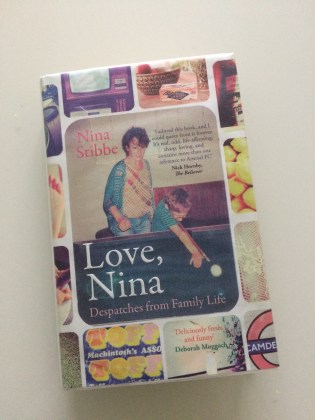 Nina is twenty when we meet her in the early 1980s. She lives with Mary-Kay Wilmers, editor of the London Review of Books, and her two young sons, Sam and Will, to whom she is a nanny. They live at 55 Gloucester Crescent NW1, an area that was also home to other literary types, among them Alan Bennett and Claire Tomalin, who also make appearances in the book, particularly ‘AB’ who is a great friend of ‘MK’.
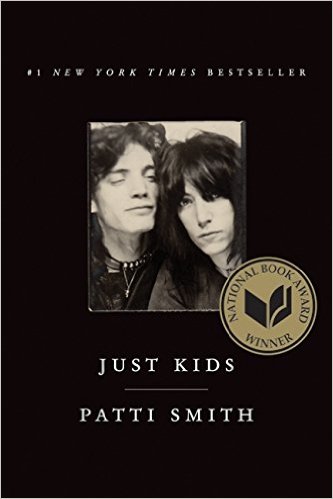 I’ve been an admirer of Patti Smith for a number of years now. I’m a bit young to have been a fan of hers when she first broke onto the music scene in the mid-1970s. I became aware of her much later when I picked up a sale copy of her debut album Horses. I was also aware of Robert Mapplethorpe, the late artist-photographer who was her lover and then close friend when they were both very young. Mapplethorpe died of AIDS in 1989 and it must have been in the 1990s that I saw an exhibition of his work in London (I had an interest in photography at the time). Later on again I learned about the connection between the two and how Patti had been, if you like, Mapplethorpe’s ‘muse’ when he was first discovering his art.


 So, the task for March on my
 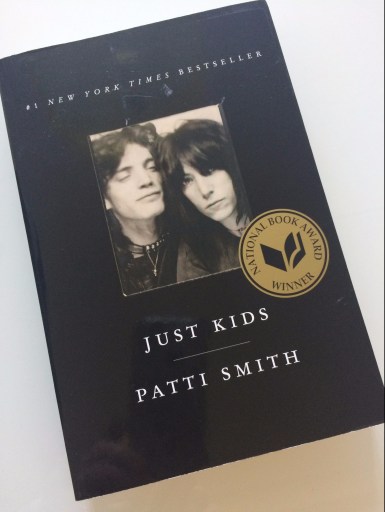 Patti Smith is a fascinating woman who has led a fascinating life. I have been meaning to read this book for years (it was published in 2010), so when I came across it in the Strand Bookshop whilst on my trip to, where else, New York last summer, it had to be bought! (It’s a very New York book.)
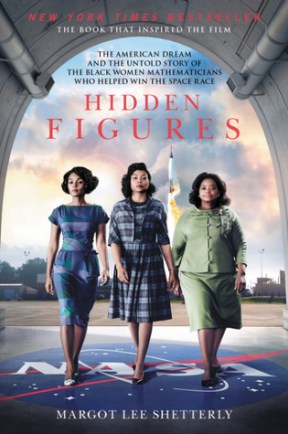 This year, literary references are a little thinner on the ground, but I want to tell you about a couple that have caught my eye. My children were on their half term holiday last week and I took my youngest daughter (aged 10) to see Hidden Figures. It is based on a true story, but the film was inspired by a book of the same name by Margot Lee Shetterly. You will no doubt have seen the trailers, but, to summarise, it tells the story of three exceptionally talented mathematical minds whose contribution to the US space programme in the 1960s went largely unacknowledged…because they were African-American women working at a time when racial segregation was still in place. It is a remarkable story, very moving and very well told.
 Now, dear reader, this blog is rather like the proverbial swan – whilst it may look smooth and effortless to you on the surface, the planning (reading, idea generation, social media, writing, etc) that goes on behind the scenes is like a military operation! Well, not exactly, but, you know, I do plan my reading, aim to bring you a book a week and try to blog twice a week. And this book has totally blown my schedule! You know what it’s like when you’ve got a busy day planned either at home or at work…and you hear the words “Mum, I’ve just been sick!” and you know your day is irretrievably banjaxed. Well, that’s how I feel.
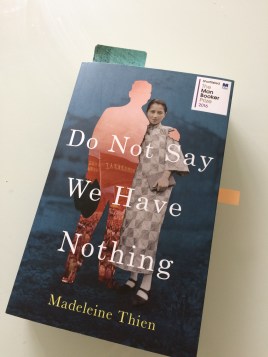 Do Not Say We Have Nothing, broadly speaking, is about China after the revolution, what it was like living under the dictatorship of Mao Tse Tung and about the hardships endured by the population, particularly by artists and intellectuals, in an era when culture was heavily proscribed. I have had a lifelong fascination with China, have read very widely about this enormously diverse and culturally rich nation, so I should be loving it. But I’m not! And I’m barely halfway through! I took a break from it this week and read Love, Nina by Nina Stibbe (which I’ll be reviewing soon), and that book is at the very opposite end of the literary spectrum – light, fun, quick to read. Many people probably would have given up by now. After all, a book, particularly a long one, is a huge investment is it not? I rarely give up on a book – I gave up on White Teeth by Zadie Smith a few years ago after a couple of false starts, but I have always planned to go back to it. My rationale for continuing with Do Not Say We Have Nothing is as follows:

 Julia's books