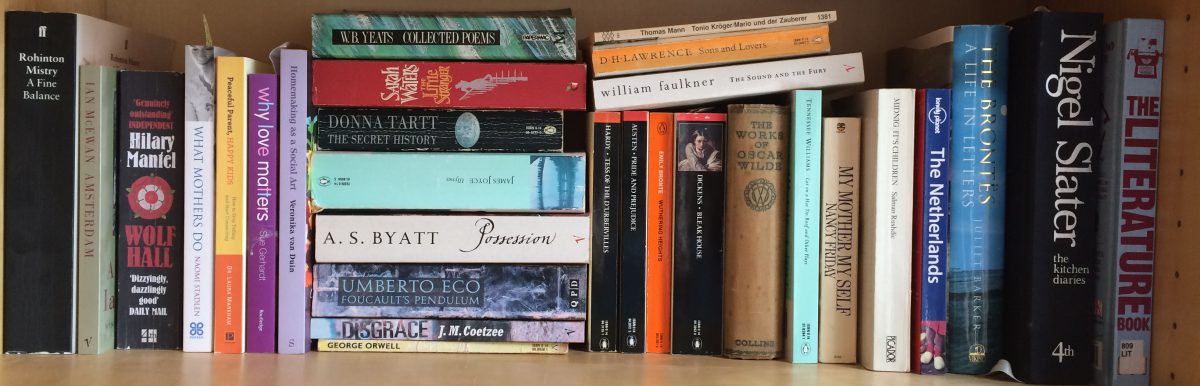

I know many people are following reading challenges at the moment – it’s becoming very popular. Not to be left out, I set my own at the beginning of the month, which you can find here if you’d like to join me. I know, however, that many busy book-loving parents don’t get as much time to read as they would like, so my challenge was about reading deeper – enjoying, embracing, rekindling the reading passion – rather than reading more.
January’s challenge was to read a book with a child (or simply to read out loud if you don’t have a child to hand). This month I have been reading two books with my youngest daughter, who is now 10. First of all we read Time Travelling with a Hamster by Ross Welford, which I reviewed here last week. We have also been reading Black Beauty by Anna Sewell.
My daughter is still young enough that reading together is something we do regularly, although we are not in the habit of doing it as much as we ought to for the purposes of school (oops!). Partly because, well, the usual, life is just full, but also because now that she is in Year 6 and a pretty good reader, we just don’t need to as much, so it’s slipped off our agenda somewhat. It just happens, doesn’t it? One minute you’re reading ‘Spot’ every bedtime, the next you realise your kids have hardly looked at a non-textbook for months.
Doing it regularly this month, however, has been a joy. For both of us. It was so lovely when we were reading a particularly dramatic section in Time Travelling with a Hamster where it was so tense she begged that we keep reading because she didn’t think she’d be able to sleep without knowing what happened next! Needless to say, I gave in, even though we’d gone way beyond official bedtime as I was pretty keen to find out if they escaped too!
Time Travelling with a Hamster, is a brilliant book, so if you haven’t got hold of it for your 9-12 year olds yet, you must. It was the first book in my daughter’s primary school book club, which I run, so I felt I was cheating slightly, putting it down for my January challenge. So, we’ve also been reading Black Beauty. I remember reading this when I was my daughter’s age and it’s been wonderful coming back to it as an adult. It has brought back so many happy memories from my childhood, not just from reading the book, but that wonderful television series. Do you remember the music? If you click here it will take you to a youtube clip of the opening and closing credits – watching it made me cry, it’s such a lovely piece of music, particularly the end theme with the choir. And that beautiful horse! It’s from 1972 so the TV show must have prompted me to read the book, as I would have been only 4 at the time. So, TV can be a good thing sometimes!
I hope you are enjoying reading with your child this month. I’d love to hear about it.
If you haven’t started yet, it’s not too late – maybe choose something together this weekend? You don’t have to finish by the end of January; we’re pretty relaxed about that sort of thing here at myfamilyandotherbooks.com!

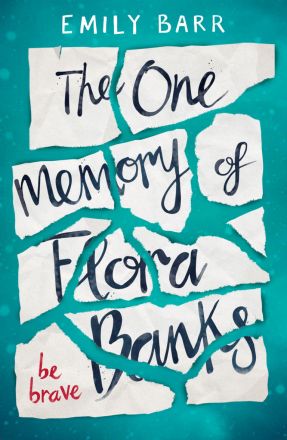

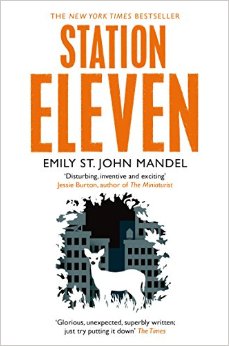 The book is set in Canada and the United States just 20 years after a catastrophic virus seemingly wipes out about 99% of humanity in a matter of days. The consequences of this are that, within a short space of time, electricity, running water and all the other basic services we take for granted, cease to exist. Vehicles are abandoned on motorways as their passengers leave their homes, to escape to…where? These people then die. Aircraft no longer fly and people are stranded pretty much wherever they happened to be at the moment the virus struck. And then mostly die. Whilst reading I recalled all those diseases in recent years that seemed to prefigure cataclysmic consequences (AIDS, Swine fever, SARS, Avian ‘flu, Ebola) fights which, for the most part, we eventually won; in this novel it is the disease (Georgian ‘flu) that prevails. And that’s scary.
 The author has quite a task managing this complexity: each of the four characters’ stories are told separately and in a non-linear way, but they are like pieces of a jigsaw gradually being pieced together until the overall picture becomes clear. The novel jumps back and forth in time and I found this quite difficult to follow. Also, for me, the drawing together of the strands was a little too contrived; it just did not seem entirely plausible that a tiny number of survivors could have such a connected past. I think this has been my problem with science-fiction generally (but perhaps I haven’t read enough); I get that you have to suspend disbelief but it’s too much for me when that means suspending credibility.
 There are so many books published that you may find people in your usual circle haven’t read the same things as you. But you will always find book review websites (whose authors would love you to post comments or engage in conversation, hint, hint!), or online reading communities, who have read your favourite most recent read. Sometimes, if I read a book I love (or loathe, though these are very few) I’m just bursting to talk about it with someone. I can always do that online.
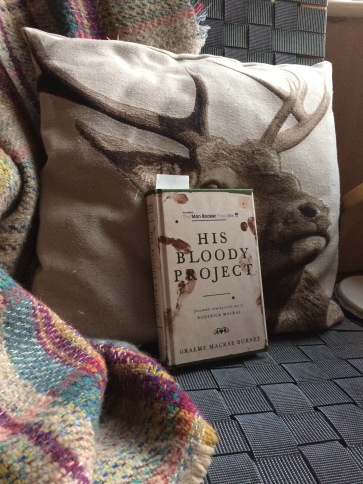 I have to say, though, that it’s a totally gripping story. Roddy Macrae is the 17-year old son of a crofter in a small village in the Scottish Highlands. The book begins with five short police statements from different witnesses who later testify in Roddy’s trial. They recount the incident, in August 1869, when Roddy murdered three other residents of the village: Lachlan Mackenzie, the village Constable and long-time foe of Roddy’s father, Mackenzie’s teenage daughter, Flora, and his young son Donnie. These witnesses observed Roddy walking through the village covered in blood and in addition to their account of the events they saw, they make observations on his character and background. Thus, there is little doubt that Roddy carried out the triple murder and the scene is set for an account of how these events came to pass.
 Autumn is becoming the new ‘new year’ for many people, lighter, brighter and generally a nicer time of year than January, which I’ve always felt was a really bad time to make resolutions and embark on new activities! On that theme, a lot of people I know are using October to make fresh starts or implement changes. For so many of us, transformation starts on the inside; if we have problems or issues we want to tackle or changes we want to make in our lives, it often means overcoming personal barriers – fears, phobias, addictions and the like – or building confidence in moving forward and realising dreams.
 Julia's books