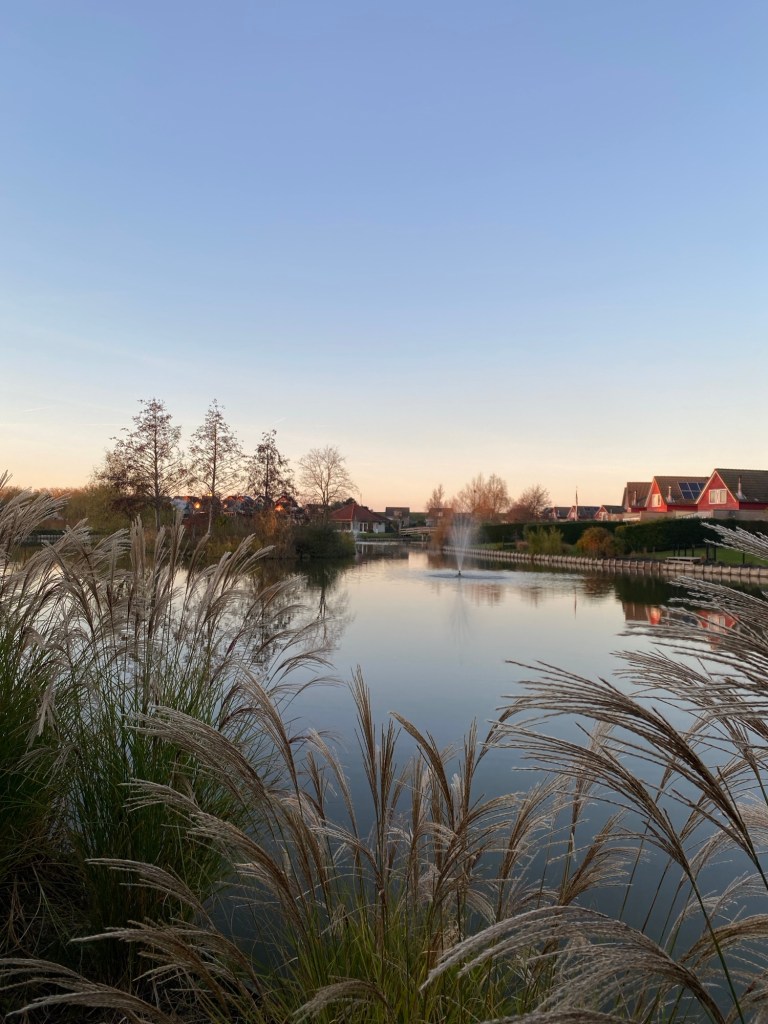
Literary adventures in the Netherlands

Relaxing Zeeland

I spent a couple of weeks in my beloved Zeeland recently, a place we have been visiting annually for almost 25 years now. It’s a place where you meet so few Brits and I often find myself feeling the need to explain why I would holiday in such a remote and seemingly unprepossessing place. I am always shocked, therefore when, very occasionally, I bump into someone who knows exactly where I am talking about. This happened just a couple of days ago while chatting to someone I have not met before in my organisation, who is Dutch and knew exactly every town I was talking about!

Middelburg, the main city in the province of Zeeland might just be my favourite place in the world and the only other place I would want to settle permanently outside of Greater Manchester or the UK. It is more of a large town than a city and it is beautiful and relaxing and historic and friendly. It also has probably the best bookshop in Zeeland, a wonderful independent store called De Drukkery, a must-see if you ever find yourself in this part of Europe.

Getting ready for Kerstmas in the Markt, the main square in Middelburg

This trip was our longest ever and very off-season – now that we are not so bound by school term times. We decided to take a trip to Den Haag, just a couple of hours by train from our nearest train station in Goes. Den Haag is a city we have visited briefly before and were very impressed with so wanted to spend a bit more time there. It does not pack as big a punch as Amsterdam or Rotterdam (both of which are actually very close by) but it is a lovely city, rather more relaxed and less touristy than its brasher neighbours. It is also the home of the Dutch parliament and most government ministries, the offices of the Dutch royal family, the International Court of Justice and many international embassies, so it has a feeling of gravitas and authority about it.

The Binnenhof, the home of the Dutch parliament is one of the oldest parliamentary estates in the world still in use. It is undergoing some extensive renovation at the moment so we were unable to visit it. The International Court of Justice is housed in the stunning Peace Palace – again, unfortunately, it was not open to visitors on the days we were there, but I feel sure we will go back.

The Binnenhof, Den Haag

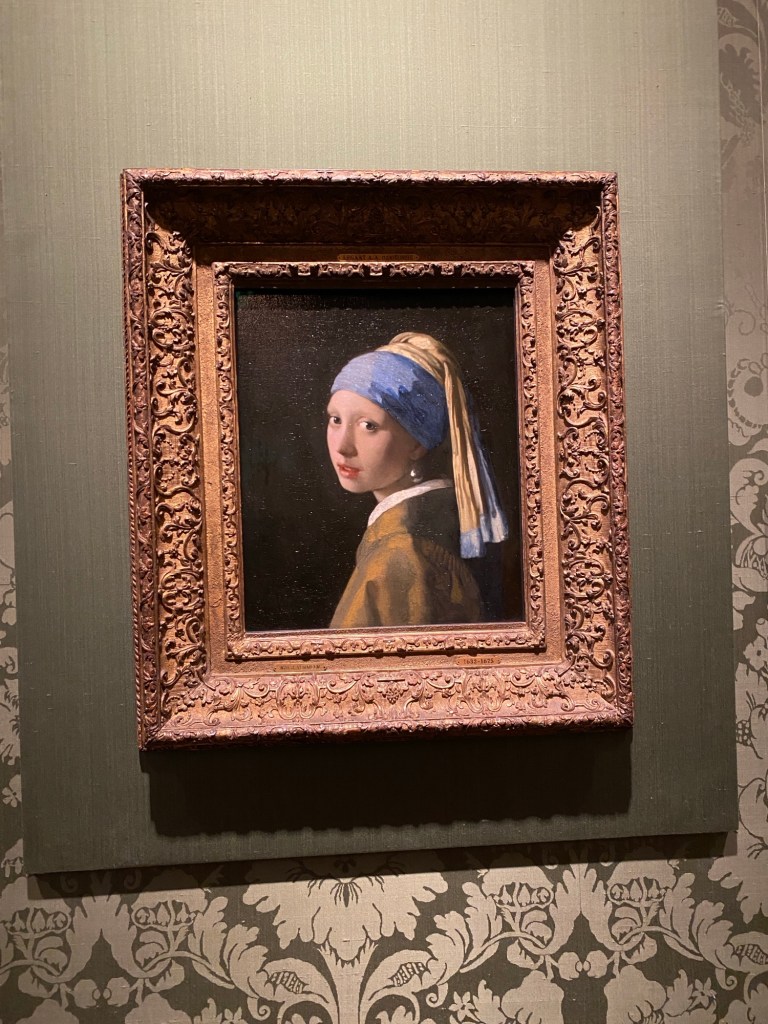
I did not mind this too much as my main objective was actually to visit the world famous Mauritshuis museum, a lifelong ambition of mine. This is a small and stunning museum, located close to the Binnenhof that houses two paintings with literary connections – Vermeer’s Girl with a Pearl Earring and The Goldfinch by Carel Fabritius.

I adore Vermeer’s work – it captures everything that Holland means to me. There was an exhibition of almost all of Vermeer’s paintings at the Rijksmuseum in Amsterdam in 2023. I would have made a special trip to go and see it, but it very quickly sold out so I was unable to get tickets (although I have just learned that there is a documentary about it now available on Amazon Prime). Girl with a Pearl Earring did not have to travel very far as the Rijksmuseum is less than 60km from the Mauritshuis, the home of the painting since 1902. Tracy Chevalier hit literary gold with her 1999 novel of the same name. It was only her second book and it made her name. I remember reading the book when it came out and I absolutely loved it. It was also what stimulated my interest in the work of Vermeer. We made out first visit to Zeeland in 2002 and I have been in love with the Netherlands and with painting from the Dutch Golden Age (broadly, the 17th century) ever since.
If it was a joy to see Girl with a Pearl Earring in real life, Fabritius’s The Goldfinch (Het Puttertje in Dutch) took my breath away and brought tears to my eyes. It is tiny, a little over 30cm high and 20cm wide, and it is so simple, but so deeply captivating – a wild bird, fixed to a perch by a delicate chain. The colours are muted and earthy, apart from a dash of yellow gold on the bird’s wing. The shadow of the bird on the plastered wall behind it creates a sense of foreboding and shows the painter’s skill at creating a sense of light and shade.

Donna Tartt’s book of the same name is one of my all-time favourite reads – I read it about five years ago and it sparked my interest in both this painting (which I had only been vaguely aware of up to that point) and the painter Carel Fabritius. His story is also a fascinating one – he died in an explosion in the city of Delft in 1654 (the year The Goldfinch was completed), at the tender age of 32. His canon consists of only thirteen known paintings, others are assumed to have been lost in the tragedy in Delft which claimed his life. I read Laura Cumming’s excellent biography of the painter, Thunderclap, earlier this year and it has made me want to see all of his works in real life. I now have three under my belt – in addition to The Goldfinch, I saw Young Man in a Fur Cap and A View of Delft, with a Musical Instrument Seller’s Stall on a visit to the National Gallery last January. There are three more in the Netherlands (in Amsterdam and Rotterdam) which I am sure I will get to see at some point, a further two in Germany and Poland, and all the rest but one are in North America. Sadly, I suspect the one in the Pushkin museum in Moscow will never be ticked off.

The town of Delft, where Fabritius died, and also the home of Vermeer (there is a museum there dedicated to him), is just a half an hour tram ride from Den Haag. We paid a brief visit to the town and will definitely go back as it is beautiful.

So, another magical, inspiring and restorative visit to the Netherlands and to Zeeland, a place hardly anyone thinks to visit. Their loss, but that suits me just fine!
Postcard from The Netherlands

We have been regular visitors to The Netherlands for twenty years now and have a small holiday home in the south of the country in the province of Zeeland. The southernmost part of the province (Zeeuws Vlanderen, or Zeelandic Flanders) is an area that has no land border with the rest of the country, being separated from it by the mighty Scheldt river, one of the primary waterways into the heart of Europe. When we first visited Zeeuws Vlanderen you reached it either by a very long detour via Antwerp in Belgium or a small car ferry between the ports of Vlissingen and Breskens. It made it feel remote. Then the opening of a 6km tunnel at the industrial town of Terneuzen transformed journey times and the economy of this part of the country. It has made Zeeuws Vlanderen more accessible and it certainly feels a little less remote these days. We tend to travel there via Calais in France, as it is less than 2 hours drive.

My daughters are both studying for exams this summer and we all needed a change of scene, so we decided to take a short break. The weather wasn’t great and the travel chaos was even less great, but it did us the world of good. This is such an under-rated part of Europe (the only visitors tend to be Dutch, Belgian or German), but for us it was like medicine for the soul!

Friday, 1 April

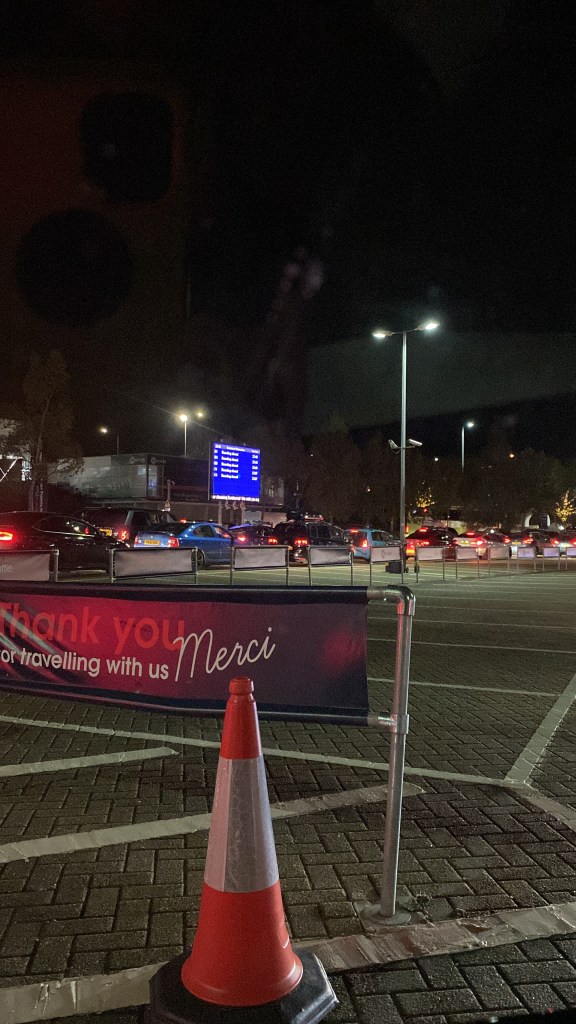
Bumper to bumper at the Eurotunnel!

We leave home straight after the end of school and drive to the Eurotunnel port at Folkestone, a journey of 275 miles. We make good progress, which stalls completely once we are diverted off the M20 (a section of which had been turned into a lorry park, under Operation Brock). The volume of traffic is such that the 2-3 mile journey from Eurotunnel motorway junction to the passenger terminal takes almost three hours! At least once we arrive in France, there is almost no traffic on the roads and we arrive at our destination in the early hours of the morning.

Saturday, 2 April

A long lie-in then a trip to the nearest supermarket in Breskens and a leisurely lunch, which must involve frites!

More vakantie apartements in Breskens

A stroll around this small town shows that since our last visit, more tourist developments have sprung up. I am happy to see this lovely place thriving, not least since it will benefit us, as we rent out our holiday home, but a part of me has mixed feelings; I’m not sure I want lots of tourists here!

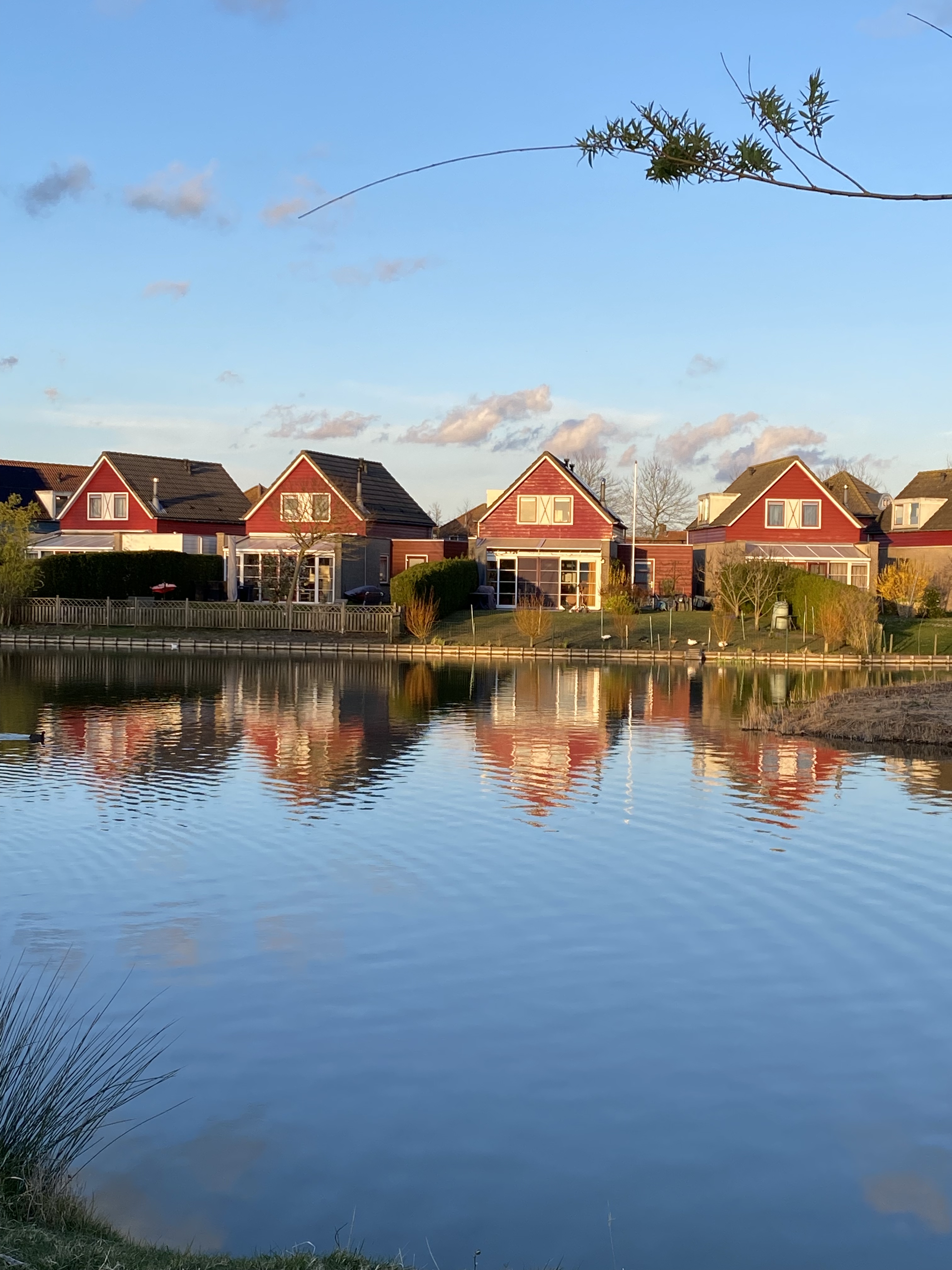
Some of the lake’s permanent residents pay us a visit!

The weather is cold, colder than I have ever experienced here in the spring, but we are just happy to be away…and enjoying the wildlife.

One of our favourite things to do here is to take an evening stroll on the dyke beside the village. The views are always rewarding.

Sunday, 3 April

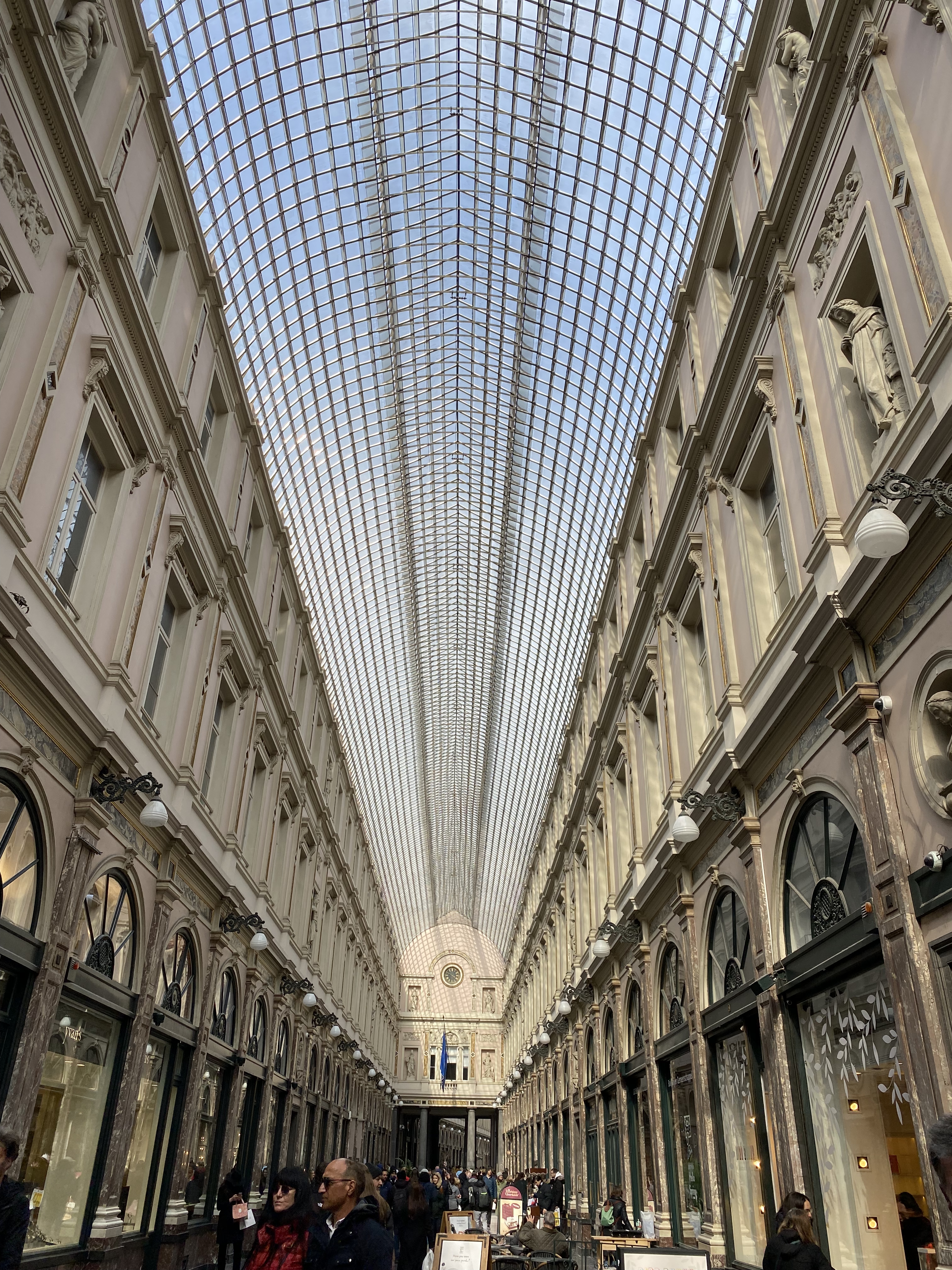
We take a trip to Brussels, to collect my husband from the airport, as he was unable to travel with us on Friday. It’s about 100km, or a 90 minute drive. I am nervous navigating the complicated ring road and finding city centre parking, but it is Sunday morning and therefore less busy. It is still cold, but it’s bright and sunny. Brussels is a beautiful city. It is also big. We stick to exploring the old town, which reminds me of Bruges minus the canals, and enjoy sipping coffee on pavement cafes, hearing clocks chiming the hour, wonderful shops, confectioners and more frites.

Monday, 4 April

No trip to Zeeland for us is complete without a day in Middelburg. This place is a hidden treasure – I’m almost afraid to mention it! This medieval town retains much of its traditional architecture and yet it has the atmosphere of an everyday working place. The quality of life here must be wonderful. My husband and I have often fantasised about renting a house here for a few months once our children have left home! There is a wonderful town square, with its spectacular town hall, edged by pavement cafes and restaurants, a museum, grand churches, picturesque canals and bridges, lovely shops, the best bookshop in southern Holland (De Drukkery), a student population and of course, coffee and frites! We often cycle here from our holiday home – we can bike to the ferry at Breskens and then cycle the 8km beside the canal, using the excellent Dutch cycle paths. But it is too cold and wet today, even for all but the hardiest of Dutch cyclists.

Tuesday, 5 April

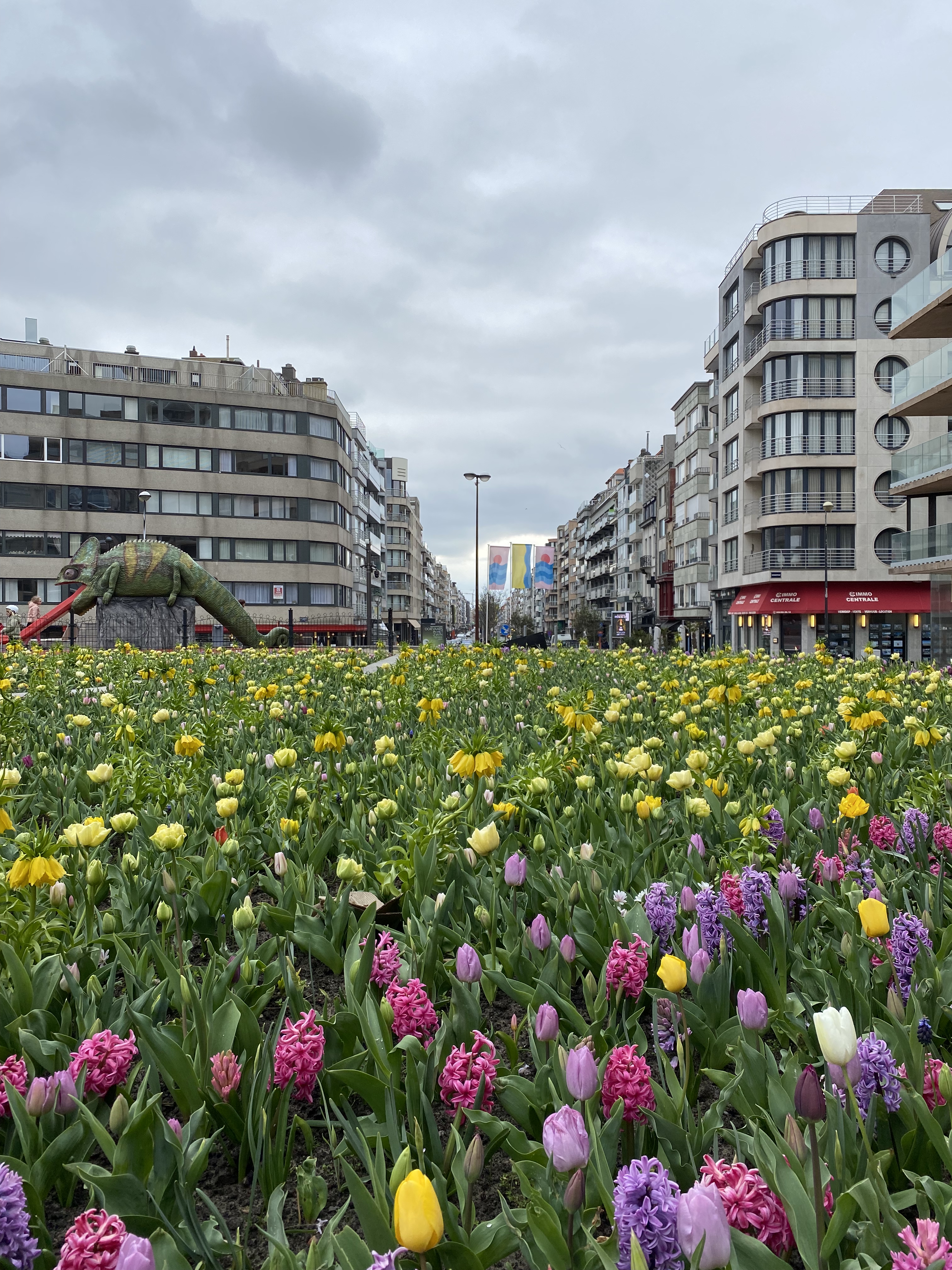
The day begins with appelflappen from the village bakery. Then we decide to head to the smart Belgian coastal town of Knokke-Heist, an attractive seaside resort which seems to consist mainly of second homes. It is quiet on a Tuesday. Most of the residential buildings are apartments, weekend homes for a wealthy Brussels elite, most likely. There are many beautiful art galleries and expensive shops, most of which only open at weekends. It has a vast beach, much of which is taken up with beach huts and cafes and bars, and a wide and long promenade. Knokke is only 30 km from our house and we have visited it often over the years. One of our favourite things to do when the children were younger was to take the Kusttram which runs for 67 km along the coast from Knokke to De Panne. You can get on and off to explore the different towns and attractions en route. Today we stayed in Knokke and just strolled around, and sampled yet more frites and ice-cream.

Wednesday, 6 April

Our short break is over and it’s time to head home. The return journey is thankfully less eventful than the one getting here. We are astonished by the size of the queue of what appear to be thousands of lorries stranded on the M20, waiting to get into Dover. My heart goes out to those drivers, who have no facilities and only the food they will have brought with them.

I did not do much reading while I was away, it being primarily a family holiday with quite a bit more packed in than we had intended.

Relaxing in The Netherlands

Holland is a fascinating country. My family and I have been going there for years, usually spending a week or so there in the Spring. Whenever I tell people that I am off to the Netherlands they utter an interested “Oh!” but I am sure that what they are really thinking is “Why?”!

IMGP0012.JPGWe spend our Spring break in the south of the province of Zeeland, in an area that borders Belgium and which was until very recently separated from the rest of the country by the mighty Schelde river.  The opening of a 6km vehicle tunnel in 2003 beneath the Schelde at the town of Terneuzen, brought huge economic benefits to the area. On a map, Zeeland looks like a collection of islands jutting out into the North Sea, which appear to be joined to the rest of the country by the most tenuous of links. In truth, this part of the Netherlands does indeed have a tenuous grip on the land, much of it having been reclaimed from the water by sheer force of will and human ingenuity. These tracts of land are known as polders and maintaining the dikes and the drainage systems, the sea defences and the canals, is a national preoccupation.

From time to time, the sea reasserts itself (and we will no doubt see more of this across the world as low-lying lands will be the first to be hit by climate change and rising sea levels). The last major incident was in January 1953, when a storm surge in the North Sea led to the deaths of 2,551 people, including 1,836 in the Netherlands, and 326 in eastern England and Scotland. A total of 9% of Dutch farmland was under water. (See the images below of exhibits from the wonderful Watersnoodsmuseum in Ouwekerk.)

I have only known about the 1953 flood since 2002, when we first started going to this part of the Netherlands, and every year I have learned more and am increasingly fascinated not only by the history of this and similar events, but also by the relationship the country has with the sea and mor widely with nature. Much of the landscape of Zeeland is man-made, many of the beaches where we have spent some glorious sunny days have been created, but I find there is a greater harmony between human enterprise and nature and an immense respect for the natural world that I have seen in few other places.


From where we stay in the village of Hoofdplaat, in the area known as West-Zeeuws Vlanderen (nearest town is Breskens), we are within cycling distance of many pretty Dutch towns. We are also driving distance from the Belgian towns of  Bruges, Ghent, Antwerp, even Brussels. Amsterdam and Rotterdam are even do-able on a day trip.

Our annual trip to the Netherlands is one of the most relaxing and energising weeks of my year. The biggest problem is returning to gridlocked England and making the snail’s-pace journey back up to the north via the M25 and M6. As for the potholes…! Something you seldom see on Dutch roads. I recommend Zeeland for a relaxing break…just don’t tell anybody. Please.

Which places do you find most relaxing? What quality is it that creates that feeling for you?