The shortlist for the Women’s Prize for Fiction, formerly the Bailey’s Prize, was announced last week. This prize is one of the foremost competitions for women writers and it’s one of those where every year the shortlist list looks like a box of precious jewels (unlike the Man Booker which always manages a curve ball or two, in my view!) There is NOTHING on the list this year that I don’t want to read at some point! So many books, so little time, especially as I’m giving over more of my reading time to children’s literature these days.
If you’re looking for something to read yourself, I have heard great things about all of these books, and I suspect you won’t go wrong if you pick any one of them.
The novels on the shortlist are:
Sight by Jessie Greengrass – a woman recounts her journey to motherhood and reflects on the relationships she had with her mother and grandmother.
Home Fire by Kamila Shamsie – Isma is studying in America, having spent years raising her two younger siblings following their mother’s death. The family becomes embroiled in London with Eamonn, the son of a high-profile Muslim politician. It’s a novel about destiny, choices and love.
Sing, Unburied, Sing by Jesmyn Ward – a story about race, drug abuse, broken masculinity and poverty in the US seen through the eyes of thirteen year old Jojo and his mother Leonie.
The Idiot by Elif Batuman – a story about language and culture set in Harvard, Massachusetts, where Selin, a Turkish-American, is studying and meets others like her, of mixed race and mixed cultures.
The Mermaid and Mrs Hancock by Imogen Hermes Gowar – a story about the power and mythology of mermaids. set in 18th century London, where the merchant Jonah Hancock learns one of his captains has sold a ship in exchange for a mermaid. News spreads and Hancock finds himself the centre of London society.
When I Hit You: Or, A Portrait of the Writer as a Young Wife by Meena Kandasamy – a novel about domestic abuse and control, and the crushing of a young woman’s hopes and ambitions by a domineering husband.
I haven’t read any of these and doubt I will manage to get through this list by the time the winner is announced on 6 June. The first and the last on this list appeal to me most, although Sing, Unburied, Sing also looks like a must-read.
I’d love to hear from you if you have read any of these – what do you recommend?
If you have enjoyed this post, do subscribe to the blog, by clicking on the Follow button, and let’s connect on social media.
 This is a very hard-hitting YA novel for older teens. It is an important book, dealing with a very current issue, misogyny, sexual violence and rape, but as a parent I found it extremely challenging to read. The story is set in Prescott, Oregon, a medium sized-town in the northwest United States. It centres on a group of three girls in high school (so about 17 or 18 years old) Grace, Erin and Rosina. Grace has moved to Prescott after her mother (an evangelical preacher) was forced out of her position in their previous home in the southern US because of hostility from the congregation towards her views. Grace finds, in her bedroom in their new home, some cryptic words scratched into the woodwork. She discovers that the previous occupant of the room was a girl called Lucy who alleged that she was raped by fellow students. No charges were brought and Lucy and her family left the town.
 I had read this book previously, but many years ago as an undergraduate, so whilst I had remembered the basic story, I had forgotten much of the detail. I had forgotten for example just how brilliant the writing is and how very like Jane Austen Flaubert can be in his use of irony. By all accounts, Flaubert was a perfectionist and spent years on this book; it is certainly masterful and for me the writing was sublime. I had also forgotten how unlikeable all the characters are! Even Emma, our supposed “heroine”, is at times unpleasant, childish, selfish, superficial and self-obsessed. When I discussed it with my husband (who speaks fluent French and read it in the original) he was surprised that I did not find Charles Bovary, Emma’s husband, sympathetic. Interesting that he felt affection for the long-suffering, betrayed husband who loved his wife to the death, despite her many faults, whereas I found him ineffectual and basically unable to connect with his wife on any level, and that was part of the problem in their marriage.
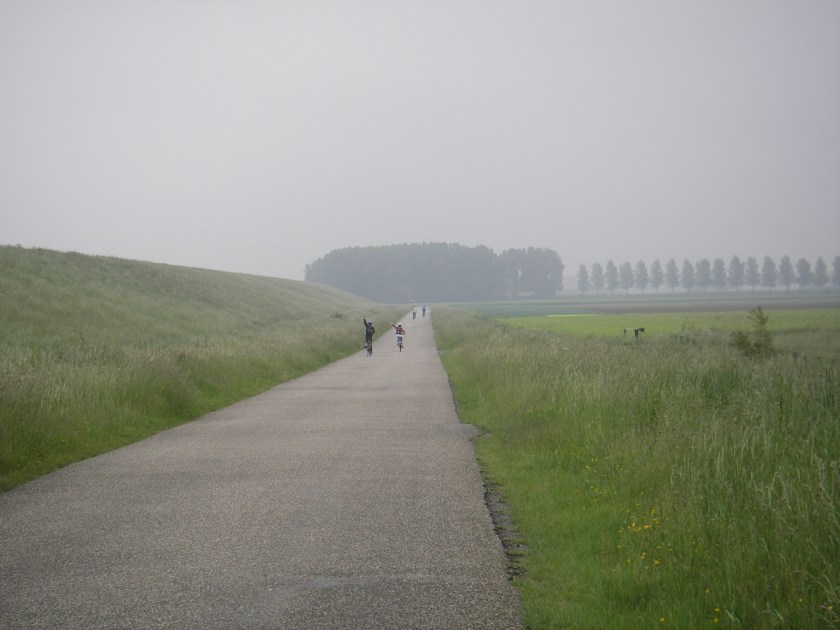 We spend our Spring break in the south of the province of


 It is extraordinary to think that this remarkable novel, still as popular and as shocking today as ever, was written when Mary was just 19 years old. The fact that she was such a literary talent is not surprising given that she was the offspring of the two famous intellectuals, Mary Wollstonecraft, philosopher and author of the seminal feminist work A Vindication of the Rights of Woman, and William Godwin, the radical political philosopher. In her lifetime, she was highly regarded as a radical writer and intellectual, as well as being the wife of the poet Percy Bysshe Shelley, whom she met and fell passionately in love with at the age of 17. Her reputation since her death, however, has been overshadowed by that of her husband’s, with whom she bore four children (three died in infancy), whose affairs and financial troubles she endured, and whose poems she edited both before and after his death. Percy Bysshe Shelley drowned at sea in 1822, just six years into their marriage when she was 25. She died at the age of 53 in London from a suspected brain tumour.
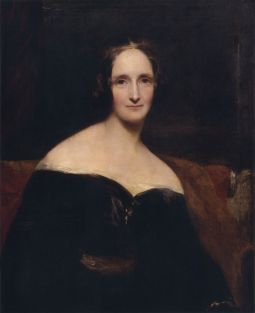 By any standards her life was remarkable and in the last few years her reputation has been revived and she has begun to be more widely considered as a formidable talent in her own right, rather than just a ‘one-book author’. Frankenstein has been a staple of English literature GCSE and A level syllabuses for years, but most of her other works have fallen out of print. A new biography, In Search of Mary Shelley: The girl who wrote Frankenstein, by Fiona Sampson was published earlier this year, some of which I caught when it was serialised in Radio 4 recently. What I heard sounded fascinating. Sadly it is not available on the BBC iPlayer at the moment.
 Last month, we battled our way through Madame Bovary, some enjoying it more than others, it has to be said. Our theme was a classic novel, and this can be a challenging genre. It can take you right back to schooldays and unhappy memories of working line by line through a text that had no relevance to your teenage life. And if you are out of the habit of reading classic, usually older, novels, the language can feel outdated, and hard work.
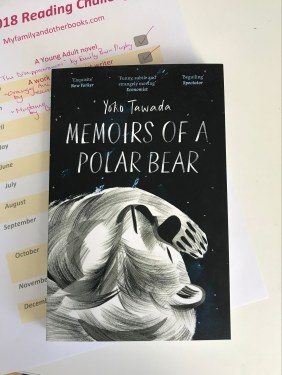 This months’s challenge is something altogether different – a children’s novel and I have chosen Memoirs of a Polar Bear by Yoko Tawada. This book first came to my attention before Christmas and I have been keen to read it ever since. It is written from the perspective of three different polar bears: the first , a female, who flees her homeland in Soviet Russia, the second, her daughter, a dancing bear in a Berlin circus, and the third, the most recent, born in captivity in Germany.
 Julia's books