Regular readers of this blog will know that I am a huge fan of literature for children and young people and that I review such books on here from time to time, not just because I think it’s good for ‘grown-ups’ to delve into these genres (you’re missing out if you don’t), but also because I know many of you often want recommendations for the youngsters you live with.
I picked up The Hurting from my local library recently (most now have online catalogues with a ‘What’s New’ section so you can browse new titles) and libraries are great for young readers because, unlike me, they often make a quick decision about whether they like something or not and if a book is worth their time, so it can be frustrating when they toss something aside after half an hour that you’ve paid £6 plus for!
Lucy van Smit is a first-time author and the publisher, Chicken House Books, has a good reputation for quality fiction for young people. It’s a YA book, for 15+ I’d say, as there are sexual references, some swearing, quite a bit of peril, and some challenging themes – cancer, alcoholism, death of a parent – all high-grade emotional stuff that teens seem to love! For me, it’s not the best YA book I’ve read this year, but then I’m judging it against The Disappearances, which I think is a phenomenal book, and Just Fly Away, which had a more concise and coherent plot and was for me more enjoyable. There is a lot going on in this book, perhaps too much.
 Nell is in her late teens and lives with her father, a very religious alcoholic, and her sister, Harper, who has cancer. They are from Manchester but moved to Norway, ostensibly for Harper’s medical treatment. The girls’ mother, we learn, left when they were young and they have had no contact since. Nell is a confused young woman; she is the primary carer for her sister, their father either working or incapable most of the time, and she wants to be a singer-songwriter back in Britain, but finds herself cut off from any possibility of making a career in that field. She attends a local school where she experiences bullying and isolation. She decides to go back to the UK, without her family’s knowledge, for an audition, but gets into a spot of bother en route and meets Lukas, a handsome but mysterious boy. At first it appears he rescues her but we learn later that he in fact engineered the whole episode in order to entrap her.
There is an instant attraction between Nell and Lukas and Nell quickly falls in love with him. Lukas pursues Nell (and yes, that is the right word), and she is drawn into what can only be described as an edgy relationship with him. It turns out that Lukas is the son of the late Harry Svad, a Norwegian minerals entrepreneur (and Nell’s father’s employer who, mysteriously, her Dad seems to hate). Svad, along with his wife Rosa, has recently been killed in a helicopter crash. Lukas was not his biological son, however; he was discovered as a very young child living in a wolf pack in an area of forest Svad wanted to mine. Svad ‘rescued’ and adopted him, but Lukas cannot forgive him for killing the wolves he loved, and says he was also treated cruelly. This draws Nell further into a web of sympathy. Lukas has a baby brother, Pup, who, now an orphan, is in the care of social services. Lukas wants to adopt him when he turns 18 (very soon) but feels he needs to get Pup back now before events spiral out of control, and he says that by the time they catch up with him, he’ll be 18 so he’ll be able to adopt without a problem. By this stage he is well able to coerce Nell into kidnapping Pup from the foster carer.
Still with me? Yes, I struggled to suspend my disbelief too, but I suspect some young people would not! Nell goes along with Lukas’s plan, they kidnap the baby and then run away, back to the grand, extraordinary but isolated Svad home, via stolen car and light aircraft. They are pursued of course, though Lukas is careful to shield Nell from too much contact with the outside world where CCTV images of her are being splashed across news screens.
Spoiler alert: once at the Svad home, Nell begins to realise that Lukas has tricked her, that he actually wants to kill Pup, and frame her, and yet she cannot reconcile these facts with her intense passion for Lukas, the only person who appears to have shown her any love. His behaviour frightens her sufficiently, however, that she decides to escape with Pup (who it turns out is her half-brother, his dead mother, Rosa Svad, having also been Nell’s estranged Mum) but this involves a perilous trek through dangerous wolf-inhabited forest. With a baby.
Yes, there is a lot going on here; rather too many events, strands and themes for my liking, and I felt a bit overwhelmed. It rather lost me in the last third of the book, I’m afraid. However, for teens who need a lot of stimulation to keep their interest, this may suit. As I said, I found it hard to believe in the events, but, again, teens who like a touch of fantasy may be able to lose themselves in it and be more forgiving about the lapses in credibility. There were, in my view, some editorial oversights which annoyed me (including a frustrating number of typographical errors, grrr!), but most teens will overlook these. I loved the evocation of place – Norway provides a great setting for the book – and the author does well to convey the sense of threat as well as beauty in the natural world. Nell is a great character and her vulnerability and confusion, her difficult life, and her thwarted dreams may have a resonance for young people. Also, her journey, her survival against the odds and her ability ultimately to overcome her fears, some seemingly insurmountable obstacles and the effects of her first-love blindness, make her a positive role-model.
Recommended for the young people in your life, even if it wasn’t quite for me.
Have you read any good YA titles recently?
If you have enjoyed this post, I would love for you to follow my blog. Let’s also connect on social media.

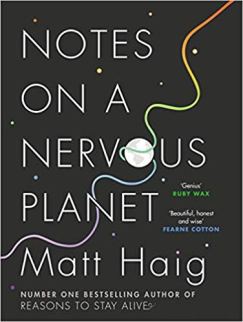 I have made an exception and decided to read Notes on a Nervous Planet again. I’m surprised at how different the reading experience is versus listening. Firstly, the author has a wonderful reading voice and I suppose because it is non-fiction and is very much about his experiences of anxiety and depression, you can sense that it comes straight from the heart. I really think that the narrator of an audiobook plays such an important role in the experience. For example, I loved Hilary Huber’s narration of Elena Ferrante’s Neapolitan Novels, but I struggled with the reading of 1984 by Andrew Wincott…who is Adam in The Archers. I just couldn’t get Adam out of my head!
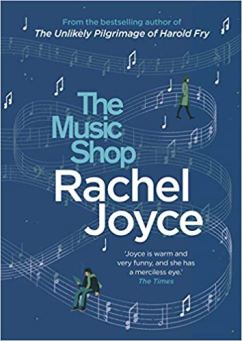 The books open in 1988 when the central character Frank opens a music shop in a rundown area (Unity Street) of an unnamed city. Frank is passionate about music, something that was instilled in him by his late mother, the eccentric Peg. It is probably the only the good thing that Frank got from her, and as the book goes on, we learn much about the lack of love and security in his childhood. This is important as it helps us to understand Frank’s actions later on. The other thing that Frank is passionate about is vinyl; he refuses to sell either cassette tapes or the new-fangled CDs in his shop, much to the chagrin of the salesmen who tell him he is a dinosaur and will have to change with the times. They gradually abandon him.
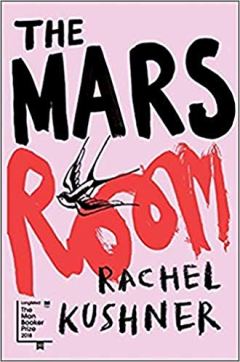
 The story concerns Romy Hall, a young woman whom we first meet in a prison van en route to Stanville Women’s Correctional Facility, somewhere in California. Romy was convicted of a brutal murder and has been given two life sentences plus six years. Romy worked as a lap dancer at The Mars Room nightclub in San Francisco and it was a former customer at the nightclub that she killed. Romy is at once similar but different to her fellow convicts. For one thing she has a seven year old child, Jackson, whose welfare she becomes increasingly concerned about during her incarceration, and she also completed high school, so she is considerably more educated than many of those around her.
 So much so that I had to have a break from all the heaviness to read something a little more uplifting and which didn’t tax my brain quite so much. I wasn’t very well last week and simply couldn’t face into The Mars Room (next on my Man Booker list) – if you have heard it is bleak, well it is! So far (not quite finished it yet). So, with my blanket, hot water bottle and cups of tea to hand I settled onto the sofa and read Rachel Joyce’s The Music Shop cover to cover in one day. I simply could not put it down.
 This book came to my attention last year. I really liked the sound of it and recommended it in one of my ‘what to look our for this season’ blogs, so it was on my TBR list. Then I saw Rachel speak at a Writers & Artists Conference I was at in September. She was such a wonderful speaker, really warm, authentic and engaging, that I had to get a copy of this book and have been eager to start it. It was a joy and just what I needed, when I was feeling unwell and when my brain was starting to hurt from the Man Booker. Look out for my review of The Music Shop next week.
 My youngest daughter, a keen singer, started getting into the show a year or so ago. She has been listening to and singing along to the soundtrack almost continuously ever since. When it was her birthday earlier this year I decided to get her tickets. I was astonished to discover how difficult these were to obtain (and how expensive!), so she has been waiting patiently for almost six months to enjoy her birthday gift. Last week, during half term, we travelled to London to see the show. It was worth the wait and she promptly declared that it was the best experience of her life. For me, seeing her enjoying something so much and how she has engaged so wholeheartedly with the story, the music and the ethos of the production, has the been the greatest pleasure.
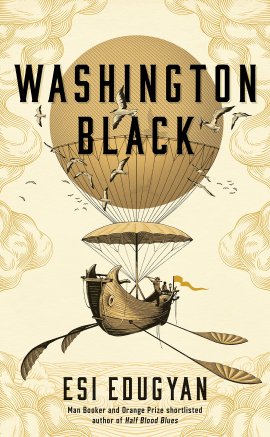 Washington Black’s life is turned around, however, when Erasmus’s younger brother, Christopher, or ‘Titch’, arrives at the plantation. He is an inventor, a man of science like his father, who does not share his brother’s views on slavery. Titch has come to Barbados in order to work on a flying machine he has designed and asks his brother for a helper. Erasmus loans him Washington Black and the boy goes to live in Titch’s quarters, helping him with drawings and experiments as well as practical household tasks. Titch discovers that Washington has considerable artistic talent as well as abilities which will be useful in his science projects and he teaches him to read. This change in Wash’s circumstances means he can probably never go back to being with the other slaves and the question is posed whether Titch has served his protégé well.
 Julia's books