I chose this book as February’s choice for my Facebook Reading Challenge 2019. The theme for the month was a YA novel. First published in 1976, this rather pre-dates the emergence of the YA genre, so it does not fit quite so comfortably. However, it is a classic and, in my view, essential teenage reading. My edition is published by Puffin and the narrator and main character is a child, but make, no mistake, the themes here are mature and heavyweight.
 Roll of Thunder, Hear My Cry is the first of three novels by Mildred D Taylor about the Logan family, black farmers in Mississippi, set in the 1930s. They are poor, but they own their own small piece of land, Grandfather Logan having bought it in the 1880s from local landowner Harlan Granger, much to the chagrin of some of the white locals who still cannot accept the social changes giving black people greater autonomy and rights. Grandfather Logan is now dead and the central character, Cassie, lives on the farm with her parents, her grandmother and three brothers. Despite owning 400 acres, the family still struggles to make ends meet, which is why Cassie’s father works away much of the year, on the railroad construction, and her mother works as a teacher at the local (black) school. All the family contributes to the running of the farm and the income it generates.
The scene is set beautifully, mainly through the four children and in particular, Cassie’s narration. The children have the same worldview of any kids their age, but even at their young age they have a strong awareness of their low status compared to their white counterparts, for example, in the way most of the local white children treat them and how the white kid’s school seems so much better resourced (they even have a bus, while the Logan children have to walk several miles every day). The unfairness is not lost on the children and sometimes they express their sense of injustice in ways that worry the adults, who know that for their own safety they must just keep their heads down and accept the reality. The early chapters set all these conditions in place and the readers is aware of the underlying tensions in the community that might erupt at the slightest provocation.
And that provocation soon comes along. Little Man, the youngest of the Logan children and a very fastidious boy, rejects a book given out to him in class because it is shabby. The books, cast-off by the white’s school as too damaged to use any longer, have been bestowed upon the black children and they are expected to be grateful. Little Man’s rejection of the damaged book is considered an affront too far, even by his teacher (it is interesting how most of the black adults in the book have been rendered completely docile by conditioning and by the threat of retribution if they speak out). For appearance’s sake, the children’s mother has to mete out Little Man’s severe punishment (being beaten), even though it pains her to do so. She decides to cover all of the children’s books, to make them appear fresher, but when this is spotted by the local (white) inspector, it has severe consequences for her too.
A series of other events set off a cascade of problems for the Logan family. For example, when the owner of the local store, upon which they all depend, appears to be treating his black customers unfairly, Cassie’s parents try to set up an arrangement whereby they make collective bulk purchases from a store charging better prices in a neighbouring town and the Logans transport the goods on their wagon. This riles the white community (black people have no right to make such a stand and resist the control being exercised over them) and the family is threatened.
Events take increasingly grave turns and the threat of violence, even death and financial ruin are never very far away. As you would expect from a novel for this age group, crisis is averted when a disaster at the end manages to bring the community back together in the most unexpected way. However, the novel does not shy away from suggesting that a terrible confrontational denouement is merely averted and not truly eliminated. It is happy for now, not happy ever after, as we know from the civil rights history of the USA. By the end of the novel, one thing is for sure and that is that nine year-old Cassie will never see the world in quite the same way again. Events have forced her out of her naïve belief in fairness and into an awareness that life, for her ilk at least, is definitely not fair.
I found this novel really gripping. I loved the characters, the dialogue with and between the children felt very authentic and the writing flows beautifully. It is a packed novel for its 220 pages, dealing with some important issues that will help to illustrate the African-American experience during a dark period in America’s history.
Highly recommended.
If you have read this book, either recently or when you were younger, I would love to hear your thoughts.
If you have enjoyed this post, I’d love for you to follow my blog. Let’s also connect on social media.
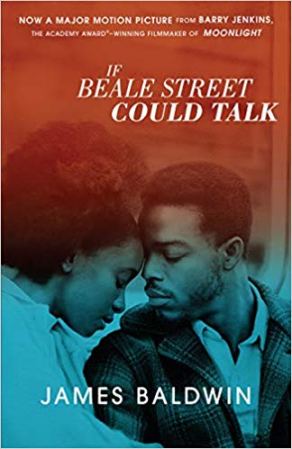 I’m always looking for the films with literary links and they are particularly scarce this year. If Beale Street Could Talk is the only novel-based film, that I could spot, and is based on the Harlem-set love story by James Baldwin, first published in 1974. I’ve just started reading it. The Spike Lee film BlacKkKlansman and the comedy Can You Ever Forgive Me? are both based on memoirs, the former a true story of a young African-American detective who set out to infiltrate and bring down the KKK, and the latter, starring Melissa McCarthy and Richard E Grant, also a memoir, about a celebrity biographer who finds herself out of work and changes tack to become a forger. This one also has a female director (too rare). I haven’t yet seen any of these films, but all of them appeal.


 This third book picks up precisely where volume two left off, at a small book launch for Elena’s first book, a mildly sexual novel which has caused a stir, and where she is being questioned in a patronising way by an obnoxious critic. A familiar face from Naples walks into the room – Nino Sarratore – and Elena’s confidence is restored. Nino has been a friend since childhood, and there is a complicated triangular relationship between him, Elena and Lila, the main but elusive protagonist of all the books. Elena has been in love with Nino since they were young, but this has not been reciprocated. Like Elena, Nino proved to be a successful student, despite the disadvantages of background and upbringing, and would go on to achieve great things academically, though both know that neither is as brilliant as their mutual friend Lila, with whom Nino was once in a relationship, but who would never reach the academic heights of the other two.
 In summary, this book is set in the late ‘60s, early 70s and is about Freda and Brenda, two young women who work together in a London factory where Italian wine is bottled. They also live together in a pokey bedsit, and share a double bed at nights. Freda is blonde, buxom and outgoing, sexually frustrated and of a romantic inclination. She has the hots for Vittorio, the nephew of the factory’s Italian owner, and fantasises about being seduced by him, contriving situations to enable this. Brenda is a redhead, but mousey in personality, timid and sexually repressed. She has left her drunken husband Stanley in the Yorkshire farmhouse which they shared with his domineering mother. Freda and Brenda met after Brenda had a tearful outburst in a butcher’s shop. Freda took her in and got her a job at the factory. Freda can be kind but also cruel and the book is as much about the complex nature of relationships between women as anything else.
 Julia's books