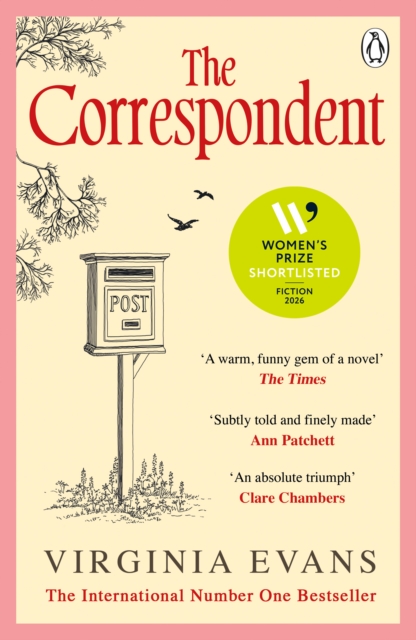
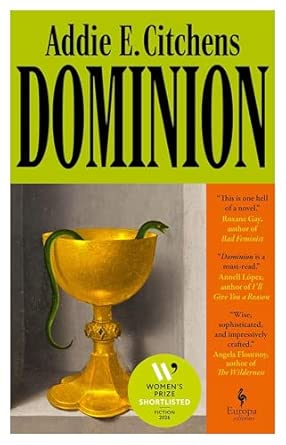
This is my fourth review from the Women’s Prize shortlist, which was won recently by Virginia Evans for The Correspondent. Dominion is a remarkable debut novel and could easily have been the winner for me; although I did love The Correspondent there is something weightier about Dominion and it is beautifully written. The title refers to the town in Mississippi in which the novel is set but also the hold that men, the church and societal expectations (ie the patriarchy) have over the women at the centre of this story.
Sabre Winfrey is the ultimate patriarchal figure, much-beloved Minister at the church, local businessman, affluent and at the top of the social hierarchy. His status lends some degree of power also to his wife Priscilla, but as mother to his five sons, none of whom truly appreciate her, she is hemmed in by the men around her. She has beauty and power, which does not make her a favourite among many of the women in the community and she is referred to somewhat disparagingly as ‘First Lady’. Priscilla has her flaws – a limp, a result of a childhood accident, a dependence on prescription drugs which she obtains from a local dealer, and a conviction for driving under the influence which puts her, quite literally, at the mercy of her husband and sons for getting around. Priscilla is nobody’s fool, however; she knows her husband is having a liaison with another beauty in the congregation, and as the novel progresses and she learns more about her sons, particularly her youngest and her favourite Emmanuel, she begins to question everything about her family and the society in which she moves.
Diamond is in many ways the antithesis of Priscilla – born into a broken family she was adopted as a child, rescued from a life of chaos and poverty, but still has contact with some of her siblings. Diamond is also beautiful, however, and is deeply in love with Emmanuel, or ‘Wonderboy’ as she calls him, the youngest Winfrey son, smart and gifted both athletically and musically. Diamond and Priscilla are cool and suspicious of each other, but when Emmanuel’s mistakes catch up with him and he and Diamond attempt to flee Dominion, both women go on a journey of seeing how their devotion has been misguided.
The novel is set in the 1990s and while racial discrimination is never very far away, particularly around the life chances of young black men not born into affluent homes, it is not the main thrust of the novel as it goes in the direction of looking at the way that the community has hemmed in the two intelligent and thoughtful women at its centre. Separated in age by a few decades, Priscilla and Diamond lives are irrevocably impacted by men (arguably the same man!). Men who enjoy the undeserved adoration of their community. Diamond dislikes Priscilla and her airs and graces; Priscilla dislikes Diamond and where her beauty and her body might lead her precious son. Both women will go on a journey to find out a bit of the truth about each other and, more importantly, their flawed men.
This novel is a stunning debut from Addie E Citchens and I enjoyed it immensely. I can only think it was a coin toss away from winning the Women’s Prize! The chapters alternate mostly between Priscilla and Diamond, but occasionally also Emmanuel and the author gives each one a distinctive narrative voice. The turns of phrase are a joy.
I listened to it on audiobook and the performances were excellent and the use of music was also an interesting addition, giving the novel a real sense of time and place.
Highly recommended.