Women’s Prize 2026 shortlist review – “The Correspondent” by Virginia Evans

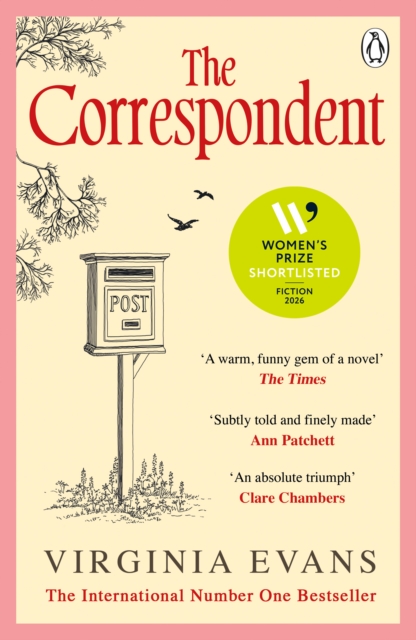
I was about halfway through this when it was announced as the winner of the Women’s Prize for Fiction a couple of weeks ago and I am delighted that it won as I have enjoyed it very much. The story spans several years from 2012 to 2022 and is told almost entirely in the form of letters to and from the main character Sybil van Antwerp. Sybil is a woman in her 70s, divorced for twenty-five years from her Belgian husband. She has two adult children, one of whom, her daughter Fiona, lives in England, the other a son, Bruce, lives closer to her home in Maryland. We also learn quite early on that Sybil and her husband Dan had another child, Gilbert, who died at the age of eight.

Sybil is long-retired but had a distinguished career in law, as clerk to a judge. Her lifelong hobby has been letter-writing, and she writes to everyone! From lengthy, newsy, intimate letters to her childhood friend Rosalie (who married the brother of Sybil’s ex-husband), to shorter letters of admiration to favourite authors (she is a regular correspondent with Joan Didion, with whom she shares an interest in the grieving process), to very short and no-holds barred letters of disapproval to the Dean of the local college where she has for years attended courses (as an auditor) and now finds she is no longer permitted to do so. Though her first love is pen and paper, Sybil has also acquainted herself with email and there are a number of exchanges – one with a customer service agent named Bassam, a refugee from Syria, who deals with her queries and concerns about taking a DNA test after having been gifted a subscription by her son (Sybil was adopted as a baby). Sybil strikes up quite a friendship with him.

Sybil can come across as harsh and difficult at times, but we also see her softer, more caring side in the exchanges she has with Harry, the neurodivergent teenage son of a former colleague, now friend, with whom she seems to have a curious rapport, despite their large age difference. When Harry experiences some severe mental health difficulties it is Sybil who steps in, without question. 

This is a novel about ageing and self-discovery, and about making peace with the facts of your life. Sybil is losing her sight – she has a degenerative eye condition – and this is devastating to her, not least because it threatens to put an end to her letter-writing. But as her sight deteriorates she gains new insights into her past life; she explores the painful circumstances of her son’s death and faces up to the fact that while she will never stop grieving, she must look that grief in the face and truly feel it. In doing so, she may be able to liberate herself from the self-imposed life sentence of guilt and allow herself to find happiness in her later life. 

This is a really moving novel that explores some powerful universal themes, but tells its story in an accessible, entertaining, sometimes funny, sometimes very sad way. A really interesting idea, cleverly executed and beautifully written. 

I have still to read three of the other shortlisted novels, but this was the most compelling of the ones I have read so far. I listened to it on audio and the performances were excellent, really bringing to life the cast of characters.

Highly recommended.

The Women’s Prize for Fiction shortlist book review – “The Mercy Step” by Marcia Hutchinson

The winner of the Women’s Prize for Fiction will be announced tomorrow and as always it’s a great shortlist. I have read two of the books – Flashlight by Susan Choi, which I reviewed on here when it was also shortlisted for the Booker Prize last year, and The Mercy Step by Marcia Hutchinson. I am also part-way through The Correspondent by Virginia Evans, which I am enjoying enormously. The remaining three books on the shortlist (Heart the Lover by Lily King, Kingfisher by Rozie Kelly, and Dominion by Addie E Citchens) also all look excellent and I am keen to read those too. 

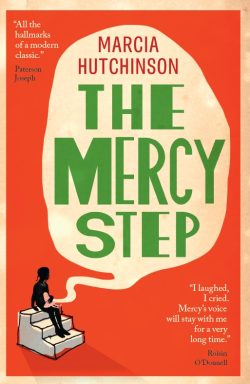
I listened to The Mercy Step on audio and it is read by the author, which at first I thought I might find disappointing, but I came to appreciate the authenticity of her Bradford accent, and the naturalness of expression in the Jamaican accents of her parents and their associates. The events of the novel mirror closely those of the author’s life; Mercy is born in Bradford in the early 1960s to parents from the Caribbean (part of the Windrush generation) and the family is large – Mercy is the middle of the five children, but we learn that there are more children who were left behind in Jamaica. The novel ends when Mercy is eleven years of age and is about to start attending the local grammar school. 

Beyond the facts of Mercy’s childhood, I have no idea whether the family in the novel in any way resembles the author’s own experience of growing up – I have not read any interviews with her. What becomes clear very quickly is that the household is chaotic – Mercy is the third of four girls, before the long-awaited and highly prized son is born. At first, Mercy feels a deep connection to her mother; she talks of the cord that connects them, as if the umbilical bond had never been broken. But when another baby comes along, the toddler Mercy’s world is shattered and she cannot comprehend having been usurped. This is the start of Mercy beginning to create her own identity separate from the family. 

Mercy’s father is emotionally absent (as, in fact, is her mother) – he is a gambler with no interest in his children (except the boy when he arrives) and is violent and abusive. The household is chaotic and there is very little money. The children are largely left to fend for themselves (especially later on when their mother has to work long hours to support the family), but at the same time they are bound by strict rules dictated by the religious convictions of their mother’s evangelical faith. Her blind adherence will later place Mercy in a very dangerous position. 

The Mercy step is initially literal, an actual place on the stairs where Mercy can be alone with her precious Dolly, and fantasise about a different life where no-one else is demanding her mother’s attention. It later comes to represent a place in Mercy’s mind where she can escape the drama and degradation (and danger) of the family home. As she grows older and starts school she becomes fascinated by ancient civilisations and realises she can create worlds in her mind that remove her from her harsh reality. Discovering the library is a near-miracle for the young girl and it soon becomes her safe place. We follow Mercy as she grows up and away from the family. At the age of eleven she is ready to embark on a new, more self-confident phase where she can finally be herself. 

I really enjoyed the novel and it is beautifully written. I loved the way the author got into the mind of the baby, toddler and child Mercy and was able to see the world from that perspective. I also enjoyed learning about the experience of a migrant family coming from halfway across the world to the bleak environment of postwar northern England. The author is now in her sixties and has led a full and interesting life as both a lawyer and activist and it will be interesting to see what her next novel brings. 

I recommend this book – I’m not sure it will win the Women’s Prize. I think Flashlight is probably a higher calibre novel and it’s the only other shortlisted book I’ve completed! But The Mercy Step is a great debut and very engaging.