As I write this, it is being announced on the radio news that Ratko Mladic has been convicted of genocide and crimes against humanity at the International Criminal Court in the The Hague, for his orchestration of the Srebrenica massacre in 1995 where as many as 8,000 Bosnian muslims were killed. It is ironic then that my book review this week concerns a novel, at the heart of which lies the Armenian genocide of 1915. It is believed that up to 1.2 million ethnic Armenians were systematically killed by the Ottoman Turks in 1915-16. A few thousand managed to escape, mostly to America. This atrocity is considered to be the first genocide of the twentieth century and led ultimately to the establishment of the concept of ‘genocide’ in international law after World War II, which was considered at length by Philippe Sands in his book East West Street, which I reviewed here last year after it won the Baillie Gifford Prize for non-fiction.
 The Bastard of Istanbul is a curious book, which my fellow book club members found disappointing. At the heart of the novel is the Kazanci family, living in Istanbul. The household is exclusively female and comprises Asya, (the eponymous ‘Bastard’) her three aunts and her mother (whom she also calls ‘Auntie’), her grandmother and ‘Petite-Ma’ who I think is her great-grandmother (more of that later, it’s part of the problem with the book). There is an uncle, who moved to America as a young man and has never returned. All the men in the family are afflicted by early death. Mustafa, the prodigal son, is in his 30s.
There is a second family to get to grips with, living in Arizona. Teenager Armanoush is the product of Rose (a southern gal) and Barsam Tchakhmakhchian, the son of an Armenian family, part of the Armenian diaspora. Rose and Barsam separated when Armanoush (also called ‘Amy’) was a toddler, and Rose then bumped into and married Mustafa (the prodigal Kazanci son). Still with me? Armanoush, curious to learn about her Armenian forebears’ early life in Istanbul, contrives to travel to the city and stay with her stepfather Mustafa’s family (the Kazanci women) without her parents knowing (they would not have approved.)
The novel opens with a bang – Zeliha, the most flamboyant and wayward of the quirky Kazanci sisters, arrives at a clinic demanding an abortion. At the very last minute, however, she does not go through with it. Enter Asya. The first half of the book is setting the scene of both Asya’s life (she is now a slightly surly teenager) and the Kazanci household as well as Armanoush’s life in the US. The second half is mainly concerned with the two young women and their developing relationship in Istanbul, and gradually the connection between them unfolds. Throughout the novel, the history of the Armenian genocide is woven in, particularly as it relates to the Turkish Kazancis and the Armenian Tchakhmakhchians.
Let me tell you what’s good about this book: I loved the sense of place – I have never been to Istanbul but am fascinated by it and by this part of the world generally and it’s on my bucket-list. I loved the characters: they are interesting and credible and the way the author builds our impression of them is beautifully done. Elif Shafak can write, and she can write with humour; there are some laugh-out loud moments, although knowing what I now do about the Armenian genocide, I’m wondering if it was fitting.
However, there are also some problems with the book, mainly it is over-written. For me, it needed some skilful editing. There is a large cast-list here and I’m afraid I rather lost track of some of the peripheral characters (Petite-Ma, for example), who are actually rather important to the story because you need to understand the ancestor relationships in order to fully appreciate the plot. There are some superfluous chunks that could easily have been stripped out and this would have given the plot lines (and later twists) greater force. Also, the historical thread, the background on the genocide, would have been given greater prominence.
The author states in the Acknowledgements that she was put on trial in 2006 for “denigrating Turkishness” with this novel (charges were later dropped). For that reason, and for the historical detail, it is worth a read, but I’m afraid, for me, it was a novel that did not quite live up to its potential.
If you have read The Bastard of Istanbul I’d love to hear your views.
If you have enjoyed this post, do follow my blog by clicking on the ‘Follow’ button. Let’s also connect on social media.
 I love Christmas, especially since having children, but now my kids are a little older (11, 13, 16) I find that I enjoy it more and more as we tend to ‘hunker down’ as a family. We do visits to and from our extended families before and after the 25th of December, but Christmas itself is spent rather quietly together, just the five of us. We have a great time hanging out together (the kids all make a real effort to get along!), watching films, playing games (poker was our favourite last year!), cooking and eating. As the children have got older, the gift-giving (or more accurately, the gift-receiving!) has become less important.

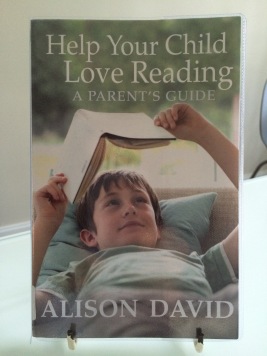 A book I am particularly fond of is Alison David’s
 I was really torn between Claire Tomalin, Anjelica Huston and Alan Cumming. I left it in the hands of the local library and it was Alan Cumming that became available first! I’m still waiting for Claire Tomalin, and that is probably the one I was keenest to read. I was attracted to Alan Cumming’s book, however, because its premise is not dissimilar to the book I am writing, namely family research and the uncovering of a long-held secret. There the similarity ends, however, as Alan’s book is much more about his relationship with his father.
 For November, the challenge is to read a book set in or by a writer from the southern hemisphere – which is, broadly, South America, southern Africa and Australasia. As the nights draw in and it gets increasingly wintry I wanted to be reminded that in other parts of the world it is Summer! So, my choice this month is Isabel Allende’s Portrait in Sepia, a book I picked up in my local Oxfam bookshop and which has been sitting on my ‘to read’ pile for far too long. Allende is such a fine writer and I’ve read a number of her books over the years. It’s great to have an excuse to dive into this one and experience the sensuousness of her writing and the world she evokes, as the last leaves fall from the trees here and nature seems to go into hibernation.
 I read A Clockwork Orange on my husband’s recommendation, straight after he’d completed it – it’s one of his favourite films, which we have watched many times, but neither of us had read the book. It’s quite short, but also quite hard-going as it is narrated by the central character, Alex, who speaks in ‘nadsat’ a kind of teenage vocabulary of the future, based loosely on Slav languages. I read it with a glossary (though Burgess intended that it should not be), but after while I found I did not consult it, and it flowed better just to read it and understand the sense, if not every word.
 The cover is lovely and there are a handful of illustrations in the book which are truly beautiful and very evocative. The apparent subject matter (animals) and the fact that it has some illustrations might put off some of the target readership (10-11 year olds, I would say), particularly the more advanced readers among them, who might think it is better suited to younger ones. The themes, however, are much more mature than you might think and may in fact be upsetting to more sensitive 9-10 year olds, say. It is perfect, therefore, for older primary school kids who are perhaps more reluctant readers who may find some of those thick volumes a bit daunting. At 276 pages, with a few pictures and nicely spaced typeface, this is a book where pages will be turned quite quickly; in my experience, this is a surprisingly important factor in many children’s enjoyment of a book!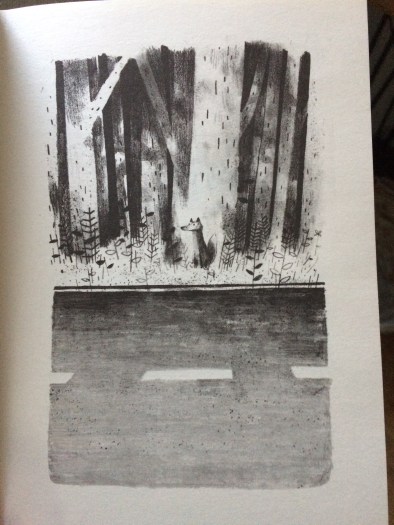

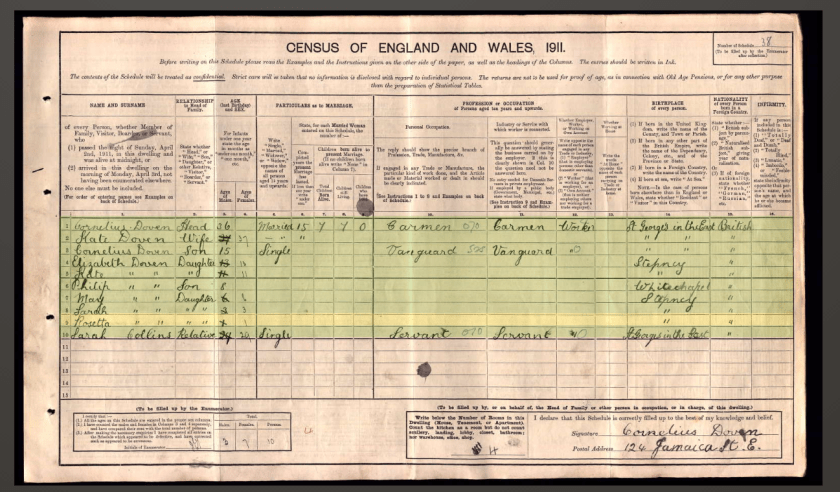
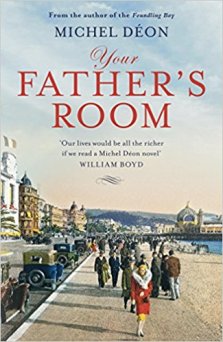 I have been reading a lot of fictionalised biography to help me and one book I read recently I found profoundly moving. Your Father’s Room by French writer Michel Deon is part fiction, part memoir, and looks back to 1920s Paris and Monte Carlo. Edouard, or Teddy, is the only child of a civil servant and his socialite wife. The family moves to Monte Carlo with the father’s job and there is a fascinating insight to life in the south of France at that time, the characters connected to the family and the nature of the relationship between Teddy’s parents. If this is an account in part of the author’s childhood then much of Teddy’s observations will have been imagined by Deon. Perhaps like me he is taking fragments of memory, partial facts and knitting them together to tell a story. It is very engaging even though it is not clear what is truth and what is fiction. How much of any of our family history is a story anyway, ‘facts’ that have been embellished (or concealed) over the years?
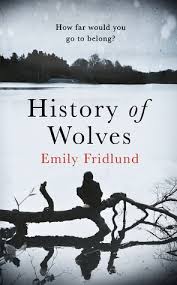 It’s a tough one to review without giving too much away, and the comments on the jacket don’t say very much about the story either, only that it is “exquisite”, “compelling” and “forcefully moving”. The central character is Linda (also Madeline or Mattie to her parents), who is an only child living with her parents in small town Minnesota. To say they live in a rural environment is an under-statement; they live in a cabin in the woods, which they seem to have built themselves, with their dogs. It seems they were formerly part of a small commune, but the other residents have gradually moved away as the cooperative spirit broke down. Linda’s parents are rather remote and she is allowed to roam the area freely, to canoe on the lake as and when she pleases, and to walk many miles in all weathers.
 There are a couple of titles that have been on my reading list for a while. The first is Scottish actor and comedian Alan Cumming’s Not My Father’s Son, which was published in 2014. It is linked to his appearance in BBC TV show Who Do You Think You Are? in 2010 in which the result of his research caused him to reflect on his family, his upbringing and, in particular, his relationship with an abusive father. It has received glowing reviews and has also won prizes. The theme of secrets and family research is close to the book I am writing myself so it could be helpful. Or it may just make me feel like givng up now!!!
 Finally, I saw in the bookshop recently that Claire Tomalin has written A Life of My Own, where, for a change, she is writing about herself. I admire Claire Tomalin hugely; she has written some of the finest biographies produced in recent years, covering subjects such as Jane Austen, Samuel Pepys and Mary Wollstonecraft. She has led the most astonishing life: an unhappy childhood, four children, the death of her husband, the loss of a child, and the eternal struggle between motherhood and work. I think I would find this book truly inspiring.
