
Murakami is a giant of Japanese literature, and it was Norwegian Wood that sealed his international fame. Prior to its publication (in Japan in 1987) his reputation and readership were more modest, but when he became internationally famous with this book, he fled the country and eschewed all publicity (oh for that luxury!). I had read nothing by Murakami before this although a friend told me (when I’d only just started it) that Norwegian Wood was his favourite book of all time and after reading he went out and got hold of everything else Murakami had written.
It’s a book that really defies description. To say it’s a love story (which it is) does not do justice to the complex interweaving of themes, the darkness, the painterly portrayal of intimate relationships and the forensic examination of the dilemmas of youth and coming of age.
Toru Watanabe is on a plane at the age of 37, about to land at Hamburg airport, when the song Norwegian Wood by The Beatles is played on the aircraft’s PA system. It takes him immediately back to his youth, when he was at university in 1969. His girlfriend at that time was Naoko, a fragile young woman with whom he used to walk miles around Tokyo. Naoko was, previously, the girlfriend of his best friend Kizuki, who committed suicide. Thus the scene is set that this novel is going to explore some challenging themes.
Naoko and Toru become lovers, but their relationship stalls when Naoko is admitted to long-term psychiatric care for severe mental health issues. Toru remains loyal to Naoko, visits her occasionally at the special hospital where she lives, some distance from Tokyo, and also strikes up a friendship with Naoko’s roommate Reiko, who, because of the very close relationship she has with Naoko, appears to know everything about Toru. A further character then enters and places Toru in something of a love triangle; Midori is a feisty, passionate fellow student to whom Toru is immediately attracted. They become friends but nothing more, mainly because of Toru’s loyalty to Naoko. Midori also has a boyfriend, although she says is not in love with him.
It is a novel in which nothing very much happens, so I don’t want to say more about the ‘plot’, and I have had some difficulty explaining to myself what is so engaging about it; I had high expectations after my friend’s endorsement. When we discussed it in my book club, we all said we found it a slow read; it is not a book you can read quickly. In a weird sort of way it forces you to read at reading out loud pace. You have to take in and savour every word, and every word has been written to be savoured. The level of detail in the observations is extraordinary. The main characters, especially Toru and Naoko, are so gentle and sensitive, that it almost has the same effect as when you hold a newborn baby – they are so fragile that all your movements become softer, your heart and breathing seem to slow down. The purpose of this, I think, is to try to take the reader deeply into the private worlds of the characters, to feel what they feel, see what they see.
There are some brash peripheral characters in the novel, such as Toru’s dorm mates, and there is a strong sense of time and place – student revolts in Japan in the late ‘60s – which serve to highlight the quietness and sensitivity of the main characters, even Midori, who comes across initially as a strong personality, but who is masking deeper insecurities.
It is a novel about coming of age, about growing up, but also about the deep darkness of depression and suicide. Insofar as it is a love story, it asks the reader what the limits of human beings’ commitments to one another are, but it will not give you a straightforward answer.
After reading Norwegian Wood I was given a copy of another of Murakami’s works, published in the UK in 2014, The Strange Library. This is a work of short fiction, a very surreal and fascinating story about a young boy who is imprisoned in the bowels of his local library after being tricked into following a strange old man in search of a reference book about tax collection in the Ottoman Empire. Whilst trapped inside he meets a collection of other weird and wonderful characters also trapped in a kind of time and space limbo. Like much short fiction it concludes in a way that leaves more questions than answers. The edition I read is beautifully illustrated, which added to my appreciation of it immensely, and it has left me wanting to explore more of Murakami’s work.
Norwegian Wood is a strange and powerful novel that will certainly leave its mark. It stays with you long after you finish it. Highly recommended.
If you are familiar with Murakami, which of his books would you recommend?
If you have enjoyed this post, I would love for you to follow my blog. Please click the ‘Follow’ button, and let’s connect on social media too.
 I concluded my 2017 Reading Challenge with something a little less challenging (in terms of length anyway), a short story. I knew it would be a busy month so I did not want to set myself up to fail by choosing some lengthy tome. (I’ve done the same for my 2018 Reading Challenge). December was so busy that it actually took me a couple of weeks to get around to choosing what to read, and then Cat Person fell in my lap, so to speak!
 Cat Person, by Kristen Roupenian has caused a social media storm. Set in America it is a story about Margot, a 20-year old college student, and a brief relationship she has with 34-year old Robert. Margot works at a small independent cinema and she meets Robert when he buys some confectionery from her stand before watching a movie. She feels mildly attracted to him:
 The first book in the challenge (the theme is a Young Adult novel) will I hope be a nice one to start with – The Disappearances by Emily Bain Murphy. It’s part science fiction/fantasy, part coming to terms with love and loss.

 I plan to spend the time eating, sleeping, walking, watching movies, playing games and, of course, reading. I’m planning to tackle the enormous 4321, the Man Booker nominated tome by Paul Auster, and the only one on the shortlist I have not yet managed to read.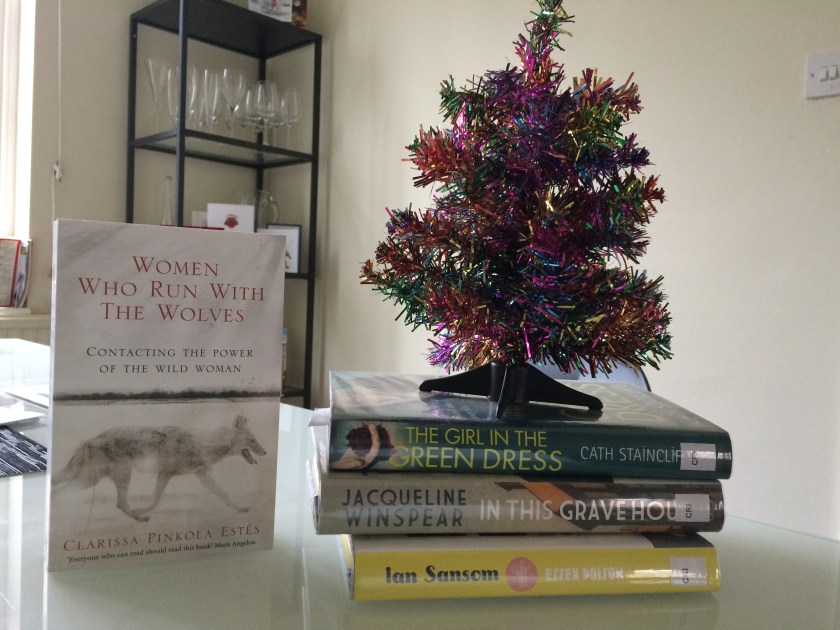
 So, it’s my final reading challenge post of 2017, and this month it’s a short story. Just as well, because there isn’t very much month left! The reason I picked this genre for December is that I predicted, correctly, that it would be a busy month and my reading would slacken off. It is taking me ages to get through the book I am currently reading (the book club’s choice of Norwegian Wood by Haruki Murakami).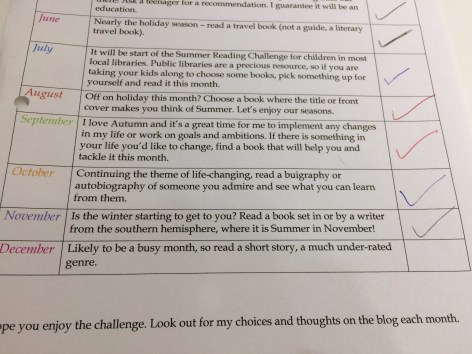
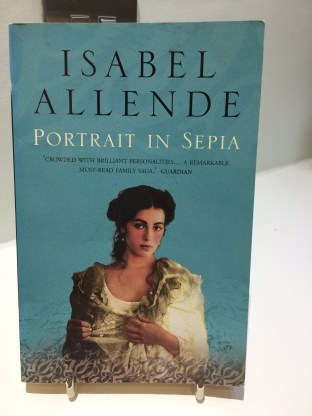








 The Disappearances by Emily Bain Murphy – suitable for 12-14 year olds
 Do You Speak Chocolate? by Cas Lester – suitable for 10-12 year olds
 Barefoot Books World Atlas by Nick Crane & David Dean (£9.99). I love the values and ethos behind Barefoot Books. Multi-cultural and humanitarian themes are present in everything they publish and their books can be valuable tools in combatting exclusion in our world and teaching children about kindness. This world atlas focuses on the interaction between environment and the communities and cultures of the world.
 Illumanatomy by Kate Davies and Carnovsky (£15.00). A superb large format book about the human body that goes into real detail. The illustrations are outstanding; when viewed with the special lenses provided you can see different parts of the body (skeleton, muscles, organs) and how they interact. Perfect for budding biologists!
 EtchArt: Hidden Forest by AJ Wood, Mike Jolley & Dinara Mirtalipova (£9.99). This is rather like those books in the colouring trend except the images you create are shiny and sparkly. The child uses the etching tool provided to produce glorious forest-themed pictures (there is also a sea-themed one available). Lovely, and nice and solid.
 Wreck this Journal by Keri Smith (£12.99). Yes, I know it’s not exactly a reading book (though there are plenty of words) there are writing and drawing opportunities. I actually love this series as I think they tap into teenagers’ anarchic tendencies, whilst also encouraging a degree of creativity. Here’s the 2017 offering and the cover is much nicer than previous editions. Good fun.
