Audiobook review – “Home Stretch” by Graham Norton

I am a huge admirer of Graham Norton. There does not seem to be much that this funny, likeable man cannot turn his hand to. I was sceptical when I saw that he had written his first novel; I get a little cross and cynical when celebrities decide to write books. The sense of entitlement annoys me and I tend to think they take the place of better writers both in bookshops and on shelves at home. When I read Norton’s first book, however, Holding, I was a convert. I loved it. I have also read his memoir The Life and Loves of a He Devil, but I think his fiction is better.

Home Stretch is Norton’s third novel and is equally accomplished. Set in County Cork, in the south-west of Ireland, close to where Norton grew up, it carries the charm and gentleness of that part of the world, while also exploring some challenging themes.

The novel opens in 1987 with a car crash and the deaths of three young people late at night, the day before two of them were due to be married. There are three survivors, Linda O’Connell, the sister of the dead bride-to-be, who is seriously injured, Martin Coulter, the local doctor’s son, and Connor Hayes, the 17 year-old son of local publicans. Whilst he is not considered directly at fault, Connor admits to being the driver and must therefore pay in some way. Connor is convicted of, we do not quite know what, but presumably dangerous driving, and given a two year suspended sentence. But the shame of being in some way responsible for so many deaths in the small town community is a far greater punishment that not only Connor, but his parents and sister Ellen will have to bear for much longer. It is decided that Connor should disappear for a while and he is sent to England to the employ of a distant cousin on a building site in Liverpool. The work does not suit Connor at all; living in a large scruffy house with the other lads on the building site he is bullied and beaten. A chance encounter in a pub leads Connor to abandoning his job and moving to London. It quickly becomes apparent that Connor is gay and he immerses himself in the scene in the capital.

Meanwhile, back in Cork, Connor’s sister Ellen is wooed and won by the smooth and, at this point, affable Martin Coulter. The couple eventually marry and it seems as if the family has finally been redeemed. Connor has gradually lost touch with his parents and although this is heartbreaking for them, it does, in a way, enable everyone to move on.

From here onwards, the novel flits back and forth in time, from 1987, the time of the accident, to the 1990s, the 2000s and the 2010s as the plot is pieced together. We learn that Connor goes to live in a New York where we find him in a long-term relationship with a partner. In Cork, Martin Coulter has taken over as the local GP and he and Ellen, now with two children, have a difficult marriage. Connor’s parents have settled lives, but have never got over ‘losing’ their son. Linda, the third survivor of the crash, is paralysed and lives a fairly empty existence being cared for by her mother and a series of paid nurses.

It is clear that there was more to the 1987 car crash than there initially seemed and the truth of the terrible night unravels as the novel progresses. Norton’s plotting is sound although it is not difficult for the reader to work out what happened, there are enough clues. Norton’s real skill though is in the characterisation and he brings acute observation to all of his characters, even the minor ones. As with Holding, I listened to this book on audio, narrated by the author, so you get even more insight into his characters through the way he reads them. There is a deep affection for this part of Ireland and the people who dwell there and although Connor is exiled from his native land from quite a young age, seemingly cast out, there is a growth and acceptance on all sides by the end which indicates Norton’s own pride in his homeland.

Thoroughly enjoyable, recommended.

Booker book review #6 – “A Passage North” by Anuk Arudpragasam and my prediction for the winner

My final review from this year’s Booker shortlist, and just getting in under the wire, since the winner is to be announced at 7.15 this evening in a live broadcast from the BBC Radio Theatre. You can listen on Radio 4’s Front Row programme, This is the first time, in the four or five years that I have been setting myself this challenge, that I have managed to read all six books in the six or so weeks between the publication of the shortlist and the announcement of the winner. I have really only managed it by being able to listen to some of the books (four of them) on audio while I was out walking or running and, in recent days, while cooking, shopping or drying my hair!

I hope that my appreciation of the last couple of books I read has not been compromised by my having read them quickly. I particularly regret this in relation to this last book that I tackled A Passage North by Anuk Arudpragasam. It is by far the most meandering, langorous and philosophical of the six books and I would rather have read it at just such a pace than at speed. The author is a young Sri Lankan Tamil who recently completed his PhD in philosophy at Columbia University in the US. This is his second novel. His first, The Story of a Brief Marriage, was published in 2016 and widely acclaimed. Both novels draw heavily on Arudpragasam’s background and his home country’s troubles during and after its three decades-long civil war.

Sri Lankan Tamil author Anuk Ardpragasam’s has a philosophy PhD and A Passage North is his second novel

A Passage North takes place some time after the end of the civil war, which concluded in 2009 when government forces finally defeated the insurgents (known as the ‘Tamil Tigers’) who had fought to establish an independent Tamil state in the north of the country. The UN estimated that as many as 100,000 deaths may be attributable to the war, including about 40,000 civilians, and the Sri Lankan Government has often been accused of war crimes. The civil war pervades every aspect of this novel.

The central character of the novel is Krishan, a young man who works for a non-governmental organisation in Colombo, the nation’s capital. He lives with his mother and grandmother, both of whom are widowed. His father was killed in an explosion during the war. The novel opens with the death of Rani, his grandmother Appamma’s private carer. She was engaged by the family when Appamma’s health deteriorated, and Krishan and his mother needed help with caring duties due to their work commitments. It is Rani’s daughter who comes to the house to inform them of Rani’s death; she had been discovered in a well, her neck broken, and it is assumed that a tragic accident has occurred and that she fell in. We soon learn, however, that Rani a refugee from the north, had lost both her sons in the war and suffers from depression and anxiety.

This is a novel about relationships conducted in the context of the aftermath of a civil war. Krishan has known nothing but war in his life and yet, as a resident of Colombo, he has not been as directly affected as others. Life, its meaning, the impact on society and on individual citizens of protracted conflict and wartime atrocities are explored by young Krishan. He is on various journeys in this novel, whether it is an evening walk through the city or a train journey to the north to attend Rani’s cremation and during these travels he contemplates his relationships. All are considered in the context of whether the person is more or less affected by the war. For example, he considers at length, his relationship with his girlfriend Anjum, a young Indian woman who works as a political activist. But her distance from the Sri Lankan civil war makes him feel distant from her. When he considers what Rani has gone through, he seems to feel that he can never fully connect with Anjum because they lack an essential experience in common. There is so much suffering, whether it is Rani’s or his grandmother’s whose health is declining rapidly, that he cannot take seriously what he sees as Anjum’s more trivial preoccupations.

This is a powerful novel that deserves a slower and more considered reading than I have given it. It has been described as ‘Proustian’, with its long meandering passages. It is beautifully written and the audiobook was wonderfully read by Neil Shah.

So, who is going to win the Booker?

Last year, I read four of the six novels on the shortlist before the winner was announced. Of those, the standout book for me was Shuggie Bain by Douglas Stuart, so I was delighted when it won. Having read all six books on the shortlist this year, the one that I have most enjoyed has been Great Circle by Maggie Shipstead and I also think this is the standout work. Its scale, its scope, its concept, characters and the quality of the writing are superb. It simply has everything you want from a book, including a cracking story. This was also the case with Shuggie Bain, which is why I wonder whether the Booker judges will, for the second year running, award the prize to such a novel. A case could be made for all the nominees actually, but I will stick my neck out and say that if it’s not Great Circle I think it will be The Promise. Like A Passage North it explores the impact of national trauma through the lens of individual crises. I loved all the books this year, any one of them would be a worthy winner.

Booker book review #5 – “The Fortune Men”

This is my penultimate review of this year’s Booker Prize shortlist, just one more to go before the winner is announced tomorrow night. Nadifa Mohamed is a Somali-British novelist and The Fortune Men is her third novel. She lectures in creative writing at Royal Holloway College, University of London (my very own alma mater!) and attended the University of Oxford. She was born in Hargeisa in what was then Somaliland, but moved to the UK with her parents when she was a child. She is the only British author on the shortlist.

The rest of this review contains spoilers.

The Fortune Men is a fictionalised account of a true story about the last man to be hanged in Cardiff in 1952. Mahmood Mattan was a Somali merchant seaman who came to Britain to escape poverty in his homeland and settled in Tiger Bay, Cardiff. There was already a significant immigrant population in the area, including other Somalis, but they still faced discrimination and racial abuse. For Mattan this was made worse by the fact that he married a local woman, Laura Williams, and they had three sons.

Lily Volpert was a middle-aged shopkeeper in the town. She and her sister were themselves immigrants, Jews who escaped the growing Nazi threat in mainland Europe, and they too experienced discrimination and abuse. The picture painted in this book is of a town divided, disparate communities existing alongside one another, but with violence and antipathy always beneath the surface, and often above it.

When Lily is murdered one March evening in her shop, her throat brutally slashed while her sister and niece prepared dinner in the adjoining apartment, the police immediately start looking for a black man; Lily’s young niece reported seeing a dark man in the shop doorway around the same time. The evidence upon which Mahmood is arrested and charged is flimsy and entirely circumstantial, so much so that he assumes it will be only a matter of time before he is released. To him, the arrest seems ridiculous and he is both affronted and angry. Mahmood’s pride does not help him; it seems only to further raise the heckles of the local detectives whose only interest is in securing a speedy conviction.

We learn a lot about Mahmood’s background in Somaliland, his family, his faith and his upbringing. We also learn a lot about Lily, the murder victim, and her family. Both are victims of a racist society and a corrupted justice system. The novel makes it clear that neither the victim, the accused or the community are served by the police or the courts in this case. The chapter covering the trial is interesting. It is written as if from court records and the plain reported proceedings expose the sham nature of trial. These scenes are heartbreaking and made me feel ashamed.

A newspaper cutting from the time of the events of the novel

Mahmood and Laura were living apart at the time of the events in the novel; Mahmood lived a shady life as a gambler and petty thief and there were clearly tensions in their relationship. But the love between them and for their children comes across clearly, particularly when Mahmood is being held in prison. Ultimately, Mahmood’s defence could have been strengthened by an alibi had he not chosen to protect Laura from an uncomfortable truth. In real life, Laura fought for decades to clear her husband’s name and his conviction was finally quashed by the Court of Appeal in 1998 in the first case to be referred to it by the newly-formed Criminal Review Cases Commission.

This is a story that needed to be told, and Nadifa Mohamed has done the job powerfully and sensitively in The Fortune Men. I listened to this one on audio and it was beautifully read by Hugh Quarshie.

Highly recommended.

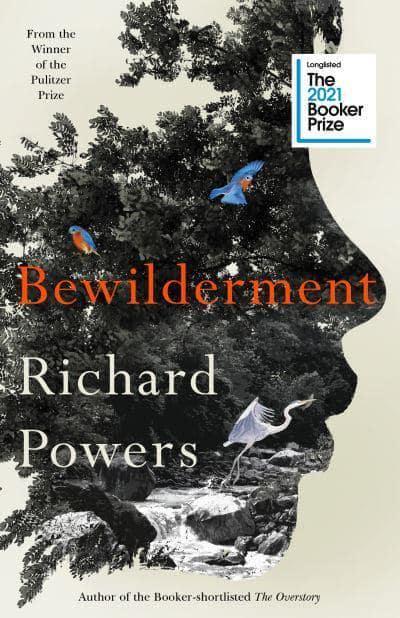
Booker book review #3 – “Bewilderment” by Richard Powers

This is my third Booker review of this year. The winner will be announced this coming Wednesday. At this point I have completed four novels, almost finished the fifth and have yet to start my final one, although, at this point, I am pretty hopeful that I will succeed in my goal of completing and reviewing all six before the winner is announced. That will be a first and I am particularly pleased with that since my house in in chaos, due to a long-awaited kitchen refurbishment, my day job has been super-busy and there has been a lot of family stuff going on these last few weeks.

I was really looking forward to reading Bewilderment; Powers’s 2018 novel The Overstory, which was also shortlisted for the Booker that year, remains one of the most powerful books I have ever read and is particularly apt for our times as the Cop26 negotiations get underway in Glasgow today. The Overstory did not win in 2018, Anna Burns’s Milkman did. That was also a brilliant book, although for me Powers had the slight edge. I don’t envy the Booker judges!

The stunning cover of Bewilderment

The reviews of Bewilderment have not been quite as strong. It is indeed a very different book, but it bears the author’s characteristic attention to detail, and a quite breathtaking amount of research.

Theo Byrne is an astro-physicist whose life’s work is to try and uncover the secrets of the universe. His research has furthered knowledge on the stars and planets with whom we share this universe and he is pursuing the biggest question of all – is there other life out there? And yet, he struggles to understand his nine year-old son Robin. Theo’s partner Alyssa, Robin’s mother and an activist advocating for the rights of animals, is killed in a car accident and their lives are thrown into turmoil. Robin, neuro-divergent, it is intimated, struggles at school, both with the constraints of the routine and getting on with other kids. After he fractures another child’s nose when the boy repeats a disparaging remark about his dead mother, Robin is threatened with exclusion from school. Theo comes under significant pressure to medicate his son, which he refuses to do. Instead he takes the decision to home-school him, but this presents numerous other challenges, not least with managing his own work.

Before they had Robin, Theo and Alyssa were involved in some highly experimental research by an esteemed neuro-scientist and former lover of Alyssa’s, Marty Currier. He is trying to map the brain patterns associated with certain emotional responses in the hope that in the future, others might be able to learn to manage their behaviour through a treatment which would involve their brain ‘learning’ from the better response patterns of others. Theo and Alyssa agree to be early guinea pigs. When Theo approaches Marty for help with his son, Marty suggests putting Robin through the treatment where his brain will learn how to mimic his mother’s responses to events. Although she is dead, Alyssa is a powerful presence throughout the book. Theo places her on a pedestal and is constantly reaching for her as he grapples with what to do about Robin, believing she was the only one who could truly understand him and was therefore able to support him.

They share a lot, astronomy and childhood. Both are voyages across huge distances. Both search for facts beyond their grasp. Both theorize wildly and let possibilities multiply without limits. Both are humbled every few weeks. Both operate out of ignorance. Both are mystified by time. Both are forever starting out.

“Bewilderment”, by Richard Powers

Theo finds his own ways of parenting his son and the relationship the two of them develop in the absence of Alyssa, the new way of being that they must find for themselves, is delicately and beautifully handled by Powers. Theo is able to share his fascination with the universe with his son, but also learns from his attention to detail, his fascination with the minutiae of nature, that Robin has inherited from his mother. The degree of knowledge and understanding of these disciplines (astrophysics and natural history) that Powers brings to the story is astonishing, as it was in The Overstory.

Powers won the Pulitzer Prize for The Overstory. Can Bewilderment bag him the Booker?

This is a powerful story with two highly contrasting themes – the devastating human impact on the natural world, and the struggle to parent in the face of tragedy and adversity, especially in a world that seems so hostile to anything outside the norm. It has a huge canvas (the universe), but also intimate detail (a father-son relationship).

I did not find the book as gripping The Overstory, but frankly, it would be unjust to compare anything to that book, in my view. Some parts of it I struggled with, the long passages on the universe, for example, I found the least engaging. But the characters are well-drawn and I felt close to both Theo and Robin, pulled into their small world.

Highly recommended, but a tough read at times.

The river of forms is long. And among the billions of solutions it has so far unfolded, humans and cows are close cousins. It wasn’t surprising that something on the fringe of life – a strand of RNA that codes for only twelve proteins – was happy, after one small tweak, to give another host a try.

A devastating disease amongst livestock threatens to jump the species barrier in “Bewilderment”.

Booker book review #2 – “Great Circle” by Maggie Shipstead

When I set out a few weeks ago out on my annual quest to read the Booker shortlist ahead of the announcement of the winner early next month, I decided I’d need a strategy. I have never actually managed to get through all six books in the six weeks or so between the shortlist being publicised and the award ceremony, but this year I am determined. Looking at the relative heft of each book, I decided that Great Circle by Maggie Shipstead would have to be ‘read’ as an audiobook. It is by some distance the longest on the shortlist – 608 pages, which amounts to 25 hours listening time. Between twice or thrice weekly runs, a bit of driving for work and a bit of solitary walking, I decided I could probably get through it in the month. My book club also decided to read it, though with some trepidation, as its longer than most books we select.

Well, here we are, just over halfway through the month and I have finished it – I COULD NOT STOP LISTENING! This is an extraordinary book, a huge achievement. Fascinating, clever, brilliantly conceived, exhaustively researched, intricately plotted and beautifully written. Whilst wishing to take nothing away from the author, I suspect there was a brilliant and meticulous editor involved with this book too.

The novel’s heroine is Marian Graves, an early 20th century aviator, a contemporary of Amelia Earhart and Charles Lindbergh. The novel begins with an account of the circumstances preceding her birth. She and her twin brother Jamie (who will later become an artist) are the only children of Addison Graves, a ship’s captain, and a 19-year-old socialite who falls pregnant on their first, casual, liaison. Their mother Annabel is emotionally disconnected from her babies, appearing to suffer from postnatal depression. When the ship that Addison Graves captains, the Josephina Eterna, sinks following an explosion in the hold, he chooses to rescue himself and the baby twins rather than remain on board until the last passenger leaves, as is his duty. His young wife is never found and when Addison is sent to prison he leaves the twins in the care of his brother Wallace, an artist and a drinker, who lives in Missoula, Montana.

The children have a wilderness childhood, thriving on neglect. They develop a close friendship with local mixed race boy Caleb, whose mother is also an alcoholic, and who spends most of his time at their home. When she is about fourteen, Marian watches an acrobatic air show held locally by two amateur pilots. She is mesmerised and decides thereafter that her only ambition is to become a pilot. Her life’s mission from then on is to accumulate enough money to take flying lessons. Marian has little formal education but she is an avid reader and works her way through the small library that her father left in the care of his brother. Having taught herself to drive and to mend cars she gets work as a delivery driver, distributing baked goods and, at the bottom of the baskets, bootleg liquor (this is the era of prohibition). She makes a delivery to the local brothel where she runs into local gangster Barclay McQueen. He is a big-time liquor distributor, importing from Canada and with an operation that spans the country. He is mesmerised by the young Marian and after slowly and gently building a relationship with her, he pays for flying lessons and will eventually buy her a plane. But he is no benevolent benefactor; he wants Marian and will eventually marry her. She finds herself drawn to him too, and there is a powerful chemistry between them, but it is also a dangerous and destructive passion.

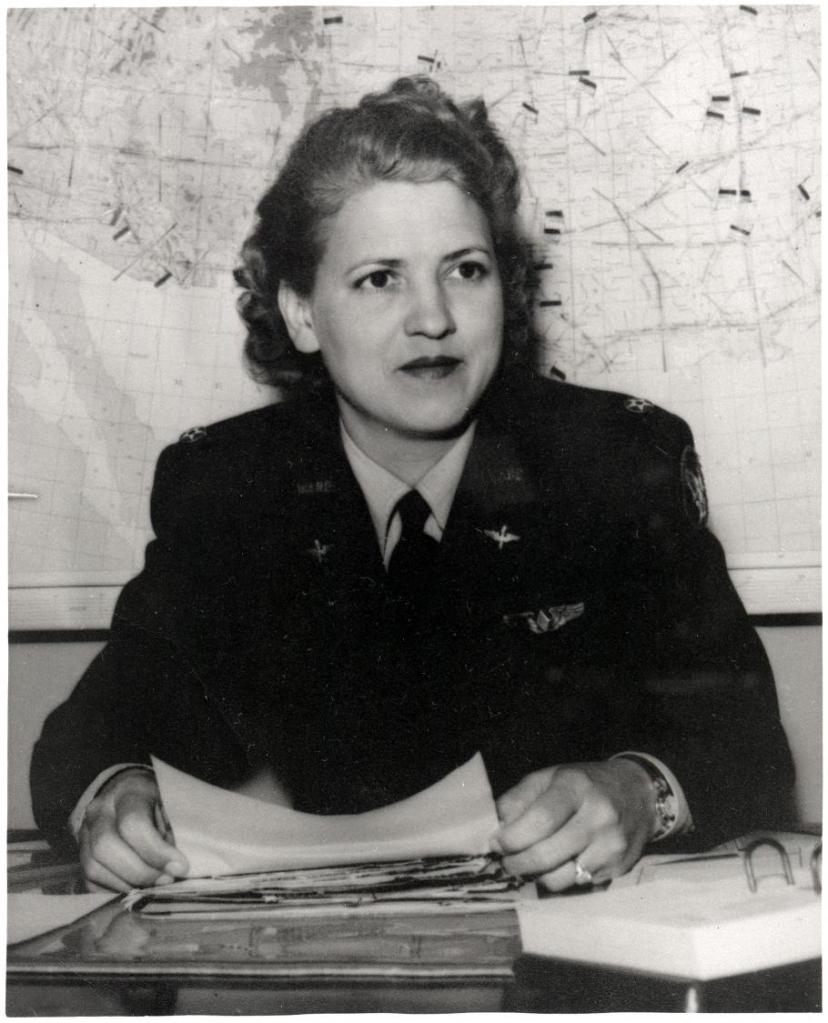
Jacqueline Cochran, the real-life founder of the Women’s Airforce Service Pilots appears in the novel. https://airandspace.si.edu/stories/editorial/flying-homefront-women-airforce-service-pilots-wasp

As we move slowly through the events of Marian’s life we follow her flying career, which goes from strength to strength, despite the times, as her natural brilliance, her driving ambition and ingenuity, combine with the many and varied flying challenges she undertakes. The greater the risk, the more expertise she gains. She catches the attention of another high-profile lady pilot who sets up a special air service in England during the second world war, where women pilots are used as aircraft couriers, flying planes to different locations where they are needed.

A present-day story is being told in this book too. In Los Angeles in 2014-15, young actress Hadley Baxter finds her life is a mess. Made famous as a child actor in a highly successful television show, she finds further fortune with a franchise called Archangel (think Twilight), but then fame turns to infamy when having broken up with the co-star, with whom she had been in a long-term relationship, she is spotted in the arms of a bad-boy rockstar, and then in a clinch with a married producer. Hadley is offered the role of Marian Graves in an arthouse biopic which is focussing specifically on Marian’s attempt to circumnavigate the globe via the north and south poles – the great circle. It was during this attempt in 1950 that Marian and her co-pilot, Eddie Bloom, and their plane disappeared. A journal Marian kept was found by chance in Antarctica years later and published. A novel was also written by a woman distantly related to Marian by marriage. These two documents will form the basis of the new film.

There are parallels between Marian’s and Hadley’s stories; Hadley was also brought up by a neglectful and drunken uncle after her parents died when their light aircraft plunged into a lake, their bodies never found. At first the novel moves back and forth between the two. It’s mostly Marian’s story, but the Hadley episodes are laugh-out loud funny, utilising every possible Hollywood caricature and absurdity. In the last third of the novel they gradually begin to intersect, however, when at a film dinner party Hadley meets the artist Adelaide Scott, who is related to Marian. The producers suggest Hadley meets Adelaide, almost as a way of getting inside Marian, in preparation for the role, an idea which is mostly ridiculous since Adelaide met her only once when she was just five years old. By this time, Hadley has developed an interest in Marian which goes beyond the role and, through Adelaide, she gradually uncovers truths about Marian, about the expedition and about what eventually happened to her, which help her to reach a place of peace with the events of her own life.

There is much more to this novel than I have been able to convey in the above paragraphs which just goes some way to indicating how rich the story is. I have barely touched on Marian’s twin brother Jamie, whose story is also powerful, and Marian’s relationship with Caleb, the childhood friend who is also the love of her life. There are many ‘great circles’ in this novel, not just the circumnavigation of the globe. It is a book about the links between beginnings and endings, how we all end up back where we started somehow and about the connections between us and how these may cross, years, decades, even lifetimes.

For me this was ‘unputdownable’. An extraordinary book, it would be a worthy winner of the Booker Prize.

Booker book review #1 – “No One is Talking About This” by Patricia Lockwood

And thus begins my annual attempt to read my way through the Booker Prize shortlist before the winner is announced. Customarily, the shortlist is announced in mid-September and the winner announced at the beginning of November, giving about six weeks to read six novels. I have never yet managed all six. I think the closest I have come is about four. I am optimistic this year as I have a strategy – a mixture of audiobook, e-reader and actual book – and a plan. So far I have completed one (the shortest), am part-way through another (the longest) and I am the proud owner of a signed copy of a third. With just over four weeks to go I am, if not optimistic, then at least hopeful. I expect kitchen renovations at the end of the month to disrupt all my plans!

The first book I am ticking off the list is Patricia Lockwood’s No One Is Talking About This, which has become one of the most talked about books of the year since it was first published in February. This is Lockwood’s first novel; she is better known as a poet and published a memoir in 2017 entitled Priestdaddy which was highly acclaimed. No One Is Talking About This has been compared variously to William Faulkner’s The Sound and the Fury, Virginia Woolf’s To The Lighthouse, and James Joyce’s Ulysses. I count all three of those among my all-time favourite reads so I should have loved this book.

It is a really difficult book to describe (for me, that’s where the comparison with Ulysses ends). I should also add, by way of a caveat, that I listened to this on audio and may well have been affected by the slightly manic reading of it. It is narrated in the first person by an unnamed character who has an unnamed family but who lives, we can assume, in New York City. The first half of the book is pure stream of consciousness, a portrayal of the wildness of modern life, particularly those parts conducted through ‘the portal’, which is pretty much everything. We see the ridiculousness of life lived out online, where only appearances matter, where substance and empathy and humanity appear to have vanished. Where photographing and documenting your food is more important than eating it. Where how your relationships look is more important than the relationships themselves. I think most of us can recognise this as the way we might all actually be heading if we are not careful. If indeed, we are not already there.

The second half of the book, described by the author herself as ‘autofictional’ centres around a devastating family event. The narrator’s sister becomes pregnant and the journey is duly recorded on the portal, until a scan reveals an irregularity in the baby’s head measurement. The pregnancy and the baby are no longer as photogenic or fit for the portal, but the event will have a seismic impact on the family and on our narrator in particular. She is completely unprepared for the immense love she feels for the severely disabled baby girl her sister delivers, a child whose life expectancy is limited and whose quality of life would usually be described as poor. And yet, the baby, with her rudimentary abilities, her dependency on her loved ones and her complete helplessness, draws out the humanity in those around her, that, because of the evils of the portal, they had forgotten they had.

This second half of the book is based on an event in Lockwood’s own family – her sister gave birth to a child with Proteus syndrome – and knowing there is truth in it, makes it a powerful read indeed. For me, it is not Ulysses, and Lockwood is not yet Woolf or Faulkner. I wasn’t awed or stunned by the book, but it is innovative. Her instincts as a poet serve her well. It reminded me a little of the 2018-shortlisted book Ducks, Newburyport by Lucy Ellman, which I have recently finished. I have to say I found that book better, but Lockwood has a good chance of winning with this novel.

So, recommended. I’m looking forward to what the rest of the shortlist has to offer.

Book review – “Beautiful World Where Are You” by Sally Rooney

A couple of weeks ago I posted about a work trip to London. I’d bought a copy of the very newly minted Sally Rooney novel Beautiful World, Where Are You which had been published earlier that week amid great excitement (there were queues and bookshops were opened at midnight to enable the keenest readers to get their hands on a copy). Whilst in London I also happened to stumble on a ‘pop-up’ in Shoreditch selling not only the novel, but other books to which there are references in the novel, and some merchandise echoing the design of the book’s cover. This book has surely been the most anticipated of the year, and who can blame the publishers, but it has definitely become a ‘product’. As has the author I suspect. I hope she is okay.

I sort of hoped I might devour the novel on the return train trip to London, but I didn’t and in fact it took me a further week or so to finish it. Rooney’s previous novel, Normal People, was a sensation, not least because of the success of the television series, one suspects, which was brilliantly put together with brilliant performances from the two wonderful new young Irish actors playing the lead parts. It was all a moment of pure serendipity and it was a joy that something so good got the attention it deserved.

Rooney’s follow-up novel therefore was always going to be a challenge and I admire her for just getting the thing out under what must have been intense pressure. It is unmistakeably Rooney – the beautiful prose, the masterful dialogue, the introspective characters, Dublin, the palpable tensions between the characters and the things unsaid. There are four characters: Alice, a successful, famous and thus fairly wealthy author (hmm) who has recently had a nervous breakdown and whom we meet when she is renting a seaside house in the country. Felix, her lover, whom she meets on Tinder, a warehouse worker and cash-strapped under-achiever. Eileen, who lives in Dublin and is Alice’s best friend from childhood. Eileen works for a publishing company in a junior role which pays poorly. She is intellectually and emotionally unfulfilled, and bitter at the hand life has dealt her. Simon is Alice and Eileen’s friend, also from their youth, but a little older, a political researcher he lives in Dublin too. He is single, but seems to have a series of much younger girlfriends, handsome, gentle and compassionate, with a strong Catholic faith.

Much of the novel is an exchange of long and detailed communications between Alice and Eileen. They are more like letters, the kind that middle class people of previous centuries might have exchanged, full of lengthy discourse on the meaning of life, love, sex, career, fame and mental health, cleverly punctuated with much more prosaic gossipy tidbits on their love lives. These of course are emails, though, not letters. In between the letters chapters we follow the various events of the characters’ lives, primarily Eileen’s gradual descent into personal crisis and her relationship with Simon, and Alice’s recovery and unlikely relationship with Felix.

It is some way into the book before the characters collide, when Simon travels with Eileen to visit Alice at her rural retreat. The weekend is a kind of catharsis for them all. Everything must break before it can be reassembled in a meaningful way.

If you are expecting a re-run of Normal People you will get some of the same things – a good deal of sex, middle-class angst and working-class insecurity, and a grown-up exploration of Irish identity in the 21st century. But it is a very different book. There are surely some autobiographical elements. It has a lot less pace and it seems a long time before anything significant happens. This novel is a much slower burn. I liked it but I didn’t love it. I did not care as much about any of the characters as I did about Marianne and Connell. I think it is the book Sally Rooney needed to write though, good enough to follow Normal People but perhaps not quite as good, so that, one hopes, some of the hype around her dissipates and she can get on with being a brilliant author and not have to worry about being a celebrity.

I think it will always be worth reading what Sally Rooney writes, so I have no hesitation in recommending this book.

Audiobook review – “Songbirds” by Christy Lefteri

I loved The Beekeeper of Aleppo and so I was keen to get hold of this book when it was published in July of this year. It is Christy Lefteri’s third novel (her first A Watermelon, A Fish and A Bible, was published in 2010, nine years before The Beekeeper of Aleppo became an international best seller and shot her to fame) and covers similar territory – the plight of immigrants from war-torn or developing countries seeking to make a better life in what we like to term ‘the West’.

Nisha is a young Sri Lankan woman whose husband was killed in a mining accident when their daughter was a baby. Widowed and penniless she decided to leave her home country, leaving her young daughter in the care of her mother, to seek employment in Europe where she hopes the higher wages will enable her to support both herself and her family and put money aside for her daughter’s education. She takes a position as a maid to a woman in Cyprus. Petra, Nisha’s employer, is also widowed with a young child, but there the similarity ends. Petra is a professional woman, European, an optometrist with her own business, and her husband died of cancer. She has a large and comfortable home and rents out the apartment above her own to Yiannis. When Petra first employs Nisha she is a broken woman, unable to find a way out of her grief. Nisha becomes a second mother to the child Aliki, taking care of most of her practical needs as well as providing that particularly maternal form of nurturing that her own mother simply cannot give her.

None of the above forms part of the plot of the book, we learn this through reflective passages because Nisha appears only briefly at the start of the novel; she accompanies Petra and Aliki on a day trip to the Troodos mountains one Sunday (what should be Nisha’s one day off in the week), but late that evening she vanishes. Petra reports her disappearance to the police, but they have no interest – such practices are common among these kinds of women, Petra is told, they leave for a better offer in the north of the island. Petra does not believe this not least because Nisha has left behind her most treasured possessions including her passport and a necklace containing a lock of her daughter’s hair. Petra also cannot believe that Nisha would leave Aliki, the child she has loved as if she were her own, without even a goodbye.

As she continues to search ever more desperately for Nisha, Petra makes unexpected connections with her neighbours, their maids, and also Yiannis, her tenant upstairs who she realises she has barely spoken to and knows nothing about. We learn before Petra does that Yiannis was Nisha’s lover, a relationship they were forced to keep secret well knowing that it could jeopardise Nisha’s job. Such women of servitude have almost every aspect of their lives controlled by the employers on whom they depend so wholly. The book drops heavy hints about how close this is to enslavement. Yiannis also has his secrets; he is a poacher, capturing songbirds from the countryside, which he then plucks and pickles for sale to unscrupulous restaurants. The songbirds are a forbidden delicacy and the practice is highly illegal. But Yiannis is himself also enslaved; like a drugs mule he is merely a cog in a bigger machine and his more senior accomplice skims off most of the proceeds while Yiannis barely survives, knowing also that he cannot leave the work or else his own life would be in danger because he knows too much.

Petra and Yiannis are searching separately for Nisha and each is on their own journey, not only to find her, but in doing so they also reflect on their own part in her disappearance. Each is taken to dark places, both literally, as they encounter underworlds that were previously not fully known to them, but also figuratively as they are forced to question whether they gave Nisha the respect and attention she had a right to expect and may therefore have some culpability.

I found the book gripping, and the story interesting. Its subject-matter is at times uncomfortable; most of us probably think that we have nothing to do with this kind of discrimination and injustice, but the reader, like Petra and Yiannis, is forced to confront the fact that we are all part of the bigger system that perpetuates it. It is less subtle than The Beekeeper of Aleppo in making its ‘campaign’ points. Some of the characters are merely caricatures of the system (such as the indifferent police detective) or mouthpieces for the points the author wants to make, like Tony the agency owner who finds jobs for many of the south-east Asian migrants, but who is also very protective of them.

I listened to the book on audio and found the narration excellent with very good performances all round. Petra and Yiannis are voiced by two different actors, which I liked, and Art Malik makes another appearance for this author reading the third-person chapters.

Highly recommended.

Source: The International Labour Organization

Book review – “The Thursday Murder Club” by Richard Osman

I am not a huge fan of celebrities writing books; memoirs I can just about get (if they have had interesting lives and have fans then I can see people might want to read about them), but I bristle slightly when I see celebrities capitalising on their success in other fields by publishing a book. David Walliams has carved out a second career as a children’s author and seems to be more of a writer than a comedian these days. Miranda Hart has also dabbled in children’s fiction, with a bit less success, I think. For adult readers, Dawn French and Ruth Jones have also been very successful. I have resisted all of these. There’s nothing wrong with it, of course, it’s my total prejudice! I suppose I just think that it is so hard for unknown authors to get published, that it’s kind of annoying when someone uses their fame to jump the queue, especially if their book is inferior. Why don’t they seek publication under a pseudonym and try their luck with the rest of us? Jealous, me? You bet!

You can understand why publishers would want a famous person to publish under their own name, of course. And you could argue that if it gets someone buying a book which they might not have done if it was written by A N Other, then that’s a good thing. And perhaps that purchase subsidises less well-known authors? It’s never as simple as it seems at first. For the celebrity, of course, there is also a risk – what if people read the book and think it’s not very good? Then their reputation for eg comedy, acting or singing, which may have been cultivated through years of hard work, could easily be put at risk.

45,000 copies sold in the first three days on sale!

I had no interest in Richard Osman’s book published in September last year, The Thursday Murder Club, which has been a rip-roaring success. It quickly became a best-seller and has sold hundreds of thousands of copies. A sequel is due to be published next month and the film rights have been bought by Steven Spielberg. Then a neighbour passed it on to me – she did not rate it very highly (neither did another neighbour), but my book club decided to give it a go. So, fate threw the book my way.

There are four main characters making up the eponymous Thursday Murder Club – Elizabeth, who has a shady past, possibly in the secret service, Ron, a former trade union leader, Ibrahim, a retired psychiatrist, and Joyce, a widow of no particular distinction. They all live in a high-end retirement village in Kent, which is on the site of a former convent. The village is owned by spivvy, property developer Ian Ventham. The quartet meets every week to discuss unsolved murder cases, and they amuse themselves by trying to work out whodunnit and how. They get their case files from Penny, a former detective and fellow resident, now with severe dementia, cared for by her husband. Penny should not have kept the files, but she did.

While studying one particular case, Tony Curran, a local man with a criminal past, former associate of both Ventham and Ron’s son Jason (who happens to be a famous former boxer, now retired), is murdered. The group now has a real life case to look at! Using wily and underhand means, Elizabeth and Joyce manage to get in with the local murder squad investigating the case – Joyce is something of an innocent and is led into deceit by Elizabeth, although she does not seem to mind. They target a young local officer, Donna, who has transferred from London following a relationship breakdown, to get them access to privileged information and they persuade her on the basis that they can ensure she is attached to the murder squad; Donna is ambitious and agrees. The other police officer who becomes central is Chris, a middle-aged, lonely, overweight, long in the tooth type, who fancies that he knows it all, but seems to be easily manipulated by the retirees. Whilst the Thursday Murder Club is considering the case another murder takes place under their noses, this time it’s Ian Ventham, the owner of the retirement village.

I think that’s enough plot information to give you an idea of where it’s all going. It is quite a clever complex plot, and it does not turn out how you think it’s going to. The activities of the Thursday Murder Club, their methods, their characters, bring an element of comedy, which you would expect from Osman, whom, I have to say, I have always liked on television. But, there is also an inescapable poignancy, not just from the fact that several people get killed (!), but also because all the residents know they are in the latter stages of their lives and death may not be far away for any of them; in fact they have to deal with it all around them on a fairly regular basis. Perhaps this is what makes them fearless, even reckless sometimes. There are some plot easements which lack a bit of credibility, which are mostly explained away by Elizabeth’s ‘access’ to people and information by virtue of her past life, and which need to remain confidential. But this book is not meant to be completely rigorous. It’s a bit of escapism with a message, that life is short and we should grasp opportunities when they come along.

The pace of the book dipped a bit in the middle for me, but overall, I have to admit I enjoyed it. Recommended if you like your murder on the lighter side.

Book reviews – “A Thousand Moons” & “The Whereabouts of Eneas McNulty” by Sebastian Barry

Sebastian Barry – poet, novelist, playwright, multi-award winner and Irish Laureate for Fiction 2019-21

One of the best books I read in 2017 was Sebastian Barry’s Booker shortlisted novel Days Without End. This extraordinary novel tells the story of Thomas McNulty and his companion and later lover John Cole who meet in the US Army and fight in the wars against native Americans and then the Civil War. Thomas crossed the ocean from Ireland to escape the famine. The couple rescue a young Indian girl, Winona, who has been orphaned at the hands of their own fellow soldiers, and go on to risk their lives, leaving the army and setting up home together with her as their adopted daughter. It is a breathtaking book. Barry began his literary career as a poet and he is also a playwright and it shows in this book; he uses the most beautiful lyrical language and has a keen sense of dramatic tension. The battle scenes are among the most vivid and visceral that I have ever read.

A Thousand Moons is the follow-up to Days Without End and was published at the start of the pandemic in March last year. Its central character and narrator is Winona, now a young woman, and her guardians, Thomas McNulty and John Cole, are living a relatively settled life in middle age. Winona is bright and determined and the men are keen that she should develop her talents, so she gets a job working as a clerk for a lawyer in the town. They family lives together on a small farm in Tennessee in a seemingly arcadian, slightly bohemian set-up with two former African-American slaves to boot. But prejudice is never very far away and in the small town, where post civil-war resentments still run deep, the household is regarded with suspicion, and particularly Winona, whose darker skin makes her origins obvious.

Local boy Jas Jonski is in love with Winona and wants to marry her, but she keeps him at arms-length. When one night Winona is raped, it sets off a sequence of events which lead to the murder of Jas. Winona is the prime suspect and events threaten to break up the family idyll; it seems inevitable that the discrimination in the law (Indians have no defence) will make it impossible for Winona to escape the death penalty.  

A Thousand Moons lacks the epic sweep of Days Without End, and is therefore a book which does not quite enable Barry to display his mastery. But it also feels like a book that had to be written; we had to hear Winona’s story, but it was always going to be a more intimate one than the grand tumultuous scale of the earlier novel. It is no less powerful, however, and the same themes, prejudice, small-mindedness, injustice, and the power of love, are picked up and explored further in the sequel. Almost all of Sebastian Barry’s novels are part of a wider schema, with different generations of the same families’ stories (the Dunnes and the McNultys) being explored. But despite their links, each novel seems to stand on its own, like The Whereabout of Eneas McNulty for example; Eneas would have been two or three generations after the migrant Thomas, but they are linked, part of the great spread, the Irish diaspora. A Thousand Moons is a true sequel and it helps to have read Days Without End.

I love Barry’s writing and I have decided I need to read his entire works! I started with The Whereabouts of Eneas McNulty because it was his third novel (published in 1998) and the first of the McNulty sagas. I am also interested in how his writing has developed. He was clearly already operating at a very high level when he wrote it. It’s brilliant! Eneas was born in Sligo at the end of the nineteenth century and we learn much about his childhood, particularly his friendship with Jonno Lynch. He joins the Royal Irish Constabulary after the end of the first world war, a decision that will define his future life. It will set him apart, mark him as a loyalist when the Irish conflict intensifies and his former friends side with the republicans. He is handed a death sentence by these former friends and is forced to flee Sligo. But Sligo will never leave him and is a constant presence in the novel.

Most of the book concerns his travels, his odyssey, as he moves around the world, making comrades and enemies. He travels first to America (a brief reference is made to a distant uncle, Thomas McNulty), to Africa, returns briefly to Sligo, only to discover that his past “crimes” have not been forgotten; even in the context of Irish independence there is no amnesty for those perceived as traitors. Eneas ends up in London running a hostel with his old Nigerian friend Harcourt, a man also exiled from his country by civil strife (and ruination caused by British colonialism) but his past will always catch up with him.

This feels like a foundational novel. The first in a series, the start of a complex family saga that the author will weave. It also has the lyrical language that characterises his later work, and explores the many different kinds of love and companionship that humans can experience, and the horrors of prejudice and intra-community conflict. I listened to both on audio (also Days Without End) and the readings have been faultless – Aidan Kelly is fabulous and I could listen to him reading anything.

I recommend both these books highly and will be adding many more by Sebastian Barry to my reading list.