This was my January pick for my 2019 Facebook Reading Challenge, the theme for this month being a humorous novel. I hadn’t read any Bainbridge before and had read that this was considered a comic masterpiece and was in fact shortlisted the Booker Prize in 1974 when it was first published (Bainbridge had no less than four novels shortlisted). This book also won the Guardian Fiction Prize.
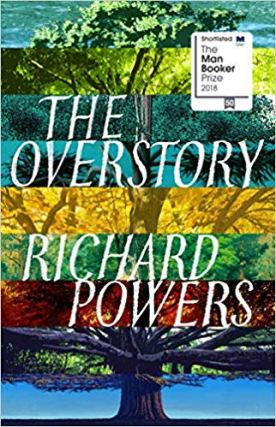
So, the book has a pedigree and I had high expectations. I enjoyed it, but I’m afraid to say that I didn’t enjoy it as much as I expected. Perhaps it’s partly timing; I posted a review last week of The Overstory, a book which I found breathtakingly good, and which I completed just before starting this one and I fear that it suffered somewhat in comparison. Perhaps I wasn’t ready for humour after that! I seem to remember having similar feelings about the books I read immediately after completing Hanya Yanagihara’s A Little Life a couple of years ago. There are some books which just need a little more time to sit with you before you launch into something else.
 In summary, this book is set in the late ‘60s, early 70s and is about Freda and Brenda, two young women who work together in a London factory where Italian wine is bottled. They also live together in a pokey bedsit, and share a double bed at nights. Freda is blonde, buxom and outgoing, sexually frustrated and of a romantic inclination. She has the hots for Vittorio, the nephew of the factory’s Italian owner, and fantasises about being seduced by him, contriving situations to enable this. Brenda is a redhead, but mousey in personality, timid and sexually repressed. She has left her drunken husband Stanley in the Yorkshire farmhouse which they shared with his domineering mother. Freda and Brenda met after Brenda had a tearful outburst in a butcher’s shop. Freda took her in and got her a job at the factory. Freda can be kind but also cruel and the book is as much about the complex nature of relationships between women as anything else.
Almost all the other factory workers are Italian, expect Patrick, an Irishman who seems to be quite protective towards Brenda. The first quarter or so of the book is spent setting the scene before the ‘outing’ takes place. The outing, which was supposed to be by coach to a stately home, was Freda’s idea and was simply one of her plots to try and get Vittorio to declare his passion for her. Inevitably, things start to go wrong when the expected coach does not arrive and some workers have to go home while others pile into cars, and the outing turns into farce. It is a cold and bleak October day, so Freda’s fantasy of a sunlit picnic and strolling through romantic gardens with her hoped-for lover were never going to be realised. The other side-plot is that Brenda is being relentlessly pursued by the (older and married) Rossi, manager of the factory. At work he is always trying to get her into compromising situations.
The outing occupies most of the rest of the book. Inevitably, not all goes to plan and there is a dramatic and unexpected twist, which I won’t spoil by sharing with you. There is definitely humour, but it is very dark. By coincidence, there was a BBC radio broadcast of the story (abridged of course) in mid-January, where the wonderful Maxine Peake and Diane Morgan took the parts of Freda and Brenda, respectively, and Sue Johnstone (masterful) narrates. They drew out both the humour and the tenderness very effectively. In fact I enjoyed the broadcast slightly more than the book! I think this was because the ironic interpretation came across more strongly (the process of abridging perhaps?) and that felt more satisfying for a 21st century reading. Clearly we still have quite a way to go when it comes to gender equality, but you forget how bad things were only 40-50 years ago. In the context of the #MeToo movement, sexual harassment of women in the workplace is more difficult to find funny. Perhaps I am being far too earnest!
I enjoyed the book, but must confess that reading it did at times make me a bit uncomfortable. Which is a shame because I think it is a far more complex novel than a first (post-Overstory) reading allows. I think I need to read it again!
Hmm, what do you think?
If you have enjoyed this post I would love for you to follow my blog. Let’s also connect on social media.


 My book club chose this for our pre-Christmas read (I’ve only just finished it!) and we all thoroughly enjoyed it. It’s long, and perhaps could have been edited somewhat, but I imagine the main buyers of this book will be Michelle-fans who want as much detail as possible. The first part of the book was, for me, the least engaging. My fellow readers and I were a little surprised to learn that Michelle Robinson did not in fact come from an affluent background. She was a ‘Southsider’ – from a part of Chicago that was fairly blue-collar and largely African-American, and became more so as she grew older and some of the white residents moved out. A picture is painted of a family with strong values around hard work, doing the right thing, caring for others and loyalty to family. Michelle excelled in school through hard work, determination and the support of her parents and attended both Princeton and Harvard Law School. She has never forgotten her humble beginnings, however, and this underpins her commitment to equality and social justice. However, I did feel this part of the book was most descriptive; in the context of the book as a whole I can see why it would have been important to her to put her politics in perspective, but it was a tiny bit…pedestrian?
 Nell is in her late teens and lives with her father, a very religious alcoholic, and her sister, Harper, who has cancer. They are from Manchester but moved to Norway, ostensibly for Harper’s medical treatment. The girls’ mother, we learn, left when they were young and they have had no contact since. Nell is a confused young woman; she is the primary carer for her sister, their father either working or incapable most of the time, and she wants to be a singer-songwriter back in Britain, but finds herself cut off from any possibility of making a career in that field. She attends a local school where she experiences bullying and isolation. She decides to go back to the UK, without her family’s knowledge, for an audition, but gets into a spot of bother en route and meets Lukas, a handsome but mysterious boy. At first it appears he rescues her but we learn later that he in fact engineered the whole episode in order to entrap her.
 The books open in 1988 when the central character Frank opens a music shop in a rundown area (Unity Street) of an unnamed city. Frank is passionate about music, something that was instilled in him by his late mother, the eccentric Peg. It is probably the only the good thing that Frank got from her, and as the book goes on, we learn much about the lack of love and security in his childhood. This is important as it helps us to understand Frank’s actions later on. The other thing that Frank is passionate about is vinyl; he refuses to sell either cassette tapes or the new-fangled CDs in his shop, much to the chagrin of the salesmen who tell him he is a dinosaur and will have to change with the times. They gradually abandon him.
 The story concerns Romy Hall, a young woman whom we first meet in a prison van en route to Stanville Women’s Correctional Facility, somewhere in California. Romy was convicted of a brutal murder and has been given two life sentences plus six years. Romy worked as a lap dancer at The Mars Room nightclub in San Francisco and it was a former customer at the nightclub that she killed. Romy is at once similar but different to her fellow convicts. For one thing she has a seven year old child, Jackson, whose welfare she becomes increasingly concerned about during her incarceration, and she also completed high school, so she is considerably more educated than many of those around her.
 Washington Black’s life is turned around, however, when Erasmus’s younger brother, Christopher, or ‘Titch’, arrives at the plantation. He is an inventor, a man of science like his father, who does not share his brother’s views on slavery. Titch has come to Barbados in order to work on a flying machine he has designed and asks his brother for a helper. Erasmus loans him Washington Black and the boy goes to live in Titch’s quarters, helping him with drawings and experiments as well as practical household tasks. Titch discovers that Washington has considerable artistic talent as well as abilities which will be useful in his science projects and he teaches him to read. This change in Wash’s circumstances means he can probably never go back to being with the other slaves and the question is posed whether Titch has served his protégé well.
 Gretel is a 32 year old woman living alone in Oxford. She works as a lexicographer, a natural career for her as her life has been dominated by words – their invention, their use, and, perhaps also, their lack. She had an unconventional upbringing with an eccentric mother on a canal boat. In her early years, Gretel and her mother developed their own language, a succession of private words for things for which a single expressive term did not exist, for example “sheesh time” refers to a desire to spend time alone, and “Bonak” will come to mean something to be afraid of, something threatening.
 The central character is Walker, a man from rural Nova Scotia, who fought with the Allied forces in the D-Day landings. He has seen and experienced terrible events, death and injury that most of us can barely even imagine, and he survived. After the end of the war, he goes back to the United States and finds himself living among the homeless in New York City. The book is divided into four sections: 1946, 1948, 1951 and 1953 each set in a different US city (though Los Angeles is the setting for both 1948 and 1953). As he reflects on his experiences, it becomes clear that it was impossible for him to return home to Canada. He reminisces about the quiet, gentle life he led there, where the rhythms of the seasons, the dependence on the harvests of the seas, and community events (such as village hall dances) dominate everyone’s existence. It’s as if the contrast between that life and the brutality he witnessed in the war means he fears contaminating the innocence of those he has left behind. He can never go back, never unsee what he has seen, and those he once loved will never be able to understand how he has been changed.
 Julia's books