Summer travel in Scotland

I wrote last week that September always feels like the start of the year to me. This is the first year since 2005 when I am not bound by any academic term dates (my youngest is studying languages and is on a year abroad), but it will take me a while to adjust I think. So, as we find ourselves post-Autumn equinox I have been reflecting on the year so far. It has been a busy one, not least with lots of travelling, a privilege and a joy, but it has meant that my blog has taken the hit because my day job has been a lot more demanding this year too.

This summer I fulfilled a long-held ambition to do a road trip in Scotland. A work client mentioned to me a while ago that she and her husband had spent their honeymoon in the Outer Hebrides and when she showed me photos of Luskentyre beach I felt immediately drawn to it.

We had two weeks and Scotland is a big place so we necessarily limited our ambitions (otherwise we would have spent the whole time in the car!) and decided to focus on the west coast and a few of the islands. Even then, there were a number of places where we would have loved to stay longer, Fort William for example.

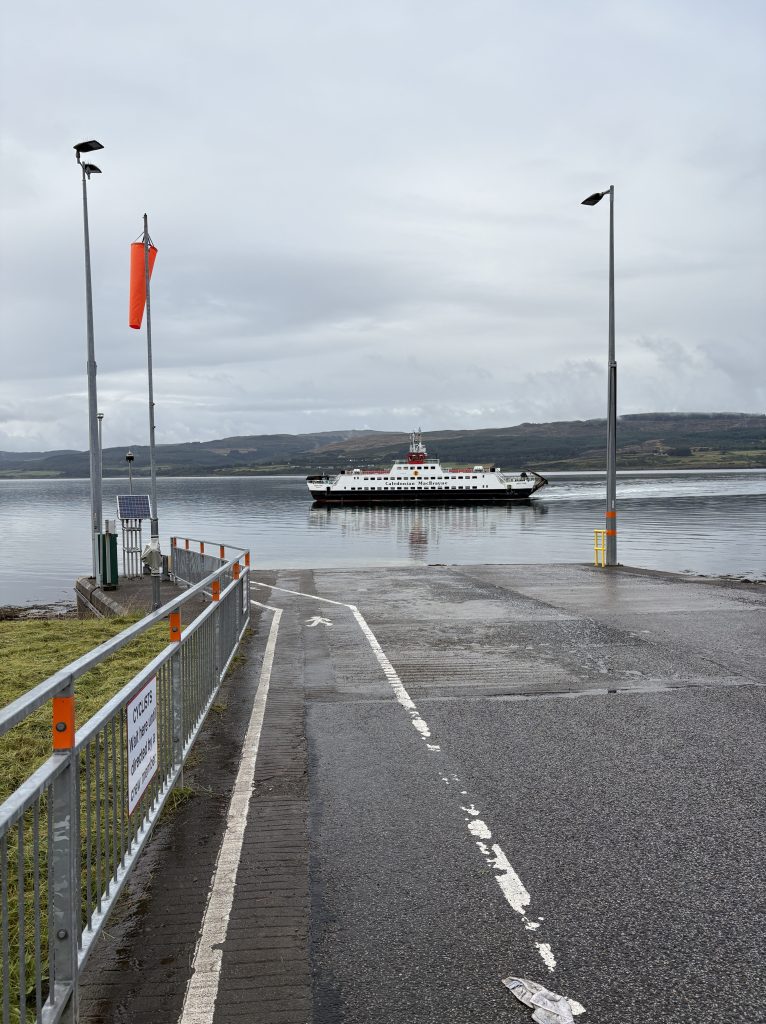
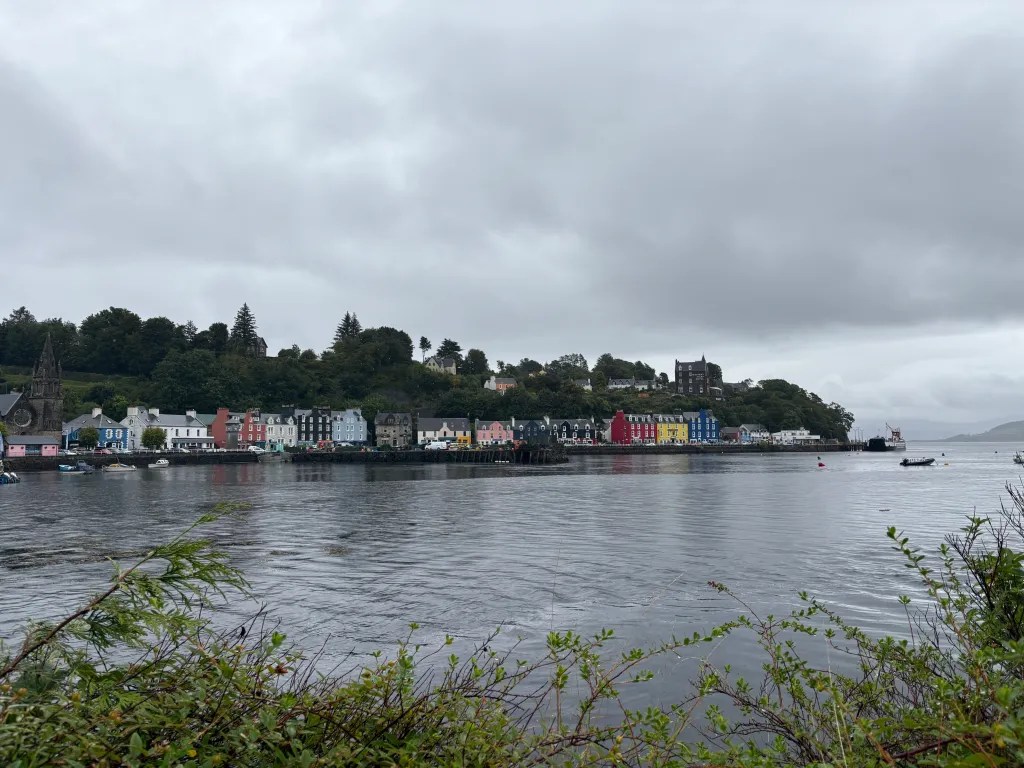
After spending a couple of days in the historic city of Glasgow, we drove to the Ardnamurchan peninsula, which, although part of the mainland, is separated from the rest of Argyll by the very long and wide Loch Linnhe. We crossed at the narrowest point, the Corran ferry, which entails quite a drive north via the stunning (and in August very busy) Glencoe mountain range. Ardnamurchan is completely different and we encountered few other tourists. We stayed in a small hotel overlooking the beautiful and peaceful Loch Shiel. From there we were also able to explore the beautiful Isle of Mull, via the ferries at Kilchoan (to Tobermory) and Lochaline (to Fishnish). Tobermory was a highlight for me as it was the setting for Balamory, a favourite TV show my kids used to watch when they were little.
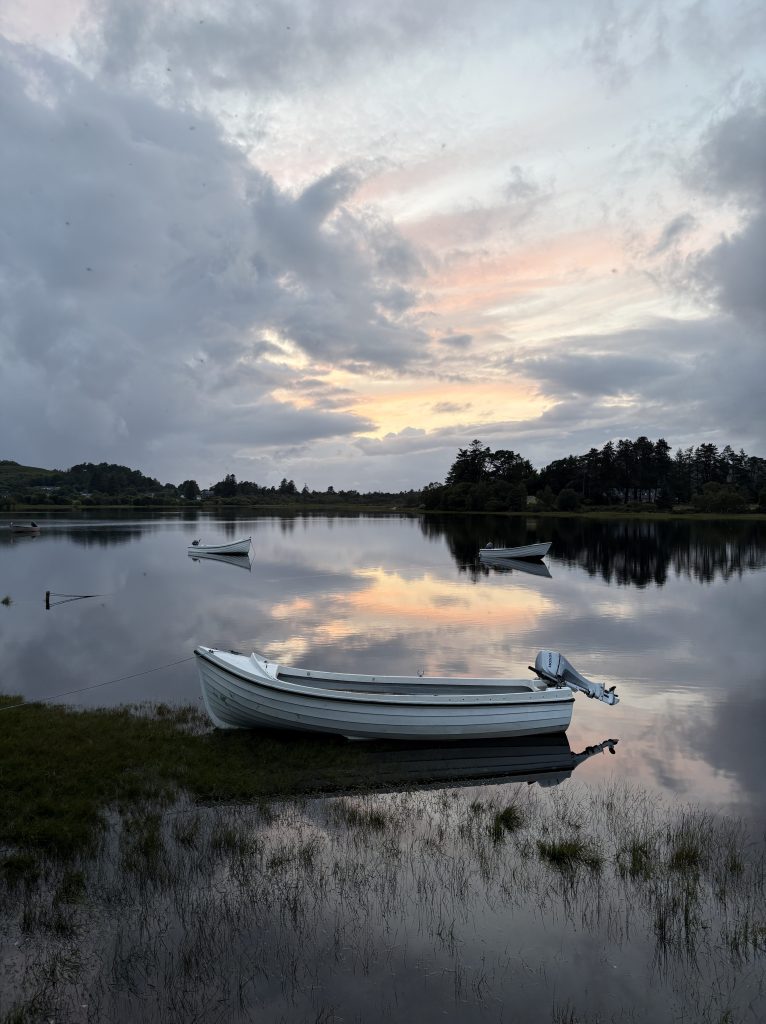
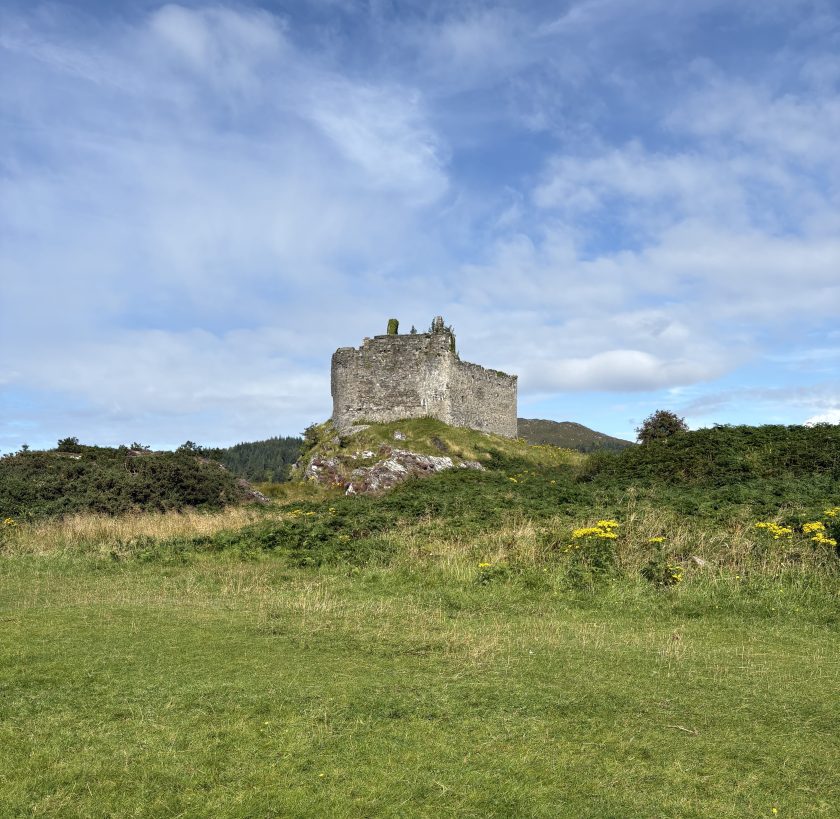
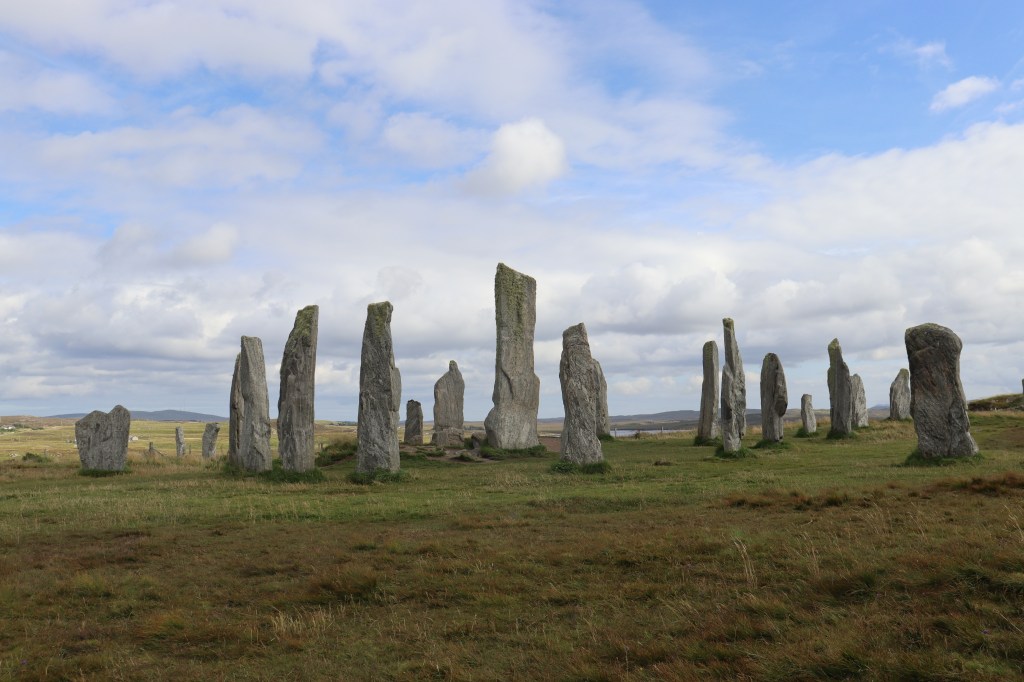
From Ardnamurchan we drove to the Isle of Skye, which was beautiful, but just felt so busy. It is close to the mainland and accessible by a half-kilometer road bridge. The bridge opened in 1995 and has clearly brought a great deal of tourism to the island. Our next stop was the Isle of Harris and Lewis (it’s one island but has two distinct parts), the Outer Hebrides, and the highlight of the whole trip for me. It is not easy to get to – you have to travel to Uig, at the northernmost part of Skye, and then take the 1 hour 40 minute ferry journey to Tarbert. From there it was another 40 minute drive to our cottage overlooking Loch Eireasort. Distant, but so worth it! We arrived on a Sunday, and everything was closed, apart from the llama sanctuary near the legendary Callanish Standing Stones – luckily we’d bought some groceries in Uig. We were able to visit the stones, but even the visitor centre was closed. This felt like a throwback to my 70s childhood!
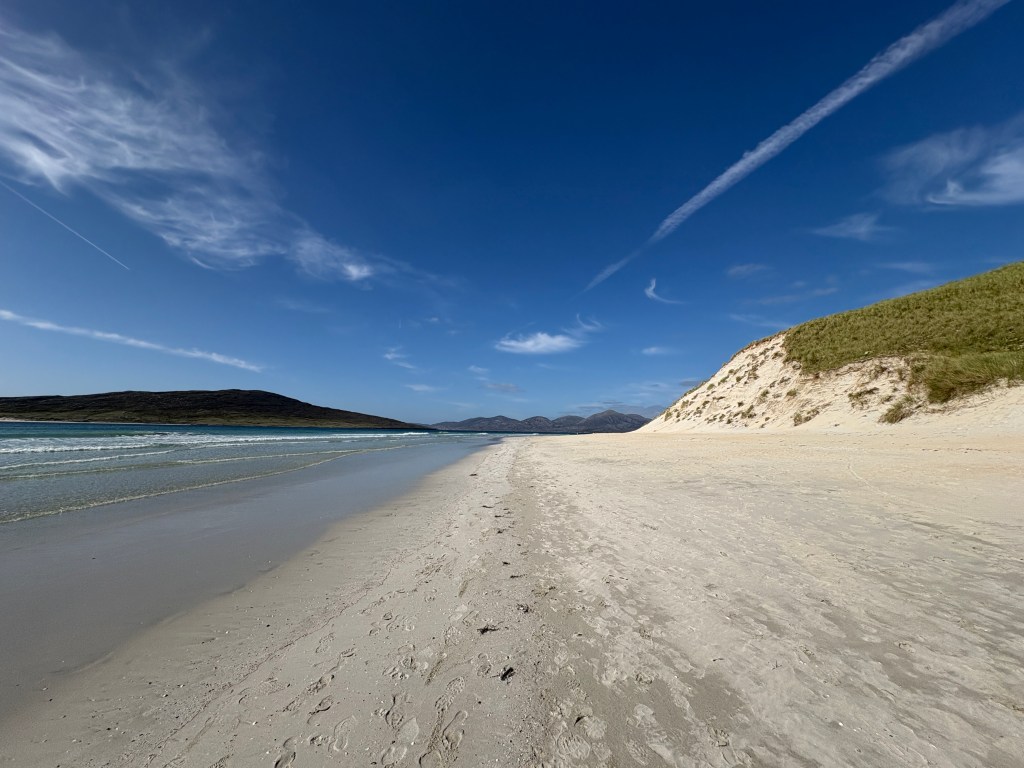
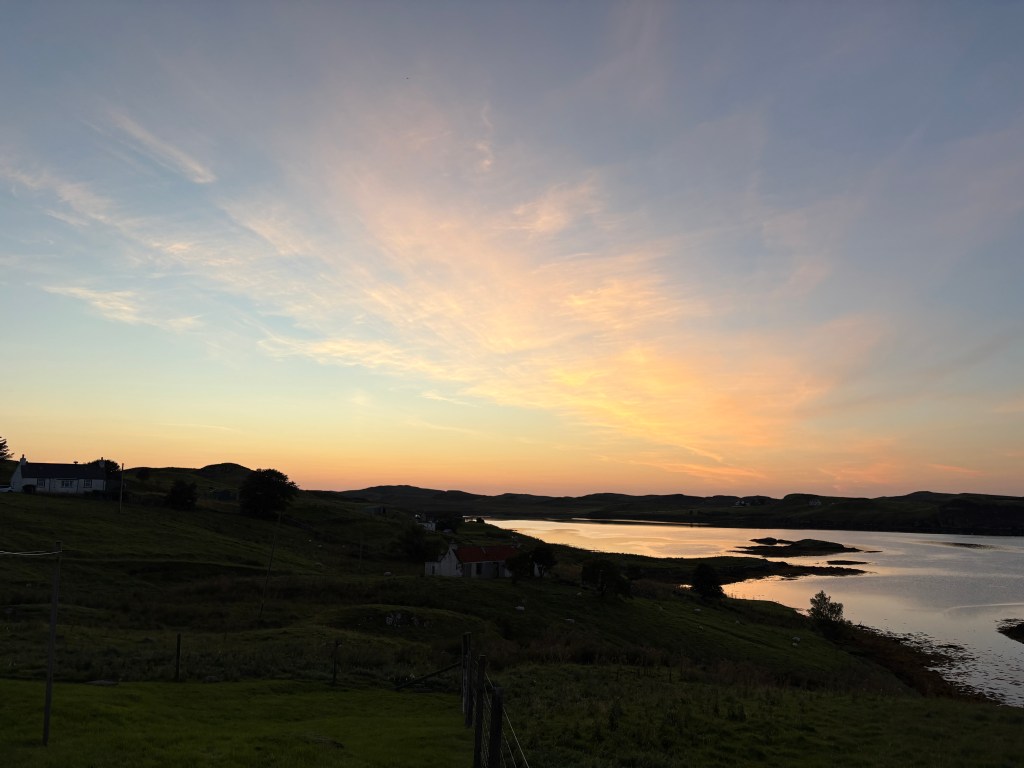
Our days on Harris and Lewis were magical. And we got to see the stunning Luskentyre beach! The sun shined the whole time, though I think we were very lucky. While there I read Graeme McCrae Burnet’s 2025 novel Benbecula – this is another island in the Outer Hebrides, nestled between North and South Uist. I also began Douglas Stuart’s Booker-shortlisted John of John, set on Harris and Lewis. It was fascinating to read these two books in the remote and special part of the world they were set and it gave me a really interesting perspective on the novels. Look out for my reviews of these books in the next couple of weeks.

We ended our road trip in Edinburgh, to see our youngest performing at the Fringe, stopping in Fort William on the way. We are already planning to go back next year, to do more cycling and more walking and to see more the islands that we missed. I recommend this part of the world highly!
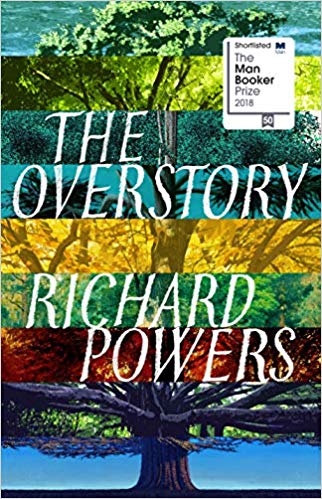
Book review – “The Overstory” by Richard Powers

According to my Goodreads account, I started this book on 4 December. It was the final book I tackled on last year’s Man Booker Shortlist. I have only just finished it. It has taken me well over six weeks. I have read a couple of other books alongside it, mainly because it is currently only available in hardback and at 502 pages it does not slip readily into the handbag. It is also a book that demands to be read slowly, almost at the pace of a tree growing, so it requires something of an investment. If you are put off already, read on, because I must balance that by saying that it is a quite extraordinary book and every hour I have spent with it has been time well spent. It is not a book that rewards being read a few pages at a time, it is best approached with an hour or so in hand.

the overstory img

It is hard to know where to begin to describe it so I will give you the New York Times quote from inside the dustjacket:

“A monumental novel about reimagining our place in the living world.”

After reading it you cannot help but feel that the human race is bent on a suicidal mission, that we will take most of nature down with us and that our tenure as a species on this earth has been wild and reckless and over in the blink of an eye (in evolutionary terms). We’re on the way out I’m afraid. The author’s framework for exploring this is the life of trees. The number and range of trees on the planet was once phenomenal, and humans have systematically destroyed most of them, in the pursuit of so-called ‘progress’, grazing land and space for short-term cash crops, a grossly selfish and short-sighted error of judgement:

“We’re cashing in on a billion years of planetary savings bonds and blowing it on assorted bling.” (p386)

This is the essential powerful message of the book and his method of telling it is also extraordinary. The first part ‘Roots’ is made up of individual chapters about nine individuals, their background, how they came to be at whatever stage of life they are at and, for some, how their families came to be in America. For each individual, trees represent some significant event in their lives. For example, Douglas Pavlicek served in Vietnam and after his plane was hit, he parachuted out and his landing in a banyan tree saved his life.

The second part of the book ‘Trunk’ is the most substantial and details how each of the individuals lives proceed. For example, Neelay, badly paralysed after a childhood fall from a tree becomes a powerful computer games entrepreneur when he invents an extraordinary virtual world. Patricia, an introverted sight and hearing impaired young girl, whose father invested in her a love of nature, becomes an academic but her book about the secret language of trees is derided and she retreats to a reclusive life as a ranger. Many years later, others will agree with her and her thesis becomes fashionable and influential. Olivia, who almost died in part one, becomes an activist, and hooks up with Nicholas, who lost his entire family in part one after they were accidentally poisoned with gas in the family home. The two of them occupy a giant redwood tree in forest threatened by loggers for many months, though ultimately their protest proves futile (this is a metaphor). Many of the characters’ lives intersect, while others remain firmly parallel, for example Dorothy and her quadriplegic husband Ray; it is not clear until close to the end how their story is relevant.

The third part of the book ‘Crown’ is a coming together of all these separate stories, the logical conclusion to the each of the individuals’ stories and the fourth part ‘Seeds’ is about the legacy they leave behind. The end is anti-climactic in some ways, but I think that is the point; for all our ego and self-importance, the mark that humans will leave is pretty insignificant in the long-term. We will simply destroy ourselves. As the book progresses the pace also picks up, as does the switching between the individuals and their stories and the sense is created of humans accelerating towards their decline.

It is hard to do justice to the book in a short review. It is a book which merits deep reading. It is a remarkable concept and remarkable in execution and the writing is sublime, possibly the finest prose I have read in years. In some ways it has left me profoundly depressed about the direction the world is going on – it would be easy to focus on the events of recent years for examples of this but the reality is we have been crafting our own demise for decades, since the Industrial Revolution. Despite all the evidence, we continue to press on with our self-destruction, although there are a few people out there trying desperately to make their voices heard, the author being one of them – I’ve heard him a few times on the radio making the case for paying attention. The non-depressing thing about the book is the realisation that human beings are actually just a miniscule episode in the natural history of this particular planet, and it will prevail, with or without us. This is the ‘overstory’, the picture that is much bigger than us. In this respect our arrogance, particularly that of some of our world leaders, is really rather laughable. What is fascinating is the why, what drives us humans to behave the way we do, and this book sets about trying to explore that.

Though I really loved Anna Burns’ Milkman and felt it was a worthy winner of the Man Booker, I am also rather desperate for a serious realisation of the impact we are having on the world around us, and feel that greater publicity for this book could at least have contributed something to that debate.

One thing is for sure, I will never look at trees the same way again.

Highly recommended, your patience will be rewarded.

If you have read The Overstory, do you agree with my take on it?

If you have enjoyed this post, I would love for you to follow my blog. Let’s also connect on social media.