A regular monthly post recalling the month past more in pictures than in words.



My reading in December




A trip to Southend and an exhibition at the Beecroft Gallery of the work of the East London Group of painters
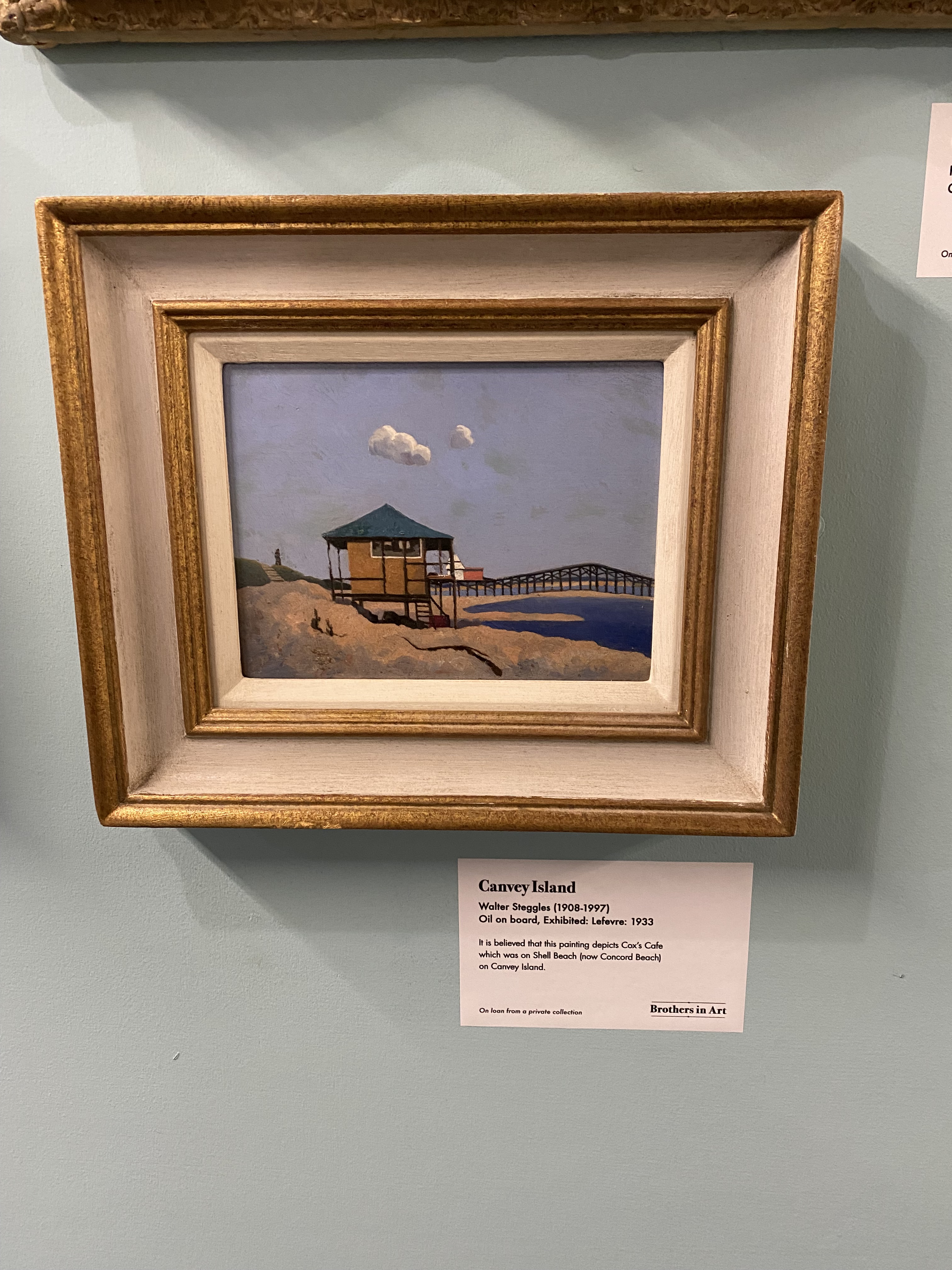

Canvey Island, Essex. Research.


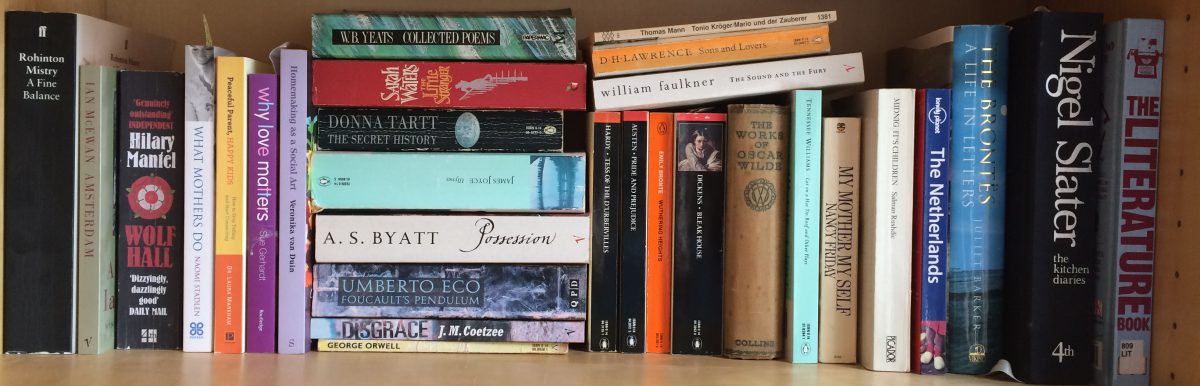
A regular monthly post recalling the month past more in pictures than in words.
My reading in December
A trip to Southend and an exhibition at the Beecroft Gallery of the work of the East London Group of painters
Canvey Island, Essex. Research.
An aunt of mine, who moved with her husband to Australia in the 1970s, said that one of the things she missed from home was the British seasons. Australia moved from scorching summer to a milder greyer period between April and August (not very different to the typical British summertime!), seldom very cold or wet. I have always been fascinated by the changes in the light, the temperature, and nature more generally as the year progresses, so I cannot imagine what it must be like when the months pass with so little to distinguish them.

Like many, I find the winter months challenging – it can be hard to maintain energy levels and motivation, particularly post-Christmas when one is facing into a long stretch of cold, wet and dark. But I appreciate and am grateful for this time of the year, for this marking of time. It is period which provides a uniquely reflective opportunity as our bodies want us to be less active, cultivate rest and, of course, read more! A Christmas Carol, the Dickens novella that I chose for the final month of my 2021 reading challenge, was the perfect book to sink into winter with.

I started it on Boxing Day, after the hurly-burly of Christmas preparation was finally over, after the meal was long-cooked and someone was taking over the reins in the kitchen. As a child, I always found Boxing Day such an anti-climax, of course, but now as a mother, I love it – the chance to put my feet up at last! When I sat down to read the book I felt deeply immersed in the season – the darkness, the warmth and protection of the interior domestic scenes, (the Cratchits and Scrooge’s nephew, that is, not the cold, lonely home of Scrooge). I read in the late afternoons as I sat down with a glass of something, or a hot cup of tea, as the dusk was falling and my neighbours’ lights were coming on, and I felt in the middle of a northern winter! I cannot imagine reading this book at Christmas time in Australia!
The visitations of the spirits of course, turn Scrooge from a miserable, lonely miser to a benevolent embracer of life and all the good things it has to offer. But in reading it for the first time in what must be many years I felt a deep and powerful sense of the importance not so much of the Christian religious themes but of more universal ideas around family, the importance of community, or caring for the less fortunate, and of rituals around food – the scene in the Cratchit’s household, particularly with the Christmas pudding is marvellous! This has a particular resonance for me as each year I gift a few of my neighbours a home-made Christmas pudding, so at the end of November, my kitchen resembles a Turkish bath thanks to all the steaming!
A Christmas Carol is a brilliant book – simple themes conveyed with imagination and economy. Like so many people, December was a very busy month of preparation and my reading suffered. This was the perfect reintroduction and I thoroughly enjoyed opening a Dickens again. It has made me want to go back and re-read all his other novels that I love so much. The size of my TBR pile is so great that that might be too much – next year’s reading challenge perhaps!
What is your ‘go to’ book at Christmas?

Happy new year fellow bloggers and readers! Let us all hope that 2022 sees the world turning the corner on the pandemic although even as I write numbers of infections in the UK, and particularly here in northwest England where I live, are frighteningly high so it is an anxious time for the clinically vulnerable once again, and for parents hoping that children can remain at school for a whole term and for anyone waiting for hospital treatment.
My Christmas was quiet – no visiting relatives for us this year. I was lucky enough to have my three children at home, though, my son returning from university, so we simply hunkered down and spent some wonderful family time together. University and school have now returned, twelfth night has passed, the decorations have been packed away for another year and it is time to get back to some semblance of normal life.
I haven’t posted on here for a few weeks. I took some time out from all my various activities over the holiday period to give myself some time to think about how I wanted to take things forward over the coming year. The autumn was quite a stressful period with one thing and another (some planned, some not) and I am hoping that the next few months will be somewhat quieter, though both my daughters are facing into big exams this year, so there is a persistent background worry about whether or not they will go ahead, about fairness and equity and about staying healthy in the run-up to them.

I have decided that this must be the year that I take my writing to the next level, so I am going to try and do a bit less of my day job to give myself the space to do that. I had a good momentum up until the start of the pandemic and then, as so many people have found, my writing routines, my motivation, my capacity all seemed to vanish and I have found myself in a rut with it ever since.
Blogging is an integral part of my writing. At the very least it exercises all the right muscles, and reading, the main focus of this blog, is the very thing that inspires me to write, so no issues there then. I would like to tell you a bit more about my writing in the coming months, if only as a way of keeping myself accountable and on track. I am going to continue to set myself an annual reading challenge. This year, I have decided that I want to focus on non-fiction. I did not read as much non-fiction last year as I have done in previous years, so I am planning to pick a different theme each month. I haven’t yet decided what January’s theme will be, so look out for that in the next week or so.

I am a ‘completer-finisher’ so I need to tell you about the November AND December books for my 2021 reading challenge; November’s theme was erotic fiction and I chose Erica Jong’s Fear of Flying, and December’s challenge was to read A Christmas Carol, the Charles Dickens classic. I’ll be posting about those in the coming days too.
Another important goal for me this year is to pay attention. In this last year or two I have spent more time walking around my local area than ever before, noticing things that I hadn’t previously. It has been a joy and has taught me that sometimes the biggest learnings and the most important discoveries can be pretty close to home. This is a lesson I hope to take into 2022 as well.
What are your hopes and ambitions for the year ahead?
Whatever they are, I would like to wish you every success in realising them.
I am a huge admirer of Graham Norton. There does not seem to be much that this funny, likeable man cannot turn his hand to. I was sceptical when I saw that he had written his first novel; I get a little cross and cynical when celebrities decide to write books. The sense of entitlement annoys me and I tend to think they take the place of better writers both in bookshops and on shelves at home. When I read Norton’s first book, however, Holding, I was a convert. I loved it. I have also read his memoir The Life and Loves of a He Devil, but I think his fiction is better.

Home Stretch is Norton’s third novel and is equally accomplished. Set in County Cork, in the south-west of Ireland, close to where Norton grew up, it carries the charm and gentleness of that part of the world, while also exploring some challenging themes.
The novel opens in 1987 with a car crash and the deaths of three young people late at night, the day before two of them were due to be married. There are three survivors, Linda O’Connell, the sister of the dead bride-to-be, who is seriously injured, Martin Coulter, the local doctor’s son, and Connor Hayes, the 17 year-old son of local publicans. Whilst he is not considered directly at fault, Connor admits to being the driver and must therefore pay in some way. Connor is convicted of, we do not quite know what, but presumably dangerous driving, and given a two year suspended sentence. But the shame of being in some way responsible for so many deaths in the small town community is a far greater punishment that not only Connor, but his parents and sister Ellen will have to bear for much longer. It is decided that Connor should disappear for a while and he is sent to England to the employ of a distant cousin on a building site in Liverpool. The work does not suit Connor at all; living in a large scruffy house with the other lads on the building site he is bullied and beaten. A chance encounter in a pub leads Connor to abandoning his job and moving to London. It quickly becomes apparent that Connor is gay and he immerses himself in the scene in the capital.
Meanwhile, back in Cork, Connor’s sister Ellen is wooed and won by the smooth and, at this point, affable Martin Coulter. The couple eventually marry and it seems as if the family has finally been redeemed. Connor has gradually lost touch with his parents and although this is heartbreaking for them, it does, in a way, enable everyone to move on.
From here onwards, the novel flits back and forth in time, from 1987, the time of the accident, to the 1990s, the 2000s and the 2010s as the plot is pieced together. We learn that Connor goes to live in a New York where we find him in a long-term relationship with a partner. In Cork, Martin Coulter has taken over as the local GP and he and Ellen, now with two children, have a difficult marriage. Connor’s parents have settled lives, but have never got over ‘losing’ their son. Linda, the third survivor of the crash, is paralysed and lives a fairly empty existence being cared for by her mother and a series of paid nurses.
It is clear that there was more to the 1987 car crash than there initially seemed and the truth of the terrible night unravels as the novel progresses. Norton’s plotting is sound although it is not difficult for the reader to work out what happened, there are enough clues. Norton’s real skill though is in the characterisation and he brings acute observation to all of his characters, even the minor ones. As with Holding, I listened to this book on audio, narrated by the author, so you get even more insight into his characters through the way he reads them. There is a deep affection for this part of Ireland and the people who dwell there and although Connor is exiled from his native land from quite a young age, seemingly cast out, there is a growth and acceptance on all sides by the end which indicates Norton’s own pride in his homeland.
Thoroughly enjoyable, recommended.
And so, the final month of the year begins and it’s time for the last book in my 2021 reading challenge. I usually choose a theme for each month, but this year I picked a very specific book for December- A Christmas Carol by Charles Dickens. I almost always select something short for December because it is such a busy month, and this novella fits the bill perfectly at less than 100 pages, which should be easily achievable. I have an almost complete collection of vintage Dickens editions, bought in secondhand bookshops in the 1980s, as I did a special study of the author for my English literature degree. Strangely, A Christmas Carol is not in my library so I will have to acquire a copy. I quite fancy one of those lovely clothbound editions, even though they are quite pricey, to match all my other Dickens hardbacks.

I love Dickens and A Christmas Carol might be one of the only books of his that I have not read. Honestly, I cannot remember if I have because of course most of us will know the story and all the main characters – Ebenezer Scrooge, Jacob Marley and Tiny Tim. Published in December 1843 it was an instant best-seller. It has never been out of print and has been adapted for stage and screen many times. It was Dickens’s sixth work to be published; his well-known classics Oliver Twist, Nicholas Nickleby and The Old Curiosity Shop had already been serialised to great acclaim. My own personal Dickens favourite, Barnaby Rudge, came out just before A Christmas Carol.
November was a very busy month for me so after my Booker Prize reading marathon, I have not actually managed to read very much this last month and have only just started my reading challenge choice (Erica Jong’s Fear of Flying). I don’t expect it to take me very long, however; it’s quite a page-turner! My day job has kept me very busy, my kitchen renovation drags on and my youngest child had an operation (a routine procedure) so life has been pretty hectic. I am expecting December to be quieter and I am looking forward to a gentle build-up to Christmas. With the Covid Omicron variant threatening to alter everyone’s plans in the coming weeks, I will most likely be hunkering down at home with the family and not doing too much in the way of partying. My Christmas shopping will be largely local and outdoors, no bad thing, as I await my booster jab.
So, I hope to be able to get back to regular posting in the coming weeks and will be sharing my usual thoughts on bookish Christmas gift ideas, so look out for those.
Happy reading!
I chose this book for October in my Reading Challenge, the theme for which was a ghost story. There were quite a few that I fancied, including many classics that I have long wanted to get around to, but I liked the sound of this one and Paver is an author I have always wanted to try, having read some great reviews of her work. She mostly writes stories for young people and this novel was one of her early ventures into writing for adults, although I am loathe to make that distinction.
The book has a tantalising opening; it is a letter from one Algernon Carlisle (‘Algie’) in response to an enquiry from a Dr Murchison, who is researching ‘phobic disorders’, applying for information on an Arctic expedition he was part of. Algie’s reply is cool; he seems somewhat affronted by the suggestion that the events of the Arctic expedition were a result of a ‘phobic disorder’ and writes that, since one of his friend’s died and the other was deeply damaged by the experience, he therefore does not wish to be reminded of it.

Set in 1937, the book’s narrator is Jack Miller, an educated but lower class civil servant who is bored with his job and rather bitter about his situation in life. He meets a group of upper class Oxbridge-educated young men who are setting up a year-long expedition to the Arctic and are seeking a wireless operator. After meeting Jack they invite him to join them and it seems like the opportunity of a lifetime, as well as taking Jack away from his repetitive and uninteresting existence. He has mixed feelings about the group but he gradually develops a close friendship with one of them, Gus.
When they set off on the trip in midsummer, they are full of enthusiasm, but the first alarm bells ring when the captain of the ship commissioned to take them to the abandoned mining settlement known as Gruhuken in Spitsbergen (which sits between Greenland and Norway in the Arctic Ocean), is anxious about travelling to the place. He is unspecific about his reservations but it is clear that something deeply untoward happened there at the time when the place was populated by miners.
When the three arrive at this strange and desolate place they are initially energetic and keen. They have their team of huskies and even though it is challenging coping with the 24 hour daylight they manage well enough. Jack finds ALgie trivial and annoying but his friendship with Gus deepens. After a few weeks, Gus becomes very ill and appendicitis is suspected. He must be removed to the mainland and it is agreed that Algie will accompany him. Jack will be left alone, although it is hoped for no longer than two to three weeks. It soon becomes clear that this is unrealistic and Jack finds his situation increasingly difficult. This is especially so when the daylight gives way to constant night and the disturbance to his body clock begins to have mental repercussions. He begins to see and hear things. Jack is visited by a trapper who also lives in Spitsbergen, though far too distant to be any sort of regular companion. Jack welcomes the company, but the trapper tells him the story of what happened years previously in Gruhuken, when a man was killed. It is said that his ghost stalks the area. Jack wants not to believe the story and declines the trapper’s invitation to join him at his own settlement. Jack is determined that he will get through this period, and prove his worth to Gus.
The rest of the book is about Jack’s mental decline as he loses all sense of time and the physical isolation leads him to become increasingly fearful and desperate. He becomes close to one of the huskies in particular, but this is also indicative of a kind of decline in his essential human-ness. The weather deteriorates, equipment breaks, the physical environment begins to collapse. The degeneration of the fragile physical set-up is a metaphor for the mental and emotional breakdown.
What is so clever about this book, and with all really good ghost stories is that the author lets the reader decide whether there really is a ghost or whether it is a ‘phobic disorder’. Algie’s view is clear from the opening of the book.
This was a real page-turner and I loved the Arctic setting which is brilliantly evoked. Paver apparently has a deep affection for this part of the world but it is clear from the book that she is also aware of its treachery and its power.
I really enjoyed this book. Recommended.
The beginning of each new month seems to come around ever more quickly, and I can’t believe that I’m on the second last book of this year’s reading challenge. I’ve been reading my way through the Booker Prize shortlist these last few weeks so I am still not quite finished with October’s book, Michelle Paver’s Dark Matter. It’s a quick read so I am looking forward to its conclusion in the coming days. Look out for my review next week.
This month’s theme is going to be interesting – classic erotic fiction! There are some great titles to choose from, much of it a century or two old, surprisingly enough. There are some French options, of course, but the book I have chosen is Erica Jong’s Fear of Flying. Its central character and narrator is poet Isadora Wing who accompanies her academic husband on a trip to Europe where she decides to act out her sexual fantasies in encounters with other men.
Published in 1973, the novel was highly controversial and caused a storm. It is also credited with setting off the second wave of feminism. The book has sold over 20 million copies worldwide and I believe we have a copy in the house on a shelf somewhere. I did not buy it so I think it must have been my husband’s – that should provide for some interesting conversations!

At the time I wrote Fear of Flying there was not a book that said women are romantic, women are sexual, women are intellectual and that brought all those parts together.
Erica Jong, 2011
So, I am hoping this one will be a page-turner after all the highbrow Booker shortlist reading. I’ll let you know in about four weeks time!
My final review from this year’s Booker shortlist, and just getting in under the wire, since the winner is to be announced at 7.15 this evening in a live broadcast from the BBC Radio Theatre. You can listen on Radio 4’s Front Row programme, This is the first time, in the four or five years that I have been setting myself this challenge, that I have managed to read all six books in the six or so weeks between the publication of the shortlist and the announcement of the winner. I have really only managed it by being able to listen to some of the books (four of them) on audio while I was out walking or running and, in recent days, while cooking, shopping or drying my hair!
I hope that my appreciation of the last couple of books I read has not been compromised by my having read them quickly. I particularly regret this in relation to this last book that I tackled A Passage North by Anuk Arudpragasam. It is by far the most meandering, langorous and philosophical of the six books and I would rather have read it at just such a pace than at speed. The author is a young Sri Lankan Tamil who recently completed his PhD in philosophy at Columbia University in the US. This is his second novel. His first, The Story of a Brief Marriage, was published in 2016 and widely acclaimed. Both novels draw heavily on Arudpragasam’s background and his home country’s troubles during and after its three decades-long civil war.

A Passage North takes place some time after the end of the civil war, which concluded in 2009 when government forces finally defeated the insurgents (known as the ‘Tamil Tigers’) who had fought to establish an independent Tamil state in the north of the country. The UN estimated that as many as 100,000 deaths may be attributable to the war, including about 40,000 civilians, and the Sri Lankan Government has often been accused of war crimes. The civil war pervades every aspect of this novel.
The central character of the novel is Krishan, a young man who works for a non-governmental organisation in Colombo, the nation’s capital. He lives with his mother and grandmother, both of whom are widowed. His father was killed in an explosion during the war. The novel opens with the death of Rani, his grandmother Appamma’s private carer. She was engaged by the family when Appamma’s health deteriorated, and Krishan and his mother needed help with caring duties due to their work commitments. It is Rani’s daughter who comes to the house to inform them of Rani’s death; she had been discovered in a well, her neck broken, and it is assumed that a tragic accident has occurred and that she fell in. We soon learn, however, that Rani a refugee from the north, had lost both her sons in the war and suffers from depression and anxiety.
This is a novel about relationships conducted in the context of the aftermath of a civil war. Krishan has known nothing but war in his life and yet, as a resident of Colombo, he has not been as directly affected as others. Life, its meaning, the impact on society and on individual citizens of protracted conflict and wartime atrocities are explored by young Krishan. He is on various journeys in this novel, whether it is an evening walk through the city or a train journey to the north to attend Rani’s cremation and during these travels he contemplates his relationships. All are considered in the context of whether the person is more or less affected by the war. For example, he considers at length, his relationship with his girlfriend Anjum, a young Indian woman who works as a political activist. But her distance from the Sri Lankan civil war makes him feel distant from her. When he considers what Rani has gone through, he seems to feel that he can never fully connect with Anjum because they lack an essential experience in common. There is so much suffering, whether it is Rani’s or his grandmother’s whose health is declining rapidly, that he cannot take seriously what he sees as Anjum’s more trivial preoccupations.
This is a powerful novel that deserves a slower and more considered reading than I have given it. It has been described as ‘Proustian’, with its long meandering passages. It is beautifully written and the audiobook was wonderfully read by Neil Shah.
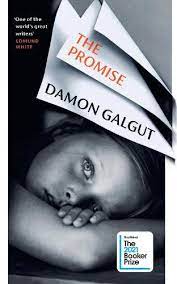


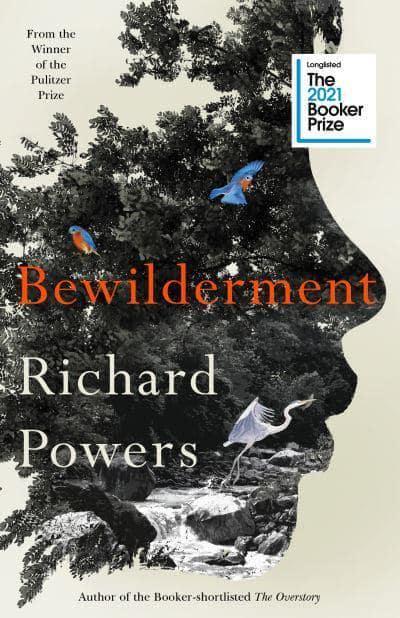


Last year, I read four of the six novels on the shortlist before the winner was announced. Of those, the standout book for me was Shuggie Bain by Douglas Stuart, so I was delighted when it won. Having read all six books on the shortlist this year, the one that I have most enjoyed has been Great Circle by Maggie Shipstead and I also think this is the standout work. Its scale, its scope, its concept, characters and the quality of the writing are superb. It simply has everything you want from a book, including a cracking story. This was also the case with Shuggie Bain, which is why I wonder whether the Booker judges will, for the second year running, award the prize to such a novel. A case could be made for all the nominees actually, but I will stick my neck out and say that if it’s not Great Circle I think it will be The Promise. Like A Passage North it explores the impact of national trauma through the lens of individual crises. I loved all the books this year, any one of them would be a worthy winner.
This is my penultimate review of this year’s Booker Prize shortlist, just one more to go before the winner is announced tomorrow night. Nadifa Mohamed is a Somali-British novelist and The Fortune Men is her third novel. She lectures in creative writing at Royal Holloway College, University of London (my very own alma mater!) and attended the University of Oxford. She was born in Hargeisa in what was then Somaliland, but moved to the UK with her parents when she was a child. She is the only British author on the shortlist.

The rest of this review contains spoilers.
The Fortune Men is a fictionalised account of a true story about the last man to be hanged in Cardiff in 1952. Mahmood Mattan was a Somali merchant seaman who came to Britain to escape poverty in his homeland and settled in Tiger Bay, Cardiff. There was already a significant immigrant population in the area, including other Somalis, but they still faced discrimination and racial abuse. For Mattan this was made worse by the fact that he married a local woman, Laura Williams, and they had three sons.
Lily Volpert was a middle-aged shopkeeper in the town. She and her sister were themselves immigrants, Jews who escaped the growing Nazi threat in mainland Europe, and they too experienced discrimination and abuse. The picture painted in this book is of a town divided, disparate communities existing alongside one another, but with violence and antipathy always beneath the surface, and often above it.
When Lily is murdered one March evening in her shop, her throat brutally slashed while her sister and niece prepared dinner in the adjoining apartment, the police immediately start looking for a black man; Lily’s young niece reported seeing a dark man in the shop doorway around the same time. The evidence upon which Mahmood is arrested and charged is flimsy and entirely circumstantial, so much so that he assumes it will be only a matter of time before he is released. To him, the arrest seems ridiculous and he is both affronted and angry. Mahmood’s pride does not help him; it seems only to further raise the heckles of the local detectives whose only interest is in securing a speedy conviction.
We learn a lot about Mahmood’s background in Somaliland, his family, his faith and his upbringing. We also learn a lot about Lily, the murder victim, and her family. Both are victims of a racist society and a corrupted justice system. The novel makes it clear that neither the victim, the accused or the community are served by the police or the courts in this case. The chapter covering the trial is interesting. It is written as if from court records and the plain reported proceedings expose the sham nature of trial. These scenes are heartbreaking and made me feel ashamed.

Mahmood and Laura were living apart at the time of the events in the novel; Mahmood lived a shady life as a gambler and petty thief and there were clearly tensions in their relationship. But the love between them and for their children comes across clearly, particularly when Mahmood is being held in prison. Ultimately, Mahmood’s defence could have been strengthened by an alibi had he not chosen to protect Laura from an uncomfortable truth. In real life, Laura fought for decades to clear her husband’s name and his conviction was finally quashed by the Court of Appeal in 1998 in the first case to be referred to it by the newly-formed Criminal Review Cases Commission.
This is a story that needed to be told, and Nadifa Mohamed has done the job powerfully and sensitively in The Fortune Men. I listened to this one on audio and it was beautifully read by Hugh Quarshie.
Highly recommended.
The fourth of my reviews of this year’s Booker shortlist – they are coming thick and fast now! This novel is by South African author Damon Galgut, a writer who I’m ashamed to say I had not heard much about before picking up this book, and certainly someone whose work I will turn to again after reading this. This is his eighth novel and the third to be shortlisted for the Booker (he was shortlisted previously for the The Good Doctor in 2003 and In A Strange Room in 2010). He has also written several plays and a collection of short stories.

The novel centres on the white South African Swart family and spans the early 1980s to contemporary times. More specifically, it charts the decline of the family and the deaths of most of its members, all of them in difficult, tragic or insalubrious circumstances. Their gradual decline, from affluent landowners with servants and status, through corruption and addiction to decay is a metaphor for the country itself, making a tottering transition from apartheid to immature democracy and majority rule and the many and various challenges that presents.
The novel begins with the death of ‘Ma’, Rachel Swart, and the family gathering at the homestead near Pretoria. Her husband Manie (‘Pa’) is grief-stricken, though it is clear that he was a weak husband and in many important ways he was neglectful of his wife. He finds a new devotion now she is dead, although the primary cause of his grief seems to be that she will be buried in the Jewish cemetery, her family having sought to reclaim her in death, and thus he will be unable to lie with her in eternity. Rachel and Manie had three children, Anton, Astrid and Amor, who is only a teenager at the time of her mother’s death and is recalled from boarding school to attend the funeral. Only Amor seems capable of acknowledging and articulating ‘the promise’, the dying wish of her mother that their lifelong servant, Salome, should be granted ownership of the property that she occupies on the family’s estate with her son Lukas. Amor’s concerns are repeatedly dismissed; the family has more important issues to grapple with they insist, but really they are in denial about the direction of travel for South Africa.
Apartheid has fallen, see, we die right next to each other now, in intimate proximity. It’s just the living part we still have to work out.
“The Promise” by Damon Galgut
There are deep tensions within the family and in this first part of the novel, the scene is set for conflicts that will re-emerge and intensify. Each part of the novel is centred around a death; the second part is the death of ‘Pa’, and the third and fourth, the deaths of Astrid and Anton, Amor’s two elder siblings. After the trauma of her mother’s death Amor becomes increasingly estranged from the family, disappointed by their continual dismissal of her efforts to ensure her mother’s promise to Salome is fulfilled, and feeling increasingly separate from them and their narrow-minded selfishness and bigotry.
But Anton can see once more inside his sister, cold and clear as the clapper of a bell, that it’s her own death she’s feeling. If it can happen to our father, it can happen to me. This nothing, this state of Not. She mourns herself in terror.
Death and the fear of it pervade this novel, yet death also stalks all of them.
The characters make this novel and the author explores each member of the Swart family deeply. He probes their motivations, their neuroses, their most-private thoughts and fantasies. They are all profoundly flawed and their ends are inevitable. In addition to the main members of the Swart family, there is a strong supporting cast, from Manie’s overbearing sister, Marina and her husband Ockie, always inappropriate, which would be laugh out loud if it were not so tragic, and Alwyn Simmers, the lacklustre, half-blind priest who manages to persuade Manie to build a church on the farm land. Plus of course there is Salome, almost-invisible, always ignored and yet who remains loyal to the family and outlives them all.
I loved this book, with the twists and turns of events that befall the family, the insightful portrayal of character and the parallels drawn between the rotten centre at the heart of the Swart family and the governing authorities of South Africa who continually let the people down.
Sometimes it’s South Africa that disappoints her. Who could have foreseen that her daddy, who everybody used to respect and fear, would have to go in front of the Truth and Reconciliation Commission and admit to doing those horrible and necessary things? The problem with this country in her opinion, is that some people just can’t let go of the past.
The thoughts of Desirée, Anton’s wife, and daughter of an apartheid-era government minister
This book is highly recommended and surely a strong contender to win.
 Julia's books