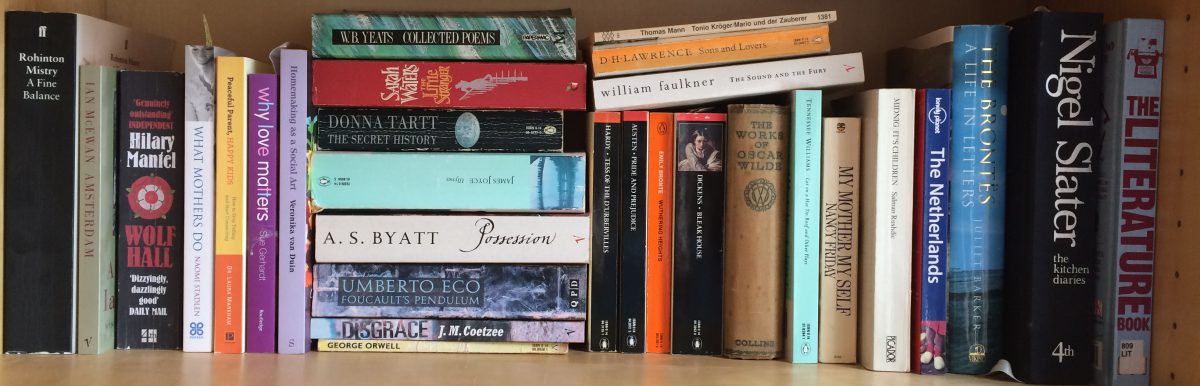

I’ve posted on here before about being a compulsive book-buyer – nothing wrong with that, you might say, there are worse habits! Despite my ‘piles’ giving me cause for consternation from time to time, because it’s another thing to feel guilty about ( I buy more books than I can hope to read, at this point in my life), I have reconciled myself to the condition. Firstly, I am happy to support authors, for the work they have done, even if it takes me a long time to get around to enjoying it. Secondly, I have three children of a certain age and, like most parents I know, am engaged in a constant struggle with small, shiny technological weapons! I consider the books that clutter (embellish?) my home to be my old-fashioned conventional arms, that will still be there when the devices run out of charge or become obsolete. There are sound reasons for having lots of books around.
That said, my March reading challenge was to take a book from my ‘to read’ pile and it made me profoundly aware of how many of my books I have not yet read, and ask myself why I still acquire more. So I decided that I would give up book-buying for Lent. I’m not religious, but I generally try and participate in Lent because I think it’s interesting to test oneself. Last year I tried giving up sugar, with mixed results, but I learnt a great deal, and I won’t be doing that again!
Unlike sugar, book-buying is a healthy thing, but it helped me look more to what I already have, instead of craving more, and within that lies a deeper message. I went into my local bookshop many times during the period of Lent (it also happens to be my coffee shop of choice), and I found it very difficult to resist the special offers, the ‘book of the month’, the attractive lifestyle books, but I did resist, and I am slightly richer for it.

It meant that I went to my local library for a book I was keen to read (East West Street by Phillippe Sands, winner of this year’s Baillie Gifford non-fiction prize) and had a long overdue browse there. (The Trafford Libraries website is amazing – you can get almost anything!) It also meant that I turned back to my ‘to read’ pile (or the TBR pile, as other book bloggers call it) for more inspiration, which was also a rewarding exercise.
I had two semi-lapses: I bought a book as a birthday gift for a friend (We: A Manifesto for Women Everywhere by Gillian Anderson and Jennifer Nadel, yes, the Gillian Anderson!) which I’m tempted to read before giving it to her belatedly. I think I can allow that one! I also bought Stay with Me by Ayobami Adebayo; that one is harder to justify but it’s this month’s read for my book club so I didn’t think I could wait until after Lent.


I am now back in full book-buying mode again, and with all the literary prizes coming up in the next few months, there will be no shortage of credit card bashing. Having detoxed for a couple of months, however, I am more than ready for it!
Are you a compulsive book-buyer? I’d love to hear your thoughts about it.
If you have enjoyed reading this post, please subscribe to my blog, by clicking on the button below or to the right, depending on your device.
 I’m off on a short holiday to the Netherlands so I’m planning to take some reading with me, of course, and have decided on another book from my
 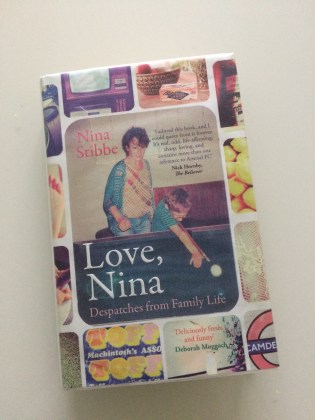 Nina is twenty when we meet her in the early 1980s. She lives with Mary-Kay Wilmers, editor of the London Review of Books, and her two young sons, Sam and Will, to whom she is a nanny. They live at 55 Gloucester Crescent NW1, an area that was also home to other literary types, among them Alan Bennett and Claire Tomalin, who also make appearances in the book, particularly ‘AB’ who is a great friend of ‘MK’.
 So, it gives me great pleasure to announce that I completed the March challenge and the pile is one volume smaller. I really enjoyed Just Kids and I’m pleased I finally got around to it. I’ve also given up book-buying for Lent so hopefully I will be better able to resist temptation in the future and tackle the unread books before buying new ones. Sometimes.
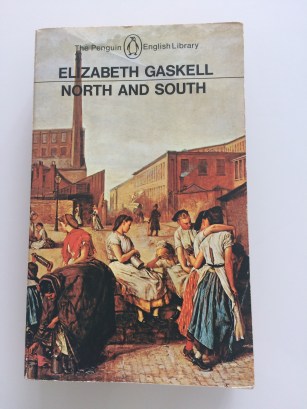 I am fortunate to live in Manchester, northern England, the setting of this book. It’s also where Gaskell spent much of her early life. You can visit
 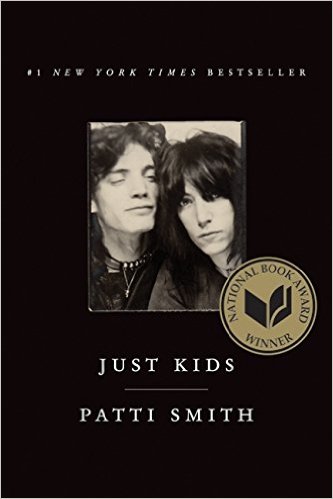 I’ve been an admirer of Patti Smith for a number of years now. I’m a bit young to have been a fan of hers when she first broke onto the music scene in the mid-1970s. I became aware of her much later when I picked up a sale copy of her debut album Horses. I was also aware of Robert Mapplethorpe, the late artist-photographer who was her lover and then close friend when they were both very young. Mapplethorpe died of AIDS in 1989 and it must have been in the 1990s that I saw an exhibition of his work in London (I had an interest in photography at the time). Later on again I learned about the connection between the two and how Patti had been, if you like, Mapplethorpe’s ‘muse’ when he was first discovering his art.
 Regular visitors to this blog will know that I am passionate about children’s literature. My children are part of the generation that grew up with Harry Potter. JK Rowling is one of my heroes, for a number of reasons, but primarily for all that she has done to get (and keep) children reading, particularly those who might otherwise not have done so. Harry Potter wasn’t the first literary character to bring wizarding and magic into children’s literary lives, however. The Snow Spider was first published 30 years ago and was a multiple award winner. It was originally published as a trilogy, but this anniversary volume has been issued as a stand-alone. I chose it for the book club I run at my daughter’s primary school.
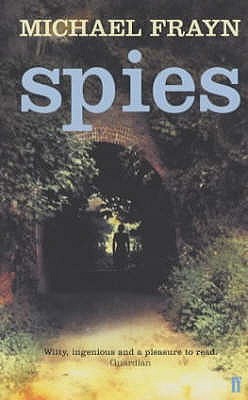 With Audible you get your first book free, so I downloaded Spies by Michael Frayn for my son, who is studying it at GCSE. I decided to listen to it myself as I had read the book when it first came out in 2002 and enjoyed it very much. It is a fantastic story and my listening experience was further enhanced by Martin Jarvis’s brilliant reading. The story is narrated by Stephen Wheatley, who, as an elderly man, revisits the suburban London cul-de-sac he lived in as a child during the Second World War. His neighbour and best friend at the time was Keith Hayward and together they spy on the households in the street and the comings and goings of the various residents. They grow increasingly suspicious about Keith’s mother’s frequent outings from the house and concoct an elaborate fantasy that she is in fact a German spy.
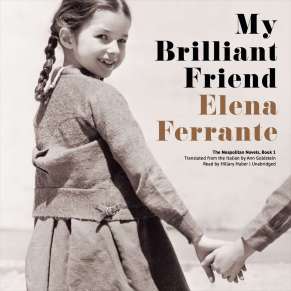 The first book I selected for myself was a long one (My Brilliant Friend by Elena Ferrante) so it took me a long time to get through (as a result I built up a few monthly credits). This book is the first in a series about two young women, Lila and Elena (I’m not sure if the book is in any sense autobiographical – the author is something of an enigma), and their intense relationship in their formative teenage years. Set in Naples in the 1950s it has the most remarkable sense of time and place and how life is changing for the young people of the city in terms of the shifting social structures and norms.
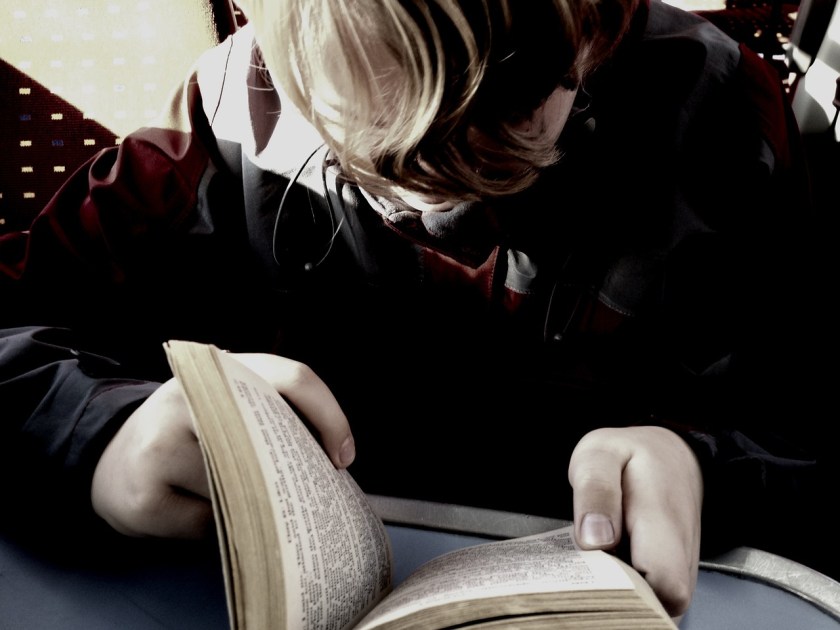 I posted a video on Facebook Live last week that got a lot of reaction. The subject was how to get your children reading and it really seemed to strike a chord. I relayed the story of my teenage son who announced to me a couple of years ago that he didn’t really like books anymore. I was, and this is not an over-statement, devastated. My son is the eldest of three and I think it is fair to say that he had the best of me! Those of you with children will perhaps empathise with my experience that I found I spent less time reading with my second and third child, simply because I had less time and opportunity to do so. My eldest was read to every day virtually from birth, until at least the age of nine or ten. And I didn’t read to them out of some sense of duty that I ought to be doing it (like taking them swimming which, as a non-swimmer until very recently, I always found stressful), it was the thing I most loved doing. So, where did I go wrong, I asked myself, and what more could I have done?


 Julia's books