 My children’s Christmas stockings would be incomplete without at least one book – whether they want one or not! – and they can be sure that this family tradition will continue even when they are older. Call it my personal crusade. I am also the book-giver for all the little people in my family; with all their senses under assault at this time of the year, I love the idea of giving something that can provide a little space and calm, and a retreat into their own imaginations.
If that’s you too, or if you would like to consider giving a book or two this Christmas, I’ve pulled together a few ideas for you. I’ve tried to cover a wide-ish age range, but by and large I have not distinguished between genders.
But first, a book for Christmas Eve…The Night Before Christmas

 This poem was first published in 1823, and is written by Clement C Moore. Despite its age, it is very accessible and is an absolute joy. We have been reading this to our kids on Christmas Eve since they were toddlers and they still look forward to it even though they are 10, 12 and 15! There are many versions available – ours is a rather quirky one (designed by William Wegman), where the models in the pictures are dogs dressed up! The pictures are key to the children’s enjoyment of it, so choose a version that is beautiful to look at and will become a family heirloom.
“‘Twas the night before Christmas when all through the house not a creature was stirring, not even a mouse.”
Pre-schoolers/Infant School
Little kids are just so wonderful to buy books for, because they are open to everything! Here are some titles that have caught my eye.
This slideshow requires JavaScript.
Zog and the Flying Doctors by Julia Donaldson & Axel Scheffler, is the latest publication from this literary super-duo. Marvellous illustrations which are instantly recognisable and a fantastic rhyming story. I recommend starting a child’s Donaldson/Scheffler collection early.
The Fox and the Star by Coralie Bickford-Smith caused a sensation when it was published last year, and rightly so. A beautiful story with the most amazing illustrations it deserves a place in every home, children or not! The hardback is a thing of beauty, but there is also now a paperback version which is a little cheaper.
Finally, two books from one of my personal favourite children’s author/illustrators, Oliver Jeffers (of How to Catch a Star fame). First, A Child of Books is a collaboration with Sam Winston, published this year. Is a reminder that CHILDREN LOVE BOOKS despite the seemingly relentless onslaught of electronics. They can both lose and find themselves in books in the most joyous way. It’s short but beautiful. And The Day the Crayons Came Home, collaboration with Drew Daywalt, is the second Crayons book revealing that forgotten, broken and lost crayons have lives too, in case you didn’t know. It’s hilarious, so adults will appreciate reading it to kids too. The book is a series of postcards to Duncan from his variously scattered crayons, reminding him they still exist and have needs. Genius!
Primary school age
There are some cracking books around at the moment. I will be buying Time Travelling with My Hamster by Ross Welford for someone, because I really want to read it myself! Recommended for 9+ it is about a 12 year old boy who travels back in time in an attempt to save his late father’s life. A bit Back to the Future-ish, maybe, with some tricky themes, but from what I have seen, all handled sensitively and with some humour. It has been shortlisted for the Costa Children’s Book Award.
This slideshow requires JavaScript.
The Snow Spider by Jenny Nimmo, was also a prize winner when it was first published 30 years ago, and a new edition has been released this year. Recommended for 9-12 years it combines myth and magic and ancient folklore, slightly gentler fantasy fiction for the post-Harry Potter generation, perhaps.
Tales from Outer Suburbia by Shaun Tan. Tan is a brilliant illustrator and writer and this book may especially suit the more reluctant reader. It has lots of pictures, a bit of a graphic novel for younger kids, and some of the pages have only one paragraph, all beautifully laid out so it’s not daunting. A wonderful book about what really goes on behind closed doors.
Secondary school age
This slideshow requires JavaScript.
The Girl of Ink and Stars by Karin Millwood Hargrave is recommended for ages 11-13 and concerns a girl, Isabella, who lives on a remote island whose inhabitants are forbidden to leave, until one of Isabella’s friends vanishes and she decides to go in search of her. There is myth and magic here, but interwoven with themes of family, friendship and liberty, more suited to the slightly older age group.
Girl Online: Going Solo by Zoe Sugg, on my pre-teen daughter’s must-have list! You’ve got to love Zoella, an icon for the generation which gets so much of its entertainment from YouTube. My girls seem obsessed! I was reading Jane Austen at their age, and whilst this may not be my first choice of reading for them, I also know it’s unwise to be judgemental about their preferences; I have blogged here before about how to keep kids reading and teens present a particular challenge, so whatever works, I say! Take a deep breath and stuff it in their stocking!
I’ll be Home for Christmas by various authors. Many teens will be developing their political and moral values as they become more aware of the world around them. It’s well known that having a sense of gratitude for the things we have can help with emotional well-being and with our teens under so much pressure from social media and advertising, this book may be a useful antidote. It’s a collection of short stories and poems (perfect for the more limited attention span!) on the theme of ‘Home’ and for every book sold one pound goes to the homelessness charity Crisis. Contributors include poet Benjamin Zephaniah, and YA authors Cat Clarke and Holly Bourne.
So, that’s the fiction sorted. Later in the week, I’ll have some non-fiction suggestions for you, and next week I’ll give you some ideas for books for grown-ups.
What books will you be giving this Christmas?

 This was one of the books I took on holiday last year, but which I didn’t manage to read. I finally got around to it when we read it in our Book Club in December. I’d been really excited about it; I love Meera Syal (Goodness Gracious Me, The Kumars at No. 42), she’s such a talent and a fantastic role model. She has written two previous novels, both published in the 1990s, neither of which I have read.

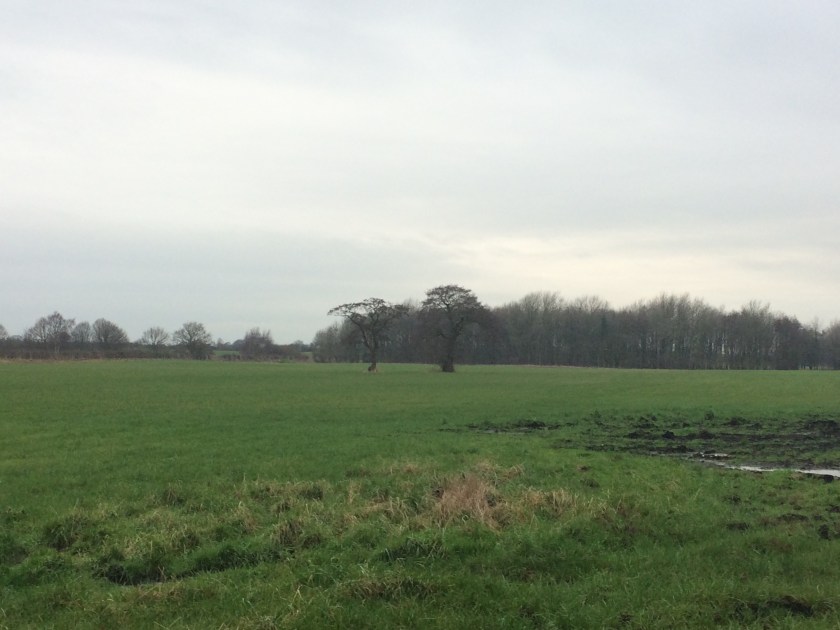 Parts of the country have been struck by a severe cold snap this last couple of days; on my walk yesterday I certainly felt the scenery was quite bleak. Yesterday was the end of Advent, twelfth night, and a natural end, for me, of a period of reflection: about the year that has gone and the one that is to come. In June last year I started this blog and I have loved posting every week about my reading and hearing from readers what you have enjoyed. In the past 12 months I have read over 30 books, the bulk of those since starting this blog, and that feels like quite an achievement. I hope to improve on that this year.
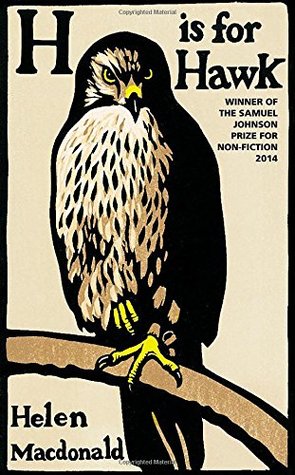 This book was a long slow read for me, but in a way that suits the type of book that it is. It is an account of bereavement. In that sense it bears reading over a long period because it covers a period of more than a year following the death of the author’s father.
 We have also completed a rather intense phase of building work in our house so I’m itching to get things back under control domestically. When thinking about this I was reminded of a book I picked up a couple of years ago called The Happiness Project by Gretchen Rubin. I’ll give you the sub-title which more or less sums up what the book is about:
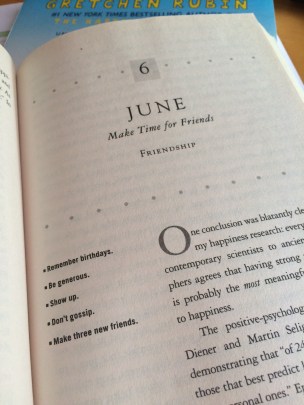 Other examples: June is a month to “Make Time for Friends” and September to “Pursue a Passion”. Her basic premise is that in order to implement change successfully you have to make things habitual. Once these habits are embedded in your lifestyle they are hard to break – for example, I manage to find 5-10 minutes each day to brush and floss my teeth, but found it really hard to find the same amount of time to drink enough water…until I got into the habit of drinking a glass at 10, 12, 2 and 4 o’clock each day. Sounds banal but it works.
 The Essex Serpent by Sarah Perry has been on my must-read list since I heard the author talking about it on BBC Woman’s Hour. (As an expatriated Essex girl, I’m also attracted to the fact that it is set in the county of my birth.) It is a historical novel set at the end of the nineteenth century and centres on the relationship between newly-widowed naturalist Cora Seaborne and local vicar William Ransome. The pair are in search of the truth about the eponymous serpent which local people believe exists and is a threat to their lives and their livelihoods. It looks like a fascinating tale and I can’t wait to read it. And the cover is gorgeous too!
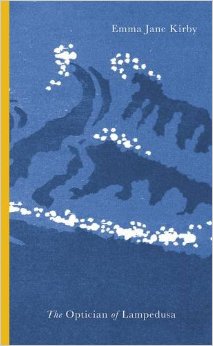 The Optician of Lampedusa by Emma Jane Kirby. Listeners to Radio 4’s PM programme will be familiar with this journalist and her reports from southern Italy on the human tragedy behind the migrant crisis. She reported extensively on the story and did a number of interviews with a local optician on the island who was deeply affected by what he witnessed. The story is told through his eyes. It’s a very affecting as well as a humbling book that will make anyone look at their children and loved ones and thank the Lord they are warm and safe.
 Bedtime Stories for Grown-Ups by Ben Holden is a wonderful anthology of classic and modern short stories, just long enough to get you off to sleep, but not so long that you have to remember what has gone before. It taps into a wonderful childhood ritual and may encourage the more reluctant adult reader who fears committing to a whole novel! It’s probably not the sort of book that most people would buy for themselves so will make a great gift.


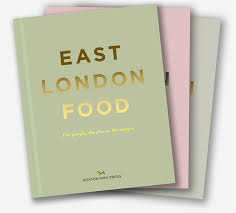 Finally, one of my most popular recent blogs was about cookery books – it seems many of you agree with me that it is an important genre. There are gazillions to choose from at Christmas, many of which, I fear, will be quite mediocre. This one caught my eye, however, East London Food: the people, the places, the recipes will be great for anyone who wants to be entertaining on trend in 2017. Independently published by Hoxton Mini Press it’s also available in three different colours to suit your gift recipient’s decor!


 Nadiya’s Bake Me A Story: Fifteen stories and recipes for children by Nadiya Hussein. My kids love baking and adore the Bake-Off and Nadiya’s victory in the competition last year was inspirational to many. Nadiya is a judge on the children’s Bake-Off on CBBC so kids will still be very familiar with her. This is a lovely book, and Nadiya is a lovely person who has qualities that naturally appeal to children. I love the idea that recipes here are combined with a quirky take on some classic fairy tales.

 The Usborne Creative Writing Book. Children are programmed to be creative, but modern life does not always allow them to exercise that muscle. Consequently, a blank page can be daunting for some children and they may need a little nudge or guidance to express their inner writer/artist/designer. There are a wide range of creative journals around just now; I bought this one because writing is the particular interest of the child I have in mind, but others are more gender-based or tailored towards different interests. They provide a great little tool for when kids say they are bored; boredom is good!
 Guinness World Records 2017: Gamer’s Edition. The Guinness World Record Book has been a staple for my son’s stocking since he was young, but at 15 he is no longer as interested as he once was. The Gamer’s Edition is a compromise, acknowledging his passion for computer gaming, whilst fulfilling his mother’s passion for the very un-tech world of books – sneaky!
 The 7 Habits of Highly Effective Teens by Sean Covey. Building on the success of his similarly titled books for adults, Covey has written a book for teenagers which encourages goal-setting, helps to build resilience and gives advice on managing relationships with family, friends, peers and authority figures. It is non-patronising and is written very much in the context of the digital age. Just don’t let them see you reading it!
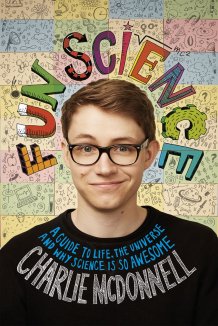 Fun Science: A guide to life, the universe and why science is so awesome by Charlie McDonnell. Charlie is a highly successful YouTuber who vlogs about science, in the linguafranca of the young people. He has over 2 million subscribers to his YouTube channel and clearly has a great passion for his subject, which is always to be admired. The look and feel of the book is a world away from a textbook, so I doubt it’s going to help much with GCSE revision, but the enthusiasm is quite infectious, which is half the battle. I could see this appealing to 11-13 year olds.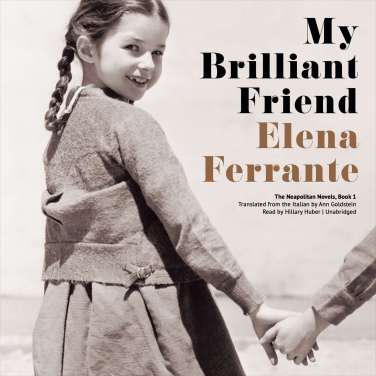

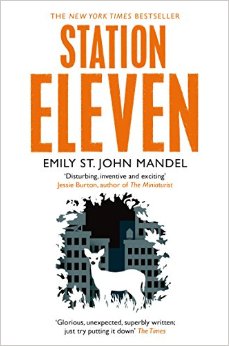 The book is set in Canada and the United States just 20 years after a catastrophic virus seemingly wipes out about 99% of humanity in a matter of days. The consequences of this are that, within a short space of time, electricity, running water and all the other basic services we take for granted, cease to exist. Vehicles are abandoned on motorways as their passengers leave their homes, to escape to…where? These people then die. Aircraft no longer fly and people are stranded pretty much wherever they happened to be at the moment the virus struck. And then mostly die. Whilst reading I recalled all those diseases in recent years that seemed to prefigure cataclysmic consequences (AIDS, Swine fever, SARS, Avian ‘flu, Ebola) fights which, for the most part, we eventually won; in this novel it is the disease (Georgian ‘flu) that prevails. And that’s scary.
 The author has quite a task managing this complexity: each of the four characters’ stories are told separately and in a non-linear way, but they are like pieces of a jigsaw gradually being pieced together until the overall picture becomes clear. The novel jumps back and forth in time and I found this quite difficult to follow. Also, for me, the drawing together of the strands was a little too contrived; it just did not seem entirely plausible that a tiny number of survivors could have such a connected past. I think this has been my problem with science-fiction generally (but perhaps I haven’t read enough); I get that you have to suspend disbelief but it’s too much for me when that means suspending credibility.
 Julia's books