So, our wonderful holiday in Portugal has come to an end. After a week of rest and relaxation on the Silver Coast (near Obidos) we headed for a few days in the country’s capital, Lisbon, a city I have been wanting to visit for years. It did not disappoint. More compact and lower key than some other European capitals it comes in at number nine on TripAdvisor’s top European destinations, ahead of the likes of arguably more famous places like Amsterdam, Venice, Florence and Edinburgh. Excluding our arrival and departure days, we were there for four full days, and there was far more to do than we could squeeze in. The high August temperatures (mostly exceeding 30 degrees Celsius during the day) and the peak time crowds made sightseeing more challenging than it might be at other times of the year, which perhaps slowed us up a bit. Other people (and those without kids) might be able to pack more in. We were not in a hurry (we are determined to go back again anyway!) and spent a lot of time just watching the world go by in cafes, bars and restaurants. Here are the top 10 things I love about Lisbon:
1. The views

Lisbon is a city of hills. There are many opportunities to get a higher perspective of the city and the surrounding area, including plenty of well signposted Miradouros (viewpoints).
2. Castelo de Sao Jorge
 This ancient fortress up on a hill is a potted Portugese history lesson. It’s fabulous and from here you can get a panoramic view of the city. You take the antique Tram 28 to reach it. Aside from the main site I recommend the tour of the ancient archaeological area (above, where they have found evidence of habitation as far back as the Iron Age) which is generally under-attended, and is fascinating because you get to see and understand exactly how people have lived in and used the fortress over the centuries.
3. Museu de Farmacia

Quirky museum by day, bar and restaurant by night with some fab cocktails (both with and without alcohol), imaginatively served. See above, #Elixir, #Oxymetazol, Vinho Verde (see 6), and we-won’t-rip-you-off-by-making-you-buy-bottled-water H2O (see 4).
4. It’s relatively good value
I grew up in London, but haven’t lived there for 20 years now. When I go back as a visitor I am struck by the hugely inflated prices compared to the rest of the country. Sadly, this is true of many major cities. Lisbon, indeed, Portugal as a whole, does not fleece its tourists. Long may it last. Food, drinks, travel, entry prices all seem reasonable, even in the light of Sterling’s weakness against the Euro.
5. The Waterfront


We took many an evening stroll along the waterfront, where there was a great buzz. The stunning Praca do Comercio (above right) looks majestically out over the River Tejo. It lies at the foot of the area of Chiado, the main shopping and commercial hub of the city.
6. Vinho Verde
The so-called Portugese ‘green wine’ is very drinkable indeed, and ridiculously cheap for the quality!
7. Cascais
Golden beaches are less than half an hour by train (for 2 Euro!) from the city centre. The husband took the two girls for the day and had a fantastic time. A great escape if the sightseeing is getting too much!
8. Fish
To see? At the amazing Oceanarium on the Expo site to the north of the city – did you know that a cuttlefish looked like this?

To eat? Fantastic fish is served everywhere, and Mr Cuttlefish is very tasty as well as cute! Cacilhas, a suburb of the city just a short hop across the river seems to be almost entirely made up of fish restaurants.
9. Pastellaria
If you have a sweet tooth, expect to be well-supplied in Portugal. From the delicious Pastel de Natas (ubiquitous small custard tarts) to Macarons (below) you will find much to choose from in the many small cafes and bakeries serving fine coffee and cakes.

10. The people
Portugese people are warm, kind, laid-back and welcoming. The language is very different to Spanish and most visitors will not have even a smattering of Portugese, I suspect (though it’s a fascinating language and I’m determined to learn a little before I go again). The natives don’t seem to mind, however, and most speak excellent English. Lisboans seem quietly proud of their city and so they should be. As such, they are delighted to help you and keen that you as a visitor should have a great experience in their city.
If you have been to Lisbon I would love to hear what your highlights were.
If you have enjoyed ths post, I would love for you to follow my blog by clicking on the ‘Follow’ button below (or to the right, depending on your device).




 I have chosen On Chesil Beach by Ian McEwan, which was published in 2007. I suspect it has been languishing unread on my shelf for a number of years! The cover is, arguably, not particularly summery, showing a young woman walking along Chesil Beach in Dorset, at what looks like dawn, but could possibly be twilight. For those of you unfamiliar with Dorset, Chesil beach is a unique natural feature of the area. Geographically, it is known, I believe, as a tombolo. It is a 20 mile stretch of shingle beach that lies in a long, fairly straight line from Abbotsbury (near the swan sanctuary) to the Isle of Portland in Dorset. Whilst it is connected to the land at each end, it sits apart from the main beach along its length, creating a kind of lagoon which is a haven for bird life.


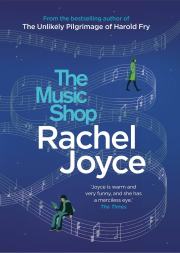 There are of course, a lot of titles published in the Spring and early Summer, marketed specifically for the holiday reading market. I’ve been perusing the titles and these are the ones that have stuck out for me. The Music Shop by Rachel Joyce, is a love story set in the 1980s about Frank, a record store owner, and Ilse, a German woman whom Frank meets when she happens to faint outside his shop. It’s had good reviews and Rachel Joyce’s earlier novel, The Unlikely Pilgrimage of Harold Fry, did very well.
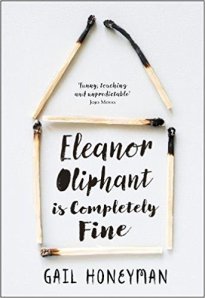 Eleanor Oliphant is Completely Fine by Gail Honeyman is on my summer reading list. Set in Glasgow, it’s about the emotional and psychological journey of a young woman from shy introvert with a dark past to living a more fulfilling and complete life through friendship and love. I’m looking forward to it.
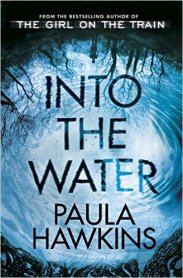 Paula Hawkins’s new novel Into the Water is everywhere, following the phenomenal success of The Girl on the Train which I’ve just finished listening to on audiobook. I had to find out what all the fuss was about! I enjoyed it, but I found most of the characters a bit irritating (that could be the influence of the actors reading, however) and, as I said, thrillers are not my favourite genre. Into the Water is another psychological thriller about a series of mysterious drownings. Like The Girl on the Train, I think, it’s as much about the internal dramas experienced by the characters as it is about ‘events’ so I’m sure it’s gripping.
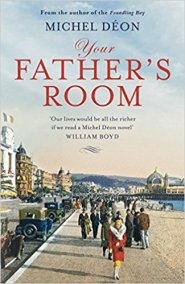 Finally, a little-known book that has caught my eye is Your Father’s Room by Michel Deon. Set in 1920s Paris and Monte Carlo (perfect if you’re off to France for your hols!) it is a fictionalised memoir based on the author’s own life. Looking back on his childhood in an unconventional bohemian family during the interwar period, the elderly narrator recounts how the events of his early life, including family tragedy, affected him growing up. I really need to read this; I’m writing a book myself partly based on my grandmother’s life in East London in the same period so I think I could learn a lot from how the author approaches this genre.
 I am an admirer of Gillian Anderson, not since her X-Files days, but since watching The Fall, the hugely popular television drama about a misogynistic and brutal serial killer in Northern Ireland, in which Anderson played the beautiful, enigmatic, but also rather damaged DSI Stella Gibson. The drama ran for three series between 2013-2016 and I was hooked. (It also starred Jamie Dornan, which helped). Jennifer Nadel, Anderson’s co-author, is a former journalist, writer and activist. Both women are open about their experiences of depression and poor self-esteem, despite their hugely successful careers and enviable lifestyles, and this book is their account of recovery and a ‘guidebook’ for other women who may be suffering from mental health issues.
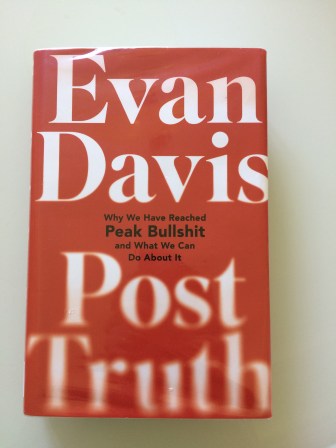 This is actually my July reading challenge book, which was to borrow something from the library. I read it in virtually one sitting on a train journey to London. For a weighty non-fiction book it’s very readable and the writing is resonant of Evan’s relaxed and articulate presenting style. There were parts where I could almost hear him reading it out. There are many references to the help and support he has had in the acknowledgements, so I’m sure he had plenty of research assistance (how could he not – with Newsnight, The Bottom Line and Dragon’s Den he is a very busy fellow!), but the authorial voice is definitely authentic, and I would bet it isn’t ghost-written, which just makes me love him all the more!
 I fell in love with Jane Austen in my teens, and I have never fallen out of love with her. The first book I read was Pride and Prejudice, and I remember I much preferred this colourful collection of sisters to Louisa May Alcott’s in Little Women! But it wasn’t until I read Emma for my English Literature A level that I really ‘got’ Jane Austen and I was blown away. Even now when I read Austen I still see her writing as impossibly brilliant. And then when you think about the life she led, her modest rural upbringing, her insight into human character is barely plausible. After Emma I quickly gobbled up all of Austen’s work (sadly, there is too little of it) and my favourite is probably Mansfield Park.
 Children these days have so many distractions which can take them away from reading; they seem to be so busy with out of school activities, have more homework than ever before and, of course, there are the digital distractions…don’t even get me started. But reading is such an important activity for them:
