‘East West Street’ by Philippe Sands

I’m going a bit highbrow this week – any lawyers in the room? I’m not a big reader of non-fiction, so a few months ago I set myself the task of reading a couple of books from the shortlist of the Baillie Gifford Prize, one of the most prestigious non-fiction awards in the world. I read Negroland by Margo Jefferson, which I really enjoyed and reviewed here back in February. East West Street actually won the prize; I enjoyed this a little less than Negroland, I have to say, but it is a remarkable work and it wasn’t what I was expecting.

East West Street img

These days we take for granted the terms ‘genocide’ and ‘crimes against humanity’; they are used fairly frequently, especially since the Balkan war in the 1990s, and fairly interchangeably, it seems to me. But did you know that these were only established as legal terms at the Nuremberg trials after the Second World War? The gravity and scale of the crimes committed by the Nazis is largely undisputed, but when it came to actually bringing individuals to justice at the court of law in Nuremberg in the post-war atmosphere, charges had to be specified and evidence had to be considered. In many ways, it seems to me, it was a piece of theatre, but the legal minds at the time were severely exercised. And I guess if you are on the winning side, both militarily and morally, the pressure to maintain the moral high-ground is immense. The victors had to be seen to be following a path of rectitude and adherence to international standards of law.

“Jackson [presiding judge at the Nuremberg trial] crafted each word with care, signalling its significance. He spoke of the victors’ generosity and the responsibility of the vanquished, of the calculated, malignant, devastating wrongs that were to be condemned and punished. Civilization would not tolerate their being ignored, and they must not be repeated. ‘That four great nations, flushed with victory and stung with injury, stay the hand of vengenace and voluntarily submit their captive enemies to the judgement of the law is one of the most significant tributes that Power has ever paid to reason.'”

(p.288, quote from Judge Robert H. Jackson, opening the Nuremberg trial)

This book provides a historical account of the intellectual tussle between two of the finest legal minds of the time: Hersch Lauterpacht and Rafael Lemkin. Lauterpacht fought for the term ‘crimes against humanity’ whereas Lemkin wanted ‘genocide’. To most of us the differences between the two might seem inconsequential, but the differences are in fact, as is discussed in the book, fundamental to the basis of international law. This is not the place for me to rehearse the arguments (even if I could!). I did struggle with the legal minutiae of the book, though I was able to grasp the broad concepts and it certainly made me think about an issue which I can honestly say I have never thought about before. And it was interesting, honestly!

So far I have probably made the book seem dry and dull to the average reader (though perhaps sexy to any of you legal eagles!), but prizes are not won by being dry and uninteresting and the author is far more successful than that; by far the more engaging aspects of this book are the human stories. East West Street is a thoroughfare in the city of Lviv, in modern day Ukraine, but which has previously been part of the Austro-Hungarian Empire and of Poland. It is also a town with which both Lauterpacht and Lemkin were linked. Lviv plays a central role in the book because it provides a snapshot of the Nazis’ ambitions and methods.

The heart of this book, however, is the author’s own quest to find out about his grandparents, Leon and Malke Buchholz, a young Jewish couple from Lviv who were forced to leave their home with their baby daughter Ruth, the author’s mother. Leon and Malke have revealed little about their early life and the author has many unanswered questions. Now dead, he sets about researching his grandfather’s early life, the circumstances of his marriage and how it was he came to be in England with Malke and Ruth. The author becomes a detective investigating his own family history and confronts some difficult truths, as is often the case. He conducts this search alongside his research into the legal basis of the Nuremberg trials and finds links and parallels.

The book is broken up into distinct parts: for example, the opening chapter is about Leon and his early life and then there are similar chapters on Lauterpacht and Lemkin. These were the chapters I found most engaging and most moving. Towards the end is a very long chapter about Nuremberg itself which was fascinating as it was not something I knew very much about before. Some parts of the book were for me overly detailed and I skimmed through some of these.

Unquestionably, however, there lies at the heart of this book a deep and terrible tragedy about which it is always worth being reminded: how prejudice, ideology, lies and propaganda, stupefied a nation, and, combined with power and determination, saw the murder of millions of people and displaced or traumatised many millions more and the consequences are still being felt down the generations today.

This is a powerful book which I recommend if you have an interest in history or the law, or if you just like to read about uncovering family stories. It looks daunting but it’s actually a quicker read than you might think.

Have you read any non-fiction books that recently that you recommend?

If you have enjoyed this post and would like to follow my blog please subscribe by clicking on the button below or to the right, depending on your device.


‘Holding’ by Graham Norton

You’ve got to admire Graham Norton; he started out as a stand-up comic, first came to prominence in the classic TV comedy show Father Ted, making a handful of appearances as one of the many random priests on Craggy Island, and has since built a very successful career as a broadcaster on both radio and television, mostly in the UK. He has previously written three autobiographical books, but Holding is his first novel. People like Graham Norton are so annoying; they are really good at their chosen vocation, then they write a book…and they’re really good at that too! Most of us are just trying to be good at the one thing!


I do love Graham Norton, though, and this book does not disappoint. I listened to the Audiobook, which is narrated brilliantly by Graham himself, and I am certain this added to my enjoyment. He performs each role with such distinctiveness and brings the characters to life. The plot of the story is a straightforward whodunnit, but it has twists and turns which Norton handles deftly. The story is set in the seemingly sleepy town of Duneen in County Cork, Ireland, but beneath the surface, there stir unaccountable passions which have been and continue to be suppressed by culture and tradition.

Our central character is Sergeant PJ Collins, the local police officer, who is overweight, unmarried, and carries about him the burden of knowing that his life has been little lived. The small-town torpor is completely shaken up, however, by the discovery of human remains in a field which is being developed for a new housing estate. It is widely suspected to be the body of Tommy Burke, a young man who disappeared many years earlier in mysterious circumstances. Suspicions are immediately thrown upon two local women with whom he had romantic links: Brid Riordan, to whom he was engaged, but only, we learn, because she was set to inherit a farm when his own family’s fortunes were somewhat in decline. Brid is now middle-aged, unhappily married and an alcoholic. The other main suspect is Evelyn Ross, a spinster who lives with her two unmarried sisters in one of the largest houses in the town, who was Tommy’s true love at the time, but the relationship was largely unrequited.

Thus the scene is set and the plot thereafter takes on some impressively imaginative twists and turns. Graham Norton’s great talent, however, is clearly for character and he introduces us to a wide cast of individuals, from the swaggering and confident, but equally unfulfilled, Detective Linus Dunne from Cork (brought in to investigate the homicide), who initially patronises and sidelines PJ before gradually accepting and empathising with him, to the meek and mild Mrs Meaney, PJ’s housekeeper, who initially comes across as something of a busybody but who takes on greater depth as the story progresses. Listening to Graham Norton’s narration gave me an even more powerful sense of the cast of characters, I think, than if I had read the book, and, I repeat, he does it brilliantly!

The book is ultimately about what lies beneath, quite literally, in the body that is discovered on the building site, but also in the characters, the lives that go on behind closed doors, until a catastrophe comes along and forces them out into the open. It is also very much about the upending of old traditions (not all good), in a post-Celtic tiger, post-credit crunch world and its being replaced by new ways of being – not all of which are good either.

I loved this book – it had me driving slowly and sitting outside my house in the car, just so I could listen to the end of a chapter! It’s quite an accomplishment for a debut novel. Highly recommended.

Have you read this book? I’d love to hear your views.

If you have enjoyed reading this blog, you can follow me by clicking on the subscribe button below or to the right, depending on your device.

‘In the Dutch Mountains’ by Cees Nooteboom

As a mother of three, I find it is always a challenge to get back into the swing of things after a school holiday. I am self-employed and work from home so I tend to take the holidays ‘off’ (insofar as one is ever ‘off’ as a parent!), but it always seems to take me a week or so to restore the term-time order of things and get back into my rhythm, including my reading rhythm. The dynamic at home has also been affected by the fact that my eldest is deep in GCSE revision and now on study leave, wanting feeding during the day and everything!

We took a short family holiday to the Netherlands over Easter, a country we know well and have visited annually for many years now. We spend our time either in Amsterdam (a fab city for kids, by the way) or in the far south of the country in Zeeland, a fascinating area for which I have a very deep affection. I’m a bit reluctant to plug it because it’s authentic and unspoilt, but we love the cycling, the beaches, the space, the calm, the beautiful and historic Dutch and Belgian towns and the warm welcome we receive each time we go there.

Despite my love of Holland, its art and architecture and its people, I am ashamed to say that I know very little about its literature, so on this trip I decided to take with me a book called In the Dutch Mountains by Cees Nooteboom. He is one of the giants of not only the Dutch but also the wider European literary tradition. I picked up this book at a secondhand stall in a market in Dublin, so this particular copy is well-travelled!

Since starting this blog almost a year ago my reading habits have changed; I now find I am reading much more newly-published work than I have ever done before, which is great, but that has been at the expense of my reading of the classics or other contemporary fiction from recent years which I have wanted to read. There really are only so many hours in a day, after all! So, it felt lovely to be picking up a novel that was first published in 1984 and is widely considered to be a modern classic.

2017-04-26 13.45.25What is so immediately intriguing about the title of the novel, of course, is that Holland is very, very flat. But In the Dutch Mountains imagines a world where the Netherlands extends much further south of its modern borders to northern Spain and the Pyrenees (hence the Dutch mountains). The narrator is himself a Spaniard, a civil servant who not only relates the story, but also philosophises on the processes of writing and story-telling: a story within a story. The main characters in the tale are Kai and Lucia, a slightly other-worldly circus couple, remarkable for their physical perfection, who are relieved of their jobs (because times have moved on and audience tastes have changed) and find themsleves travelling south to look for work. Kai is kidnapped and Lucia sets out on a journey to find him, accompanied by an old woman she meets on the way who agrees to drive her to find her lover.

The book is a vivid re-telling and reinterpretation of an iconic European fairy-tale, The Ice Queen, and explores the boundaries between myth and reality, but as a 21st century reader the strongest themes that came out for me were that of migration (for work), and what it means to be one nationality or another. The author contrasts the orderly, tidy north (what we now know as Holland) and the more chaotic, but freer south. He himself is Dutch but his narrator is part of the Spanish establishment (an inspector of roads), who happens to be a part-time novelist and philosopher. Alfonso, the narrator, is writing in the quiet of a school, empty of children who are on their summer holiday, a middle-aged adult sitting at a diminutive desk and chair. Thus the novel sets up a whole series of contradictions which invite us to challenge our assumptions and expectations.

This is a short novel, but one which merits reading slowly and deeply, and I will probably re-read it at some point. It won the 1993 European Prize for Literature.  It was a curious read and I can’t exactly say I loved it, but I did find it fascinating, and it wasn’t at all what I expected. I think it’s always good to push your reading boundaries and as I read this book I certainly found myself drawn into a very different literary tradition than the one I have become used to in recent years. As a citizen of a nation that has expressed its intention to leave the European Union I feel strongly that European literature has a great deal to offer us in terms of enhancing our understanding of and empathy with our near neighbours, and I intend to read more of it in the future.

What European novels have you read? Do you think they are different in style and tone to English literature?

If you have enjoyed reading this blog you can subscribe to follow me by clicking on the link below or to the right, depending on your device. 

Easter holiday reading suggestions

2017-03-30-11-55-53.jpgI’m off on a short holiday to the Netherlands so I’m planning to take some reading with me, of course, and have decided on another book from my ‘to read’ pile (I’m in the groove now!) called In the Dutch Mountains by Cees Nooteboom. It looks delightfully weird and I love the Dutch so am very excited to be reading it at last. I’m also taking Roxane Gray’s Difficult Women, a collection of short stories which was a gift from a friend. Looking forward to that and hoping I can get some tips for my own short story writing. I’ll also take North and South which I’m re-reading this month as part of my 2017 reading challenge.

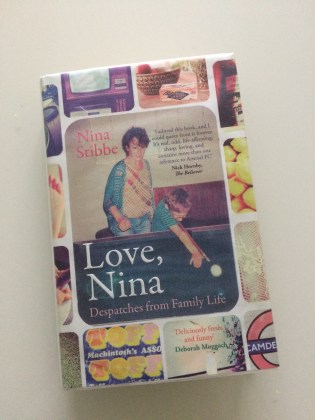
If you’re looking for ideas yourself and would like something light and amusing which you can dip in and out of, you could try Love, Nina: Despatches from Family Life by Nina Stibbe. I mentioned this book in a blog a few weeks ago; I read it whilst on a ‘break’ from a book I was finding quite heavygoing (Do Not Say We Have Nothing). It was the perfect antidote: a straightforward jolly read. It’s a series of letters from Nina, to her sister Victoria in Leicestershire and therefore readable in bitesize chunks.

Love Nina imgNina is twenty when we meet her in the early 1980s. She lives with Mary-Kay Wilmers, editor of the London Review of Books, and her two young sons, Sam and Will, to whom she is a nanny. They live at 55 Gloucester Crescent NW1, an area that was also home to other literary types, among them Alan Bennett and Claire Tomalin, who also make appearances in the book, particularly ‘AB’ who is a great friend of ‘MK’.

Nina’s letters home detail the events of daily life in the household, and are brought alive by her pithy observations on the quirkiness of her employer and the neighbours. It was particularly nice to read this after watching Alan Bennett’s The Lady in the Van over Christmas, which was also set in Gloucester Crescent and features many of the same people. Nina’s affection for the family shines through and she writes with great fondness of Sam and Will, her young charges. MK is idiosyncratic, but charming, and Alan Bennett leaps off the page. The personalities of the individuals come across strongly; Nina clearly has a talent for this since much of what we learn about them is through the conversations she reproduces in the letters as extracts of dialogue. She manages to pick out the little details or the nuances and word choices that reveal so much.

The letters cover a couple of years, and at the end of the book Nina is part way through her degree in English literature at Thames Polytechnic. By this stage you can see she herself is becoming a more accomplished chronicler, although the later letters, many of which are about her university friends, I found less endearing than the earlier ones.

Nina, now in her 50s, eventually became a writer, and had two children with Nunney, one of the other inhabitants of Gloucester Crescent (though they got together much later), and has subsequently published two novels in addition to this memoir: Man at the Helm and Paradise Lodge, which I’d be interested in reading. Love, Nina was also adapted for television by Nick Hornby, and starred Helena Bonham Carter. I think that could be fun to watch.

So, a good little read, perfect if you’re going away this Easter holiday.

What are you reading this Spring?

If you have enjoyed this post I would love for you to subscribe to my blog by clicking on the follow button below or to the right, depending on your device.

My ‘to read’ pile is shrinking!

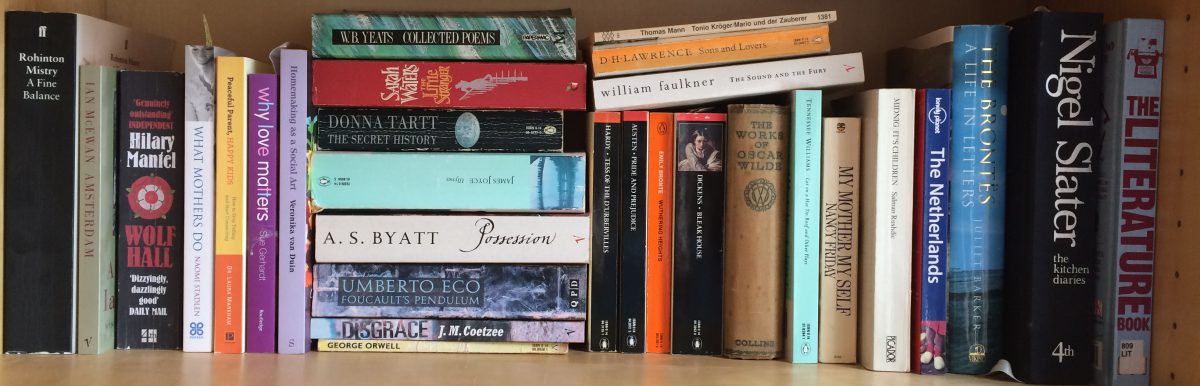
Last week I posted a review on this blog of Patti Smith’s Just Kids, which I’d read as part of my 2017 reading challenge. The challenge for March was to select something from my ever-growing ‘to-read’ pile. I know you have one too! It felt very satisfying to finally get around to something that I’ve been wanting to read for some time but which never seemed to rise to the top of the pile. My ‘to read’ pile bothers me a lot, so much so that I have many “‘to read” piles’ around the house. I’m a compulsive book-buyer so I feel guilty about the money I spend (although it has to be said a great many of the books I buy on impulse are from charity shops or waiting rooms) and about the space taken up, especially since I read Marie Kondo’s The Life-Changing Magic of Tidying! Clutter, to me, feels like a powerful signal of under-achievement. I bet my tidy, high-achieving friends don’t have large ‘to read’ piles! The psychology of the ‘to read’ pile is clearly very deep.

2017-03-30-12-10-56.jpgSo, it gives me great pleasure to announce that I completed the March challenge and the pile is one volume smaller. I really enjoyed Just Kids and I’m pleased I finally got around to it. I’ve also given up book-buying for Lent so hopefully I will be better able to resist temptation in the future and tackle the unread books before buying new ones. Sometimes.

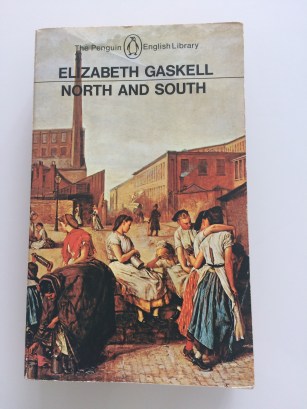
April’s challenge is to re-read a book I have enjoyed in the past. I’m not a big re-reader and yet I know this can be hugely rewarding, especially if you’re in a quiz or something and the name of the central character from that really famous book you read years ago is on the tip of your tongue! My husband is a good re-reader and he finds that he is able to get something new out of a book each time he goes back to it. I’ve decided to re-read Elizabeth Gaskell’s North and South. I read this many years ago, whilst studying English Literature at university and I’m afraid I remember very little about it, but I do know that I enjoyed it.

2017-03-30 11.25.47I am fortunate to live in Manchester, northern England, the setting of this book. It’s also where Gaskell spent much of her early life. You can visit Gaskell’s house in Plymouth Grove, Ardwick (and then stroll over to the Pankhurst Centre nestled in amongst the buildings of the Manchester Royal Infirmary) which I did last year. It’s still a work in progress, so well worth supporting, but has a fascinating collection of her possessions and is set out as it would have been when she and her family lived there. I moved to Manchester relatively recently and have become fascinated by the city’s history and culture. It will be interesting to read the book now, with that new knowledge and awareness.

My copy of North and South is a slim little thing, perfectly innocuous-looking, but the text is tiny and it has over 500 pages! I’m looking forward to immersing myself in 19th century northern industrial poverty. I also note that the Introduction to my edition is written by one of my former Professors, so it will be a trip down Memory Lane altogether.

Did you start a reading challenge this year? If so, how are you getting on?

If you have enjoyed this post, I would be delighted if you would follow my blog by clicking on the subscribe button, below or to the right, depending on your device.

Just Kids

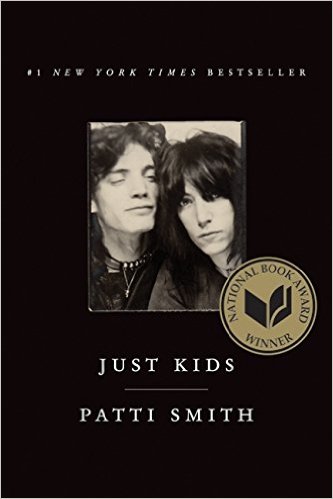
JUst kids imgI’ve been an admirer of Patti Smith for a number of years now. I’m a bit young to have been a fan of hers when she first broke onto the music scene in the mid-1970s. I became aware of her much later when I picked up a sale copy of her debut album Horses. I was also aware of Robert Mapplethorpe, the late artist-photographer who was her lover and then close friend when they were both very young. Mapplethorpe died of AIDS in 1989 and it must have been in the 1990s that I saw an exhibition of his work in London (I had an interest in photography at the time). Later on again I learned about the connection between the two and how Patti had been, if you like, Mapplethorpe’s ‘muse’ when he was first discovering his art.

I’d known about this book for a while, having heard Patti Smith talking about it in a radio interview, but I picked this up, ironically, in New York, when I was there on holiday last summer, from the famous Strand Bookstore. I’d hoped to read it whilst there (and perhaps visit some of the places she mentions in the book) but that didn’t happen. I decided to read it as part of my 2017 reading challenge; March’s challenge is to read something from my ‘to read’ pile, which, as I have written here recently, is substantial! And it has been a real pleasure to read.

The book is an account of her and Mapplethorpe’s early artistic development. They found each other by accident in New York City in the late 1960s when they had both arrived there in search of a more meaningful life. Their early life together was marked by poverty and the struggle to be recognised. In many ways their life was pretty ordinary, were it not for all the incredible people they meet and hang out with – Andy Warhol, Jimi Hendrix, William Burroughs – and if you are familiar with New York City, particularly the lower Manhattan and Greenwich Village areas, you will enjoy the mentions of different places, particularly the infamous Chelsea Hotel where many a star has risen and fallen.

But the book is so much more than that; it is an account of how artists find their voice and their medium, but it is also a love story. Patti writes tenderly and affectionately of her love for Mapplethorpe and the profound mutual respect that lay at the heart of their relationship. You don’t need to be admirers of them to appreciate this. It is also an account of how love changes; Mapplethorpe loved Patti deeply but he eventually came out as homosexual. He had been brought up a Roman Catholic and this was a long and difficult process for him. Patti later married a musician Fred Smith, and they lived a happy humdrum family life together in Michigan with their children until he died at the age of 45 in 1994. To that extent the book is also about what happens when love moves on, and how former lovers can evolve their relationship and grow as a result.

I thoroughly enjoyed reading this book, particularly the escape into bohemian New York in the 1970s. Some books you read of this nature can make you feel your own life is rather dull and insignificant, but at the centre of this book is not glamour and sensationalism, but the day to day human love that we all need and hopefully most of us experience at some point in our lives. To that extent it is a story we could all identify with.

A nice book for kids for the holidays

xmas-1-2Regular visitors to this blog will know that I am passionate about children’s literature. My children are part of the generation that grew up with Harry Potter. JK Rowling is one of my heroes, for a number of reasons, but primarily for all that she has done to get (and keep) children reading, particularly those who might otherwise not have done so. Harry Potter wasn’t the first literary character to bring wizarding and magic into children’s literary lives, however. The Snow Spider was first published 30 years ago and was a multiple award winner. It was originally published as a trilogy, but this anniversary volume has been issued as a stand-alone. I chose it for the book club I run at my daughter’s primary school.
It’s set in Gwynedd, rural Wales, where our central character, nine year-old Gwyn Davies, lives on a farm with his parents. It starts on the morning of Gwyn’s birthday with his grandmother, the eccentric Nain, giving him five gifts: a brooch, a broken wooden horse, a yellow scarf, a piece of seaweed and a tin whistle. It turns out that these rather unusual tokens are in fact a kind of test, designed to determine whether Gwyn has inherited the magical powers that run in the family line but which have now missed several generations.

We learn that Gwyn’s birthday is usually a quiet and fairly sombre affair because it is the anniversary of his elder sister’s disappearance, four years earlier. Bethan went out in search of a pet lamb belonging to her little brother, after he begged her to do so, and never returned. Gwyn’s father blames Gwyn for his beloved daughter’s disappearance and has since become a cold and distant figure in his son’s life.

Gwyn soon finds that he does indeed possess certain magical powers and each of the gifts given to him by Nain has an individual significance, a power he must explore and learn about. The first sign he receives is when the brooch becomes a delicate and beautiful silver spider, Arianwen. The spider becomes his guide and companion throughout the rest of the book and on his journey of self-discovery. The broken horse unleashes some malevolent forces that Gwyn must learn to control – this is a very high-action chapter! The yellow scarf, which had belonged to his sister and was the only sign of her left on the hills after she vanished, attracts Bethan back into the family’s life, but in an abstract way; Eirlys is introduced about halfway through the book when she arrives at Gwyn’s school, apparently an orphan. She lives with a family in the village, but after becoming trapped in a storm finds herself spending some days with Gwyn and his family. Eirlys clearly reminds Gwyn’s father of his missing daughter and her presence brings about a softening in his relationship with his son.

The children in the book club had mixed feelings about The Snow Spider. Some did not like it at all – one even abandoned it! For others I think it was perhaps rather gentler than their usual reading, with not quite enough “action”. Compared to many of the books published today it has a certain innocence that I confess made me rather nostalgic! I loved the sense of place; rural Wales, with all its traditions of myth and magic is beautifully evoked, and the characters are well-drawn and familiar.

The recommended age group for this book is 8-12 years, but I feel it would probably work best for children at the younger end of that spectrum, and it’s a lovely one to read aloud together; some of the keener children in the book club raced through it (it’s quite short) and I think this may have compromised their enjoyment. I think it also helps to have an adult to discuss the book with as it deals with some challenging themes, not least the disappearance of a child. Gwyn’s relationship with his parents, particularly his father, is quite a tricky issue, as is the question of acceptance by peers (once Gwyn’s ‘visions’ become playground gossip, he is teased by some of the other children). Also, Gwyn’s discovery of his magic after his 9th birthday is, I think a metaphor for puberty and adolescence, which may resonate with children approaching double figures.

It is a lovely book that I think quieter, perhaps more thoughtful children will enjoy, or children who like to read with an adult. But it isn’t Harry Potter!

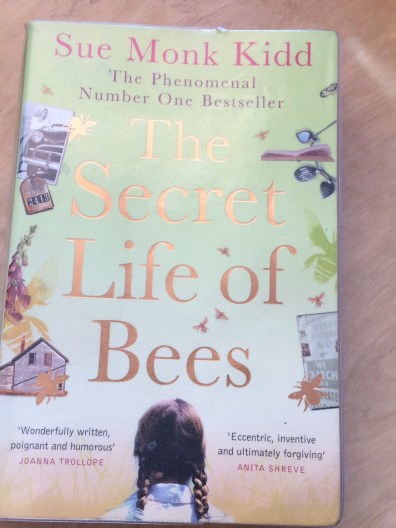
Who knew about ‘The Secret Life of Bees’?

2017-03-08 12.29.54

When I put it out on social media a couple of weeks ago that I was about to start reading this book, I had a number of comments back from people telling me how much they had enjoyed it, so I started with high expectations. I was not disappointed. I was only puzzled at how I’d missed it first time around, but then it was published in 2001, the year my first child was born, which explains a lot! I was totally absorbed by this book, as were my fellow book club members – I read it very quickly because it was so hard to put down. It is a very female book in the sense that it is full of strong women, so perfect to be reading around the time of International Women’s Day.

The central character is fourteen year-old Lily. When we first meet her she is living a lonely, loveless existence on her father’s peach farm; we learn that her mother died when she was four years old in a mysterious accident with a gun which seems to have involved Lily pulling the trigger. Lily lives with her father, whom she calls T. Ray, an indication of the distance and lack of filial affection in their relationship. It’s worse than that though; T.Ray’s treatment of his daughter is borderline abusive. He is emotionally and physically cruel, administering harsh physical treatment for what he perceives to be her misdemeanours, and exploiting her labour. Lily’s only friend is the black maid Rosaleen.

Lily longs for her dead mother and craves the affection she feels sure her mother would have given her. She spends time imagining what her mother was like and cherishes the small trinkets which serve as her only memories. One of these trinkets is a picture of a black Madonna with the words ‘Tiburon S.C.’ written on the back. It transpires that Tiburon is another town in South Carolina, some distance from Sylvan where Lily lives.

The novel is set in the Summer of 1964, when the Civil Rights Act had just been made law, giving people of colour the right to vote throughout the United States. Whilst racial equality had been affirmed in law, it was not yet fully accepted in the wider society. Rosaleen walks into town to register to vote and is involved in an incident with some local thugs. She is beaten up by these men, but finds herself arrested and put in jail. Her injuries are so severe that she is sent to hospital. For Lily this is the final straw and she sees this as an opportunity for them both to escape their repressed life. She gets Rosaleen out of the hospital from under the nose of the guard who is meant to be watching her, and the two women make their way to Tiburon by hitchhiking and walking.

Lily has no plan beyond getting to Tiburon and does not even know what she intends to do or what she expects to find when she gets there, but there is no doubt she feels drawn there and, in reality has no other option. Through a series of chance encounters, Lily and Rosaleen find themselves at ‘the pink house’, the home of the calendar sisters, August, June and May, three black women who run a cottage industry from their home, producing honey. The label on their jars has a picture of the same black Madonna that Lily has among her mother’s possessions. It turns out that the sisters also belong to a group called The Daughters of Mary, a small religious coterie which worships Mary, mother of Jesus (manifested in the black Madonna, of whom they also have a statue in their home), as the source of divine love and power.

The sisters take in Lily and Rosaleen and they spend the summer with them, working for their board and lodging. Over the weeks and months, Lily begins to uncover some truths about her mother and her own story, which are not easy for her to bear. Lily also learns what it is to be loved as her relationship with one of the sisters, August, develops, and she is accepted by the other sisters and their companions.

This is a wonderfully written book with a powerful sense of time and place. The setting, hot, sultry South Carolina is beautifully conveyed. It is not a light book; there are some dark and sinister undertones here with the racial violence, child cruelty and social injustice, but it is ultimately a hopeful and uplifting book. Through Lily, Rosaleen and the sisters, truth and goodness ultimately prevail.

I loved this and would recommend it highly. Great bedtime reading, great holiday reading, great anytime reading, this is storytelling at its best.

Books for Spring

What do you think of when you think of Spring? I think of birth, renewal, reinvigoration, green shoots, hope, beginnings, fresh air, clean, the colour yellow, eggs, baby animals and life. There is a little more light each day, and it’s getting ever so slightly warmer. I want to be outdoors and I want to let the outside in by throwing open the windows. It’s also a time when people start to think about putting into effect changes they’d like in their lives, whether that be losing weight, decluttering or pursuing a new venture, because it’s easier to motivate yourself when the sun is shining and you have more energy.

With all those things in mind, I have come up with a list of books for Spring, a mix of fiction and non-fiction, hopefully covering a broad range of topics and interests.+

This slideshow requires JavaScript.

  1. The Life Changing Magic of Tidying by Marie Kondo – for those of you determined to do some spring decluttering. I read it last year and you can read my review here. It is a great talking point even if you don’t follow the Kon-Mari method for clearing your home and unblocking your life to the letter.
  2. My Mother My Self by Nancy Friday – 26th March is Mothering Sunday in the UK and I think this book is essential reading for all women. I learned so much about myself when I first read this some years ago, reflected a great deal on my mother and my relationship with her, and thought about the kind of mother I wish to be to my daughters.It covers all sorts of issues from how we talk about our bodies, sex,
  3. We: A Manifesto for Women Everywhere by Gillian Anderson and Jennifer Nadel – I am a huge fan of Gillian Anderson and I am dying to read this book. She is a very interesting and uncompromising woman who is open about her lifelong struggles with mental health. Jennifer Nadel is apparently a writer friend of hers.
  4. Gut: the inside story of our body’s most under-rated organ by Giulia Enders – the microbiome is getting a lot of publicity at the moment as we realise how little we have still to learn about the body and the influences on our health prognosis. This is a fascinating book, not just a handbook on how you can improve your overall health through what you eat, but, for those of us who like our advice to come backed up by a little more evidence, has plenty of science in it too.
  5. Exit West by Mohsin Hamid – published just last week, I’m very keen to read this. Globalisation and migration will be the defining issues of our time, I suspect, and this book is a novel about two young lovers who leave their home in the ‘east’, as civil war is about to break out, and plan their escape to an idealised ‘west’. The seemingly impossible clash between the desire of those who want a better life and those who are anxious about the pace of change is explored.
  6. Stay With Me by Ayobami Adebayo – Chimamanda Nogozi Adiche, possibly one of Nigeria’s finest literary figures, has been in the news a lot recently, as her views and publications on feminism have been getting some profile. Her work has certainly roused my interest in African women writers (I’ll be writing more about this in a future blog) and this novel by Adebayo stood out for me when the longlist for the Baileys Women’s Prize for Fiction was announced last week. It is the story of a young woman whose husband and family are desperate for her to have a child, yet she seems unable to conceive. It is set in 1980s Nigeria and explores the social and cultural pressures faced by Yejide, the main character.
  7. Tweet of the Day: a year of Britain’s birds by Brett Westwood and Stephen Moss – I have a bit of a phobia about birds, but I love them and am fascinated by them at the same time. This is a really gorgeous book that I want to look at when I see all the young birds landing on my neighbour’s bird feeder (we have a cat, so a bird feeder is not an option for us!)
  8. A Year in the Life of the Yorkshire Shepherdess by Amanda Owen – the story of a farmer in a remote Yorkshire location. She has eight children, so plenty of birth and renewal here. Also, the very outdoor nature of her and her family’s life may inspire you if you want to get your family off the sofa.
  9. The Detox Kitchen Bible by Lily Simpson and Rob Hobson – Spring is a good time for a health detox, I find. I have my own little detox method, which I’ve used for years, but if you’re looking for one for yourself this book, published at the end of 2016, has had some excellent reviews.
  10. Jane Eyre by Charlotte Bronte – you don’t need an excuse to revisit this classic, but if you want one, Charlotte was born in the Spring (21st April 1816) and she died in the Spring (31st March 1855).


What are your recommendations for Spring reading?

If you have enjoyed reading this post, please take a moment to follow my blog by clicking on the subscribe button below or to the right (depending on your device). Thank you!

Thoughts on unhappiness

sad-505857_1280

My children and I are privileged. On every level. There is no doubt about it. Because we have a roof over our heads that we can afford to pay for, because we know where not just the next meal, but the one after that and the one after that are coming from, and because we can turn the heating up when there’s an unexpected cold snap, we are more privileged than many. And I don’t just mean those children fleeing war or who have lost their families, but many in our country, our city, or our town. And yet. And yet.

I read somewhere once that you are only as happy as your unhappiest child. And just now I have an unhappy child. A child who feels that nothing is going right for them, who feels there is pressure, who struggles sometimes in their social network. A child. One who is too young for this. A child who says that sometimes life is so hard they wish they could just hide away from it all. So no matter how good my life, no matter how well my other children are or are doing, I too am unhappy. I’d go through the pain of childbirth every day to take that pain away.

I was lucky to be a relatively successful child. I sailed through most things. I was disliked by some of the nastier kids in the neighbourhood, but I managed to avoid them, mostly. I thank my lucky stars I wasn’t bullied because I was a prime target for it (nice, timid, studious, spectacle-wearing), but I came through school largely unscathed. It was in young adulthood that the realities of the world hit me. When I realised that, hmm, life was tough. That it wasn’t all going to be plain sailing. That life wasn’t fair. And I was powerless to do anything about much of life’s injustice. It was only later I learned all I could do about it was just to be the best that I could be.

Mental nd emotional wellbeing have been a lifelong challenge for me, as for many people I know (most?). I admire and am fascinated by people who have a natural positive outlook, that sunny disposition, and I wish I knew how to get it. No. I wish I knew how to get it for my child. My question is, is it better for children to learn when they’re young that life is not fair and you just have to make the best of it? Does disappointment and heartache when you’re young help to build resilience when you’re older? I sometimes wonder whether a bit of disappointment, a reality check, when I was a kid, might have helped me cope better with it in adulthood. But maybe not.

More recently, I’ve learned how focusing on gratitude can help to build resilience and a positive mindset, so I practice this every day. And I know I have so much to be grateful for. Just recently I heard a single mother on the radio talking about the pain of having to put her severely disabled 12-year old into care because she could no longer cope. And, again, I thank my lucky stars, my guardian angels, or whatever force in the world is out there looking after me and mine, that I have a healthy, stable family. That said, the least empathic thing you can say to someone who is feeling low is to invite them to think of all the people who are worse off than they are.

I also read somewhere once that you get the children you need; maybe that divine force out there has gifted my children to me because I have within me the love to support and care for them, when unhappiness strikes. But today I feel ill-equipped and today I feel as unhappy as my unhappiest child.

 “Happiness, not in another place but this place, not for another hour but this hour”

As ever, I look to my books for help. The above quote from Walt Whitman is a call to embrace joy in the here and now, and is one of the techniques for being happy listed in a little volume I picked up in a bargain bookshop a while ago. A little book I keep to hand for times like this – How to be Happy by Anna Barnes.

I don’t think Whitman will mean much to my child at this point, but perhaps my job as a parent is to try and pass on some of my own hard-earned resilience to my child, who is still maturing, still growing, still learning.