We are living in an age where minorities are beginning to find their voices. Many people who have experienced discrimination are angry. Their talents have been undervalued, their lives and their health have been damaged, their daily lived experience has, for many, been characterised by fear and by acts of hostility. The #BlackLivesMatter movement is rocking the United States to its very foundations and leading to some intense friction between people who have been historically oppressed and who are saying enough is enough, and people who fear what they might lose. Some of these, no doubt, subscribe to the view that the oppressed somehow deserve their lesser status. The movement has taken hold in the UK and throughout Europe too, although it does not appear to be quite as toxic as in the USA. The conversation we all now need to engage in will be a difficult one.
In the last week or two, we have seen a resurgence of another discrimination issue which is much more long-standing, that of anti-semitism; the UK Labour Party is currently considering a report by the Equality and Human Rights Commission on anti-semitism in its recent past. The full report will not be published for some time yet, but this will be a painful period for a party which has tolerance and plurality at its heart. The rapper Wiley was (eventually) banned from various social media platforms after making posting anti-semitic remarks recently, repeating discredited conspiracy theories. Several celebrities and public figures boycotted Twitter in protest at the failure of the social media giant to take down Wiley immediately.
 It therefore seems timely that I recently read the memoir Unorthodox by Deborah Feldman. Deborah is in her mid-thirties and lives in Berlin, with her young son. However, she grew up in Williamsburg, Brooklyn as a member of the Satmar sect of Hasidic Jews. She was brought up by her grandparents; her parents separated when she was very young. Her father was a man with sub-normal intelligence, though the precise nature of his disability or illness was never identified. Deborah’s mother was English, the daughter of poor divorced Jewish parents (though not Hasidic), who was unlikely ever to be able to marry well. The marriage was effectively one of convenience for both of them and Deborah was born soon after. The marriage broke down quite quickly, however, and Deborah’s mother was compelled to leave. The community put enough pressure on to ensure she left her child behind.
Unorthodox is the story of Deborah’s childhood and teenage years as a member of this closed community. It provides a fascinating insight into the norms of this ultra-orthodox group. The Hasidis have separate schools and girls are not permitted to have a full education. In fact, boys aren’t either really, they are just educated to a different end. The girls are expected to marry young, very young, and have many children. From this book I learned that Hasidis (and I hope I am representing this accurately), are opposed to the state of Israel, it being a secular state. They also believe that the Holocaust was a punishment (divine punishment?) for Zionism and by the assimilation of non-orthodox Jews with other societies. I realise the differences are probably far more complex than this, so I hope any Jewish readers will forgive any simplification – I am happy to be corrected.
The Satmar sect to which Deborah and her family belong, continue to follow centuries-old customs, which include, for example, arranged marriage, separation of the sexes and the requirement for women to wear wigs. Menstruating women and girls are considered unclean and must endure cleansing rituals before they are permitted to have sex again. Young people are taught nothing about sex, however. When she is married to a shy and inept young man at the age of seventeen, Deborah does not even know what her body parts are supposed to do. The marriage is disastrous, for both of them, and is not consummated for a year. When, finally, Deborah and her husband manage to have sex, she becomes pregnant very quickly and gives birth to a son at the age of nineteen.
To a western European reader, of no particular religious persuasion, the account of life in the community is both jaw-dropping and enlightening. It is genuinely hard to imagine how such a sect can continue to exist, particularly in the melting-pot of New York. This book, however, is not political, rather it is intensely personal. Deborah develops a curiosity from a very young age; she is interested in books by, for example Jane Austen and Roald Dahl, but she is forced to read them in secret. Her reading opens her eyes to other possibilities, however, and she glimpses a vision of a life outside the community. Her good fortune is that in some ways she never felt fully integrated, her parents having separated and her mother having come from outside the community; we are witnessing discrimination within discrimination within discrimination. This is quite telling in itself.
As she grows older, Deborah sees the cracks in the community – the absurdity of some of the customs, the cruelty these can give rise to, how the women conspire in misguided ways against one another to perpetuate their misery, and the hypocrisy in the political power struggles in the community. Deborah finally escapes the sect. You would think that a curious and intelligent girl on the doorstep of one of the most cosmopolitan cities in the world find it easy to leave, but reading the book gave me an insight into the degree of control the elders hold over the young people, particularly the young women, disempowering them psychologically, financially and intellectually. Perhaps this comes from a place of fear, but that is not the subject of this book – it is one woman’s story of escaping a kind of captivity and finding her own mind.
It is a gripping account which I recommend highly. It has also been adapted and made into a television series by Netflix – something else to go on my ‘must-watch’ list!
Discrimination and its effects are common literary themes – what are your recommendations for books on this topic?



 In The ABC Murders Poirot is involved in a cat and mouse game with a serial killer, someone who warns in advance where and when he will strike, taunting our Belgian hero; the murderer begins with middle-aged shopkeeper Mrs Alice Ascher in Andover, then flirty young waitress Betty Barnard in Bexhill-on-sea, and so on. In this novel Poirot is past his career peak and his approach is challenged as somewhat old-fashioned in the form of Inspector Crome, an ambitious young detective who prefers more modern methods in his investigation. The murderer, however, pits himself squarely against our ageing Belgian hero; it is, unusually for the Poirot novels (it seems to me), a psychological game between perpetrator and hunter.
 Last month, the theme of the Reading Challenge was ‘Something from Africa’ and I picked the debut novel of contemporary Nigerian writer Lola Shoneyin The Secret Lives of Baba Segi’s Wives. If you were able to read along with me, I hope you enjoyed the book – I loved it! Shoneyin, previously a published poet, released this novel in 2010 and it was longlisted for the Orange Prize for Fiction in 2011. Described as a feminist author, I thought the book was clever in the way it portrayed the patriarch Baba Segi and his polygamous household where, though he is referred to by his wives as “Lord” and “King”, he is in fact a fool deceived by the much cleverer women around him. The book begins in comedy, but its ending is much more sober and ambivalent.
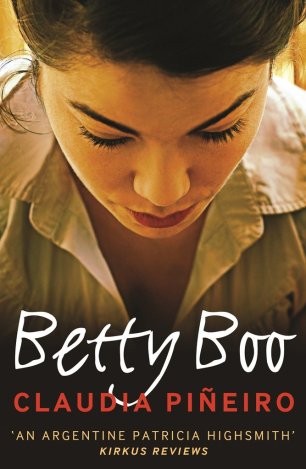 July’s theme is ‘Something from the Americas’. I always had South America in mind here and it was hard as there is so much to choose from among the great classics by Isabel Allende, Mario Vargas Llosa or Gabriel Garcia Marquez, to name but a few. However, I really want to explore something more contemporary and less of a household name outside South America. I’ve chosen a book by Argentinian crime and mystery novelist Claudia Pineiro – Betty Boo. This was first published in 2011 in the original Spanish and then in English translation in 2016. It’s available in paperback and on Kindle.
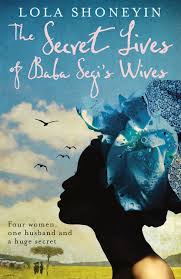 This book by Nigerian writer Lola Shoneyin, was published in 2010 and longlisted for the then Orange Prize for fiction the following year. Shoneyin writes beautifully. I have only just started it but I already love the characterisation and the humour, although a more melancholic note is now beginning to enter. It is described in the publisher’s blurb as at once funny and moving and I can definitely see that. Baba Segi is a traditional Nigerian male, still following the practice of polygamy in modern-day Nigeria. He has seven children by his first three wives, but desires more and when he meets Bolanle, a young graduate from a more enlightened family, who are against the marriage, he thinks his wish has been granted. Not all goes to plan, however.
 I really enjoyed Zennor in Darkness. It is a great story, two stories really, which become intertwined. Clare Coyne is the only daughter of widowed Francis Coyne, and the pair live together in the small town of Zennor in Cornwall. Clare’s mother was born there and the family moved from London when Clare was a baby in order to be near family. Clare’s father’s family had a higher social status, and Clare is clearly ‘different’ from her Cornish cousins, grandparents and aunts, with whom she has spent so much time, but Clare is largely disconnected from her paternal grandparents. Francis Coyne is an ineffectual character, a botanist who earns very little money from his publishing, who spends more time with his books than with his daughter, and who does not seem to understand her on any level. Clare has artistic ability and is a talented artist. She spends her time looking after her father, keeping house, and drawing plants for his latest book project.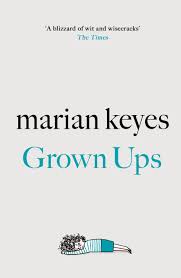
 Marian Keyes – Grown Ups to be precise. It was my book club’s choice the last time we met in person and although it was probably not a book I would have picked up it was the most perfect tonic, especially as I listened to it on audio, with Marian’s wonderful narration.
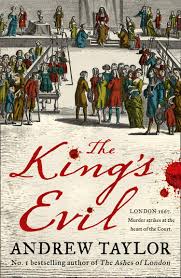 This is the third book in Andrew Taylor’s series of Marwood & Lovett novels. I have thoroughly enjoyed the first two books,
 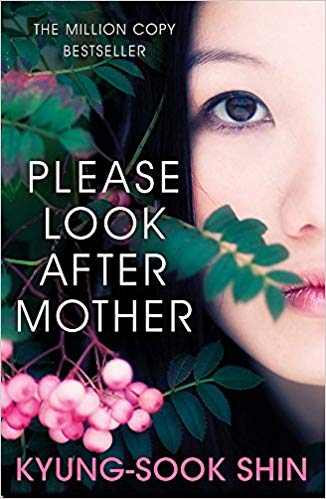 The premise of the story is very simple: So-nyo is a wife and mother to five children, all of whom are now grown-up and living their lives in different parts of the country (South Korea). So-nyo lives a very simple fairly rural life with her husband at the family home, where there are many privations. The place is almost a throwback to a bygone era. So-nyo’s eldest son, Hyong-chol, lives in Seoul with his wife and family and it is while his parents are on their way to visit him (to celebrate the father’s birthday) that his mother goes missing; she was holding her husband’s hand on the busy underground station platform one moment, then she seemed to slip from his grasp and just disappeared into the crowd.
 Julia's books