Reading time deficit

I’m feeling a bit overwhelmed by my reading situation at the moment. A quick glance at my Goodreads profile will tell you that I have three books on the go right now. This is not by choice; I was reading The Hate U Give by Angie Thomas, but this was taking me longer than expected. Then I realised it was getting close to the end of the month and I hadn’t even started April’s choice on my Facebook Reading Challenge, Colin Thubron’s To A Mountain in Tibet, so I started that. It’s fascinating and enthralling, but written so beautifully, that you have to read every word, so it’s a slow read and has also therefore taken me longer than expected. At the beginning of last week, I glanced at my diary and saw that it was my book club on Thursday and I hadn’t even started our book. Fortunately, out choice for this month was Why Mummy Drinks by Gill Sims, which is, unlike the Thubron, a very swift read, so easy to whizz through sufficient pages to have a conversation…but still I have not completed it.

So, this all feels strangely messy to me. I know some people like to read a number of books at the same time, but I don’t. I prefer to immerse myself in just one and see it through to the end, before starting on another. I’m loyal like that! They are all very different books, so it’s not like I’m getting storylines mixed up or anything, but, when I do have some reading time, I find myself quite torn about which one to pick up.

The other problem is lack of reading time. It’s been a busy month so far, between work and my kids’ commitments, not to mention one of them deep in major revision mode, and we are decorating the last room in our (so far) four-year long house refurbishment project, which has involved much time poring over light fittings, carpet samples, colour charts and radiators, as well as handling tradesmen, people who measure stuff and retail professionals.

It’s all good, but I think it must be a problem unique to book-lovers, and perhaps also introverts (I am both), that the absence of reading time has a detrimental psychological impact, rather like a lack of vitamins leads to a deterioration in some aspect of physical health. That’s how it feels to me anyway. Many book lovers I know are also a little bit obsessive about certain things and having three books on the go, none of which I seem to be progressing in a satisfying way, is making me a little bit twitchy. I have just completed the audiobook of Professor Steve Peters’ The Chimp Paradox, though, so I know this is just my chimp talking.

I’m very nearly there with Colin Thubron and with Gill Sims, so my Goodreads profile should be back down to just the one book by the end of the week and I may start to feel a little more settled. And be able to post some book reviews again!

How does it make you feel when your days lack reading time?

If you have enjoyed this post, I would love for you to follow my blog. Let’s also connect on social media.

Facebook Reading Challenge – May’s book

The months are passing at a rapid rate and I can’t believe it is already time to consider a new book for my Facebook Reading Challenge. Last month the theme was travel writing and I chose Colin Thubron’s To A Mountain in TibetI have to confess that, almost a week into the new month, I still have not finished it. Although I am enjoying it, it is a very slow read. Something about the way it is written makes my reading pace reduce to the author’s speed of ascent up the mountain! I wish I could say look out for the review next week but I have had to set it to one side to speed-read my book club book, which I had forgotten all about…

lord of the flies img

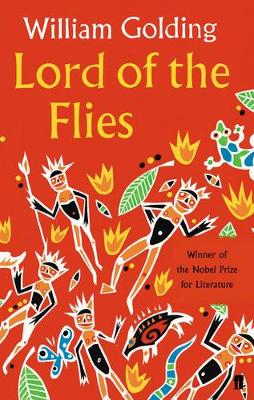
It will get finished, of course, and I posted a video on the Facebook group’s page last week announcing this month’s book which is William Golding’s Lord of the Flies. A few people replied to say they had done it for ‘O’ level – I am sure they are of a similar age to me, but it was obviously not my year, as I had forgotten that it’s a favourite set text for 16 year-olds. Most people seemed happy to be reading it again though. You can see things in a completely different way when you come back to a book, particularly after a number of years and a number of life changes. My recent re-read of Perfume (the March choice for the Reading Challenge) gave me an insight into that.


So, if you care to join us for the challenge this month, hop on over to the group’s Facebook page and request to join, or else just read along and let me know your thoughts when I post a review in early June.

Happy reading!

If you have enjoyed this post, I would love for you to follow my blog. We can also connect on the various social media platforms.

Book review: “The Wonder” by Emma Donoghue

One of my earliest posts on this blog was a comparison of a handful of books with their film adaptations; it was 2016, a bumper year for great books in the Oscars with The Danish Girl, The Revenant, Room and Carol all nominated. Emma Donoghue’s Room was I think my favourite of that batch (both the film and the book) and was one of my best reads of that year. Shortly after, I picked up The Wonder and it’s been sitting in my TBR pile ever since! I resolved to read it while I was away over Easter and, my goodness, it did not disappoint.

2019-05-01 15.19.27
Lovely cover too

Set in rural Ireland in 1859, in the shadows of the Irish Famine and the Crimean War, the main protagonists have had disturbing brushes with death and suffering which impact the way they behave and how they interact with one another. Elizabeth ‘Lib’ Wright is a nurse who trained with Florence Nightingale in the Crimea. She is sent to Ireland on a commission to observe an eleven year-old girl, Anna O’Donnell, who, it is alleged, has not eaten for four months. Her survival without food is being hailed as a miracle and the village council has recruited a team of two (Lib, the English nurse, and an Irish nun) to watch her in shifts to ensure the child is genuinely not receiving sustenance. Many visitors have already come from both Ireland and abroad to view the child, and to perhaps receive some divine benefit from being in her midst.

Lib, with her scientific outlook, naturally suspects foul play. She has no religious faith and believes it impossible for the human body to survive without food or water; she fully expects quickly to get to the bottom of the suspected ruse. She approaches Anna with scepticism initially, believing she and her family are nothing more than manipulative, deceiving, attention-seeking hoaxers seeking to profit from their little miracle. Lib is also haughty, however; whilst she is aware of some of the wrongs that have been wrought upon the Irish people by her own country, she brings with her certain prejudices about social and cultural backwardness. She meets a Dublin journalist, staying at the same inn, and there to report on Anna’s case for his newspaper, and her conversations with him begin to educate her about Irish history about the status and role of Catholicism and about the nature of the people.

As Lib gets to know Anna better in the long hours she spends watching her, she also begins to grow fond of the child, something she does not expect and which interferes with her sense of herself as a rational being. She makes detailed notes about her observations of the child, and when it becomes truly apparent to her that little or no nourishment is reaching Anna, she becomes concerned about the deterioration in her health. The unwillingness of the family to confess to the hoax, as she sees it, disturbs her, and the vested interests of the local community, both the medical and religious elements, which seem to prevent them stepping in to save the child’s life, challenges her medical ethics. Most remarkably for Lib, however, is the commitment Anna has to her starvation; she truly has no desire to eat, and her religious fervour seems genuine and uncorrupted. Lib suspects some deep trauma (she is familiar with this notion following her experience in the Crimea) possibly connected to the death of her older brother a few months earlier, but struggles to get to the bottom of it.

The job Lib has been paid to undertake begins to take a grave emotional toll on her and all her certainties, her assumptions and the truths she has held dear begin to unravel at the same time as Anna’s health status is becoming increasingly grave.

This is a remarkable and complex novel which I found both profoundly moving and deeply interesting. The author provides an insight into a community, a belief system and a set of codes that most of us will struggle to comprehend. And yet, the way she recounts the story, you can see how Anna’s actions might make perfect sense to her, to her family and to her community. This is the most alarming part – how easily it could be seen as real and reasonable – and gives an insight into how sometimes bizarre doctrines can take hold in groups so that they can seem true, in spite of scientific evidence.

The plot of this book is also gripping and it has some remarkable twists, not to be revealed here, which will have you on the edge of your seat.

Highly recommended, a real page-turner which will draw you into a world you did not know about.

Have you read any other Emma Donoghue books – which would you recommend I read next?

If you have enjoyed this post, I would love for you to follow my blog and for us to connect on social media. 

Book review: “Educated” by Tara Westover

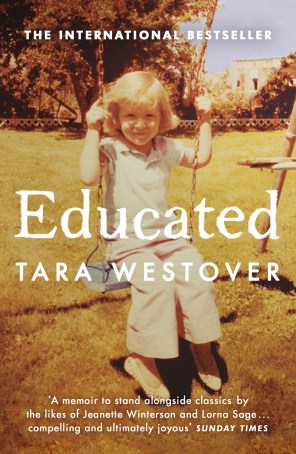
Educated imgThis book caused something of a sensation when it was published last year. It is the extraordinary memoir of a young woman who grew up in rural Idaho, as part of a large Mormon family. Nothing too outlandish there until the author begins telling you about the father’s survivalist beliefs (he hoards supplies of food and fuel in their bunker for when catastrophe strikes, as he believes it inevitably will), his Christian fundamentalism (quite extreme beliefs about, for example, what women should wear, that even their fellow Church members find uncomfortable) and the obsessive control he exerts over the rest of the family. The unconventional nature of the family would be enough to make this a fascinating read, but what makes it shocking is the level of violence, of almost sadistic cruelty. Some of is quite hard to read and at times I found myself gasping out loud.

Tara, the author, is the youngest of seven children. The family lives in an isolated area, below Buck’s Peak mountain in Idaho, far from town and the influence of ordinary society. Her father runs his own business making money from scrap metal. He is a powerful patriarchal figure whose word must be obeyed and who has strong conspiracy theory beliefs. He distrusts all figures of authority and all institutions, including the police, doctors and nurses, public officials, banks and school teachers. His children are “home-schooled” (in the loosest sense of the term, since he also believes there is little need for an academic education), have no official records (neither of her parents can be sure exactly how old Tara is or of her birthdate) and never attend a hospital. Tara’s mother becomes a “midwife”; more accurately she is self-educated and self-appointed to attend births in other families with similar distrust of conventional medicine. (Later in the book she begins to develop her own homeopathic remedies which will make the family’s fortune.)

The book is a largely chronological account of Tara’s growing up and her increasing scepticism about her family’s views. She is an intelligent and curious child and inevitably questions some of the beliefs and assumptions underpinning her parents’ beliefs. As she gets occasional glimpses into the lives of others she determines that what she desires most of all is an education in a proper school or college. When one of her brothers manages to achieve this, and encourages her to seek it out for herself also, she makes the necessary arrangements. What seems to me to fuel Tara’s gradual withdrawal from the family, however, is not the desire for an education but an increasing intolerance of the violence experienced by her brothers, at the hands of their father, and that meted out to Tara herself by her brother Shawn, a deeply disturbed individual. The terrible ‘accidents’ that they all endure (even Tara’s mother sustains a head injury in a car crash that leaves her with unspecified brain damage) are the direct result of wilful neglect of normal standards of safety (her father removes all the seatbelts from the family car). Make no mistake, this level of violence and cruelty is all about control and ruling through fear.

Slight spoiler alert: Tara does eventually break free from her family, though it is a difficult journey for her, and she finds herself torn many times between her attachment to her parents and siblings, in spite of everything she has had to endure from them, and her academic ambitions which see her winning scholarships to Cambridge and to Harvard. Her achievements are extraordinary given her background and her lack of formal education. She realises how sheltered her life has been when she stuns a lecture room into dumbstruck silence by asking the teacher what is meant by the term ‘Holocaust’. Adapting to life ‘in the outside world’ is extraordinarily difficult and she often wonders whether it might just have been easier to stay where she was.

I found this both a shocking and a moving read. There has been a great deal of controversy surrounding the book; the family has closed ranks around itself and some members have contradicted Tara’s account of events. The author alludes to some of these differences in the notes section and also states at several points throughout that her memory of an event is vague and she is relying on others’ recollections. I felt at times uncomfortable reading the book, it felt voyeuristic. At other times I found myself disbelieving – how could Tara even think about going back to her family after all they had done. It was hard to imagine how she could not see through the lies and the control. But then, on the other hand, this is an account, you could say, of abuse, and of how the victim can be drawn back to the perpetrator. Especially where those perpetrators are her closest family. Without them she has no-one.

Recommended, but not the easiest of reads.

How do you rate Educated?

If you have enjoyed this post, I would love for you to follow my blog. Let’s also connect on social media.

>>>STOP PRESS<<< Teenager goes on reading binge!

read-515531_640

Yes, it’s true – one of my children is currently reading at a rate of about one book per day! They are currently on Easter holidays so that helps, but this started a couple of weeks ago. I thought it would pass, a mere flash in the pan, but so far so good, more and more books are piling up. Instead of walking around with eyes firmly fixed on the phone, she is walking around with her nose in a book. I am even having to suggest she stop reading and turn off the light at a very late hour!

So, how has this magic occurred? Perhaps you would like to know. Don’t get me wrong, she has always been a good reader, but in recent years, as with most young people once they hit the teens, it has tailed off in favour of the mobile phone, social media and TV streaming services, plus of course homework and friends. Sound familiar? Even when she has wanted to read, the motivation to put down the phone and pick up a book has not always been there, and hours are suddenly lost.

I asked her what has brought about this change (I wish I could claim the credit for it!) First of all, we had a grown-up conversation (ie not a parent-child, I’m-telling-you-what-to-do-type conversation) about getting enough sleep and she realised (quietly) that perhaps being on the phone late into the evening was not a good idea. She was also seeing that friends and peers were posting on social media well into the early hours. These are the kids looking exhausted at school, under-performing and experiencing behaviour problems, so she made the connection herself.

Once the phone was off, she had to find something else to do. This coincided with her watching the film of The Book Thief , which she had read and loved a few years ago. Realising how much had been omitted from the film, she went back and re-read the book. This set her off re-reading other books she had enjoyed. Once she’d got through a good few, she decided to get some new titles, and watch some film adaptations as well. And thus, a virtuous circle of reading, re-reading and associated film watching ensued.

I hope it lasts. She seems to be finding genuine pleasure in reading and it seems the more she reads, the more it motivates her to continue. Keen adult readers will no doubt recognise this feeling. It has, I think, also made her realise the pointlessness of much social media activity. She is aware of the potential harms, both the large and the small, and has decided, off her own bat, not to put herself in a scenario that might impact on her in a negative way.

Naturally, I feel very proud, but I assure you I am not smug; much of parenting teenagers involves realising you have less effect than you’d like and just hoping things turn out okay – it’s not for the faint-hearted!  I would like to think that we adopt certain habits at home that are helpful – modelling both reading behavior and limiting our own phone use – but, frankly, who knows?

So, that’s my little bit of domestic wisdom. If there are young people in your life, I hope they too will see the light.

What are your top tips for getting teens reading?

If you have enjoyed this post, I would love for you to follow my blog. Let’s also connect on social media.

Book review – “Perfume” by Patrick Süskind

This book is without doubt one of the most extraordinary novels of the late twentieth century. It was first published in the original German in 1985, and published in English the following year. It has sold over twenty million copies worldwide and been translated into 49 different languages. It won numerous prizes, remained on the bestseller lists in Germany for many years and was universally acclaimed. Despite this, its author published only a handful of other works (Perfume was his second book) and virtually retired from literary life in the mid-1990s and now, in his seventies, lives as a recluse between Germany and France, shunning all publicity. None of this surprises me; this book has surely to be the product of a very unusual mind.

Photo 11-03-2019, 13 52 18The book begins in mid-eighteenth century Paris when the central character, Jean-Baptiste Grenouille, is born beneath a fish stall, to an indigent mother. She pauses her work briefly in order to give birth to him but then, believing or perhaps wishing him to be yet another of the many stillbirths she is said to have had, she leaves him for dead amongst the discarded fish guts. When he is discovered alive, his mother is tried for infanticide and executed. He is left to the mercy of the church, but proves a demanding and difficult baby, who, despite his unpromising start, appears to enjoy rude health. So much so that the wet-nurse hired to take care of him, returns him as he is drinking too much of her milk, making it impossible for her to take on any other infants and therefore make a living. The sense of his insatiable appetite and how he sucks the life out of those around him is established. As he goes through life, we learn that those who come into contact with him invariably meet a tragic end.
Once old enough he is apprenticed to a tanner and lives a brutal existence. He also begins to learn that he has an exceptional sense of smell – it’s almost painterly in its precision. An unscrupulous perfumer in the city, whose best days are behind him, discovers the boy’s skills and buys him from the tanner, obviously without revealing Grenouille’s gifts. The vain Baldini uses him to copy the successful scents produced by others and to create remarkable new fragrances which restore Baldini’s fame and fortune.

It is whilst working for Baldini that Grenouille commits his first murder, spontaneously and without any particular malice. He follows an enchanting smell only to find that it belongs to a young nubile girl. In its purity and its goodness, the smell is like nothing Grenouille has ever come across and he wishes to possess it. He kills the girl and remains with her body until he has absorbed every atom of her odour into himself. The curious thing about Grenouille is that despite his acute sense of smell her has no odour of his own and can pass through society virtually unnoticed. With this first murder he realises that he will never be found out.

Years pass and Grenouille moves out of Paris, including spending a number of years as a hermit, living in a mountain. He is constantly searching, for some essence of life that he lacks in himself and covets in others, for some sort of olfactory peace. He has the capacity to deceive others and, although he is cruel and unfeeling, by doing so he exposes the foolishness, vanity and greed of others. It is inevitable that Grenouille will become a prolific serial killer. His final act is a kind of aromatic climax, following which he is both spent (there is nothing left for him to do) and satisfied.

The opening chapters of the novel are an assault on the senses – eighteenth century Paris, with all its filth, poverty and physical and moral dereliction, is right there beneath your nostrils. Grenouille’s journey is narrated in the most extraordinary prose that you will ever read. The final scenes, with the baying crowd of thousands that gathers to witness his execution but which then, utterly transfixed by the hypnotic odour he has doused on himself, stolen from the bodies of his young female victims, descends into a wild orgy. It’s like the author presents a Hogarth painting on the page! (Hogarth was working at around the same time and I wonder if the author had him in mind?) It is quite extraordinary.

Perfume was one of the first books I read after graduating. I had a reading holiday after I’d finished my degree in English and this novel reminded me of my love for literature (at the time I was feeling pretty spent myself!). The other memorable book I read around this time was Donna Tartt’s The Secret History, and I count both among my favourite books of all time. I was nervous coming back to Perfume, concerned that I might not find it as good and therefore its memory may somehow be spoiled. I needn’t have worried – it was an even greater pleasure second time around. Parts of the book left me breathless they were so powerful.

Highly, highly recommended, whether as a first or subsequent read. Astonishing.

Have you read Perfume? If so, how do you rate it?

If you have enjoyed this post, I would love for you to follow my blog. Let’s also connect on social media.


Reading challenge April – travel writing

It’s the end of March and time to be thinking about the reading challenge for April. The theme this month is travel writing and I’ve picked Colin Thubron, who is said to be one of the finest living travel authors. It’s not a genre I am very familiar with, although I love and have read quite a few of Dervla Murphy’s books (her book On a Shoestring to Coorg featured on my reading challenge two years ago). So, I thought it would be good to aim high and go for one of the best!

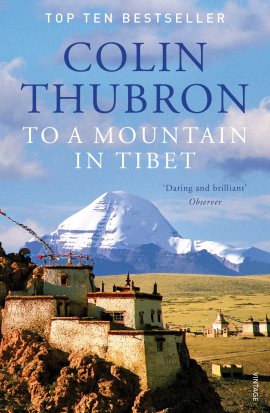
To A Mountian in Tibet imgThe title I have chosen is To A Mountain in Tibet, partly, I’m afraid, because it is one of the slimmer volumes; I’m struggling to keep up with all my planned reading at the moment…where did March go? Ah yes, I know, I spent a lot of time with my mouth open glued to the news and political analysis programmes (the less said about that the better!). Reading the blurb and the reviews of this book, I also feel it encapsulates what I am looking for in a travel book, which is not only the author on a physical journey, but also on some kind of process of learning. In To A Mountain in Tibet Thubron is undertaking a pilgrimage well known to Hindus and Buddhists, but is also a story of him coming to terms with loss and bereavement.


It seems appropriate to be reading this book in April, when Easter falls, and when many people will be undertaking journeys of their own. I will be on a family holiday later in the month and this book will be in my suitcase.

I will be posting my review of the March reading challenge book next week, Perfume by Patrick Suskind, so look out for that. This was a re-read for me; I last read it nearly thirty years ago and it has been one of my all-time favourites – find out if I loved it as much second time around!

I would love for you to join the Facebook reading challenge. Do drop by the group’s page if you’d like to.

If you have enjoyed this post, do follow my blog. Let’s also connect on social media.

Is there any point reading Shakespeare?

My book group decided a couple of months ago to have a go at reading a Shakespeare play. We decided on Much Ado About Nothing (the one with Beatrice and Benedick), possibly not the best choice we could have made, on reflection, but we fancied something light. We spent less time discussing it than any other book we have read in the three years or so we have been meeting. True, it was the same night we had scheduled in a viewing of The Children Act by Ian McEwan, a book we had all loved, so there was less discussion time than usual, but even if we had had the whole evening, I doubt we would have found much more to say. We were just rather underwhelmed. Now, don’t get me wrong, I’m a lover of Shakespeare, and have studied most of the plays, thanks to having done a degree in English literature. Many of the comedies don’t do much for me, but, even reading Much Ado About Nothing again, I could appreciate the cleverness and the writing. And it’s not even that it’s out of date – some of the shenanigans, yes, they stretch credibility to a modern audience, but, really, are they that different to what’s going on in Love Island or Friends, or any one of the countless melodramas teens watch?

2019-03-27 11.38.59

I’ve given this a lot of thought recently as my children go through their GCSE Shakespeare texts. Generally, they’re a bit more exciting than Much Ado; my son studied The Merchant of Venice, which he found interesting, but not much more, and currently, my elder daughter is studying Macbeth, my personal favourite because it was my first encounter with the Bard, at the same age as she is now, but which she is finding rather laborious. Perhaps I was just lucky I had a wonderful English teacher (Mrs P. I hope you are reading this!), but kids just seem to find the whole process a bit dull, just as my book group seemed to reading Much Ado! And it’s not ‘kids of today’ – relatively speaking, Shakespeare is just as old as it was when I was studying over thirty years ago. And can it really all be down to the teaching?

Part of me concludes that Shakespeare is just not meant to be read. It can be like wading through treacle when the language is complex or you have to look up words no longer in use. Teaching Shakespeare does still seem to involve reading it through line by line in the classroom, which can be deathly dull, especially when you are not the one reading. Shakespeare  was written to be performed and many of the nuances of direction and staging, (ie who might be hiding behind which arras) are simply lost in a straight reading. Actors are also paid to add something – they study their characters in depth so that they can interpret for the audience. They can also add tone of voice, facial expression, and body language which tells us much more about what is happening and has the potential to make the action and the themes much more relevant. Shakespeare’s themes are still relevant and we see his legacy in so much of what we read or watch – not least The Children Act. What about politicians’ behaviour around Brexit? The talk of Cabinet coups, challenges to leadership – it’s all so Shakespearean! And that is because Shakespeare’s themes come from his profound observations of the human condition – the scenery, the clothing, the words might change, but the events are essentially the same. And we lap it all up.

So, how to deal with Shakespeare going forward, for a younger readership. Yes, it’s a conundrum because you do need to sort of understand the language a bit before you can fully appreciate the play in performance. Bring back the travelling players, I say, to go around schools and perform that year’s GCSE text for the students, hold workshops with the kids, going through the more complex aspects. Not all children can afford to go to the theatre, but it’s essential they see it live in order to fully understand and appreciate it. And you never know, it might actually inspire a lifetime love of the man and his work, as it did for me, and a different perspective on what’s going on in the world today.

Would love to hear your thoughts – what has been your experience of either teaching or being taught Shakespeare?

If you have enjoyed this post, I would love for you to follow my blog.

Book review – “The Storm Keeper’s Island” by Catherine Doyle

Regular followers of this blog will know that I am passionate about children’s literature and that I frequently post reviews of great kids’ books I have read. I have decided to make this a more regular feature and will devote one week a month to reviewing children’s books and discussing issues about kids reading habits, an issue which I know is of concern to many of you, parents or otherwise. After all, most keen adult readers would, I think, say that their love of reading was fostered in childhood. Just the other day, I recommended Lucy Mangan’s new book Bookworm: A memoir of childhood reading, one of the books on my TBR list this spring which I feel sure will take me back to my own childhood and the many nights I spent reading under the covers, not with a torch, worse, by the light from the landing. It’s a wonder my eyesight wasn’t ruined!

The Storm Keeper's Island imgThis month, I would like to recommend Catherine Doyle’s The Storm Keeper’s Island, published last year by Bloomsbury, as a fantastic choice for any young people you know who like modern adventure stories where the good guy wins. Catherine Doyle is a young writer (just 29 years old) and has published several YA novels already; The Storm Keeper’s Island is her first novel for what is called the “middle grade”, ie about 9-12 years, and it was a barn-storming debut, winning several prizes and accolades from established authors in this genre. A second novel, following the further adventures of the main character Fionn Boyle, is planned for this summer and I would expect it to feature heavily in recommended holiday reading lists in advance of the Summer Reading Challenge.

Fionn Boyle and his twin sister Tara are to spend the summer with their grandfather, Malachy Boyle, on the real-life island of Arranmore, just off the coast of Donegal in north-west Ireland. It is a sparsely-populated island where most of the inhabitants are native Irish speakers, but many tourists visit. It is an island the author knows well, her own grandparents having lived there, and her love of the place comes across strongly. The two children don’t seem to know their grandfather well; he is their paternal grandfather, and their own father died at sea before they were born. The children have been sent to their grandfather because their mother has had some sort of mental breakdown. We learn that she has never really recovered from her husband’s death.

Malachy Boyle soon proves to be a quirky character, about whom there is an air of mystery. His cottage is full of home-made candles with mysterious names, like “The Whispering Tree”, “Low Tide” and “Unexpected Tornado”. Malachy Boyle is in fact Arranmore’s ‘Storm Keeper’, a chosen one whose role is to preserve the memories and legends of the island and protect it from its ancient mythical enemy, Morrigan, and her foe, the good spirit, Dagda. Inevitably, Fionn, gets drawn into an adventure involving these mythical spirits; Tara’s island boyfriend (whom she met on a previous visit), the ghastly Bartley Beasley, a vain, self-centred, full-of-himself bully, is the grandson of Elizabeth Beasley, who wants her family to be the next in line for the storm-keeper role and hopes Bartley will be anointed when it becomes time for Malachy to pass the baton. The undercurrent of conflict between the Boyles and the Beasleys is a metaphor for the Morrigan/Dagda feud.

Led by Bartley, the children (ie him, Tara, and Bartley’s sister Shelby, but excluding Fionn) plan to search out the long-lost and mysterious Sea Cave, where it is said a wish can be made. Obviously, Bartley wants to use the wish to make himself the storm-keeper. They are warned away from it as it is said to be highly dangerous. Fionn wants to find it first, to prevent Bartley having his wish, but he is afraid. As time passes, his grandfather passes on to him the knowledge of the candles and how lighting one enables a kind of time travel, where those present can see, even be a part of, events of the past that have been captured in the candle. Using the candles, Fionn will eventually triumph and (spoiler alert!) become the new storm-keeper.

I am not normally a lover of fantasy fiction, and I fear the above makes it sound as if there is a lot of myth and legend here. There is, but there are also actually a lot of real-life issues, modern concerns that children will identify with – loneliness, bullying, sibling rivalry, grief and loss, emotional vulnerability, what is meant by fear and courage, and perseverance. Ultimately, the good triumphs over the bad, the bullies don’t win and they are be exposed and punished. All the kinds of messages we want kids to get from their reading. The island legends do underpin the novel but it is by no means the heart of the novel. Most of all the child characters are credible and human, and many kids will be able to identify with them.

There is excitement, adventure and mild peril here, but also a kind of escapism – the children are on their summer holidays in a remote island community, with freedom to roam and where candles are more useful than mobile phones. The book would suit a variety of young readers in the 9-12 year-old age group. Recommended.

What recently-published books would you recommend for the 9-12 age group?

If you have enjoyed this post, I would love for you to follow my blog. Let’s also connect on social media.

Books to look out for this Spring

The freaky February weather is behind us, those treacherous early Spring storms seem to have passed, and there are signs of Spring – things are sprouting in my garden (apart from all those snowdrops I planted last Autumn – hmm!) and it is warm enough to take the thick down lining out of my winter coat. The London Book Fair has been taking place this week, with all those publishers deciding what we are going to be reading in the coming months, and there are some fantastic new books to look out for. With the Easter holidays coming up in the next month or so, you may be looking for something to read yourself. Here are some of the newly published or soon to be published books that have caught my eye

The FiveThe Five by Hallie Rubenhold

This book has been getting a lot of coverage and tells the stories of the women raped and murdered in Victorian London by Jack the Ripper. Reclaiming a space for these women, the author seeks to make them more than just victims.


BookwormBookworm: a memoir of childhood reading by Lucy Mangan

I have been reading Lucy Mangan’s columns in The Guardian for years and have always loved her writing style. I have also always identified with the passion for reading she found she had as an introverted child. This looks like a nice read and one that will take you back to characters and places you may also have loved as a child.


SpringSpring by Ali Smith

The third in Ali Smith’s seasonal quartet. Autumn was published in 2016 and was shortlisted for the Man Booker in that year. Winter was published in 2017 (still on my TBR list) and here we now have Spring, due for publication on 28 March. It concerns the lives of three people living in a time of war in a country facing a crisis of identity. Remind you of anywhere?


girl balancingGirl, Balancing by Helen Dunmore

Having just completed Birdcage Walk, I’m really keen to get into some more Helen Dunmore and this collection of short stories looks like a perfect one to take on holiday. I don’t read very many short stories so this will be a bit of a departure for me.


LannyLanny by Max Porter

Just read a review of this and it sounds so intriguing that I can’t wait to get hold of it. Set in a small village not far from London, this book is about the many residents past and present who have lived there, and about the culture, history and folklore of the place, embodied by the slumbering woodland spirit Dead Papa Toothwort.


That should keep me going for a while!

What books are you looking forward to reading this Spring?

If you have enjoyed this post, I would love for you to follow my blog. Let’s also connect on social media.