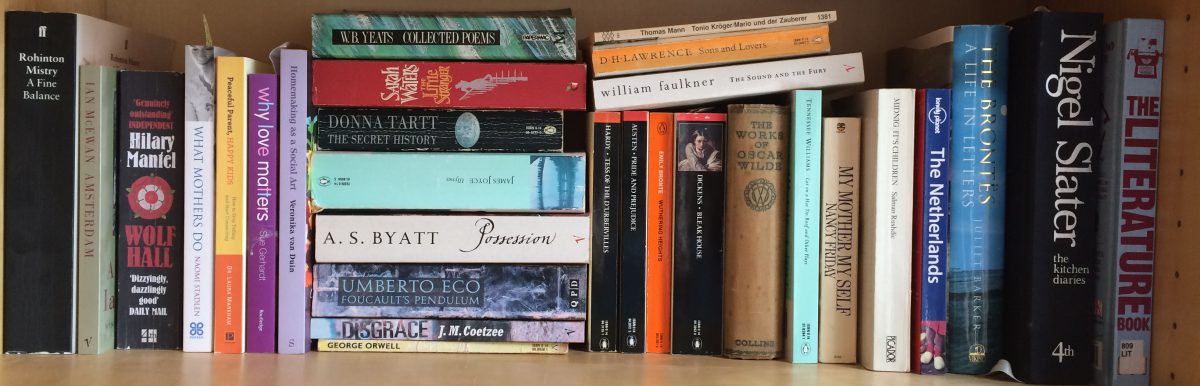
I have a deep love of children’s books and am passionate about keeping kids reading, as regular readers of this blog will know. I am frequently asked for recommendations for books for children and young people. In truth, there are so many great books for kids out there and I can only read a fraction of what I’d like to, so it’s difficult. Wander into any bookshop or library, however, and you will see before you dozens of wonderful titles. I am a firm believer in allowing kids to choose their own books; that way you build their love of reading from the inside out rather than it being an interest that the parent tries to impose from the outside in. This is particularly important for teenagers who a) are likely to resist all things their parents like and embrace the opposite, and b) are particularly sensitive to being told what’s ‘good’ and ‘not good’. My advice would be, don’t worry too much about the ‘quality’ of their reading and take pleasure in the fact that they are reading. Once you engage with them on their terms, they may be more open to suggestions further down the line.

I have a deep love of children’s books and am passionate about keeping kids reading, as regular readers of this blog will know. I am frequently asked for recommendations for books for children and young people. In truth, there are so many great books for kids out there and I can only read a fraction of what I’d like to, so it’s difficult. Wander into any bookshop or library, however, and you will see before you dozens of wonderful titles. I am a firm believer in allowing kids to choose their own books; that way you build their love of reading from the inside out rather than it being an interest that the parent tries to impose from the outside in. This is particularly important for teenagers who a) are likely to resist all things their parents like and embrace the opposite, and b) are particularly sensitive to being told what’s ‘good’ and ‘not good’. My advice would be, don’t worry too much about the ‘quality’ of their reading and take pleasure in the fact that they are reading. Once you engage with them on their terms, they may be more open to suggestions further down the line.
I know, however, that many parents want to build a decent library of choices for their children, and also, grandparents, aunts and uncles, and godparents also want to know what they should give as gifts. So, I am starting a series of posts on building your children’s library. I will focus mainly on classics as these are books that have stood the test of time. As ever, age boundaries are flexible – a mature 10 year old might enjoy something in 11 -13 range and vice versa. Again, don’t worry; this is not a reflection of their ability, only of their interests. It is counter-productive to push them to read topics they are not ready for.
That probably won’t be a concern for today’s list however, as I’m picking books for pre-schoolers! Having said that, my teens still get great pleasure from having many of these books around (many of our books have gone to charity shops over the years, but some will be treasured forever).
So, if you have or know young children in 2-5 age group, here are ten of the very best books ever:
- The Very Hungry Caterpillar by Eric Carle
- Each Peach Pear Plum by Janet and Allan Ahlberg
- We’re Going on a Bear Hunt by Michael Rosen & Helen Oxenbury
- Guess How Much I Love You by Sam McBratney and Anita Jeram
- Miffy by Dick Bruna
- Goodnight Moon by Margaret Wise Brown and Clement Hurd
- The Tiger Who Came to Tea by Judith Kerr
- Where the Wild Things Are by Maurice Sendak
- The Gruffalo by Julia Donaldson and Axel Scheffler
- Elmer by David McKee
There are probably at least a hundred other books I could have included here, so my next post on this topic might just be an extension list to this one! I’d love to hear your recommendations too. I should add that these are books not only that my children loved but that I also loved reading aloud to them. And THAT has truly been one of the joys of my life.
What are your favourite books for pre-schoolers?
If you have enjoyed this post I would love for you to follow my blog. Let’s also connect on social media.
 This book is Angie Thomas’s debut novel and it caused a sensation when it was first published in the United States in February 2017. It enjoyed both critical and popular acclaim, remaining at the top of the New York Times YA best seller list for almost a year. It was made into a film which was released last Autumn. The novel came out of a short story Thomas wrote in college following the police shooting of a young black man in 2009.
 The book is about a young newly-married couple, Celestial and Roy, and is set in the American Deep South. Their lives appear full of potential until Roy is accused of a crime he did not commit. He is convicted and sentenced to twelve years in prison. The book concerns the effect of the separation on their marriage, how Celestial copes alone and what this means for their shared dreams.
 There was a decidedly political, Brexit-y feel to events this year, perhaps that is because of the looming Tory party leadership contest and the European elections last week. Also, there is a sense that the world of arts and culture is beginning to assert its feeling about the Brexit issue more vociferously as the UK’s departure draws nearer. I saw Keir Starmer on Saturday and found him extremely impressive (surely a future leader of the Labour Party?). He was thoughtful and candid, whilst also remaining tactful about current political events. He was gracious about Theresa May and less so about many of her colleagues. He was being interviewed by Philippe Sands, author of
 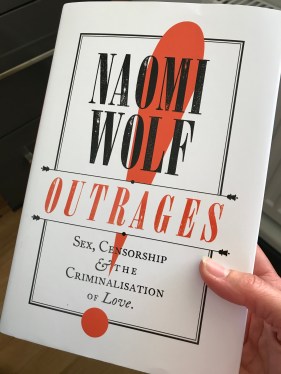 I also saw Naomi Wolf, a woman whose work I have admired for years. She was talking about her latest book, Outrages: Sex, Censorship and the Criminalisation of Love in which she traces the evolution of attitudes to sex, particularly homosexual activity, from the mid-19th century on, through the writings of John Addington Symonds. There has been a lot of controversy in the press about an error in her book (which she has acknowledged and plans to correct in the next edition), which in my view, has been somewhat overblown; I truly doubt whether a male author would have experienced the same opprobrium. Naomi Wolf was warm and articulate, and gracious about the cultural and political turmoil in the UK, reflecting also on similar events in the US too. I was glad to have heard her speak.
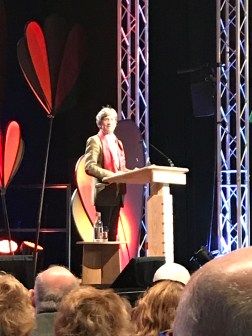 On Sunday, I went to a panel discussion led by Ed Vaizey MP, talking about branding with a number of business-people. It was interesting, and Ed Vaizey is very witty, but, to be honest, didn’t feel very “Hay”. I also saw Melvyn Bragg speak about his new novel Love Without End: A Story of Heloise and Abelard. I enjoy listening to his BBC Radio 4 show In Our Time and am always impressed by his ability to cut through to the core of so many topics. Can you believe this is his 22nd novel!!! He has also written seventeen non-fiction books. Surely, he is approaching national treasure status!
 So my reading time has been severely curtailed. I managed to finish Why Mummy Drinks just after the book club meeting, just as well it was a quick read and did not require too much mental investment. My other big read for last month, however, did. Colin Thubron’s To A Mountain in Tibet was the April title for my



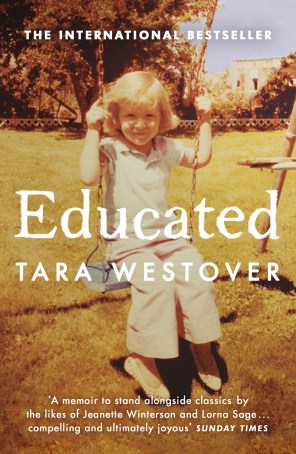 This book caused something of a sensation when it was published last year. It is the extraordinary memoir of a young woman who grew up in rural Idaho, as part of a large Mormon family. Nothing too outlandish there until the author begins telling you about the father’s survivalist beliefs (he hoards supplies of food and fuel in their bunker for when catastrophe strikes, as he believes it inevitably will), his Christian fundamentalism (quite extreme beliefs about, for example, what women should wear, that even their fellow Church members find uncomfortable) and the obsessive control he exerts over the rest of the family. The unconventional nature of the family would be enough to make this a fascinating read, but what makes it shocking is the level of violence, of almost sadistic cruelty. Some of is quite hard to read and at times I found myself gasping out loud.
