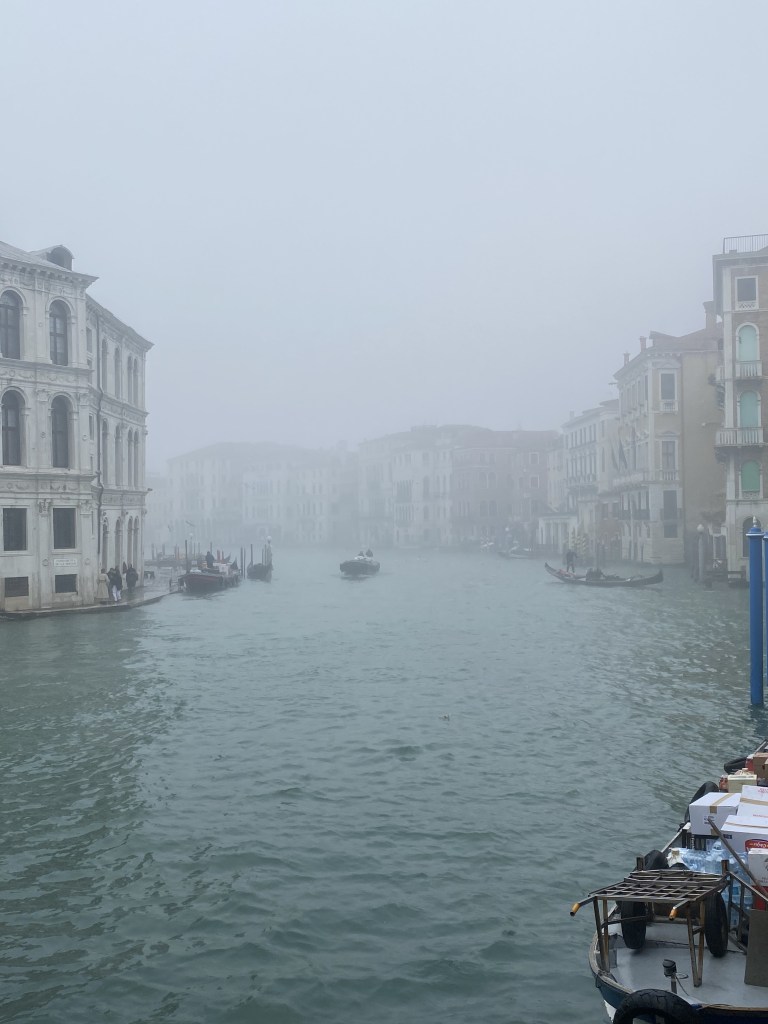
I have started the year as I hope to go on, fulfilling a long-held travel ambition! I have visited Venice a couple of times (once about 12 years ago when my kids were still quite young, and once when I was 18 and went inter-railing in Europe) and on both occasions it was mid-summer, very hot and very, very busy. Ever since, I have wanted to experience Venice in the winter season and last week, with no school term dates holding us back, my husband and I made the trip, spending 6 glorious days in this unique city. One of our favourite films is Nicholas Roeg’s Don’t Look Now (1973), starring Donald Sutherland and Julie Christie. It tells the story of a couple, grieving after the death of their young daughter, in a very grey wintry Venice, where Sutherland’s character is restoring a church. The setting is so atmospheric and ever since seeing it I have fantasised about being Julie Christie wandering along empty the alleyways and bridges over deserted canals!
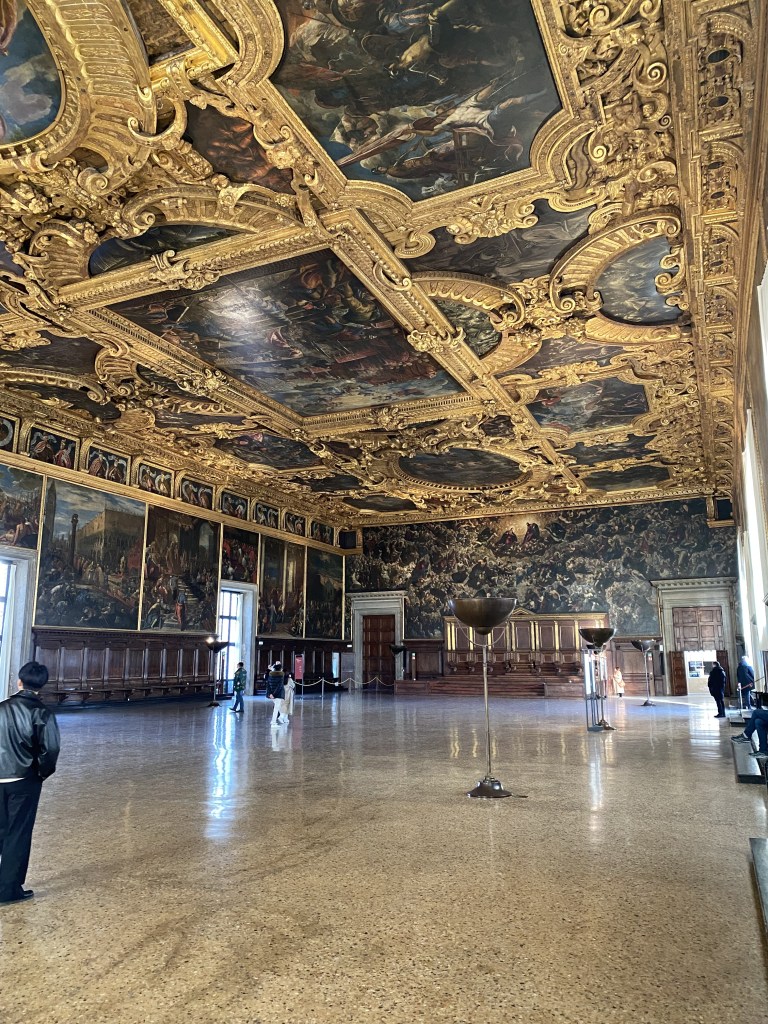
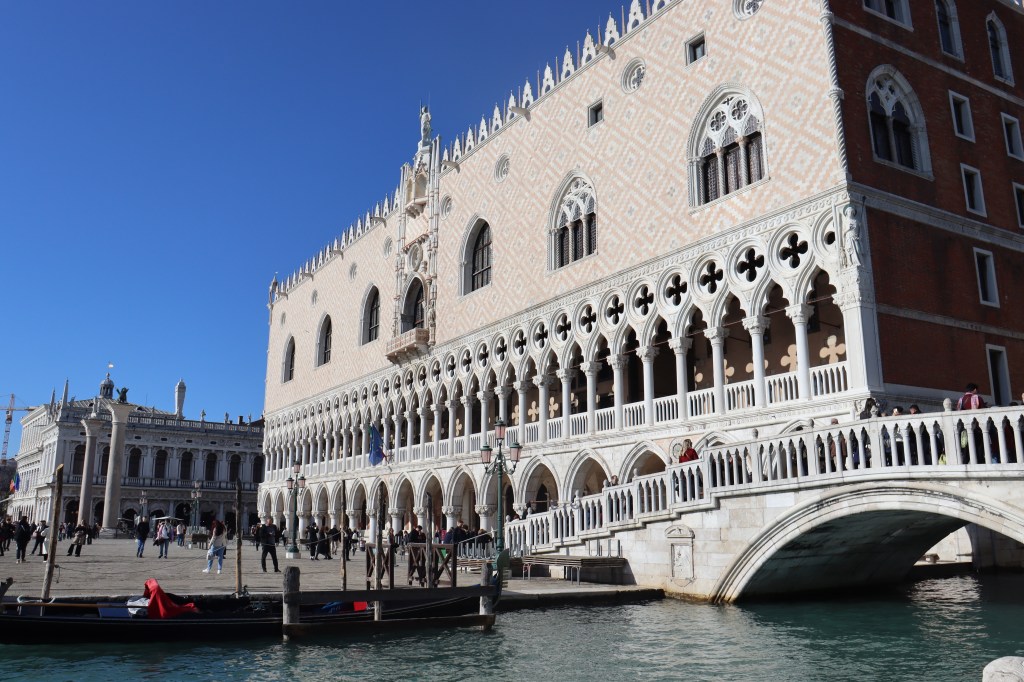
Needless to say it wasn’t quite like that – it was still quite busy, although not nearly as much as spring through to autumn. But the Venetians were warm and friendly, less harassed perhaps than at other times of the year, there were no queues for the big tourist sights (by closing time at Basilica San Marco we had the place practically to ourselves) and good restaurants had plenty of tables. It was well worth compromising on the weather to get the more authentic experience (it was chilly but we did have some bright sunny days) and although Venice is never ‘cheap’ you can definitely get more hotel for your money out of season. Here are a few of my holiday snaps!




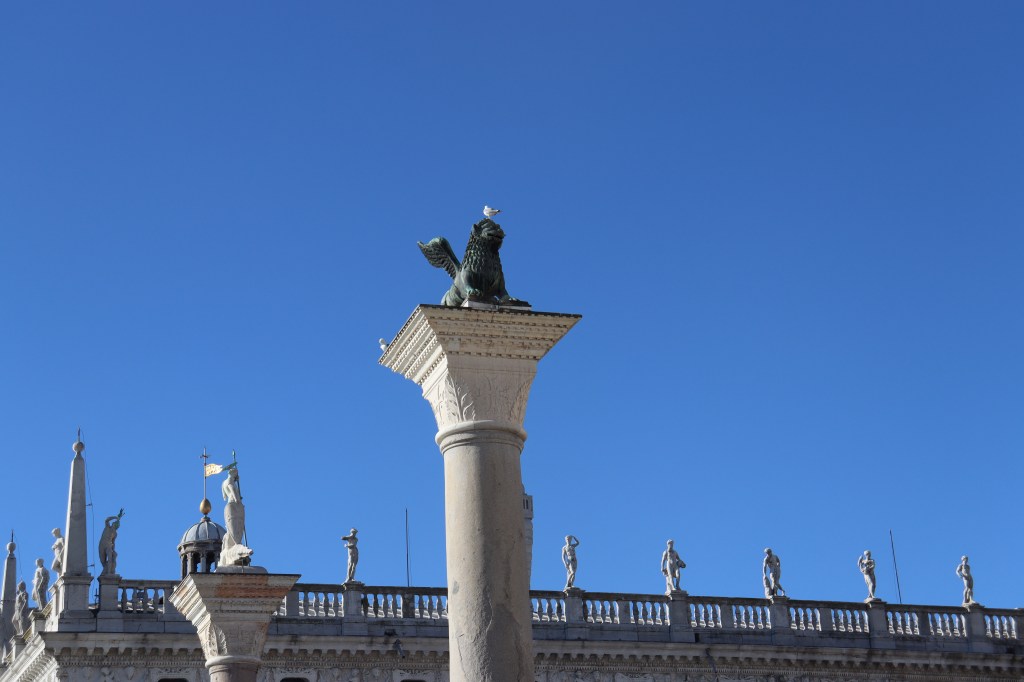


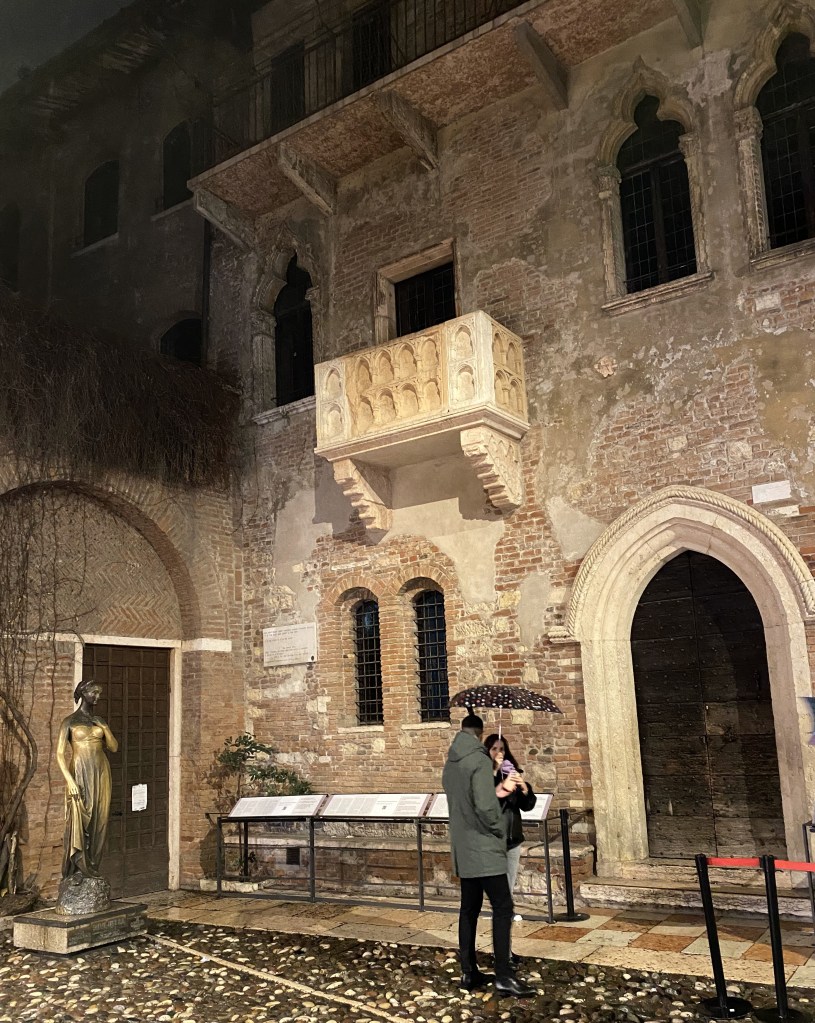
As well as beauty, culture, and fascinating history, Venice has a distinguished literary pedigree. Shakespeare set two plays in the city (Othello and The Merchant of Venice). He also set two plays in nearby Verona – Romeo and Juliet and The Two Gentlemen of Verona). We stopped for a night in Verona before heading to Venice – another truly beautiful and fascinating city – and you can visit ‘Juliet’s balcony’ (left). Scholars disagree on whether Shakespeare visited the Veneto but he certainly had a feel for the area and its stories.

A plaque in Verona commemorating Shakespeare’s connection to the city
Lord Byron, of course, famously spent a lot of time in Venice (he loved Italy), occupying a palazzo near San Marco, and referenced it in his poetry. In the nineteenth and early twentieth century American author Henry James wrote about his love of Venice, and John Ruskin wrote a three volume compendium on the art and architecture of Venice. More recently, the Russian American poet and philosopher Joseph Brodsky and American poet Ezra Pound are both buried in the island cemetery of San Michele in Venice. And finally one of my favourite books is set on the Lido – Death in Venice by Thomas Mann, also a brilliant film starring Dirk Bogarde.
So, a definite bucket list trip for me! I highly recommend Venice in the winter.

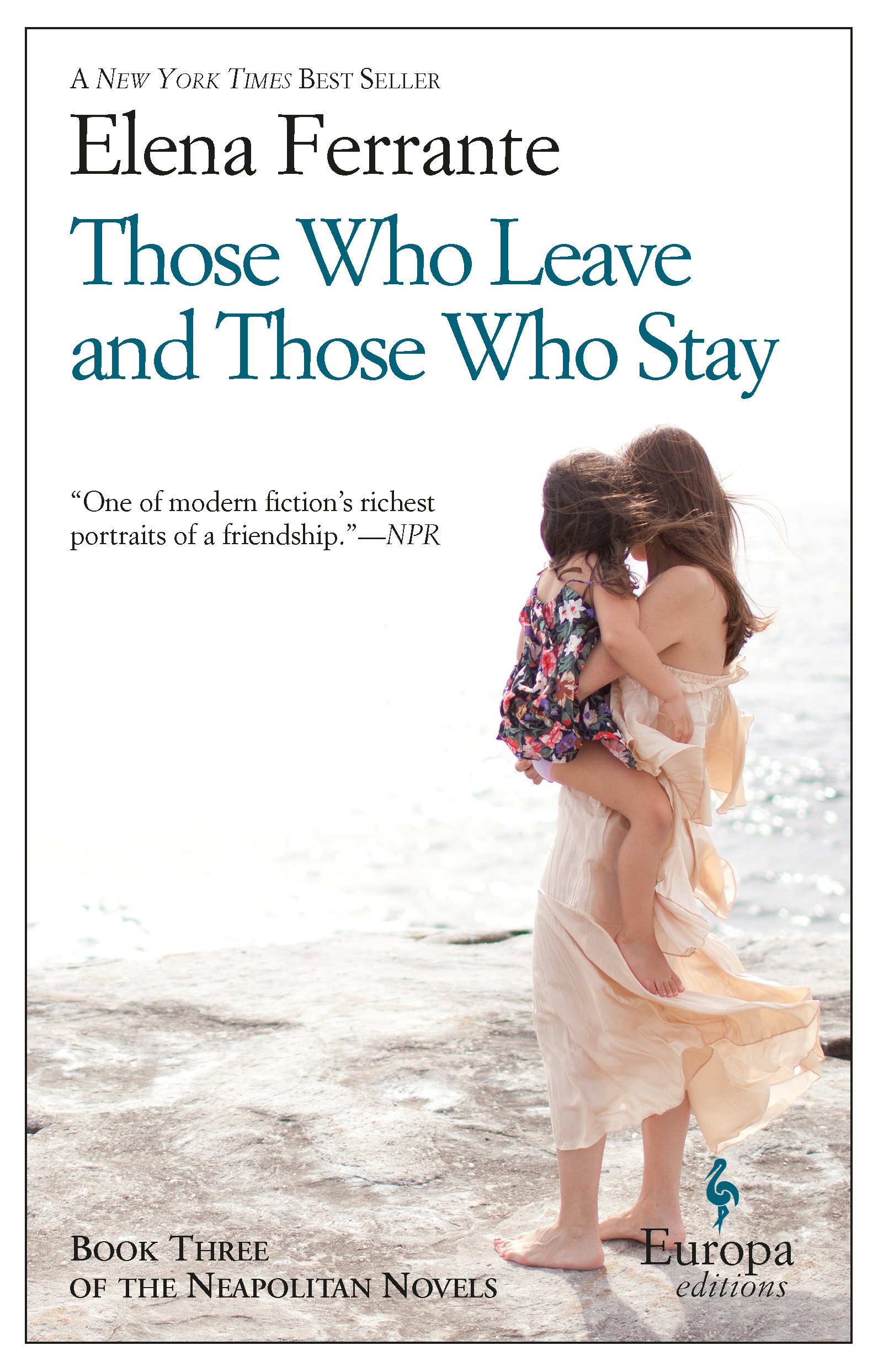 This third book picks up precisely where volume two left off, at a small book launch for Elena’s first book, a mildly sexual novel which has caused a stir, and where she is being questioned in a patronising way by an obnoxious critic. A familiar face from Naples walks into the room – Nino Sarratore – and Elena’s confidence is restored. Nino has been a friend since childhood, and there is a complicated triangular relationship between him, Elena and Lila, the main but elusive protagonist of all the books. Elena has been in love with Nino since they were young, but this has not been reciprocated. Like Elena, Nino proved to be a successful student, despite the disadvantages of background and upbringing, and would go on to achieve great things academically, though both know that neither is as brilliant as their mutual friend Lila, with whom Nino was once in a relationship, but who would never reach the academic heights of the other two.
 The novel is set in Renaissance Florence; the sense of time and place is profound. You can almost smell the streets wafting from the pages! Dunant is a meticulous researcher and the novel feels very authentic. The central character is Alessandra, the fifteen year-old daughter of a wealthy cloth merchant. Much to the frustration of her family Alessandra is a precociously intelligent young woman, a talented artist, a strong personality and has a deep desire to be out in the world. These are all traits which are highly inconvenient for the family and not compatible with the kind of life she will be expected to lead.
 I’m a big fan of audiobooks as a way of passing otherwise dead time in a more constructive way – for me it’s car journeys, or whilst exercising. It might also be while you’re waiting for swimming lessons to finish or at the supermarket. You have to choose your titles carefully though, because it’s not just about what you listen to, but the narrator is really key to the enjoyment. For example, audiobooks I have enjoyed have been Holding, narrated brilliantly by the author Graham Norton, Frankenstein, narrated by Derek Jacobi and 1984, narrated by Andrew Wincott (Adam from The Archers). Their reading styles enhanced my enjoyment. A title I enjoyed less because of the narration was The Girl on the Train, where I felt the male voices were not done well.
 I have recently finished listening to The Story of a New Name by Elena Ferrante, Book Two in her Neapolitan Novels series. I have listened to and reviewed here, Book One,
  Julia's books