Book review: “On Chesil Beach” by Ian McEwan

I read this for my August reading challenge, which was to choose a book, the title or cover of which was reminiscent of summer. I chose On Chesil Beach because I love Dorset, possibly my favourite county in England, and I love Chesil Beach, which we visited on a family holiday about three years ago. Chesil Beach is one of those fascinating geographical features, dating back to Jurassic times, which reminds you that human habitation on earth is a mere blip in time. It’s an 18-mile stretch of shingle beach, separated from the mainland by a saline lake called the Fleet Lagoon, and formed thousands of years ago as deposits of sediment were plopped near to the coastline, but not on the beach, so creating a ‘barrier beach’ separated from the actual coastline. It’s a haven for wildlife as well as being one of those mysterious oddities that Wessex (yes, I’m a huge fan of Thomas Hardy!) does so well.

2017-08-05 07.34.39

The front cover of On Chesil Beach shows a picture of a woman in a white dress walking along the beach at what appears to be either dawn or dusk. She is walking away from us, into a vague distance. The sky is grey-blue, twilit, with a slash of brightness from the emerging or receding sun. In the far distance are cliffs and the sea on either side of the beach is grey, somewhat forbidding. The skirt of the woman’s dress, and her hair, are blowing in towards the land; there is clearly a strong breeze coming in from the sea. This image is everything I love about the English coast. It reminds me that nature is in charge here, that the earth will prevail. This area is part of Dorset’s Jurassic coast where fossils are easily found and where there is much evidence of the prehistoric past. It is a humbling place to be.

Chesil Beach is the setting of McEwan’s moving, domestic tragedy. Set in the summer of 1962 it begins in a hotel where Edward and Florence are having dinner in their suite on their wedding night. The awkwardness, the tension and the weight of expectation are apparent from the outset, and the detail with which McEwan describes every aspect of the scene made me feel like I was living every excruciating moment of the evening in real time. It is clear very quickly that this is a book about sex. It’s 1962 so the couple have not yet experienced the benefits of the sexual liberation of the 1960s and are still victims of the much more staid post-war attitudes of the 1950s. Despite being newlyweds, and therefore supposed to be a happy young couple, it is clear very early on that each is in a very different place; it is apparent that they have had little intimacy, sexual or otherwise, prior to their wedding. Edward has been ‘patient’ assuming that all will be well once they are married, while Florence has been hoping simply for strength, that she will be able to endure what she thinks will an unpleasant duty once within the confines of marriage.

“They separately worried about the moment, some time soon after dinner, when their new maturity would be tested, when they would lie down together on the four-poster bed and reveal themselves fully to one another. For over a year, Edward had been mesmerised by the prospect that on the evening of a given date in July the most sensitive portion of himself would reside, however briefly, within a naturally formed cavity inside this cheerful, pretty, formidably intelligent woman. How this was to be achieved without absurdity, or disappointment, troubled him…..But what troubled her was unutterable, and she could barely frame it for herself. Where he merely suffered conventional first-night nerves, she experienced a visceral dread, a helpless disgust as palpable as seasickness.”

And therein lies the nub of the whole book really, how these inner truths reveal themselves, how the pleasant mask of their love begins to crumble and how the relationship is affected under the pressure of these problems.

The book is structured in five parts: the first part is the awful wedding night, subsequent parts provide the back story to Edward and Florence’s relationship, their early lives and their very different backgrounds – class difference plays a big part in the novel too and whilst this is not named as an explicit barrier between them, you get the sense as a reader of her as more refined, affluent, uptight, middle-class, while he is seen as ultimately more vulgar, preoccupied by earthier matters and that this is somehow a consequence of his socially humble background.

I don’t wish to spoil the ending for you if you haven’t read the book, but the final part, the denouement, takes place on Chesil Beach itself, as the two individuals encounter one another at the climax of their so far bitter wedding night experience. It is like a classical scene, like a game of chess as the two manoeuvre around their respective problems. It is a very fine, forensic study of a 1960s relationship that could barely be called a relationship.

A stunning read, which I didn’t expect to be so good. Highly recommended.

(Apologies for any typos I haven’t spotted – my daughter’s hamster gave me a nasty bite on the middle finger of my right hand it has badly affected my typing!)

If you have read this book, what did you think?

If you like what you read here, please follow my blog. I would love also for us to connect on social media.

Book review: “The Lady and the Unicorn” by Tracy Chevalier

Tracy Chevalier’s second novel Girl with a Pearl Earring was published in 1999 (really, it was that long ago!) and was a sensation. I remember reading it at the time and was bowled over. It was made into a film starring Scarlett Johansson and Colin Firth in 2004. I’m afraid to say that I have not read any of Tracy’s subsequent work and until now would not have been able to name any of her nine other books (although I love the look of New Boy, published this summer, and recommended it just a few weeks ago).

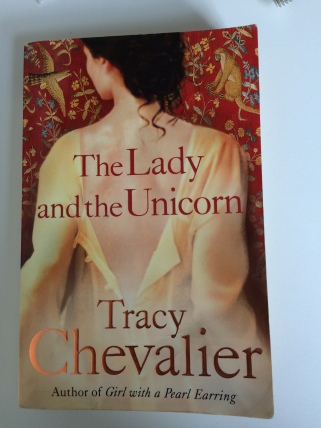
The Lady & the Unicorn imgI picked up The Lady and the Unicorn at the secondhand book stall at my youngest daughter’s school summer fair and read a large chunk of it whilst there. It would not normally have caught my eye on a bookshelf as the cover is more suggestive of a cheap sexy romance (nothing wrong with that if that’s your thing!), but I was very quickly drawn into the world that Chevalier evokes, as she also did so brilliantly in Girl with a Pearl Earring.

The novel is set in Paris and Brussels in 1490-92. Parisian nobleman Jean Le Viste wants an impressive tapestry in his home, a way of showing off his wealth, status and fine taste. He commissions local artist Nicolas De Innocents to paint a design which will then be turned into a tapestry by specialist weavers in Brussels. The subsequent story is about Nicolas’s travels between the two cities, the time he spends in Brussels with the family of weavers and the effect the work has on all their lives.

It’s a very simple premise and you would be forgiven for wondering how a full-length novel could be strung-out from this. Like Girl with a Pearl Earring, it’s the characters, their motivations, their internal lives and the relationships between them that drive the narrative. Here, Nicolas des Innocents is the central figure. He is young, virile, charismatic and mischievous. In Paris, he threatens to destabilise the Le Viste family when the youngest daughter Claude falls for his charms (he has already seduced the maid!), but socially, he is an outsider, a class well below his employer, and thus it is important he is kept at arm’s length. In Brussels, he penetrates the family more deeply as he needs to work alongside the weavers to design the various features of the tapestry and to help realise these in the final product. Nicolas the charmer develops a close bond with the weaver’s blind daughter. I’ll leave it at that – no spoilers here!

The book is written from several perspectives, with each chapter narrated by different characters. This allows us as readers to observe the events of the story from a number of viewpoints. It’s a sexy novel, there are simmering passions throughout (to that extent the suggestive cover on my copy is not far wrong!). It provides an insight to the issues of the period – honour, social status, the role and standing of women, as well as the process of creating a tapestry and the meaning behind all the imagery – and Chevalier has a brilliant talent for bridging the past and the present and showing us that in many ways day to day concerns remain the same throughout the ages. I particularly like how the author marries her skills for story creating into some bare facts about a real tapestry (it does exist) and real people. This is what she did in Girl with a Pearl Earring too, of course.

Whilst this novel clearly did not make the same splash as Chevalier’s more famous earlier book, it’s a good read and I would recommend it. Glad I found it on that book stall!

Have you read any of Tracy Chevalier’s books?

If you have enjoyed this post, I’d love for you to follow my blog. Let’s also hook up on social media. 

On holidays in Portugal

I’m on my holidays with the family in Portugal. It’s a lovely country: the people are warm and laid-back, the food is wonderful, it’s a seafood-lover’s paradise. The weather where we are, north of Lisbon on what is known as the ‘Silver Coast’, is warm and sunny, with Atlantic breezes keeping the temperature below the more intense numbers you get on, say The Algarve – mid-30s Celsius is tough on a fair-skinned Brit! When you have to take your holidays in August (school!) you have to think carefully about where you go. It’s so much more expensive before you even arrive and popular locations can be jam-packed, unbearable with children. Our location here in Portugal feels perfect just now. 


The beach is stunning, vast and empty, and the ocean majestic, though cold even to paddle in for me and mostly too much undertow for swimming.

Since we arrived on Saturday I have finished reading The Power, the Bailey’s Prize-winning novel by Naomi Alderman. 

I wasn’t bowled over by it I’m afraid, but will post a review in a couple of weeks. 

We are staying close to the beautiful town of Obidos, which has designated itself, rather fortuitously for me, ‘City of Literature’! My book-seeking antennae were out and we found two amazing bookshops. 


The first was a secondhand bookshop that also incorporated an organic food market – what’s not to love! Look at what I picked up from the English shelf: 


Plenty of Manchester references here I expect!

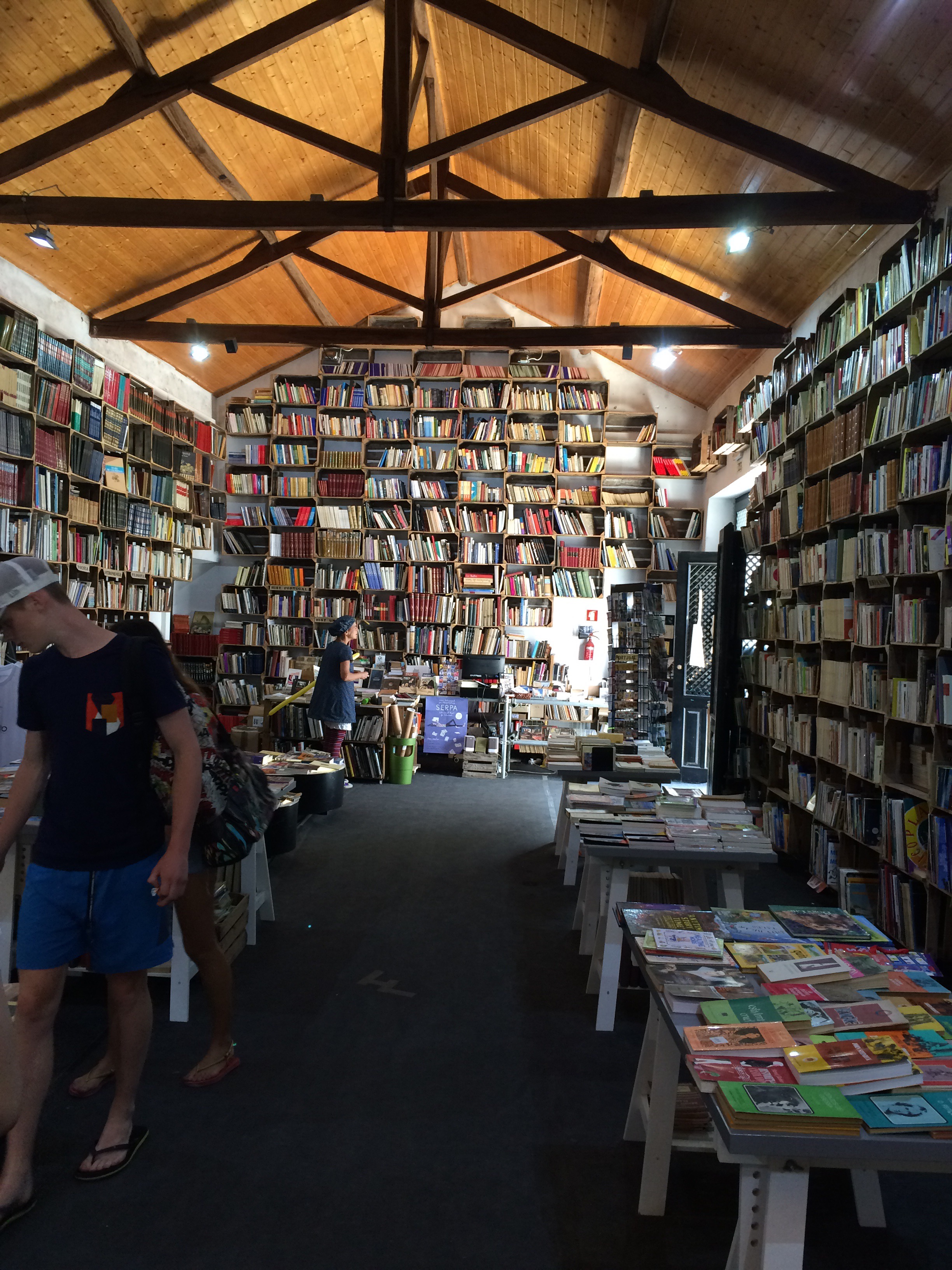
The next bookshop was in a converted church and had the most amazing structure of wooden shelving which doubled as stairs and a mezzanine. 


Beautiful isn’t it?

Reading-wise I’m currently enjoying  Lisa McInnerney’s The Blood Miracles, which is so far matching the quality of her first novel The Glorious Heresies

I hope you are also enjoying the holiday season and that you’re getting plenty of R&R (reading and relaxation) in!

August reading challenge: a book with a summery cover

Last month I ticked off my July reading challenge pretty quickly, having skipped through Evan Davis’s Post-truth: Why we have reached peak bullshit and what we can do about it fairly quickly after a train journey.

2017-08-05 11.14.50

This month, mindful that we are in the middle of the holiday season, the challenge is to choose a book, the cover of which is reminiscent of summer. (Whilst I definitely do not judge a book by its cover, I’m afraid I’m a sucker for the book that jumps off the shelf and grabs my attention!) Between the Baileys Prize in June and the Man Booker longlist in July, I’ve bought quite a lot of books recently, so I thought I’d dig through my not insubstantial pile of unread books purchased over the years for inspiration.

2017-08-05 07.34.39I have chosen On Chesil Beach by Ian McEwan, which was published in 2007. I suspect it has been languishing unread on my shelf for a number of years! The cover is, arguably, not particularly summery, showing a young woman walking along Chesil Beach in Dorset, at what looks like dawn, but could possibly be twilight. For those of you unfamiliar with Dorset, Chesil beach is a unique natural feature of the area. Geographically, it is known, I believe, as a tombolo. It is a 20 mile stretch of shingle beach that lies in a long, fairly straight line from Abbotsbury (near the swan sanctuary) to the Isle of Portland in Dorset. Whilst it is connected to the land at each end, it sits apart from the main beach along its length, creating  a kind of lagoon which is a haven for bird life.

Dorset is one of my favourite counties of England. I wouldn’t say I have spent lots of time there, I have been maybe four or five times, but each time I’ve visited I have found it the most beautiful, fascinating and interesting place. It is also deeply connected with my literary life. I am a huge admirer of Thomas Hardy and a few years ago, following a horrible relationship breakdown, I spent the most wondrous and life-affirming fortnight cycling around the county, visiting many of the towns, villages and monuments which appear in Tess of the D’Urbervilles and other Hardy novels. Jane Austen also has connections with Dorset, and who could forget The French Lieutenant’s Woman, a wonderful book, set in Lyme Regis, possibly the loveliest seaside town in the world.

Dorset also has many fascinating geographical and historical features; you can go fossil-hunting in Charmouth, and there are of course, the incredible cliffs at West Bay, made famous as the site of the murder of Danny Latimer in the TV series Broadchurch. The beaches are spectacular, my favourite is the beautiful, horseshoe-shaped Lulworth Cove. As I write this, I am reminiscing about a wonderful week we had there with the children two of three years ago, and aching to go back, even though the weather was typically British!

So, I will look forward to reading this book, as I set off on a short trip to Dublin later today to visit my in-laws.

What books remind you of summer?

If you have enjoyed this post I would love for you to subscribe to my blog by clicking on the link below or to the right (depending on your device). 


Summer holiday reading suggestions

The 2017 Man Booker longlist was released yesterday and there are a number of books on the list this year which most avid readers and observers of the book world will recognise. A wide mix of well-known and debut authors, women and men, and diverse countries. So, if you’re looking for some summer reading suggestions, you could do worse than browse the list. I’ve only read Sebastian Barry’s Days Without End, which I reviewed here back in June, and which I absolutely loved, but there are plenty of the others in the list that are on my TBR pile, including Arundhati Roy, Mohsin Hamid and Colson Whitehead.

However, I think it is fair to say that when it comes to holiday reading, most of us are usually looking for something a little lighter? (Which Days Without End certainly is not!) Something you can read and enjoy on the beach with one eye on the kids? Something you wouldn’t mind leaving on your holiday rental’s bookshelf? If these are your criteria, I would suggest the following from my most recent reads (the title links through to the reviews).

Firstly, Holding by Graham Norton, which I enjoyed on audiobook (you will too), but which would be equally good as a hard copy and which, for me, is perfect holiday reading. Secondly, Sometimes I Lie by Alice Feeney, a decent thriller which I enjoyed, despite it not being my favourite genre. Thirdly, The Secret Life of Bees by Sue Monk Kidd, which is a lovely life-affirming book.

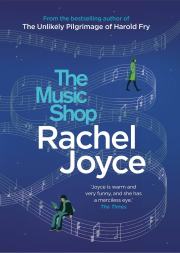
The Music ShopThere are of course, a lot of titles published in the Spring and early Summer, marketed specifically for the holiday reading market. I’ve been perusing the titles and these are the ones that have stuck out for me. The Music Shop by Rachel Joyce, is a love story set in the 1980s about Frank, a record store owner, and Ilse, a German woman whom Frank meets when she happens to faint outside his shop. It’s had good reviews and Rachel Joyce’s earlier novel, The Unlikely Pilgrimage of Harold Fry, did very well.


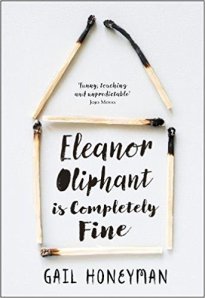
Eleanor OliphantEleanor Oliphant is Completely Fine by Gail Honeyman is on my summer reading list. Set in Glasgow, it’s about the emotional and psychological journey of a young woman from shy introvert with a dark past to living a more fulfilling and complete life through friendship and love. I’m looking forward to it.


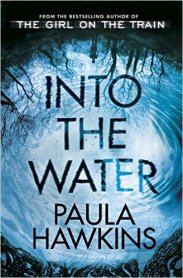
Into the water imgPaula Hawkins’s new novel Into the Water is everywhere, following the phenomenal success of The Girl on the Train which I’ve just finished listening to on audiobook. I had to find out what all the fuss was about! I enjoyed it, but I found most of the characters a bit irritating (that could be the influence of the actors reading, however) and, as I said, thrillers are not my favourite genre. Into the Water is another psychological thriller about a series of mysterious drownings. Like The Girl on the Train, I think, it’s as much about the internal dramas experienced by the characters as it is about ‘events’ so I’m sure it’s gripping.

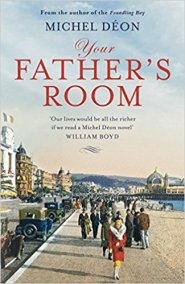
Your father's roomFinally, a little-known book that has caught my eye is Your Father’s Room by Michel Deon. Set in 1920s Paris and Monte Carlo (perfect if you’re off to France for your hols!) it is a fictionalised memoir based on the author’s own life. Looking back on his childhood in an unconventional bohemian family during the interwar period, the elderly narrator recounts how the events of his early life, including family tragedy, affected him growing up. I really need to read this; I’m writing a book myself partly based on my grandmother’s life in East London in the same period so I think I could learn a lot from how the author approaches this genre.


I hope you have found these suggestions helpful. If you have any of your own, I’d love to hear them. 

If you have enjoyed reading this post, I would love for you to follow my blog by clicking on the subscribe button below or to the left. You can choose to receive a weekly digest of my posts (I usually write twice a week), or get notifications direct to your Inbox as soon as I publish.


My life with Jane Austen

Today marks the 200 year anniversary of the death of Jane Austen. She died at the age of 41 in Winchester, having moved there whilst ill to spend her final days with her beloved sister Cassandra. She lived almost all of her too-short life in Hampshire. She first lived in the village of Steventon, where her father was the local vicar. After her father’s death she spent some time in Southampton, but it is Chawton near Alton with which she is most closely associated and where, between 1809 and 1817, she wrote most of her great works. Her former home is now the Jane Austen museum and provides a centre for scholarship of her work as well as a place of pilgrimage for her many millions of fans across the globe.

Like many women writers of her time, Jane did not achieve fame and fortune for her work in her lifetime. It was only in the second half of the 19th century, many decades after her death, that she grew in renown, although many at the time still did not favour her writing. It was considered too subtle for Victorian tastes, lacking in powerful sentiment and extravagant prose. It was only really as literary taste evolved that she was more widely appreciated in the 20th century as being way ahead of her time.

2017-07-18 12.56.38I fell in love with Jane Austen in my teens, and I have never fallen out of love with her. The first book I read was Pride and Prejudice, and I remember I much preferred this colourful collection of sisters to Louisa May Alcott’s in Little Women! But it wasn’t until I read Emma for my English Literature A level that I really ‘got’ Jane Austen and I was blown away. Even now when I read Austen I still see her writing as impossibly brilliant. And then when you think about the life she led, her modest rural upbringing, her insight into human character is barely plausible. After Emma I quickly gobbled up all of Austen’s work (sadly, there is too little of it) and my favourite is probably Mansfield Park.

At times, I have felt rather unfashionable saying that Austen is in my top three favourite authors (another being Emily Bronte, who only wrote one book, and was said not to be a fan of Austen). Many people, who have not read Austen deeply, assume she is rather staid and formal and for the middle-class and middle-aged. But to me she is an icon, a woman doing what she was good at in an era when women writers were virtually non-existent and if they were published it was under a masculine pseudonym. Yes, you can argue the range of her subject matter is limited, but she is so much more than that. She tells truth.

In this bicentenary year, there are many celebrations planned, many of them in Hampshire, unfortunately for me! You can find out about the various events planned here. She will also grace the new British £10 note to be issued by the Bank of England in September:

Austen note

The anniversary of Jane Austen’s death provides an opportunity to celebrate her great achievements as a writer. For me, she deserves to stand alongside Shakespeare as one of the literary greats at the heart of British arts and culture.

What is your favourite Austen novel?

If you have enjoyed this post, I would love for you to follow my blog and for us to connect on social media. Click on the ‘Subscribe’ button. 

Book review: The Essex Serpent by Sarah Perry

This book was everywhere when it first came out last year, surprising since it was written by a little known author and published by a relatively small independent publisher. It became a bestseller, was shortlisted for the 2016 Costa Novel Award and was the Waterstones Book of the Year. I was very keen to read it but it seemed to take a long time to be issued in paperback, so I’ve been hanging on for a while.

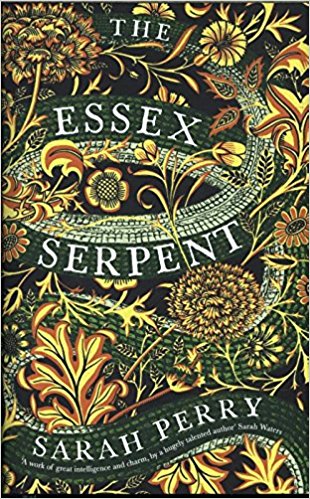
The Essex Serpent imgThe book is set mostly in the fictional Essex village of Aldwinter in the 1890s and the action takes place over the course of a year. The central dynamic of the plot is the relationship between Cora Seaborne, a woman approximately in her late 30s, who at the start of the novel is newly widowed, and William (Will) Ransome, the local minister. Will is happily married to Stella and they have three children, while Cora is happily widowed! It seems hers was a fairly loveless marriage in which she felt constrained and imprisoned and her husband appears to have been somewhat older than her. The lack of intimacy in the marriage is indicated by the fact they had only one child, Francis, and that he is an unusual boy (for Cora “nothing shamed her as much as her son”), who is almost certainly autistic.
Once she becomes widowed, Cora is able to follow her passion for natural science, and she moves out of London to Essex. There she becomes captivated by a local myth, a mysterious serpent that villagers feel is responsible for unnatural happenings, including unexplained deaths, crop failures, madness and distressed livestock. Cora first encounters Will on one of her forest walks, when the two rescue a sheep from a bog. They later meet socially and thereafter strike up an increasingly intimate friendship. The book becomes about the development of their relationship against a backdrop of events connected with the serpent, with the illness of Will’s wife, and Cora’s relationships with other friends, including that of Luke Garrett, a brilliant surgeon who is clearly in love with her.

Whilst the book is essentially about relationships and the nature of love (it is explored in many forms) it is also about a clash of worlds. Firstly, the old versus the modern – it is no coincidence the book is set on the eve of the 20th century – and science versus religion, where Cora and Will have some of their most passionate debates. There is also reason versus superstition; the villagers fear the Essex Serpent, whereas Will finds his parishioners’ fears almost pagan in tone, and Cora wants to prove the existence of the serpent, as some sort of lost creature.

Perry also explores the position of women, from Cora, the scientist, for whom marriage had “so degraded her expectations of happiness” and for whom widowhood and thus the single life had “freed her from the obligation to be beautiful”, to Stella the model dutiful Victorian wife and mother, afflicted by a quintessentially 19th century illness. There is also Martha, Cora’s maid (although her exact position in the household slightly defies definition!), also a political activist who utilises the connections she has made through Cora to further her Marxist leanings. In many ways the themes of the novel are very modern indeed – Martha’s campaigning for suitable social housing for the poor of London is resonant of a very 21st century problem. It’s also a very erotic novel, in the Gothic sense, without being explicit; there are many tensions below the surface and some of these do not get fully resolved, which is actually quite true to life when you think about it.

I thoroughly enjoyed this book and would recommend it highly. It gripped me to the end. It’s a novel rich in themes, rich in its descriptive power and rich in its evocation of time and place.

If you have read this much talked-about book, I’d love to know what you thought of it.

If you have enjoyed this post please follow the blog, and let’s connect on social media.

July reading challenge – something from the library

You know summer is on its way when the local library announces the annual Summer Reading Challenge! Aimed at children of primary school age in the UK it is a great way of getting kids engaged in books (any books!) and giving them rewards for achieving certain reading goals. I love the way the organisers come up with different themes each year, and interesting activity packs that provide a surprising amount of diversion. This year the theme is Animal Agents and it’s being launched next week, so do look out for it if you have primary age children. I’ll be writing more about it once it’s launched so look out for a future blog on the topic.

2017-07-06-09-53-13.jpg

In the meantime, it’s the beginning of the month so it must be time for this month’s reading challenge! With the holiday season upon us, June’s challenge was to read a literary travel book. I chose On a Shoestring to Coorg by Dervla Murphy, and posted my review earlier this week, which you can read here.

This month’s challenge is to go to the local library and pick out a book (the challenge will be to keep it to just one!) and to read it before its due date. I have had a deep passion for libraries since I was a child (I was lucky that my mother took me regularly) and believe firmly that they provide an essential service. I am a compulsive book-buyer, but there is no doubt books can be expensive and what if you’re not sure whether you’re going to like the book? For the old and the young and for those on fixed or low incomes, libraries may be the only viable source of books. Not only that, but libraries provide a host of other services: librarians are information specialists and can help you find things out, they are often at the centre of a community providing reading groups, children’s book clubs, places to sit when it’s cold, places to study where it’s quiet, access to computers (not everyone has one at home) and of course reference books which you may not necessarily want to buy. Need I go on?

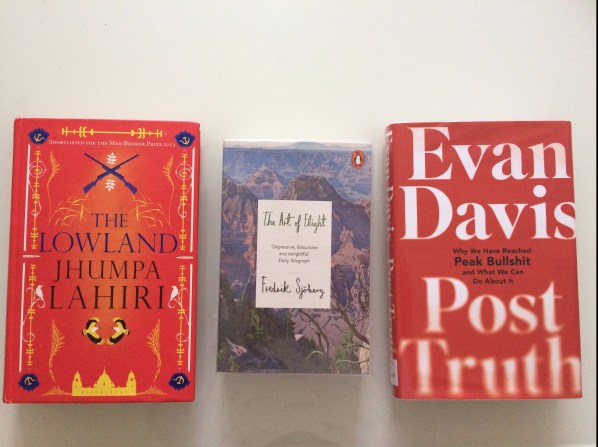
You will gain much from a visit to your local library. I came away with a whole bunch of leaflets about things to do over the summer, theatre guides, etc, a couple of guidebooks on Portugal (where I’ll be heading in August) as well as three books:

2017-07-07-15-04-05.jpg

The Lowland by Jhumpa Lahiri was shortlisted for the Man Booker in 2013, and caught my eye as I love Indian literature, and having just read about Devla Murphy’s travels in the south of the country, my interest was piqued anew. It’s set in Calcutta in the 1960s and ’70s and is about two brothers, very close as children, whose lives take dramatically different paths as historical events unfold around them. I was also drawn to The Art of Flight by Frederik Sjoberg which I think is a kind of memoir, structured as a number of short essays and prose pieces about the natural world. Sjoberg is a Swedish writer I’ve never heard of, but the book looks interesting. Finally, I had reserved a copy of Evan Davis’s newly-published book Post-truth: why we have reached peak bullshit and what we can do about it, after spotting it in the bookshop recently. Evan Davis has for years been one of my favourite journalists because he is warm, watchable, connects well with the viewer and is fantastically clever. He has an ability to cut to the essence of an issue and frequently outsmarts even the most nimble interviewees, so I’m interested in his take on this cultural shift we seem to be experiencing in politics.

I want to read all of these now, so I’m not sure which I will take on for the July challenge. I’m off on a train journey to London tomorrow, so it might well be the one which weighs least!

Have you picked up anything interesting from the library recently?

If you have enjoyed this post, then please subscribe to my blog by clicking on the button below or to the left, depending on your device. Let’s also connect on social media and Goodreads.

#IBW 2017 – Independent Bookshop Week 24 June – 1 July

IBW 2017We’re all on a budget and we’re all busy, so why would you make the effort to go to an independent bookshop when, with a couple of clicks, you can get what you want from the comfort of your armchair and have it delivered, and probably for a discount on the jacket price? Well, as they say, use it or lose it!

The bigger they get the more powerful they become

Most of us would be uncomfortable with the idea of only one major supermarket or only one petrol station. We all recognise that competition means consumers get the best deal. If there were only one supermarket around, you would not see the BOGOFs, the price reductions, the CHOICE. Don’t get me wrong, I use A****n along with everyone else, but I try to spread my spending. And when you work it out, it usually is not that much cheaper. As for choice, well, I am plagued by daily emails recommending heavily-marketed titles to me, but what about the books that are not pushed my way, and the authors that have written them? There’s nothing qute like discovering something new, a title you haven’t heard about. Bookshops can give you those surprises.

If it’s cheap you value it less

Anything that is cheap and plentiful we tend to treat with less respect than something that is scarce or more expensive. In my household, cheap food is much more likely to go to waste or pass its ‘use by’, whereas we are undoubtedly more disciplined about expensive organic or free range products. I think the same is true of other items we consume in our households; if we’ve paid more for a book, we may be more inclined to value it.

You don’t get much buzz with a ‘click’

For me, there is nothing quite like the smell of a bookshop, or the pleasure of browsing the shelves, spending time properly choosing, reading the first couple of pages, feeling the weight of a book in may hands. An online purchase just does not give me that same experience. I know some people like to choose in the shop and then go home and buy online, to get the discount, but, really, for a book? If you’re there in the shop, you’ve made the effort to go there, is it really worth the one or two pounds you might save by buying  it online? And then you’ve to wait until it’s delivered!

Real-life independent bookshops provide an experience, and the good ones (and it’s mainly the good ones that have survived) often provide spaces for you to sit and read, or to hang out with your kids. A Saturday afternoon activity that will cost you less than a tenner! For a child this is exciting, and will encourage them to read much more than a brown package arriving through the post, two or three days later.

You are dealing with people who are passionate

It’s hard running a small shop in today’s often under-crowded high streets, but it’s even harder running an indie bookshop when you consider what they’re up against. Bookshop owners definitely don’t do it for the money! If you love books you have to love indie bookshops and for my money their passion, expertise and sheer tenacity deserve our support.

So, check out your nearest indie bookshop here and make an effort to take yourself along some time this week. You won’t regret it.

Do you live near a great indie bookshop? If so, give them a shout out here.

If you have enjoyed this post, please subscribe to my blog to read future posts.

Book review: “Days Without End” by Sebastian Barry

I listened to this on Audiobook, which was narrated by the wonderful Aidan Kelly. It’s a brilliant book, with the most sublime use of language, my appreciation of which was enhanced by Kelly’s fabulous reading. I had the same experience with Holding by Graham Norton, but sadly not with The Girl on the Train by Paula Hawkins, which I’m listening to at the moment, where I’m finding the narration rather irritating. Aidan Kelly’s reading brings such an authenticity to the listening experience that I actually believed I was listening to Thomas McNulty.

Days Without End img

The book is set in America in the 1850s, where our very young narrator and central character, Thomas McNulty, finds himself after fleeing devastating famine in Sligo, Ireland, and searching for a new life, any life, in the New World. He signs up as a mercenary soldier for the Government infantry in the civil war against the Confederate south. There he meets ‘handsome John Cole’, an American, with whom he develops an intimate relationship. When their time in the infantry ends the two make a living for a while as entertainers where Thomas masquerades as a woman. He finds he is comfortable playing this role with John Cole as his beau, and in the periods when the two live a settled life together, it becomes his costume of choice, as well as providing a convenient disguise in times of trouble.

The accounts of war and violence are graphic and horrific and no detail is spared, which I found difficult to listen to at times, although also strangely compelling. Thomas and John rejoin the army further on in the novel and are involved in head to head battles with native American Indians. These accounts were even more harrowing as the contrast between the two sides is exposed so starkly, the soldiers having far superior firepower. In one of these encounters, Thomas and John rescue a young girl, Winona, whom they practically adopt as their own daughter and determine to look after.

Some of the scenes in the book are brutal and hard to read (or in my case listen to). The injustice of the men’s situation, the terrible conditions in which they have to live, the way that soldiers are treated as cannon fodder and afforded very little respect by their military masters is shocking. They are forced to live a most brutal existence and for many of the men the experience is completely dehumanising. The extreme violence they both administer and experience is like nothing that most of us will ever have come across and the novel is very powerful as a result. And yet, there is also tremendous tenderness: the relationship between Thomas and John Cole is beautifully drawn, though we never hear John’s voice first hand, and never gratuitous, never titillating. Even Thomas’s cross-dressing is handled with a beautiful innocence. The love that is shared between the two young men and Winona is also very powerful; that they are capable of such care of another human being is all the more moving when you consider the extremes of violence, deprivation and injustice in which they have existed.

There is a tale here, though mostly the novel is about a time and place in history and what that was like for the people immersed in it. It is a tale not just of survival but about how people who have nothing, have love and find a way, ultimately, to live peacefully.

This is one of a series of novels about various members of the McNulty family. I haven’t read the others, but I will certainly do so after reading Days Without End. The novel won the Costa Book Award in 2016 and has been widely acclaimed.

I recommend it highly and can particularly recommend the audiobook. That said, the language of the book is so beautiful that I would also love now to go back and read it, to see those words dance on the page.

If you have read this book, I would love to hear your thoughts.

If you have enjoyed this post, it would be great if you could follow my blog by clicking the subscribe button below or to the right, depending on your device.