

I suggested this to my book club as our first read of the summer – I had seen a trailer for the film (starring Gillian Anderson and Jason Isaacs) and it reminded me that I had bought this book some time ago and it was sitting on a bookshelf somewhere in my house, unread. We thought we could read the book then watch the film – I’m a fan of Gillian Anderson (frankly, who isn’t?) so thought it was bound to be good.
Almost as soon as I started reading it, the whole controversy around the book blew up – for anyone who needs reminding, there were allegations (published in The Observer in July) that the author misrepresented aspects of her partner Moth’s illness, and that she had defrauded a past employer and that was the reason for losing their home. Even if you have not read the book, I am certain you will have heard of it, if you live in the UK certainly, so you will no doubt know that the premise of the book is that the author and her partner are evicted from the rural home they have lived in for years after falling into debt as a result of a bad business investment (she alleges in the book that the couple were poorly advised, misled even, by an old friend). At around the same time Moth is diagnosed with an incurable degenerative neurological condition. Facing poverty, homelessness and inevitable physical decline, they decide to embark upon a walk, England’s South West Coast Path that goes through Devon, Cornwall and Dorset. The distance is in excess of 600 miles.
The book was a spectacular success for the debut author – a story of grit and determination in the face of a cruel world (both the human and the natural), a journey of self-discovery and finding joy in the simple things in life when all material possessions are stripped away. The book also set the author on a successful career in writing and she has since published two further nature memoirs. A fourth book was due to be published this summer but Penguin have put this on hold due to the controversy surrounding the author and The Salt Path.
But what of the book itself? My fellow book club members and I quite liked it, but I’m afraid it did not meet our expectations. The writing is good in parts, but in others I found it quite…mediocre? The comments on double standards in attitudes to homelessness and poverty are worthy but they are handled in a clumsy way; for example, where the couple encounter abusive locals or holidaymakers who sneer at their clothing, their poverty, their demeanour or their behaviour I found the account did not ring true. You would not necessarily expect the author to recall every word precisely accurately but I would expect an author to be able to write a conversation or dialogue that felt authentic. Some of the stories about places they camped and how they fled at dawn to avoid paying for a pitch felt like tall tales. Finally, I just found the book a bit boring, I’m afraid. I wasn’t gripped, or keen to read on finding out what happened on the next 10 mile stretch. Many times I just found myself drifting off.
As for the accusations of misrepresentation, well that is problematic. The publisher really should have done their due diligence, particularly as the book is so detailed at the start about the ‘bad business’ that got them into financial difficulty (I’m surprised their former business acquaintance’s lawyers are not on to them as well). Personally, I found this part of the book particularly uninteresting and it read to me like getting back in print under cover of a confessed naivety. I think it’s okay for a memoir to stretch the truth a little for narrative effect, but on the face of it it seems the author has gone too far in that respect, though it must be said she denies all the allegations made against her. For me though, the book is quite weak overall so I am not sure what has been gained by the misrepresentation (if there has been any) – it would have been enough had they just found themselves at a financial/health/age-related crossroads and embarked on the journey for no particular reason.
Quite honestly, I am surprised it won so many plaudits and everyone in my book club was decidedly underwhelmed. Cheryl Strayed’s Wild: A Journey from Lost to Found is a far superior example of the genre in my view.



 It therefore seems timely that I recently read the memoir Unorthodox by Deborah Feldman. Deborah is in her mid-thirties and lives in Berlin, with her young son. However, she grew up in Williamsburg, Brooklyn as a member of the Satmar sect of Hasidic Jews. She was brought up by her grandparents; her parents separated when she was very young. Her father was a man with sub-normal intelligence, though the precise nature of his disability or illness was never identified. Deborah’s mother was English, the daughter of poor divorced Jewish parents (though not Hasidic), who was unlikely ever to be able to marry well. The marriage was effectively one of convenience for both of them and Deborah was born soon after. The marriage broke down quite quickly, however, and Deborah’s mother was compelled to leave. The community put enough pressure on to ensure she left her child behind.

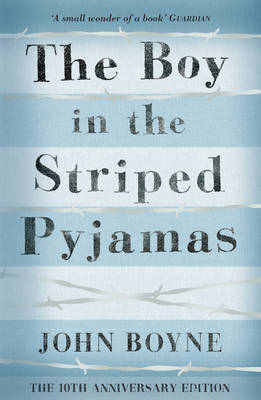 So now it is time top get back on track and announce the book for November. Our theme is a children’s book; we are winding down towards the end of the year, but I am not going to make it too easy, because this book is a challenging one – John Boyne’s The Boy in the Striped Pyjamas. I have been meaning to read this ever since it was published to great acclaim in 2006. My elder daughter read it recently and has been nagging me to follow suit. She found it very moving so I am looking forward to it.
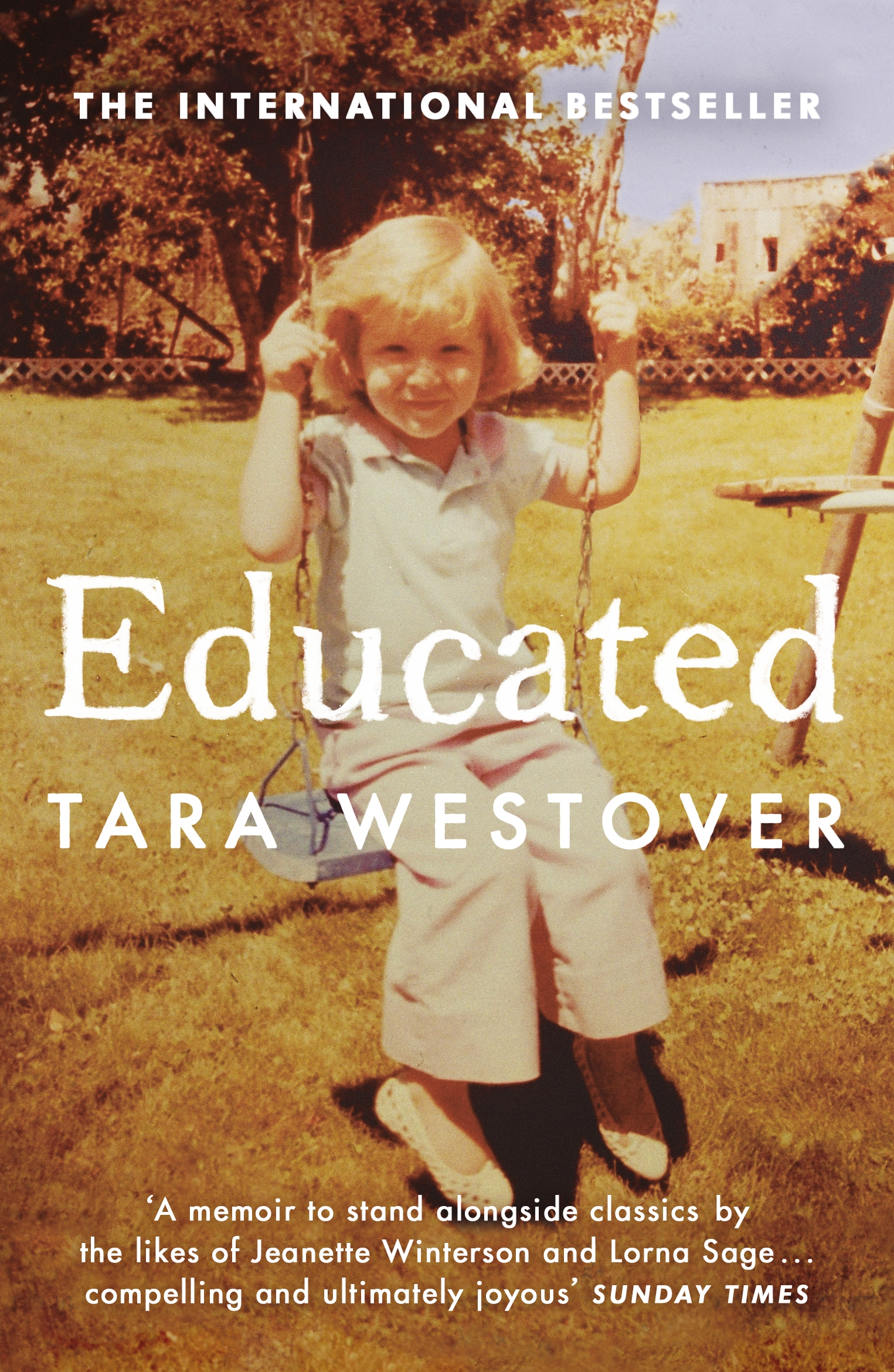 This book caused something of a sensation when it was published last year. It is the extraordinary memoir of a young woman who grew up in rural Idaho, as part of a large Mormon family. Nothing too outlandish there until the author begins telling you about the father’s survivalist beliefs (he hoards supplies of food and fuel in their bunker for when catastrophe strikes, as he believes it inevitably will), his Christian fundamentalism (quite extreme beliefs about, for example, what women should wear, that even their fellow Church members find uncomfortable) and the obsessive control he exerts over the rest of the family. The unconventional nature of the family would be enough to make this a fascinating read, but what makes it shocking is the level of violence, of almost sadistic cruelty. Some of is quite hard to read and at times I found myself gasping out loud.
 My book club chose this for our pre-Christmas read (I’ve only just finished it!) and we all thoroughly enjoyed it. It’s long, and perhaps could have been edited somewhat, but I imagine the main buyers of this book will be Michelle-fans who want as much detail as possible. The first part of the book was, for me, the least engaging. My fellow readers and I were a little surprised to learn that Michelle Robinson did not in fact come from an affluent background. She was a ‘Southsider’ – from a part of Chicago that was fairly blue-collar and largely African-American, and became more so as she grew older and some of the white residents moved out. A picture is painted of a family with strong values around hard work, doing the right thing, caring for others and loyalty to family. Michelle excelled in school through hard work, determination and the support of her parents and attended both Princeton and Harvard Law School. She has never forgotten her humble beginnings, however, and this underpins her commitment to equality and social justice. However, I did feel this part of the book was most descriptive; in the context of the book as a whole I can see why it would have been important to her to put her politics in perspective, but it was a tiny bit…pedestrian?
 We decided for our March meeting we’d read Graham Norton’s 2014 memoir The Life and Loves of a He Devil. We wanted to read an autobiography and felt that among the many “celebrity” memoirs out there, Graham’s might have more to offer than most. We all like him as a broadcaster and personality and thought it might be fun. We were not wrong! But when we came to meet and discuss it, we had very little to say. We’d exchanged a number of messages on our WhatsApp group in the preceding weeks, with many laughter emojis, asking each other if we’d come across the dog and condom anecdote yet, or the Dolly Parton story. Some sections of this book, which I read most of whilst on a train journey to London, were laugh-out-loud, or rather “try to suppress a laugh because I’m in public”, moments. It’s a romp and Graham writes the way he speaks, with wit, authenticity and complete honesty. His writing style is similar in his novel
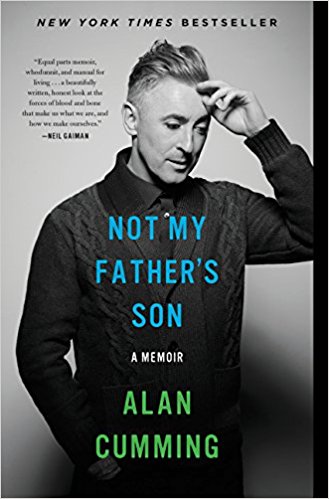 I was really torn between Claire Tomalin, Anjelica Huston and Alan Cumming. I left it in the hands of the local library and it was Alan Cumming that became available first! I’m still waiting for Claire Tomalin, and that is probably the one I was keenest to read. I was attracted to Alan Cumming’s book, however, because its premise is not dissimilar to the book I am writing, namely family research and the uncovering of a long-held secret. There the similarity ends, however, as Alan’s book is much more about his relationship with his father.
 For November, the challenge is to read a book set in or by a writer from the southern hemisphere – which is, broadly, South America, southern Africa and Australasia. As the nights draw in and it gets increasingly wintry I wanted to be reminded that in other parts of the world it is Summer! So, my choice this month is Isabel Allende’s Portrait in Sepia, a book I picked up in my local Oxfam bookshop and which has been sitting on my ‘to read’ pile for far too long. Allende is such a fine writer and I’ve read a number of her books over the years. It’s great to have an excuse to dive into this one and experience the sensuousness of her writing and the world she evokes, as the last leaves fall from the trees here and nature seems to go into hibernation.
 I’m not knocking either of these genres, I’m simply saying that literary non-fiction is a very tough genre to sell in. I read recently that the average non-fiction title in the US sells 250 copies a year (one for roughly every million people), or 2,000 copies over its lifetime. It makes you wonder why on earth you would write one! Many seem to be written by academics, journalists or people who have already established themselves in a chosen field and know they are writing for a particular niche. One striking thing about the genre, though, is that authors have a real passion for the topic, and the authenticity of the work is palpable.
 Julia's books