I’m finally getting back into my blogging groove after a fairly difficult few months and feel it’s time to revive my occasional #Keep Kids Reading series. Regular readers of this blog will know that I am passionate about children’s books and about making sure our young people don’t neglect reading in favour of seemingly more “exciting” (but ultimately less satisfying) pursuits – you know what I’m talking about don’t you?! Every writer and keen reader I know remembers childhood reading with joy – the torch under the bedclothes, a favourite book read over and over, sitting on a parent or grandparent’s lap enjoying time shared. There is a relatively short window in which to foster a love of reading, a love which brings lifelong benefits, and I fear that many youngsters today are missing out on something precious. #KeepKidsReading is all about trying to keep books high up on our childrens’ agendas. Plus I love an excuse to sit down with something from the amazing world of contemporary literature for kids!
 I’ve just finished a lovely little book The Umbrella Mouse by Anna Fargher. When I was browsing in my local bookshop a few months ago, one of the assistants recommended it to me and said it had had her in tears. I knew then it was a ‘must-read’! I got my copy secondhand online and it’s signed!
The story is set in 1944 in World War Two and the author says she wrote it because she felt there were not enough books about this period aimed at children. The story is set amongst an animal community that is affected by the war and plays its part in defeating the Nazis. Pip Hanway is a mouse who lives with her parents in an umbrella shop in London. Their nest is inside the prized antique umbrella that sits in the window of the shop. When the shop is destroyed by bombing Pip finds herself alone, her parents and the shop owners seemingly having been killed. All that is left of the life she has known is the umbrella. She decides that her only hope is to go to Gignese in Italy, to the umbrella museum there that her parents have told her about and where she knows she still has family.
She is befriended by a rescue dog, Dickin, who takes her to St Giles, an underground hub for all the London animals, domestic and wild, made homeless by the war, and thence to the Secret Underground Animal Army, an intelligence outfit helping Churchill by mobilising animals across Europe. Dickin believes they will help Pip get to Italy with her umbrella. They agree that she can participate in a mission to get a secret message to the (animal) Resistance in France, and from there will be directed to Italy.
After a perilous journey through a storm, down the Thames and across the Channel, Pip arrives in France with her companions, Hans, a German rat fighting on the Allied side, and GI Joe, a messenger pigeon. She is welcomed by the Resistance animals there and takes part in a further dangerous mission to sabotage a German camp, at which Pip displays bravery she did not know she was capable of. Her commitment to the cause helps her to deal with the grief at the loss of her family and her old life, as she finds new friends, and exposes a traitor in the midst of the Resistance force.
The book did not have me in tears, which is perhaps a good thing! It was a nice little tale that had plenty of action, good characters, a nice solid story and gently introduced ideas about the war, the brutality of the Nazis, the bravery of those who fought against them and the impact the war had on civilians. The standard of writing makes it quite mature but the story and characters (talking animals) suggests a younger age group, so I would recommend it for 8-11 year olds, with the caveat that younger kids will need to be quite accomplished readers, while it would not suit those at the upper end of the age range who have moved on to more mature texts. So, for example, anyone who is on to the Diary of Anne Frank (which I think all my kids did at school in year 6) may find this book a little childish. I hope that helps. This is apparently the first in a planned series about the adventures of Pip the umbrella mouse, so look out for more.
A nice one for me – read on a day when I was ill in bed, and needed something not too taxing!
If you have enjoyed this post, I would love for you to follow my blog. Let’s also connect on social media.


 So now it is time top get back on track and announce the book for November. Our theme is a children’s book; we are winding down towards the end of the year, but I am not going to make it too easy, because this book is a challenging one – John Boyne’s The Boy in the Striped Pyjamas. I have been meaning to read this ever since it was published to great acclaim in 2006. My elder daughter read it recently and has been nagging me to follow suit. She found it very moving so I am looking forward to it.
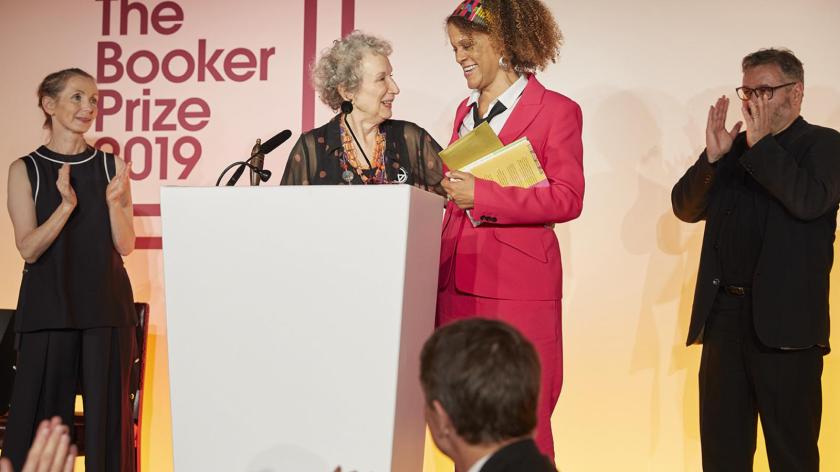 The Booker prize winner(s) were announced last week and for the first time in years, and against the explicit rules of the contest, the judges awarded the prize jointly to Margaret Atwood and Bernardine Evaristo. I have not read either book yet, though I am currently listening to The Testaments on the excellent BBC Sounds and enjoying it enormously, though it is extremely dark. There has been so much publicity around Atwood and The Testaments that I was wondering how on earth the Booker prize judges were going to be able to not award it to her! So, I think the judges probably made the right decision. By now, I would probably have worked my way through at least two thirds of the shortlist (I’ve never managed all six in the period between shortlist and winner), but, for obvious reasons, I have not read that much so far this year.
 It is somewhat and sadly ironic that I was reading Elif Shafak’s 10 Minutes 38 Seconds in This Strange World at the time of my mother’s death, a novel about a woman, Leila, an Istanbul prostitute known as Tequila Leila, who is brutally murdered in a back alley by street thugs. Rather than death being an instant occurrence, however, the author explores the idea of it as a transition from the world of the living to the ‘other’ (with a duration, for Leila, of ten minutes and thirty-eight seconds) during which time her whole life flashes before her. Leila’s life story is told through a series of recollections about her five closest friends, how and when she met them and what impact they have had on her life. We learn that Leila came from a relatively affluent family. Her father was anxious for heirs, but when his wife proved incapable of having any he took a second wife, Binnaz, a much younger woman from a lowly family, who gave birth to Leila. Binnaz was forced to give up the child to the first wife to bring up as if she were her own, whilst Binnaz, who never recovered mentally from the trauma of that event, was thereafter known to Leila as ‘Auntie’.
 The book concerns two women, Rosemary, an 86 year-old widow, and Kate, a 26 year-old journalist, and how they are brought together by chance when the Brixton lido is threatened with closure. Their relationship evolves as together they mount a campaign to keep the pool open, drawing in other local people and reviving a community spirit that everyone involved thought had been lost. In some ways the two women could not be more different: Rosemary is nearing the end of her life, now alone having lost her beloved husband, and has lived in this area of South London all her life. Kate, on the other hand, is young and bright, and has moved to the city from Bristol to begin her journalistic career on the local paper. Kate too, though, is lonely; unlike Rosemary she has not lost anyone, but she has not found anyone either, and she grapples with panic attacks, anxiety and low self-esteem. She shares a house with a number of similarly isolated flatmates, none of whom she knows, and stays alive thanks to ready meals.
 It seems appropriate that I should be posting a review of Normal People this week, a book so very much about Ireland, the challenges and contradictions at the heart of a nation that has transformed itself in recent years. It is not just about Ireland, but about what it means to be young in Ireland and about class. It is also about identity and, in common with some of the issues faced in the UK and many other societies I am sure, the draw away from regional towns and cities, towards a centre, a capital, where there is perceived to be more opportunity, and what that means both for the individual and for society in the wider sense.
 I have chosen a book which caught my eye a couple of months ago – The Lido by Libby Page. It concerns a friendship between two women, 86 year-old widow Rosemary and 26 year-old Kate, who strike up a bond when their local outdoor swimming pool in Brixton, south London, is threatened with closure. The two women have different reasons for wanting to campaign to keep the lido open, but they are brought together in a common cause.
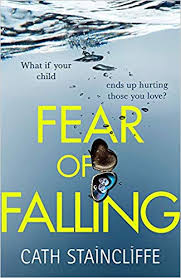 The centre of the story is the relationship between two women, Bel and Lydia, who meet at a New Year’s party in 1985, when they are both sixth-formers although at different schools in Yorkshire. They are very different people – Lydia is reserved, generally quite sensible, and from a secure and ordinary family. Bel is wilder, her family rather more bohemian and she has a difficult relationship with her parents. Bel grew up in France and then London and it is her father’s job that has brought them to northern England, where she is something of an outsider. Bel and Lydia are drawn to one another, despite their very different personalities; for Lydia, Bel represents spontenaiety, excitement, danger even. For Bel, Lydia represents security, a steady point in a turning world.
 Milton the Mighty by Emma Read
 The Dog Who Saved the World by Ross Welford

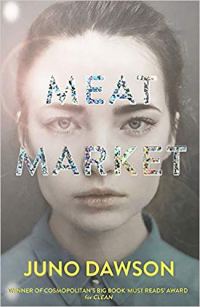 Meat Market by Juno Dawson
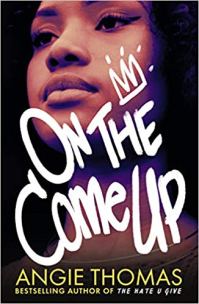 On The Come Up by Angie Thomas
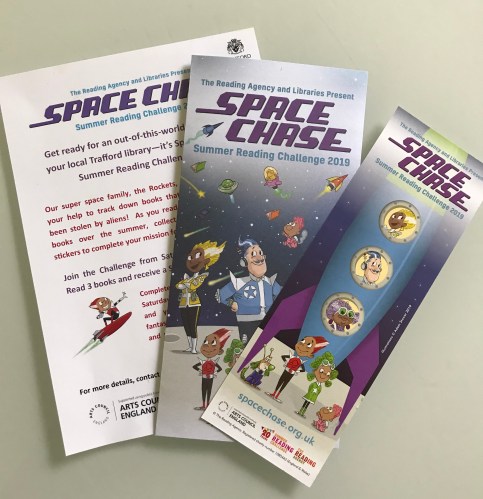
 Julia's books