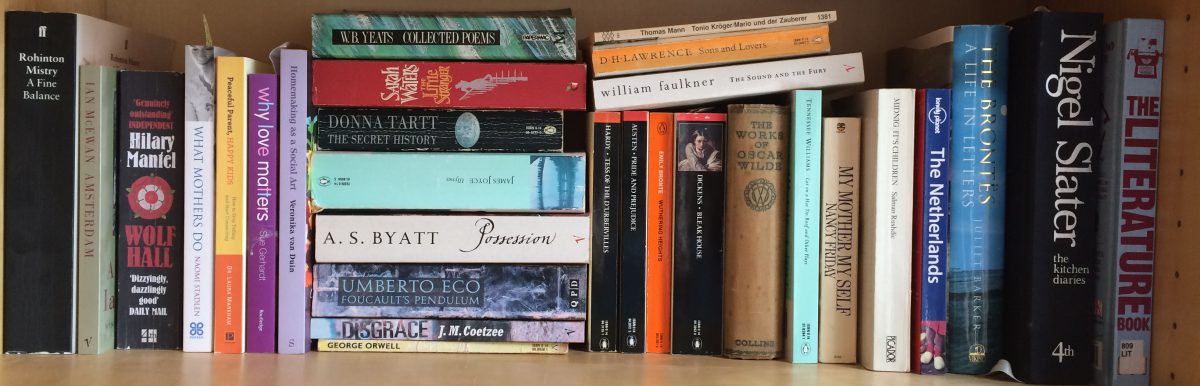
Most of my reviews recently seem to have been of quite high-brow books. I wouldn’t want to give the impression that I’m any kind of snob when it comes to reading it’s just that it has all been quite literary of late. I’m currently reading Claudia Winkelman’s Quite in the crevices of my life (when the complex plotting of Tinker, Tailor, Soldier, Spy starts to make my head hurt!), my book club’s choice and which one of my friends described as ‘hubba bubba’! If you are old enough to remember what that is, well, it is describes the book perfectly! Look out for my review of that soon.

A novel I read recently, which was at the more popular end of the spectrum (no judgement intended), was Queenie, the debut novel by Candice Carty-Williams. It was shortlisted for a number of prizes, including the Waterstones Book of the Year and the Costa First Novel Award, was longlisted for the Women’s Prize last year and won in two categories of the British Book Awards in 2020 – Book of the Year and Debut Book of the Year. So, it was quite a sensation, and its thirty-two year old author seemed to be everywhere!
Rightly so, because it is a super book, very readable. In my head I thought it was a YA novel, the cover and the marketing scream YA, but it’s really quite adult; I’m not sure I’d be giving it to my 16 year-old for another year or so, for example. Lots of quite graphic sex.
Queenie Jenkins is a twenty-something Londoner of Jamaican origin and the novel begins with her break-up from long-term (white, middle-class) boyfriend Tom. He initially tells her it is a “break” but it becomes quite clear that he is simply trying to let her down gently. Or failing to be honest with her, depending on your perspective.
Queenie’s life soon spirals out of control. She has to move out of the apartment she shared with Tom into a much more shabby and smaller room in a house. She also finds herself engaging in a series of brief and bruising sexual encounters. Some are literally bruising – one affair with a junior doctor leaves her with a physical damage and a STD. Almost worse, however, is the work colleague who seems nice, approaches her with sensitivity and understanding, but, guess what? He just wants the sex and turns out to have…other commitments!
This is more than just a break-up novel, however. The book has been described by some as the ‘black Bridget Jones’, but it is far more complex than that. Queenie experiences gaslighting of the nastiest kind, and you can’t help but notice the racial dimension to that. But it’s not exactly a ‘race’ novel either…it is more complex than that too! It is a novel about sisterhood because it is friendship that gives Queenie the leg-up she needs to get her life back on track, her relationships with ‘The Corgis’ – the title of the Whatsapp group she invites her three closest confidantes to join.
This book is a good read. I don’t want to say ‘fun’ (like Bridget Jones) because it is at times deeply harrowing, although the author has a deft comic touch that quickly lifts you out of the gloom. It’s snappily written, with a style that a younger readership will recognise and engage with, but which is not too beyond the comprehension of this middle-aged reader either!
So, proof – I’m not just into classics and high-brow!
Recommended.
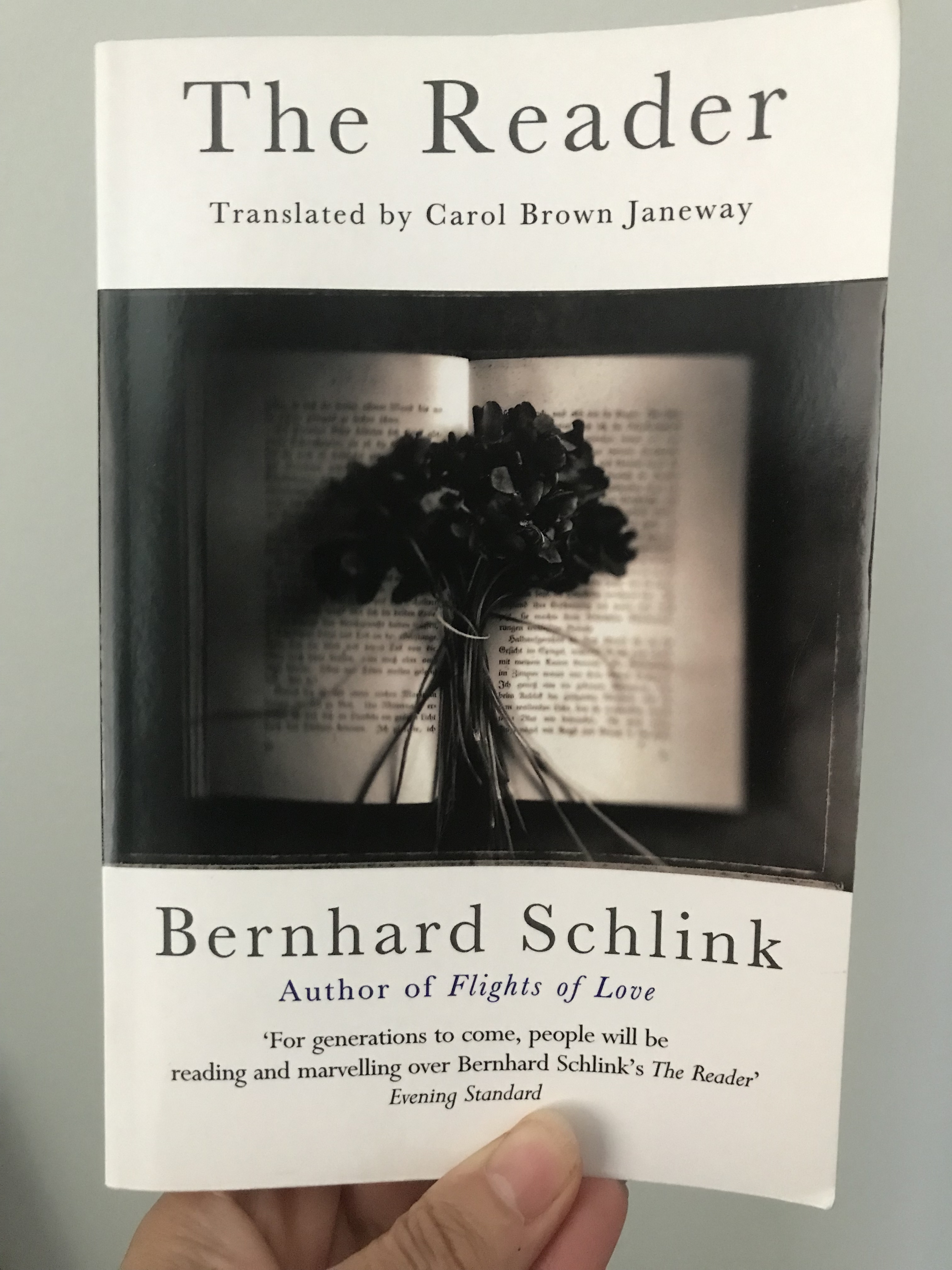 The story begins when 15 year-old Michael, off school for many months after contracting hepatitis, seeks out Hanna Schmitz, a woman who had been passing when he found himself being sick in the street and who had helped him. Once he is well again, Michael’s mother sends him off to find the mystery good Samaritan in order that he can thank her. Hanna is twenty years Michael’s senior and employed as a bus conductor, but despite the social and age gap between them, they begin a passionate affair, both parties equally consenting. One of the more intimate aspects of their relationship is that Michael reads aloud to Hanna, after sex and in the bath mainly, although never the other way around. Michael never questions Hanna’s desire to have him read to her, he just accepts it. This makes up the first part of the book and perhaps it is a testament to events that have occurred since the time of its writing that all of us (mothers of teenagers!) found the prose rather discomfiting, and not a little implausible. Hanna disappears mysteriously out of Michael’s life, leaving him heartbroken and perhaps also rather damaged.
 The central character, Hildy, is a slightly quirky, slightly awkward 17 year-old. She has two close friends – her best friend is Max, who is gay and fairly camp with it, and her other good friend, Xiu is much more astute, confident and successful in affairs of the heart. She confides in them extensively about her feelings and worries. Hildy has not had a boyfriend for some time and so, out of a degree of desperation signs up for a research programme which is exploring whether it is possible to facilitate a romantic relationship between two people by making them ask and answer a specific set of (36) questions. Hildy’s ‘partner’ in the programme is Paul, who, from the outset, makes it quite clear that he is only in it for the $40 fee and who is a nonchalant and frustrating participant to begin with; where Hildy makes an effort to answer the questions truthfully and fully, Paul is uninterested and uncooperative, and obfuscates throughout. Their first session ends with Hildy throwing a tropical fish at Paul that she had bought for her younger brother on the way to the meeting.
 Juno is a widely-published author, Queen of Teen 2014 and member of the LGBT community. The story begins with a funeral, for Eliza, girlfriend of central character, Samuel. Eliza was killed in a car accident in which Samuel was driving. He is grief-stricken and finds himself in conflict with his family, who do not understand his torment. Samuel seeks out the estranged sister of his vicar father, with whom he cut off contact after she began to dabble in the supernatural. Through his Aunt Marie, Samuel enters a world where he can bring Eliza back to life, but at a deadly price.
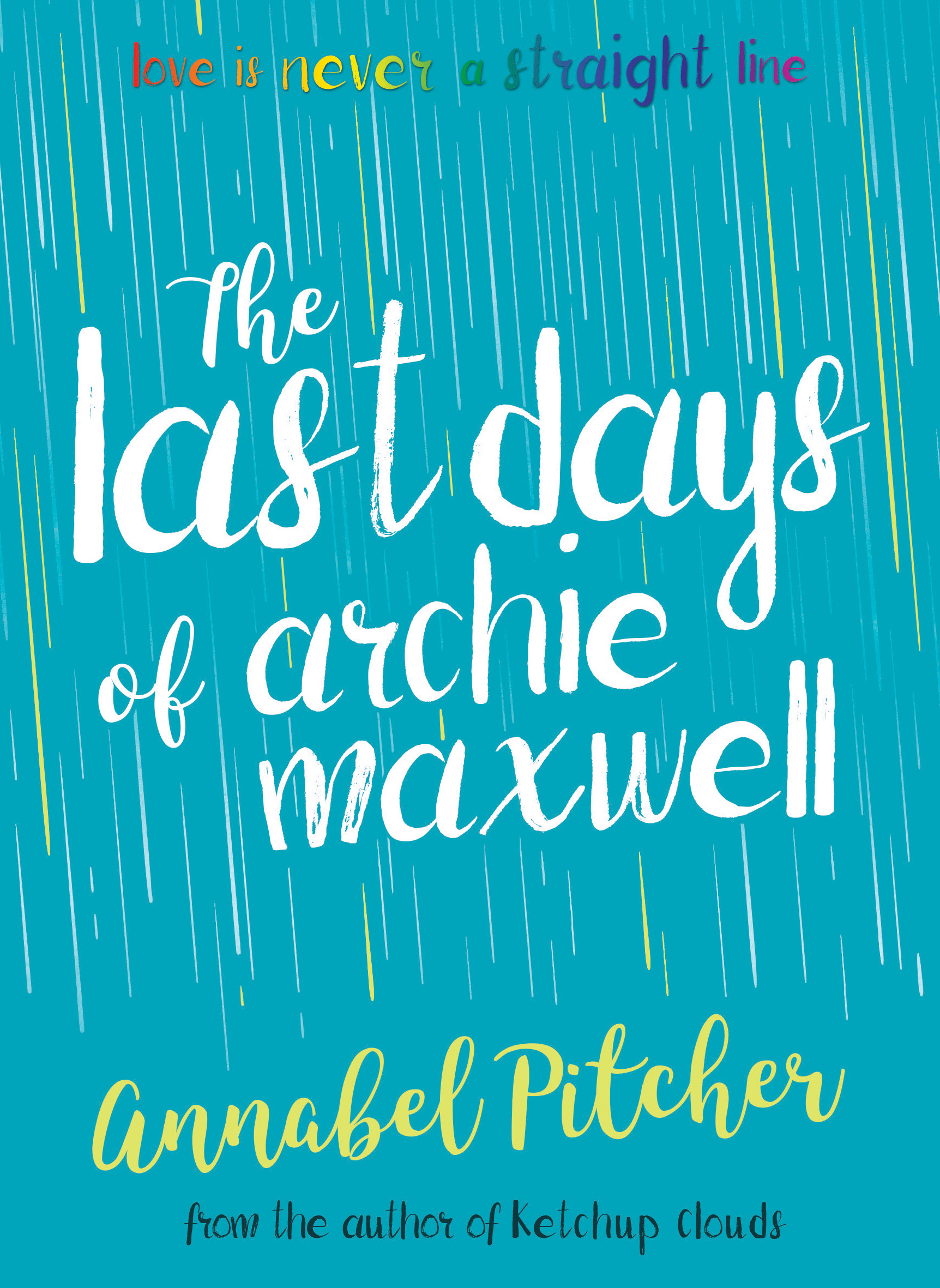 I found this grittier and rather more challenging than Grave Matter. It would suit teens who enjoy social realism or who may be coming to terms with difficult family relationships or with issues around sexuality. The book opens with Archie’s parents announcing they are to separate. Archie’s sister suspects it is because their father is gay. This is going on in the background, but Archie also has issues at school. He is part of a gang with some of the cooler kids, but who are actually unpleasant bullies. He befriends one of the more desirable girls at school, Tia, about which he is mercilessly teased by the other lads. Tia’s brother committed suicide on the railway line near Archie’s house, a year earlier, and he finds himself telling her that he saw her brother just before the day he killed himself, because she seems to need this to comfort her in her grief. As a result they become close. Thus, Archie finds himself sucked into lying, whilst his own home life seems to be falling apart.
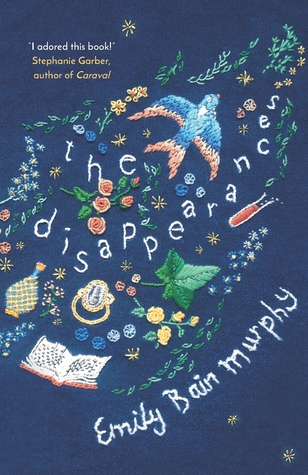 The book is set in Connecticut in 1942-43. Aila, is 16 years old when we first meet her and she has a younger brother Miles. Their mother, Juliet, has just died and their father has been called away to fight in the war. Aila and Miles are sent to live in Sterling (their mother’s birthplace) with Matilda Cliffton and her family; Matilda was Juliet’s childhood best friend. Aila is keen to take something of her mother’s with her and she finds a volume of Shakespeare’s complete works, much scribbled in, into the back of which has been placed an envelope, containing a ring Juliet always wore, and a mysterious note to an unknown person, Stefen, at the end of which Juliet signs herself ‘Viola’.
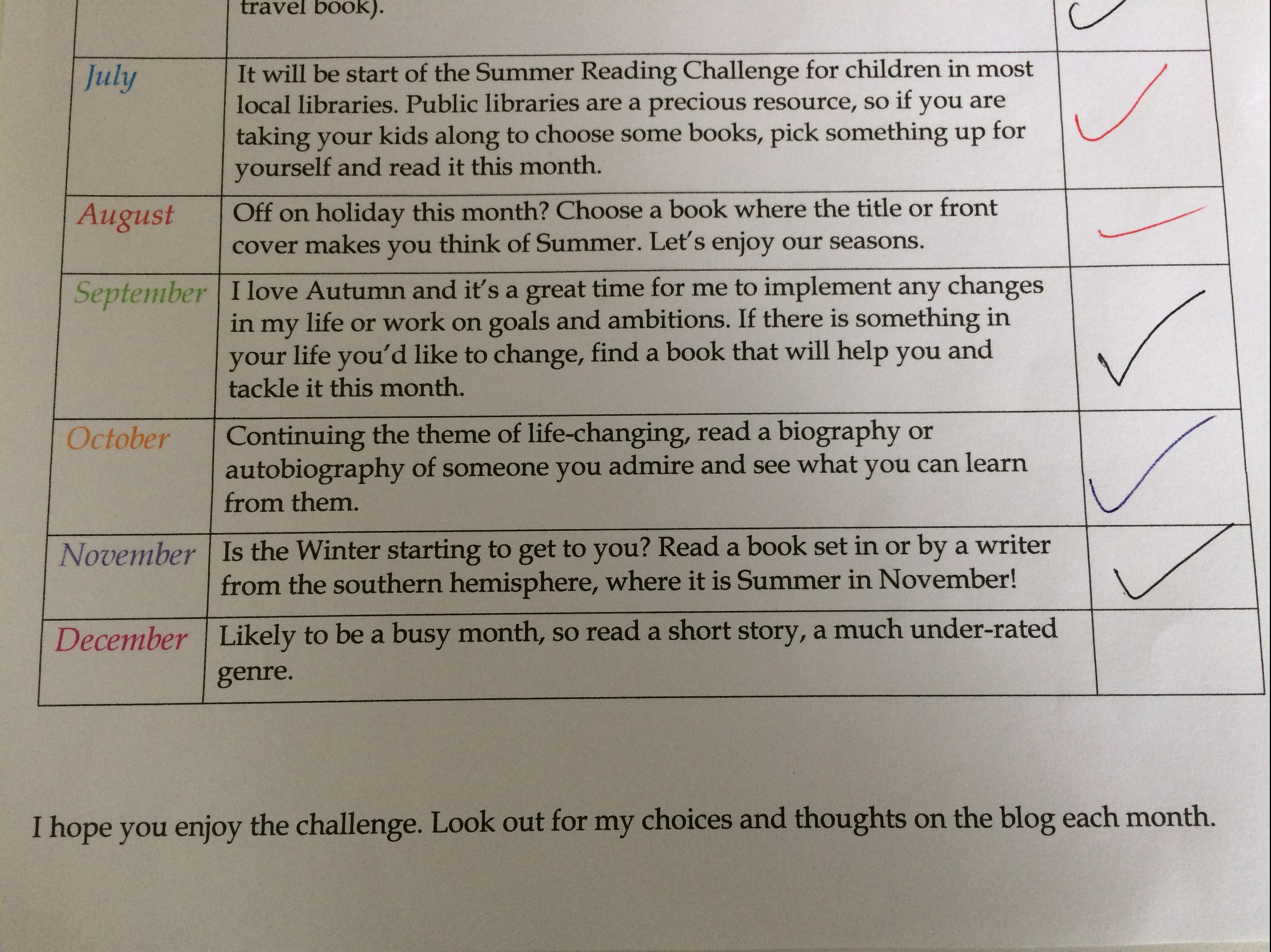 So, it’s my final reading challenge post of 2017, and this month it’s a short story. Just as well, because there isn’t very much month left! The reason I picked this genre for December is that I predicted, correctly, that it would be a busy month and my reading would slacken off. It is taking me ages to get through the book I am currently reading (the book club’s choice of Norwegian Wood by Haruki Murakami).

 Julia's books