I announced my February choice for my Facebook Reading Challenge last week. I also mentioned how much I loved January’s choice, The Color Purple by Alice Walker. The theme was an American classic. I had chosen that theme to celebrate the inauguration (at last!) of President Joe Biden and his Vice-President Kamala Harris. I can tell you I breathed a huge sigh of relief on 20 January! The Color Purple was a particularly fitting choice, given its feminist themes and exploration of racial segregation and discrimination. It was a book I had considered a couple of years ago for a previous reading challenge when the theme was a feminist novel. Back then, I chose Jeanette Winterson’s Oranges Are Not the Only Fruit and I feel quite glad now that I left The Color Purple until 2021.

I feel slightly embarrassed to be calling this post a ‘book review’; embarrassed because it is surely a book that I (everyone!) should have read long before now. How had I not?! You don’t need me to tell you that it’s brilliant – the Pulitzer Prize judges did that back in 1983. The book was made into a film in 1985, directed by Steven Spielberg, and won a clutch of Academy Awards, including Best Actress for Whoopi Goldberg in the lead role of Celie, and Best Supporting Actress awards for both Oprah Winfrey as Sofia and Margaret Avery as Shug.
Because both the novel and the film are so well-known, I believe I actually thought I knew the story and what it was all about, but I am ashamed to say I really did not. Set in Georgia in the early twentieth century (and going up to the early years of the second World War), segregation, racism and black poverty of course provide the backdrop, but the book is so much more than this. Firstly there is the sisterly love between Celie and Nettie, which endures even though they are separated for decades; Celie remains in Georgia, while Nettie goes to Africa as a missionary. The book is brilliantly structured as a series of letters, initially between Celie and her ‘God’, and later between Celie and Nettie, when the two women are separated. I think this is a difficult format to pull off- it may look easy but could become tired or pedestrian in a weaker author’s hands, but Walker pulls it off in masterclass fashion and it gives the book a surprising amount of pace.
The second somewhat surprising theme for me was the resilience of the African-American woman, not just Celie and Nettie, but also Shug Avery (who becomes Celie’s lover, best friend, and is the former lover of Celie’s husband “Mister”), and Sofia, Celie’s step-daughter-in-law. The men in the book are largely feckless, cruel, violent and controlling, but somehow these women rise above them, not only surviving, but thriving.
Thirdly, there is the theme of love; I have already mentioned the intense sisterly love between Celie and Nettie (and the ending will have you weeping), but many other different kinds of love are explored here – the sexual love that Celie enjoys with liberal bohemian Shug, who shows her another way of being a woman in America at that time, and opens up whole new worlds for her. There is also love that is turbulent, between Sofia and Harpo, and love between different age groups, as with Nettie and her husband. It is a tribute to open-mindedness and the joy of love in all its forms.
Finally, there is a difficult theme, which is that of violence, including sexual violence, within the African-American, former slave, community. Celie is basically a victim of child rape, perpetrated by her stepfather, by whom she has two children who are given away to another family. She is married off to a wicked man (“Mister”) who also rapes her, and treats her as his own slave when it is clear he only wanted her to cook and clean for the family that the death of his first wife has left him with. We are left wondering whether the treatment of the black community by their former slave-owner masters has been the cause of this social dysfunction, particularly as it relates to the lowly position that women occupy. Readers are left in further turmoil, however, by the descriptions Nettie provides in her missives from Africa about the tribe amongst whom she lives, where she refers to the widespread practice of ‘cutting girls’ (female gential mutilation). Nettie admires the tribe and learns a great deal from them, but she cannot accept this practice. When the tribe is displaced by white colonial settlers wishing to exploit the natural resources the land offers, Nettie is appalled and foretells the devastating consequences of western industrial expansion on the natural world and the people who have lived in harmony with it for generations. Nettie is further disillusioned when, travelling via Europe (specifically, England) to report back to the authorities of the church to which she and her husband belong, on their work and the horror of the practices they have witnessed by the colonialists, their protests are met with indifference.
It is really extraordinary how the author does so much in a relatively short book and with such a simple format.
So, at last, I can say that I have read this book. If you have not done so, then it really needs to go on your TBR list. And though I will now watch the prize-winning film, I truly doubt whether it can cover everything that the novel encapsulates.
Highly, highly recommended.
 I chose this book for my 2018 Facebook Reading Challenge. The June theme was an autobiography, a tricky category since enjoyment can often depend on your feelings about the author. I also wanted to avoid titles that would most likely have been ghost-written. After thinking about it for some time, I chose this, the first volume in Angelou’s memoir series, and the one which is often considered to be the best. It can be read as a stand-alone.
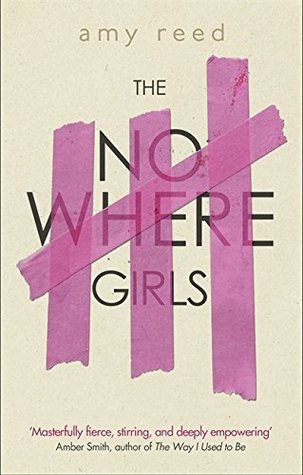 This is a very hard-hitting YA novel for older teens. It is an important book, dealing with a very current issue, misogyny, sexual violence and rape, but as a parent I found it extremely challenging to read. The story is set in Prescott, Oregon, a medium sized-town in the northwest United States. It centres on a group of three girls in high school (so about 17 or 18 years old) Grace, Erin and Rosina. Grace has moved to Prescott after her mother (an evangelical preacher) was forced out of her position in their previous home in the southern US because of hostility from the congregation towards her views. Grace finds, in her bedroom in their new home, some cryptic words scratched into the woodwork. She discovers that the previous occupant of the room was a girl called Lucy who alleged that she was raped by fellow students. No charges were brought and Lucy and her family left the town.
 Julia's books