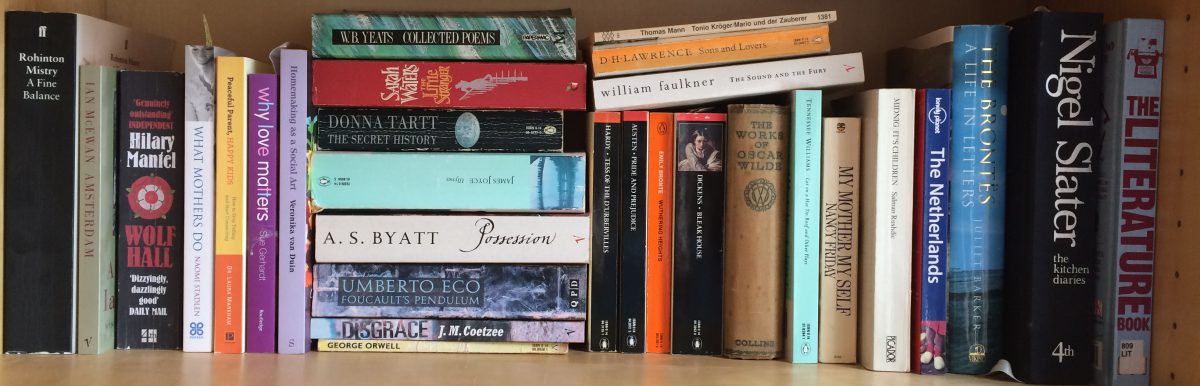

Yes, it’s true – one of my children is currently reading at a rate of about one book per day! They are currently on Easter holidays so that helps, but this started a couple of weeks ago. I thought it would pass, a mere flash in the pan, but so far so good, more and more books are piling up. Instead of walking around with eyes firmly fixed on the phone, she is walking around with her nose in a book. I am even having to suggest she stop reading and turn off the light at a very late hour!
So, how has this magic occurred? Perhaps you would like to know. Don’t get me wrong, she has always been a good reader, but in recent years, as with most young people once they hit the teens, it has tailed off in favour of the mobile phone, social media and TV streaming services, plus of course homework and friends. Sound familiar? Even when she has wanted to read, the motivation to put down the phone and pick up a book has not always been there, and hours are suddenly lost.
I asked her what has brought about this change (I wish I could claim the credit for it!) First of all, we had a grown-up conversation (ie not a parent-child, I’m-telling-you-what-to-do-type conversation) about getting enough sleep and she realised (quietly) that perhaps being on the phone late into the evening was not a good idea. She was also seeing that friends and peers were posting on social media well into the early hours. These are the kids looking exhausted at school, under-performing and experiencing behaviour problems, so she made the connection herself.
Once the phone was off, she had to find something else to do. This coincided with her watching the film of The Book Thief , which she had read and loved a few years ago. Realising how much had been omitted from the film, she went back and re-read the book. This set her off re-reading other books she had enjoyed. Once she’d got through a good few, she decided to get some new titles, and watch some film adaptations as well. And thus, a virtuous circle of reading, re-reading and associated film watching ensued.
I hope it lasts. She seems to be finding genuine pleasure in reading and it seems the more she reads, the more it motivates her to continue. Keen adult readers will no doubt recognise this feeling. It has, I think, also made her realise the pointlessness of much social media activity. She is aware of the potential harms, both the large and the small, and has decided, off her own bat, not to put herself in a scenario that might impact on her in a negative way.
Naturally, I feel very proud, but I assure you I am not smug; much of parenting teenagers involves realising you have less effect than you’d like and just hoping things turn out okay – it’s not for the faint-hearted! I would like to think that we adopt certain habits at home that are helpful – modelling both reading behavior and limiting our own phone use – but, frankly, who knows?
So, that’s my little bit of domestic wisdom. If there are young people in your life, I hope they too will see the light.
What are your top tips for getting teens reading?
If you have enjoyed this post, I would love for you to follow my blog. Let’s also connect on social media.


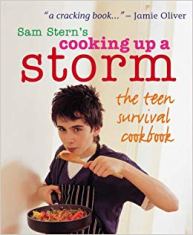 Cooking Up a Storm: The teen survival cookbook – Sam Stern & Susan Stern
 We are staying in Cancale, a smallish coastal town in Northern Brittany, arriving here on the overnight ferry from Cork to Roscoff, which was very pleasant indeed – good, reasonably-priced food, decent cabins and plenty to do.
 I’ve been unusually restrained with my holiday library this year, just the three books: Harvesting by Lisa Harding, a harrowing account of child prostitution, child trafficking, abuse and neglect, Death on the Nile, by Agatha Christie, the August choice for my Facebook Reading Challenge, and The Last Runaway by Tracy Chevalier, one of my book club’s summer reading titles.
 The central character, Hildy, is a slightly quirky, slightly awkward 17 year-old. She has two close friends – her best friend is Max, who is gay and fairly camp with it, and her other good friend, Xiu is much more astute, confident and successful in affairs of the heart. She confides in them extensively about her feelings and worries. Hildy has not had a boyfriend for some time and so, out of a degree of desperation signs up for a research programme which is exploring whether it is possible to facilitate a romantic relationship between two people by making them ask and answer a specific set of (36) questions. Hildy’s ‘partner’ in the programme is Paul, who, from the outset, makes it quite clear that he is only in it for the $40 fee and who is a nonchalant and frustrating participant to begin with; where Hildy makes an effort to answer the questions truthfully and fully, Paul is uninterested and uncooperative, and obfuscates throughout. Their first session ends with Hildy throwing a tropical fish at Paul that she had bought for her younger brother on the way to the meeting.
 Juno is a widely-published author, Queen of Teen 2014 and member of the LGBT community. The story begins with a funeral, for Eliza, girlfriend of central character, Samuel. Eliza was killed in a car accident in which Samuel was driving. He is grief-stricken and finds himself in conflict with his family, who do not understand his torment. Samuel seeks out the estranged sister of his vicar father, with whom he cut off contact after she began to dabble in the supernatural. Through his Aunt Marie, Samuel enters a world where he can bring Eliza back to life, but at a deadly price.
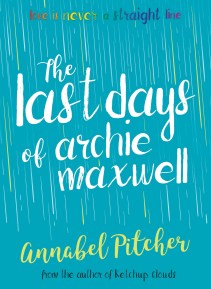 I found this grittier and rather more challenging than Grave Matter. It would suit teens who enjoy social realism or who may be coming to terms with difficult family relationships or with issues around sexuality. The book opens with Archie’s parents announcing they are to separate. Archie’s sister suspects it is because their father is gay. This is going on in the background, but Archie also has issues at school. He is part of a gang with some of the cooler kids, but who are actually unpleasant bullies. He befriends one of the more desirable girls at school, Tia, about which he is mercilessly teased by the other lads. Tia’s brother committed suicide on the railway line near Archie’s house, a year earlier, and he finds himself telling her that he saw her brother just before the day he killed himself, because she seems to need this to comfort her in her grief. As a result they become close. Thus, Archie finds himself sucked into lying, whilst his own home life seems to be falling apart.
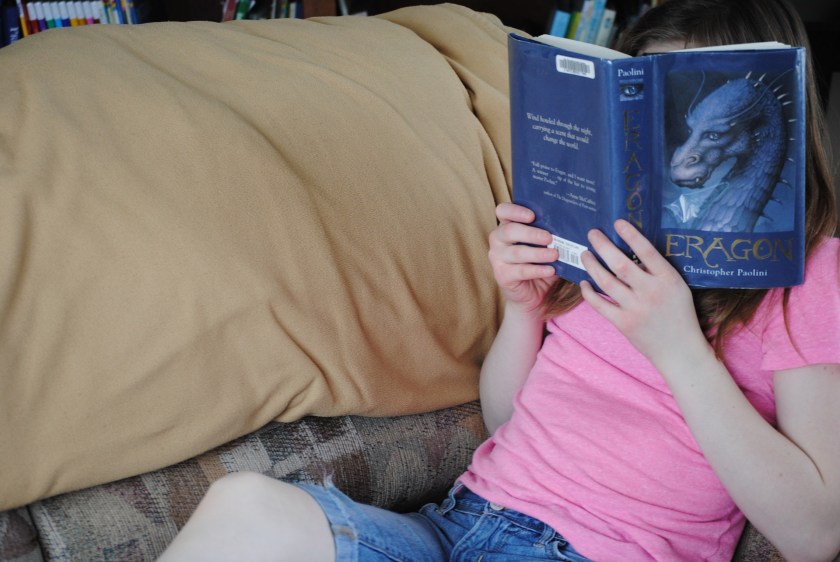 However, with autonomy comes power – if they are having an ‘at home’ day they can simply slip under the radar and spend a great deal of quality time with their phones and tablets (oh for the days when I only worried about how much Balamory they watched!) They can secrete themselves in their bedrooms while I lose myself in all my usual activity. At their age, sure I watched a lot of telly while my parents were out at work in the school holidays, but I also spent plenty of time with my nose in a book. Digital distractions were fewer and less powerful.
 The book is set in Connecticut in 1942-43. Aila, is 16 years old when we first meet her and she has a younger brother Miles. Their mother, Juliet, has just died and their father has been called away to fight in the war. Aila and Miles are sent to live in Sterling (their mother’s birthplace) with Matilda Cliffton and her family; Matilda was Juliet’s childhood best friend. Aila is keen to take something of her mother’s with her and she finds a volume of Shakespeare’s complete works, much scribbled in, into the back of which has been placed an envelope, containing a ring Juliet always wore, and a mysterious note to an unknown person, Stefen, at the end of which Juliet signs herself ‘Viola’.
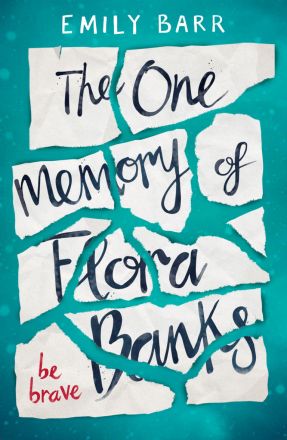
 Julia's books