I posted last week about the events of my life over the last couple of months, the dominant event being the death of my mother in mid- September. So much has happened in that time and yet I have felt rather out of the loop, my attention having been on other things. It feels strange to be posting here again, to be writing my first book review in what feels like months – can you believe I have a few butterflies?!
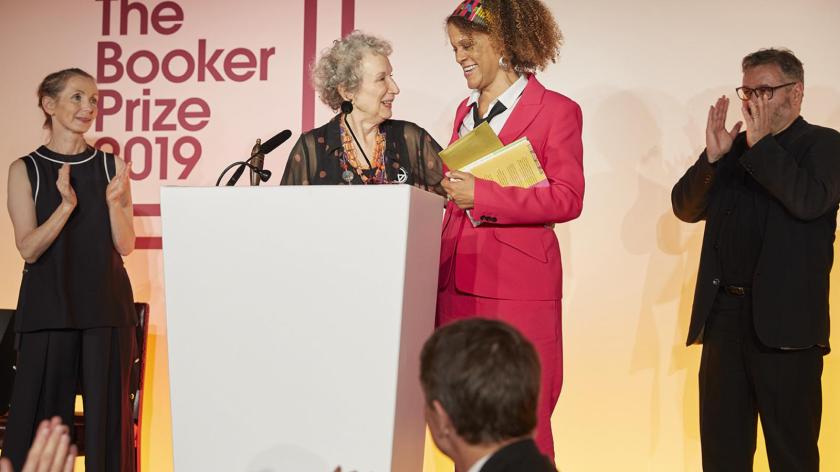 The Booker prize winner(s) were announced last week and for the first time in years, and against the explicit rules of the contest, the judges awarded the prize jointly to Margaret Atwood and Bernardine Evaristo. I have not read either book yet, though I am currently listening to The Testaments on the excellent BBC Sounds and enjoying it enormously, though it is extremely dark. There has been so much publicity around Atwood and The Testaments that I was wondering how on earth the Booker prize judges were going to be able to not award it to her! So, I think the judges probably made the right decision. By now, I would probably have worked my way through at least two thirds of the shortlist (I’ve never managed all six in the period between shortlist and winner), but, for obvious reasons, I have not read that much so far this year.
 It is somewhat and sadly ironic that I was reading Elif Shafak’s 10 Minutes 38 Seconds in This Strange World at the time of my mother’s death, a novel about a woman, Leila, an Istanbul prostitute known as Tequila Leila, who is brutally murdered in a back alley by street thugs. Rather than death being an instant occurrence, however, the author explores the idea of it as a transition from the world of the living to the ‘other’ (with a duration, for Leila, of ten minutes and thirty-eight seconds) during which time her whole life flashes before her. Leila’s life story is told through a series of recollections about her five closest friends, how and when she met them and what impact they have had on her life. We learn that Leila came from a relatively affluent family. Her father was anxious for heirs, but when his wife proved incapable of having any he took a second wife, Binnaz, a much younger woman from a lowly family, who gave birth to Leila. Binnaz was forced to give up the child to the first wife to bring up as if she were her own, whilst Binnaz, who never recovered mentally from the trauma of that event, was thereafter known to Leila as ‘Auntie’.
Leila was sexually abused by her uncle as a child, ran away to Istanbul at the age of sixteen and, somewhat inevitably, was lured into a world of prostitution where she suffered many abuses, including being disfigured by a lunatic client who threw acid at her. She eventually found love in her life, with D’Ali, but he was killed soon after they were married and she found herself back on the streets again, just to survive.
We learn about the five friends in her life, people who crossed her path and whom she helped in different ways, and who became her family after her parents disowned her. Through these stories we learn about Leila’s humanity and warmth, her openness and kindness. After Leila’s death, with no living relatives willing to claim her body, the city consigns her to the ‘Cemetery of the Companionless’. Her friends have no rights to bury her so they set about stealing her body from the graveyard. The second half of the book is an account of how and why they do this and how eventually they give Leila the resting place they feel she deserves.
Elif Shafak is a Turkish national presently exiled from her country where she feels that with her liberal politics and as a free speech and human rights activist she would be in danger from the ultra-conservative government. It is clear, however, that she feels the present ruling party does not reflect the true culture of Turks, and in particular the ancient and multi-cultural city of Istanbul. The book is peppered with political messages and layered with historical references, particularly the Armenian genocide of 1915, a passion of Shafak’s, and the main topic of her novel The Bastard of Istanbul.
I have been an admirer of Elif Shafak since I saw her speak at the Hay Festival last year; she is a woman of huge intellect and achievement, a true polymath. However, I struggled with The Bastard of Istanbul as I have also with this book – I just did not like either of them as much as I wanted to. 10 Minutes 38 Seconds… is a really novel and interesting concept but I just felt like it did not deliver on its promise.
When my mother was admitted to hospital and was clearly close to death, I wondered whether to abandon this book; I thought I might find it too upsetting a read in the circumstances. But I’m afraid the book just did not move me. The second half even felt slightly slapstick.
I will keep admiring Shafak and keep trying with her books. Maybe I’ll find something I love!
What has been your favourite read from this year’s Booker shortlist?
If you have enjoyed this post, I would love for you to follow my blog. Let’s also connect on social media.
 The book concerns two women, Rosemary, an 86 year-old widow, and Kate, a 26 year-old journalist, and how they are brought together by chance when the Brixton lido is threatened with closure. Their relationship evolves as together they mount a campaign to keep the pool open, drawing in other local people and reviving a community spirit that everyone involved thought had been lost. In some ways the two women could not be more different: Rosemary is nearing the end of her life, now alone having lost her beloved husband, and has lived in this area of South London all her life. Kate, on the other hand, is young and bright, and has moved to the city from Bristol to begin her journalistic career on the local paper. Kate too, though, is lonely; unlike Rosemary she has not lost anyone, but she has not found anyone either, and she grapples with panic attacks, anxiety and low self-esteem. She shares a house with a number of similarly isolated flatmates, none of whom she knows, and stays alive thanks to ready meals.
 It seems appropriate that I should be posting a review of Normal People this week, a book so very much about Ireland, the challenges and contradictions at the heart of a nation that has transformed itself in recent years. It is not just about Ireland, but about what it means to be young in Ireland and about class. It is also about identity and, in common with some of the issues faced in the UK and many other societies I am sure, the draw away from regional towns and cities, towards a centre, a capital, where there is perceived to be more opportunity, and what that means both for the individual and for society in the wider sense.
 I have chosen a book which caught my eye a couple of months ago – The Lido by Libby Page. It concerns a friendship between two women, 86 year-old widow Rosemary and 26 year-old Kate, who strike up a bond when their local outdoor swimming pool in Brixton, south London, is threatened with closure. The two women have different reasons for wanting to campaign to keep the lido open, but they are brought together in a common cause.
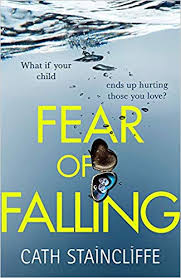 The centre of the story is the relationship between two women, Bel and Lydia, who meet at a New Year’s party in 1985, when they are both sixth-formers although at different schools in Yorkshire. They are very different people – Lydia is reserved, generally quite sensible, and from a secure and ordinary family. Bel is wilder, her family rather more bohemian and she has a difficult relationship with her parents. Bel grew up in France and then London and it is her father’s job that has brought them to northern England, where she is something of an outsider. Bel and Lydia are drawn to one another, despite their very different personalities; for Lydia, Bel represents spontenaiety, excitement, danger even. For Bel, Lydia represents security, a steady point in a turning world.
 The main character in the book is a girl this time – 12 year-old Ethel Leatherhead; yes, it is an unusually old-fashioned name, but that is significant. Ethel lives with her ‘Gram’, a very conservative, very proper lady who has strong views about things that are ‘common’ or undesirable. We learn that Ethel’s mother died when she was young, and that she is not aware of her father. Ethel also has a great-grandmother, who turns 100 in the course of the novel. Great-gram lives in a nursing home and speaks very little until one day, after Ethel visits her, she grabs her by the arm and says to Ethel, rather mysteriously, “Tiger. Pussycat.”
 Milton the Mighty by Emma Read
 The Dog Who Saved the World by Ross Welford

 Meat Market by Juno Dawson
 On The Come Up by Angie Thomas