The Christmas period never really ends for me until twelfth night – I’m a bit attached to this concept and I’m not sure why. From a Christian perspective I believe it is when the Magi are said to have arrived in Bethlehem, but personally, I feel more in tune with pre-Christian rituals, to do with celebrations of the solstice and the importance of honouring the human instinct for quiet and a slower pace at this time of year, so I am very protective of the ‘downtime’ that follows the hectic Christmas preparations. For me it means time for reflection and, since I am fortunate to have a family, time together to relax and have fun.
So, I make no apology for launching my 2020 Reading Challenge one week into the new year, and here it is!

This is my fourth reading challenge and it has been hard to come up with new genres, so if my themes this year seem rather random, it’s because I was having to think outside the usual boxes.

I’m starting the year, the new decade, with a look back at the 2010s and have chosen what was one of the biggest selling books of the decade, and which became an international phenomenon – Gone Girl by Gillian Flynn. It was also critically acclaimed, although being at the more ‘popular’ end of the market, it wasn’t nominated for the usual high-profile literary awards. Published in 2014, I’m afraid I never read it; I confess I got it mixed up with Paula Hawkins’s The Girl on the Train so for years I thought I had in fact read it! I’ve decided to do this one on an audiobook as it’s quite long and I have some car journeys coming up this month.
The book that closed off the 2019 Reading Challenge (a novella), The Prime of Miss Jean Brodie by Muriel Spark, was very short so I don’t feel too guilty about setting a long one for this month. Look out for my review of that book in the coming days.
I hope you will join me at some point on the Reading Challenge this year – why not start this month and pick up a copy of Gone Girl. I am sure there will be plenty of copies knocking around in charity shops – it sold 20 million after all! If you’d like to join us, why not hop over to the Facebook Reading Challenge Group now.
Enjoy your reading year – there are some exciting titles due to be published this year. More of that in another blog!
If you have enjoyed this post, I would love for you to follow my blog. Let’s also connect on social media.
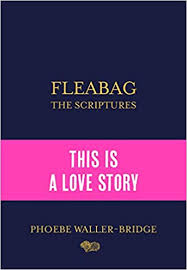 Fleabag: The Scriptures by Phoebe Waller-Bridge £20.00
 Who Am I Again? by Lenny Henry £20.00
 Wilding by Isabella Tree £9.99
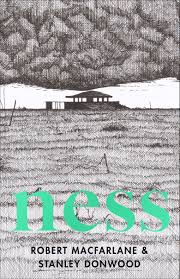 Ness by Robert Macfarlane and Stanley Donwood £14.99
 Twas the Nightshift before Christmas by Adam Kay £9.99
 The Jewish Cookbook by Leah Koenig £35.00
 Mother: A Human Love Story by Matt Hopwood £9.99
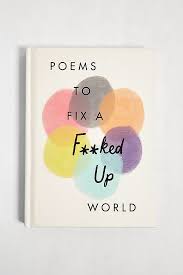 Poems to Fix a F**ked Up World by Various £9.99
 Fucking Good Manners by Simon Griffin £9.99
 The Boy, the Mole, the Fox and the Horse by Charlie Mackesy £16.99
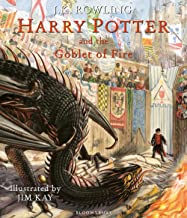 Harry Potter and the Goblet of Fire (Illustrated edition) by JK Rowling and Jim Kay £32.00


 Diary of a Dyslexic School Kid by Alais Winton and Zac Millard £9.99


 The Book of Dust Volume Two: The Secret Commonwealth by Philip Pulman £20.00
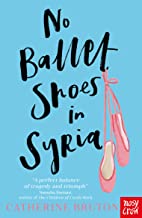 No Ballet Shoes in Syria by Catherine Bruton £6.99
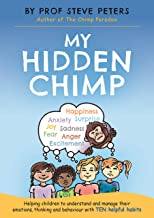 My Hidden Chimp by Steve Peters £12.99
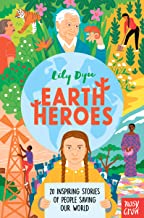 Earth Heroes: Twenty Inspiring Stories of People Saving Our World by Lily Dyu £9.99
 I remember when this book was published in 2006. It was widely acclaimed, but also controversial; there were some questions marks over its historical accuracy (one senior rabbi argued that nine year-old boys were not kept in concentration camps, all were gassed because they could not work and were therefore of no use, though this argument also been disputed) and others have questioned whether such a relationship, between a young inmate and the son of the camp commandant, could have gone on for so long undetected, particularly when Bruno slips under the fence. Whatever its problems, the book has sold millions of copies worldwide and was made into a successful film within two years of publication.
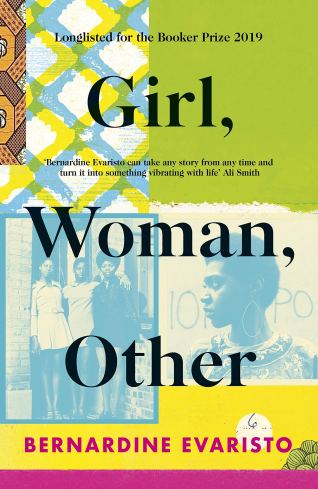 What I liked about it, however, was less this grander aspect, but rather the quality of its story-telling. I must admit that 50 or so pages in, I was not overwhelmed! There are twelve characters in the book, all women bar one (who is trans), all black or mixed race. They are broken down into four groups of three, and each threesome is strongly connected in some way (eg mother/daughter). Each group is also connected with the others, even if only in a tenuous way (eg teacher and former pupil) and almost all are in some way connected to Amma, the first character we meet. Amma has written a play which is having its debut performance at the National and this provides the framework of the novel. Many of the characters are present at the penultimate chapter of the book, the after-party, where the differences between them and their lives are laid bare. This is interesting because the author is not only trying to draw out the similarities between the characters and their life experiences, suggested by their common characteristic of being mixed race and female, but she is also, I think, railing against the notion of such women/people being homogeneous; they are all far more than just their race or gender.
 I’ve just finished a lovely little book The Umbrella Mouse by Anna Fargher. When I was browsing in my local bookshop a few months ago, one of the assistants recommended it to me and said it had had her in tears. I knew then it was a ‘must-read’! I got my copy secondhand online and it’s signed!
 The Lathe of Heaven was written in 1971, but was set in ‘the future’ – Portland Oregon in 2002. This future world is one in which the global population is out of control, climate change has wrought irreparable damage and war in the Middle East threatens geopolitical stability. The most alarming (and engaging) thing about the book, for me, was how prophetic it was; in 1971 did readers think this was some dystopian world? Worryingly, many of the problems envisaged by Le Guin are recognisable features of our environment in 2019.
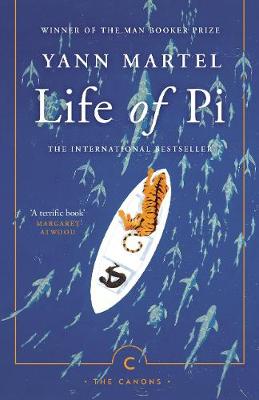 The story is well-known: a young Indian boy, Piscine “Pi” Patel (a name he adopts to get back at the school bullies who taunt him with the nickname ‘Pissing’) grows up in the territory of Pondicherry where his parents own a zoo. The first part of the story gives us a detailed account of the family’s life there, including enormous detail about life for the animals in a zoo setting (I was fascinated by this and it changed my perspective on zoos). We learn in particular about the fierce Bengal tiger, Richard Parker, who is the zoo’s prized possession. I love the use of ‘naming’ in this book – the story of how Richard Parker came to be given this name is brilliant and a sign of the author’s ingenuity and creativity. The other important feature of this part of the novel is that we learn of Pi’s deeply philosophical nature, his decision to adopt three religions (Hinduism, in which he has been brought up, Islam and Christianity), much to his family’s dismay, because he can see benefits in all of them.


 So now it is time top get back on track and announce the book for November. Our theme is a children’s book; we are winding down towards the end of the year, but I am not going to make it too easy, because this book is a challenging one – John Boyne’s The Boy in the Striped Pyjamas. I have been meaning to read this ever since it was published to great acclaim in 2006. My elder daughter read it recently and has been nagging me to follow suit. She found it very moving so I am looking forward to it.


