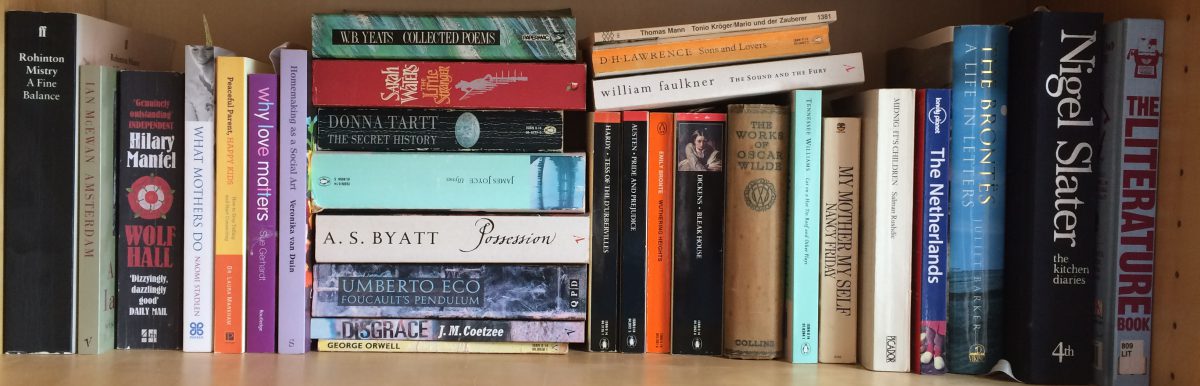

There was a bit of alarm in the book world recently when the Publishers Association in the UK announced a 7% decline in revenue from sales of fiction (physical formats) in 2018. There was a rise in sales of digital formats but not enough to offset fully the drop in sales of actual books. In contrast, non-fiction sales were up and are now worth almost £1bn! Audiobooks have also enjoyed big increases in the last couple of years.
Those of us who feel strongly about books may find this rather worrying and publishers have identified fiction as most vulnerable as there are now so many other things competing for a slice of our leisure time. In my household, I have three teenagers and whilst they do all read (some more than others!) it is undoubtedly Netflix that commands more of their attention. They will quite literally walk around with their earphones on watching their mobile phone screens! (As I wrote that I chuckled to myself, thinking about Anna Burns’s central character in Milkman who got such a hard time for “reading whilst walking around”!)
Don’t get me wrong, I do watch Netflix and am working my way through a couple of box sets at the moment. I seldom watch more than one episode per sitting, though; I know some people will watch several episodes back to back, and suddenly your evening is gone. ‘On demand’ television is great, but I do feel you have to have balance in life – I also have on-demand coffee and chocolate in my house but I wouldn’t dream of drinking three consecutive cups per evening! The reasons are obvious. And whilst Netflix, Amazon, computer games or social media are probably not going to make you really wired and stop you sleeping (though they might!) it is still important to be able to stop and switch off, to know that there are other things in life that deserve your attention and may be better for you.
Some might argue that it’s all just entertainment and it’s not doing us any harm, and, indeed, that there is high quality television out there. The Handmaid’s Tale, for example, has made an extraordinarily successful transition from novel to Netflix and this will no doubt drive an increase in sales of Margaret Atwood’s follow-up book The Testaments, due for publication this Autumn. However, it’s not the blockbusters, the big-name, already rich and famous authors who need our support, it’s all the other writers, striving to get their books noticed. My worry is that the links between on-demand television and online book retailers, and the time-pressed, mobile phone-dependent consumer will create a perfect storm where the choice of reading we have available is gradually narrowed and homogenised.
I am pleased to see non-fiction is thriving; there are some wonderful history, philosophy and political books out there. And I do believe the trends in children’s books are more encouraging, less linked as they are to television and film.
All I can say is we must keep reading widely, keep campaigning to ensure our libraries stay open and use our bookshops before we lose them, particularly independents. Oh, and go to a literary festival or an author talk.
Do you worry about the future of the novel?
If you have enjoyed this post I would love for you to follow my blog. Let’s also connect on social media.
 This book has been on my to-read list for some time now, ever since it caught my eye over a year ago when it was published. I recommended it as a
 However, the full diary will be emptying out a little as this month progresses, so I’m hopeful I’ll be able to restore my daily reading hour. My selection for the Facebook Reading Challenge this month will also help. The theme is contemporary crime fiction and I’ve chosen the latest book by north-west (England) crime writer Cath Staincliffe, Fear of Fallling, which was published last year. I met Cath at a writer’s conference a couple of years ago and she was such a lovely, warm, down to earth person that she really inspired me to think that I too might be able to pursue a writing life. Crime is not usually my genre of choice, but I read a couple of her books, including
 The story begins when 15 year-old Michael, off school for many months after contracting hepatitis, seeks out Hanna Schmitz, a woman who had been passing when he found himself being sick in the street and who had helped him. Once he is well again, Michael’s mother sends him off to find the mystery good Samaritan in order that he can thank her. Hanna is twenty years Michael’s senior and employed as a bus conductor, but despite the social and age gap between them, they begin a passionate affair, both parties equally consenting. One of the more intimate aspects of their relationship is that Michael reads aloud to Hanna, after sex and in the bath mainly, although never the other way around. Michael never questions Hanna’s desire to have him read to her, he just accepts it. This makes up the first part of the book and perhaps it is a testament to events that have occurred since the time of its writing that all of us (mothers of teenagers!) found the prose rather discomfiting, and not a little implausible. Hanna disappears mysteriously out of Michael’s life, leaving him heartbroken and perhaps also rather damaged.

 This book is Angie Thomas’s debut novel and it caused a sensation when it was first published in the United States in February 2017. It enjoyed both critical and popular acclaim, remaining at the top of the New York Times YA best seller list for almost a year. It was made into a film which was released last Autumn. The novel came out of a short story Thomas wrote in college following the police shooting of a young black man in 2009.
 The book is about a young newly-married couple, Celestial and Roy, and is set in the American Deep South. Their lives appear full of potential until Roy is accused of a crime he did not commit. He is convicted and sentenced to twelve years in prison. The book concerns the effect of the separation on their marriage, how Celestial copes alone and what this means for their shared dreams.
 There was a decidedly political, Brexit-y feel to events this year, perhaps that is because of the looming Tory party leadership contest and the European elections last week. Also, there is a sense that the world of arts and culture is beginning to assert its feeling about the Brexit issue more vociferously as the UK’s departure draws nearer. I saw Keir Starmer on Saturday and found him extremely impressive (surely a future leader of the Labour Party?). He was thoughtful and candid, whilst also remaining tactful about current political events. He was gracious about Theresa May and less so about many of her colleagues. He was being interviewed by Philippe Sands, author of
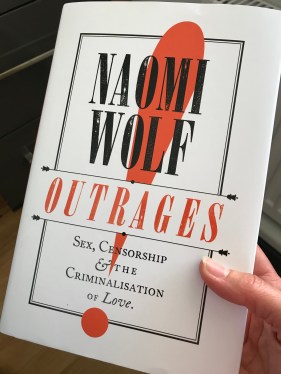 I also saw Naomi Wolf, a woman whose work I have admired for years. She was talking about her latest book, Outrages: Sex, Censorship and the Criminalisation of Love in which she traces the evolution of attitudes to sex, particularly homosexual activity, from the mid-19th century on, through the writings of John Addington Symonds. There has been a lot of controversy in the press about an error in her book (which she has acknowledged and plans to correct in the next edition), which in my view, has been somewhat overblown; I truly doubt whether a male author would have experienced the same opprobrium. Naomi Wolf was warm and articulate, and gracious about the cultural and political turmoil in the UK, reflecting also on similar events in the US too. I was glad to have heard her speak.
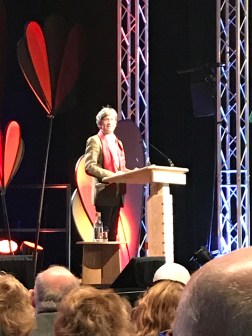 On Sunday, I went to a panel discussion led by Ed Vaizey MP, talking about branding with a number of business-people. It was interesting, and Ed Vaizey is very witty, but, to be honest, didn’t feel very “Hay”. I also saw Melvyn Bragg speak about his new novel Love Without End: A Story of Heloise and Abelard. I enjoy listening to his BBC Radio 4 show In Our Time and am always impressed by his ability to cut through to the core of so many topics. Can you believe this is his 22nd novel!!! He has also written seventeen non-fiction books. Surely, he is approaching national treasure status!
 So my reading time has been severely curtailed. I managed to finish Why Mummy Drinks just after the book club meeting, just as well it was a quick read and did not require too much mental investment. My other big read for last month, however, did. Colin Thubron’s To A Mountain in Tibet was the April title for my

